Group Assignment
- Measure the power consumption of an output device.
- Document the experimental procedure on the group work page.
- Reflect on the learning experience on the individual page.
Learning Outcomes
- Understand how electrical power is measured in electronic systems.
- Relate voltage, current, and power consumption in an output device.
- Demonstrate a workflow for characterizing the electrical behavior of an actuator.
Power Consumption Measurements
To characterize the power consumption of an output device, a 24 V DC geared motor was connected directly to a regulated laboratory power supply. The power supply provided the motor voltage while simultaneously displaying the output voltage, current, and electrical power delivered to the load.
To validate the current readings shown by the power supply, a digital clamp meter was also connected in series with the motor circuit. This allowed the measured current to be compared using two independent measuring instruments.
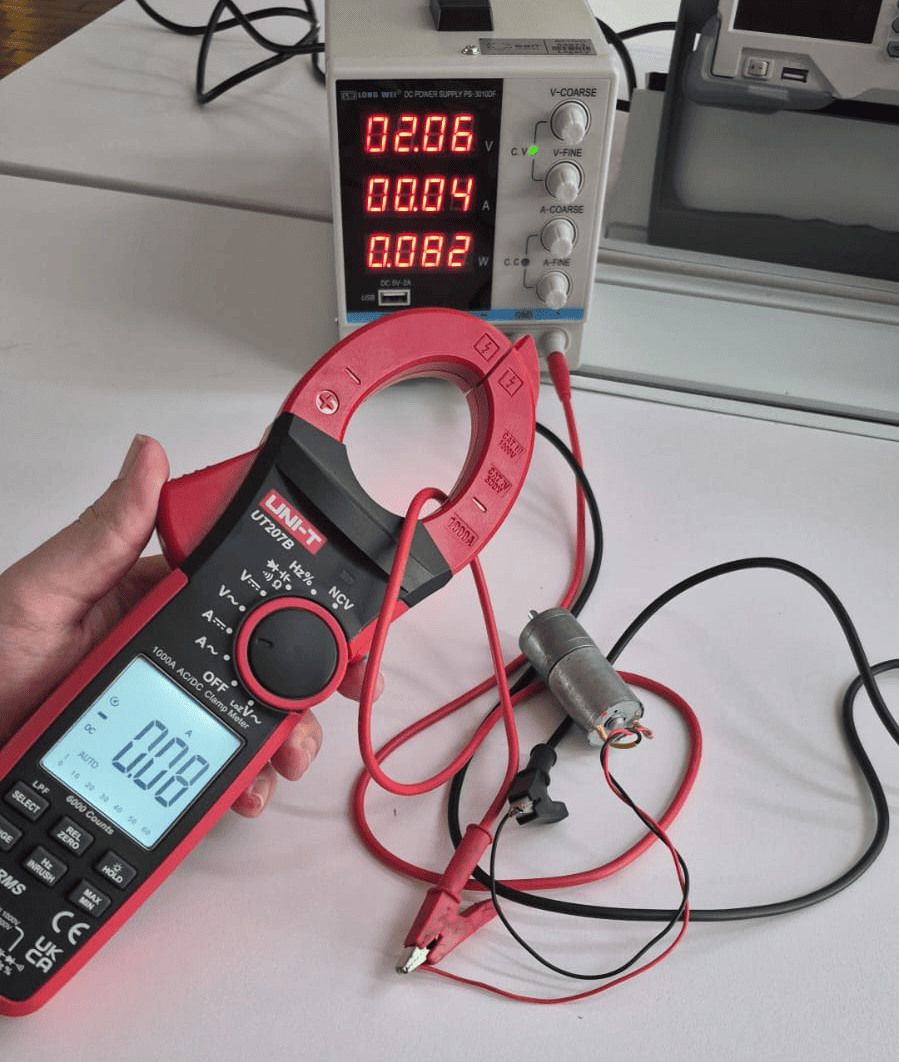
Power consumption measurement at approximately 2 V.
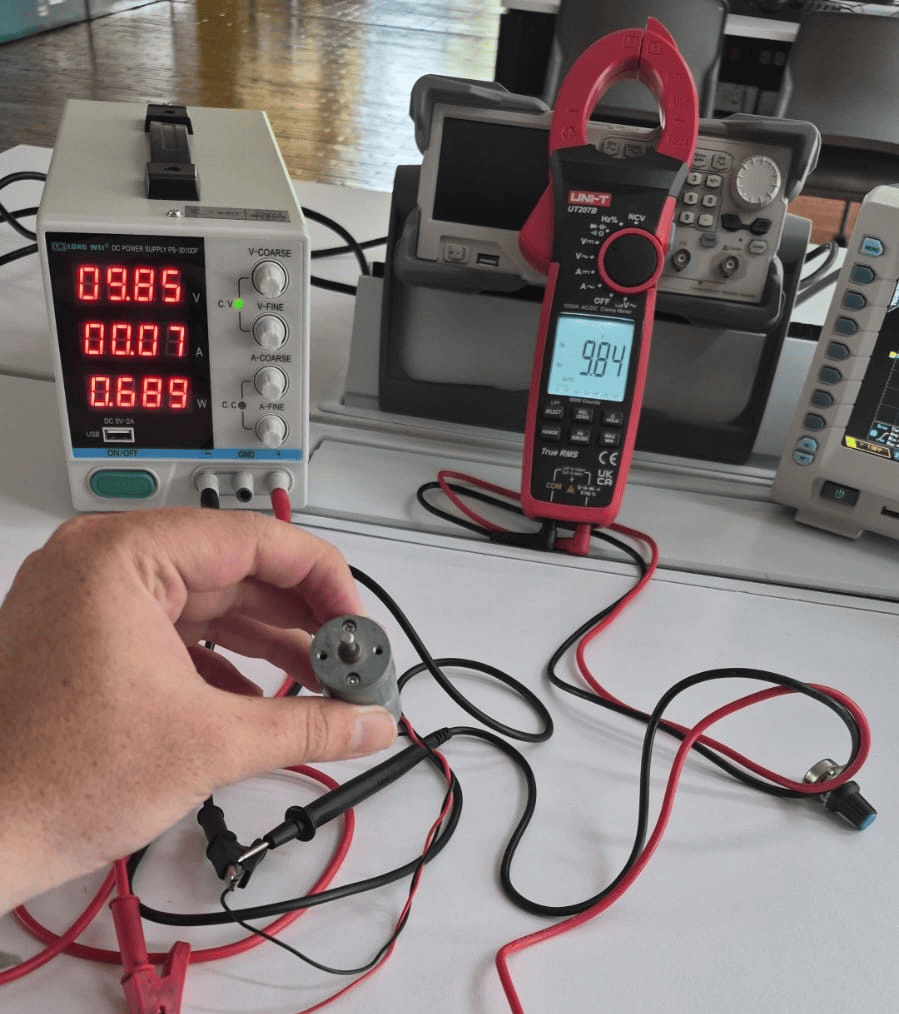
Power consumption measurement at approximately 10 V.
Experimental Results
| Supply Voltage | Current | Power | Motor Behavior |
|---|---|---|---|
| 2.06 V | 40 mA | 82 mW | Slow rotation |
| 9.85 V | 70 mA | 689 mW | Higher rotational speed |
Result Analysis
Increasing the supply voltage caused the motor to rotate significantly faster, which also increased the electrical power delivered to the motor. Although the current changed only slightly during these measurements, this occurred because the motor operated without any significant mechanical load.
For DC motors, current consumption is primarily related to the torque required to drive the load. Since the mechanical load remained nearly constant throughout the experiment, the measured current varied only slightly, while the increase in voltage produced a substantial increase in electrical power.
Motor speed increases as the supply voltage is raised while operating under approximately constant load conditions.
Group Conclusion
This group assignment demonstrated a practical workflow for measuring the electrical power consumption of an output device. Using a regulated laboratory power supply together with a digital clamp multimeter, we characterized the operating conditions of a DC geared motor by measuring its supply voltage, current consumption, and electrical power under different voltage levels.
The experimental results showed that increasing the supply voltage increased the motor's rotational speed and the electrical power delivered to the load. Under no-load conditions, the measured current remained nearly constant, illustrating that current consumption in a DC motor is primarily related to the torque required rather than the applied voltage alone.
Beyond obtaining numerical measurements, this assignment reinforced the importance of validating electrical behavior using laboratory instruments. Understanding the relationship between voltage, current, power, and mechanical performance provides a solid foundation for selecting appropriate power supplies and designing reliable embedded systems with output devices.