Week 18: Invention, Intellectual Property and Income
Created a dissemination plan for your final project.
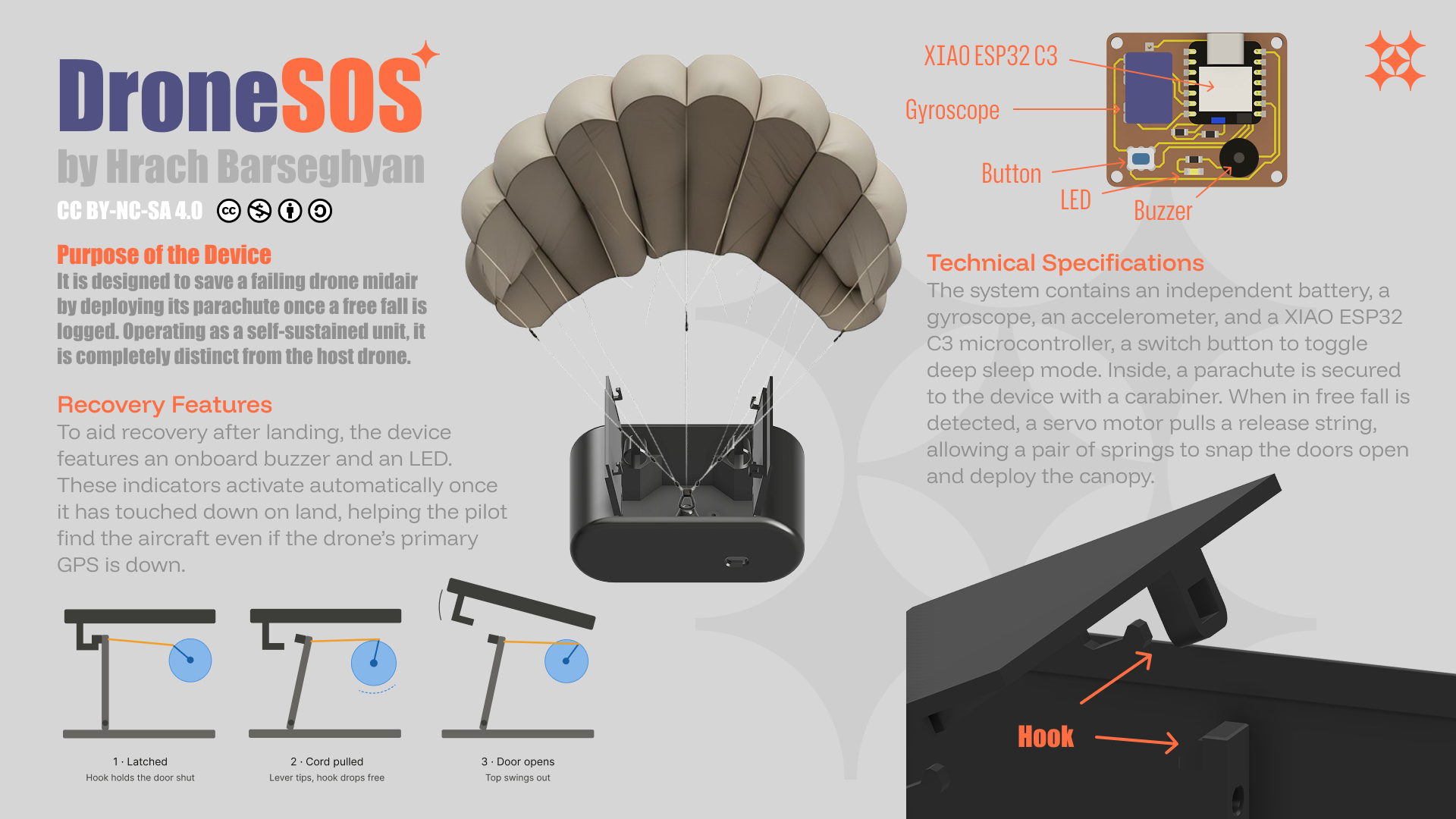
I am not yet considering any commercial activity for this project as I see a long path to develop it. But initially, before having done any thorough market research, I thought about licensing the firmware, or perhaps the deployment system. So my idea was to creat some key feature that would serve as a proprietary asset.
Once I had some idea about this market, I started drifing away from this idea. But licensing is something that is much easier than producing. Think about it, you license something meaning you grant commercial permission in reward to financial compensation, and the rest is not your problem. Of course I am not yet even concerned about copy right infringements.
So unless I have some compatitive advantage over what I can offer to the market, I do not see a straight disseminational path.
If I were to distribute this product, I would naturally approach drone producers, to sell on their store fronts as a verified 3rd party product. But when you think about it, many companies practice planned obsolescence, meaning the products are not intended to be repaired. So it would not be very logical for them to agree to sell a product that would conflict with their sales.
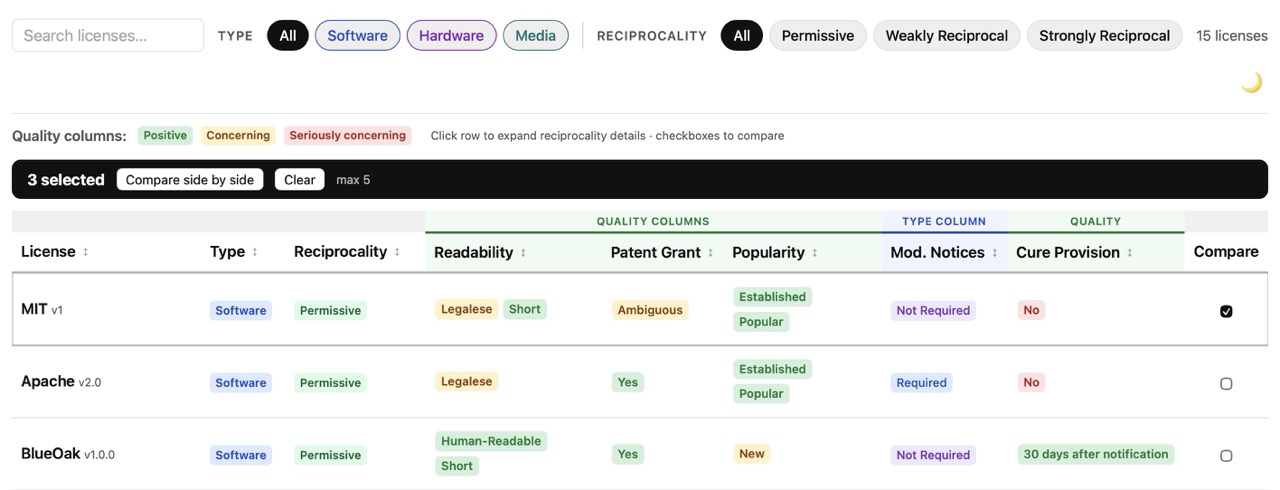
I went to this website that has a table of Comparison of Licenses. Apart from what I had heard during the lecture this was quite easy to navigate through as well.
The color markings make it even more readable, you simply choose the wether your want to license hardware, software or media. The colors green, yellow, red describe the quality of the license making green the most favorable.
I then ticked my desired licenses on the right side panel, and in the top black panel clicked Compare side by side.
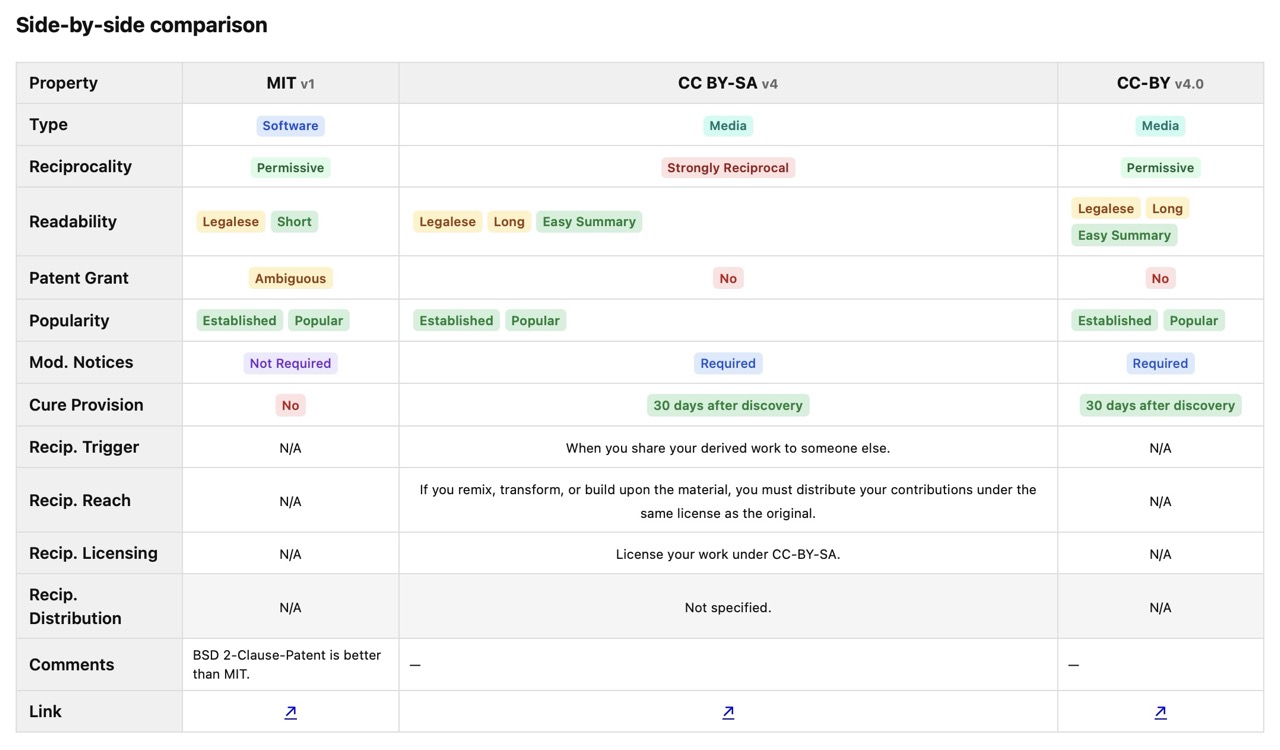
In the table below were the three of my favorable licenses. I chose Creative Commons CC BY-NC-SA 4.0 because I want people to freely share, use, and build on my work, as long as they credit me and don’t use it for commercial gain without my permission. I also want any adaptations to stay open under the same terms, so the work, and its idea of open sharing stays protected as it spreads.


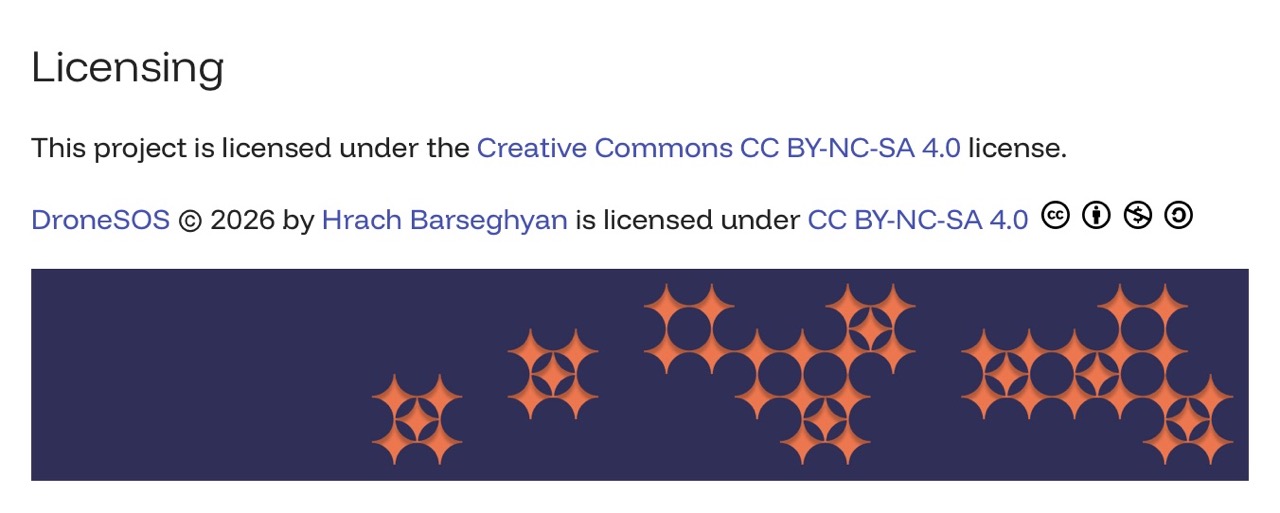
As one of the last steps, I added the chosen licesne to the final page [image below].
Outlined future possibilities and described how to make them probabilities.
While the current direction of the internal mechanical parts is highly effective due to the unibody construction, the outer casing requires modifications. Specifically, I will need work on reducing its overall size, improving its aerodynamics, and isolating the parachute chamber from the electronics. Additionally, integrating a TPU or rubber rim will mitigate vibrations, stabilize device positioning onto the drone, and maximize shock absorption. Finally, I plan to redesign the parachute deployment mechanism to significantly increase system reliability. I believe this will require a lot of time to test what will work best, so I am keeping hopes high that the current plan will work just fine.
What tasks have been completed, and what tasks remain?
The core functionality is clear to me, and my primary goal is to have proper parachute deployment. If this is achieved I will consider this project successful. If time permits, I will additionally see through a secure integration of mounting straps into the case body to ensure reliable attachment to the drone. Considering spiral developement for this project, I believe the straps at this stage are optional.
What’s working? What’s not?
Despite the device’s minimal component count and simple design, it delivers its expected output. The servo motor works fine, and so do the spring loaded dummy doors. I have also tested out the IMU, which we actually got to work with during the Machine Building week, so if I have any questions I know who I can turn to.
I still need to figure out the dimensions of the canopy, and its volume to be fitted into the case. And I also need to integrate the battery onto the board, as so far I have only been testing with USB-C.
What questions need to be resolved?
So far I have covered all the basics, I am not sure if something needs resloving. So as I am pacing though this project in spiral developement, I am at its very core.
Planned what will happen when?
In the image below you can see the timeline of actions represented in a Gantt Chart.
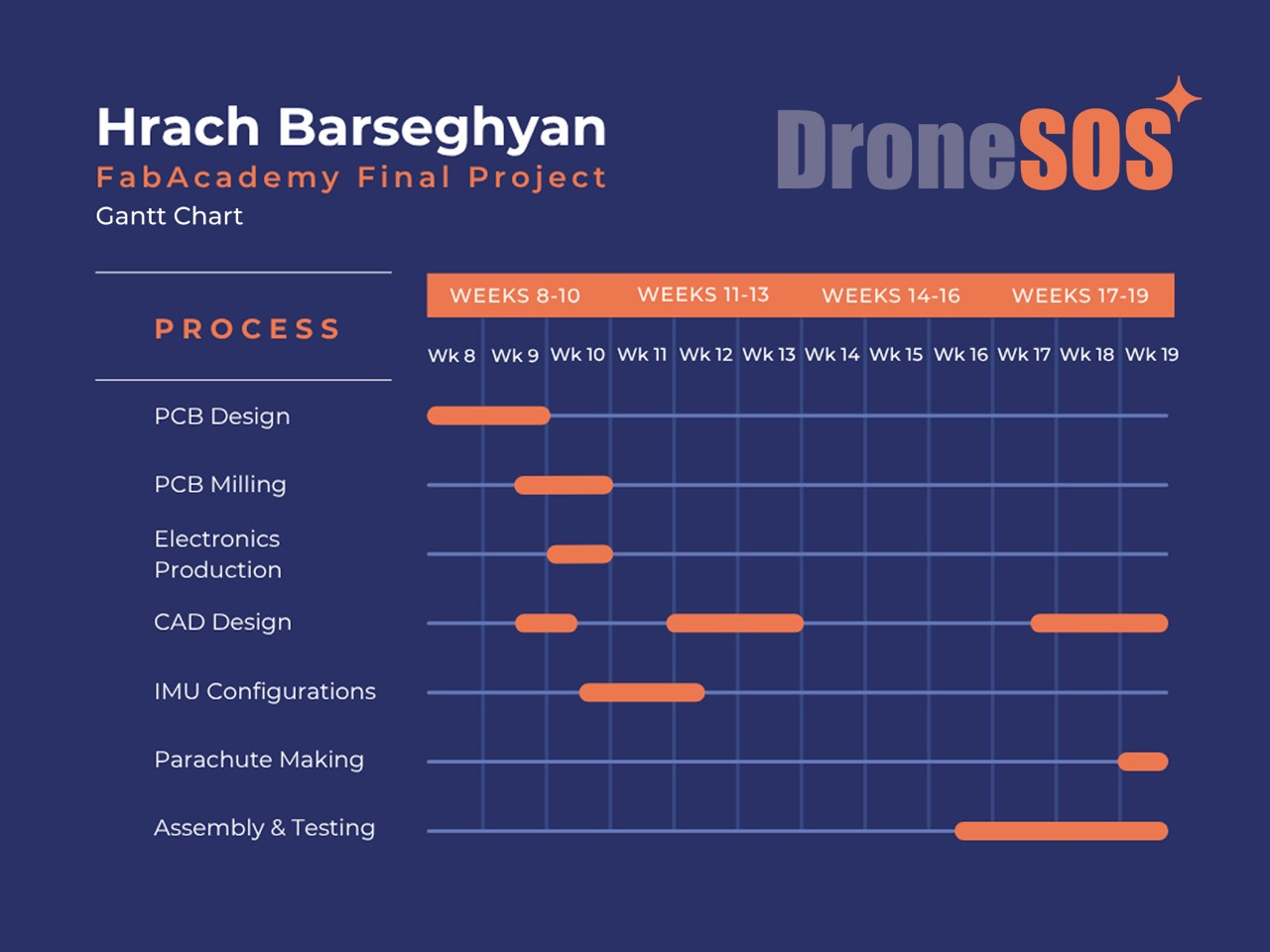
Hoping that the integration of all the components go well, I will answer this question by focusing on the future, post-presentation. I would consider this project even more successful once I achieve a more aerodynamic, compact and beautiful design. I consider product design to be one of the core pillars of good mechanical design.
What’s next?
Not sure what the criteria is, but I would conisder working towards earning design awards such as Red Dot Design, or iF Design Awards.
Other product design awards here.
What have you learned?
If I could I would have chosen to skip this question, it seems too abstract to have a definite answer. What technical skills have I learned, or maybe soft skills instead…?
I remember throughout the first week, cannot recall who, but someone said that FabAcademy is about time management. I cannot say I completely agree with it, and cannot comfirm that I had managed my time correctly. But instead, I have tried improving the skills I am to hunt for life – resilience, learning to learn, being able to do [not make] anything myself, and several other peculiar things that words cannot not seem to describe…
When I was little, about 6 years old, at home I remember I found a swiss army knife. It had great allure, visible scratches on its red handle, and patina on its tools. I remember when I had first opened one of its blades I was scared of it snapping a finger of mine off. Since then I have used it countless times. I still have it with me, and even brought it with me to Dilijan.
What’s my point? I love how versatile it is! I have used that knife’s functionality as my life’s motto, hence me wanting to be able to do anything myself. And with the same motto I had chosen to study computer science for my bachelors – for its math, programming, and resourcefulness.
I also remember how much excitment, liveliness, and eureka moments I have had throughout the AgriTech incubation program I participated in… There I had probably revoked all the knowledge I had in me at the time, and I loved having tasted that sence of entreprenurial unpredictability.
So… What have I learned? I have learned how to function more like a swiss army knife, have broaden my set of skills, and to some extent I had come closer to the ideology I had come up for myself!