9. Invention, Intellectual Property, and Income
Assignment
Develop a plan for disseminating the final project and explain how the project can create social and economic value for the community.
Track the progress of the final project by documenting:
- What tasks have been completed?
- What tasks remain?
- What is working?
- What is not yet working?
- What questions still need to be resolved?
- What will happen and when?
- What have I learned?
- How will the project be disseminated and commercialized?
Dissemination Strategy
The project will be disseminated through a combination of technical documentation, open educational resources, community demonstrations, training, partnerships, and commercial deployment.
The objective is not only to document the technology, but also to make the knowledge accessible while developing a sustainable model for deploying smart water-treatment systems in communities.
1. Fab Academy Documentation
The complete development process will be documented on my Fab Academy website.
The documentation will include:
- Problem definition and research
- System architecture
- Water-treatment process
- Mechanical design and fabrication
- Electronics design
- PCB development
- Sensor integration
- Embedded programming
- IoT and MQTT communication
- Dashboard development
- Testing and calibration
- Manufacturing processes
- Bill of materials
- Assembly and maintenance procedures
- Results and lessons learned
This documentation will allow students, makers, researchers and other developers to understand the system and use the project as a reference for future development.
2. Open Educational Resources
Selected project materials will be shared openly to support learning and collaboration.
These may include:
- CAD designs
- PCB designs
- KiCad files
- Source code
- Wiring diagrams
- Fabrication files
- Assembly instructions
- System documentation
- Testing methodologies
The documentation will distinguish between educational/open materials and components of the project that may form part of the future commercial product.
For the publicly shared documentation, I intend to use a Creative Commons Attribution-NonCommercial-ShareAlike 4.0 International (CC BY-NC-SA 4.0) license.
This allows others to learn from, share and adapt the educational material while preventing commercial reuse of the licensed documentation without permission.
3. Community Demonstrations
The system will be demonstrated to communities, schools, organizations and potential partners.
Demonstrations will focus on showing how the system:
- Treats and monitors water
- Measures turbidity
- Measures water flow and usage
- Automates water routing and treatment decisions
- Uses sensors and IoT technologies
- Can be monitored remotely
- Can be maintained locally
- Can be adapted to different community requirements
The demonstrations will also help gather feedback from potential users and identify the practical requirements for future deployments.
4. Smart Water Academy
A major part of the dissemination and commercialization strategy will be the development of a Smart Water Academy.
The Academy will provide practical training to:
- Community water operators
- Youth and technicians
- Schools and teachers
- Community-based organizations
- NGOs
- Institutions operating water systems
Training will cover:
- Water treatment and filtration
- Water-quality monitoring
- Turbidity and flow sensors
- Electronics and IoT
- Pump and valve operation
- System troubleshooting
- Filter replacement
- Preventive maintenance
- Data interpretation
- Remote monitoring
Training will be offered as a paid service to organizations and communities that want to develop their own technical capacity.
The Academy will also create opportunities for trained local operators to participate in the installation, operation and maintenance of Water Nodes.
5. Research and Collaboration
The project will continue developing relationships with organizations and technical communities including:
- Fab Academy
- FabLab Winam
- Skylab Workshop
- Toyota
- BioClub Tokyo
- Water and WASH organizations
- Local schools and community organizations
These partnerships can support technical validation, knowledge exchange, testing, funding opportunities, community deployment and future research.
6. Commercialization Strategy
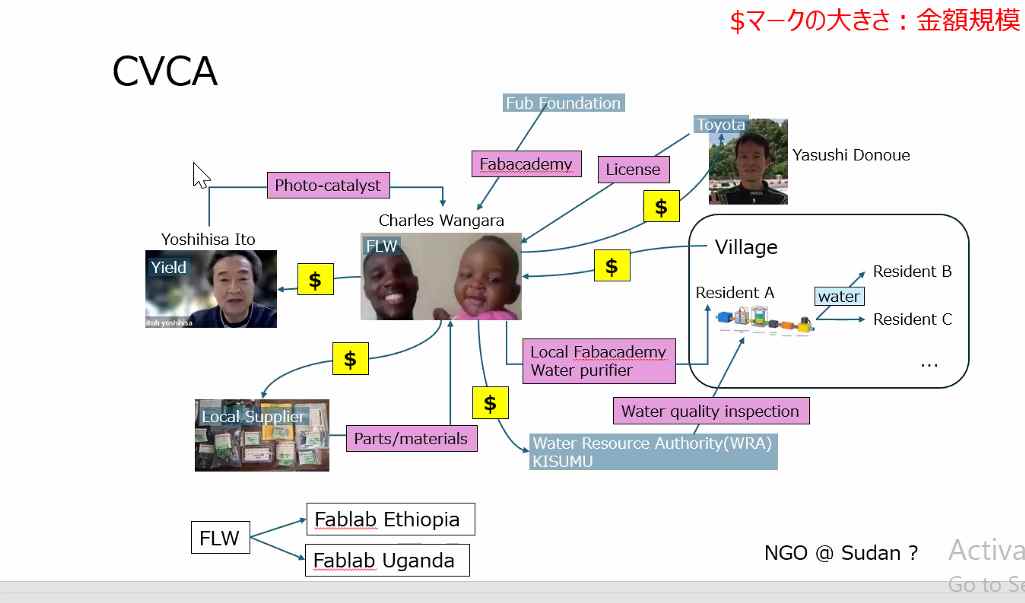
The project will be commercialized as a Smart Water Node and service platform, rather than relying only on selling treated water.
A Water Node combines:
Water Treatment + Sensors + Automated Control + IoT Monitoring + Local Training + Maintenance
The system is designed to be modular so that it can be adapted to different communities, institutions and water-treatment requirements.
Smart Water Node Deployment
The initial commercial strategy will focus on deploying 3–5 Water Nodes through selected communities, schools or partner organizations.
These initial installations will allow me to:
- Demonstrate the technology in real operating environments
- Establish realistic operating costs
- Measure water demand
- Understand maintenance requirements
- Train local operators
- Improve the system based on user feedback
- Develop evidence for larger funding and deployment programmes
Following successful initial deployments, the target is to expand toward 10–20 Water Nodes over approximately three years, depending on funding, technical validation and demand.
If each node serves approximately 50–100 regular users, 10–20 nodes could directly support approximately 500–2,000 users.
These figures are initial targets rather than guaranteed outcomes.
Revenue Model
The project will generate income through several complementary services.
Training
Communities, schools and organizations will pay for Smart Water Academy training.
Hardware
Revenue will come from selling:
- Complete Water Nodes
- Pumps
- Turbidity sensors
- Flow sensors
- Solenoid valves
- Control boards
- IoT modules
- Filtration components
- Replacement parts
- Other system components
Installation
Customers will pay for:
- System installation
- Plumbing
- Electrical integration
- Sensor configuration
- Commissioning
- Operator training
Maintenance
Recurring income will come from:
- Filter replacement
- Sensor calibration
- Pump maintenance
- Valve maintenance
- Electrical troubleshooting
- Preventive maintenance
- Software and firmware updates
Remote Monitoring
Organizations will be able to subscribe to remote monitoring services through the IoT dashboard.
The dashboard can provide information on:
- Turbidity
- Flow rate
- Water volume
- Pump status
- Valve status
- System faults
- Maintenance requirements
Data and Analytics
Operational data can be used to generate reports and analytics for organizations managing the infrastructure.
Examples include:
- Water consumption
- System uptime
- Maintenance history
- Water-demand patterns
- Filter-service requirements
- System performance
Any use or sharing of data will follow appropriate privacy, consent and data-governance requirements.
7. Community-Based Business Model
The model is designed so that communities are not simply passive recipients of technology.
The approach is:
TRAIN → INSTALL → OPERATE → MONITOR → MAINTAIN → SCALE
A community or organization can receive training through the Smart Water Academy, purchase or obtain a Water Node through a funded programme, operate the system locally and receive continued technical support.
This creates local capacity and reduces dependence on external technicians.
For communities that cannot afford to purchase a complete system, I will seek support from NGOs, CSR programmes, development organizations and other partners to sponsor or co-finance deployments.
This creates two complementary markets:
Commercial customers — organizations that purchase the system and services.
Sponsored deployments — organizations that finance Water Nodes for communities with limited financial resources.
Project Progress Tracking
Completed Tasks
Research and Planning
- ✔ Water purification technology research
- ✔ Community needs assessment
- ✔ System architecture design
- ✔ Gantt chart and project planning
- ✔ Component selection
- ✔ Water-treatment process definition
Physical System
- ✔ Physical filtration module developed
- ✔ Water-flow pathway established
- ✔ Modular system architecture defined
- ✔ Photocatalytic treatment concept developed
- ✔ Pump and water-storage arrangement established
- ✔ Automated water-routing concept developed
Electronics
- ✔ Turbidity sensor tested
- ✔ Flow sensor tested
- ✔ OLED display tested
- ✔ MQTT communication tested
- ✔ XIAO ESP32-C3 integrated during development
- ✔ Power-system architecture developed
- ✔ PCB schematic planning completed
Programming and IoT
- ✔ Turbidity monitoring code developed
- ✔ Flow-rate monitoring code developed
- ✔ MQTT communication implemented
- ✔ Dashboard communication established
- ✔ Sensor calibration performed
- ✔ System-monitoring architecture developed
Documentation
- ✔ Weekly assignments documented
- ✔ Sensor testing results documented
- ✔ System design documentation prepared
- ✔ Project Gantt chart developed
- ✔ Commercialization concept developed
Remaining Tasks
Physical Fabrication
- □ Complete final enclosure
- □ Complete final plumbing assembly
- □ Integrate all treatment modules
- □ Finalize photocatalytic treatment chamber
- □ Improve system safety and serviceability
Electronics
- □ Complete final power PCB design in KiCad
- □ Manufacture power PCB
- □ Complete main control PCB
- □ Manufacture and assemble PCBs
- □ Integrate power and control boards
- □ Complete electrical enclosure
Software
- □ Finalize control algorithm
- □ Complete automatic valve-control logic
- □ Refine dashboard
- □ Implement system alerts
- □ Improve remote monitoring and data logging
Testing and Validation
- □ Complete full system integration
- □ Conduct long-duration operational testing
- □ Validate turbidity monitoring
- □ Validate flow measurement
- □ Optimize water flow
- □ Evaluate filtration performance
- □ Validate photocatalytic treatment performance
- □ Evaluate filter lifespan and maintenance requirements
- □ Conduct appropriate laboratory water-quality testing
Final Documentation
- □ Final photographs
- □ Final demonstration video
- □ Assembly manual
- □ Bill of materials
- □ Maintenance guide
- □ Final testing results
- □ Final project presentation
- □ Commercialization plan
What Is Working?
The following parts of the system have been successfully developed and tested:
- Turbidity sensor produces stable readings.
- Flow sensor successfully measures water flow.
- MQTT communication is functioning.
- OLED display successfully displays system data.
- XIAO ESP32-C3 provides the embedded control platform.
- The IoT monitoring architecture is functioning.
- The water-treatment process flow has been established.
- The system has a modular architecture.
- The physical filtration system has been developed.
- The monitoring dashboard architecture has been established.
What Is Not Yet Fully Working?
The main areas requiring further work are:
- Final integrated PCB has not yet been manufactured.
- Complete electrical and plumbing integration is still being finalized.
- Automatic valve control requires full real-world testing.
- Photocatalytic chamber performance requires validation.
- Long-duration system reliability has not yet been established.
- Final water-quality performance requires laboratory validation.
- The most appropriate enclosure and manufacturing approach still need to be finalized.
These are primarily integration, validation and optimization tasks, rather than fundamental changes to the overall system concept.
Questions That Need to Be Resolved
1. Power and Electronics
What is the most reliable and cost-effective power architecture for continuous operation, including solar or backup power where required?
2. Treatment Performance
What treatment configuration provides the best balance between water quality, flow rate, energy consumption and operating cost?
3. Photocatalytic Chamber
What chamber geometry, photocatalyst configuration, light source and flow conditions provide reliable treatment performance?
4. Filtration Maintenance
How long can each filtration stage operate before replacement or maintenance is required?
5. Water Quality Validation
What laboratory testing is required to verify the treatment performance and determine the appropriate applications and operating limits of the system?
6. Manufacturing Cost
What is the most cost-effective way to manufacture the system at small and medium scale while maintaining reliability?
7. Community Operation
What training, maintenance schedule and local technical support are required for communities to operate the system sustainably?
Timeline to Completion
Week 3 — System Integration
- Integrate physical treatment modules
- Complete plumbing
- Complete electrical wiring
- Integrate sensors
- Integrate control electronics
Week 4 — Testing and Validation
- Conduct full system testing
- Validate sensor operation
- Test automated valves
- Test water-flow performance
- Evaluate treatment performance
- Identify and resolve system faults
Week 5 — Documentation and Dissemination
- Capture final photographs
- Produce final demonstration video
- Complete technical documentation
- Complete bill of materials
- Prepare maintenance documentation
- Finalize commercialization model
- Prepare final project presentation
What I Have Learned
This project has significantly expanded my understanding of water-treatment systems, electronics, embedded systems, IoT, digital fabrication and product development.
I have learned how to integrate:
- Water-treatment technologies
- Mechanical fabrication
- Electronics
- PCB design using KiCad
- Embedded programming
- Sensors
- MQTT communication
- Remote monitoring
- Data collection
- System automation
- Digital fabrication
- Product development
- Community-centered design
One of the most important lessons has been that developing a technology for a real community requires more than making the hardware work. The system must also be maintainable, affordable, understandable, measurable and economically sustainable.
This project has therefore evolved from a water-treatment system into a broader concept combining water infrastructure, digital monitoring, local skills development and community-based entrepreneurship.
The Smart Water Academy and Water Node model provides a pathway for communities to not only access improved water-treatment infrastructure, but also develop the skills required to operate and maintain it locally.
Ultimately, the project demonstrates how digital fabrication, electronics, programming, water-treatment technology and community training can be combined to develop a scalable approach to decentralized water infrastructure.
For the publicly shared documentation, I intend to use a Creative Commons Attribution-NonCommercial-ShareAlike 4.0 International (CC BY-NC-SA 4.0) license.