17. Applications and Implications
assignment Plan a final project masterpiece that integrates the range of units covered, answering: What will it do? Who’s done what beforehand? What sources will you use? What will you design? What materials and components will be used? Where will come from? How much will they cost? What parts and systems will be made? What processes will be used? What questions need to be answered? How will it be evaluated? Your project should incorporate 2D and 3D design, additive and subtractive fabrication processes, electronics design and production, embedded microcontroller design, interfacing, and programming, system integration and packaging Where possible, you should make rather than buy the parts of your project Projects can be separate or joint, but need to show individual mastery of the skills, and be independently operable
What will it do?
Water for Aduvan, Is a system that provides an automated approach to water purification and monitoring. The system ensures that water undergoes filtration, quality assessment, and controlled distribution before reaching the end user. Through the integration of sensors, automated valves, and monitoring components, the system enhances water safety, reliability, and efficient usage management.
The system consists of four main modules, namely:
- Water Intake and Storage Tank Module
- Filtration Module
- Sensors and Monitoring Module
- Control and Distribution Module
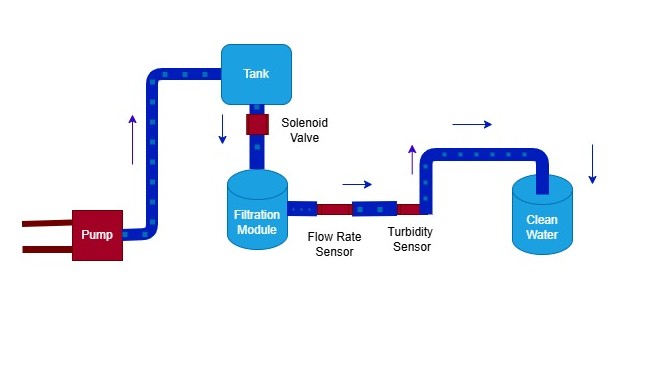
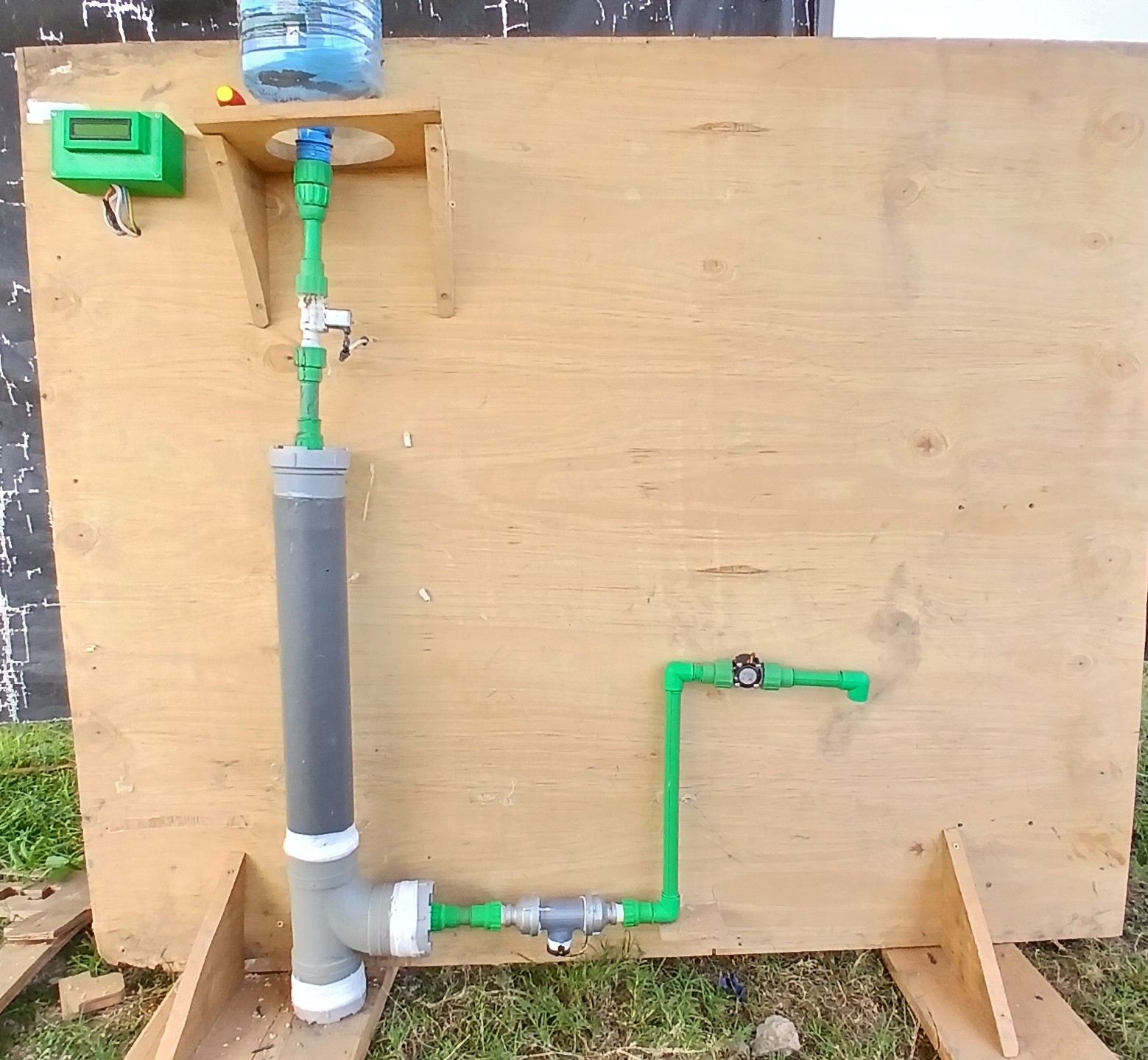
Water Intake and Storage Tank Module
Surface water is first collected and pumped into an elevated storage tank. The elevated tank allows water to move through the system using gravitational force, reducing energy consumption and improving water flow efficiency throughout the purification process.
Filtration Module
From the storage tank, the water flows into the filtration chamber where physical filtration takes place. The filtration unit is responsible for removing suspended particles, sediments, and other visible impurities from the water before it proceeds to the monitoring stage. The filtration process improves the physical quality of the water and prepares it for further quality assessment.
Sensors and Monitoring Module
After filtration, the water enters the sensors and monitoring module. This section is responsible for analyzing the quality and status of the water in real time. The system uses a turbidity sensor to measure the turbidity level of the water measured in Nephelometric Turbidity Units (NTU).
The system operates according to the following conditions:
When the turbidity level is < 5 NTU, the water is considered safe for consumption and is allowed to proceed to the next chamber for storage or distribution. When the turbidity level > 5 NTU, the water is considered unsafe for drinking. The control system automatically activates a solenoid valve to stop the flow of water, preventing contaminated water from reaching consumers.
The system also incorporates a flow rate sensor that monitors the movement of water within the system. The flow rate sensor is used to:
Monitor the operational status of the system Measure the quantity of water consumed Detect abnormal flow conditions or possible blockages Support system monitoring and performance evaluation
Control and Distribution Module
The control module is responsible for processing data received from the sensors and controlling the operation of the system components. Based on the turbidity readings, the control system automatically determines whether water should continue flowing or be stopped. If the water meets the required quality standards, it is allowed to flow to the clean water chamber for usage. If the water quality does not meet the acceptable standards, the system restricts water flow until the issue is resolved.
Who’s done what beforehand?
Smart Reverse Osmosis Water Monitoring System This project monitored a reverse osmosis water purification system using sensors to track water quality, flow, and filter condition. It mainly focused on system monitoring and maintenance alerts rather than active purification control.
https://archive.fabacademy.org/2016/fablabtecsup/students/399/FinalProject.html
Rainwater Filtering and Analysis System
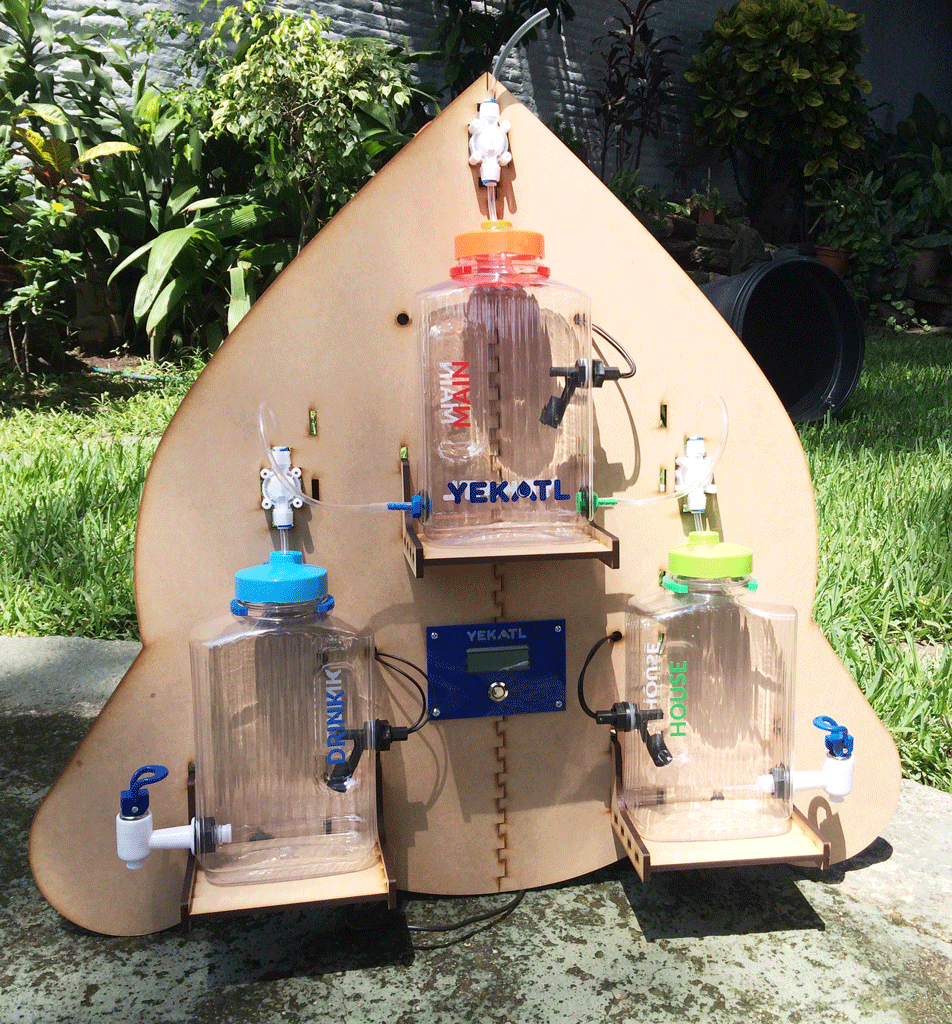 This project was designed to collect, filter, and analyze rainwater. The system used sensors to determine whether the collected water was safe for use and incorporated automated water flow control mechanisms.
The project emphasized sustainable rainwater harvesting and automated water quality analysis
This project was designed to collect, filter, and analyze rainwater. The system used sensors to determine whether the collected water was safe for use and incorporated automated water flow control mechanisms.
The project emphasized sustainable rainwater harvesting and automated water quality analysis
https://archive.fabacademy.org/2017/fablabveritas/students/148/elements.html
What sources will you use?
The project integrates locally available fabrication infrastructure at Fablab Winam with selected electronic components and modern digital design tools. This combination allows the Charles Water System to be fully designed, built, and tested within a maker-space environment while leveraging external knowledge and components where necessary.
Fabrication Tools and Workshop Equipment
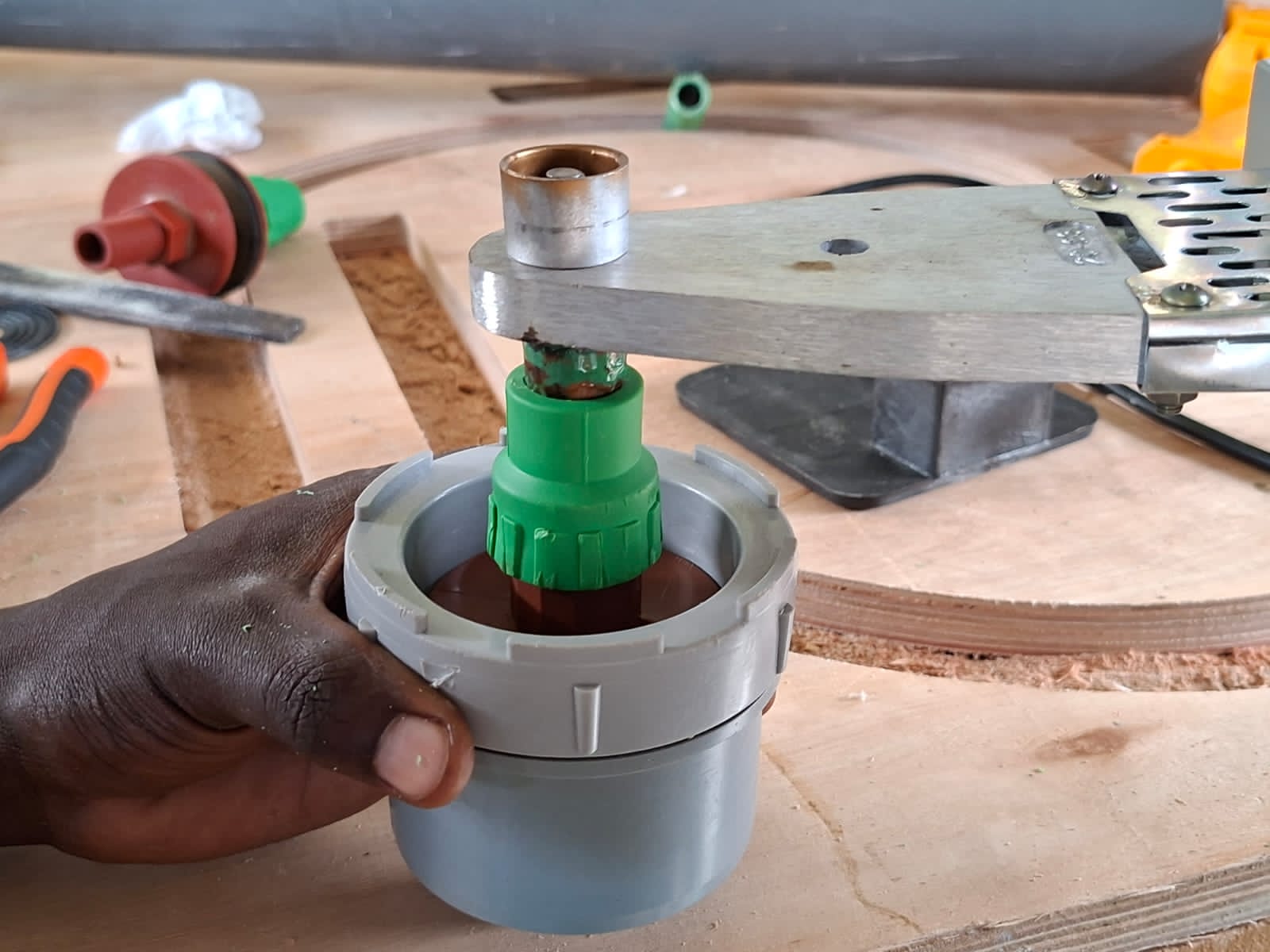
Physical parts of the system will be fabricated using equipment available at Fablab Winam. These tools will support the construction of the structure, housing, and mechanical components of the system.
- 3D printers for custom enclosures and fittings
- Roland milling machine for precision parts fabrication
- Hand tools available in the lab (cutting, drilling, assembly tools)
- PCB milling using Roland SRM machines for circuit production
- Locally purchased plumbing materials such as PVC pipes, PPR fittings, and waste pipes for water routing and tank connections
Electronic Components and Sensors
Key electronic components will be sourced locally and internationally to support sensing, control, and automation functions.
- Seeed XIAO ESP32-C3 microcontroller (system control unit)
- Turbidity sensor for water quality measurement
- Flow rate sensor for monitoring water usage and system performance
- Solenoid valve for automated water flow control
- Additional electronic components sourced from Skylab and other suppliers
Design and Development Software
The system design, circuit development, and programming will be done using a combination of professional and open-source software tools.
- Fusion 360 – mechanical and system design
- KiCad – PCB design and circuit layout
- VCarve – CNC toolpath generation and fabrication preparation
- Arduino IDE – microcontroller programming
- VS Code – code development and system integration
- MQTT protocol tools – IoT communication and data transmission
- ChatGPT – documentation support, idea structuring, and debugging assistance
Online Learning and Reference Resources
Online platforms will be used for learning, troubleshooting, and reference during development.
- YouTube tutorials for practical implementation guidance
- GitHub and open-source IoT projects for reference designs
- Online documentation for ESP32, sensors, and MQTT integration
- Fab Academy archives for similar water and IoT projects
What will you design?
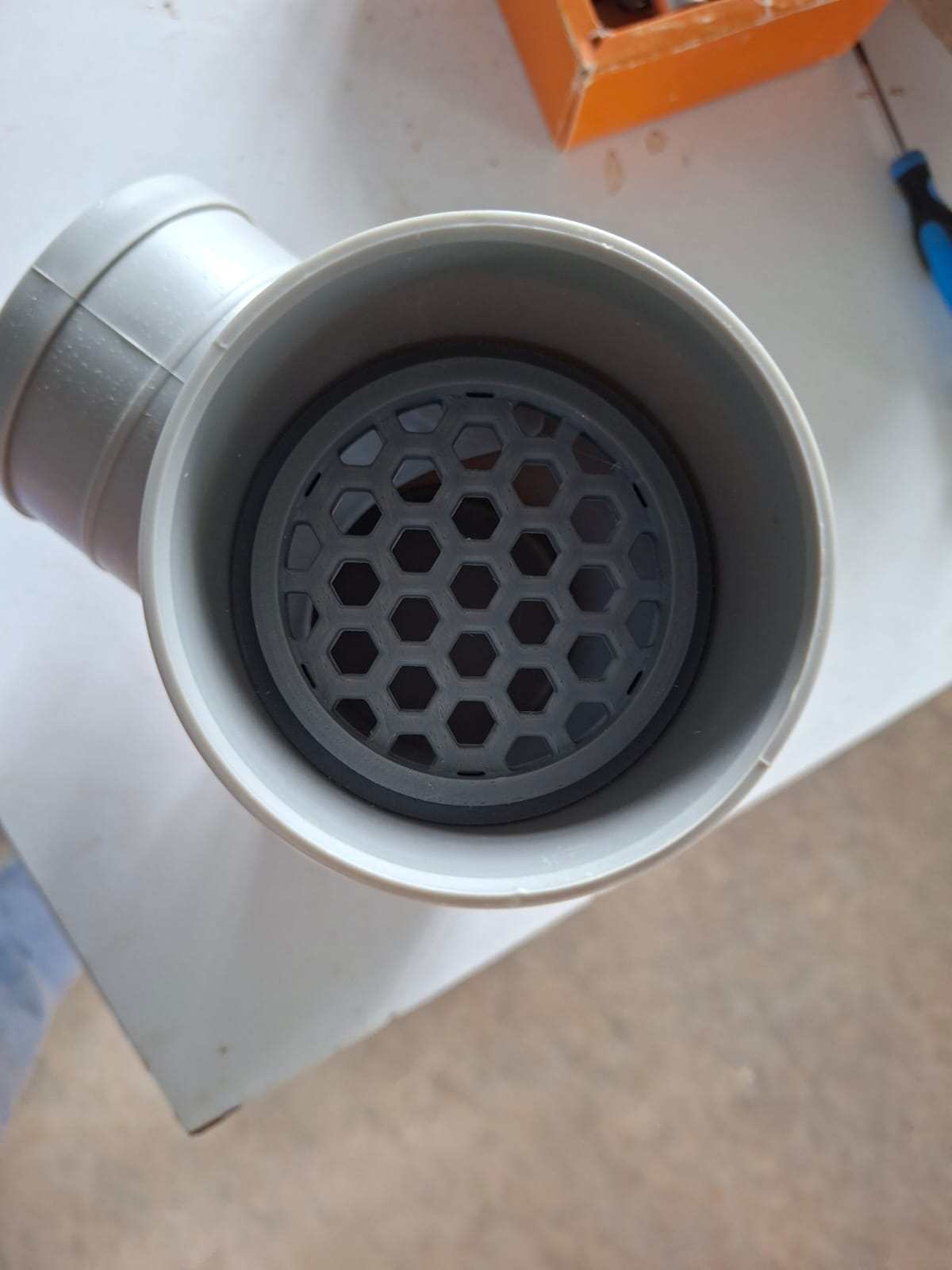
Filtration Holder
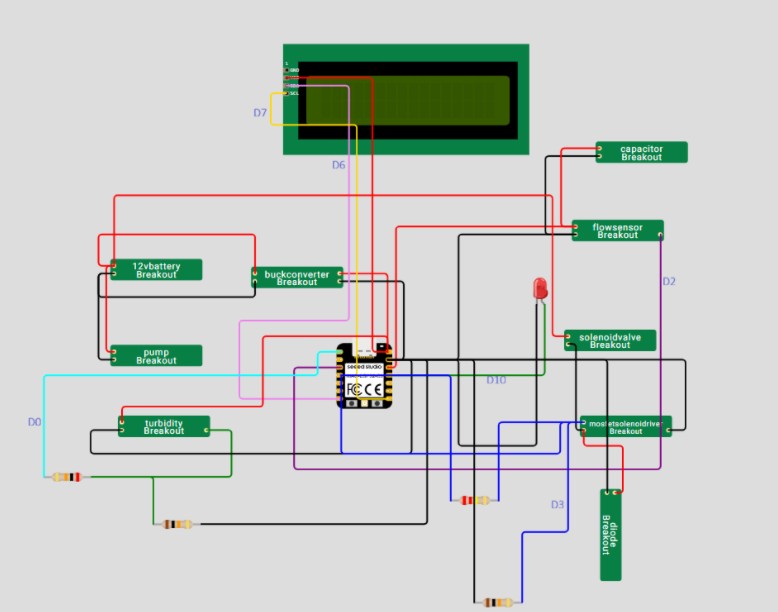
Electronic Board
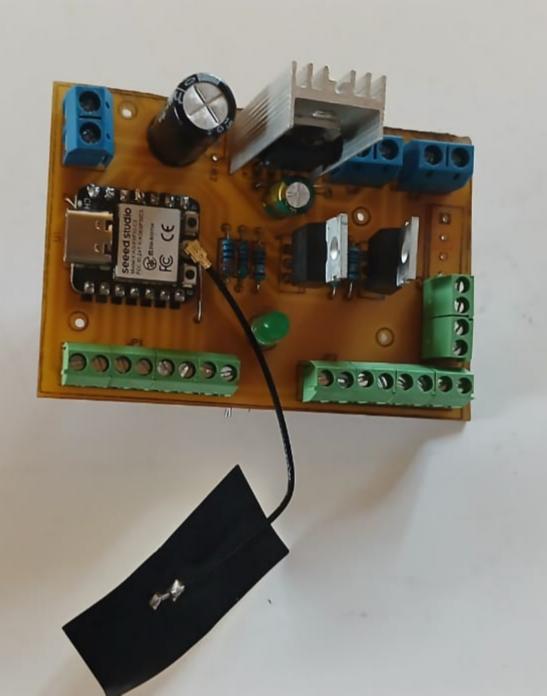
What materials and components will be used?
maetrials used and components are in the BOM below
Bill of Materials (BOM)
| # | Material / Component | Qty | Unit Cost (KES) | Total (KES) |
|---|---|---|---|---|
| 1 | PVC Pipe 3” (13 ft) | 1 | 500 | 500 |
| 2 | PVC Plug 3” | 3 | 150 | 450 |
| 3 | PPR Welding Machine | 1 | 2,500 | 2,500 |
| 4 | Male Adapter 1/2” | 8 | 50 | 400 |
| 5 | Tank Connector 1/2” | 8 | 300 | 2,400 |
| 6 | Plain Elbow 1/2” | 8 | 30 | 240 |
| 7 | Solfix / PVC Glue | 1 | 200 | 200 |
| 8 | Female Adapter 1/2” | 4 | 50 | 200 |
| 9 | T-Connector | 1 | 200 | 200 |
| 10 | YF-S201 Flow Sensor | 2 | 820 | 1,640 |
| 11 | Solenoid Valve (12/24V) | 2 | 1,000 | 2,000 |
| 12 | Turbidity Sensor | 1 | 1,500 | 1,500 |
| 13 | XIAO ESP32-C3 | 1 | 1,200 | 1,200 |
| 14 | I2C LCD 16×2 | 1 | 800 | 800 |
| 15 | LM2596 Buck Converter | 2 | 300 | 600 |
| 16 | Water Pump (24V) | 1 | 3,500 | 3,500 |
| 17 | Activated Charcoal | 2 kg | 300 | 600 |
| 18 | Fine/Coarse Sand | 5 kg | 200 | 200 |
| 19 | Pebbles / Gravel | 5 kg | 200 | 200 |
| 20 | Filter Mesh / Cloth | 1 | 150 | 150 |
| 21 | 6-Core Alarm Cable | 1 set | 300 | 300 |
| 22 | Copper Board | 1 | 200 | 200 |
| 23 | 24V Power Supply | 1 | 1,500 | 1,500 |
| TOTAL ESTIMATED COST | KES 21,480 |
GANTT CHART
Fab Academy · individual final project
Development timeline — water treatment system
## What parts and systems will be made?
the filtration module will be made through pipe connections, and designing and 3d printing.
Electronics board will be designed and cut
How will it be evaluated?
My System will be evaluated based on its ability to function as a reliable water purification and monitoring system.
Functionality The system is tested to confirm that water is successfully pumped, filtered, and passed through all stages of the system without failure.
Water Quality Performance Water quality is evaluated by measuring turbidity levels before and after filtration. The system must correctly allow water below 5 NTU to pass and block water above 5 NTU.
Sensor Performance The turbidity sensor and flow rate sensor are evaluated for accuracy, stability, and consistency in real-time readings.
Control System Response The solenoid valve is tested to ensure it automatically stops water flow when unsafe water is detected and resumes flow when conditions are safe.
*System Reliability The system is assessed for continuous operation, stability, and absence of leaks, blockages, or sensor failures during use. Overall Performance The system is evaluated on its ability to deliver safe water through automated filtration and monitoring, ensuring improved water safety and usability.