Week 19: Invention, Intellectual Property and Income
Another week to focus on the final project. This week about focusing on the invention, intellectual property and income. We will be looking at how to protect our ideas and how to make money from them.
Final Project (Zakkerni)
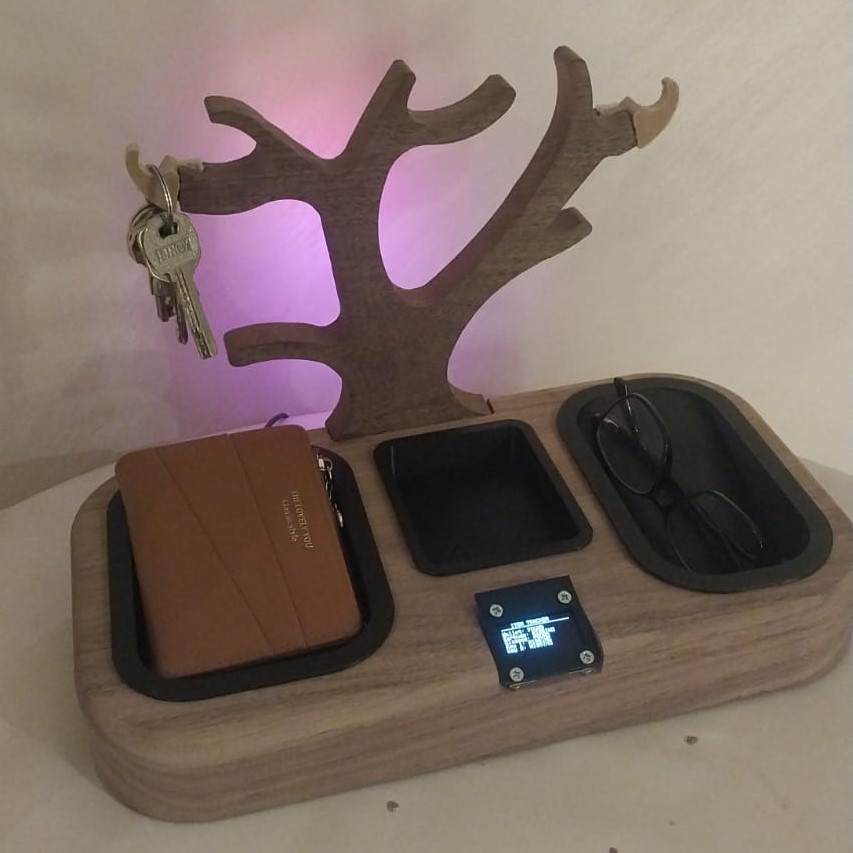
Dissemination Plan
Zakkerni is designed for students, professionals, and anyone who frequently forgets essential belongings such as keys, wallets, or identification cards. Awareness of the project will be raised through project social media, and online documentation. The project is currently developed as an educational and personal project and is self-funded using laboratory resources and purchased components. In the future, the system could be scaled up by seeking sponsorships, partnerships, or crowdfunding to support larger-scale production. The project is shared for educational purposes to inspire others to develop similar smart home solutions and improve everyday organization habits.
Future Improvements
The Zakkerni project has several potential future enhancements:
- Dedicated Mobile Application: Develop a custom mobile application for Zakkerni instead of relying on the Blynk platform, providing a more personalized interface and advanced features.
- Item Tracking Outside the Home: Add a tracking feature that allows users to locate their belongings even when they are far away from home, making the system useful both inside and outside the house.
- AI-Based Item Recognition: Implement an AI-powered version of Zakkerni that uses a camera to automatically identify which item is placed in each slot, eliminating the need for dedicated sensors for every object.
These improvements could be achieved through additional development time, integration of wireless tracking technologies, implementation of machine learning algorithms, and the development of a dedicated mobile application. User testing and feedback will also help guide future enhancements.
Planning
Here is working Plan that shows the progress of the project until this stage:
This visual presenting was build using cloud.
What's Working and What's Not?
The overall design of Zakkerni, including the mechanical structure, item detection system, mobile notifications, and system integration, is functioning as intended. The main challenge has been the manufacturing process, particularly the PCB production, which required several iterations before achieving a satisfactory result. These manufacturing difficulties caused delays in the project timeline, even though the design itself was successfully completed.
License
The Zakkerni project is shared under MIT License, allowing others to freely use, modify, and distribute the project for educational and personal purposes. The project is open-source, and the design files, code, and documentation are available for anyone interested in learning from or contributing to the development of Zakkerni.
 MIT License

Copyright (c) 2026 Malak Alsharqawi

Permission is hereby granted, free of charge, to any person obtaining a copy
of this software and associated documentation files (the "Software"), to deal
in the Software without restriction, including without limitation the rights
to use, copy, modify, merge, publish, distribute, sublicense, and/or sell
copies of the Software, and to permit persons to whom the Software is
furnished to do so, subject to the following conditions:

The above copyright notice and this permission notice shall be included in all
copies or substantial portions of the Software.

THE SOFTWARE IS PROVIDED "AS IS", WITHOUT WARRANTY OF ANY KIND, EXPRESS OR
IMPLIED, INCLUDING BUT NOT LIMITED TO THE WARRANTIES OF MERCHANTABILITY,
FITNESS FOR A PARTICULAR PURPOSE AND NONINFRINGEMENT. IN NO EVENT SHALL THE
AUTHORS OR COPYRIGHT HOLDERS BE LIABLE FOR ANY CLAIM, DAMAGES OR OTHER
LIABILITY, WHETHER IN AN ACTION OF CONTRACT, TORT OR OTHERWISE, ARISING FROM,
OUT OF OR IN CONNECTION WITH THE SOFTWARE OR THE USE OR OTHER DEALINGS IN THE
SOFTWARE.
Questions to be Resolved
Most of the project components have been completed successfully, including the mechanical design, sensor integration, and software development. However, the PCB production required several iterations, which delayed this stage of the project.
The remaining questions that need to be resolved like whether additional optimization is needed for the system packaging, and how future features such as item tracking and AI-based object recognition can be integrated into later versions of Zakkerni.
What I Have Learned
Through the development of Zakkerni, I learned how to integrate mechanical design, digital fabrication, electronics production, embedded programming, and software into a complete system. I also learned the importance of iterative design, testing, troubleshooting, and time management when developing a complex project from an idea to a functional prototype.