Week 16: System Integration
This week, I focused on final project system integration, showing all design versions and my final design, and explaining how it achieves strong system integration.
My final project, Zakkirni, integrates various components to create a cohesive user experience. The microcontroller serves as the central hub, processing data from the ultrasonic sensors and controlling the neopixel LEDs and OLED display. The device communicates with the user's phone via Wi-Fi, allowing for real-time updates and notifications about the status of their belongings.
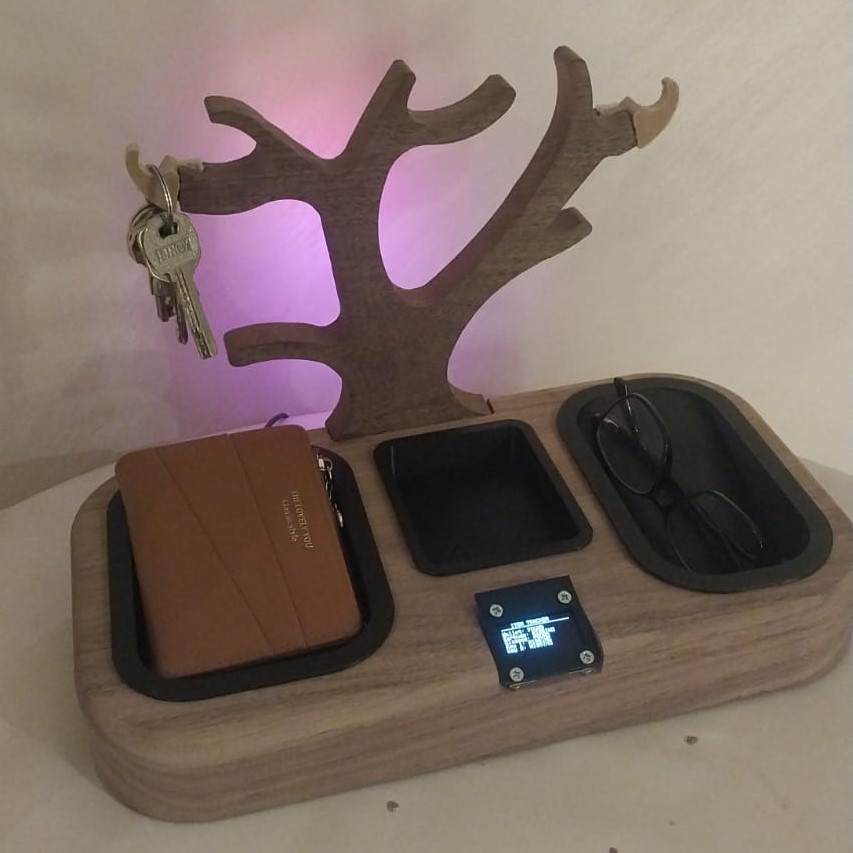
All Versions
Version 1
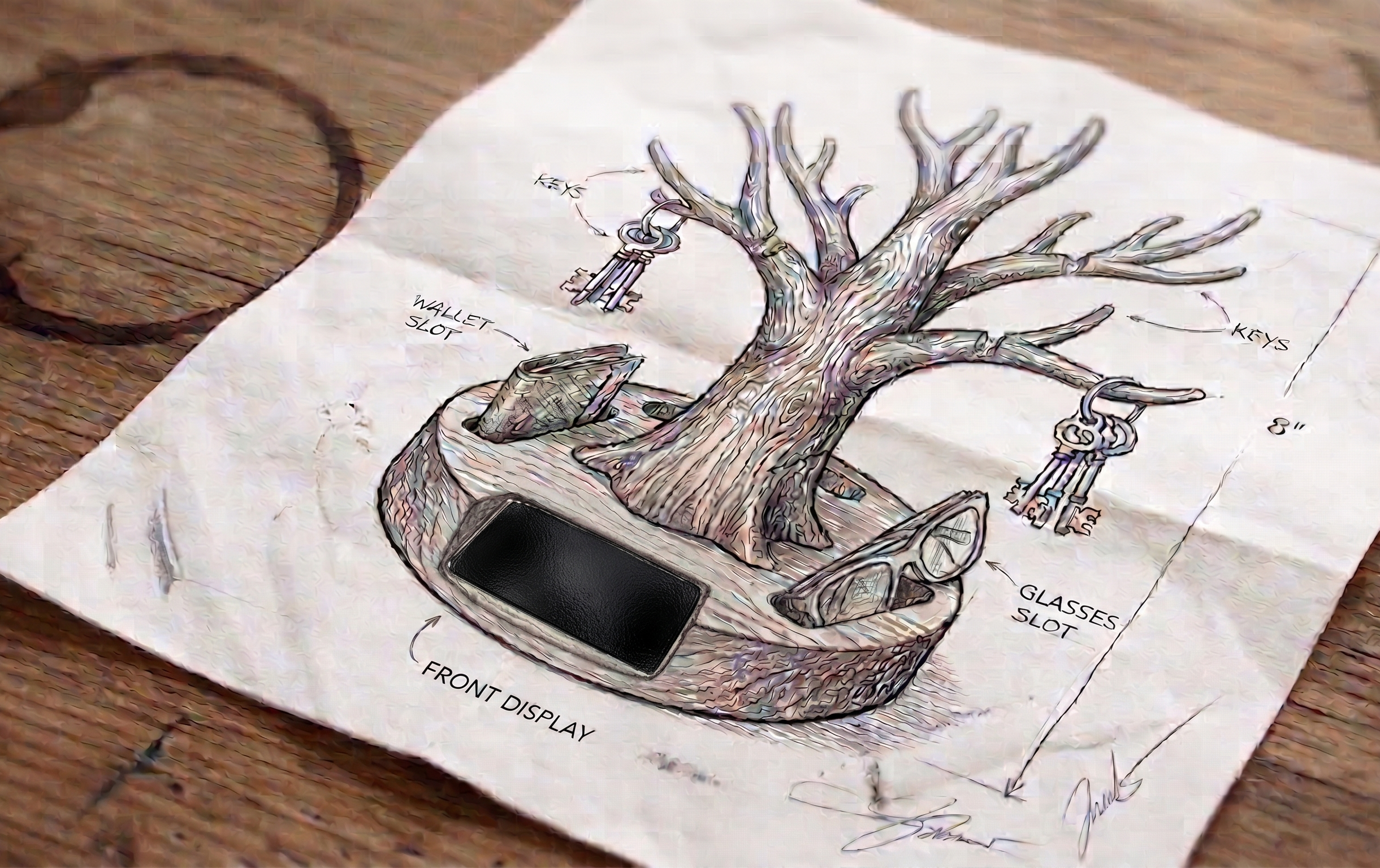
The first version was a rough concept of the final project, created to satisfy the Week 2 design requirement.
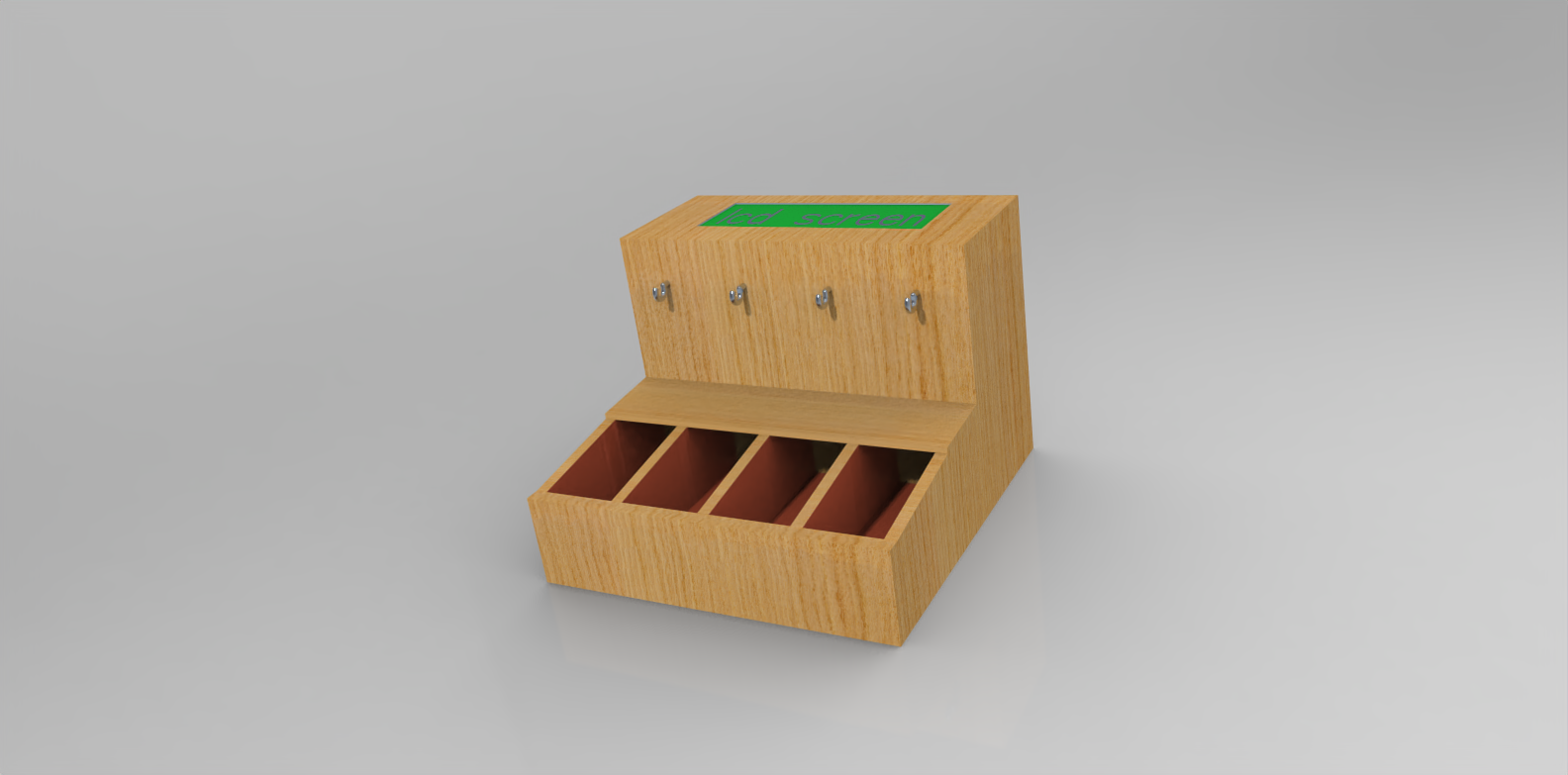
This version had some system integration, but the appearance was boxy.
Version 2
The second version clarified the design and focused more on appearance than on system integration.
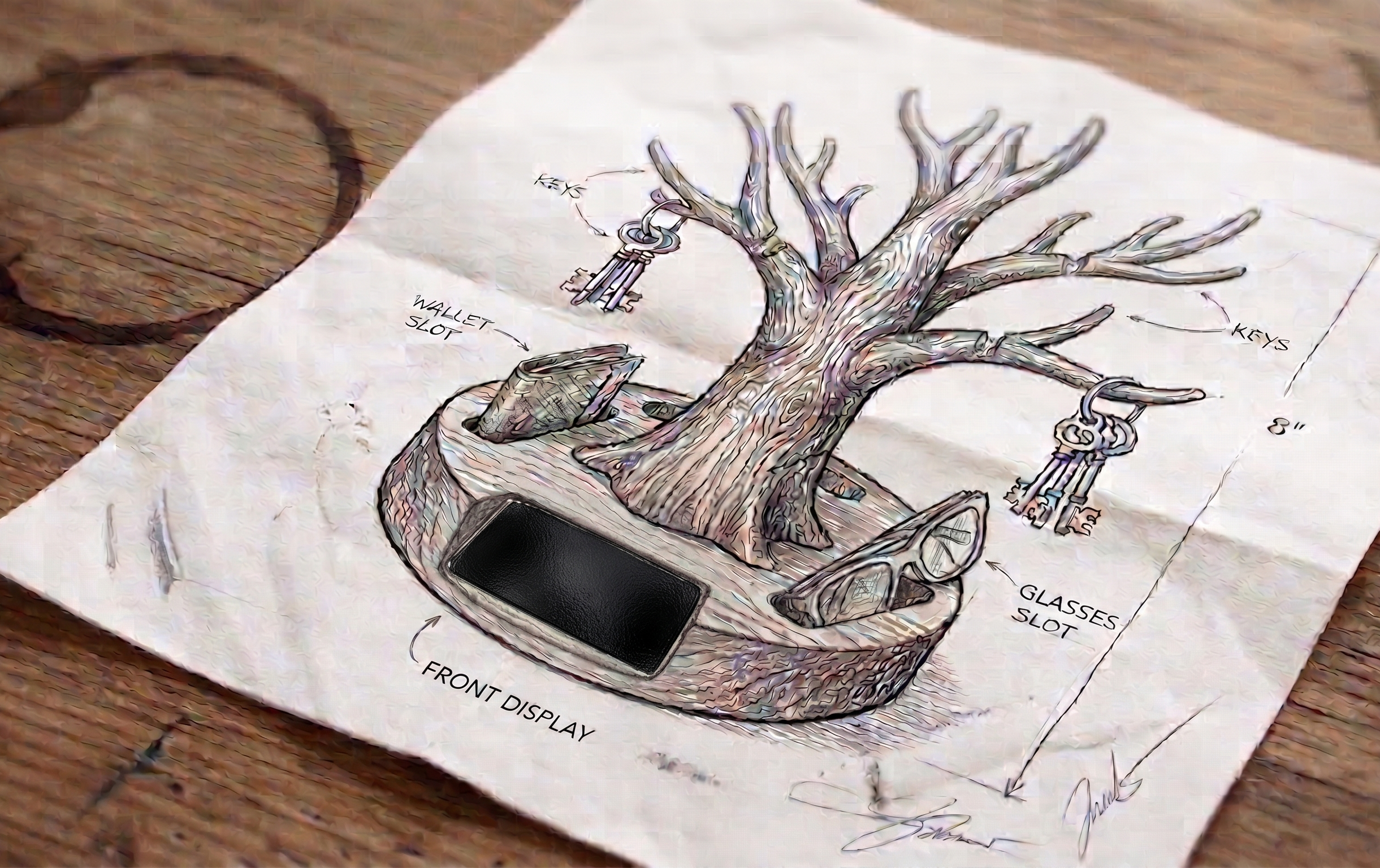
After reviewing this version, I realized I had no solution for routing the wires to the tree hook, so another revision was needed.
Version 3
The third version addresses previous issues: it achieves system integration, improves the appearance, and provides a solution for routing wires to the tree hook.
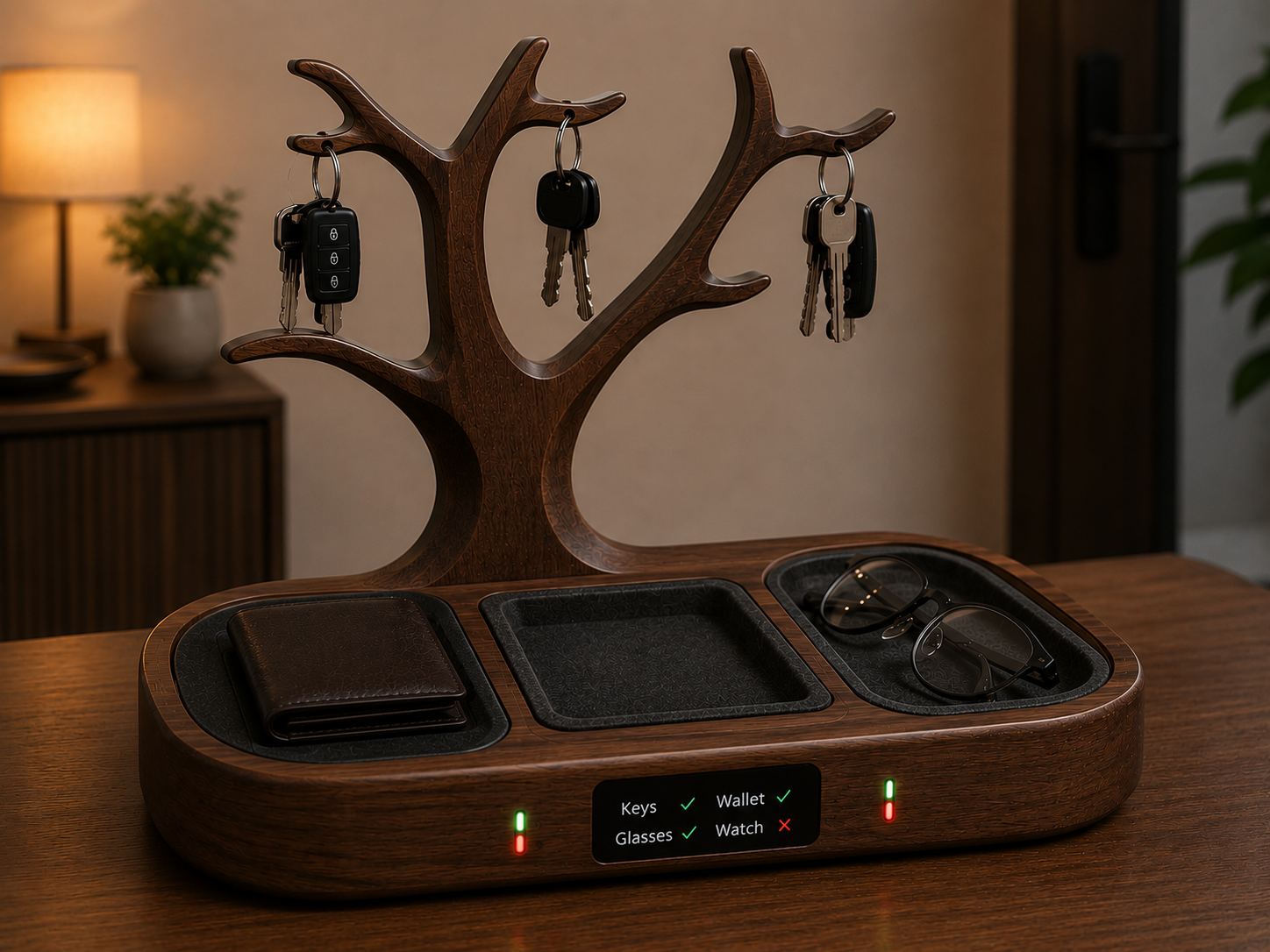
I generated this image using Gemini as an initial step toward the final design.
Final Design
The final design integrates all components into a cohesive system, with a focus on aesthetics and functionality.
When I tried to implement the third version, I encountered some limitations related to woodworking—ensuring there are no undercuts and making the cutting easier, such as removing chamfers on some edges and designing the base so that the machine can cut it without any undercuts.
This design was created using Fusion 360. Here are the files: Final Design Files
System Integration in the Final Version
Here is a system diagram that shows how the components are connected and how they interact with each other:
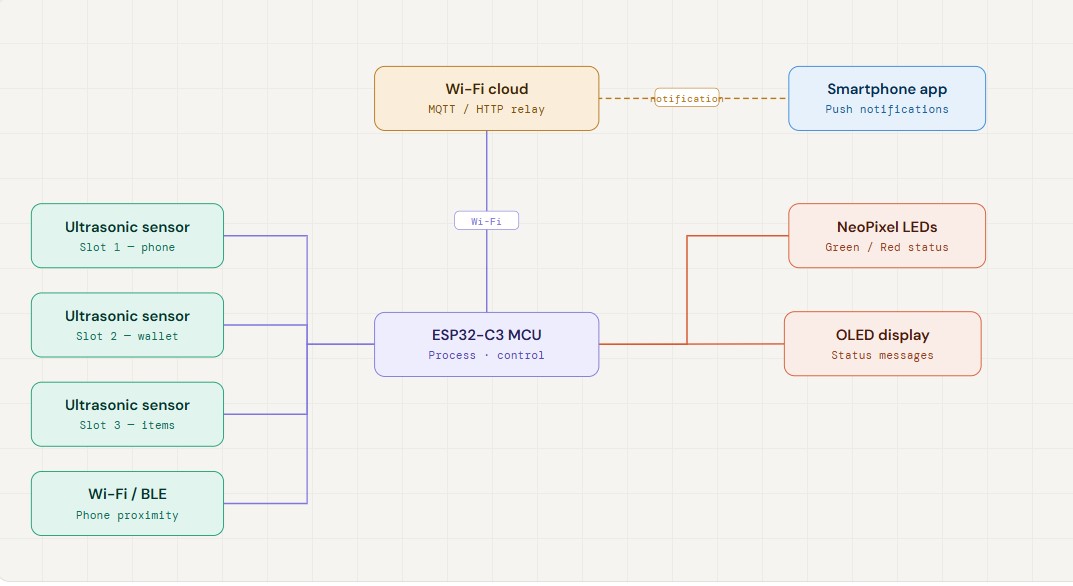
Below, I describe the system integration in the final version and how it was achieved.
Sensors & OLED
The sensors include two ultrasonic sensors and one IR sensor for object detection.
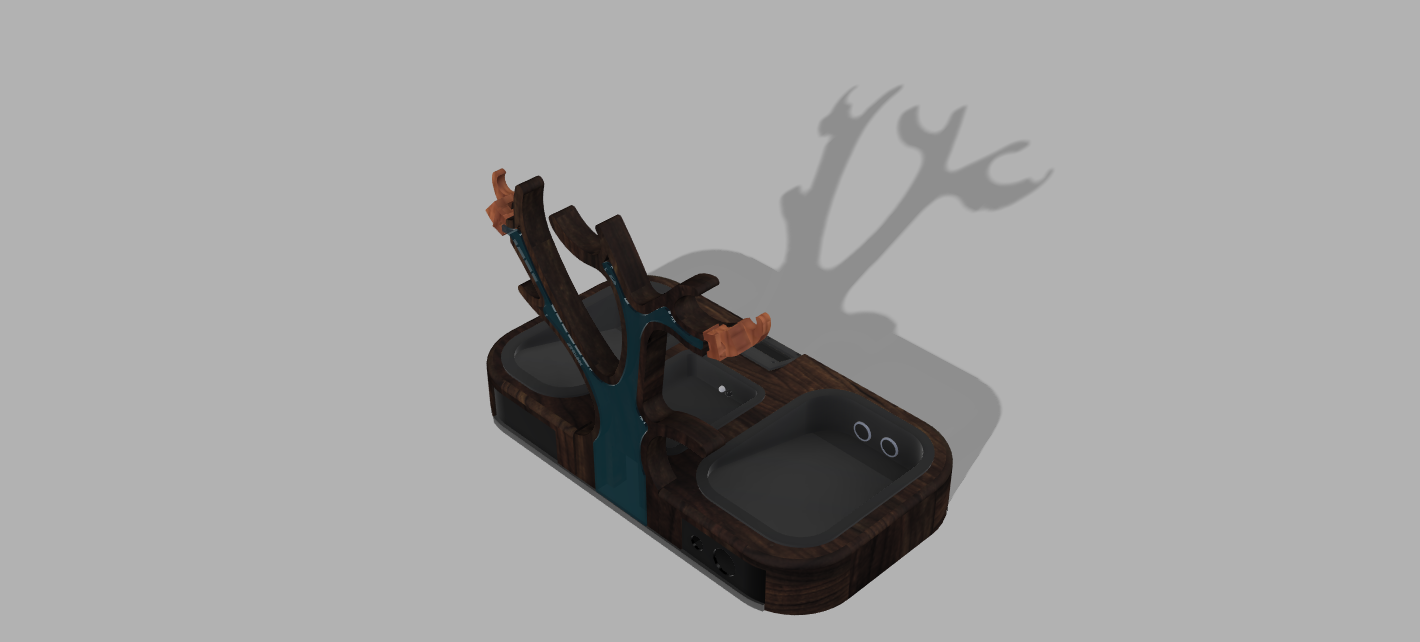
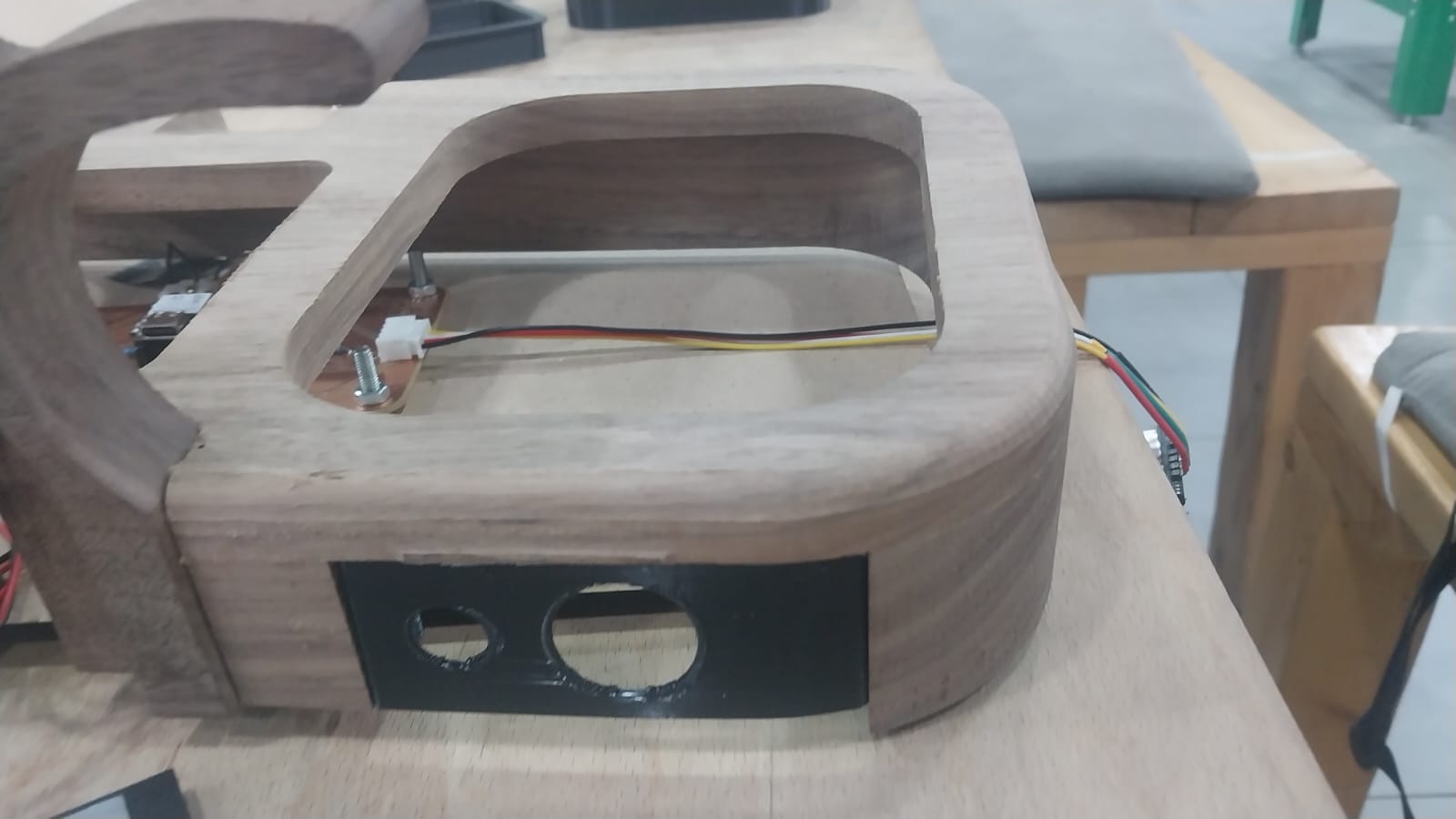
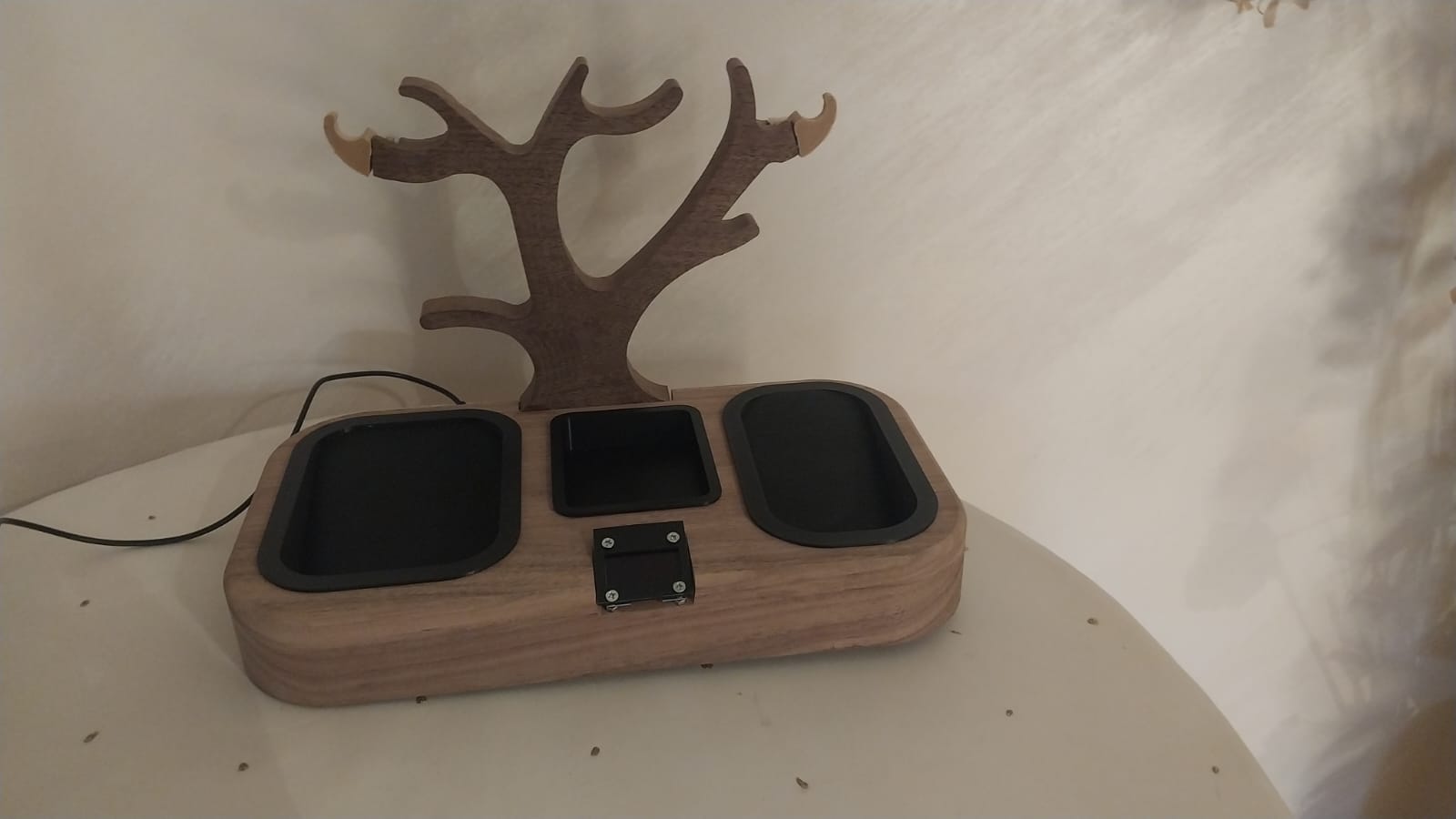
I created holes in the design to mount the sensors and reserved space for the OLED, integrating them visually into the design rather than adding them as external components.
I made the sensors unnoticeable by flipping the slots and created a suitable holder for the OLED.
PCB
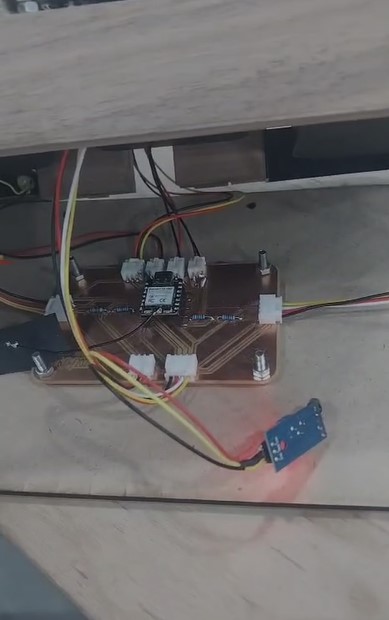
I planned to design a customized PCB that would integrate all the necessary components for the final project, such as the microcontroller, Neopixels, ultrasonic sensors, IR sensor, two switches, and OLED screen, and embed the resistors needed for the ultrasonic sensors.
The PCB will be secured to keep everything permanently in place without risk of movement or disconnection of any component, and to ensure this, I will use JST connectors.
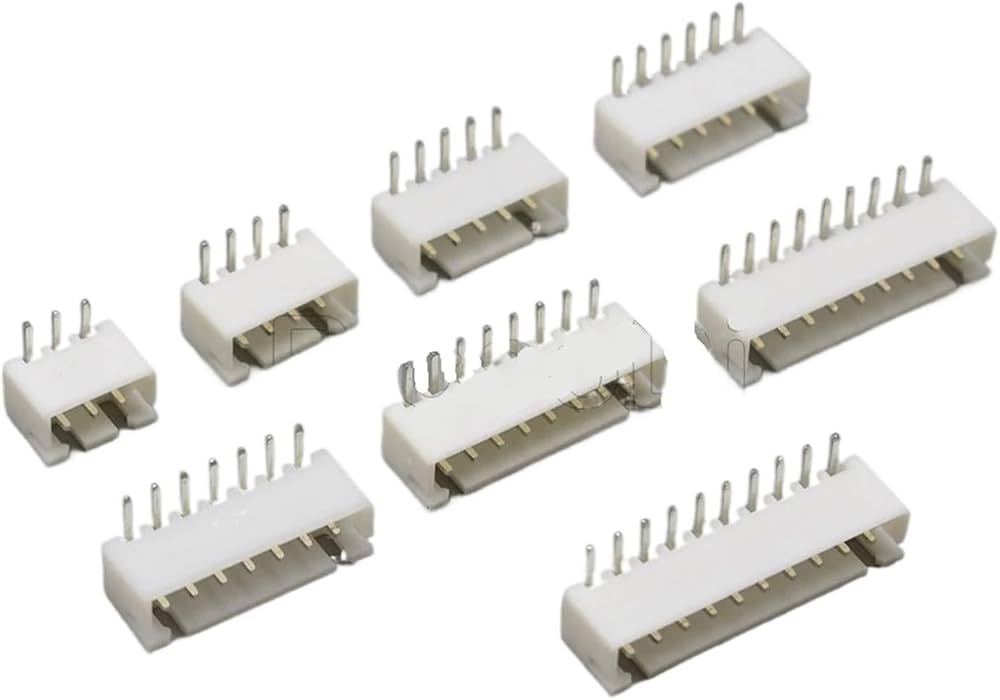
Here is the PCB design:
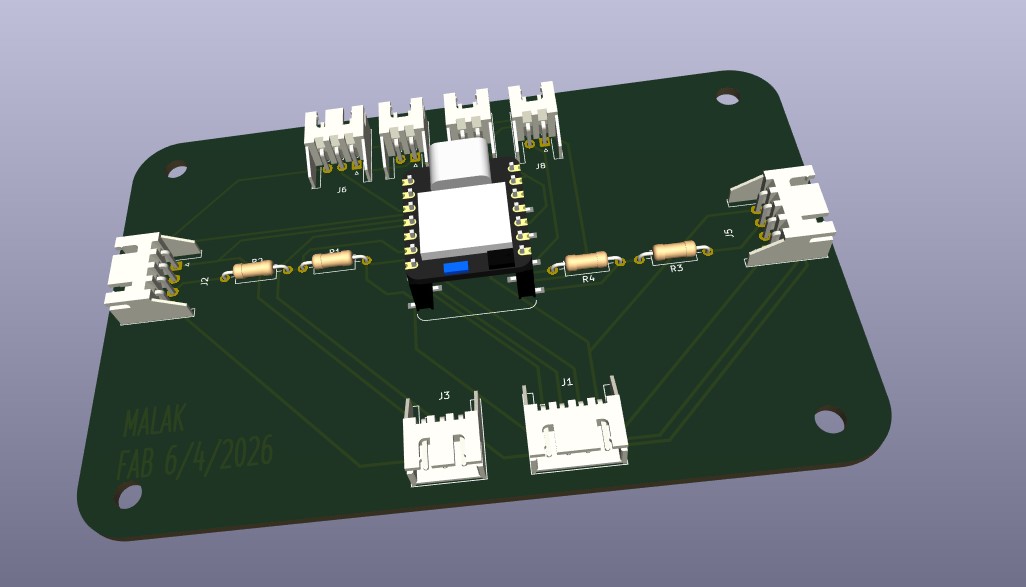
Download the PCB design files: Kicad - PCB Design
Packaging Methods
I designed the packaging method to ensure that all components are securely held in place and protected from external factors. The packaging includes a custom enclosure that houses the PCB, sensors, and other components, providing a clean and professional look.
Alongside with using costomized PCB with JST connectors that allow for easy connection and disconnection of components.
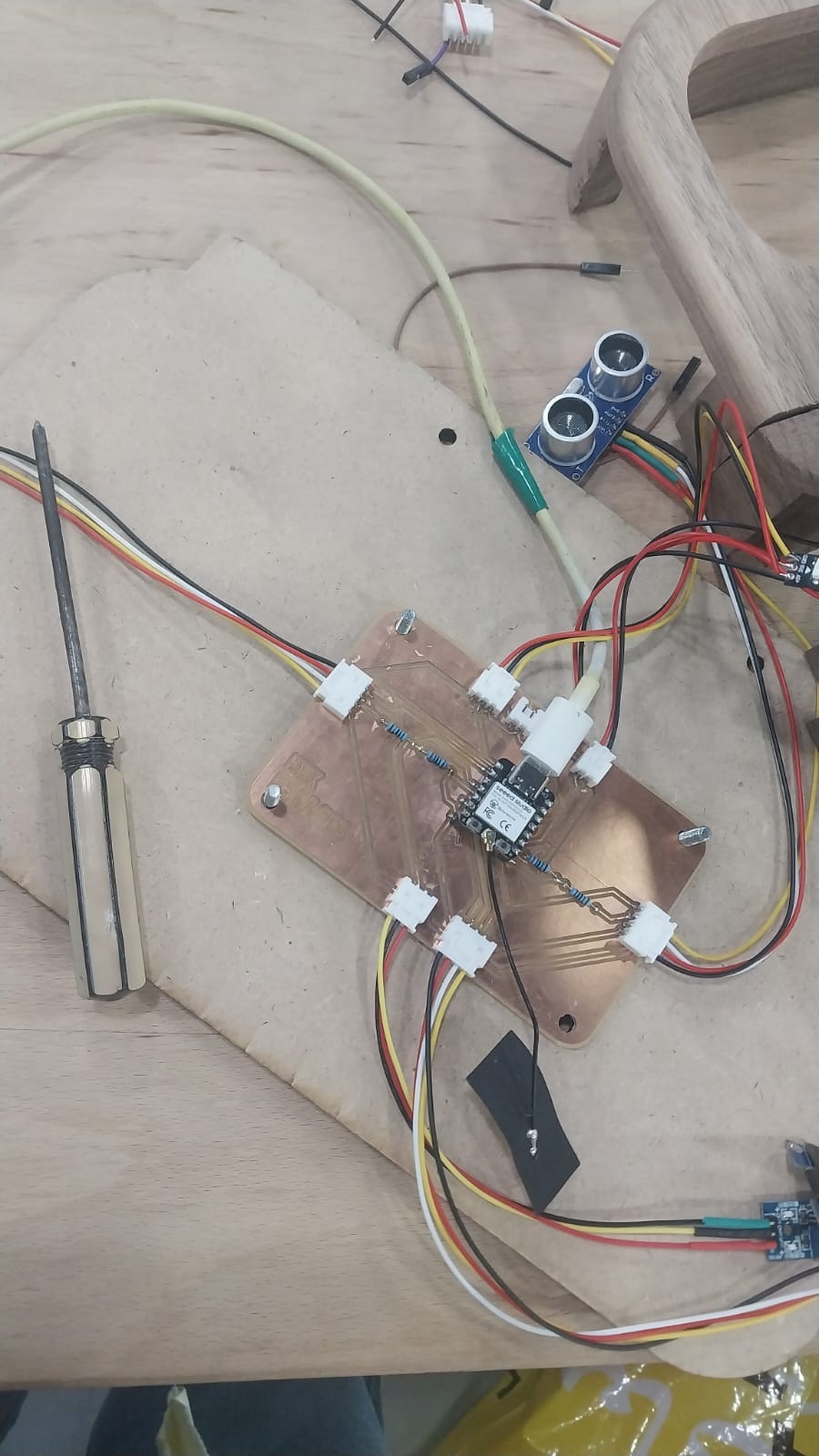
The enclosure is designed to be easily assembled and disassembled for maintenance or upgrades, while also providing adequate ventilation for the electronic components.
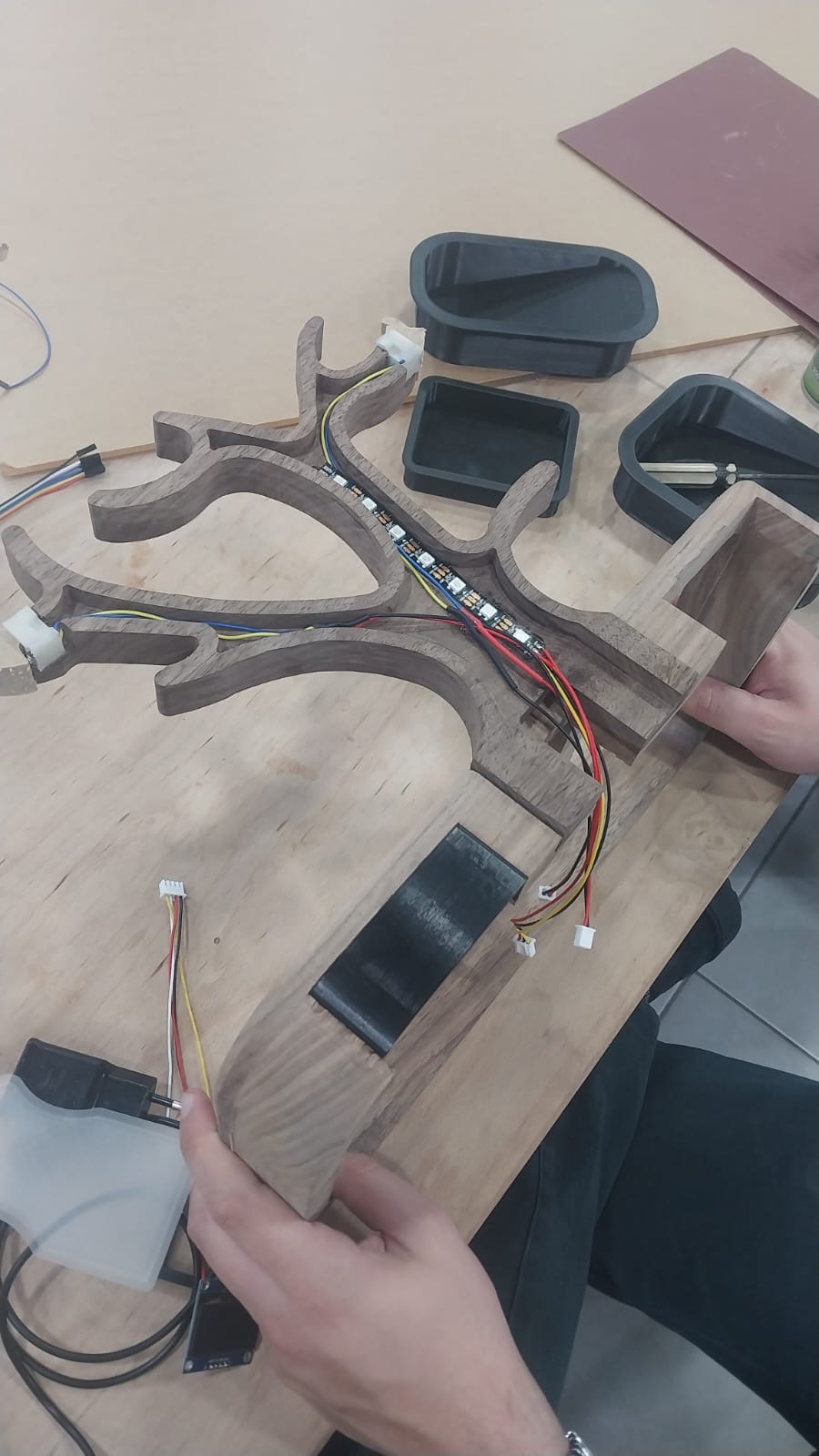
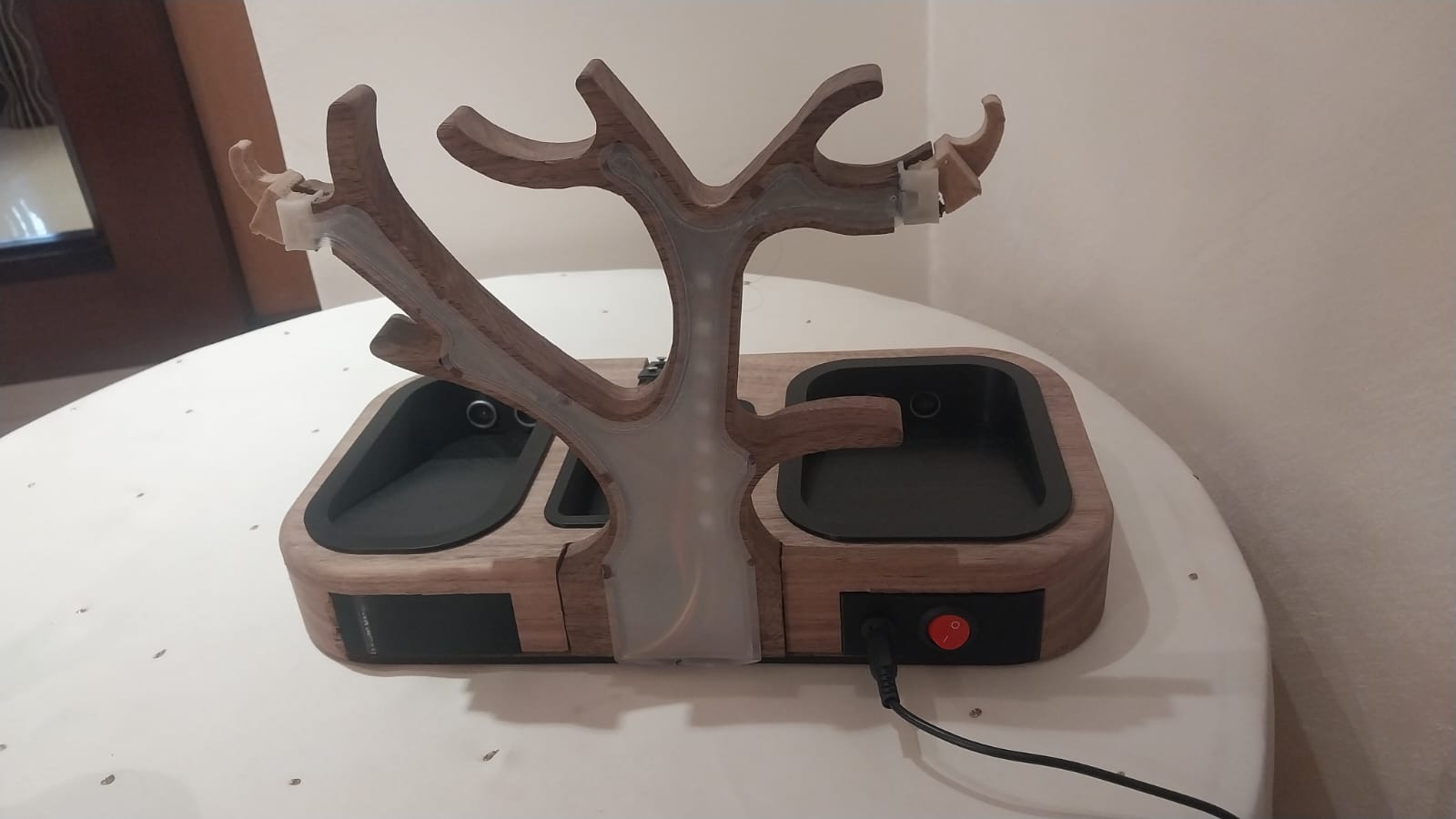
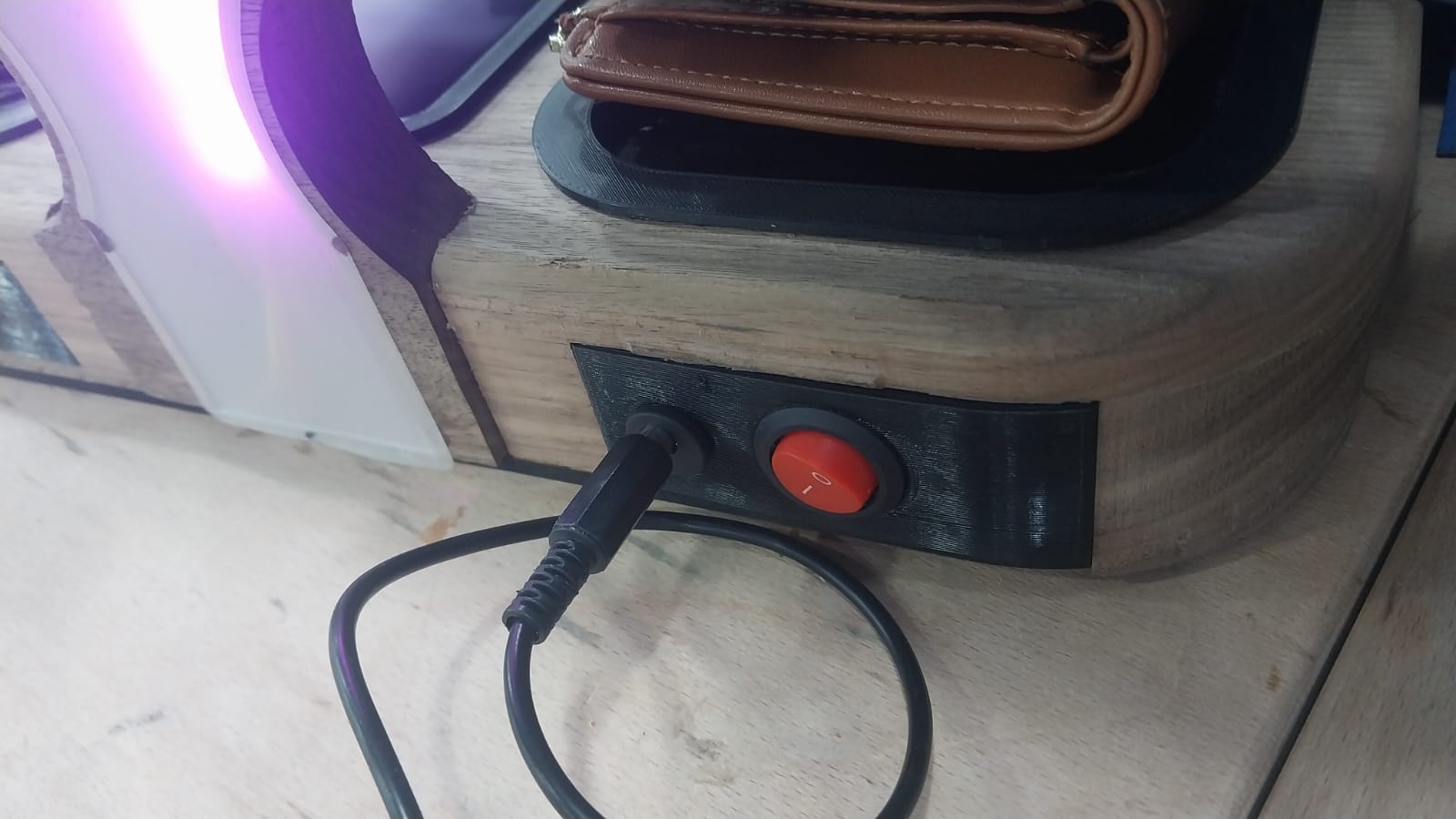
Some Images of System Integration
Here are some images showing the system integration in the final version:
Conclusion
You can find the whole manufacturing process and all details related to the final project on the final project page, and I will keep updating it with all the details of the manufacturing process.