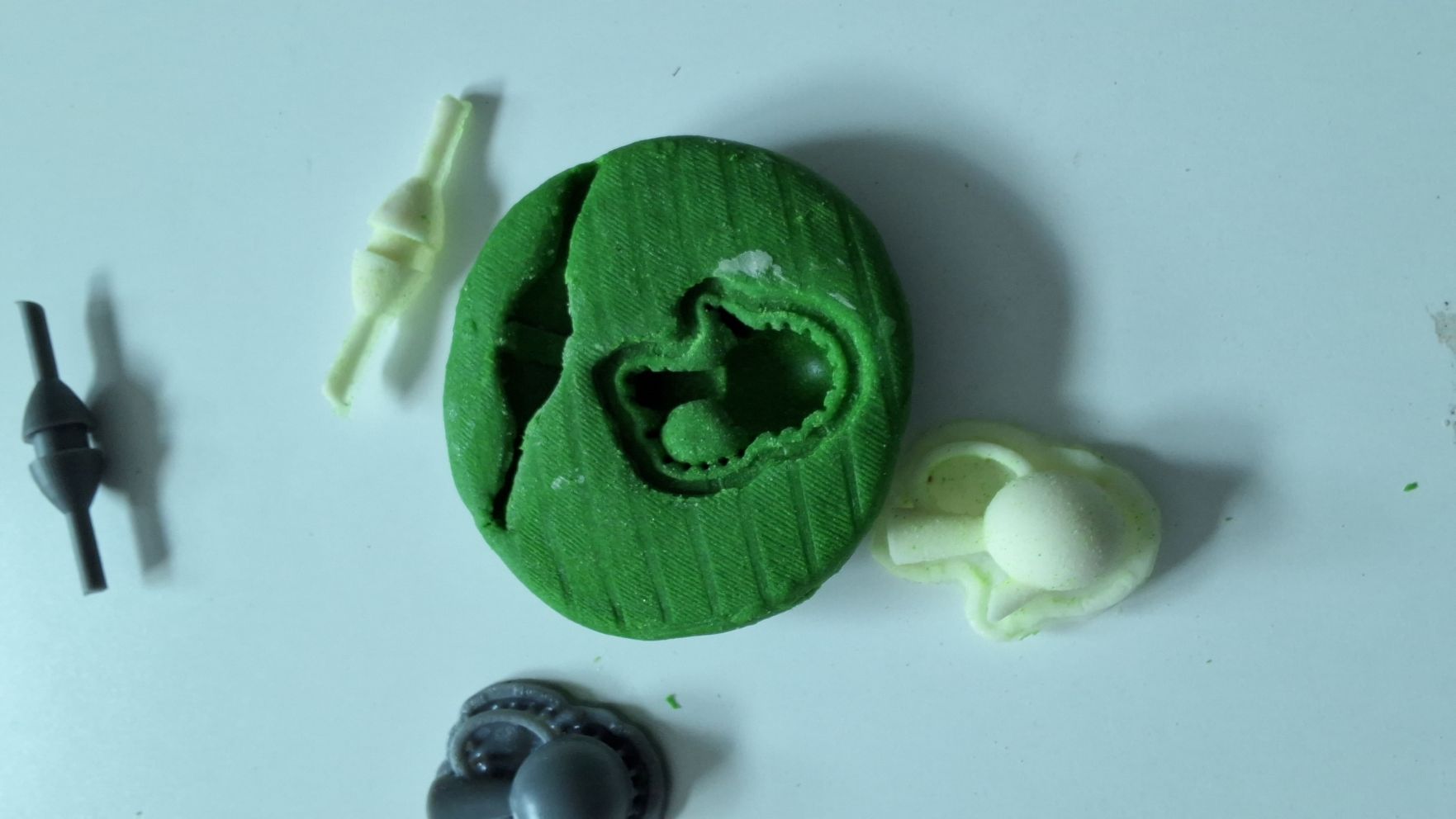
Week13 Molding and Casting
SSTM
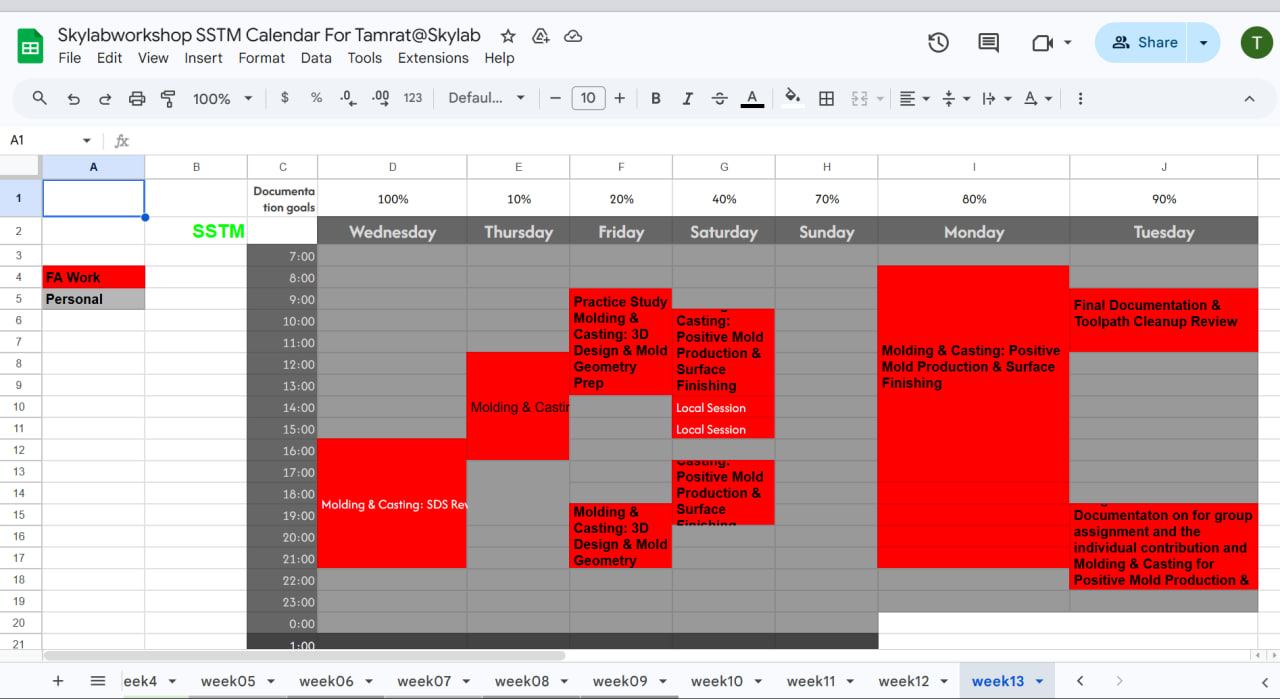
IN this 13th week of our journey in Fabacademy I have the following assignments to learn the Molding and Casting:
Group assignment: - review the safety data sheets for each of your molding and casting materials, - then make and compare test casts with each of them - compare mold making processes
Individual assignment: - design a mold around the process you’ll be using, produce it with a smooth surface finish that does not show the production process toolpath,and use it to cast parts - extra credit: use more then two mold parts
Group assignment
Individual assignment
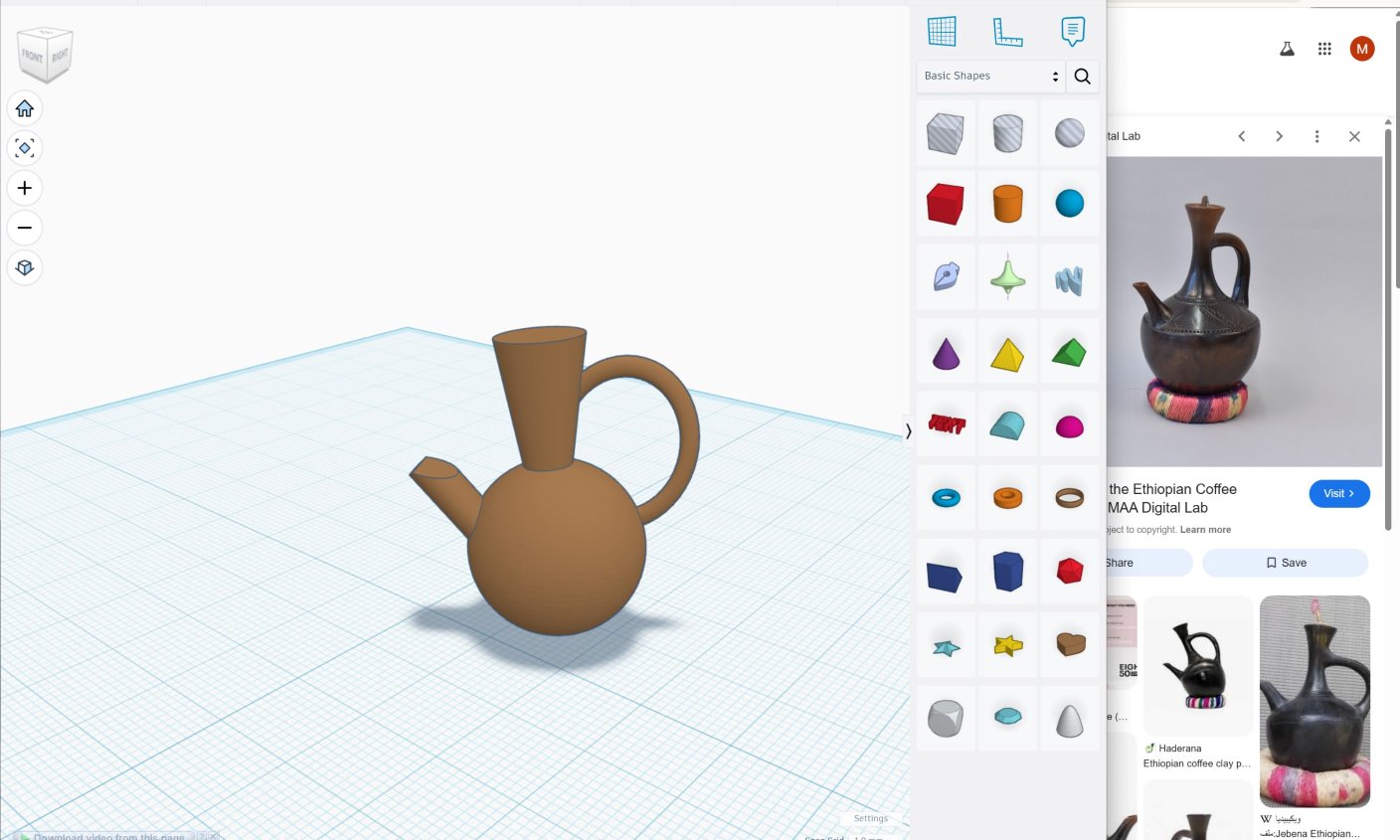
I am planning to made the Ethiopian clay traditional coffee maker pot (jebena) in this practical assignment. the following are steps am try to follow
Casting and Molding of Ethiopian Coffee Pot (Jebena Style)
1. Objective
To create a mold of a traditional Ethiopian coffee pot (jebena) using a silicone and corn flour mixture, and produce a cast replica.
2. Materials and Tools
Materials
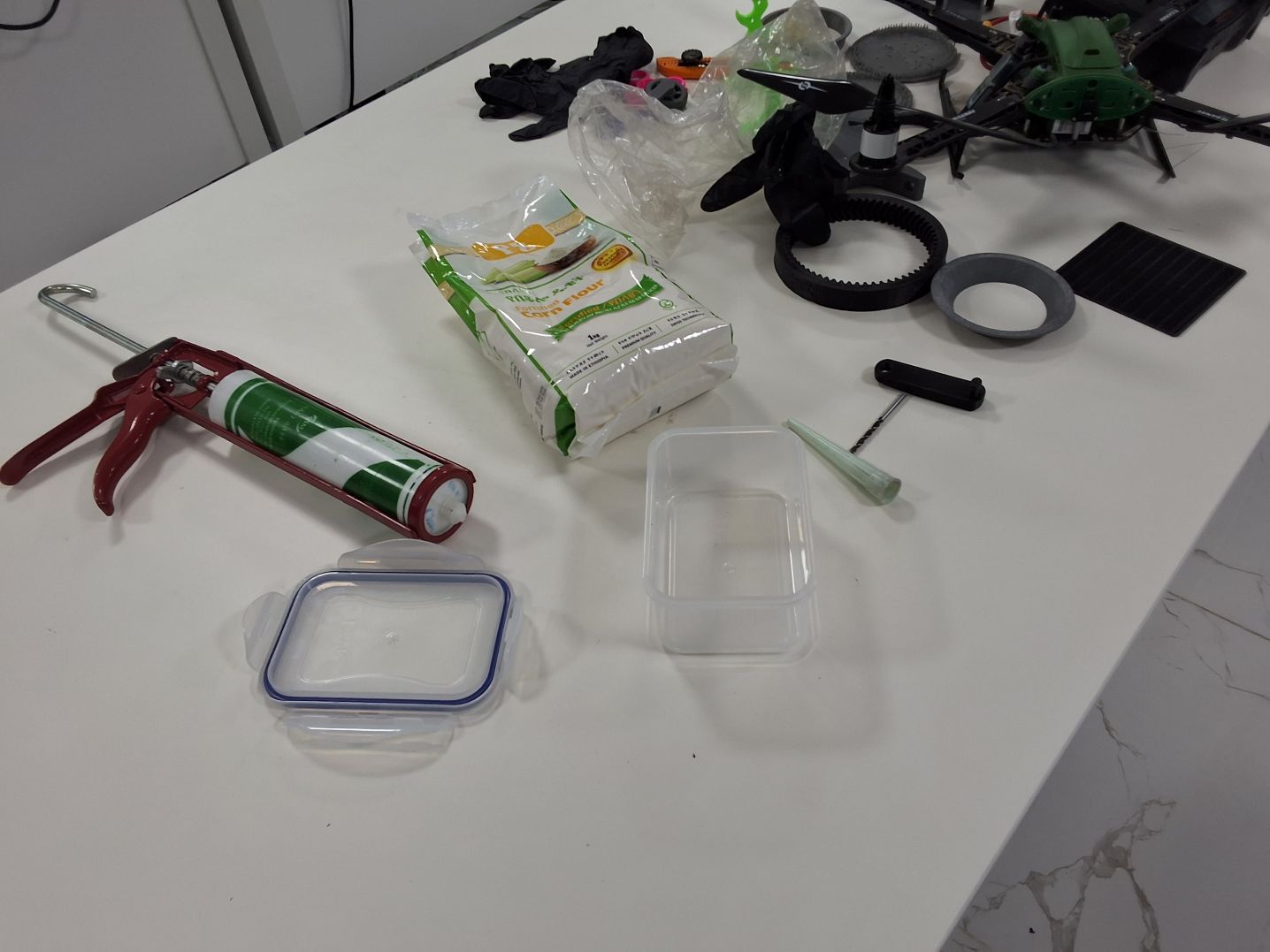
- 100% silicone sealant
- Corn flour (cornstarch)
- Liquid soap (optional)
- Petroleum jelly or oil (release agent) — I have used the Vassiline
- Original jebena model
- Casting material (plaster, resin, or clay)
3. Model Preparation
- Design in thinkercad
- Print Using SLA printer
SLA Formlab 3L 3D Printer
The Formlabs Form 3L is a large-format industrial 3D printer that uses Low Force Stereolithography (LFS) technology to produce high-resolution and smooth surface parts. It is designed for professional prototyping and production of large or multiple parts in a single print. Preform slicer is used
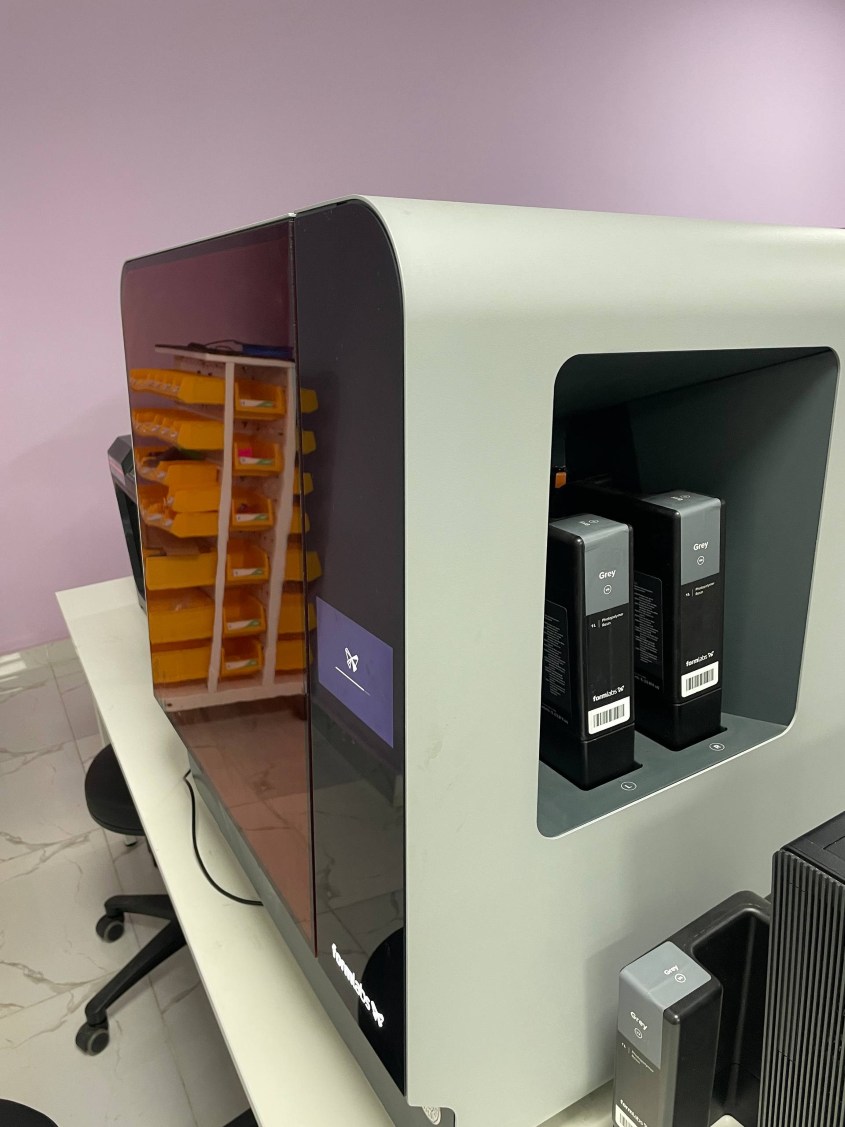
- Print the model with SLA
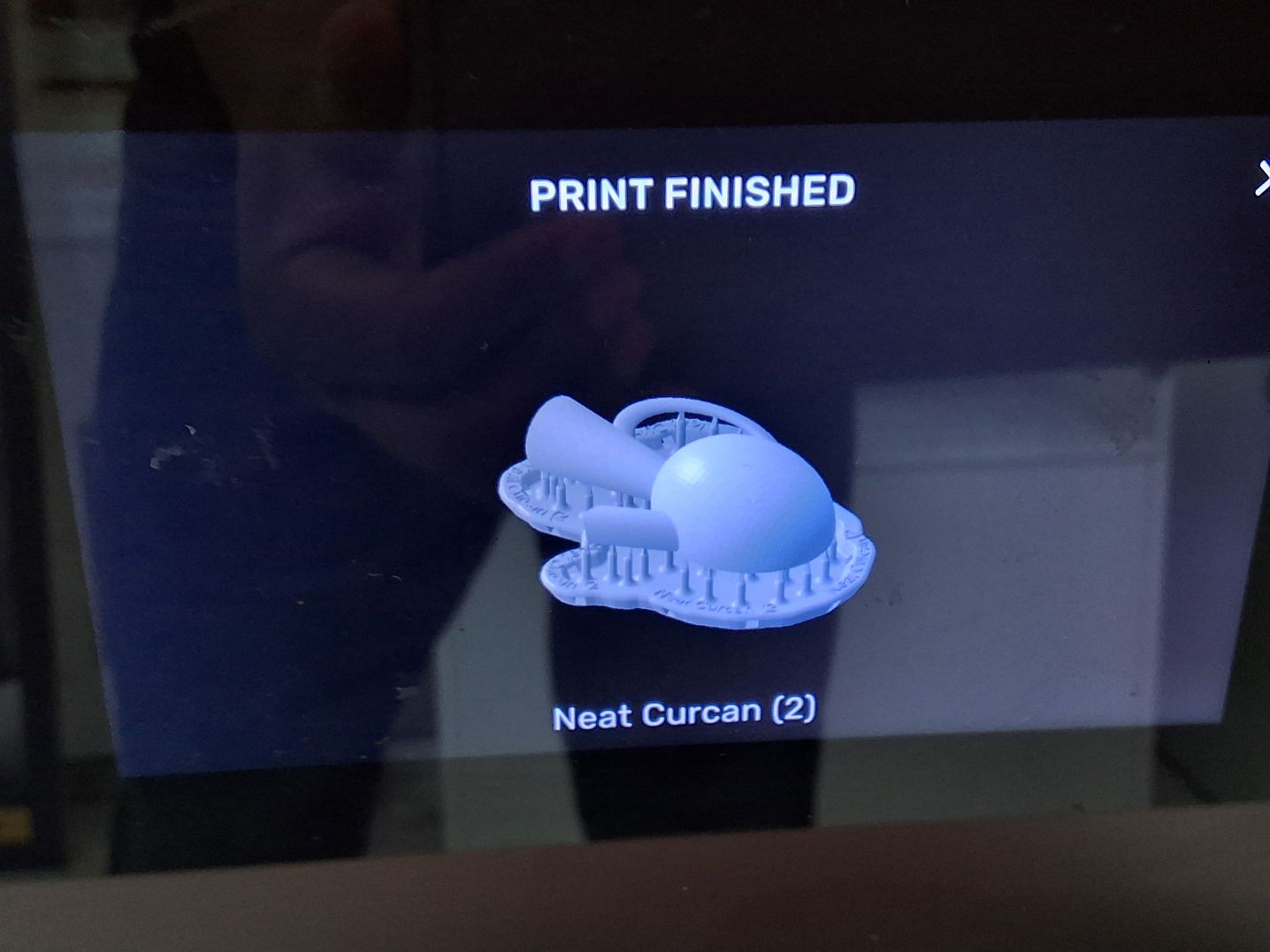
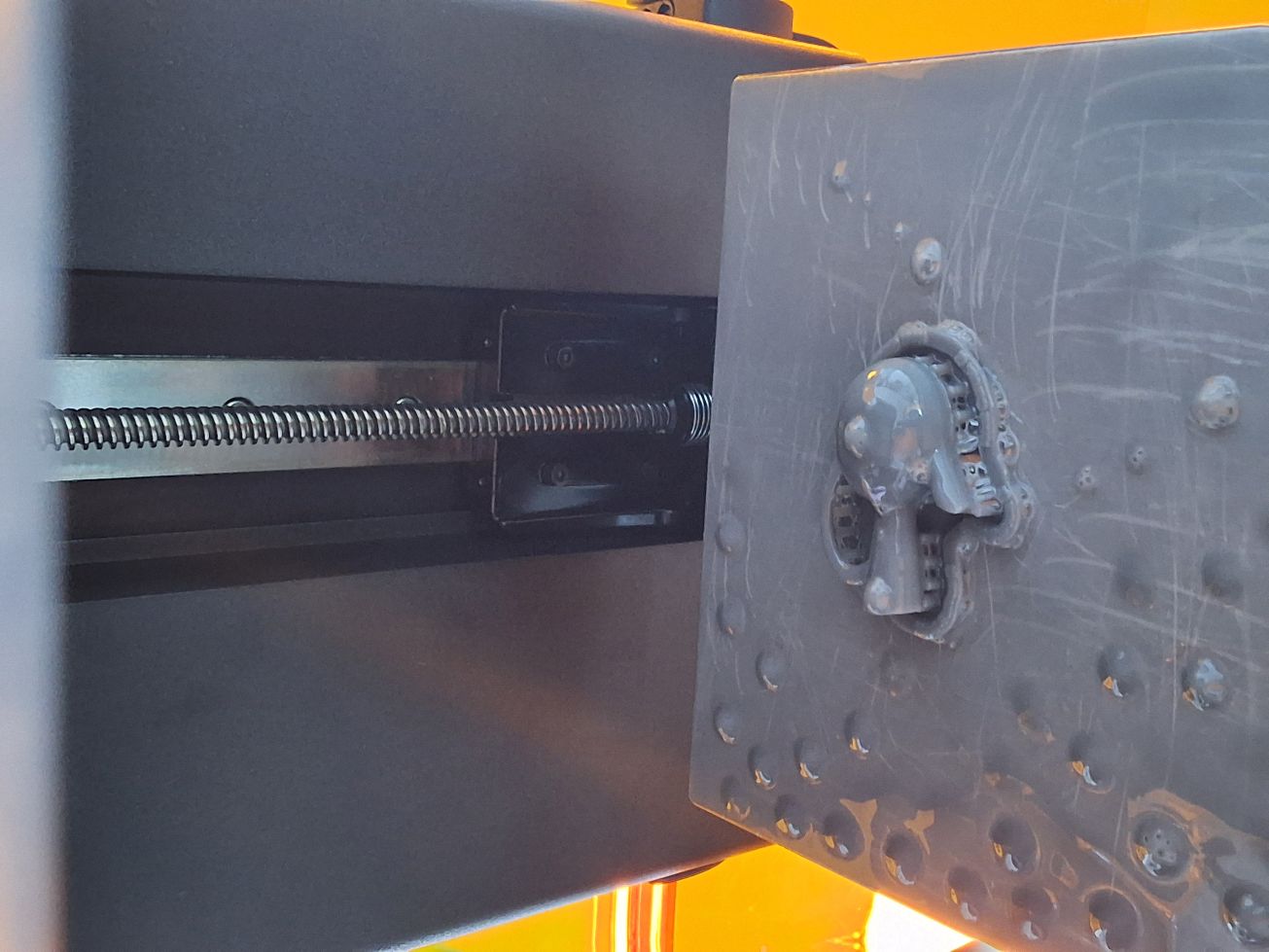
- Wash with ethanol and cure it
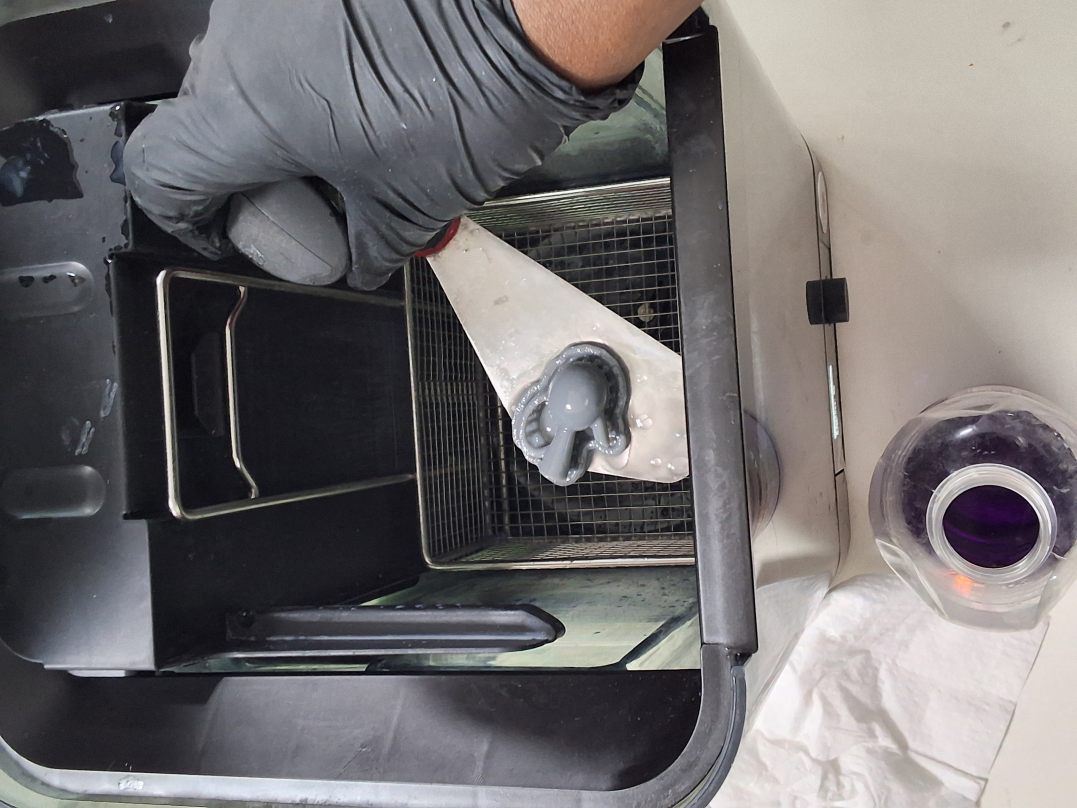
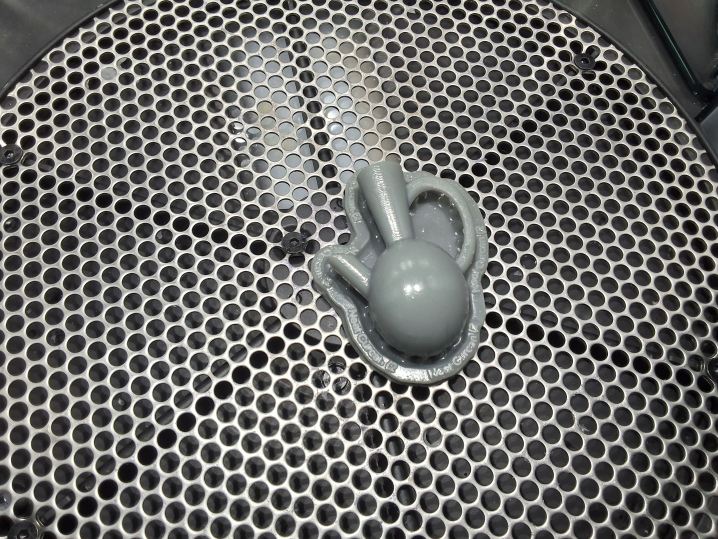
- Clean the jebena/pot surface.
- Apply a thin layer of oil or petroleum jelly… here I apply vassiline.
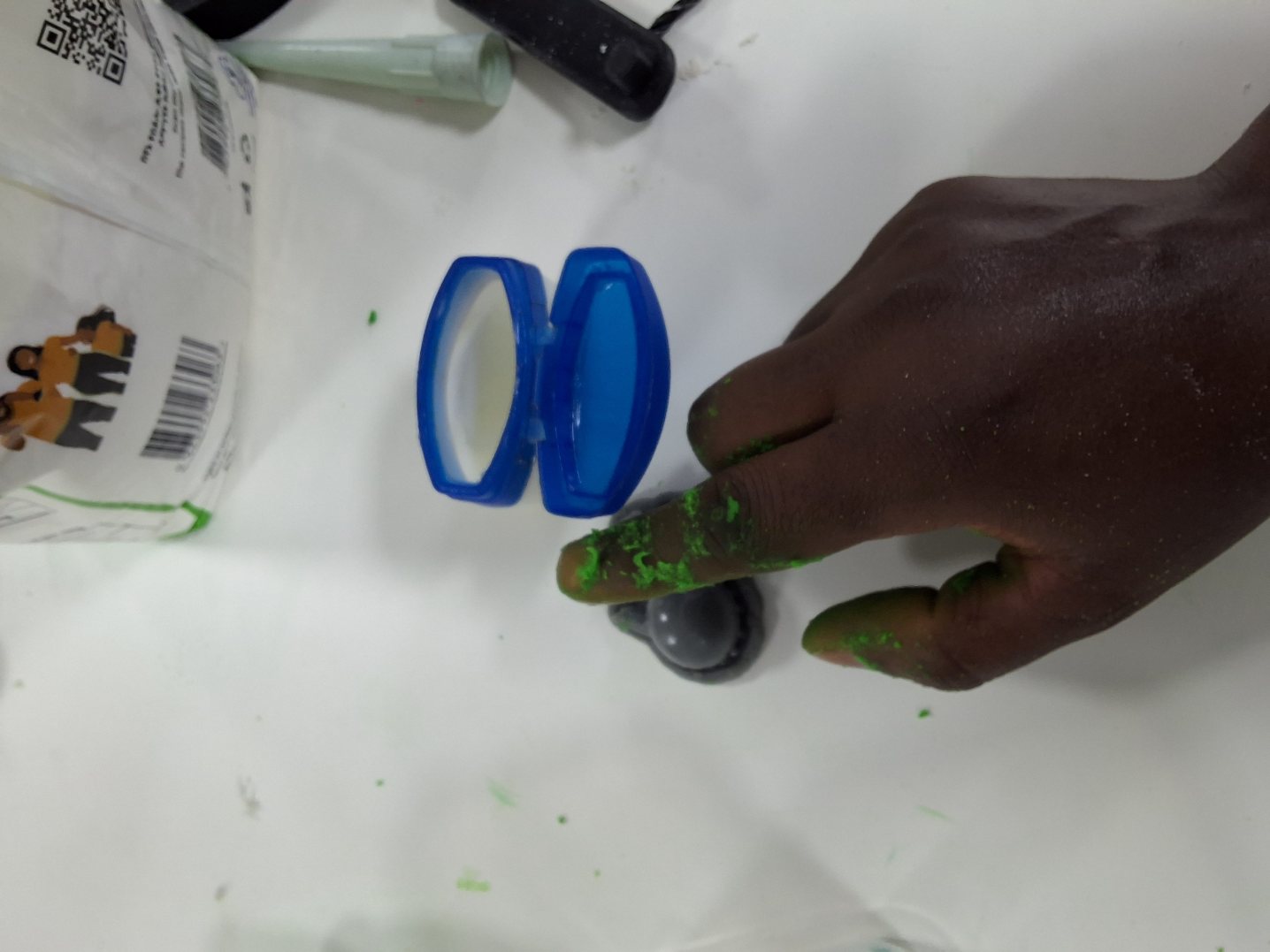
Ensure all features (spout, neck, base) are coated.
4. Mold Material Preparation
- Wear gloves during chemical usage (when touch/clean resin) the but the mixing process of selicone and flour with glove is harder
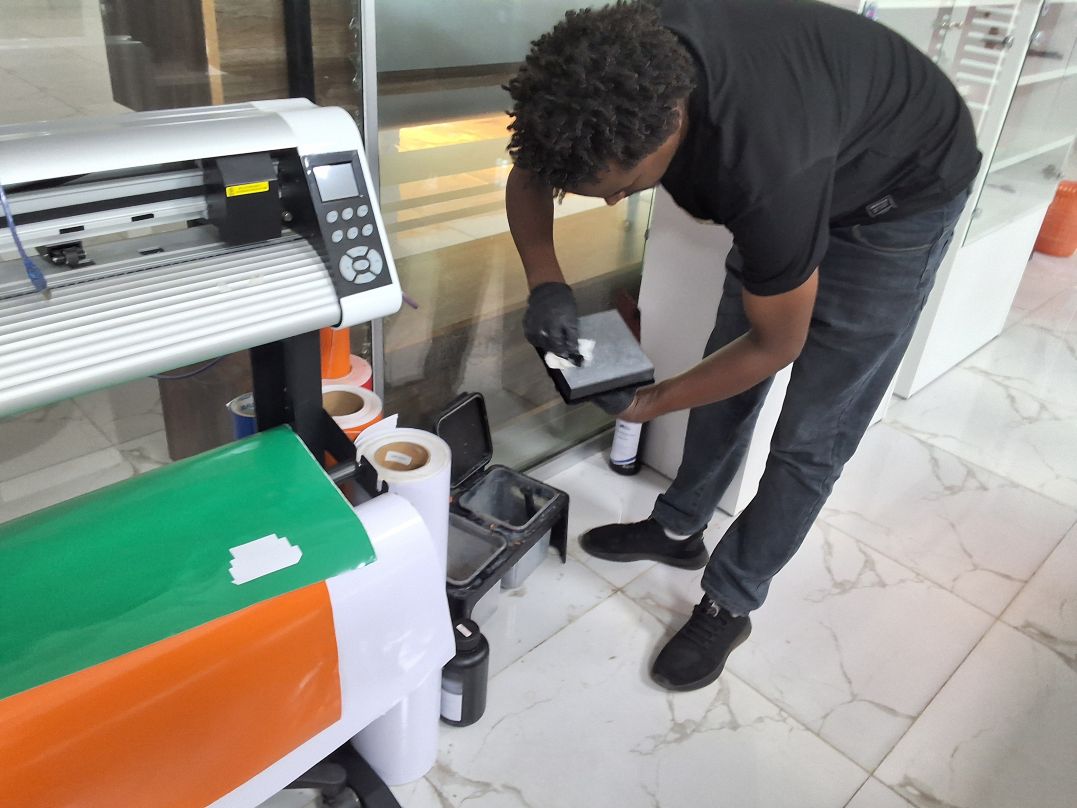
-
prepare materials
-
Mix silicone and corn flour in my case it is thicker … it might need rework
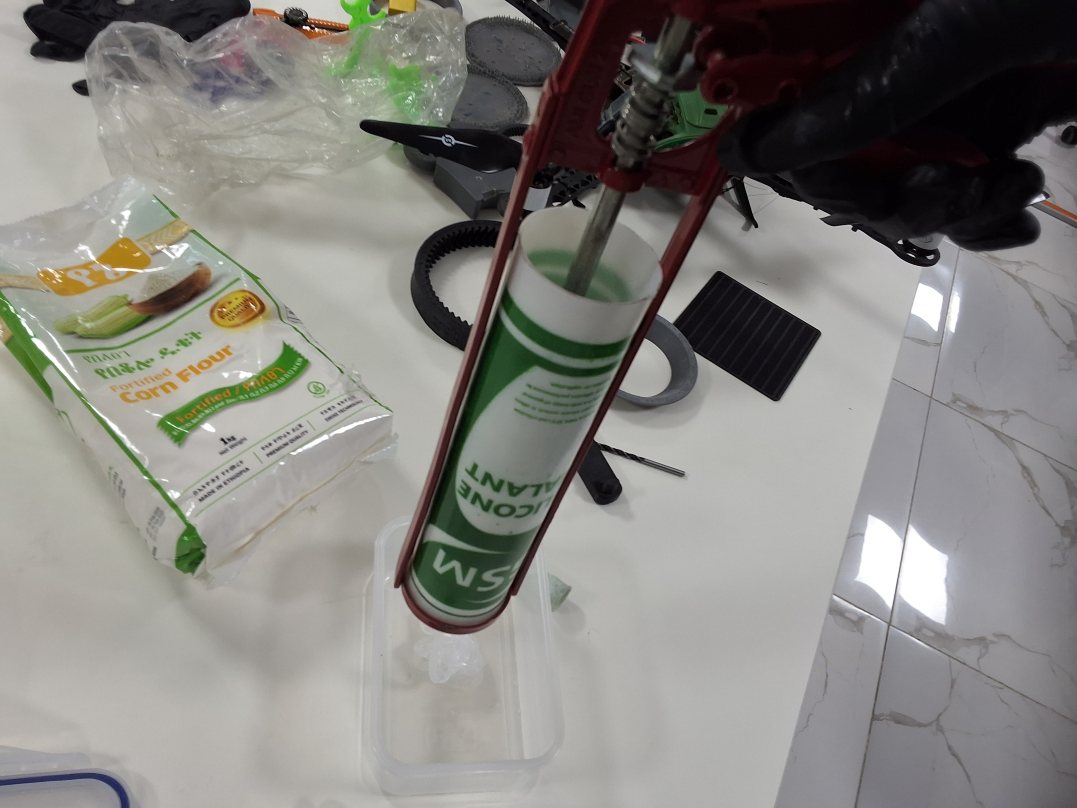
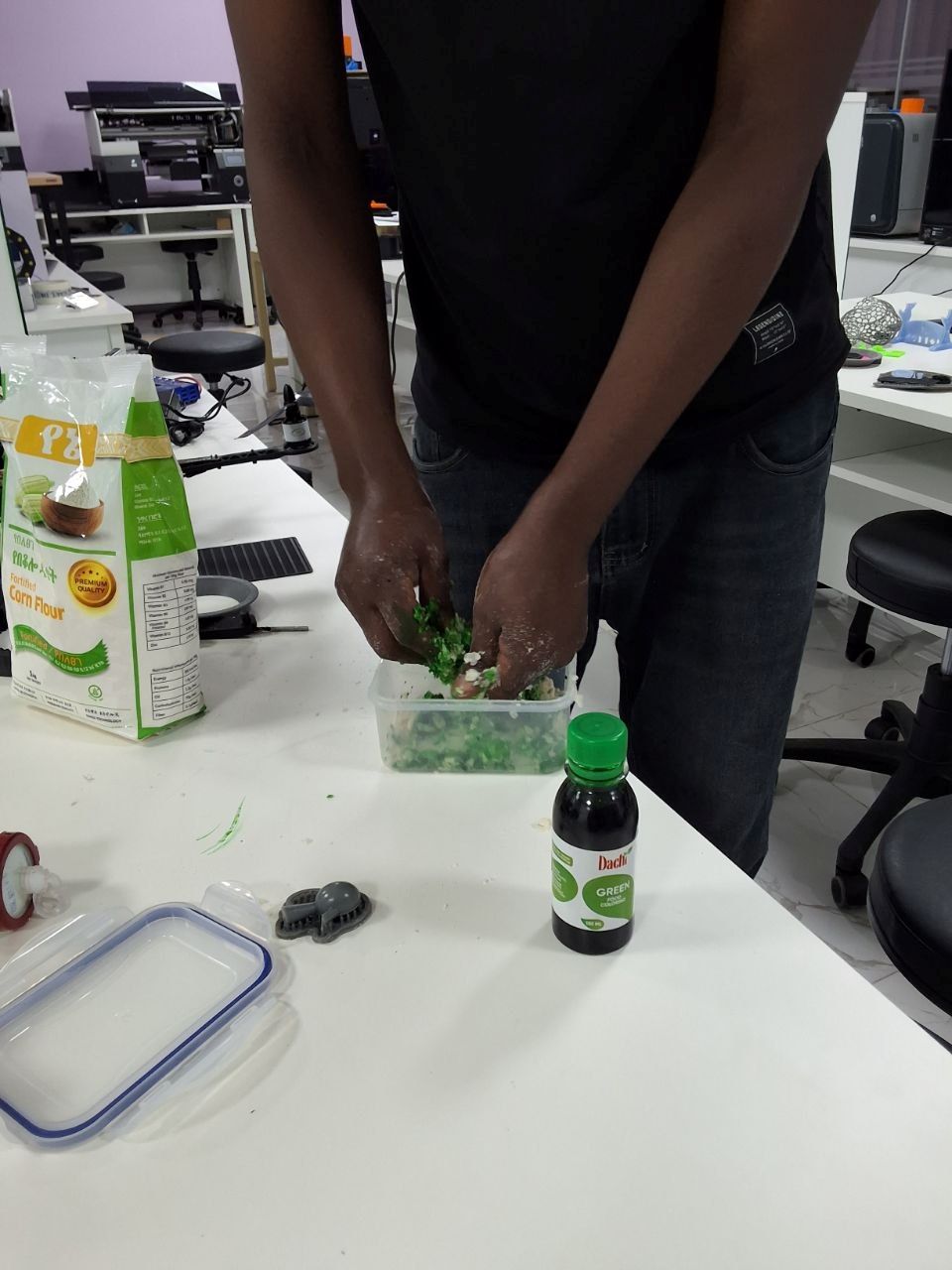
- Knead into a uniform paste.
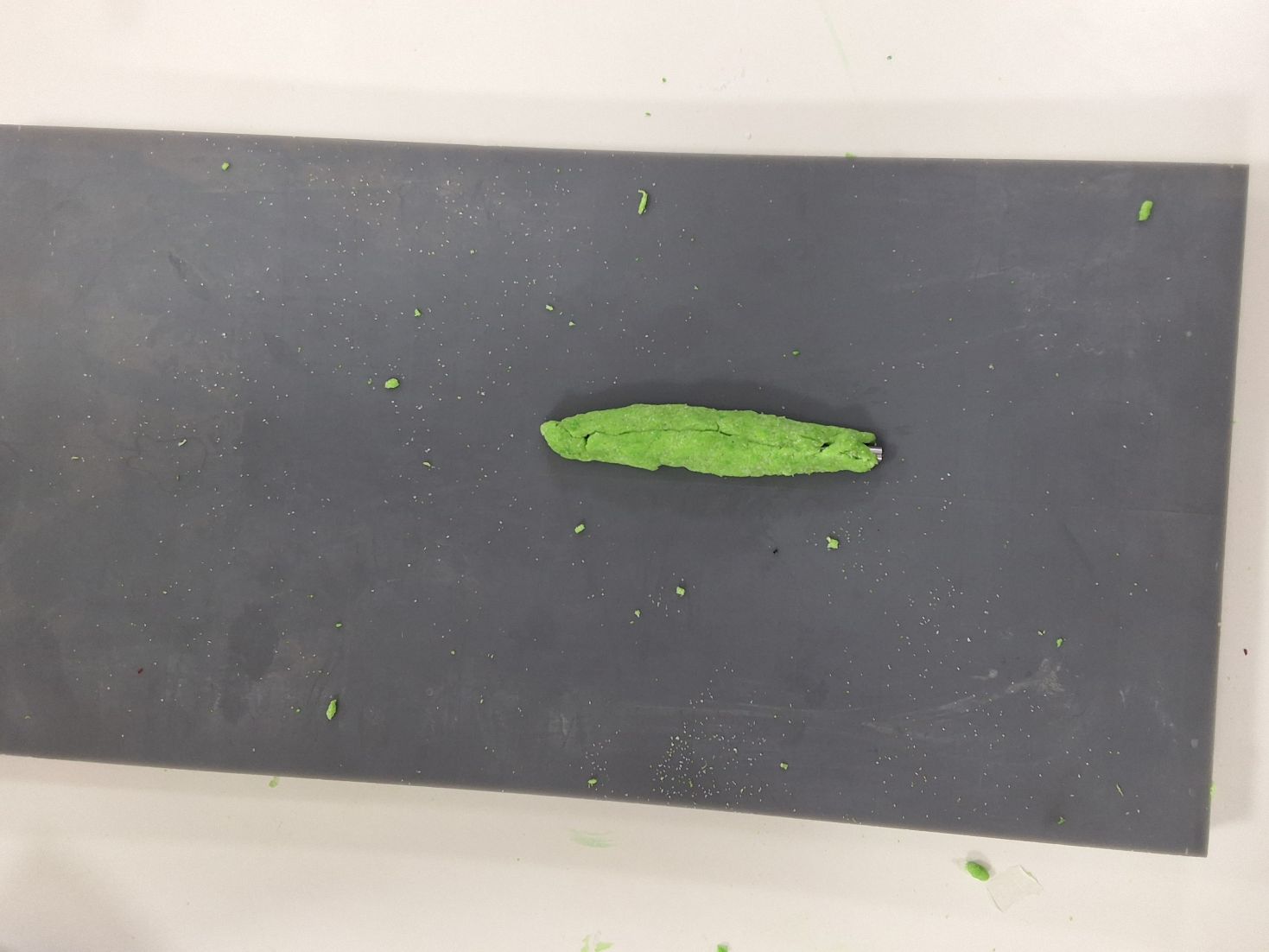
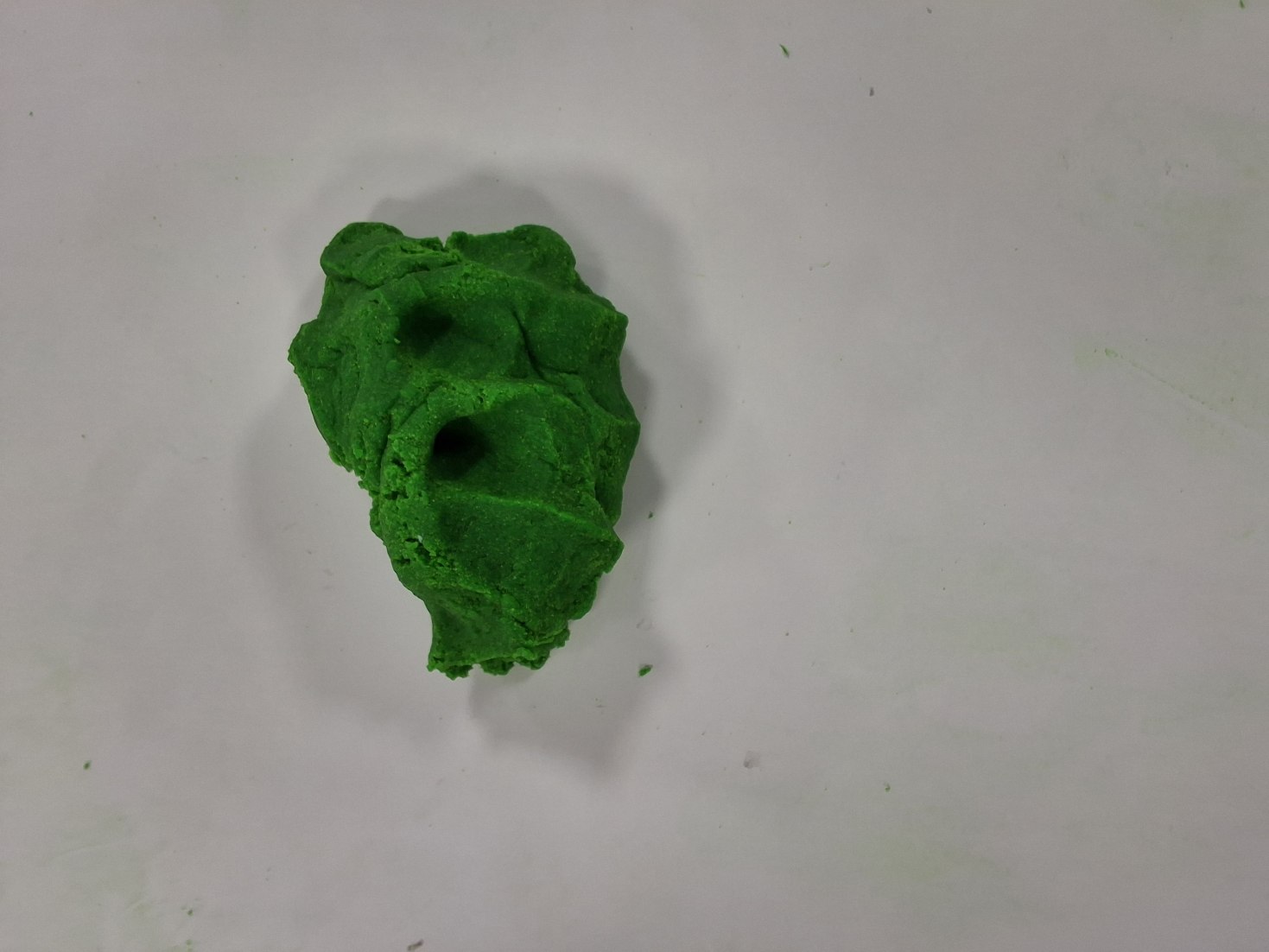
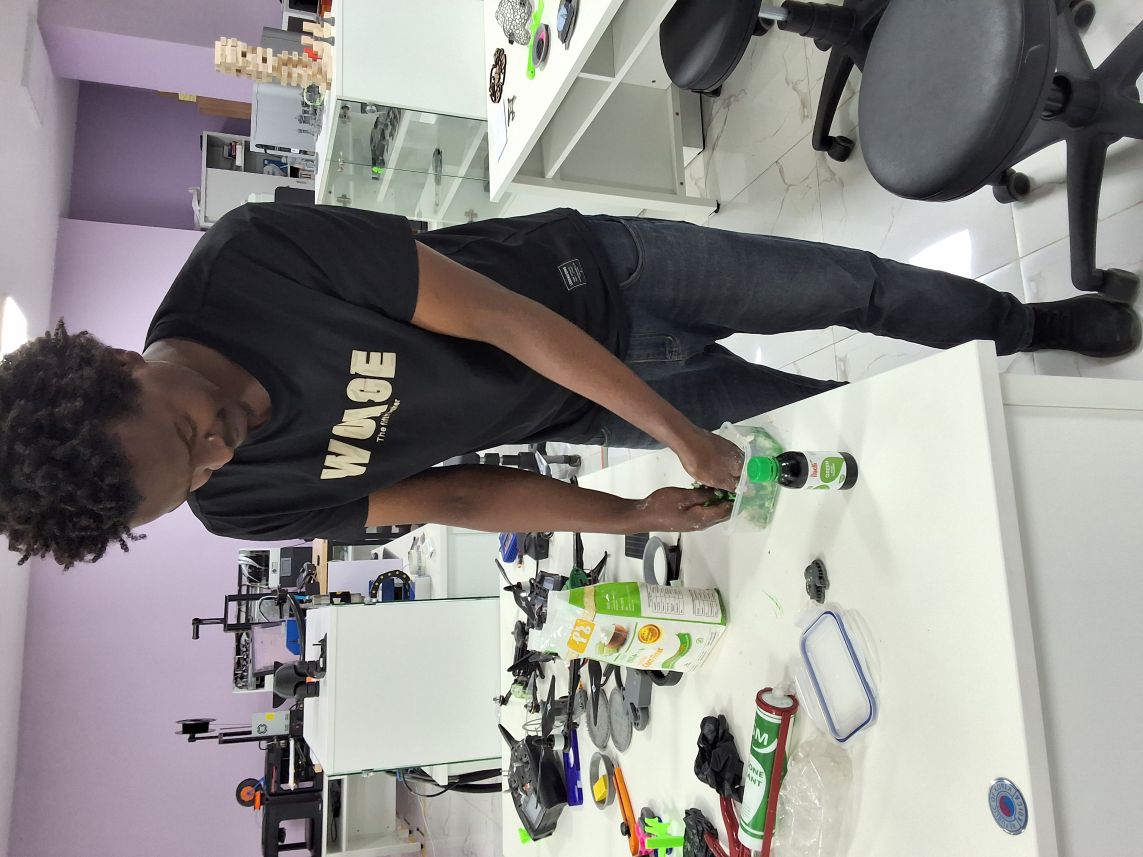
- Optionally add a few drops of liquid soap for smoothness. and for the color i used green food color
5. Mold Application
- Apply the mixture over the jebena surface.
- Press firmly to capture details.
- Work in sections for complex areas.
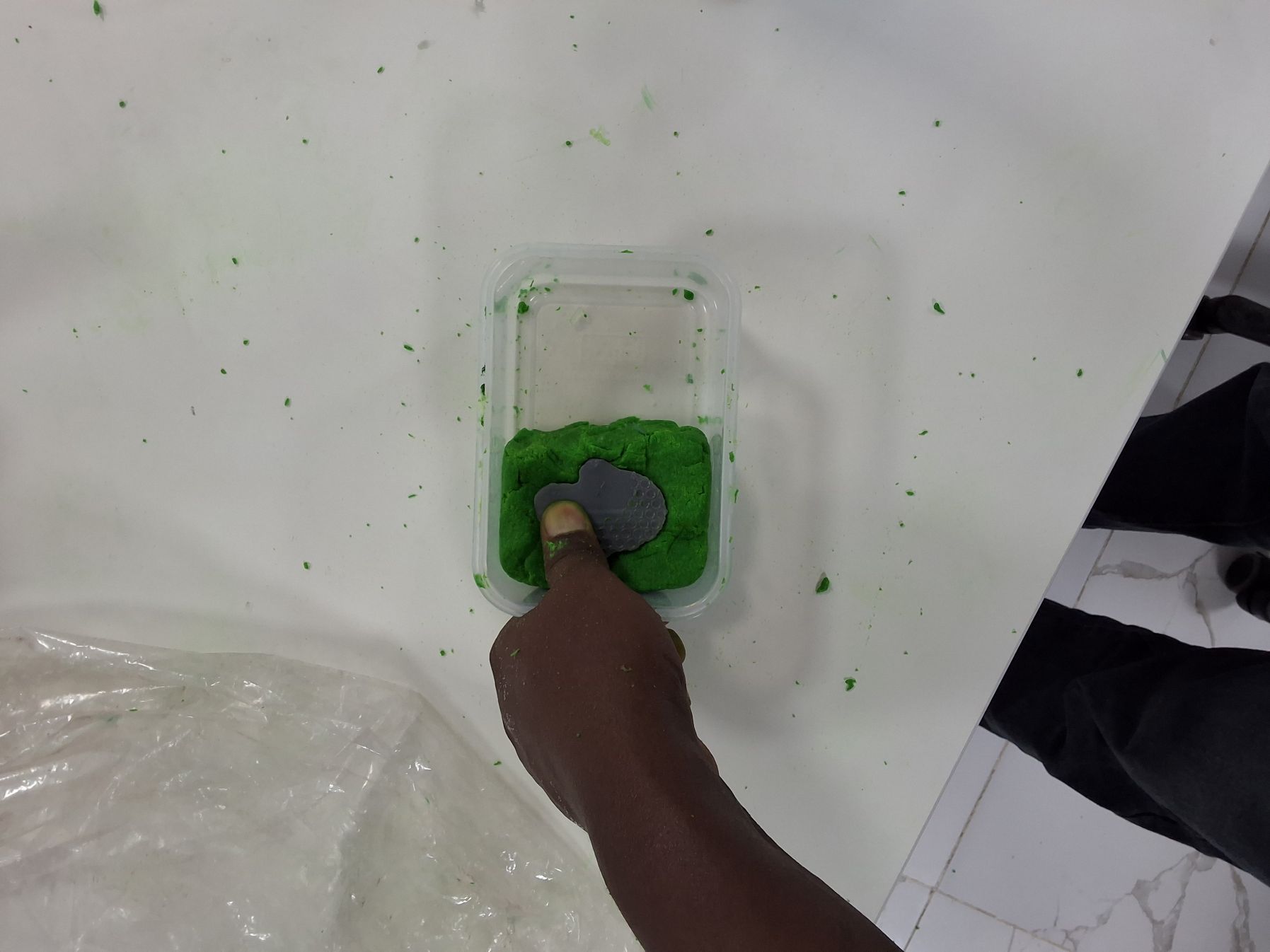
6. Mold Structure
- Use a two-part mold for better removal.
- Add external support if necessary to maintain shape.
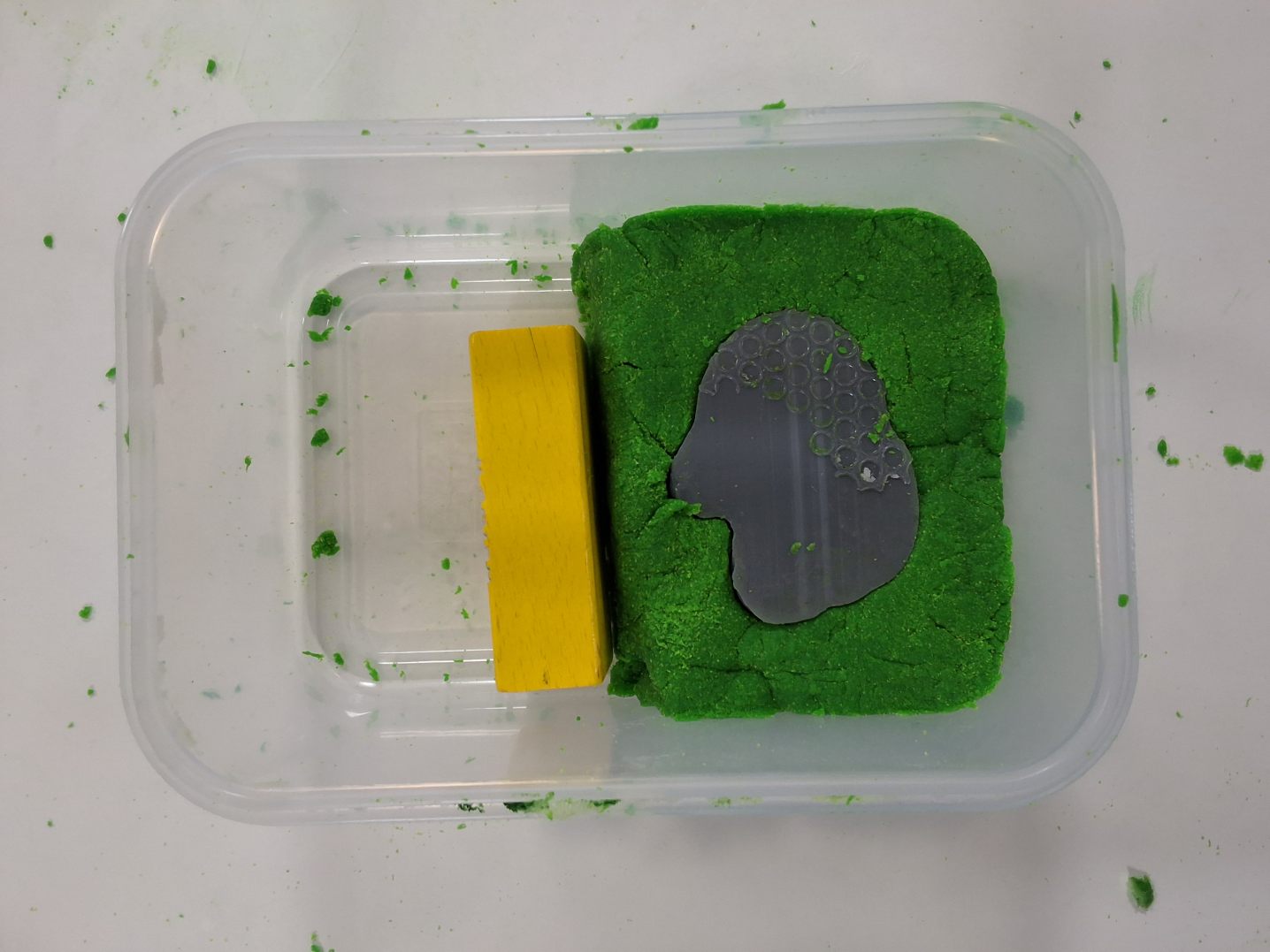
Error and problem faced
I mixed the corn flex powder without proportionally amount
prepare again with more of selicone and corn powder
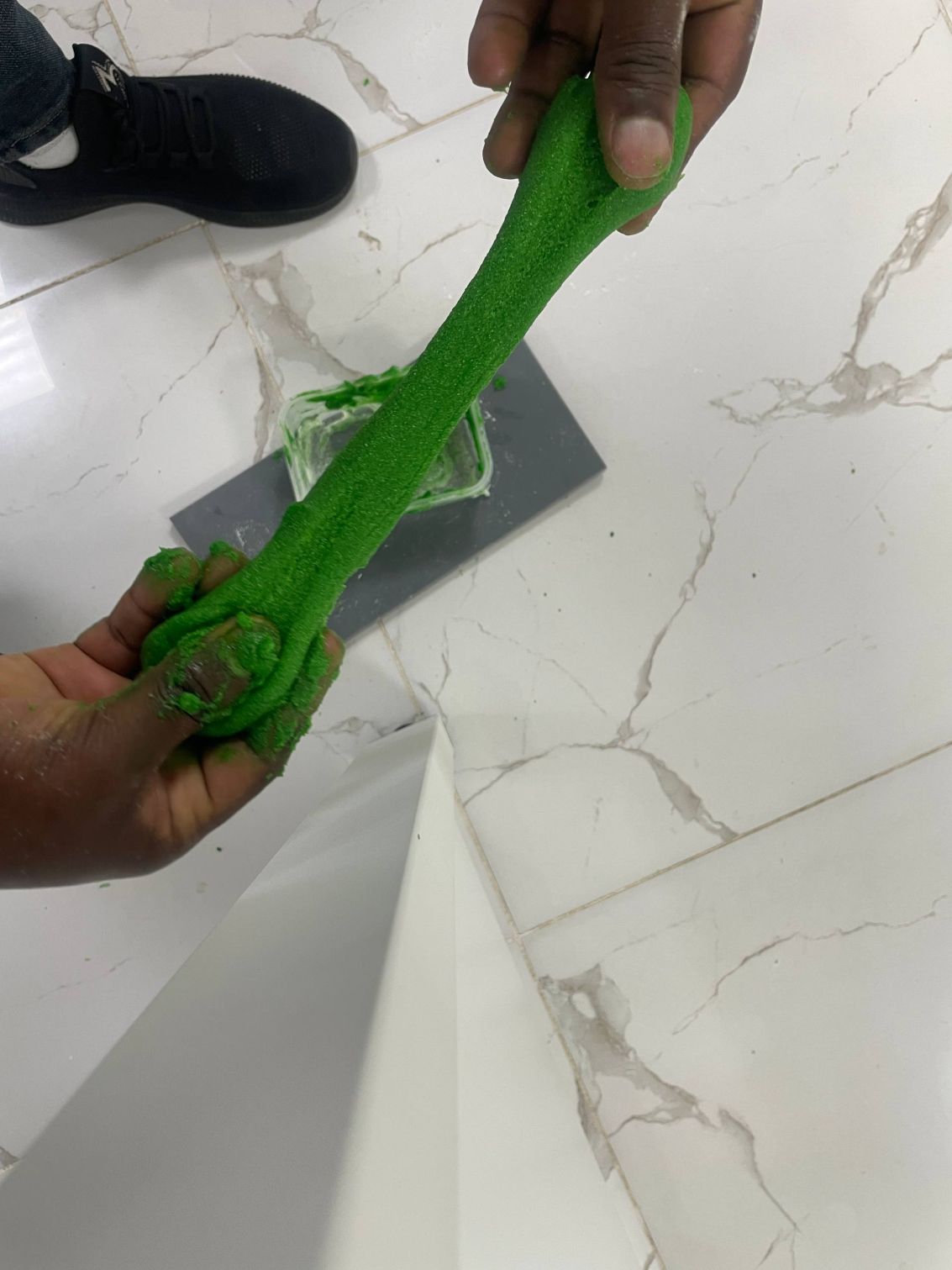
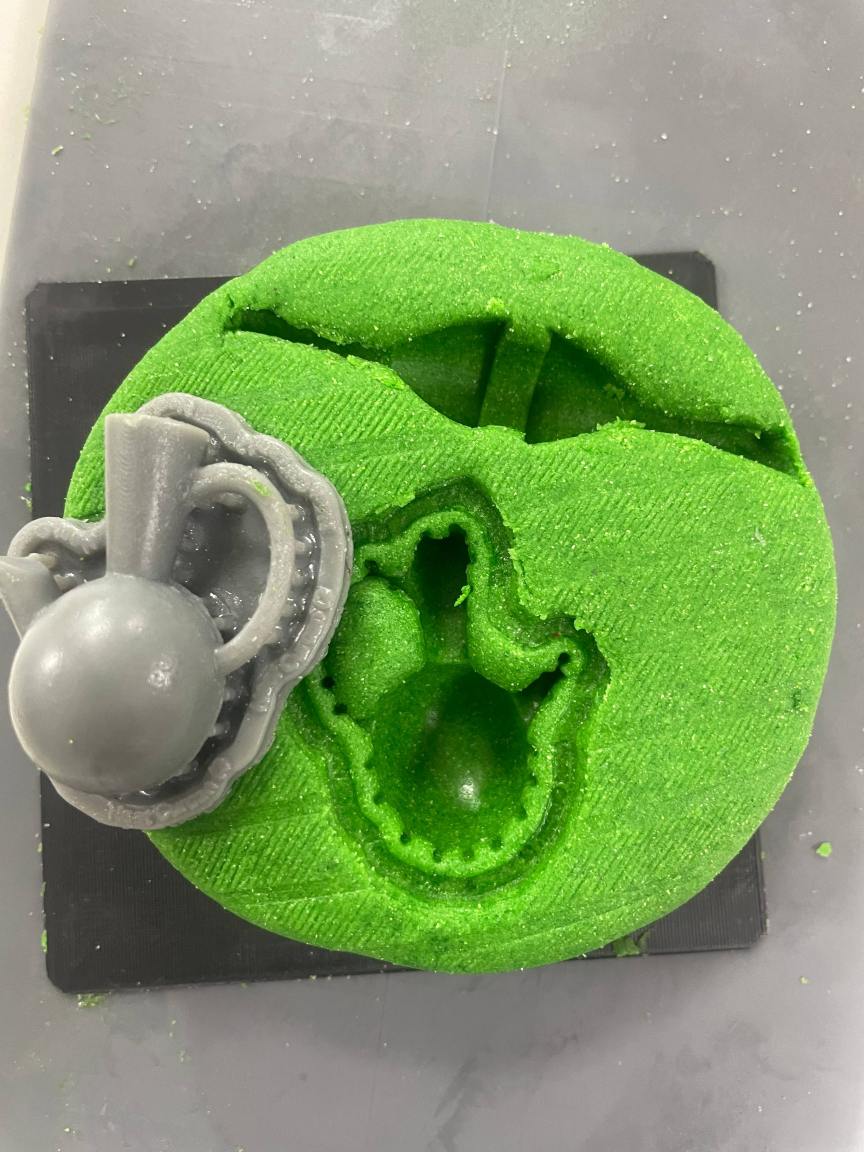
7. Curing
- Allow initial setting for 30–60 minutes.
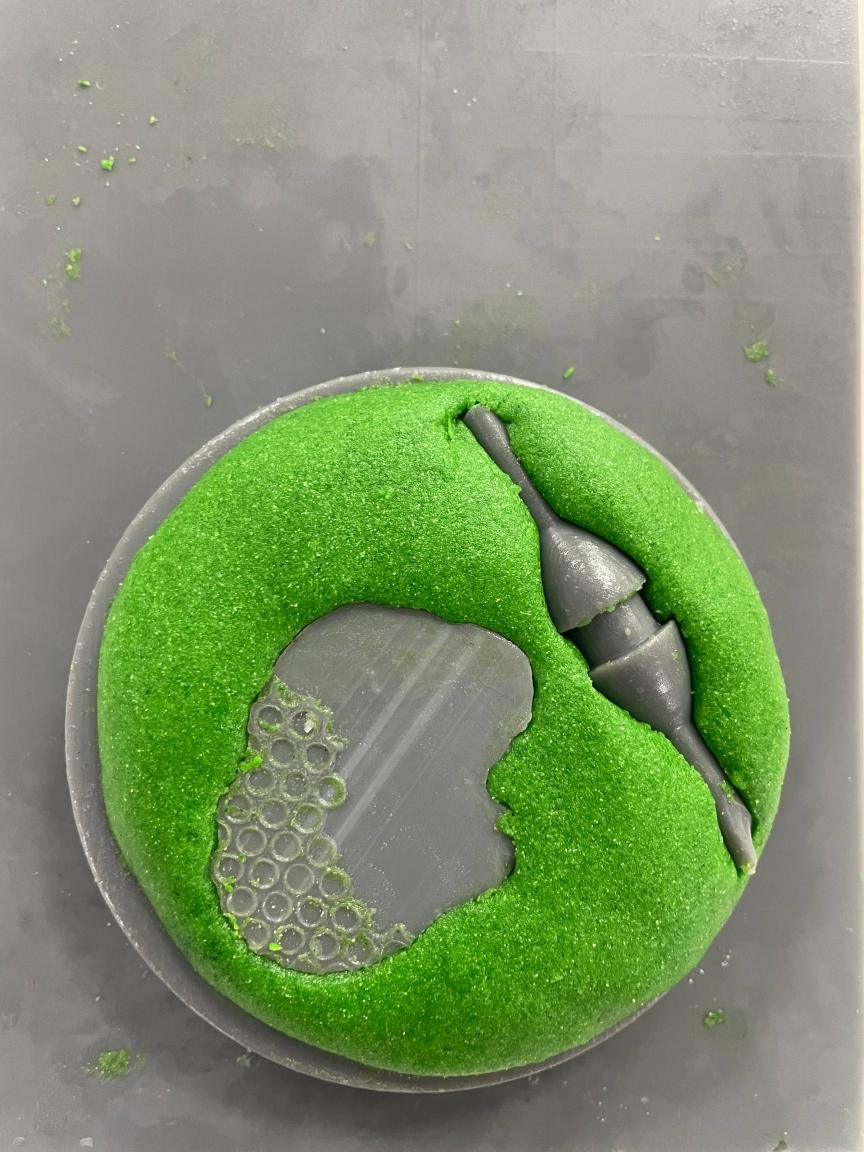
8. Demolding
The pot inserted to moldable mixture
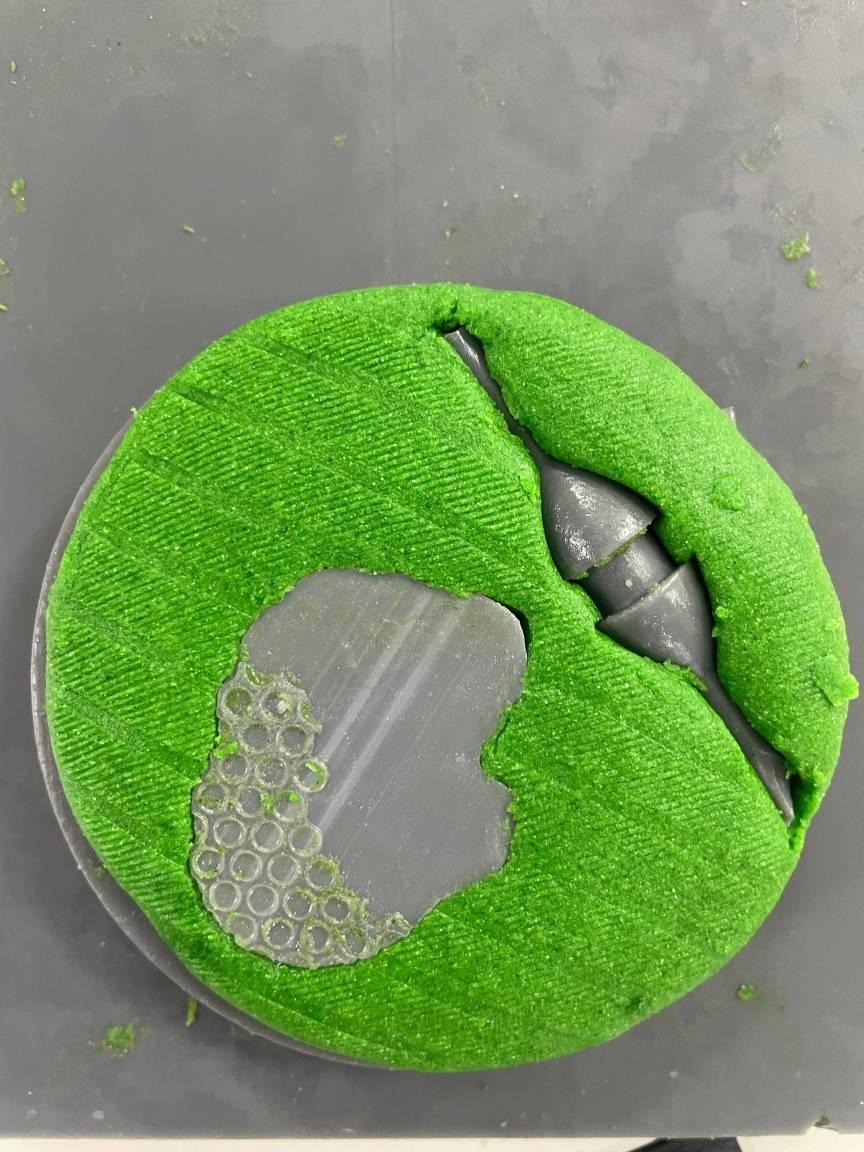
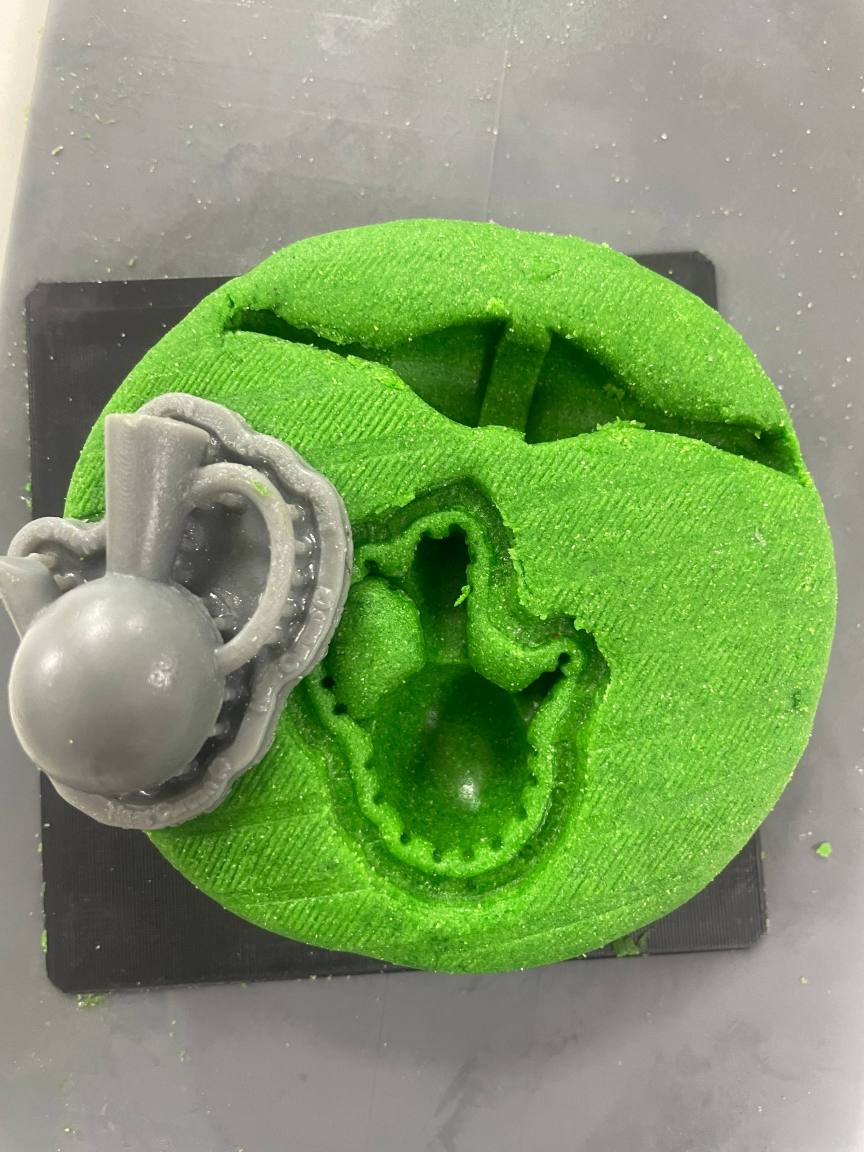
9. Casting
I used water to prepare ice-pot
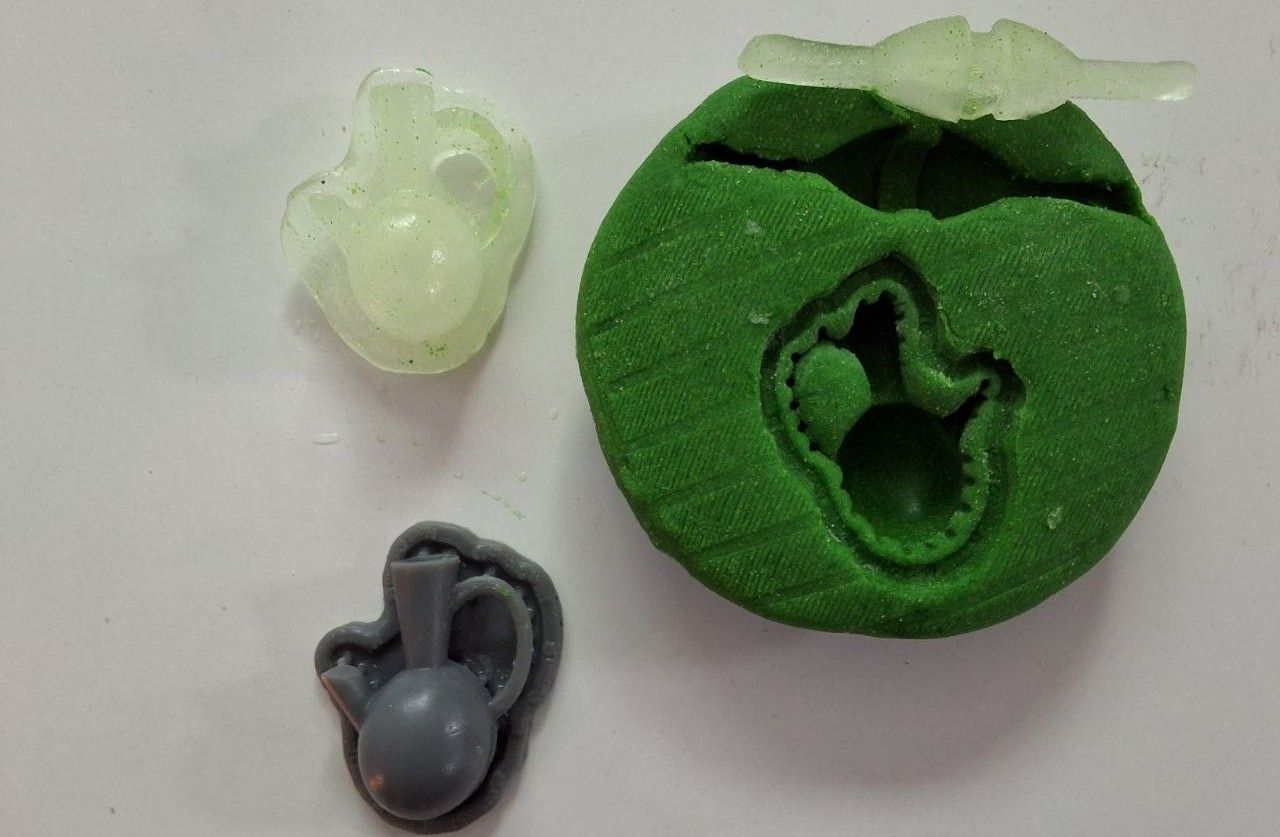
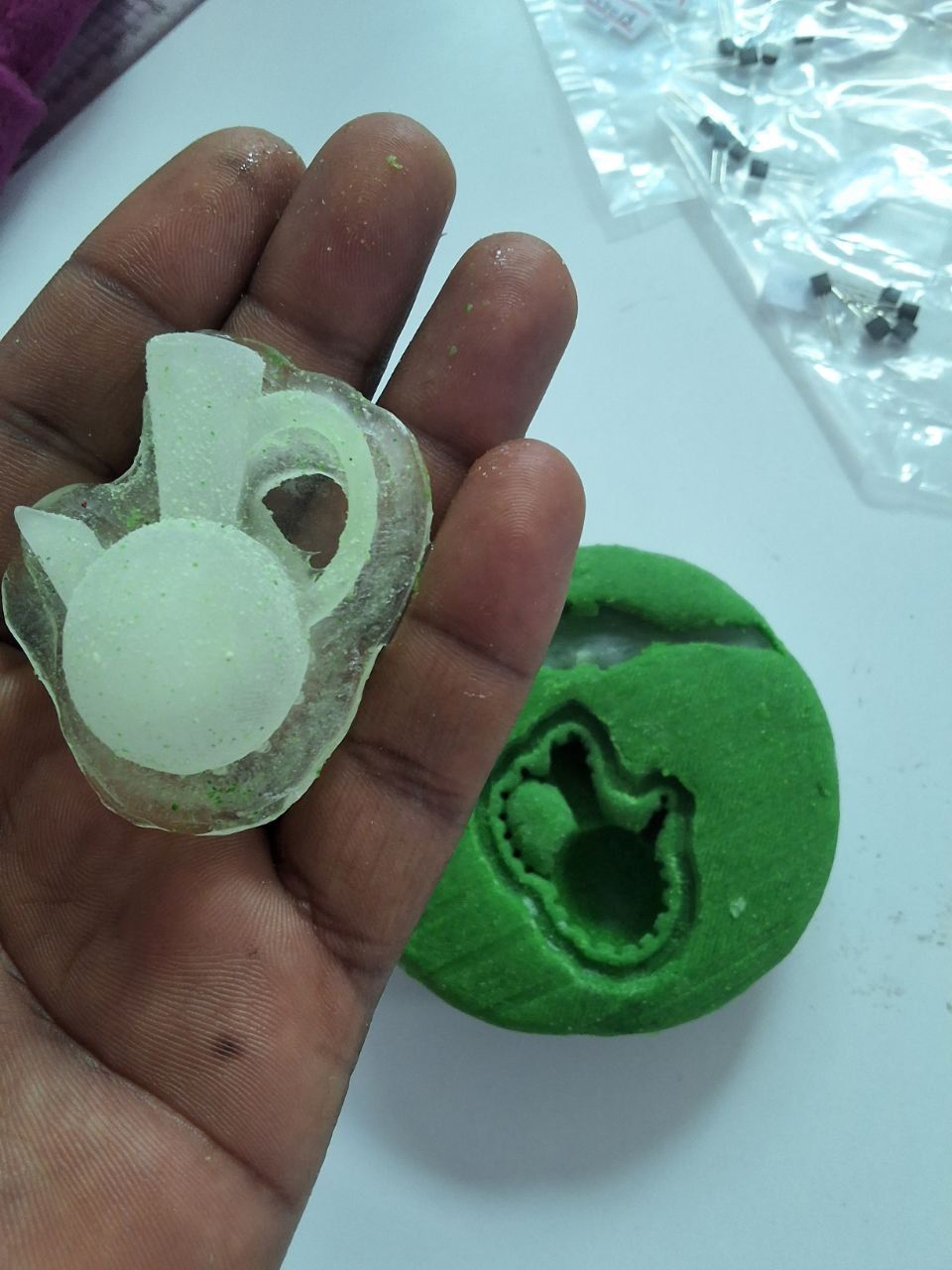
The mold is reusable for future
I used the corn powder to prepare corn-pot
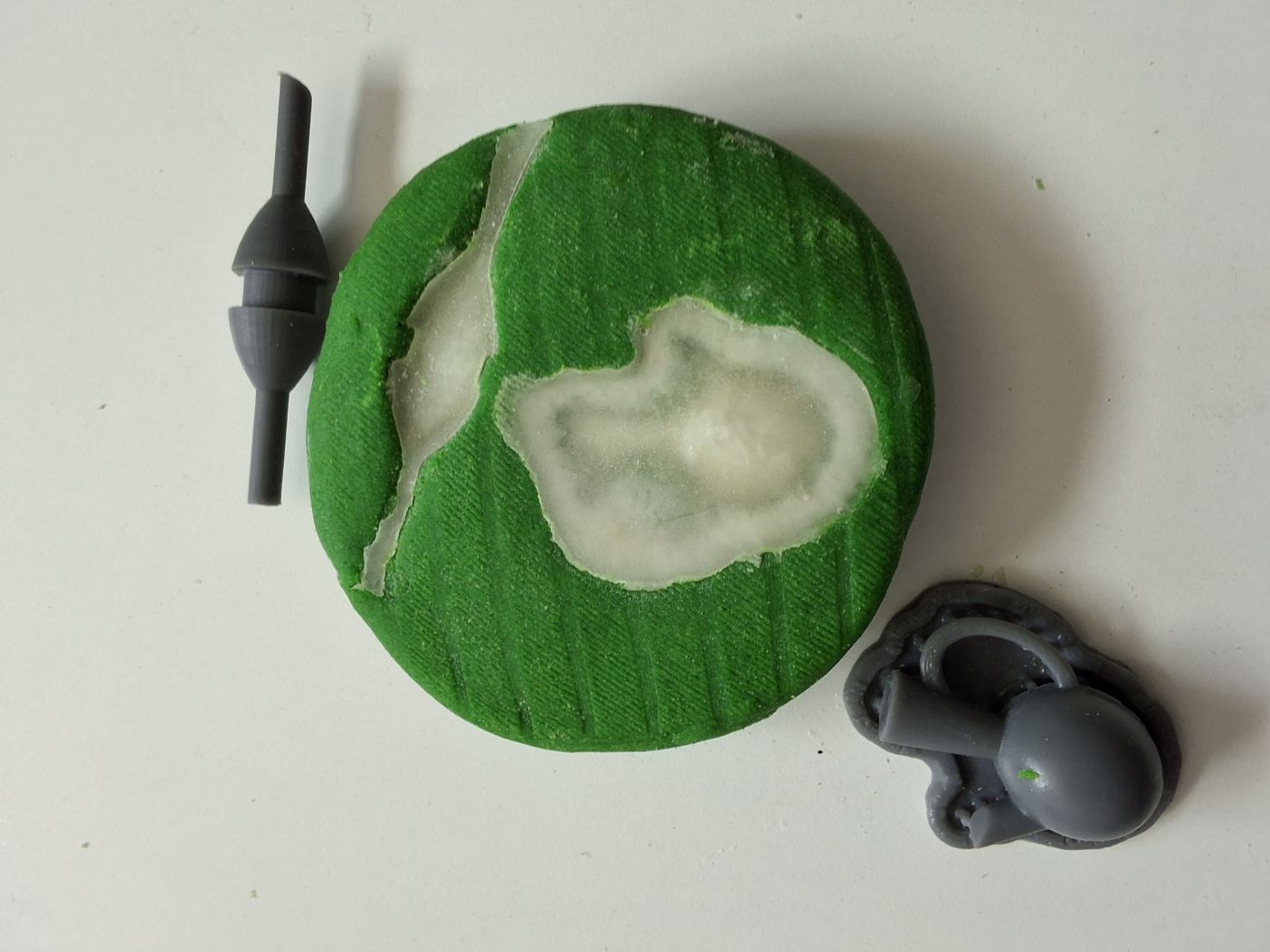
- It is reusable to model the Ethiopian traditional coffee maker pot