Invention, Intellectual Property and Income

Overview of week 19
Individual Assignment
- Develop a plan for dissemination of our final project.
- Prepare drafts of our summary slide (presentation.png, 1920x1080) and video clip (presentation.mp4, 1080p HTML5, < ~minute, < ~25 MB) and put them in your website's root directory
1. Target Audience Identification
Primary Audience: The underwater inspection drone is primarily targeted at marine infrastructure companies, port authorities, environmental monitoring agencies, and underwater research institutions. It provides them with an affordable, real-time, and high-precision underwater inspection solution in turbid or low-visibility conditions.
Secondary Audience: Government disaster response units like NDRF, fisheries departments, and coastal regulatory authorities who require reliable underwater surveillance tools for search & rescue or inspection tasks.
Tertiary Audience: Educational institutions, Fab Labs, and marine robotics R&D hubs interested in fostering innovation and training in underwater robotics, enhancing student engagement through real-world projects.
2. Product Launch and Marketing Strategy
Website Integration: Present the underwater drone on your Fab Academy project page with detailed documentation, underwater video samples, build logs, maintenance guides, and deployment case studies for user clarity.
Social Media Campaign: Share engaging underwater footage, client testimonials, and field trial visuals via YouTube, Instagram, and LinkedIn to build trust and attract commercial and institutional clients.
Industry Events and Expos: Showcase the drone at defense expos, maritime exhibitions, and innovation fairs to directly engage professionals and demonstrate capabilities in live demo tanks.
Partnership with Government Bodies: Collaborate with ports, environmental agencies, and disaster management departments for pilot testing and validation in real-world conditions.
3. Pilot Programs and Feedback Collection
Field Trials: Deploy the drone with select partners for inspection of underwater pipelines, docks, and reservoirs, collecting performance data in diverse environments.
Client Feedback: Use interviews, reports, and online forms to gather insights on ease of use, visibility in murky waters, and inspection accuracy to iterate on design.
Live Demonstrations: Organize demo sessions at marine labs, harbor areas, or during Fab Lab events to train users and validate the product’s real-time monitoring capabilities.
4. Educational Content and Curriculum Integration
Training Modules: Develop detailed modules on underwater ROV design, sensor integration, and inspection protocols for robotics, ocean engineering, and polytechnic courses.
Capstone Projects: Encourage students in robotics, mechanical, and mechatronics courses to take up drone enhancement or AI integration as final-year projects.
Intellectual Property (IP)
Intellectual Property (IP) refers to creations of the mind that are legally protected through rights granted to the creator or owner. This includes inventions, designs, brand names, logos, software, literary and artistic works, and trade secrets.
Types
- Patents – protect inventions and technological innovations.
- Trademarks – protect brand names, symbols, or slogans used in commerce.
- Copyrights – protect original works of authorship such as books, music, and software.
- Trade Secrets – protect confidential business information that provides a competitive edge.
- Open Source & Open Licenses: Allow creators to freely share work under certain conditions (e.g., Creative Commons, MIT License, GPL), promoting collaboration and learning.
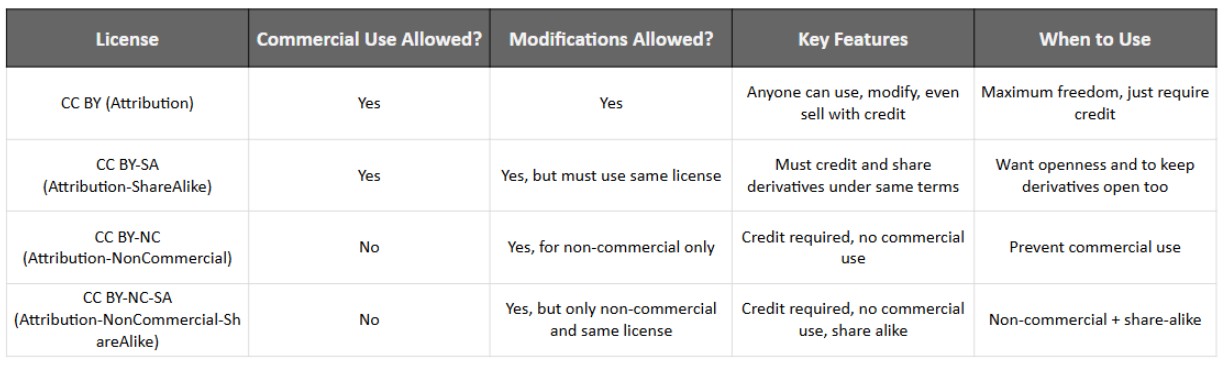
CC BY 4.0 License Permits
- Use for Any Purpose – Both commercial and non-commercial use is allowed.
- Share – You can copy and redistribute the material in any medium or format.
- Adapt – You can remix, transform, and build upon the material.
- Distribute – You can publish the modified material under your own name or brand.
- Sublicense and Commercialize – You can sell or license your version of the work.
Creative Commons Licensing Process
To license the underwater drone design, I visited Creative Commons.
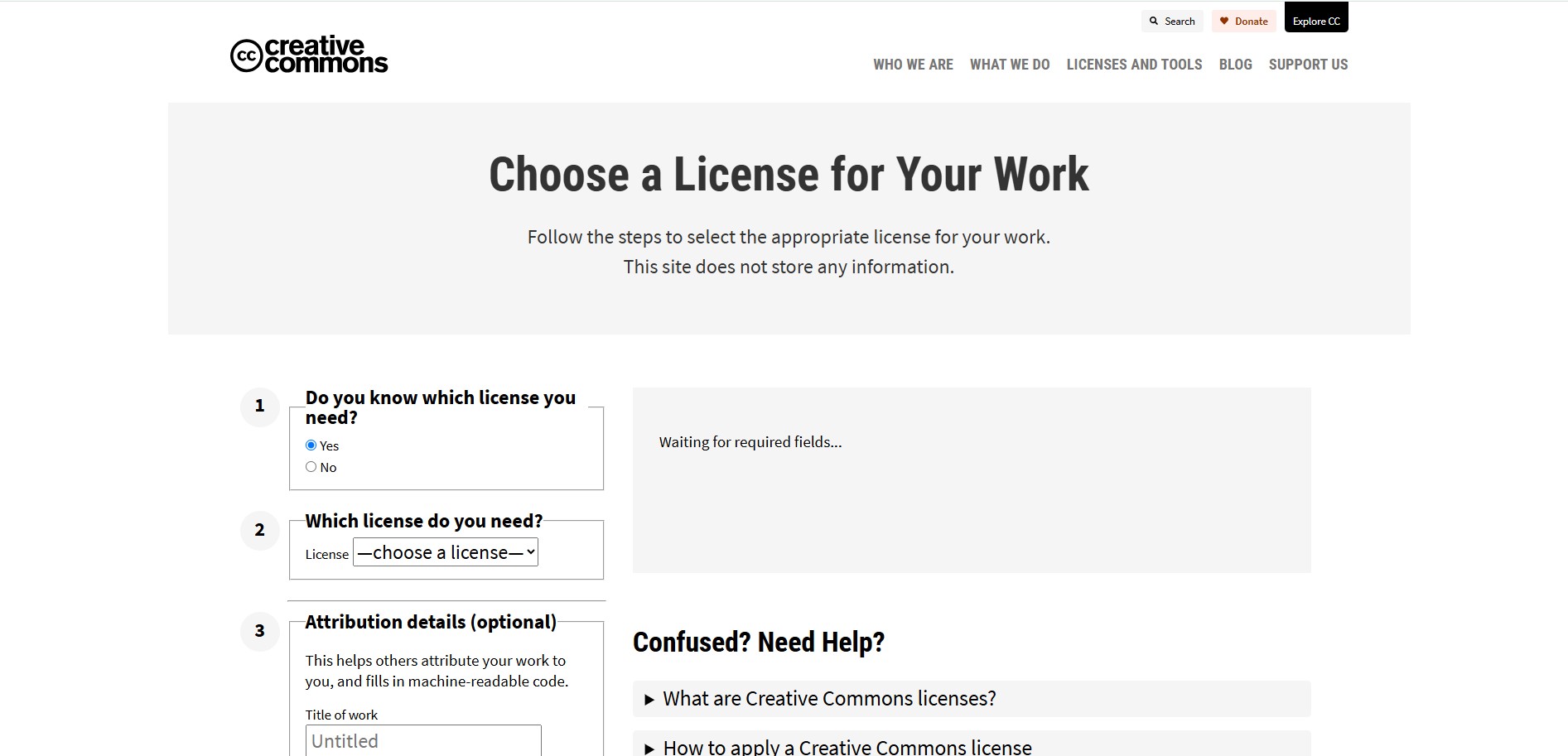
After carefully answering questions about usage, attribution, and modification rights, I selected the CC BY-NC-ND 4.0 license (Creative Commons Attribution-NonCommercial-NoDerivatives 4.0 International).
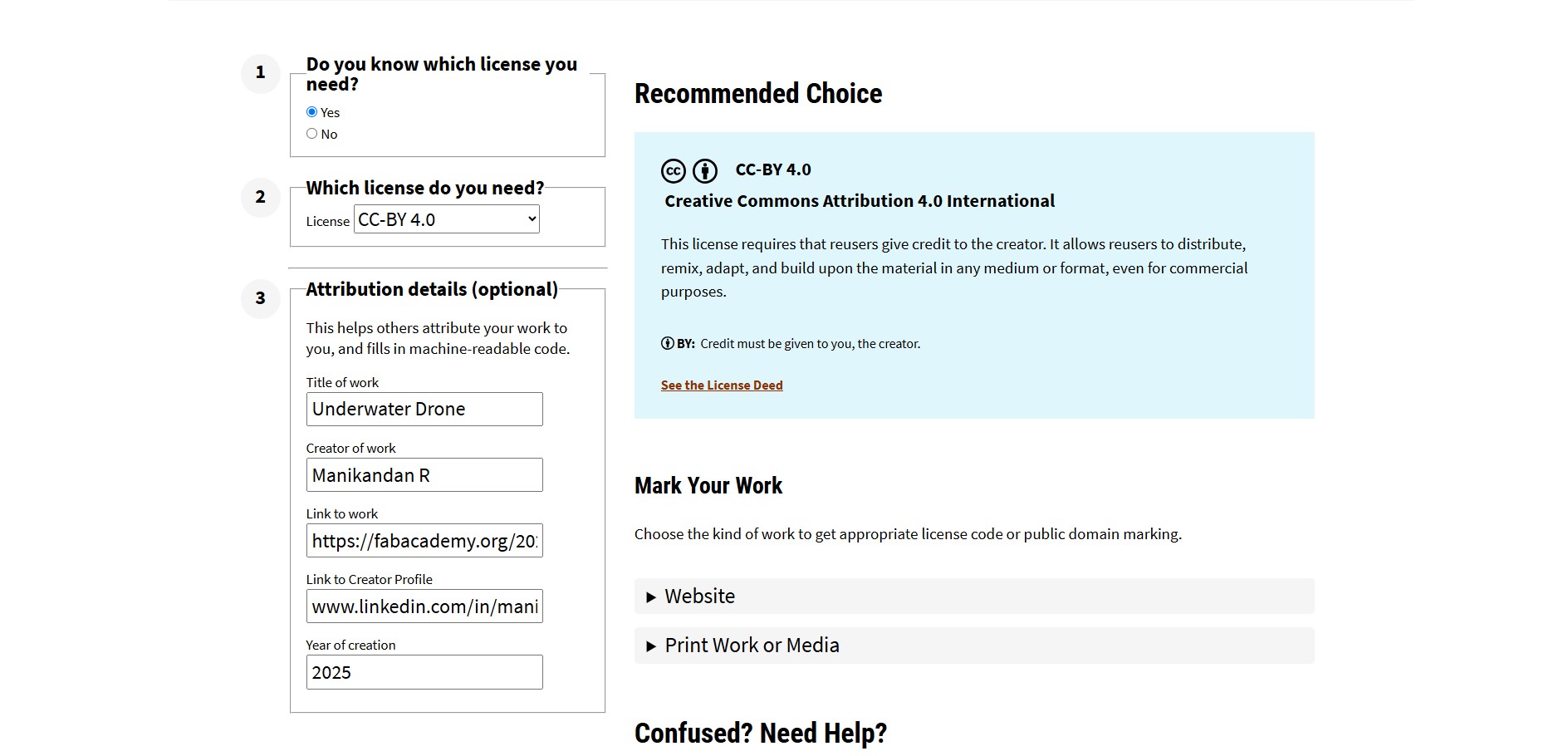
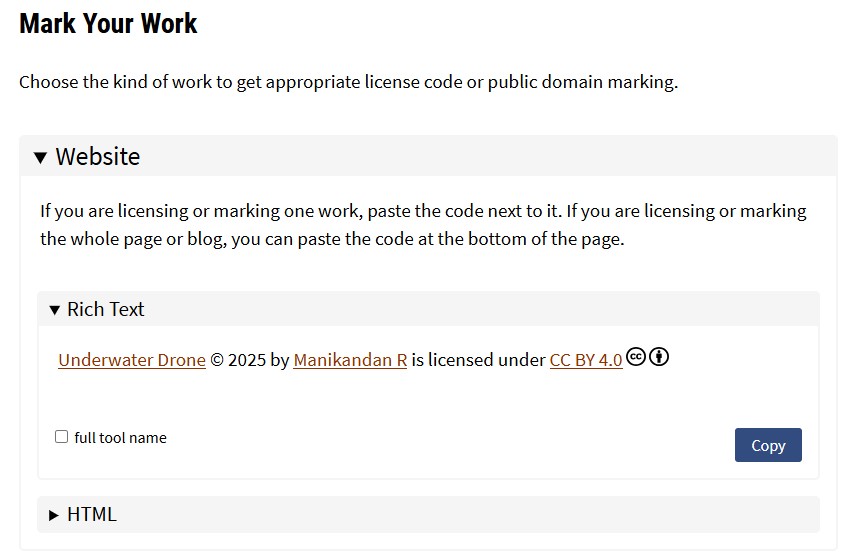
The generated license notice: "Underwater Inspection Drone © 2025 by Manikandan R is licensed under CC BY-NC-ND 4.0"
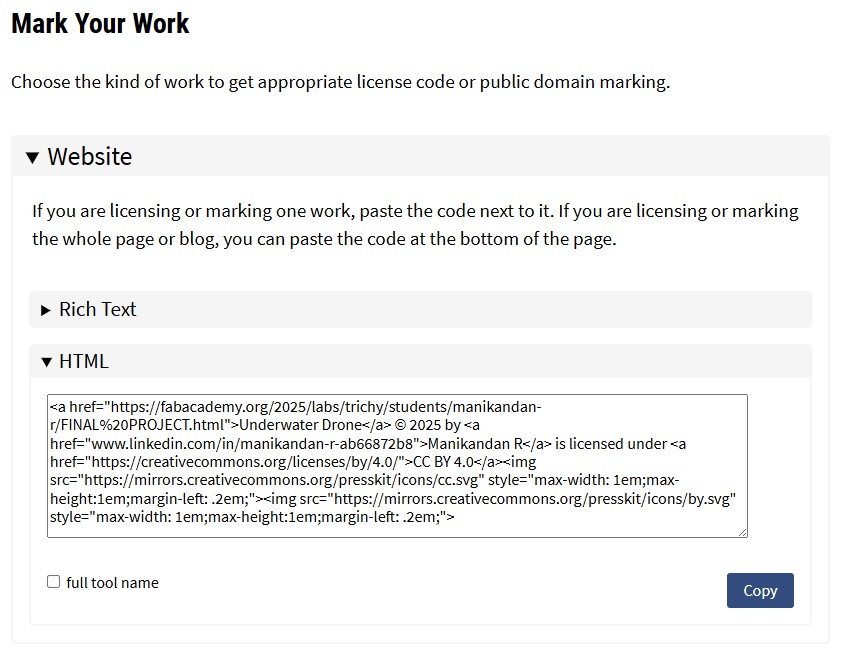
The HTML license code has been embedded in the footer section of the final project webpage.
Underwater Drone © 2025 by Manikandan R is licensed under CC BY 4.0

Final Product Slide and Video

Conclusion
Future Possibilities for Underwater Inspection Drone
- Sonar Mapping: Integrate 3D sonar imaging for detailed seafloor and structure reconstruction in poor visibility.
- Bio-Tracking Module: Add sensors to monitor aquatic life for environmental studies and conservation purposes.
- Modular Payloads: Design swappable sensor pods (e.g., turbidity, temperature, pH) to allow mission-specific configurations.