Invention, Intellectual Property And Income
This week’s goal was to complete and document the final project, develop a dissemination plan, track progress, evaluate remaining challenges, and reflect on the overall development process and lessons learned.
Dissemination Plan
This week I started to define how my final project could be shared, developed further and possibly used after FabAcademy.
FlowLi is not only a technical prototype for the final presentation. I also see it as a possible product prototype for a future one-off furniture object or custom interactive lamp.
My project will be published mainly through my FabAcademy documentation page. This page will contain the full development process of FlowLi, including the design decisions, electronics, software, fabrication steps, testing, problems and final results.
I want the project to be understandable and reproducible for other students, makers and FabLab users. Therefore, I plan to publish the important project files together with the documentation. This includes:
- source code
- Gerber files
- STL files
- SVG files
- Fusion design files
- images
- videos
The goal is that another person could rebuild the project or use parts of it as a starting point for a similar system. At the same time, FlowLi should also work as a finished portfolio project and maybe as a physical demonstrator inside the FabLab.
The project can be shared in several ways:
- through my FabAcademy documentation page
- as a physical demonstrator in the FabLab
- through the final project video
- through images and short explanations of the design and interaction concept
The final video is especially important because it can communicate the idea much faster than a long technical explanation. It should show the lamp, the sender unit and the interaction principle in a clear and visual way.
License and Use
I decided to publish FlowLi under a Creative Commons Attribution-NonCommercial-ShareAlike license (CC BY-NC-SA). This means that other people are allowed to learn from the project, rebuild it, adapt it and use it as inspiration, as long as they give proper attribution, do not use it commercially and share adapted versions under the same license.
This license fits my intention for the project. I want the documentation to be useful for other students, makers and FabLab users, but I do not want the design, interaction concept, project identity or name FlowLi to be used commercially without my permission.
For my documentation, this means:
- learning, documentation and non-commercial reproduction are allowed
- attribution to me and the project FlowLi is required
- adapted versions must be shared under the same license
- commercial use is not allowed without my permission
Intellectual Property
FlowLi uses existing components and technologies, such as ESP32 microcontrollers, ToF sensors, BLE communication and individually addressable LEDs. These components themselves are not my invention.
My own contribution is the way these elements are combined into one complete system. The important parts of my own work are:
- the product and furniture design
- the interaction concept
- the wooden lamp body
- the system architecture
- the custom PCB design
- the software implementation
- the integration of sender unit and standing lamp
- the project identity and name FlowLi
The name FlowLi is the project name and should be used consistently. It describes the combination of flowing interaction and light, and it gives the project a clear identity.
Income Possibilities
For now, FlowLi is not a finished mass-market product. It is a final project and a functional prototype. However, I can imagine developing it further into a possible product prototype.
The most realistic income possibility would be the production of individual custom lamps. I do not currently see FlowLi as a product that should be mass-produced directly. The more realistic path would be high-quality one-off pieces, where the lamp is built as a custom object for a specific room or customer.
Before FlowLi could become a real product, several topics would need more development. These include long-term reliability, safety, repeatable manufacturing, sensor robustness, heat behavior and a more detailed product version of the sender unit.
Future Possibilities
FlowLi can be developed further in different directions.
The current standing lamp is already finished as a high-quality furniture object. It could be used as a luxury furniture piece in its current visual form. The main part I would improve is the base.
For a more perfect finish, I would not use multiplex plywood for the base again. Instead, I would use solid wood, for example oak, mahogany or another high-quality hardwood. The stained end-grain sides of the multiplex base still make this part look more like a prototype than a real high-end product. A solid wood base would match the quality of the lamp body much better and make the whole object feel more refined.
The sender unit also has strong potential for further design refinement. The current version works as a prototype, but it could look much more finished with a flatter and more elegant form factor.
Originally, I planned to integrate ebony inlays into the sender. This would have created a stronger visual connection to high-quality furniture design and would have made the control unit feel less like an electronic prototype and more like a designed product. A thinner body, cleaner proportions and more refined material details would significantly improve the overall appearance of the sender unit.
The larger future potential is not only one lamp, but a system of different lamps controlled by the same sender unit. The sender could become a central interaction device for several light objects.
Possible future lamp types could include desk lamps, ceiling lamps, wall-mounted lamps, smaller ambient lights or even larger light installations.
This would make FlowLi more than a single object. It could become a modular lighting system where the user controls different light sources with the same contactless control unit.
Another interesting future possibility would be the integration of DJ software. For example, Rekordbox could be connected to the lighting system. Rekordbox uses phrase analysis to identify musical sections and track properties. This information could be used to automatically generate matching light patterns based on the audio structure.
In such a version, FlowLi could react not only to hand gestures, but also to music. The system could combine manual control with automatic light behavior based on the track.
Making Future Development More Probable
To make these future ideas realistic, the next development steps need to be specific and testable.
One of the most important topics is the sensor integration. The sensor setup did not work as reliably as expected from the mathematical planning. The geometry was calculated, but the real mechanical integration introduced new problems. This showed that the optical path, the hole size, the cover material and the final mounting position have a strong influence on the measurements.
For a next version, I would run new tests to find a better balance between functionality and design. The sensor openings should be tested with different sizes, shapes and cover options. The goal would be to keep the sender unit visually clean while still giving the ToF sensors a reliable measurement path.
Further steps would be:
- keep all design files organized for future versions
- document the current sensor problems clearly
- test different sensor openings
- improve the sender design based on these tests
- create a cleaner and more product-like PCB version
- test the complete system over longer running times
- check possible heat behavior during longer use
- collect feedback from FabLab users and other makers
These steps would make it much easier to move from the current final project prototype to a more reliable and refined version.
Current Direction
The current direction for FlowLi is therefore clear:
- document the project openly for learning and non-commercial reproduction
- keep the project connected to my name and the FlowLi project identity
- present it as a possible product prototype
- focus future development on sensor integration, reliability and possible product use
- keep custom one-off lamps as the most realistic commercial direction
The project is not finished as a commercial product yet, but it has a clear design identity and a realistic path for further development.
Completed Tasks
I decided on the final project name: FlowLi.
I will use this name for the final documentation, the presentation and the project identity.
I already finished or tested several important parts of the project:
I tested the wood stain on my prototype from Week 7. This gave me a realistic impression of the final color and surface finish before using the stain on the final lamp parts.
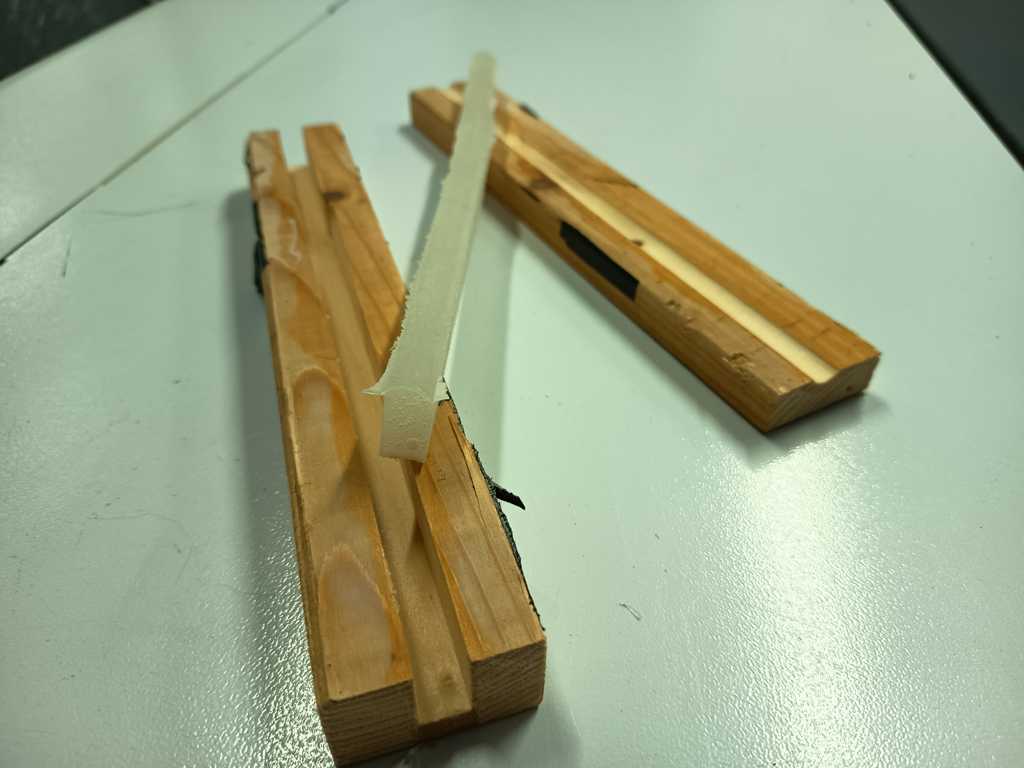
I made a silicone test casting before casting the final diffuser. With this test, I wanted to understand the complete process, not only the final result. I checked how well the silicone can be processed, how many air bubbles appear, how vibration can reduce these bubbles, how well the silicone releases from the wooden mold, how well I can post-process the cured silicone and how the final surface finish looks. I also tested how the diffuser spreads the LED light in a real physical setup.
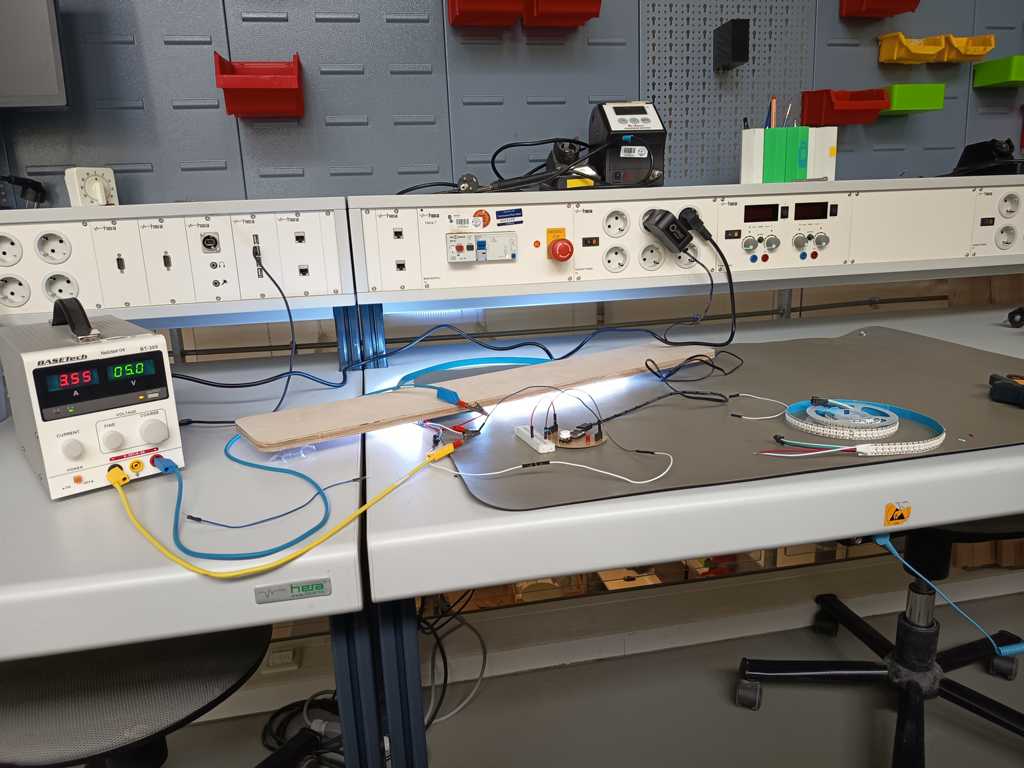
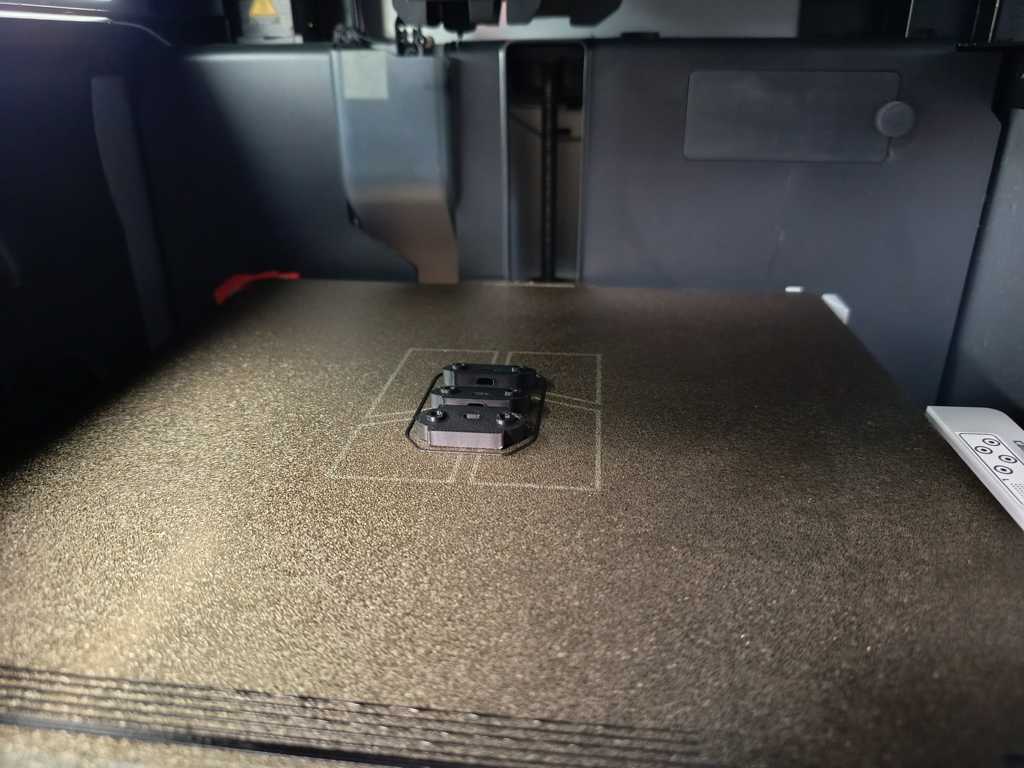
I built the first version of the 3D printed ToF sensor adapter, including the small glass plates. This adapter helped me test how the sensors behave inside a more realistic mechanical setup.
I defined the final shape of the standing lamp, including the base. This gave the project its final visual direction.
I developed the basic code structure and logic for the project. This includes the main behavior of the system and the way the different parts should interact.
I tested the SMD workflow before using it for the final electronics. I placed SMD components, applied solder paste and used the reflow oven. This helped me understand the process better and gave me more confidence for the final PCB assembly.
I prepared the silicone mold and the auxiliary form for the lamp body. These forms are important for the casting process and for shaping the wooden lamp body later.
I finished the PCB designs for the project. These boards are part of the final electronics and connect the microcontrollers, sensors and output components.
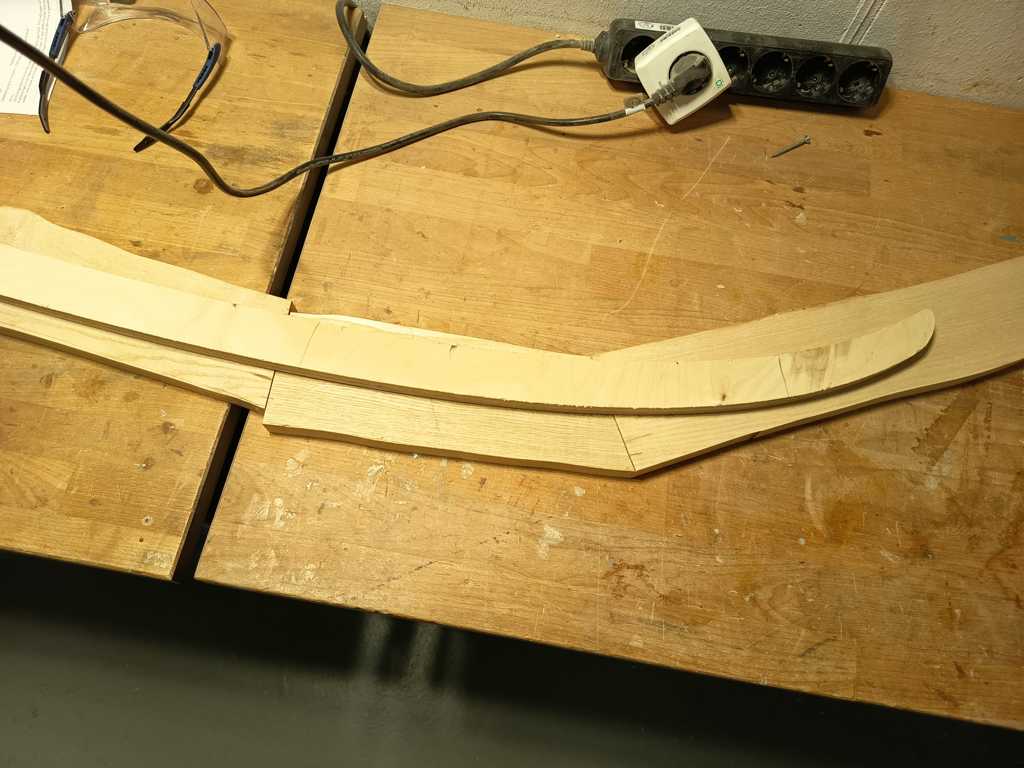
I also cut the ash wood for the main lamp body. This prepared the material for the next fabrication steps.
Remaining Tasks
I still need to complete several important tasks before the final presentation:
I still need to cast the final silicone diffuser. After curing, I need to remove it from the mold and post-process it.
I also need to glue the ash wood parts together. After that, I need to attach the auxiliary form to the ash wood and cut and mill the lamp body flush to the final shape.
I still need to make the lamp base and the sender unit.
I also need to finish the code and integrate it with the final hardware.
I also need to prepare the final video and the summary slide for the presentation.
The remaining work is not only one type of task. It includes PCB production, soldering, casting, woodworking, CNC milling, 3D printing, software, integration and presentation work.
What Is Working
The silicone casting process works reliably based on the test casting. I could process the material, reduce bubbles, remove it from the mold and evaluate the light diffusion.
The SMD soldering workflow also works reliably. I tested component placement, solder paste and the reflow oven, so I can use this process for the final electronics.
The staining process also works reliably. The Week 7 prototype helped me check the color and finish before using the stain on the final parts.
What Is Not Working Yet
The first version of the 3D printed ToF sensor adapter does not work reliably. The mathematical analysis of the sensor geometry looked correct, but the real setup showed problems.
The main issue is the mechanical and optical integration. The adapter, the glass plates and the openings influence the sensor readings much more than expected.
Because of this, I cannot use the current adapter as the final solution. I need to develop and test a second version.
Open Technical Questions
The main open technical question is the real integration of the ToF sensors.
At the moment, I cannot use the real ToF gesture control in the final setup. The sensors can work in principle, but the current adapter with glass plates and small optical openings does not give reliable measurements.
For the next version, I need to find out how the adapter should change. I need to test the hole size, the sensor position, the glass cover and the balance between a clean design and reliable sensor behavior.
The goal is to keep the sender unit visually clean while giving the sensors a reliable optical path.
Timeline Until the Final Presentation
The final presentation deadline is Friday at 17:14.
Before the presentation, I still need to do the following steps:
- produce the PCBs
- solder the components with the reflow oven
- do the last hardware store shopping trip
- screw together the mold for the silicone casting
- cast the silicone diffuser
- remove the diffuser from the mold and post-process it
- glue the ash wood parts together
- attach the auxiliary form to the ash wood
- cut and mill the lamp body flush
- develop and print the second version of the 3D printed ToF adapter
- cut new glass plates for the sensor adapter
- mill the groove for the LED strip and the diffuser into the lamp body
- CNC mill the lamp base
- CNC mill the sender unit
- stain the lamp base
- do a short post-processing of the wooden surfaces
- integrate all components
- finish the code
- prepare the final presentation
- edit the final video
- create the PNG slide for the presentation
This is a tight timeline because many steps depend on each other. I need to bring fabrication, electronics, software and documentation together in a short time.
After FabAcademy / Version 2
After FabAcademy, I would improve several parts in a second version.
I would improve the design of the sender unit. A flatter shape would make it look more refined and less like a prototype.
Originally, I wanted to add ebony inlays to the sender. This would create a stronger connection to high-quality furniture design. I could also use similar inlay details in the base. I would not make the lamp base from multiplex plywood again. The end-grain sides give the object a prototype-like look.
I would also improve the button integration. One option could be a second internal layer inside the sender unit. Another option could be a different PCB design that makes the mechanical integration cleaner.
I would also spend more time on the final post-processing of the wooden surfaces. This would improve the overall finish of the object.
The code could also be extended with more modes. This would make the interaction more interesting and would allow the lamp to show a wider range of behaviors.
What I Learned
One of the most important technical lessons was that a mathematical analysis is not enough on its own. Even if the geometry of the ToF sensors looks correct on paper, I still need to test the real setup. The final material, the mechanical adapter, the openings and the glass cover can change the result a lot.
I also learned that it is very important to test how the materials and processes behave before using them in the final object. The silicone test casting, the wood stain test and the SMD soldering test helped me understand the risks before the final build.
Another important lesson is that many problems have more than one possible solution. There is the saying: “All roads lead to Rome”. For this project, that means that I first had to understand the details of a topic before I could choose a good solution.
This was especially true for the sensor integration, the silicone diffuser, the wooden construction and the electronics production. At first, some of these topics looked simple. But after working with them, I realized that the details matter a lot.
Final Thoughts
At this point, there is not much time left. I have almost no buffer for unexpected problems, and there is still a lot of work ahead of me.
Still, I am confident that I can finish the final project in time. It might not become as perfect as I originally imagined, and I may only be able to finish some parts partially. But the main goal is to bring all core elements together and create a working final result.
During the whole Academy, I often learned that workflows can create unexpected problems, even when they look simple at first. The important part is not to avoid every problem, but to react quickly, make decisions and keep moving forward.
This final phase will show how well all previous weeks come together in one project.