Week 7: CNC and CAM
Safety

This is the CNC machine. His name is “model number” It is a large and dangerous beauty.
- Closed toed shoes
- DO NOT operate alone
- Keep the stop button with you at all times
- Make sure your materials are secured
- Mask, ear protection and eye protection. No your glasses are not enough
- KNOW where the fire extinguisher is
- Keep your phone on you
- stay alert and aware of your surroundings.
- DO NOT OPERATE when tired.
I would like to note that when I am feeling too tired to operate and watch the CNC safely, I have someone who is sit with me.
How it’s made
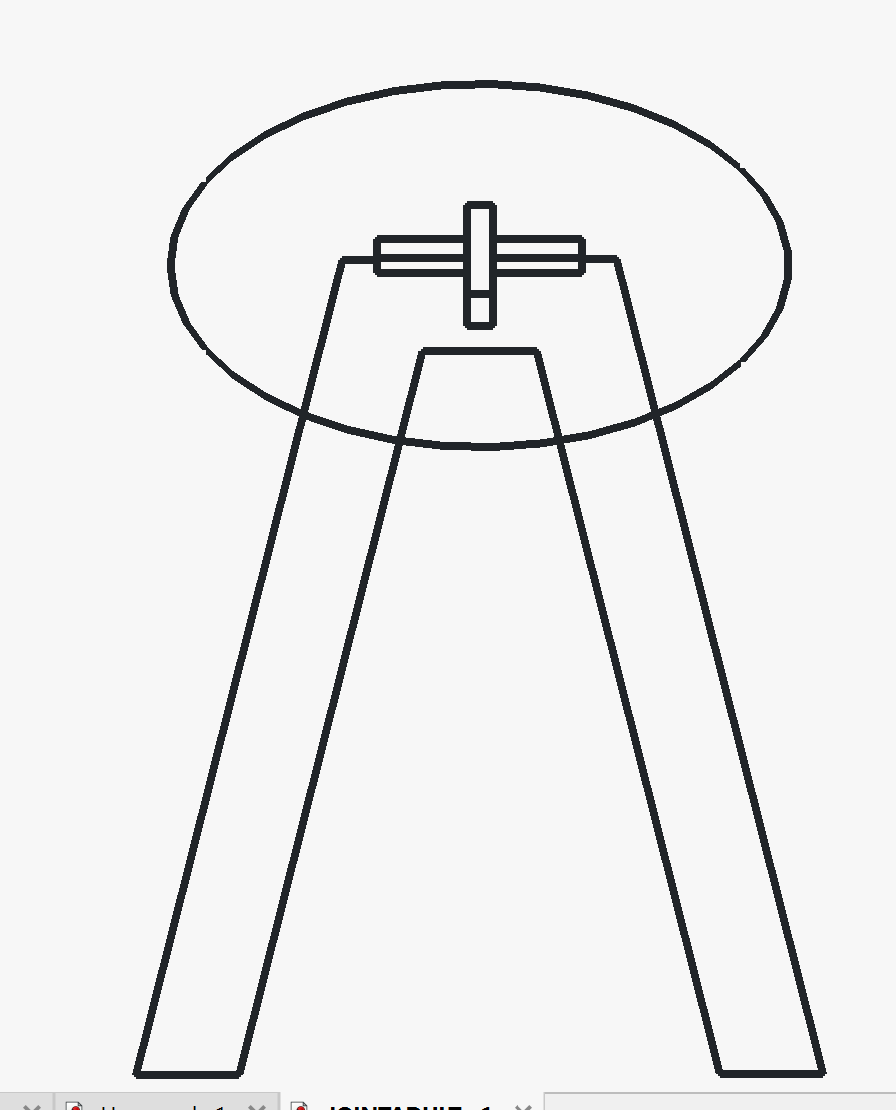
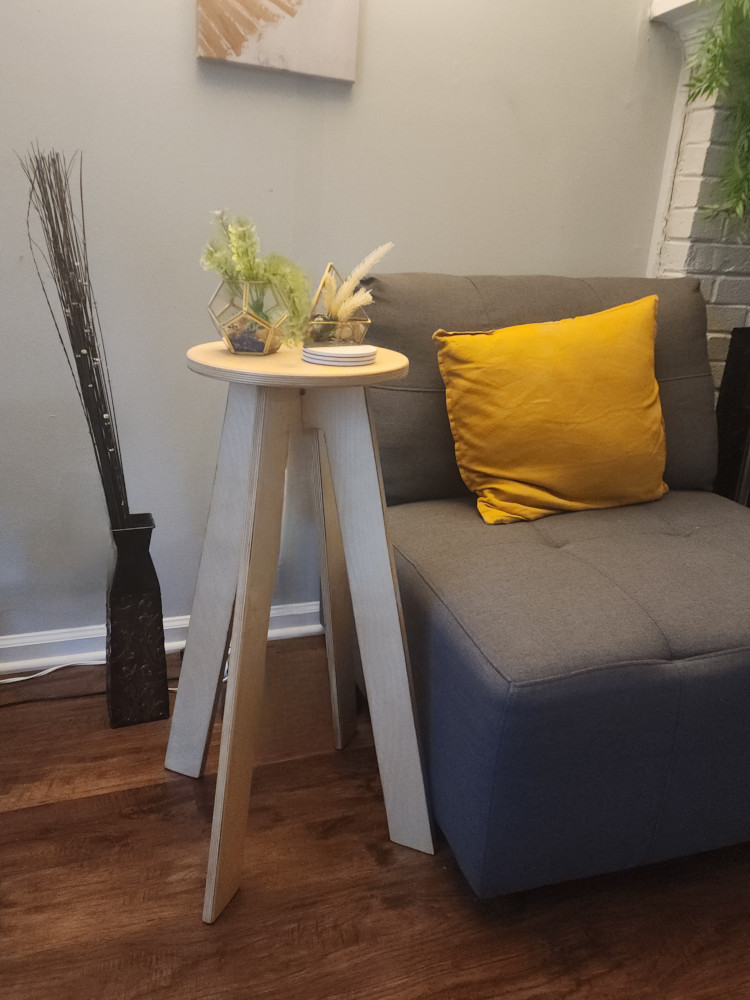
My goal was to make a barstool. This was my inspiration
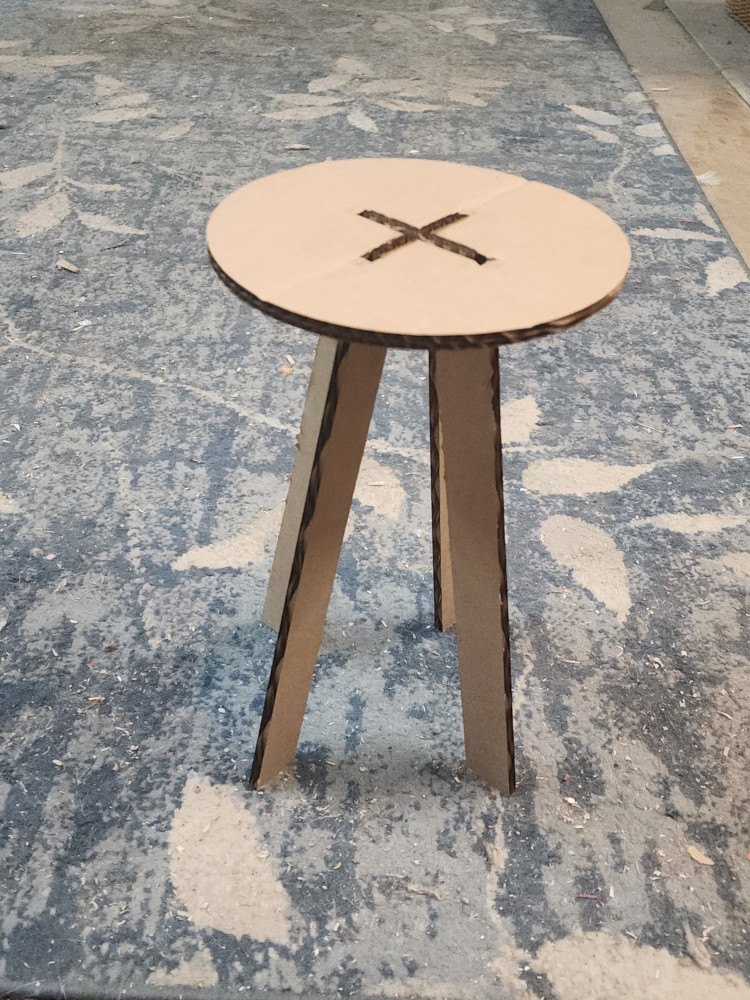
I tested it out by using the laser first. My plan was to use 3/4in plywood, so I tested my design on 1/4in cardboard. I learned that I made the slits in the seat too big.
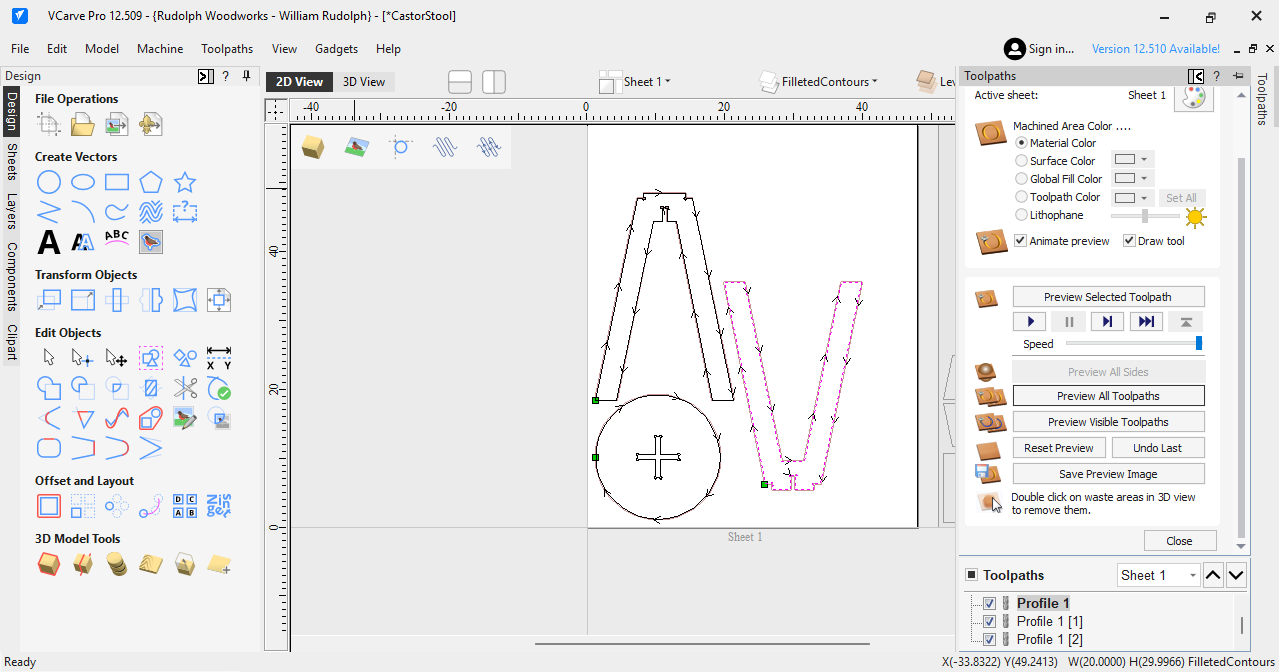
To actually generate a toolpath, I used Vcarve. It is a paid program that my instructor uses for his work. I changed the settings so that it cuts in 3 Passes and uses a 1/8th in compression bit.
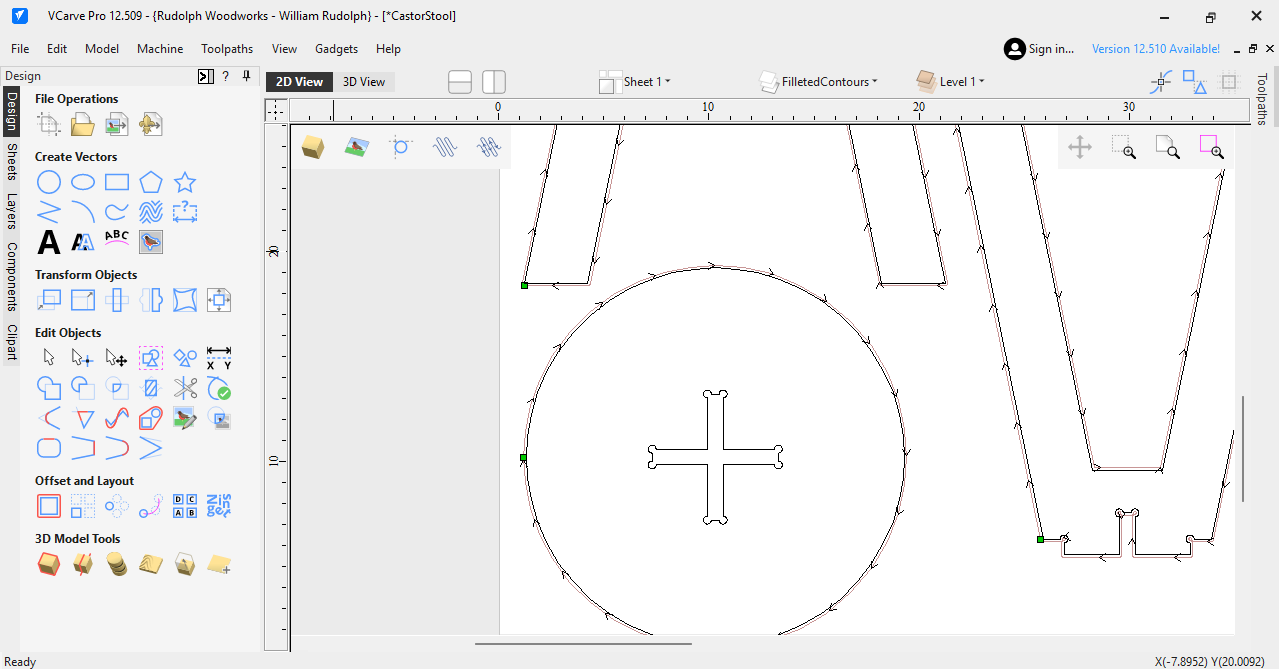
I used the included “dogbone” tool to create circles at the corners of my cuts. This is so that the pieces can actually slot in to each other. The bit is a circle and so it cannot cut tight corners the way a laser can. In addition to that, I made the center of stool a “pocket cut”. This is a type of cut that does not go all the way through. I set it to cut 1/2in deep.
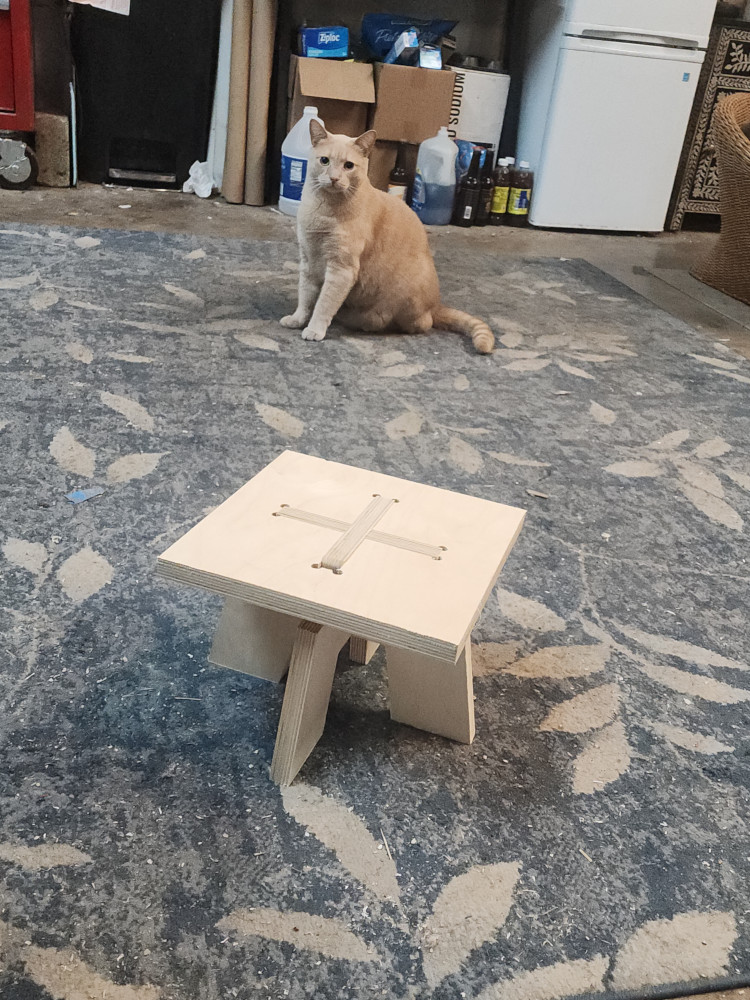
I made a test cut for to check that the joint was correct, and shortened the pocket cross.
The CNC is a beautiful and dangerous machine! We need to turn on the exhaust fan to use it, and it is very loud.
It is also important to home it and also “tell” it the position of the wood using the Axis touchplate.
We learned 2 things. - the seat is WAY bigger than I thought it would be, I reduced it to 12in. - It fits well! No need to change the design. - I do not like having the seat cut all the way through.
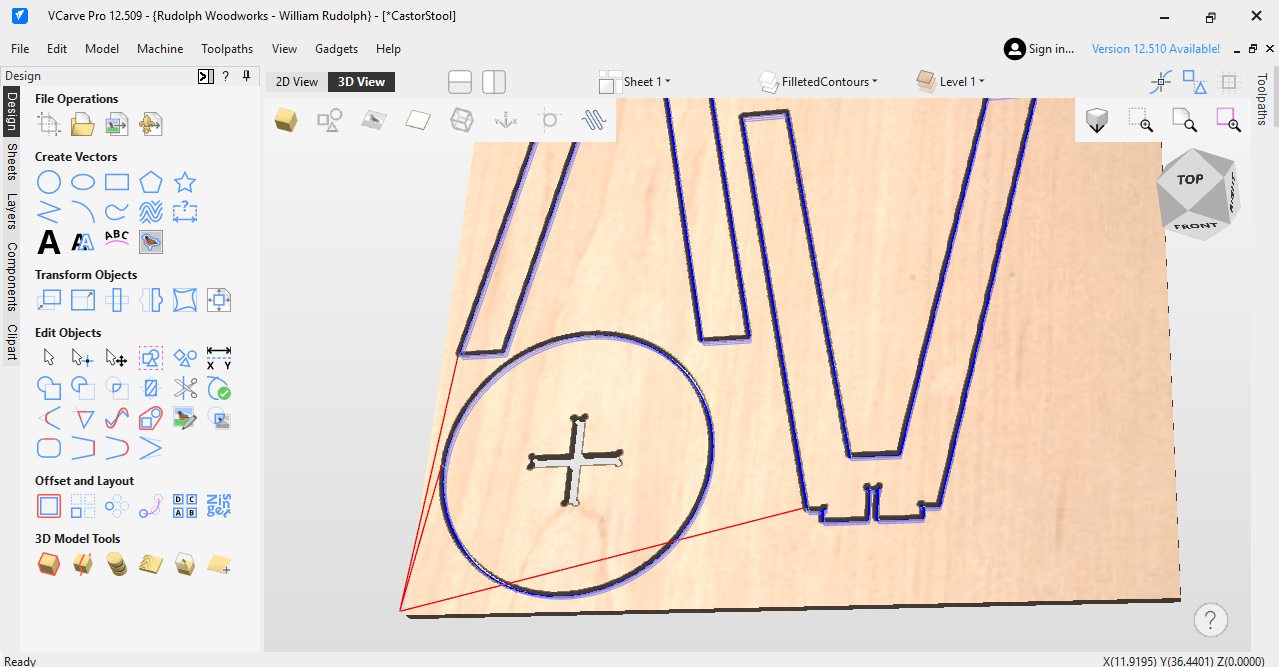
With these changes in mind, I previewed the cut to make sure that the seat had a pocket cut.
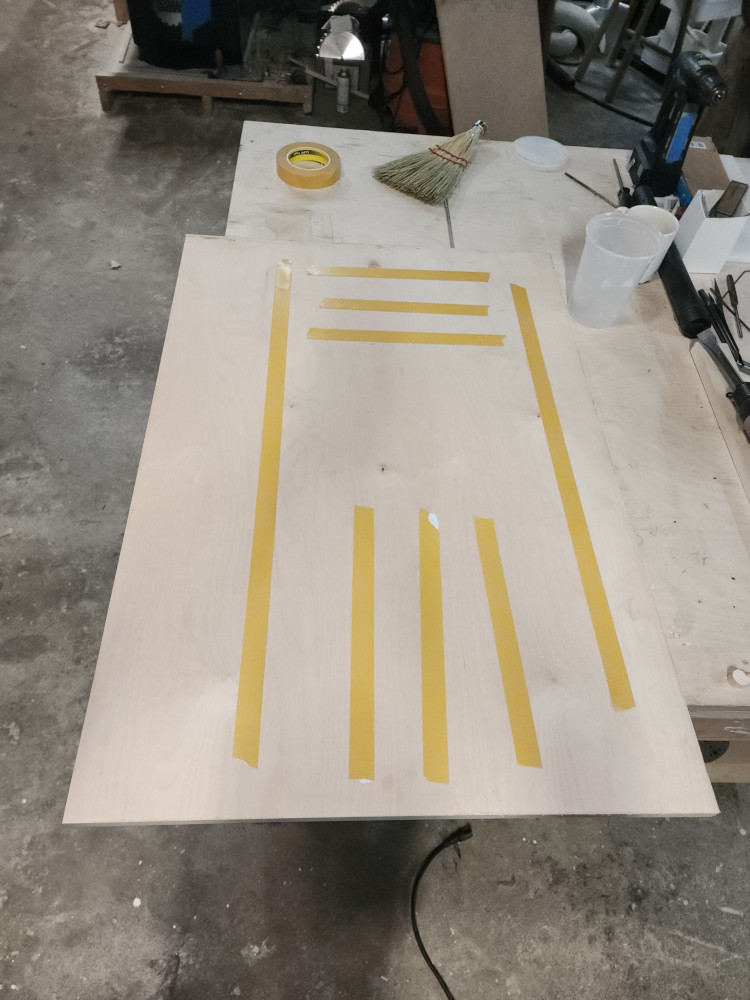
Now that we know it works, time to tape down the wood we are using!
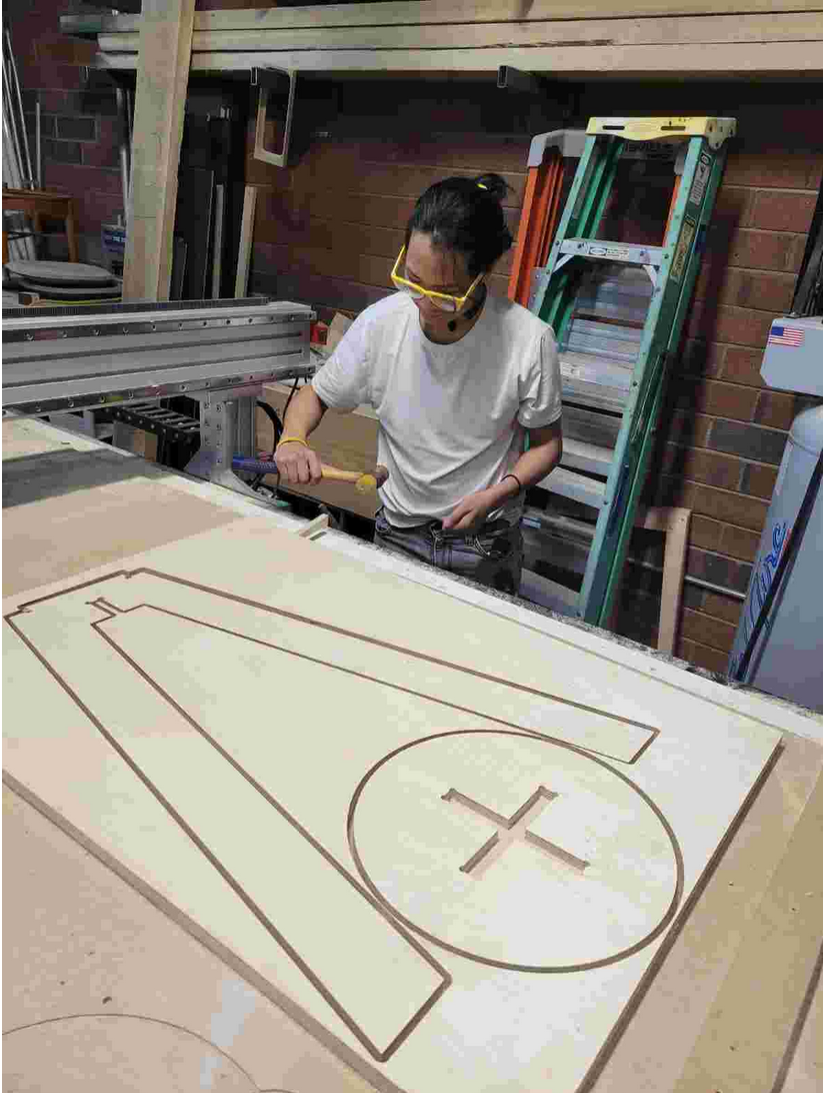
I used a wedge to carefully separate my board from the table once it was done cutting.
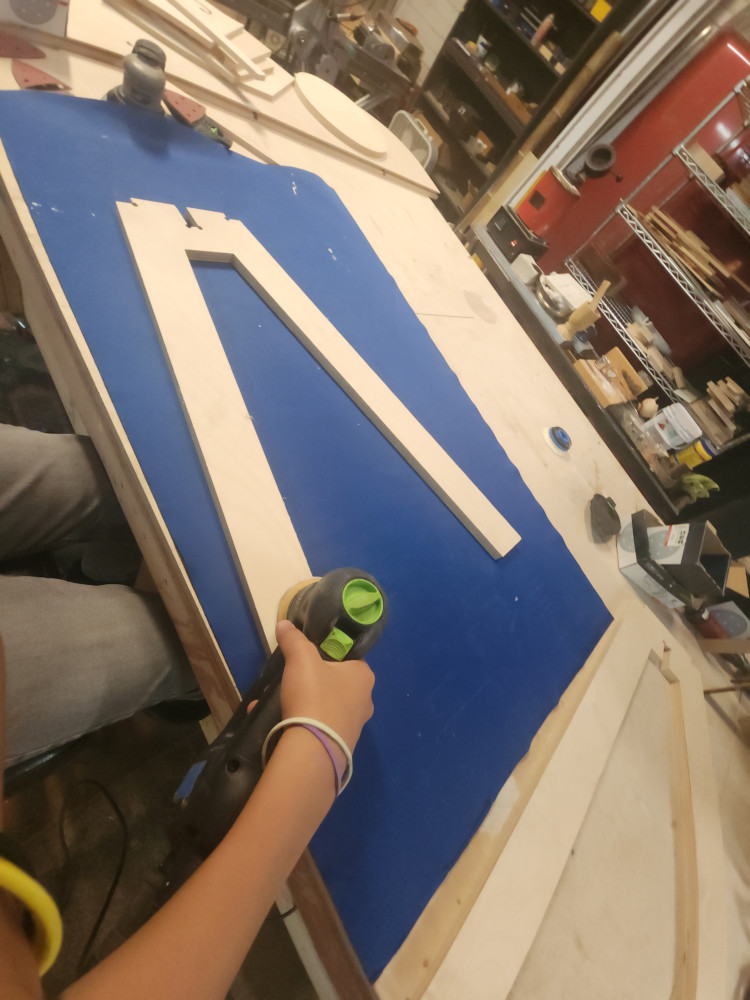
I sanded down the edges using 220 grit sandpaper
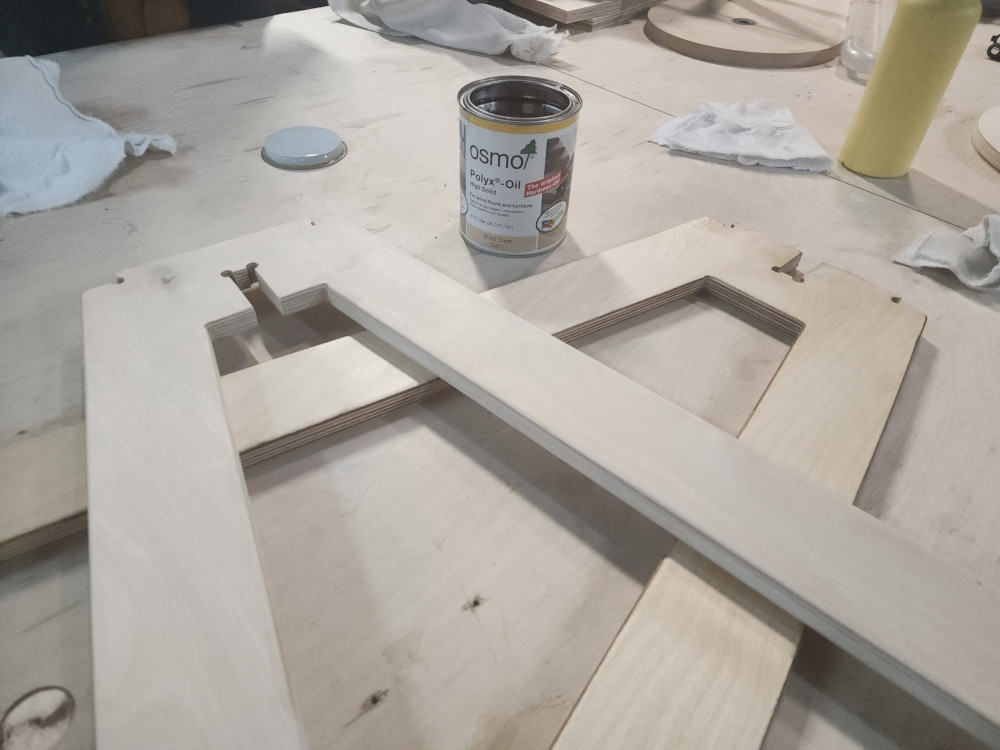
I applies Osmo finishing oil, look at the difference!
A happy day :)
Troubleshooting
Q: What happens if I forget to put the metal on the touchplate?
A: If you forget to do it, the machine will make a horrible sound, but the bit will not be ruined. The gold part of the touch plate is made of softer metal so that it will not damage the bit if you forget, and the plate does sit on springs to prevent damage to the bit.
Q: Whats those little circles around the corners of the cut?
A: Those are dogbones! The bit is round, it cannot make a sharp inside corner, so you have to dril it out a litter farther in the corners if you want the joint to slide in. Originally, the wood went all the way trhough so it was visible, because I did not like how the dogbones looked, I changed the design.
Q: Does the way I orient the plywood matter?
A: Yes! You want the grain to be matching on the stool legs, length wise. This is how you get the strongest cut.
Reflections
This week tested my physical stamina. I had to make sure all the files were ready so that I could use the machine when I was fully energized in the morning. I also understand why carpenters have so much muscle, sanding is hard work! Overall I really was excited about making furniture. If I did it again the prep would take maybe 1 hour, the actual cut less than 10 min, and the post-processing 2 days. The hardest part was the sanding!
CNC Vocabulary
Runout: When the bit in the machines is spun rapidly to cut something, it is not perfectly centered. There are minor deviations. This is called runout.
Alignment: THe process where we calibrate the machines, the bits and makes sure it “knows” where the cut material is.
Fixturing: we use double sided tape to keep our Board in place.
speeds: how fast the bit is rotating
feeds: how fast the material is cutting into the material
materials: we are using plywood
toolpaths: we used pocket and cut through. there are other options like inlay.
Passes: The amount of times the machine repeats a path, each time cutting away more martial downcut vs upcut
deflection: the amount the bit deflects in response to it being pushed against the wood. bigger passes, bigger force, bigger deflection, This is also true of feed rate.
Groupwork
Click here to learn more about the speeds, feeds, and definitions!
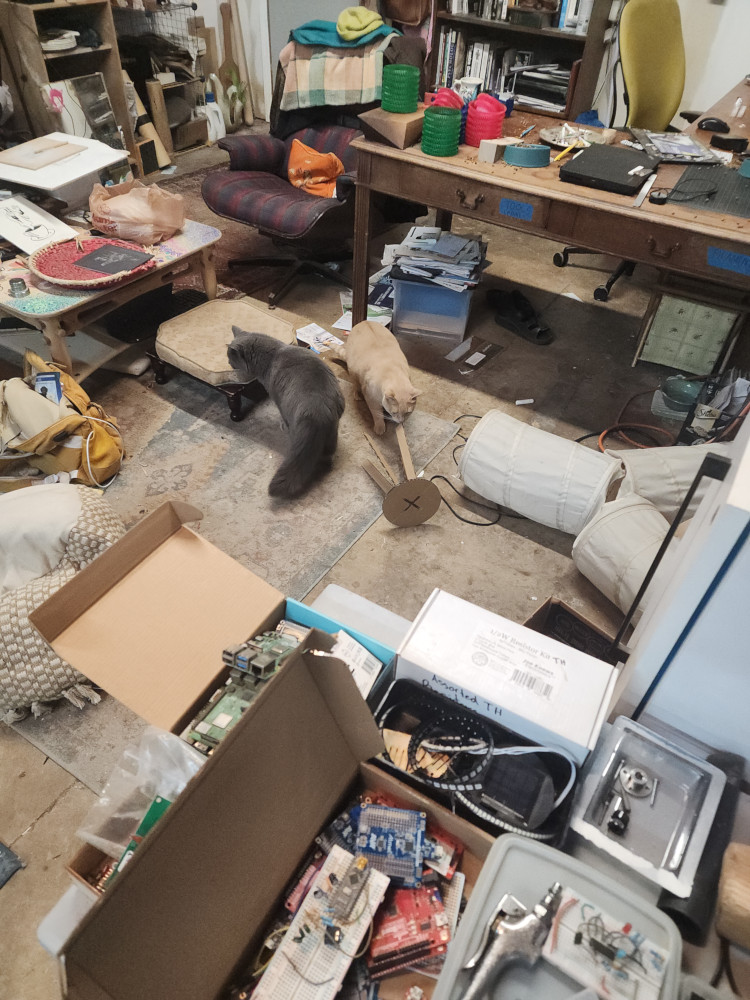
Cats
Files
Copyright 2026
Source code hosted at gitlab.fabcloud.org