Final Project
Final Project
My Final Project consists of two part;
1. FABLAB.able Kinetic Seat Ver.2 as the improved version from my Fabricademy Final Project to be the base of my FAB Academy Final Project
2. Semi-Active Kinetic Seat controlling system development
1. Development of FABLAB.able Kinetic Seat
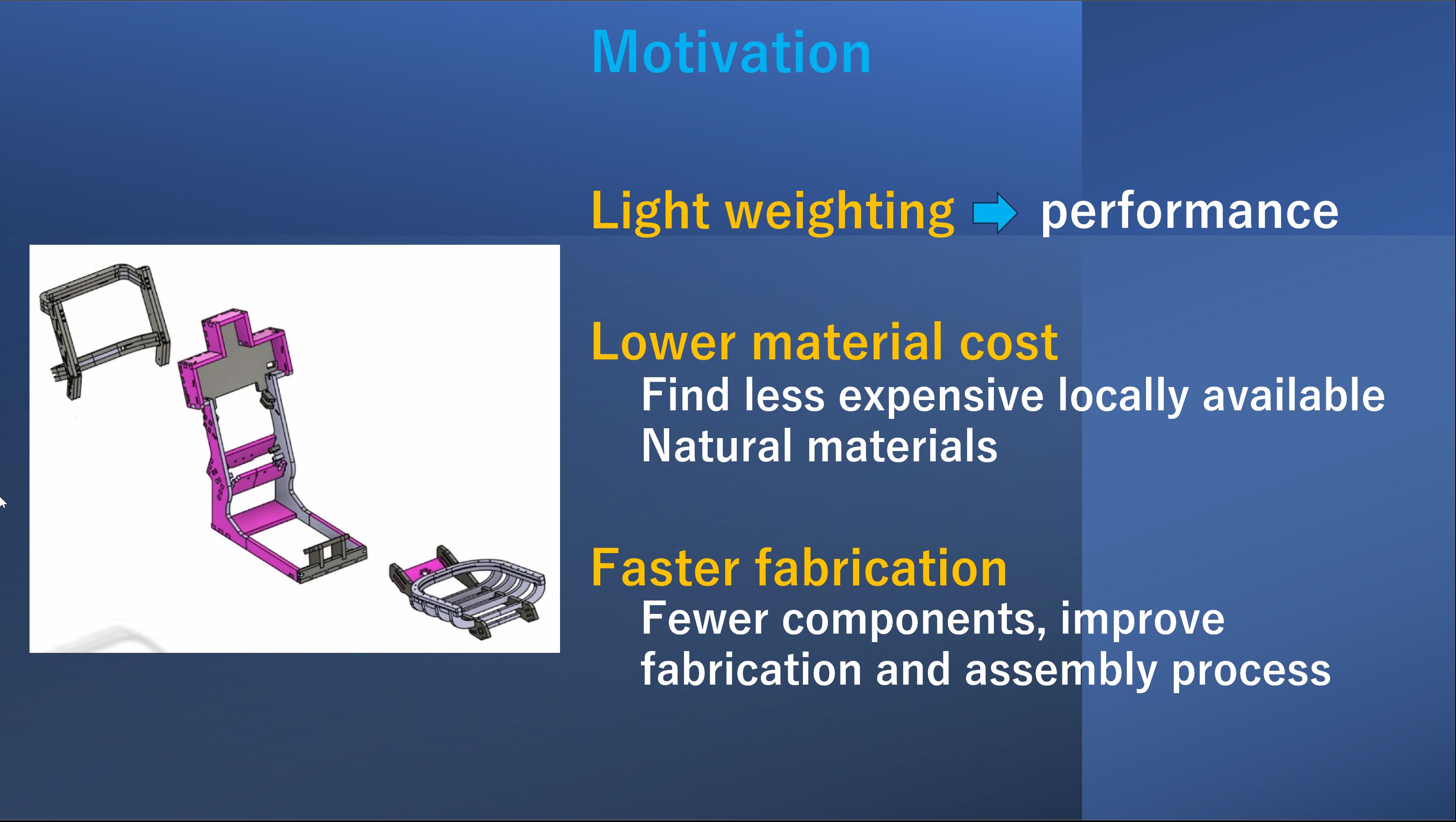
1st prototype was successful, but some improvements were needed:
- Lightweighting for performance improvement esp. at the moving parts
- Lower material cost by finding less expensive, locally available natural materials
- Faster fabrication with fewer components, and better fabrication process
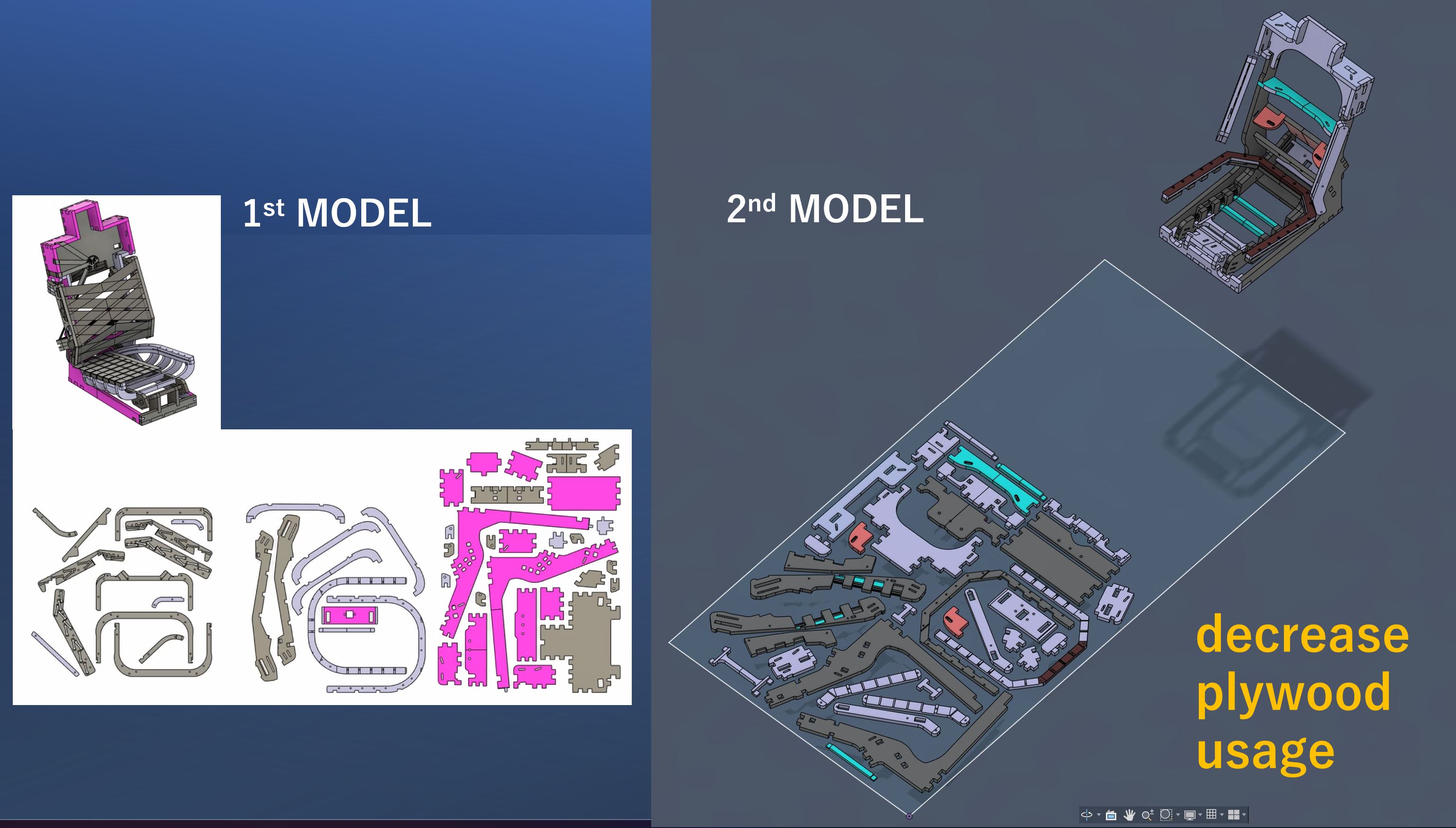
For faster fabrication, I minimized the plywood CNC parts…
Version 2 can be milled from 1 board…versus 2 boards before
For both mass and material cost reduction,
I chose Bamboo strips for its strength.
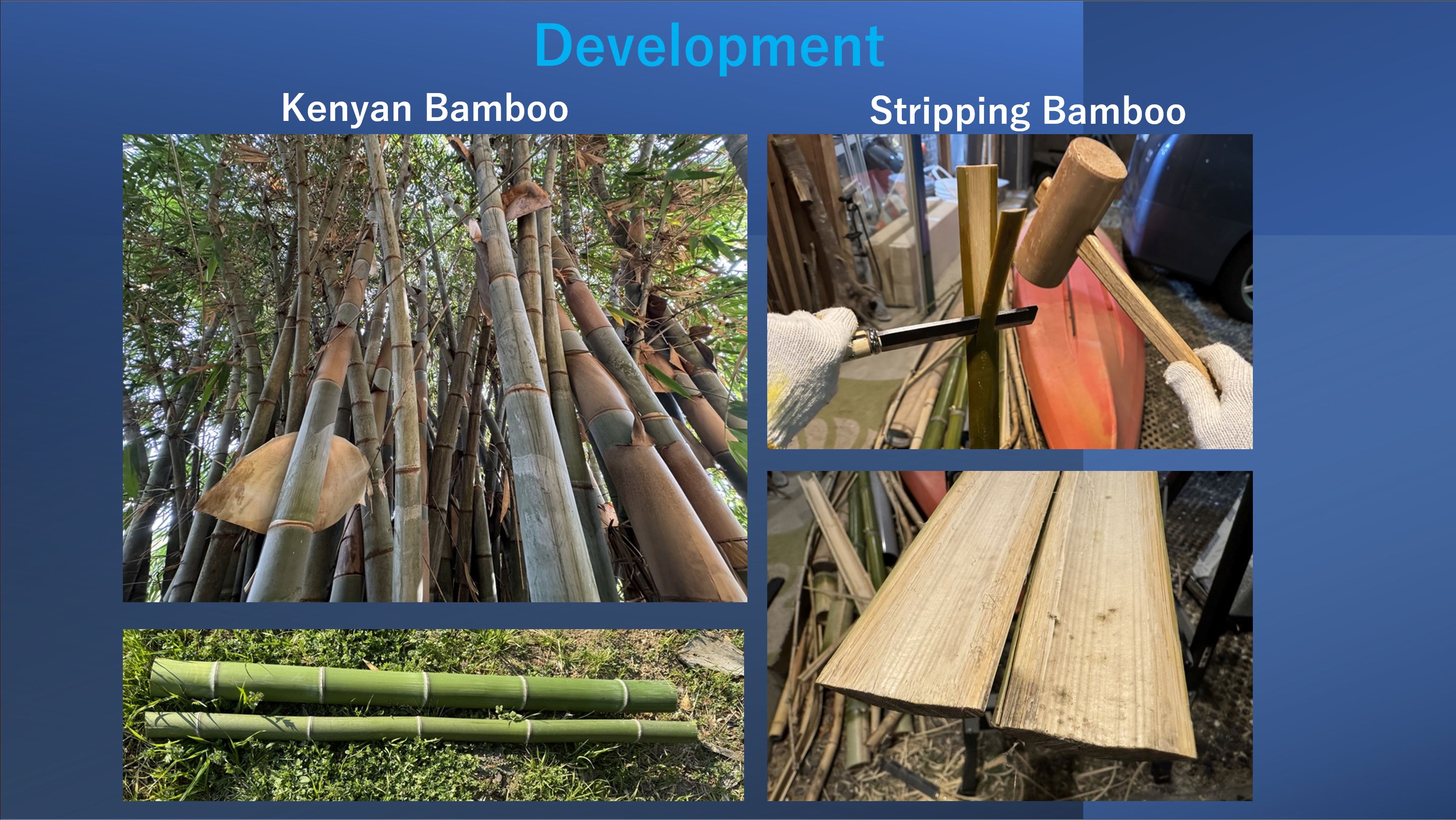
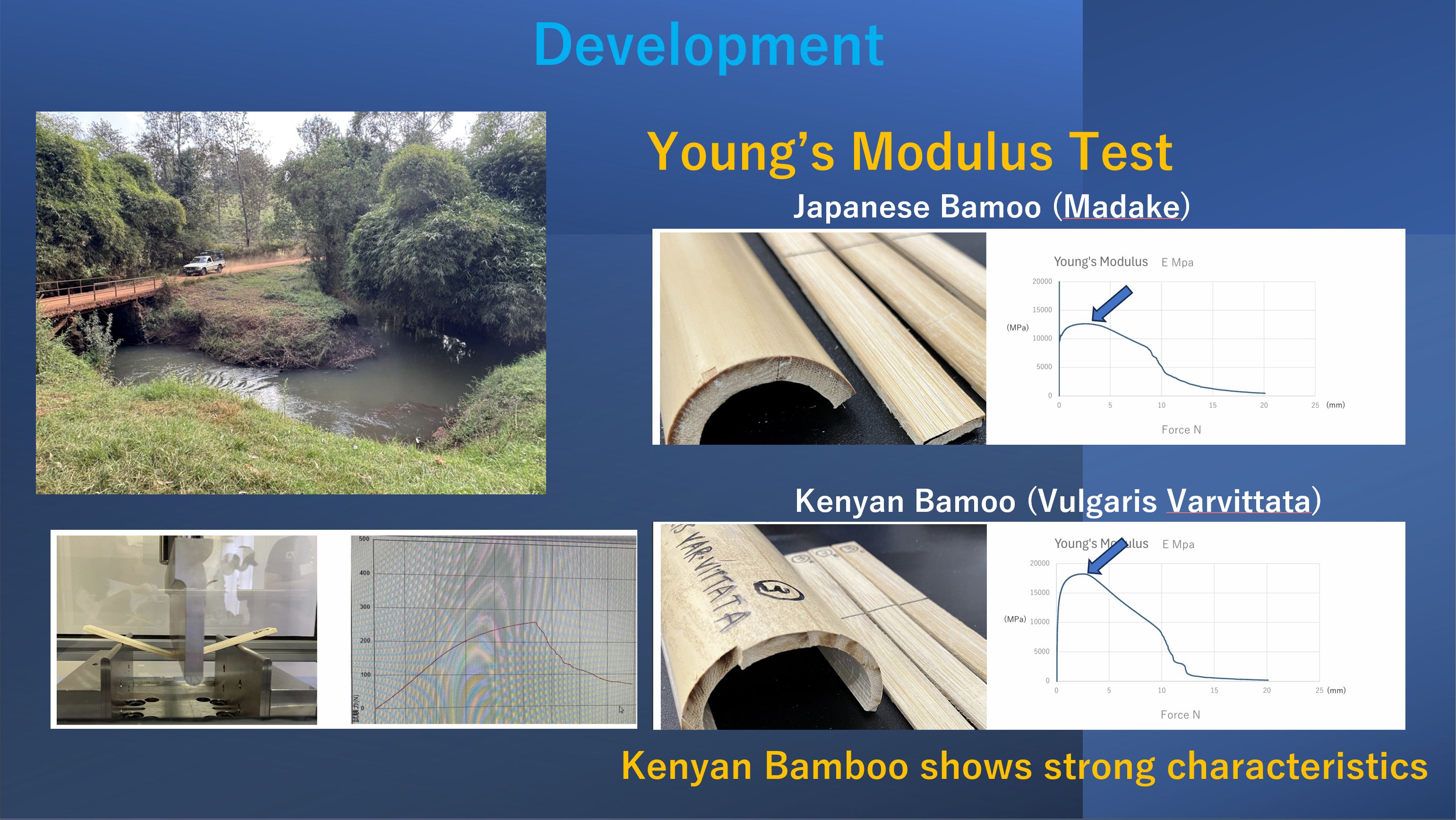
In Kenya, Government started planting Bamboo to prevent erosion of riverbanks.
I discovered that Bamboo in Kenya is very strong particularly the Vulgairs V speiceis.
You can see in the Youngs’ modulus graph in comparison with the Japanese bamboo Madake.
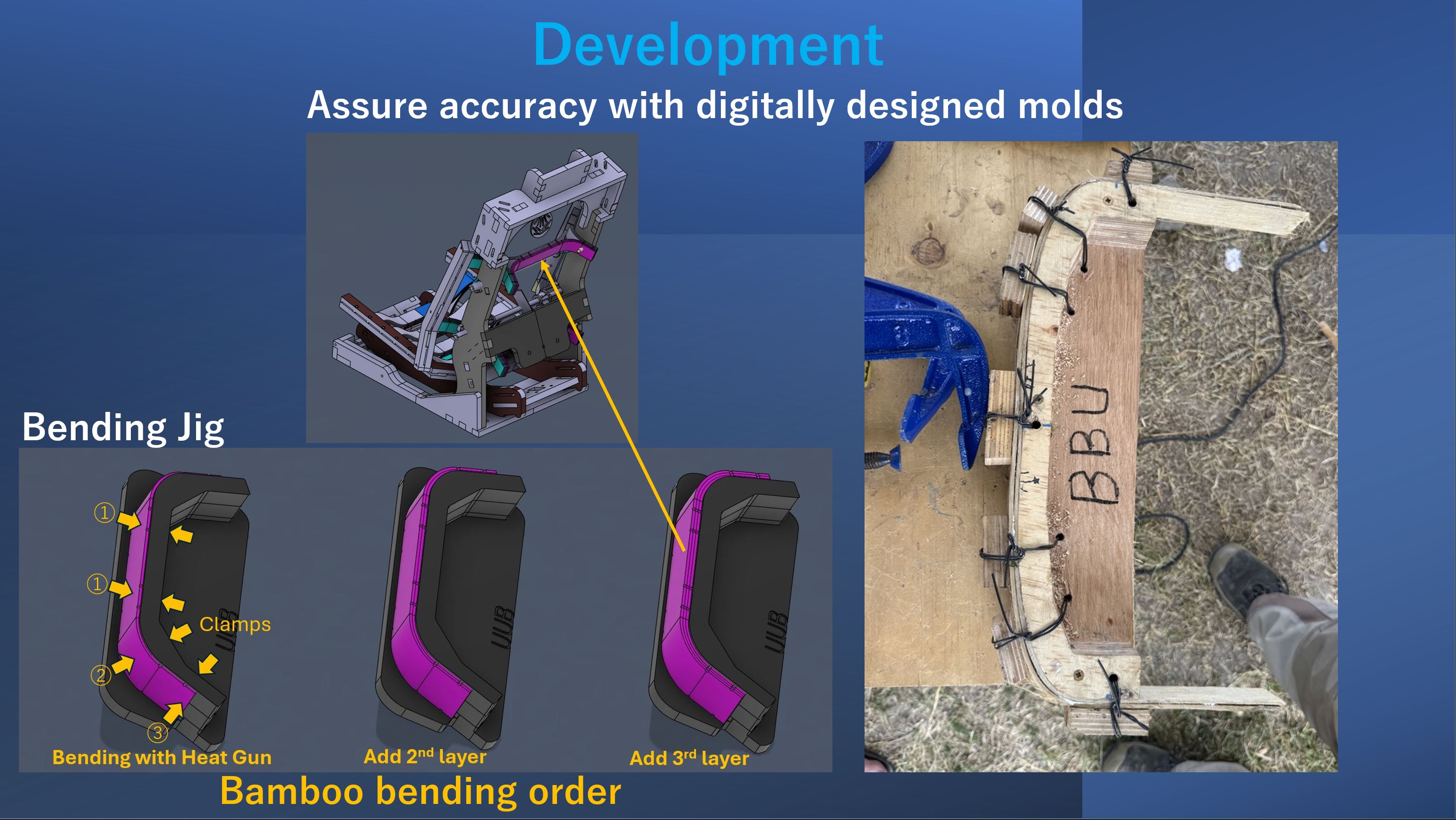
CNC jigs were made to assure the accuracy of stripped bamboo bending curvature.
This improved fabrication efficiency, as several people could work in parallel.
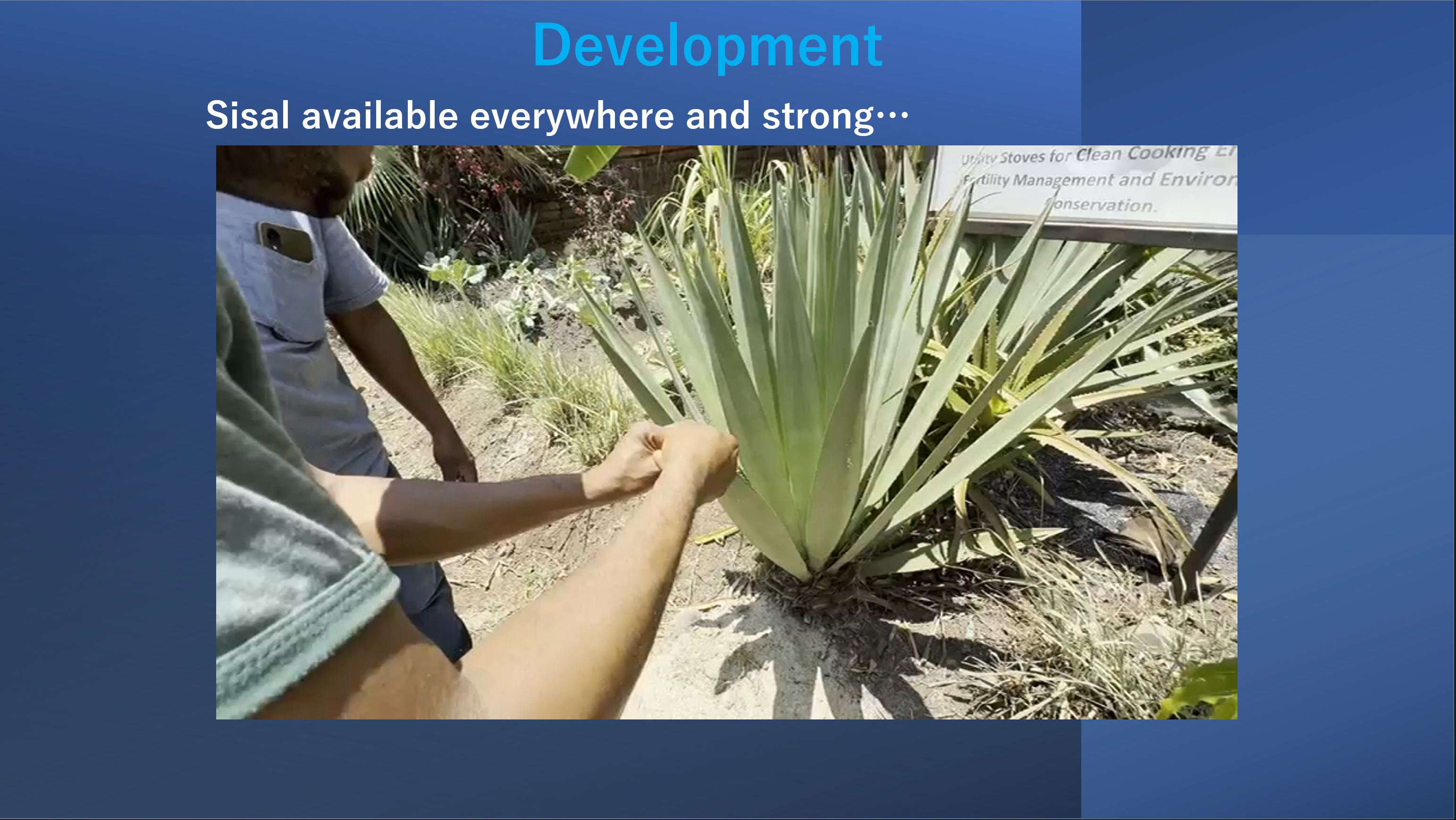
There are Sisal everywhere, and they have very strong fiber inside…
Here you can see our fabrication process from local materials.
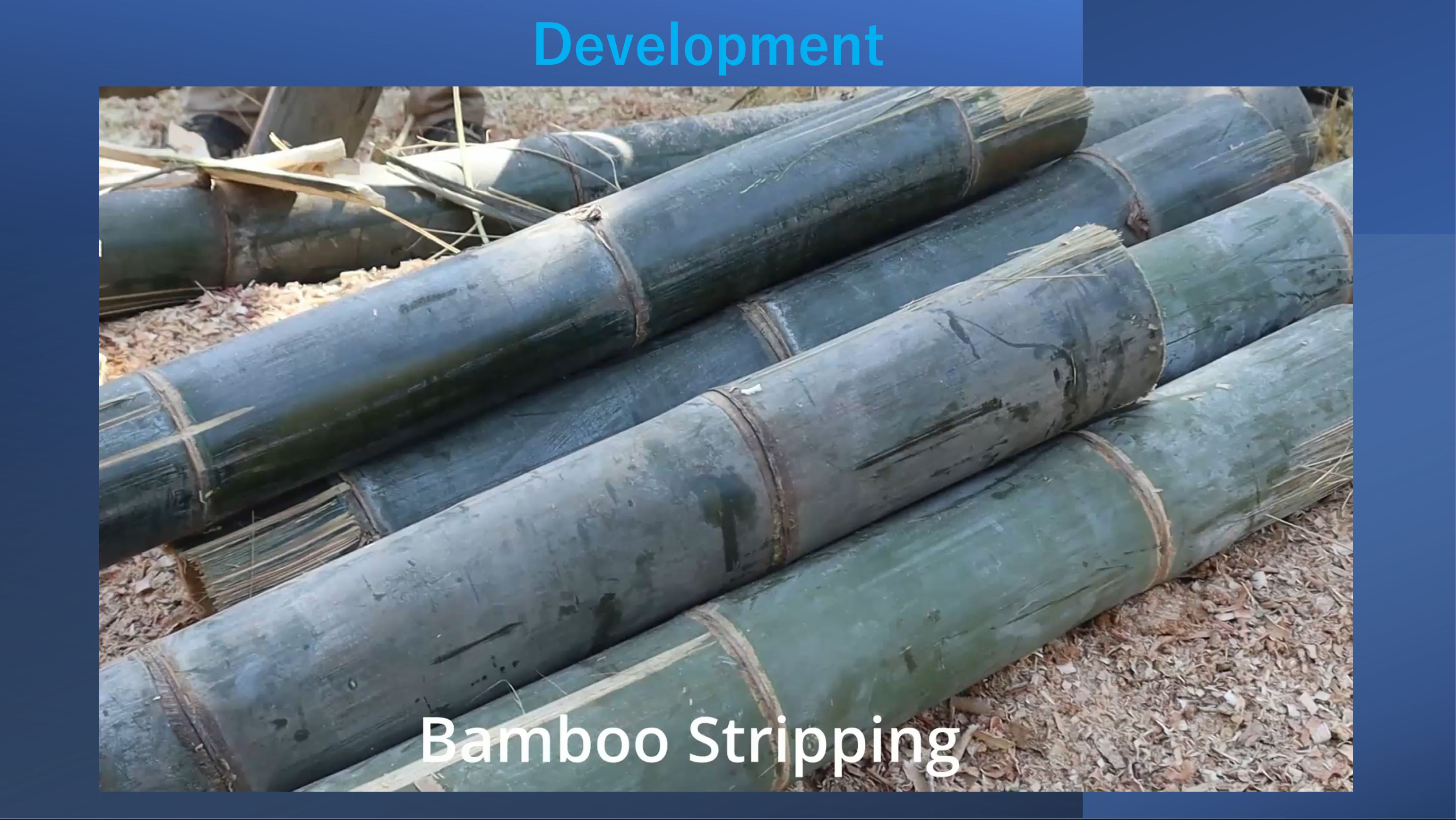
–> Video will be installed here
We asked TukTuk drivers to test drive our seat and give us their impressions;
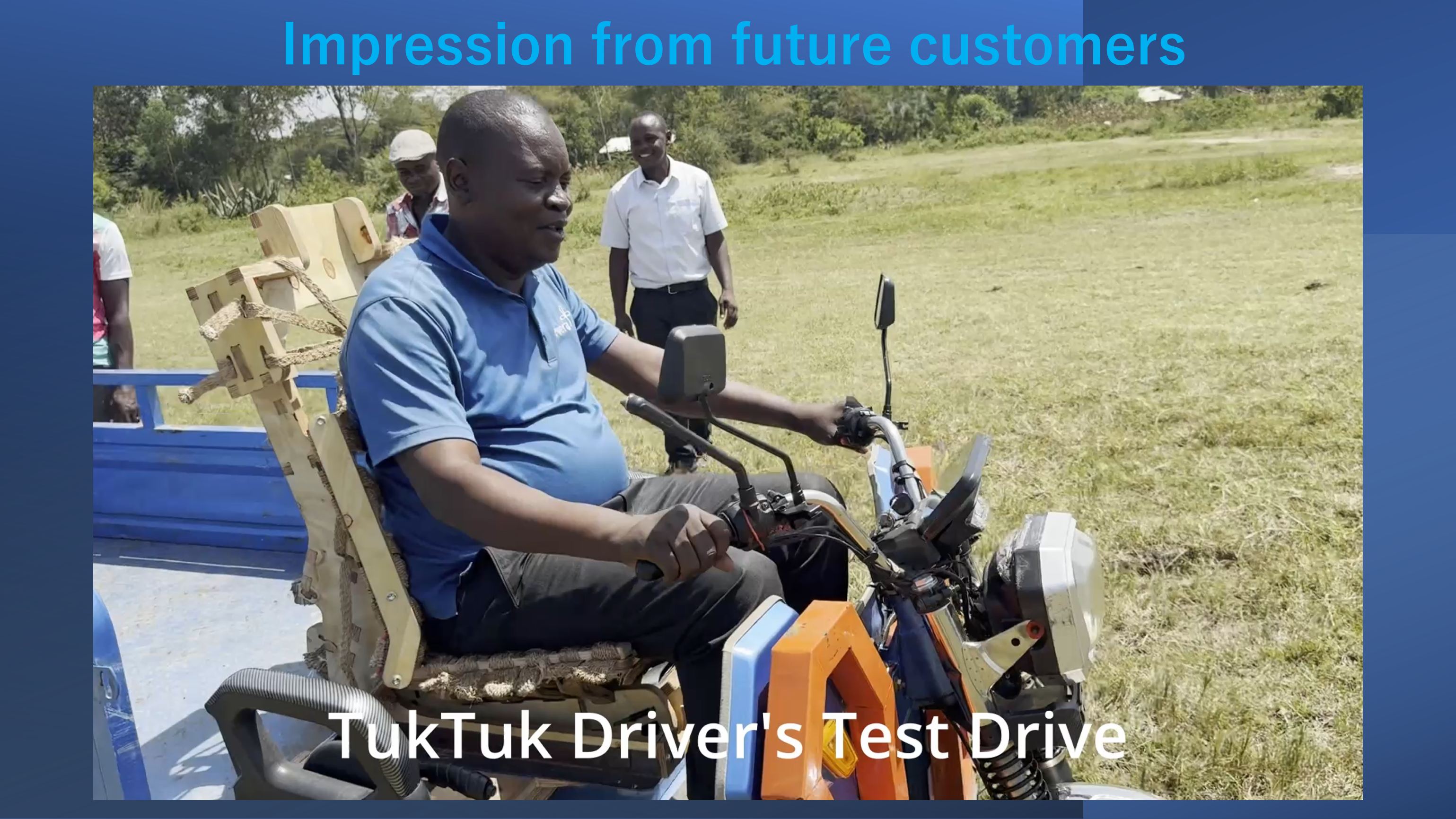 –> Video will be installed here
We further investigate the business opportunity for Safari Tour Conversion vehicles.
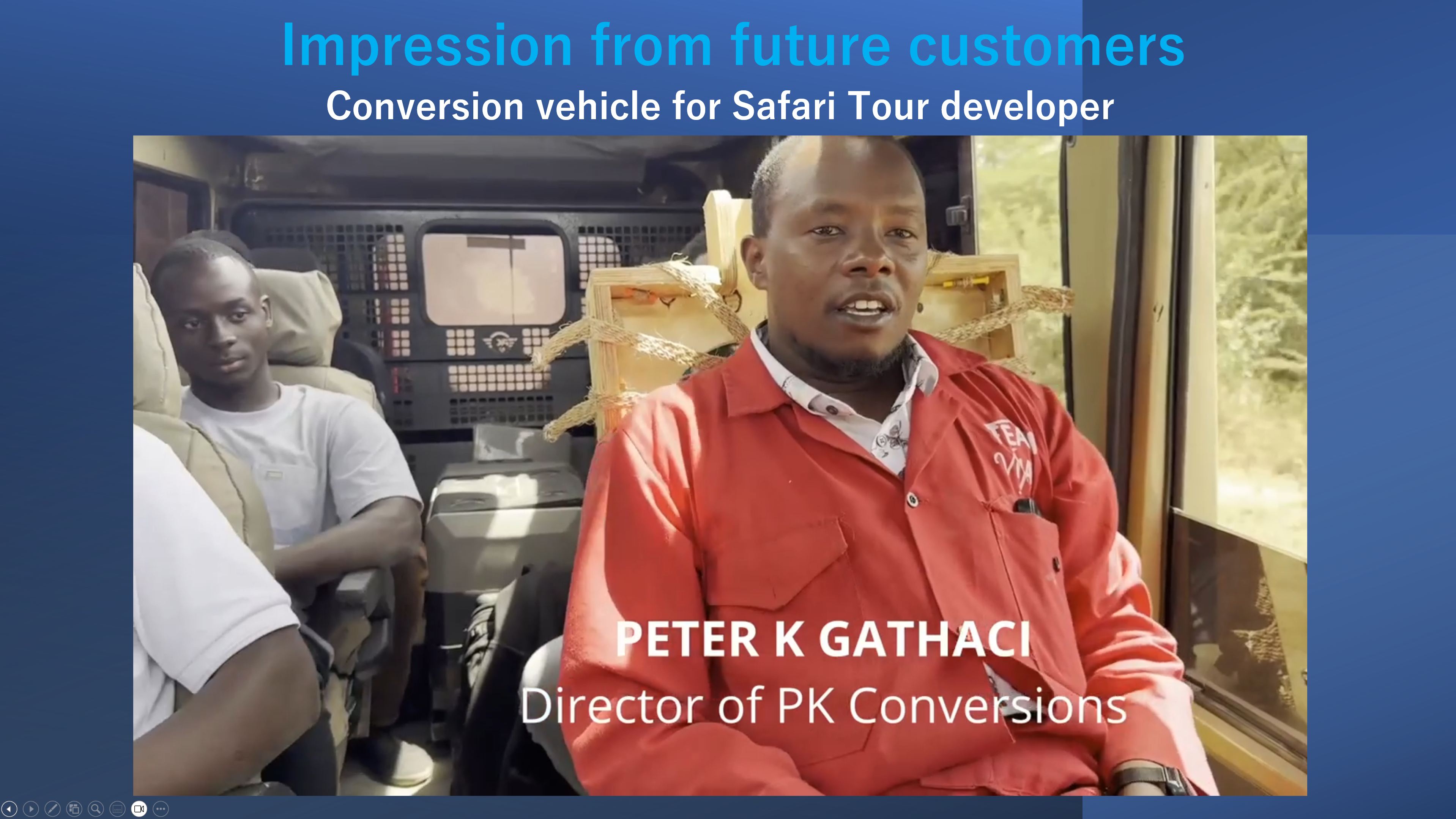
–> Video will be installed here
A patent was filed.
This patent is for the strong structure of Bamboo strips usage.
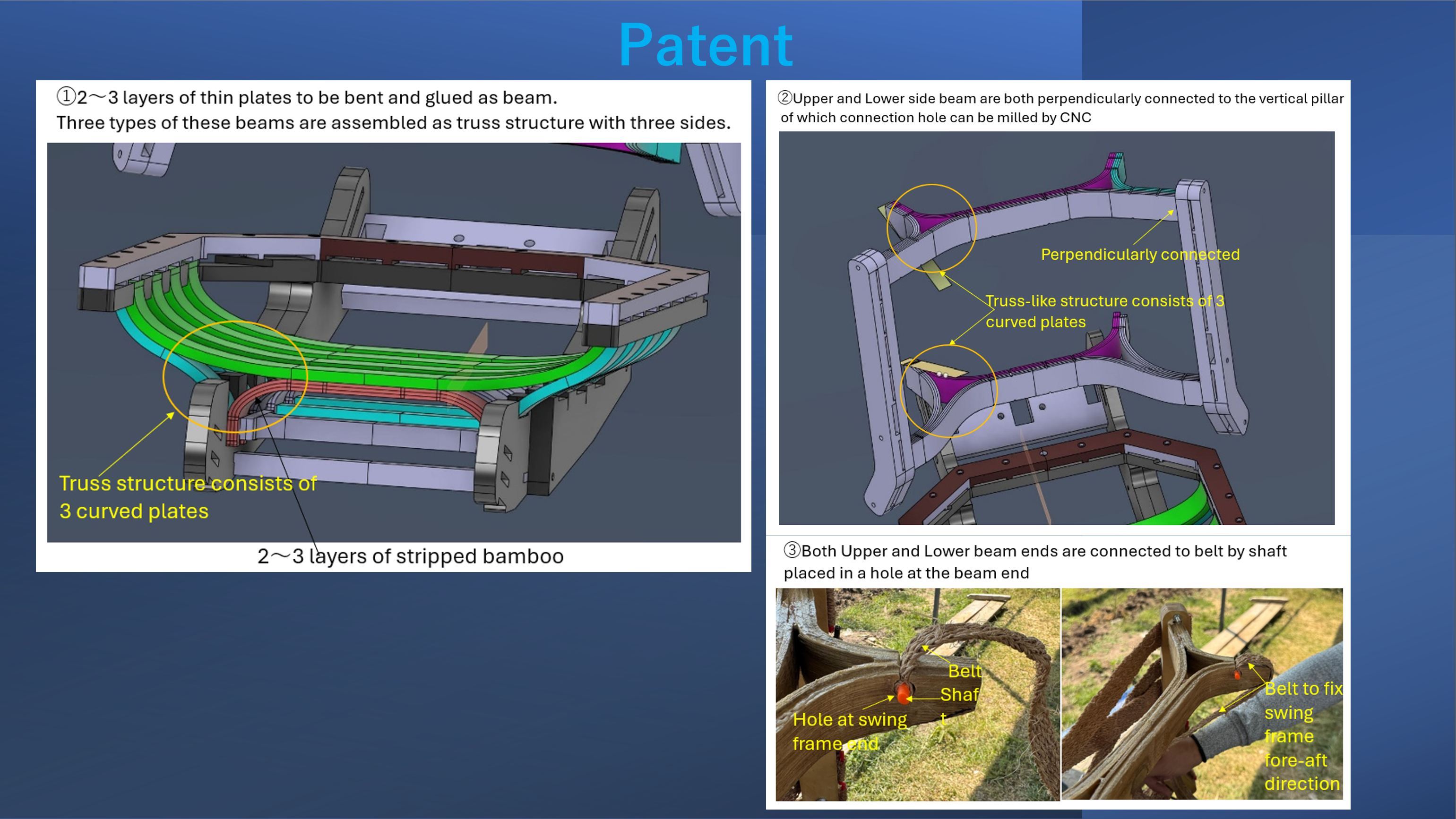
This is the most important part which I could not share yesterday morning talk.
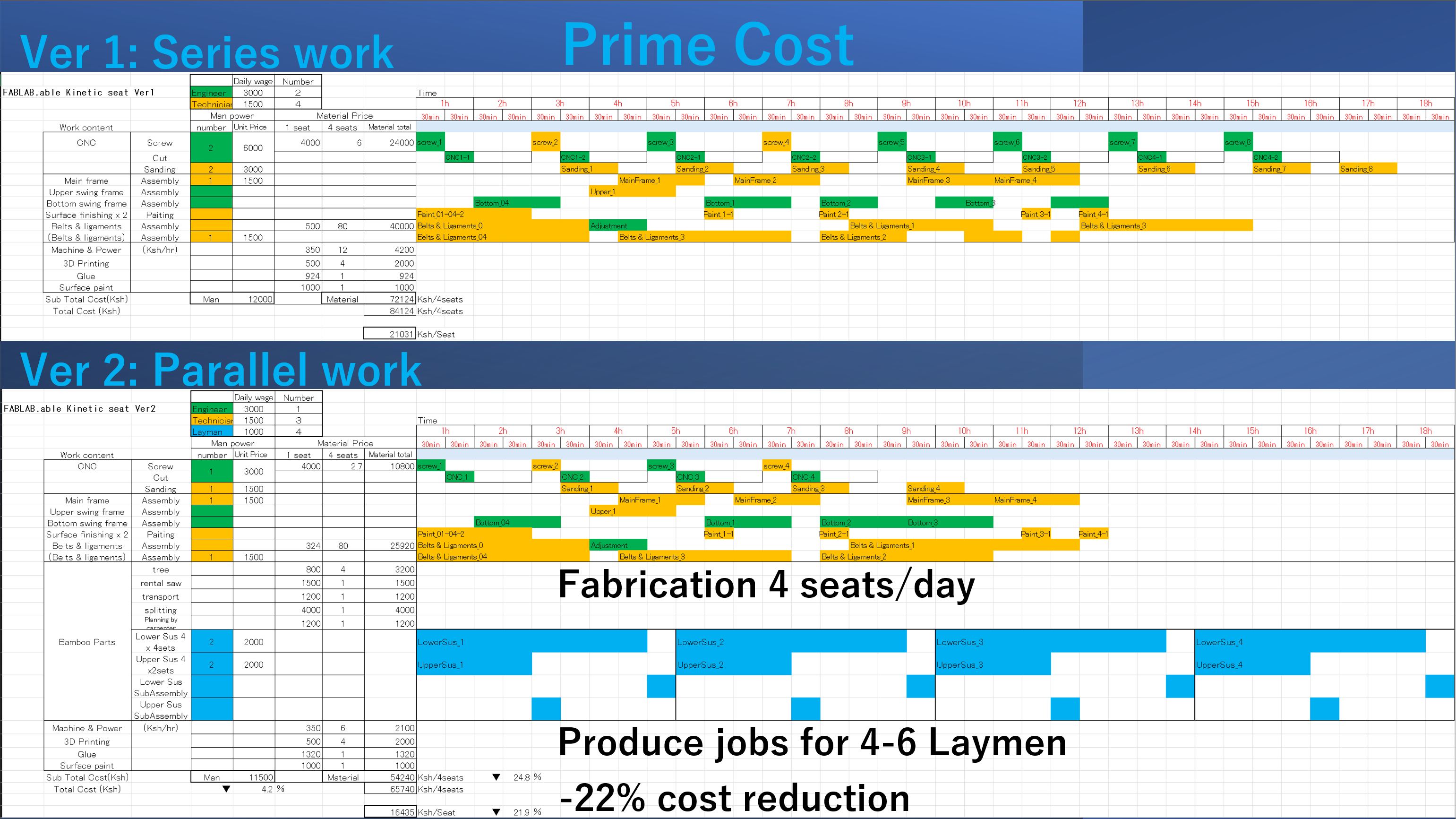
This table shows the workflow, and the lateral axis shows the time.
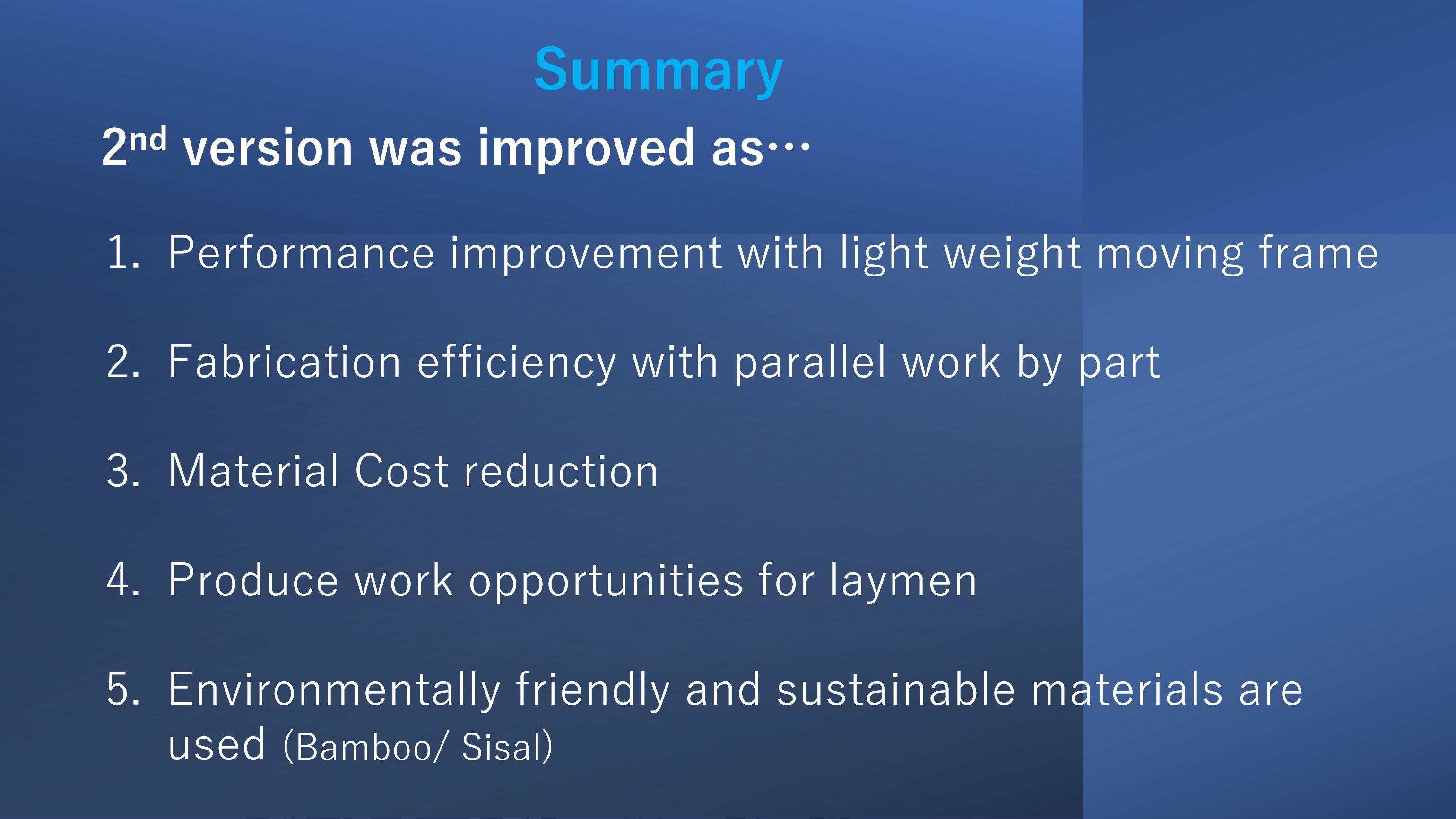
Version 1, uses only CNC cut plywood body structure, could not be fabricated 1 seat a day.
Because it uses 2 boards, and the data preparation, screw fixation points need to be changed everytime takes time…
While, Verson 2, the Hybrid work with Hand bending Bamboo parts could be fabricated 4 seats a day,
and produces jobs for 4-6 Laymen,
and Prime cost reduction by 22% including the workers wages.
It’s because of the low wages of young people, and hand work could be done in parallel.
Here under are the picture of our team…
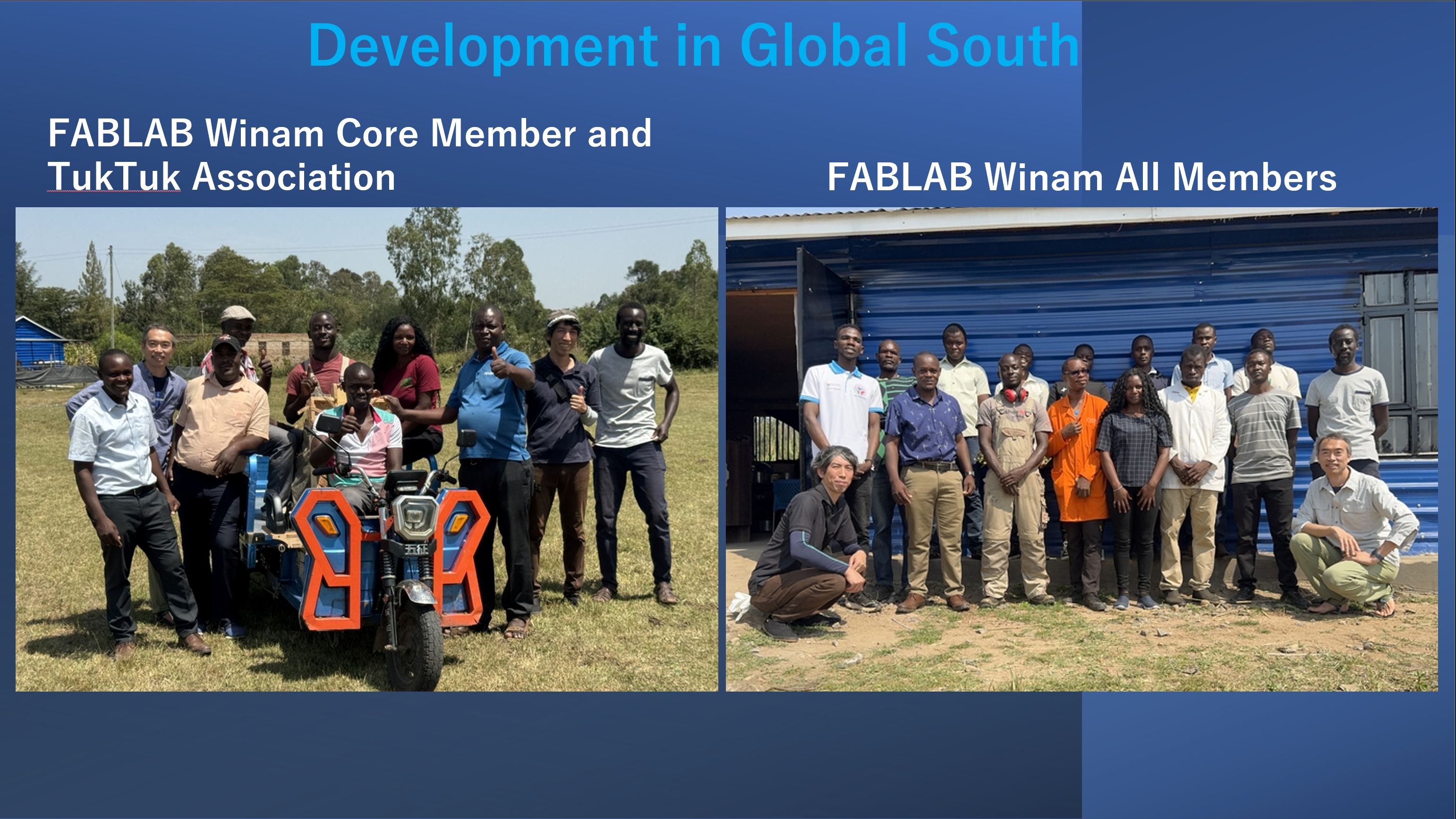
Sharing our “Development of FABLAB.able Kinetic Seat” story at FAB26
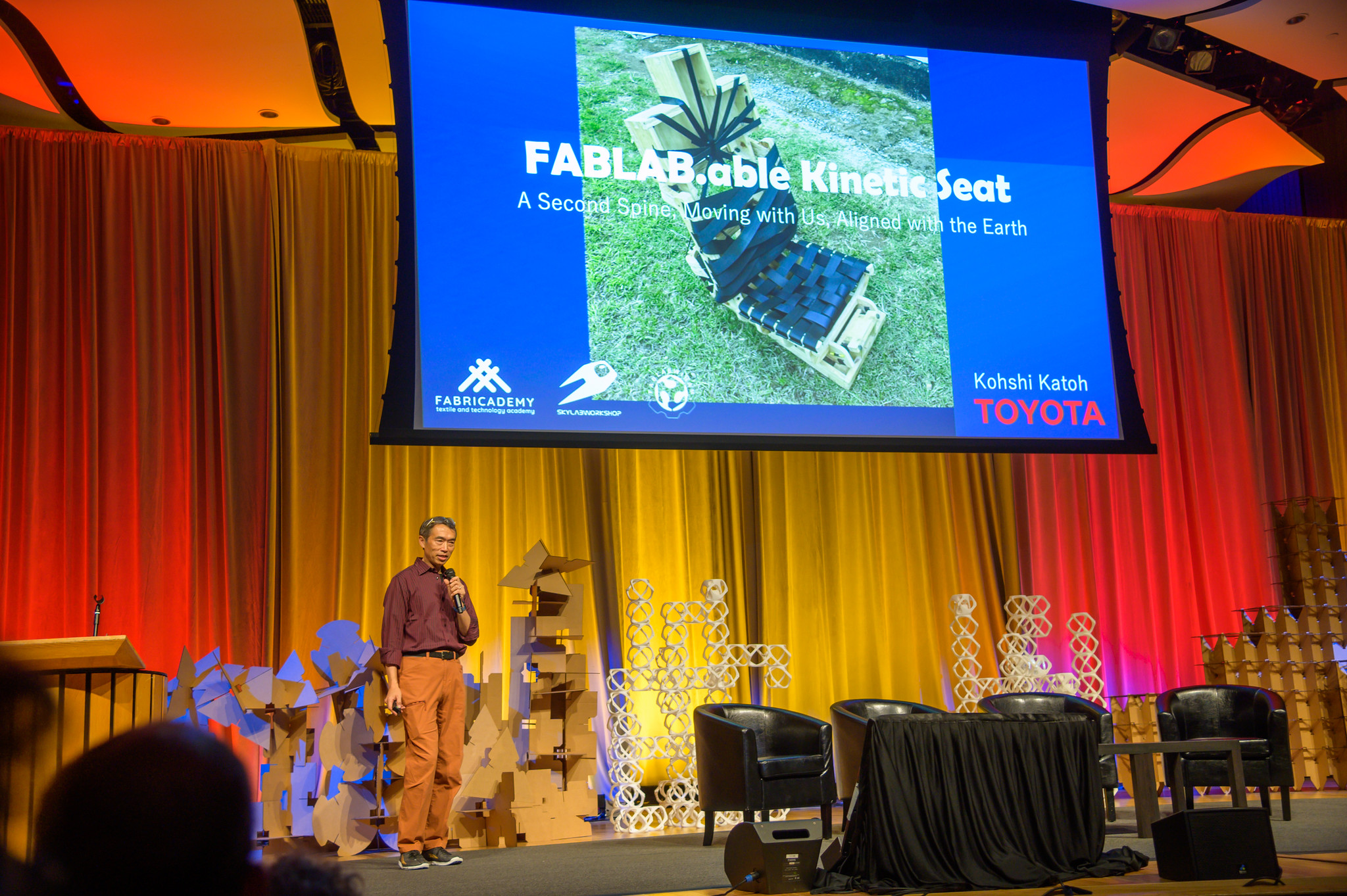
I was lucky to be selected as the main stage speaker at FAB26 to share our focus, ideas, method, experiences about our development journey with brilliant people in the event.
I could share our story in two presentations and one workshop.
These opportunities gave me further ideas for the future work and collaboration opportunities.
Here is one of the presentations I made in FAB26 –> Presentation at FAB26
Part of the work regarding the Seat Structure Design are from my FAB Academy assignment work.
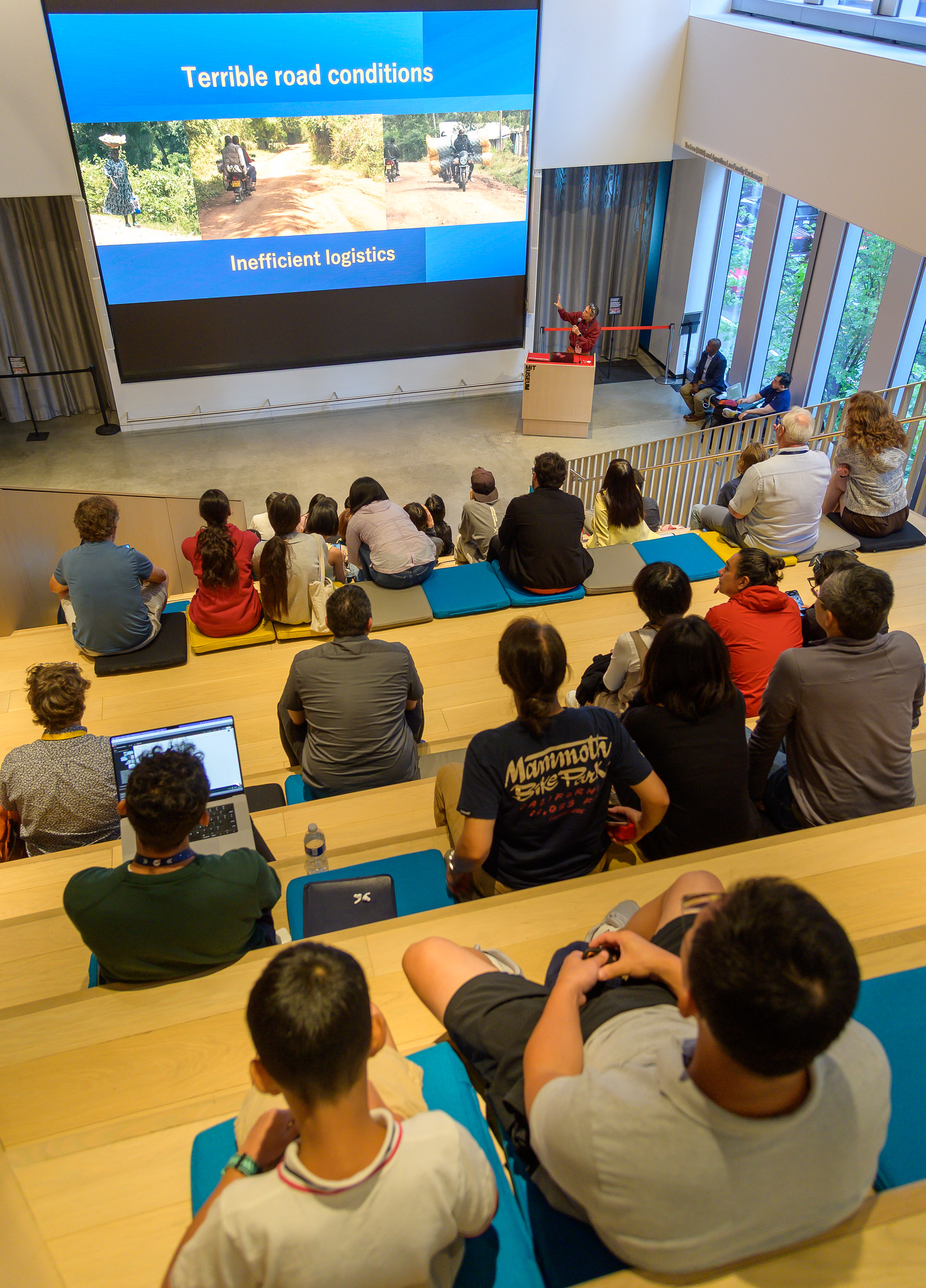
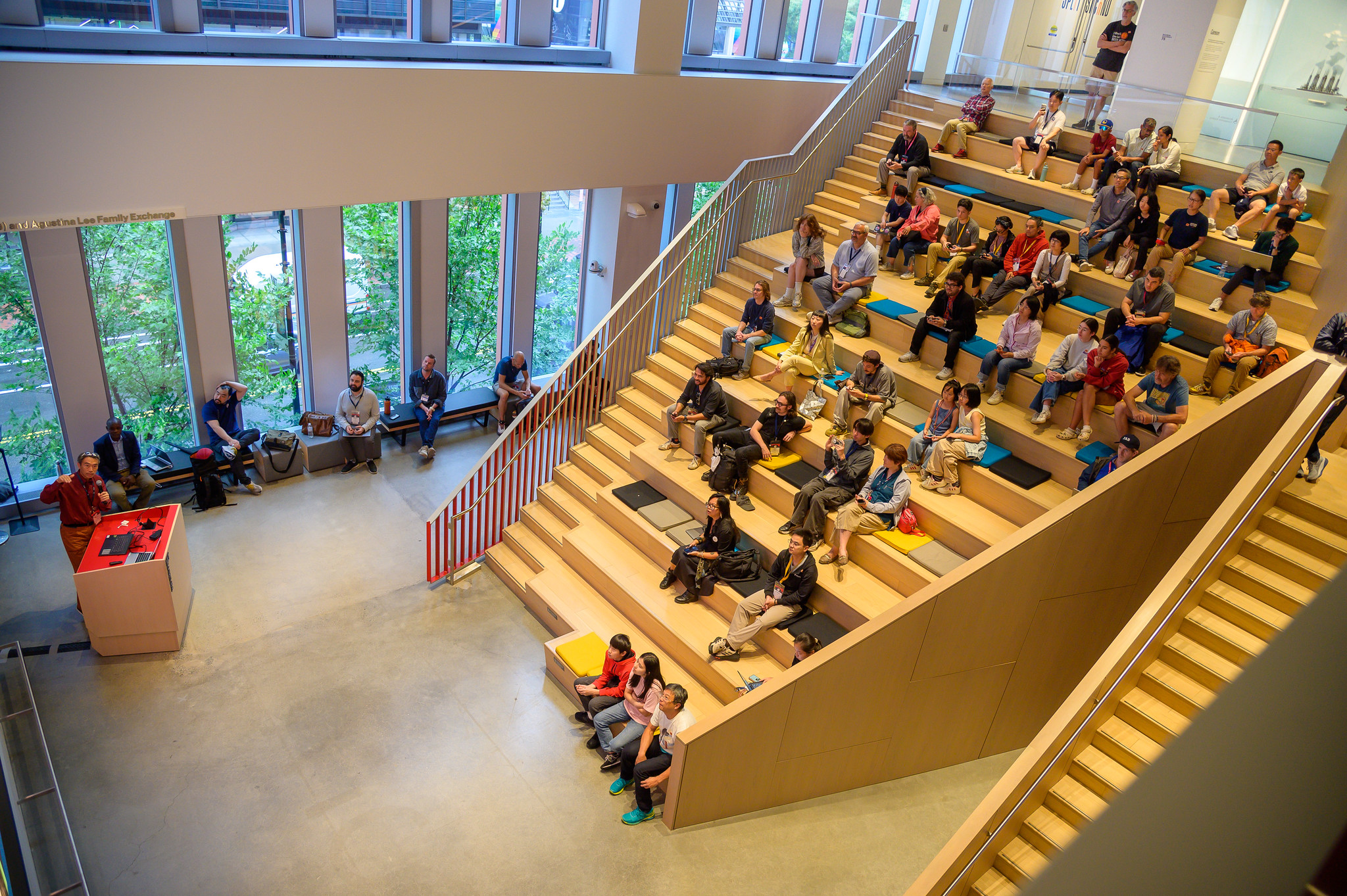
Presentation at MIT Kreigue Auditorium
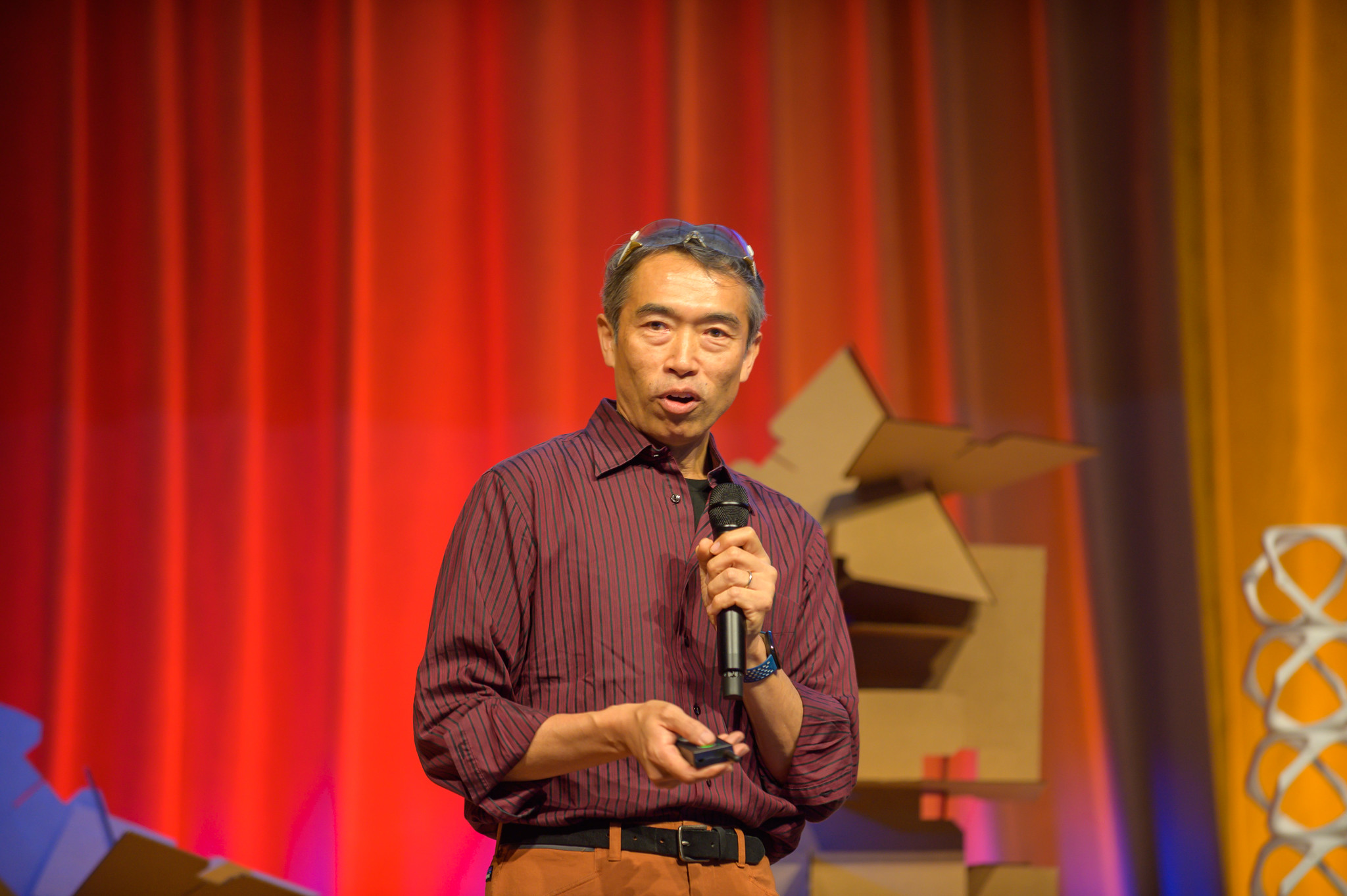
Presentation at MIT Museum
Workshop at MIT Media Lab E14 room
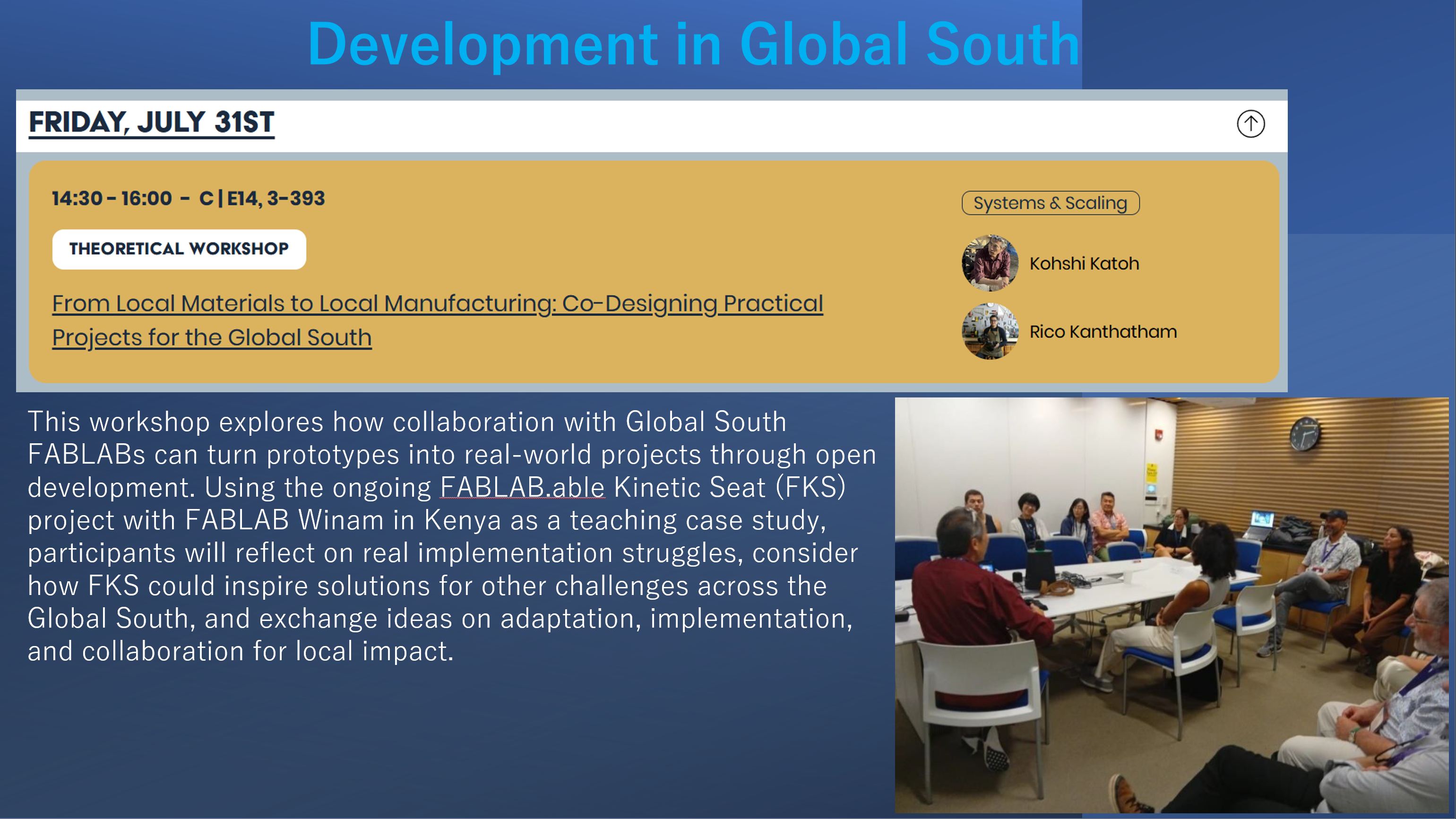
Thanks to having those opportunities of sharing our development story, we could have so many and so brilliant participants to discuss in our workshop at FAB26 last day.
Here under are the example of people who joined and gave great interests in our project.
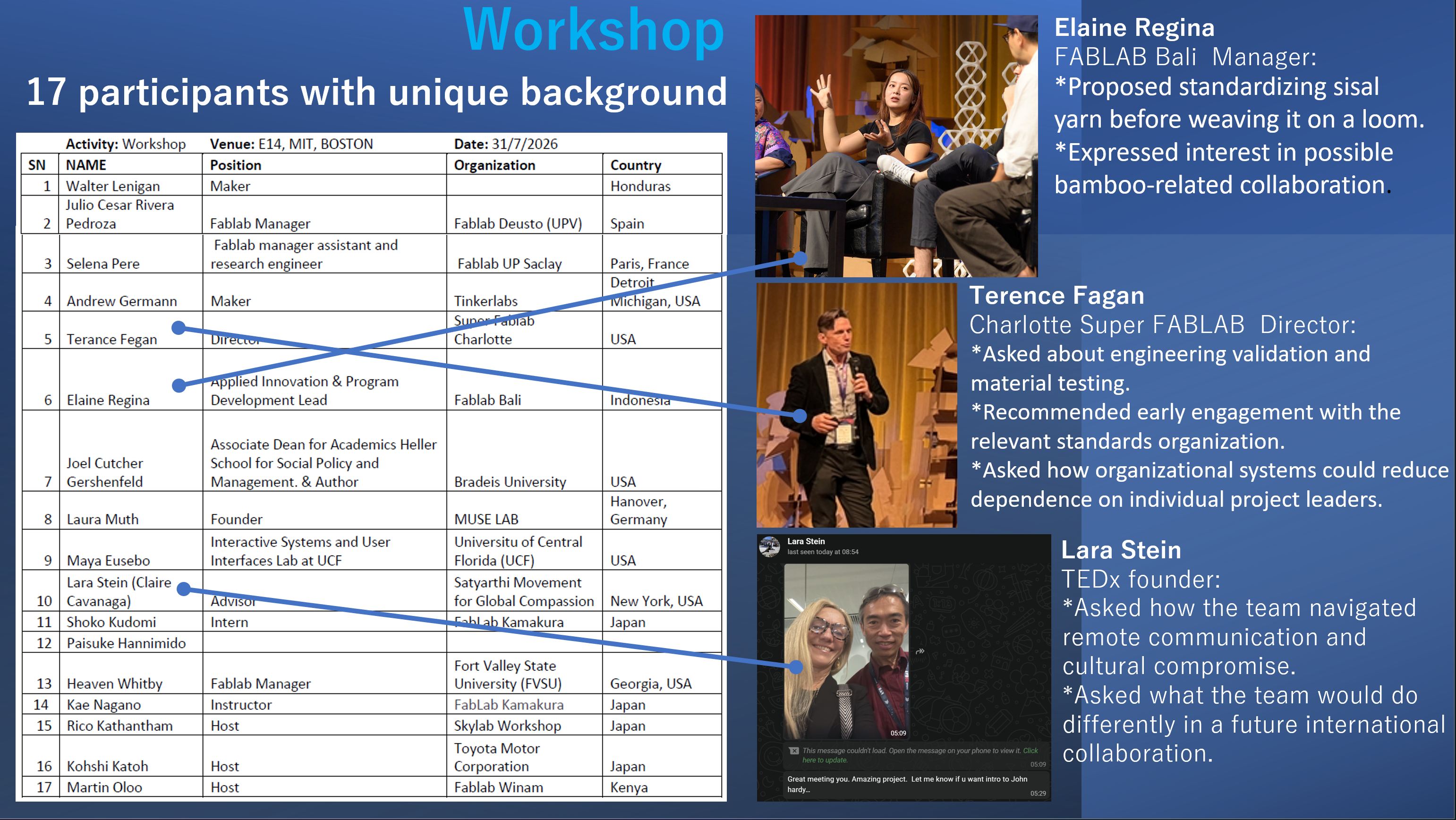
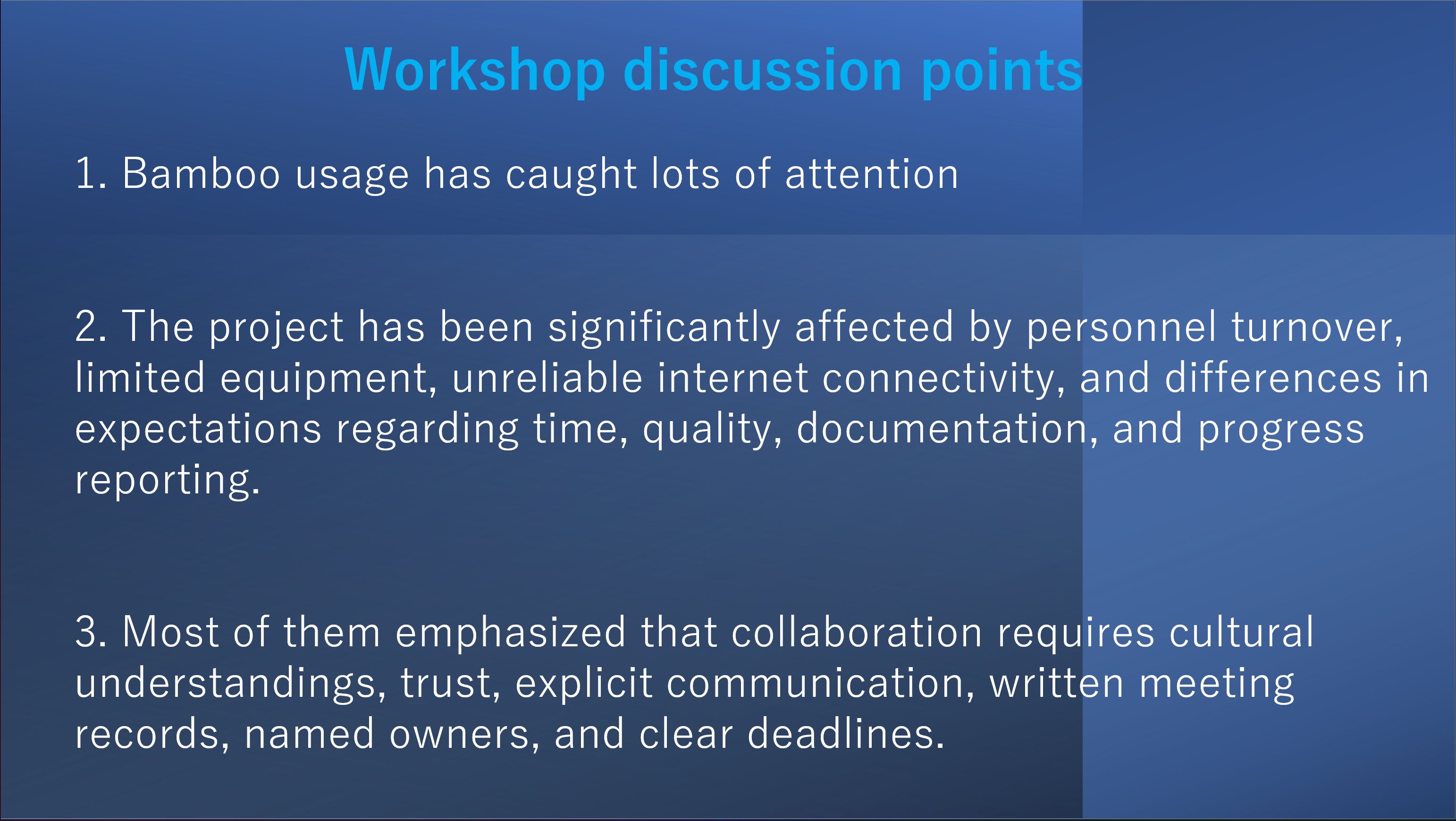
Here under is the summary of the discussion points in our workshop.
2. Development of “Semi Active Kinetic Controlling System”
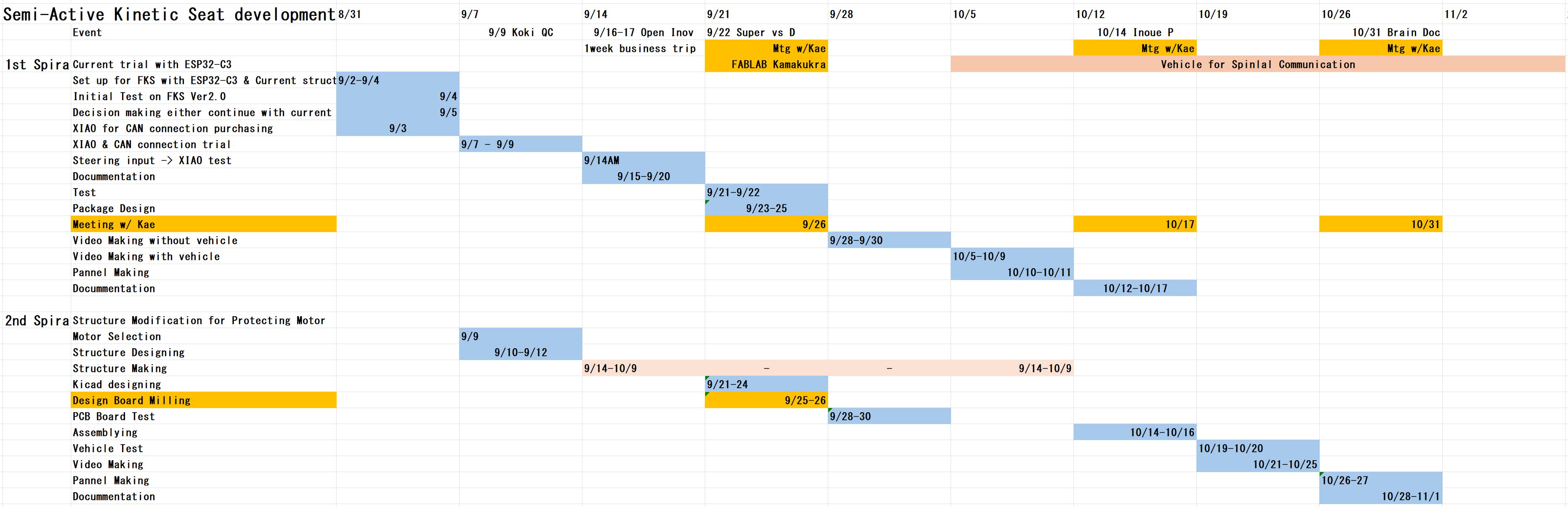
Revised Plan for “Semi Active Kinetic Controlling System” development (2026/09/01~2026/10/31)
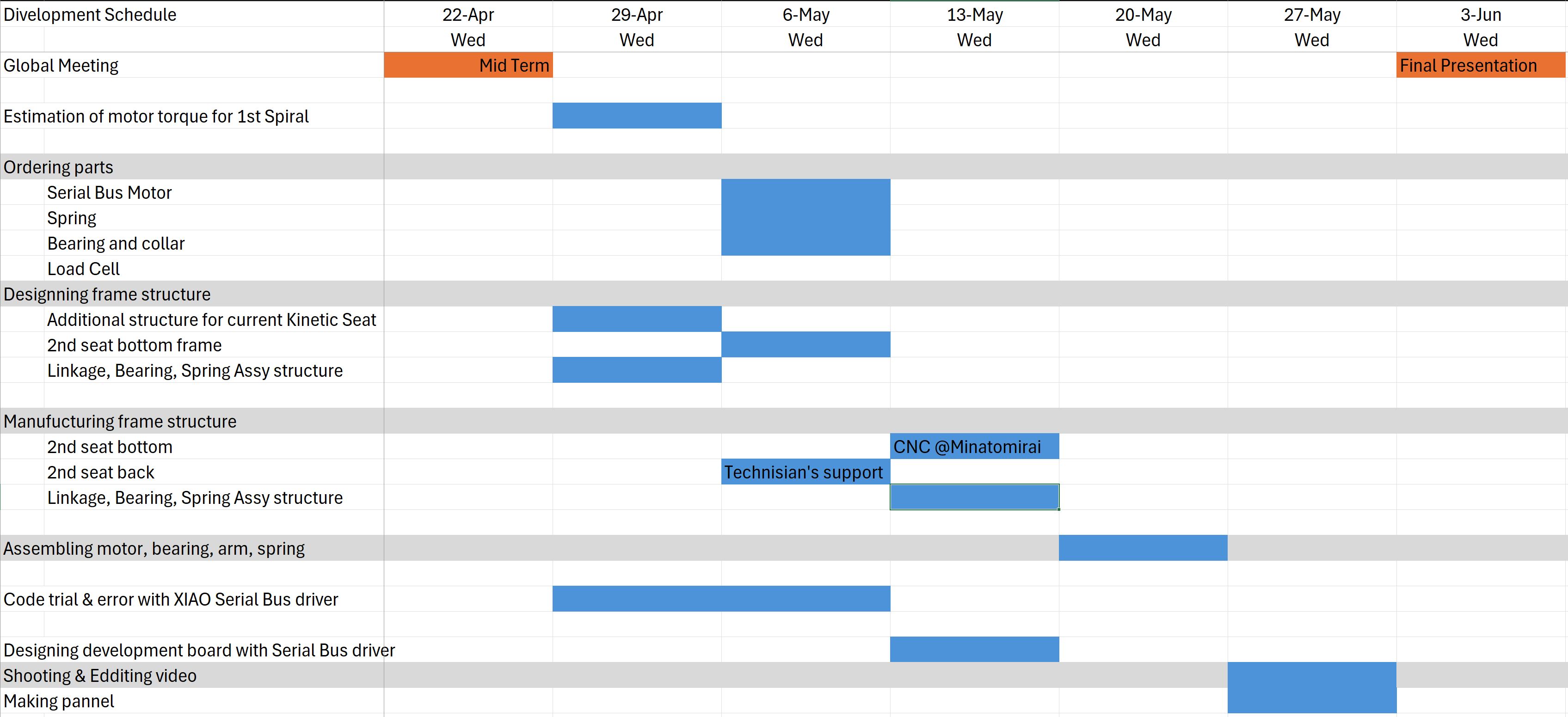
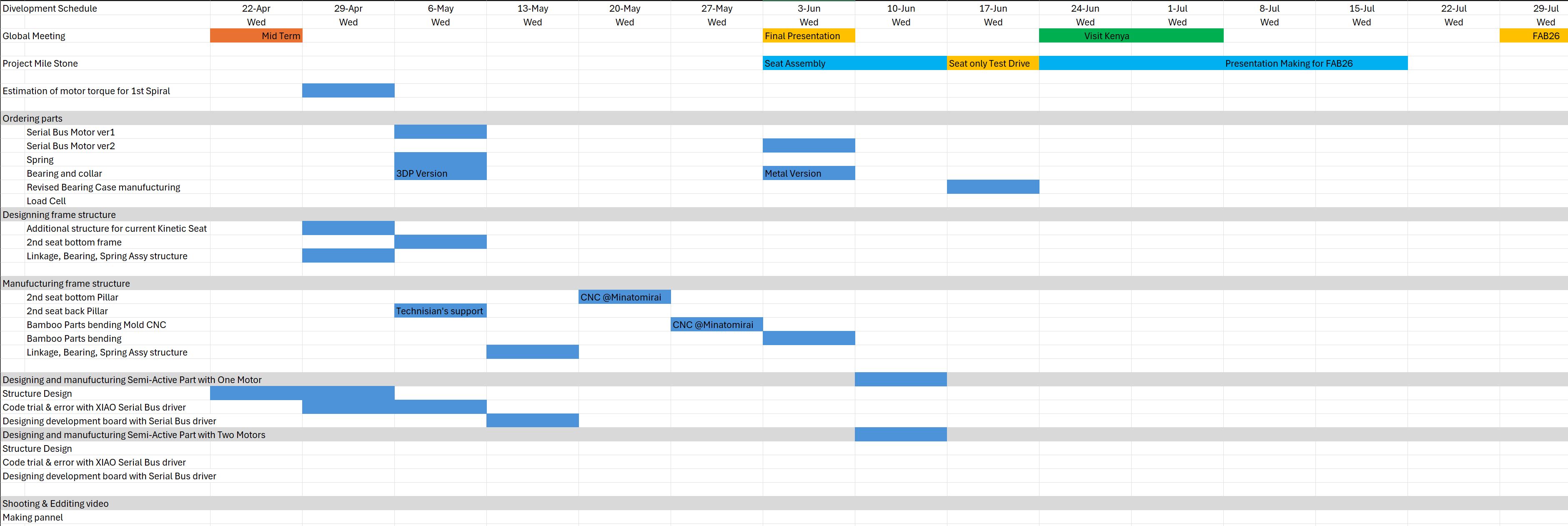
I made the revised schedule of my Final Project as follows;
Orange color date will be the date to visit or communicate with FABLAB Kamakura.
Initial Plan for the Final Project (~2026/05/15)
Since, I am tackling my Final Project as my company’s project, I am writing Final Project’s detail idea in my NDA folder(only accessible to limited person).
Outline: Develop “Semi Active Kinetic Seat”
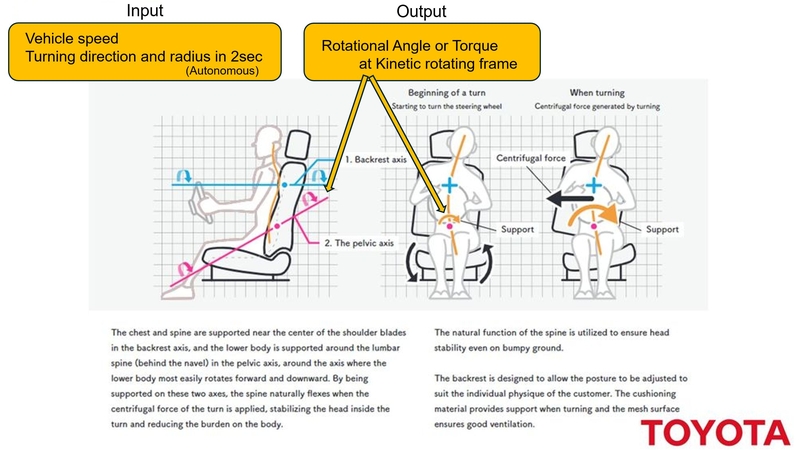
One example of the “Semi Active Kinetic Seat” control system outline is as follows;
My strong intention for the final project is
to achieve this active control without spoiling the “original Kinetic Seat function”
Structure
- Latest version of Kinetic Seat for Kenya (made of bamboo and natural material)
- Motor (linear or step?)
- Linkage to provide torque to swing sub-frame of Kinetic Seat
- Rotary sensor to sense motor angle position
- Wire or wireless net work VS vehicle
- Test vehicle with CANVAS net work connection for actual test driving at Toyota Proving Ground
- Car Driving Game with display and steering wheel for FAB26 workshop booth to collect feedback from FAB26 audience
Benefit
- Prevent all passenger’s Car Sickness
- Improve driver to vehicle engagement
More benefits are written in my NDA folder(only accessible to limited person).
Base Seat will be a new FABLAB.able Kinetic Seat
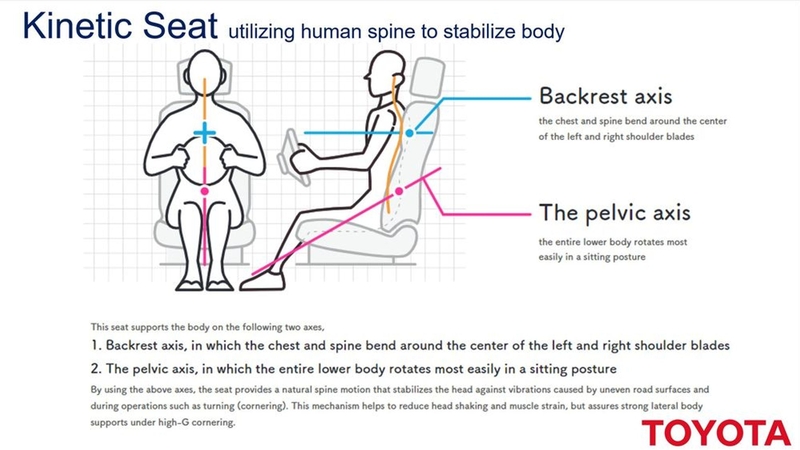
Principle of Kinetic Seat: Both seat backrest and seat bottom (pelvis) cushion is suspended by flexible belts by fixing the rotational axis position but allowing the rotational motion.
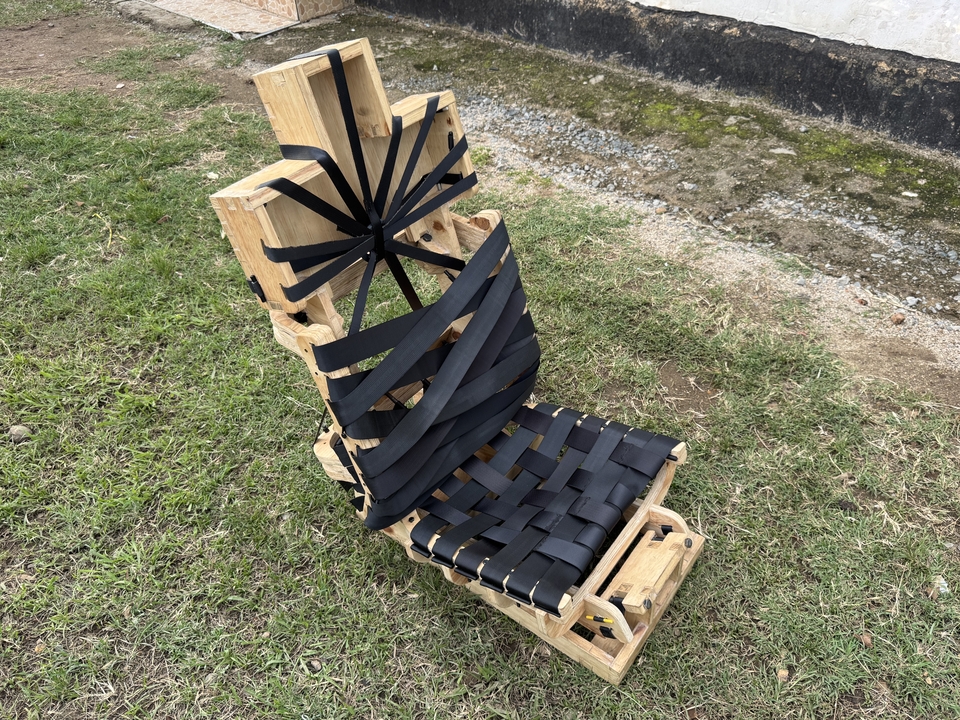
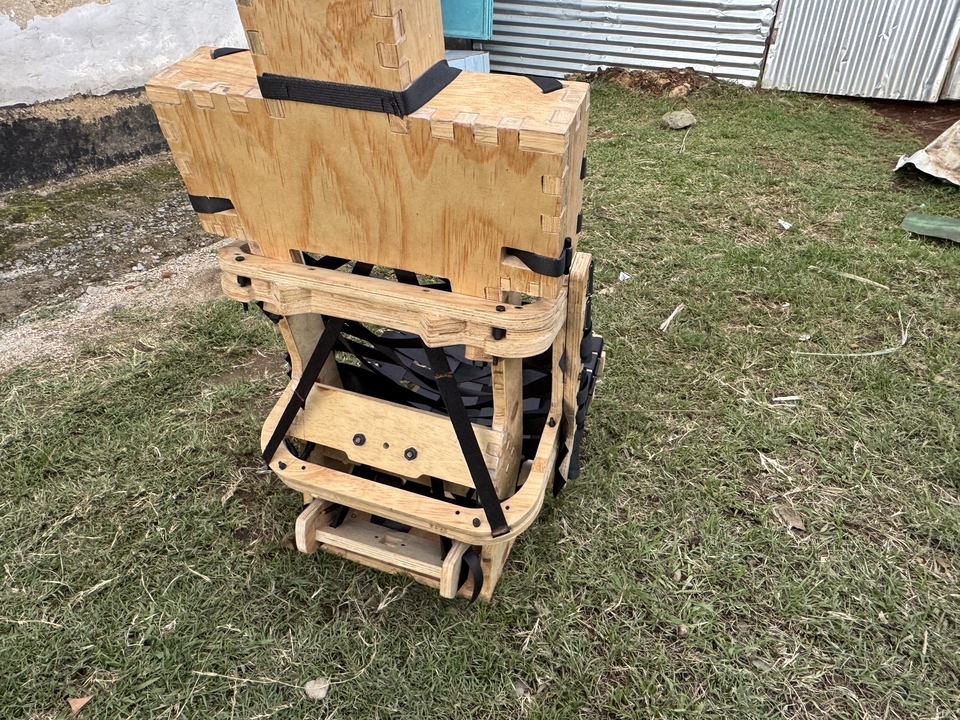
1st prototype of FABLAB.able Kinetic Seat made in Kenya
Initial Development Schedule
Postponing my graduation
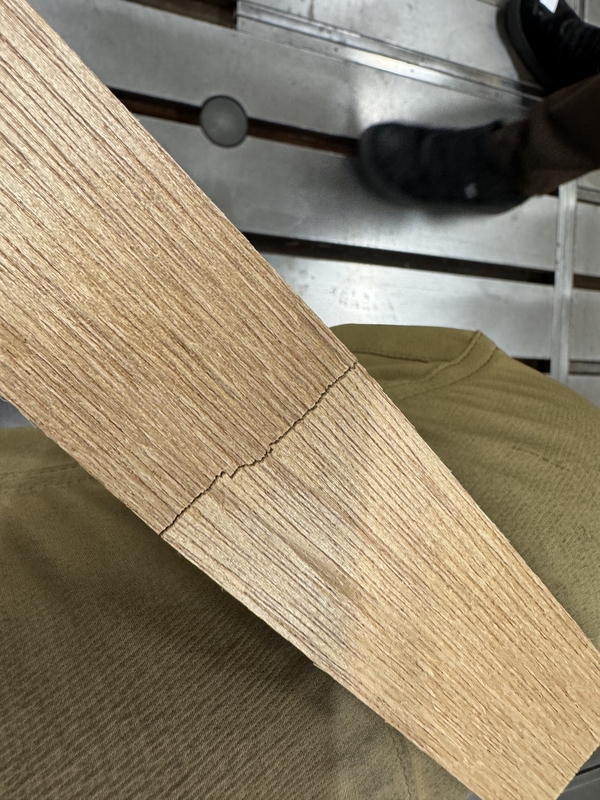
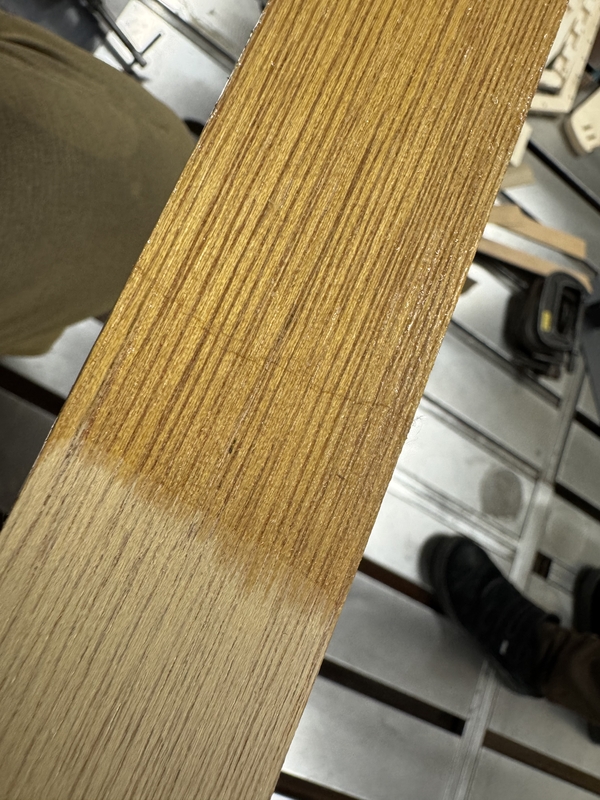
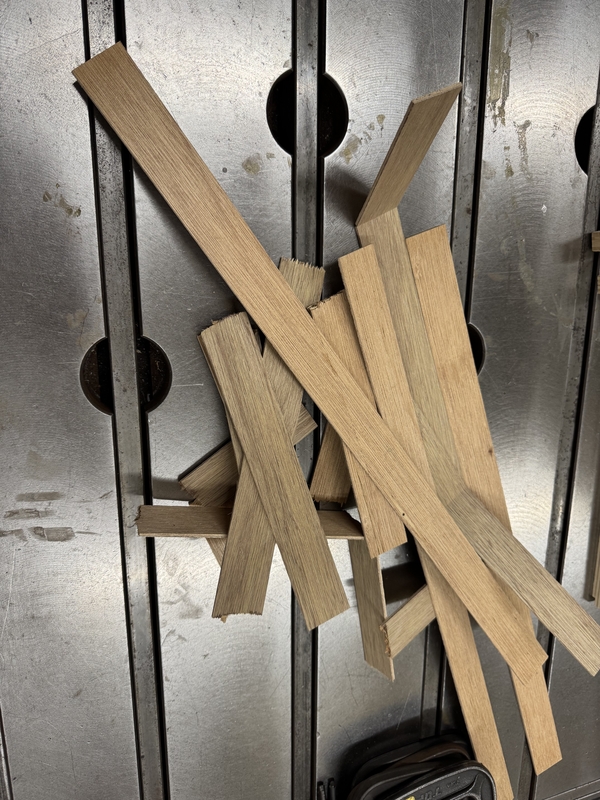
Because of the material “3mm thickness bending wood plate which simulates stripped bamboo” I have ordered arrived with insufficient condition with cracks in most of them, I need to ask the supplier for processing new pieces again to be in time for my Kenya project as well.
Revised Development Schedule
This made my project very difficult to complete within May since I have to complete the ver2.0 seat until 1st week of June for Kenya visit aiming FAB26 Talk…
Then, I decided to to postpone my graduation.
My FInal Project Requirement
-
What does it do?
The Seat (mainly bottom cushion) moves in advance of vehicle event such as turning to the left or braking so that the passenger (1) can anticipate the event and (2) posture will be ready for the coming event for good riding comfort free from car sickness.
-
Who’s done what beforehand?
There are several company and institutes to develop active seat like this. Here under are well known examples but not so effective…
-
BMW’s active seat bolsters use air-powered bladders inside the seat back, controlled by an electric pump and valves, to dynamically adjust lateral support and stabilize the occupant during cornering.
Comparison of Motion Sickness Mitigation Technologies (summarized by Chat GPT5.5)
by following Prompt:
Are there any European automotive manufacturers that have developed products or technologies in which the seat or cabin actively moves to reduce motion sickness?

In addition, if there are any English-language academic papers or technical publications on similar approaches, could you please provide them?
| Category | Representative Example | What Is Actively Controlled / Moved | Positioning as a Motion Sickness Countermeasure |
|---|---|---|---|
| Active seat tilting | University of Michigan PREACT / Preemptive Tilting Seat System | Seat posture and passenger body orientation | Closest to the concept of my Kinetic Seat; aims to prepare the passenger’s body in advance for upcoming vehicle motion, but opposite phase from Kinetic Seat’s |
| Active vehicle body / chassis control | Porsche Active Ride / ZF sMotion | Vehicle body attitude, suspension, pitch and roll motion | Closest among production-oriented technologies; reduces or compensates body roll/pitch and can modify acceleration forces felt by occupants. |
| Motion-optimized driving style | Jaguar Land Rover Wellness Score | Acceleration, braking, steering behavior, vehicle dynamics, and cabin settings | Future-oriented approach for autonomous vehicles; adapts vehicle behavior and cabin conditions to reduce passenger sickness. |
| Sensory cue / cabin environment control | Mercedes-Benz airflow and ambient lighting patent | Cabin airflow, ambient lighting, visual/tactile motion cues | Attempts to reduce sensory mismatch by giving occupants additional motion cues through the cabin environment. |
| Integrated motion sickness mitigation | BMW patent: seat system + vehicle stabilization + display | Seat adjustment, vehicle stabilization system, and display/visual information | Integrated system concept combining seat motion, chassis/body control, and visual feedback; currently best understood as a patent-level concept. |
Short Summary by Chat GPT5.5
Among these technologies, Porsche Active Ride is the closest example of a production vehicle technology that actively changes vehicle body motion.
For seat-based motion sickness reduction, the University of Michigan PREACT / Preemptive Tilting Seat System research is the closest to the concept of a Kinetic Seat, but Opposite phase which is not so effective in my study.
Katoh-san’s FABLAB.able Kinetic Seat may be differentiated from these approaches by focusing not only on physical restraint or vehicle body control, but also on pelvic, spinal, and head-motion-based perception design for reducing motion sickness.
-
What did you design?
Semi-Actively motor controlled FABLAB.able Kinetic Seat version 2.0 of which bottom cushion (and seat back) moves by motor with unique linkage system. The motor is controlled by micro computer by the input of CAN signal of autonomous driving.- FABLAB.able Kinetic Seat version 2.0 consists of half Plywood by CNC milling and half Bamboo by handmade with digitally made molding
-
What sources did you use?
-
What materials and components were used?
- 18mm thickness Plywood
- 3mm thickness Bending Wood (or stripped Bamboo)
- Seat Belts (from Discarded Car)
- Serial Bus Servo Motor (STS3215)
- Strain Gage with Amplifier
- MISUMI Combined Bearing
- MISUMI Bearing Case
- Spring
- XIAO ESP32C3
- Potentiometer
- 3D Printed PLA parts
- φ10mm shaft with bolt
- M10 nuts
- M6 bolts and nuts
-
Where did they come from?
-
How much did they cost?
Block Name Size Required Number Cost Vender Note Seat Main Frame Plywood 18mm x 910 x 1820 1 ¥4500 φ10mm shaft with bolt M10 nuts Sear Swing Frame Bending Wood / or Bamboo 3mm x 40 x 640 3 x 8 + 3 x 4 x 4 = 72 Seat Belt 1mm x 47 x 1000 25 from Discarded Car M6 Bolts M6 Nuts Semi-Active Controlling part Serial Bus Servo Motor (STS3215) 1 MISUMI Combined Bearing MISUMI Bearing Case Spring XIAO ESP32C3 Potentiometer
-
What questions were answered?
-
What worked? What didn’t?
-
How was it evaluated?
-
What are the implications?
Materials
| Qty | Description | Price | Link | Notes |
|---|---|---|---|---|
| 1 | Material one | 22.00 $ | http://amazon.com/test | Order many |
| 1 | Material two | 22.00 $ | http://amazon.com/test | |
| 1 | Material three | 22.00 $ | http://amazon.com/test | |
| 1 | Material five | 22.00 $ | http://amazon.com/test | |
| 1 | Material eight | 22.00 $ | http://amazon.com/test | |
| 1 | Material twelve | 22.00 $ | http://amazon.com/test | |
| 1 | Material eleven | 22.00 $ | http://amazon.com/test |