Output Devices
For this assignment, I used the board developed during the Input Devices week. The board was originally designed to read an ECG signal through an analog input. In the previous stage, the main goal was to acquire the signal and observe it using the Serial Plotter. For this assignment, I focused on adding an output device to the same system by connecting an OLED display.
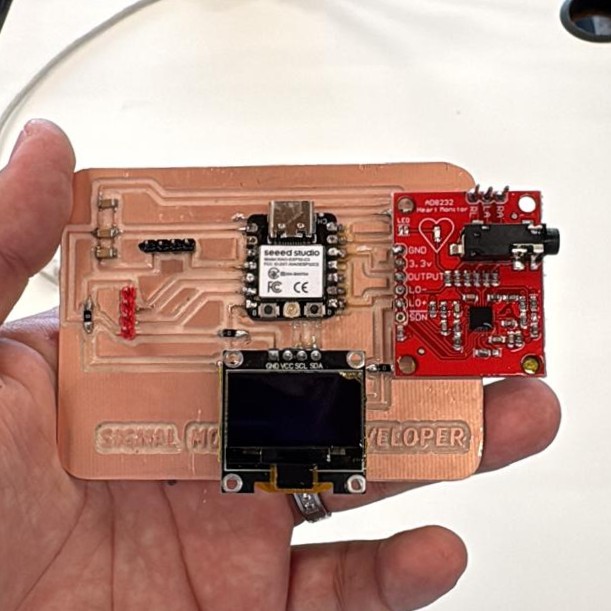
The OLED display was connected using the I2C pins available on the board. This communication protocol only requires two lines, SDA and SCL, which makes the wiring cleaner and leaves more pins available for other parts of the system. This is useful because the same board can keep reading the ECG signal while also sending information to an output device.
At this stage, the OLED was used to test the visual interface of the ECG system. The screen did not display the real ECG signal yet. Instead, I used test screens to validate the layout and check that the display worked correctly with the board.
The screens changed automatically every few seconds. This helped me test how the information could be organized before integrating the real ECG processing code. The interface was designed to represent different stages of the system, such as raw input, filtered signal, BPM display, and system status.
Test
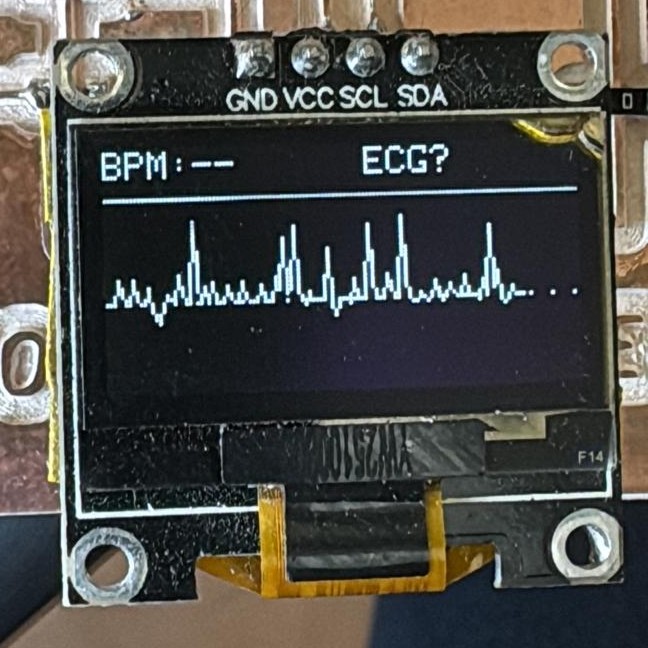
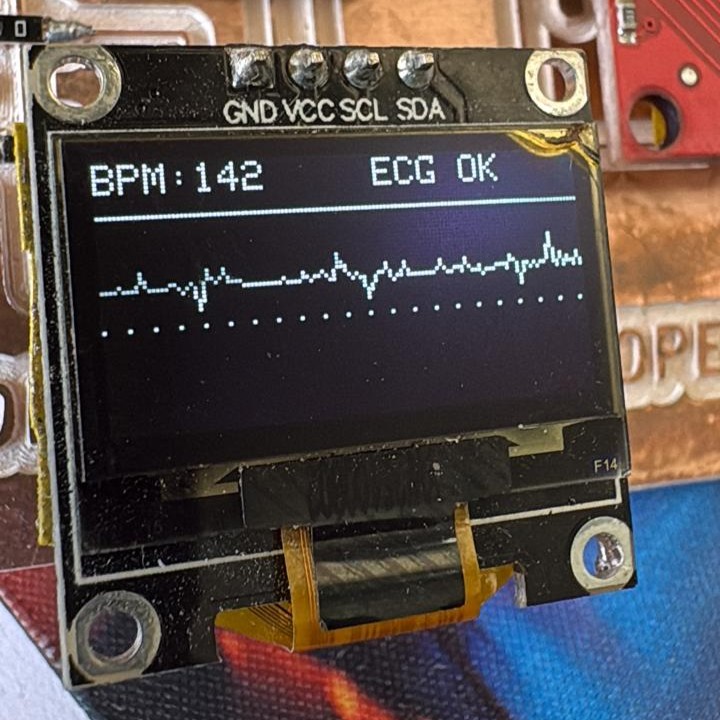
During the first tests, I verified that the OLED could show the different interface screens correctly. The goal was to confirm that the display was responding properly and that the information was readable.
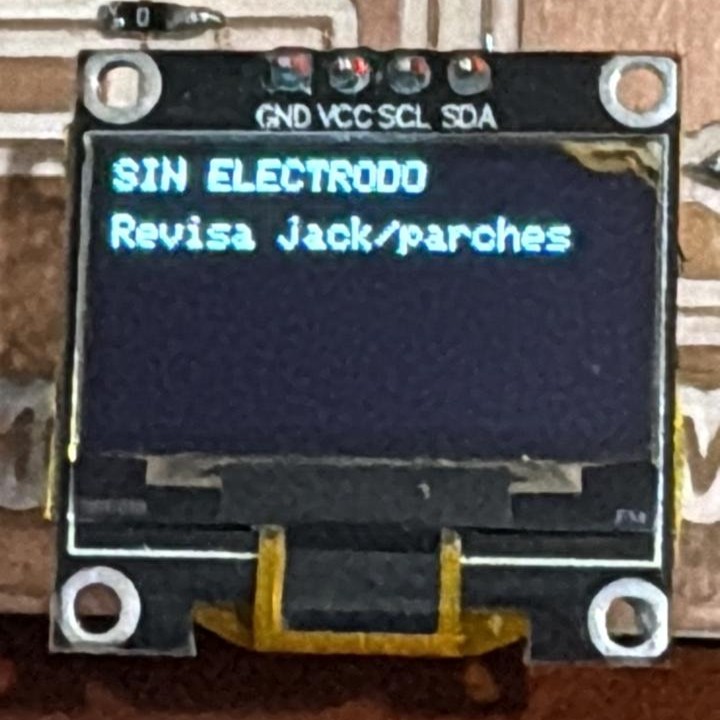
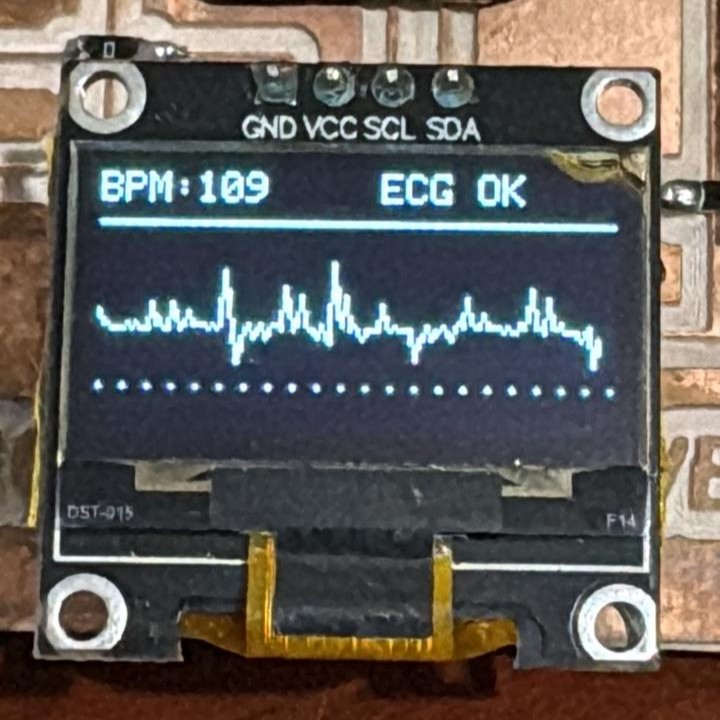
The processed data was sent to the OLED through I2C communication. During testing, I noticed that the values shown on the display did not always match the readings from the Serial Monitor. Because of this, the filtering and display mapping had to be adjusted until the readings became more stable.
This test showed that the same board can work as both an input and output system. The ECG signal can be acquired through the analog input, processed by the microcontroller, and then displayed on the OLED screen. In future versions, the interface can be connected directly to the real ECG processing code to show the waveform, BPM, and signal status in real time.