Moulding and Casting
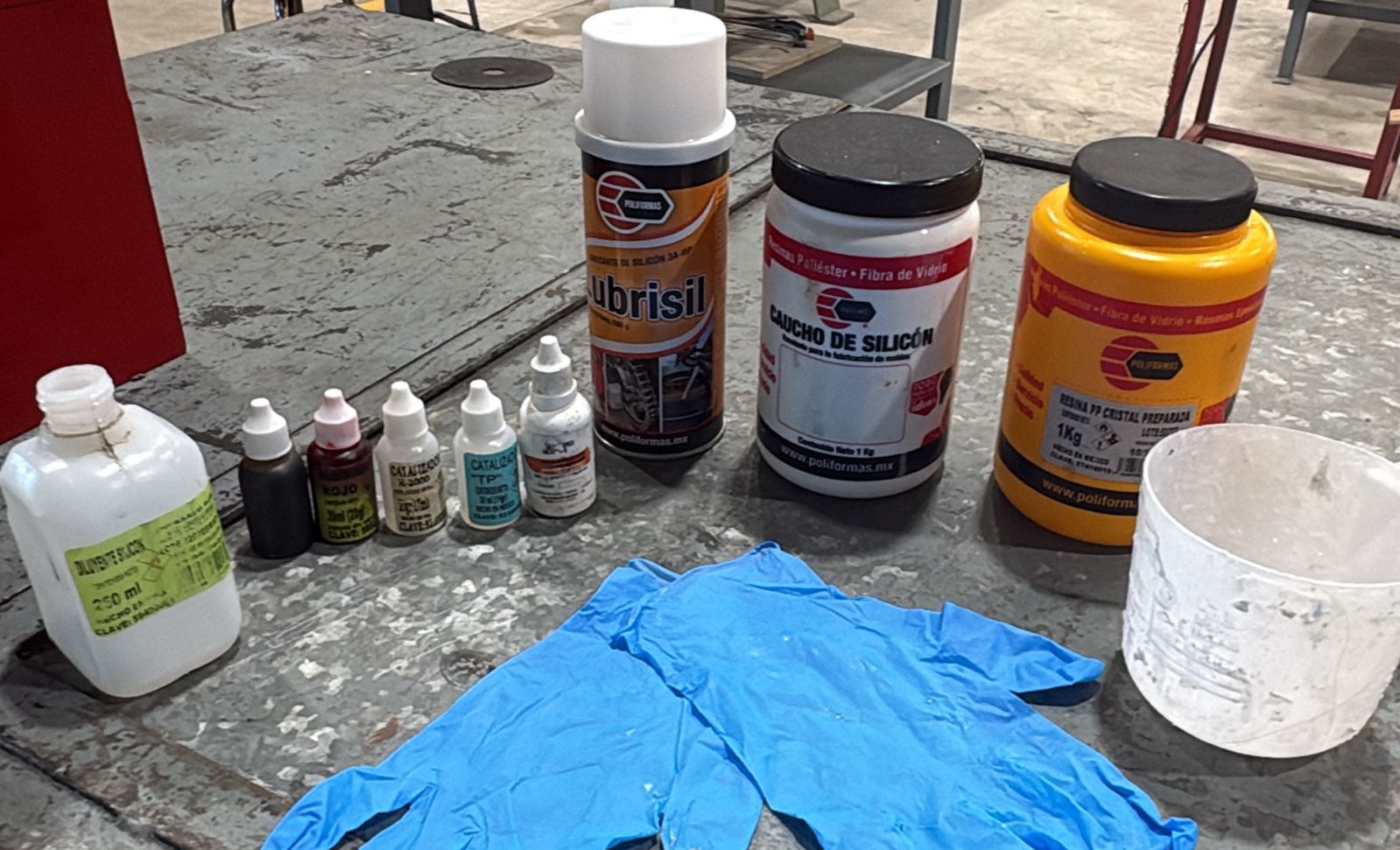
After preparing the mold design and machining process, we reviewed the materials that would be used for the casting stage. These materials included silicone rubber, resin, catalyst, pigments, mixing containers, and gloves for safe handling.
The goal of this stage was to understand how each material is used in the molding and casting process. Silicone rubber is commonly used to create flexible molds, while resin is used to cast the final rigid part. The catalyst or hardener starts the curing process, and pigments can be added to modify the color of the final piece.
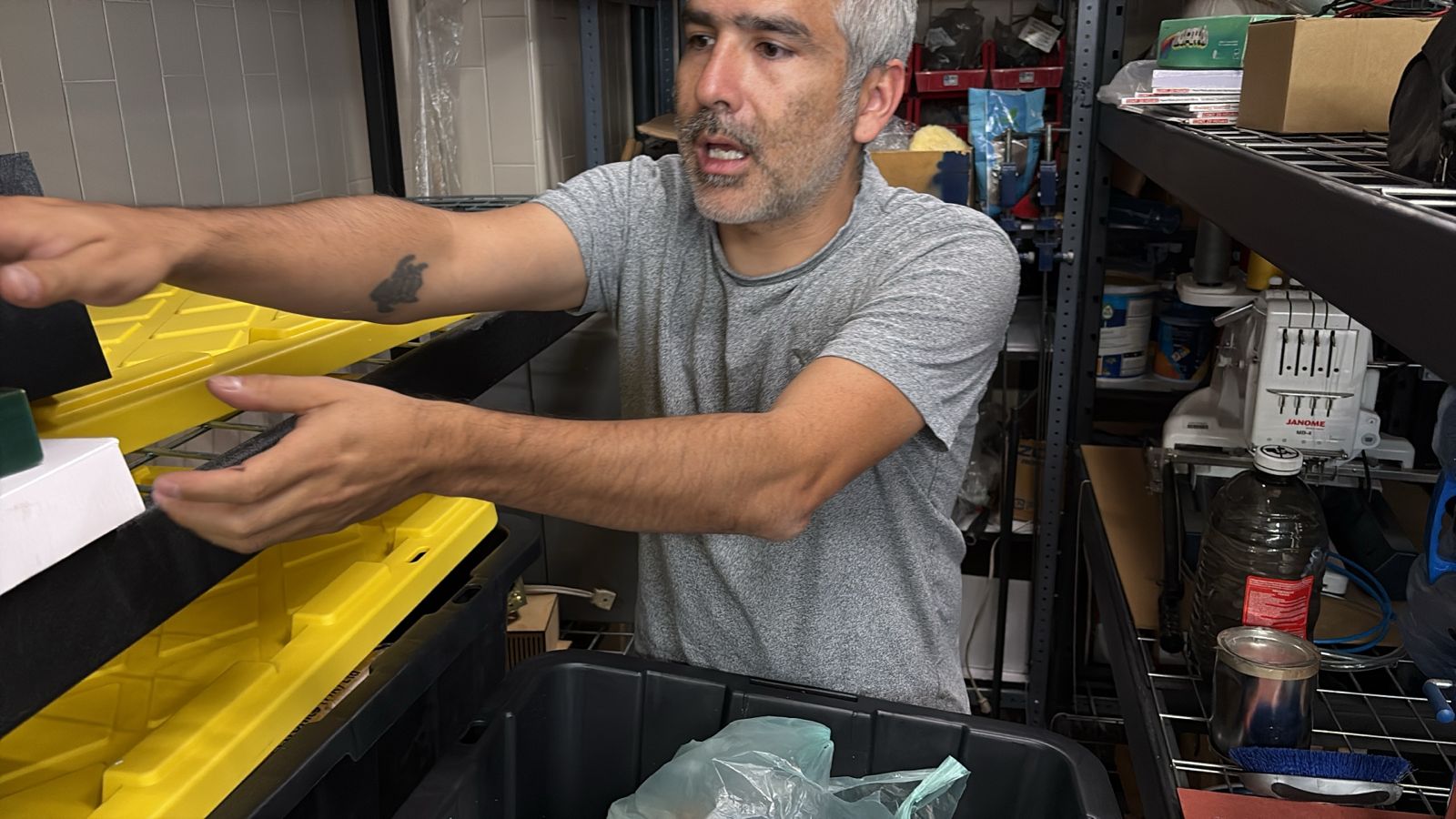
- Silicone rubber: Flexible material used to create molds.
- Polyester resin: Liquid plastic used to cast rigid parts.
- Catalyst / hardener: Chemical component that starts the curing process.
- Pigments: Used to add color to the resin or silicone.
- Mixing container: Used to prepare and mix the materials.
- Gloves: Personal protective equipment used for safe handling.
Casting Process
For the casting process, the material was prepared by mixing the required components carefully. This step was important because the quality of the final piece depends on the correct proportion and proper mixing of the material.
Once the material was prepared, it was poured into the mold. During this step, it was important to make sure the material reached all the cavities and details of the mold. The mold was handled carefully to reduce trapped air and improve the final result.
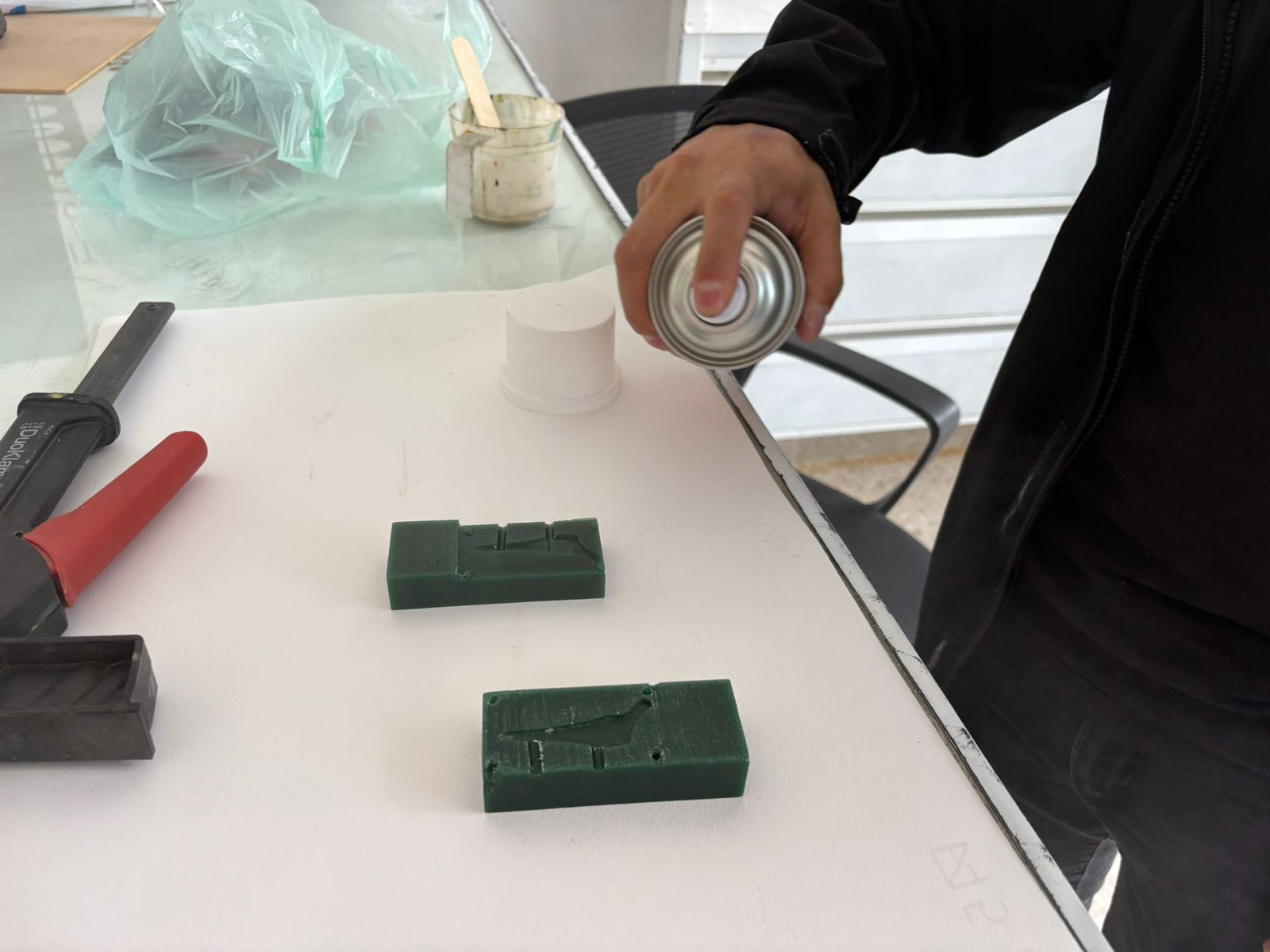
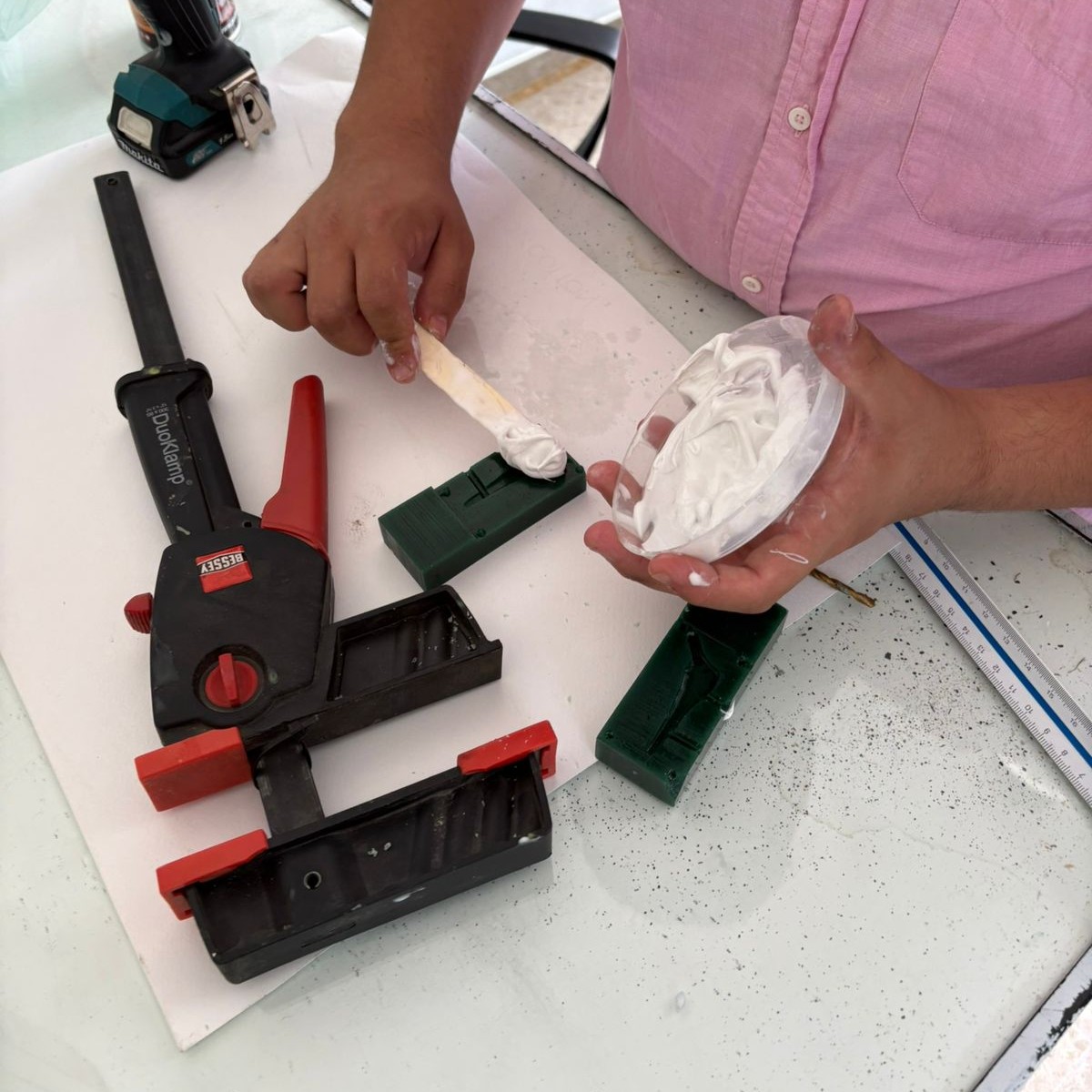
After the material cured, the part was removed from the mold. The result allowed us to evaluate the mold quality, the level of detail achieved, and the behavior of the casting material.
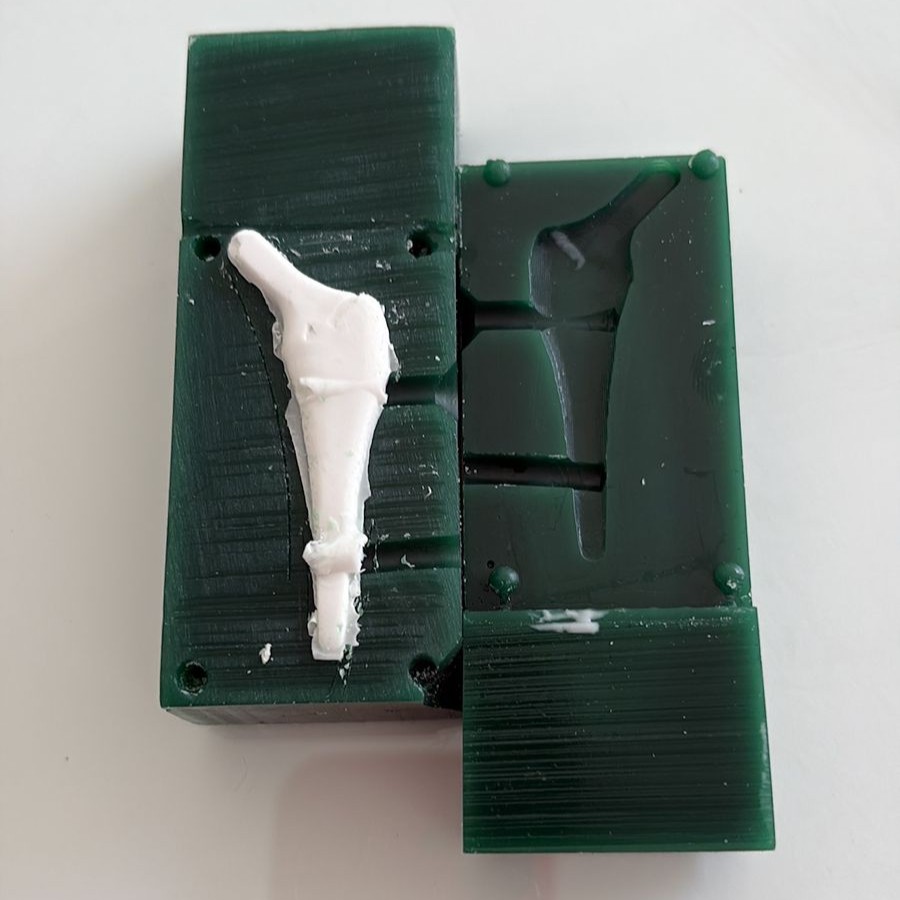
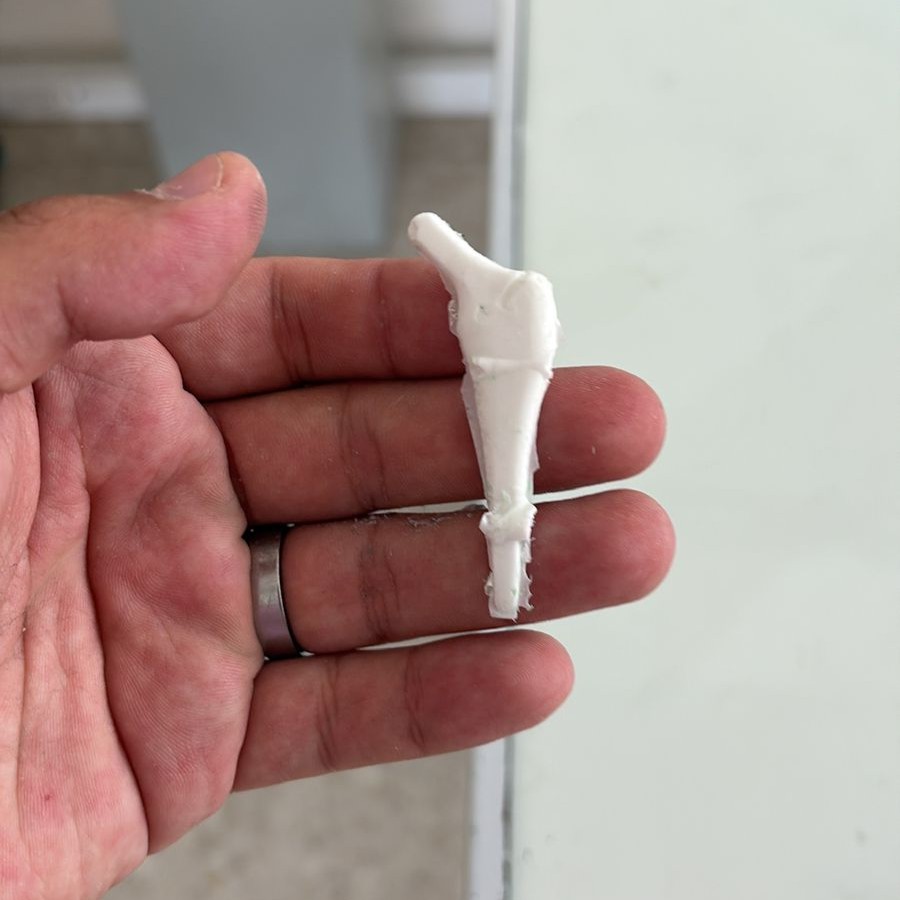
This test helped me understand the complete workflow from material preparation to the final casted part. Although the piece was small, the process was useful to evaluate how the mold works and how the material behaves after curing.
“Greatness is not measured by size, but by impact.”