17. System Integration
This project is an experimental sculpture rather than a conventional product or consumer good, so integration here follows somewhat different rules than packaging a finished commercial device. Rather than enclosing the mechanism, the goal was to make it operate cleanly at the scale of a tabletop object — visible, legible, and stable.
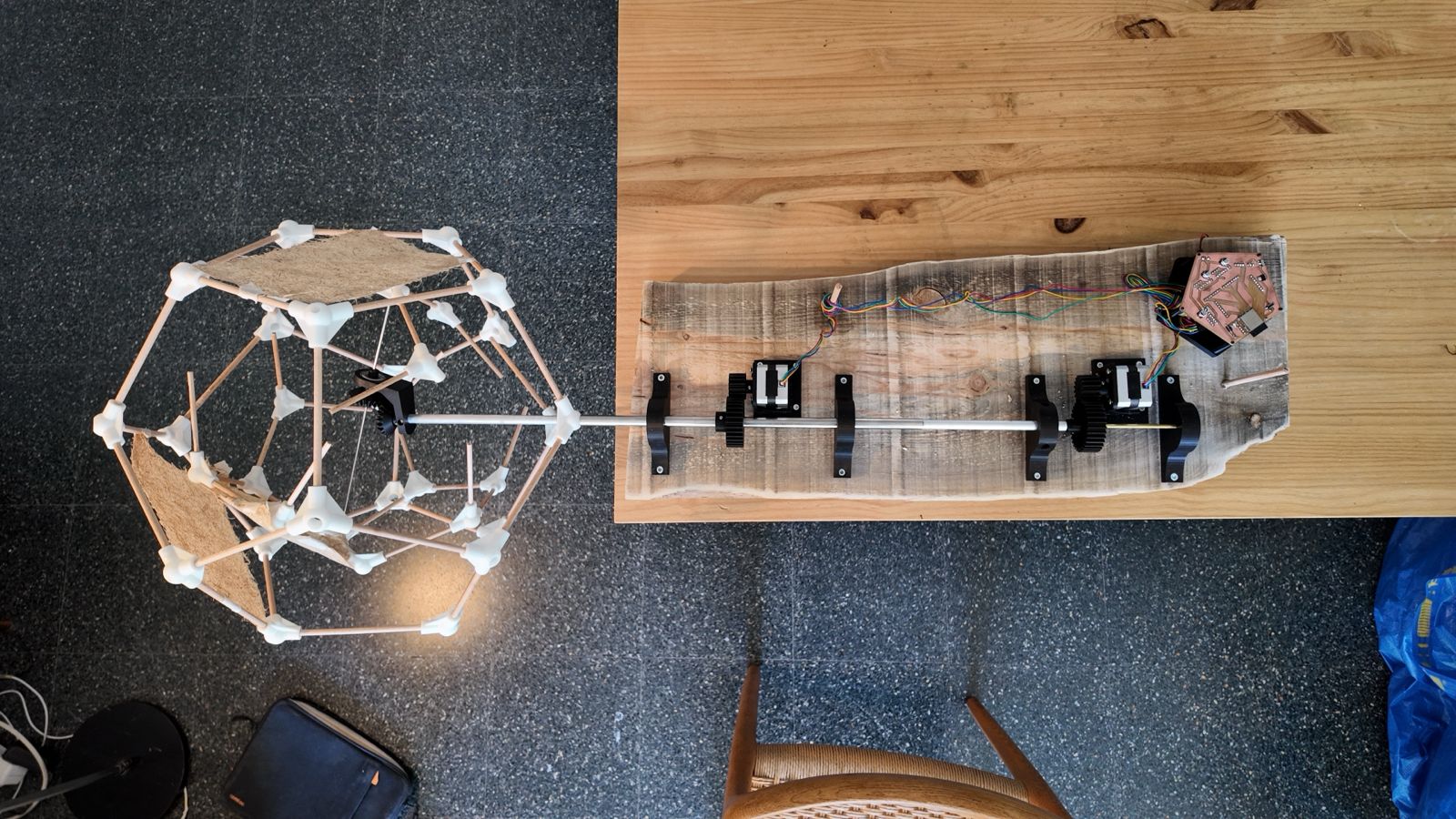
- Base and mounting — the axial system sits on a piece of natural wood, cut and sanded by hand, which acts as the structural base for the entire piece.
- Shaft holders — 3D-printed holders, designed to the correct tolerances for the tubing, support each shaft. Each holder is mounted to the wood base with two screws. The middle holder — which holds the fixed, structural middle tube — uses screw inserts that clamp onto the tube from the sides; this worked very effectively and kept the middle tube genuinely fixed under load.
- Stepper mounts — custom holders position both steppers at the correct elevation to meet the shared center point required for the bevel gears to mesh. These holders are mounted to the wood base with four screws at the corners for stability.
.jpeg)
- Electronics mounting — a 3D-printed holder secures the pentagon motherboard to the base. Cable management — a temporary solution using 6mm wooden rods (“phone poles”) that the stepper coil wires wrap around, keeping cables organized and out of the way of moving parts. This is functional but acknowledged as a placeholder; a cleaner cable routing solution is a target for future iterations.
.jpeg)
- programing The installation connect to the laptop and IDE program through usb-c port and it meant to be programmed in an experimental way and tested.
Sketch
Original
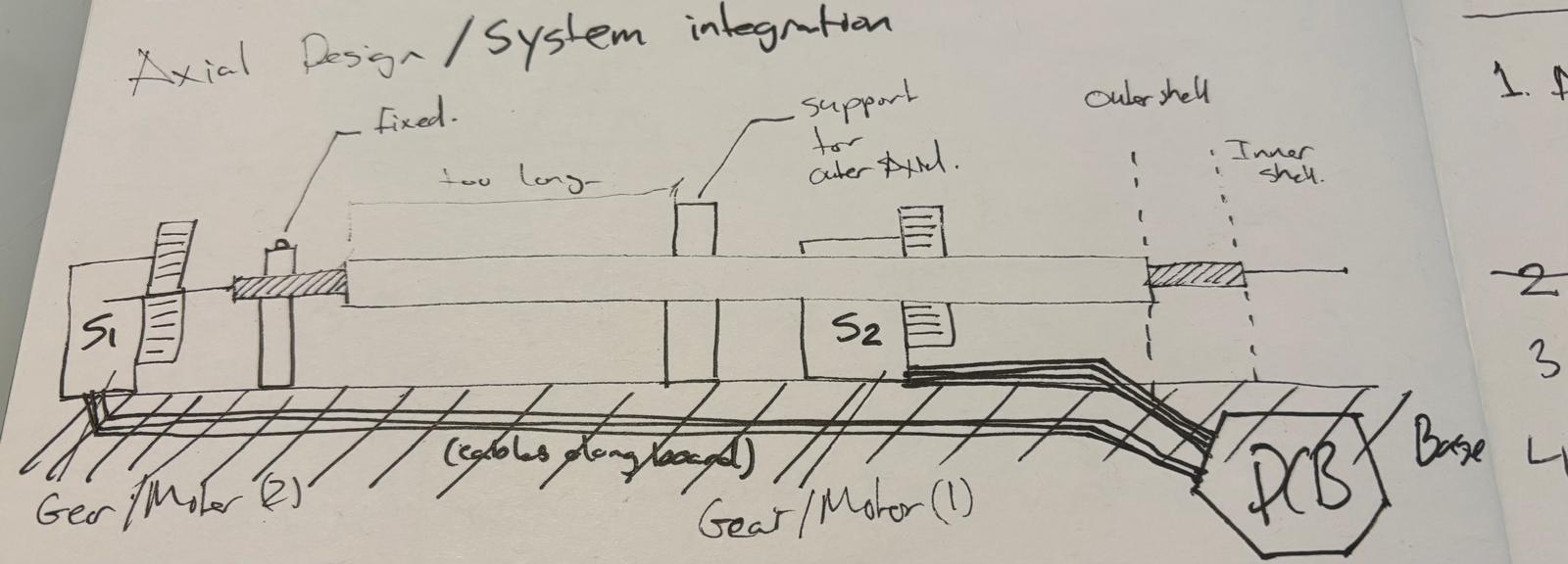
Cable Managment
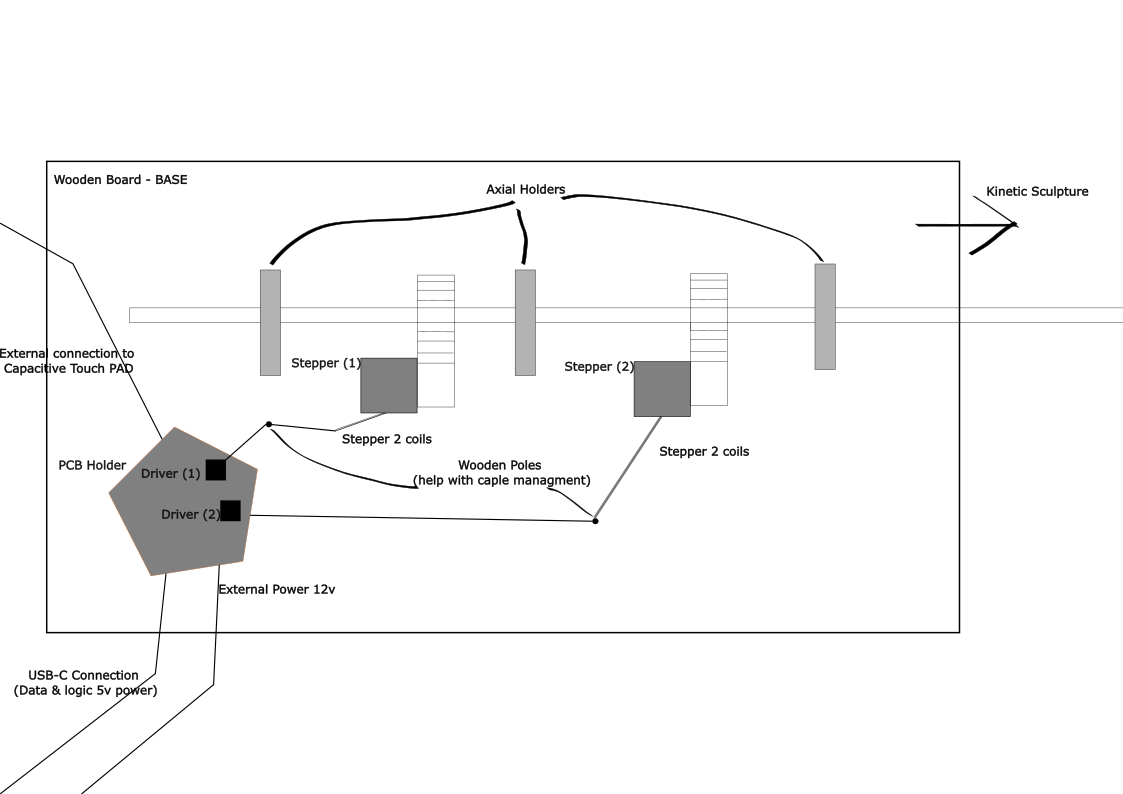
Testing & Debugging
There was a number of analug and digital tests that I did to test the mechanism as well as the code. Here are the videos of those experiments.