1. Group Assignment Molding and Casting
Group assignment:
1.Review the safety data sheets for each of your molding and casting materials
2.Make and compare test casts with each of them
3.Compare printing vs milling molds
1.1 Safety Issues with Silicone
-
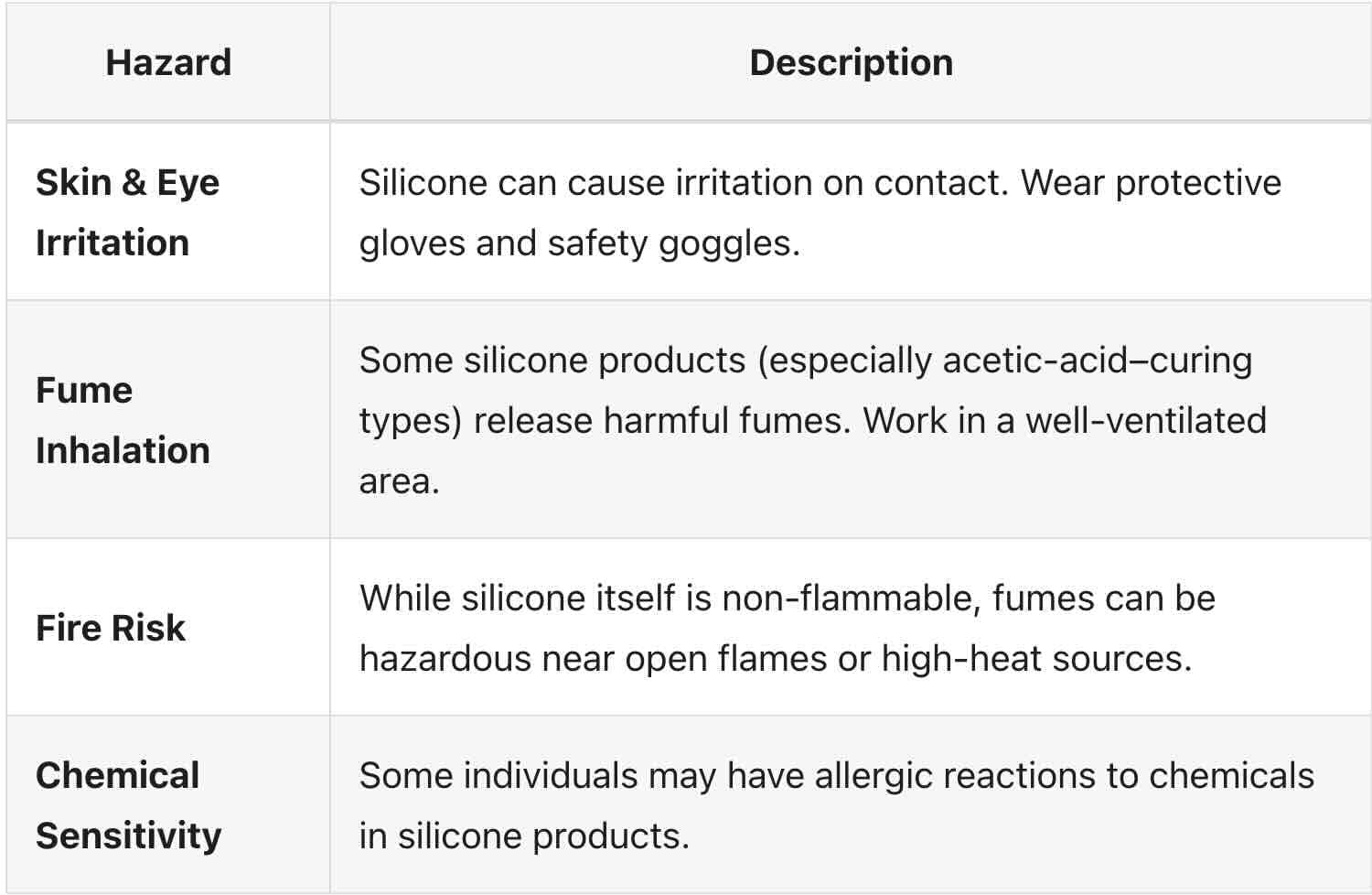
Skin and Eye Irritation Silicone can cause irritation upon contact with skin or eyes. Always wear protective gloves and safety goggles.
-
Fume Inhalation Some silicone products, particularly acetic-acid-curing types, release irritating or harmful fumes during curing. Use them only in well-ventilated areas.
-
Fire Risk While silicone itself is generally non-flammable, its fumes can be hazardous near open flames or high heat sources.
-
Chemical Sensitivity Certain individuals may experience allergic reactions or sensitivities to the chemicals in silicone products.
1.1.1 Preventative Measures
-
Wear Protective Gear Always wear gloves and safety goggles. Consider using an exhaust fan or working outdoors for extra ventilation.
-
Avoid Sensitive Areas Prevent silicone from coming into contact with eyes, mouth, or other sensitive body parts.
-
Store Properly Keep in a cool, dry place away from direct sunlight, and ensure containers are tightly sealed.
-
Follow Instructions Read and adhere to the manufacturer's guidelines on application and curing time.
-
Dispose Safely Dispose of excess silicone in accordance with local regulations.
1.2 Safety Issues with AB Glue
1.2.1 Preventative Measures
-
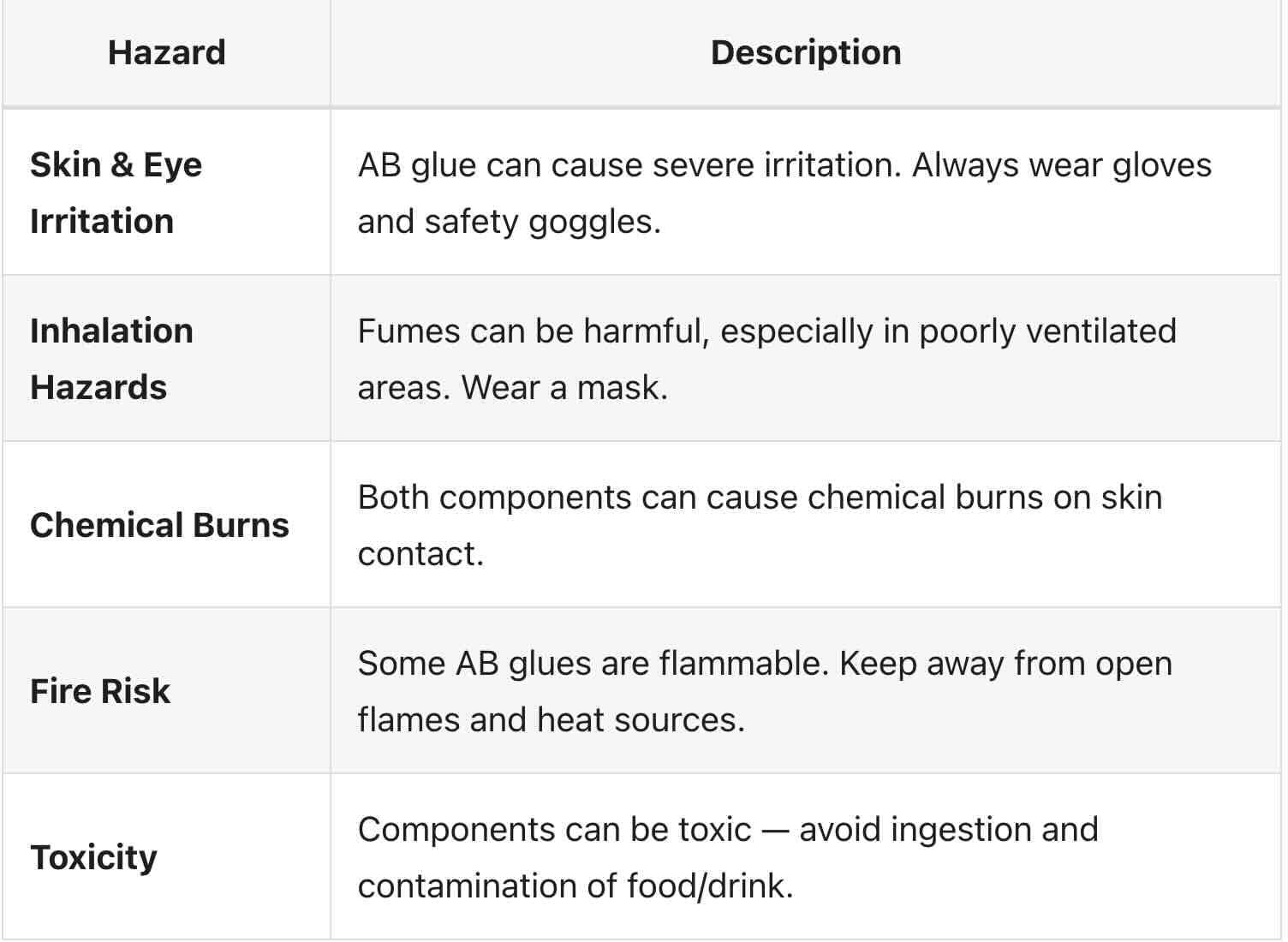
Wear appropriate PPE Use gloves, safety goggles, and a mask at all times.
-
Ensure good ventilation Work in a well-ventilated area to avoid inhaling fumes.
-
Keep away from heat and flames Store and use the glue away from heat sources and open flames.
-
Follow manufacturer's instructions Adhere to the guidelines for safe usage and proper disposal.
-
Store properly Keep in a cool, dry place with containers tightly sealed when not in use.