13 : Molding and Casting<

Learning Outcomes<
What did I learn this week ?
- Safety :
- Read a silicon Smooth-On safety sheet
- Molding :
- Use a vacuum forming machine
- Design a 3D printed mold
- Casting :
- Cast silicon
- Cast plaster
Assignments<
This thirteenth week's asignments are :
- Group :
- Review the safety data sheets for each of your molding and casting materials, then make and compare test casts with each of them
- Compare mold making processes
- Individual :
- Design a mold around the process you'll be using, produce it with a smooth surface finish that does not show the production process toolpath, and use it to cast parts.
1. Group Assignment<
We agreed on documenting mainly the group assignment on Michel's page. However I will shortly explain what we did.
Our model is simple in order to easily observe casting materials properties :

Heating vacuum forming machine :

Machine instructions :

Safety Data Sheets


Cast :

Ecoflex hard to remove :

Results


2. Individual Assignment<
2.1. Vaccum Forming Mold<
Let's create more tools for Patrick !

Let's try transparent plastic sheets this time :

Another silicon based rubbber (more solid for the tools) :

Its safety sheet :

Oops, forgot to add releasing agent ...

Let's try again with allen wrenches :

Installed them carefully in the molding machine :

Beautifull mold !


Casting after 30 minutes (for the releasing agent to be dry) :

Still quite hard to remove... Maybe not enough releasing agent...

Two out of three worked, I hope Patrick will be happy ! Even if it looks more like candies than wrenches...
2.2. 3D Printed Mold<
My previous work was not enough for this week assignment since it was asked to "design" a mold. Therefore I will restart the assignement by designing a 3D printed mold and using plaster for the casting part.
3D Design and Print<
I designed a 3D mold of a chess pawn using OpenSCAD :
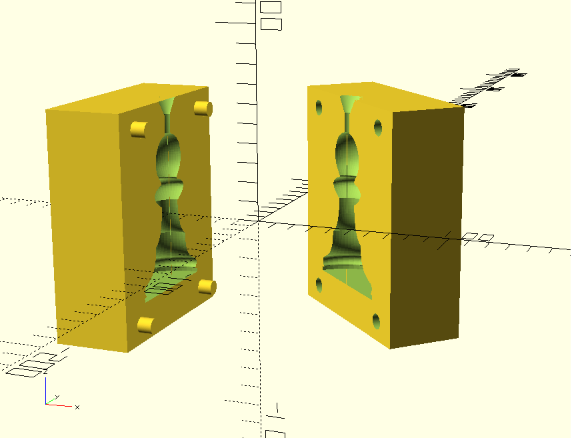
Code
$fn = 180;

// Dimensions du moule
L = 80;
W = 100;
H = 120;

// Paramètres du pion
pion_scale = 3;
segments = 64;

// Position verticale du pion
// À ajuster selon le positionnement souhaité
z_pion = -40;

// Dimensions des ergots
ergot_d = 8;
ergot_h = 8;
jeu = 0.3;

// Dimensions du canal de remplissage
canal_d = 6;
entonnoir_d = 18;
entonnoir_h = 8;

// Empreinte du pion
module pion() {
    translate([0,0,z_pion])
        scale(pion_scale)
            rotate_extrude(convexity = 10, $fn = segments)
                import(file = "profiles/pawn_profile.svg");
}

// Canal de remplissage
module canal() {
    union() {
        // Canal cylindrique
        translate([0,0,41])
            cylinder(
                h = H/2 - entonnoir_h - 41,
                d = canal_d
            );

        // Entonnoir
        translate([0,0,H/2 - entonnoir_h])
            cylinder(
                h = entonnoir_h,
                d1 = canal_d,
                d2 = entonnoir_d
            );
    }
}

// Cavité complète à retirer
module empreinte() {
    union() {
        pion();
        canal();
    }
}

// Position des ergots sur le plan de séparation
module ergots() {
    for (p = [
    [-35,-50],
    [ 35,-50],
    [-35, 50],
    [ 35, 50]
]) {
        translate([-0.5,p[0],p[1]])
            rotate([0,90,0])
                cylinder(d=ergot_d, h=ergot_h);
    }
}

// Empreintes des ergots
module trous_ergots() {
    for (p = [
    [-35,-50],
    [ 35,-50],
    [-35, 50],
    [ 35, 50]
]) {
        translate([-0.2,p[0],p[1]])
            rotate([0,90,0])
                cylinder(
                    d=ergot_d + jeu,
                    h=ergot_h + 0.4
                );
    }
}

// Première moitié du moule
module moule_gauche() {
    union() {
        difference() {
            translate([-L/4,0,0])
                cube([L/2,W,H], center=true);

            empreinte();
        }

        // Ergots mâles
        ergots();
    }
}

// Deuxième moitié du moule
module moule_droit() {
    difference() {
        translate([L/4,0,0])
            cube([L/2,W,H], center=true);

        empreinte();

        // Logements des ergots
        trous_ergots();
    }
}
Surface Coating<
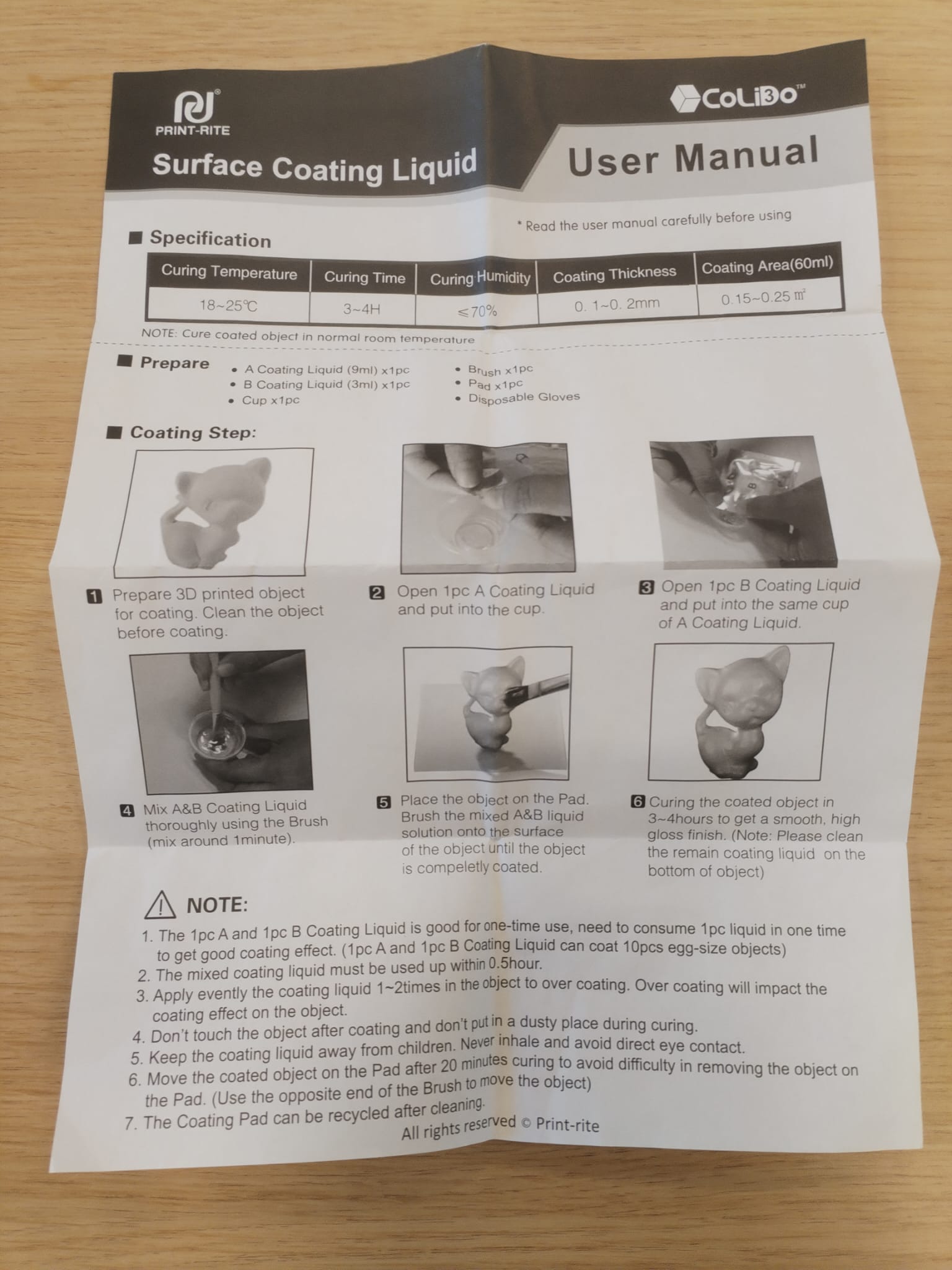
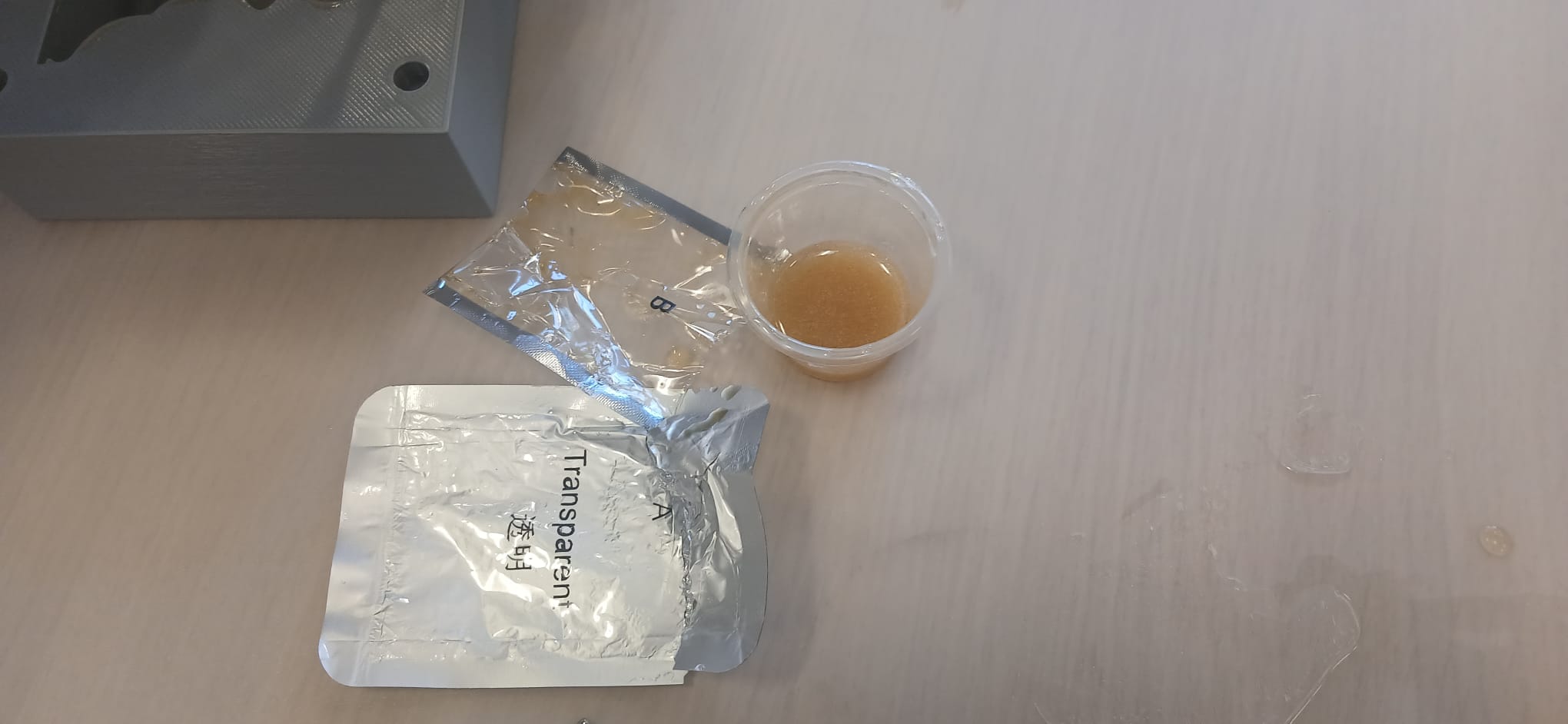
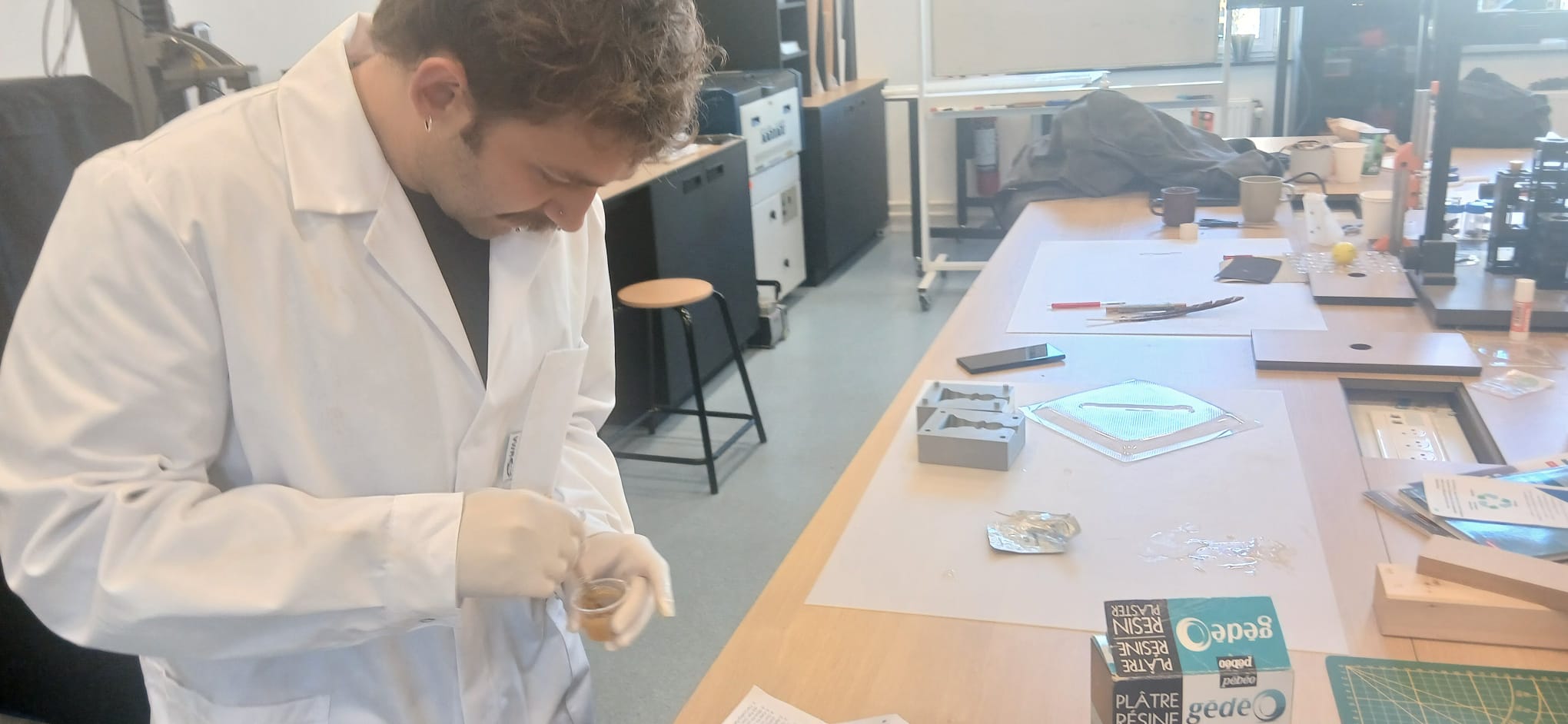
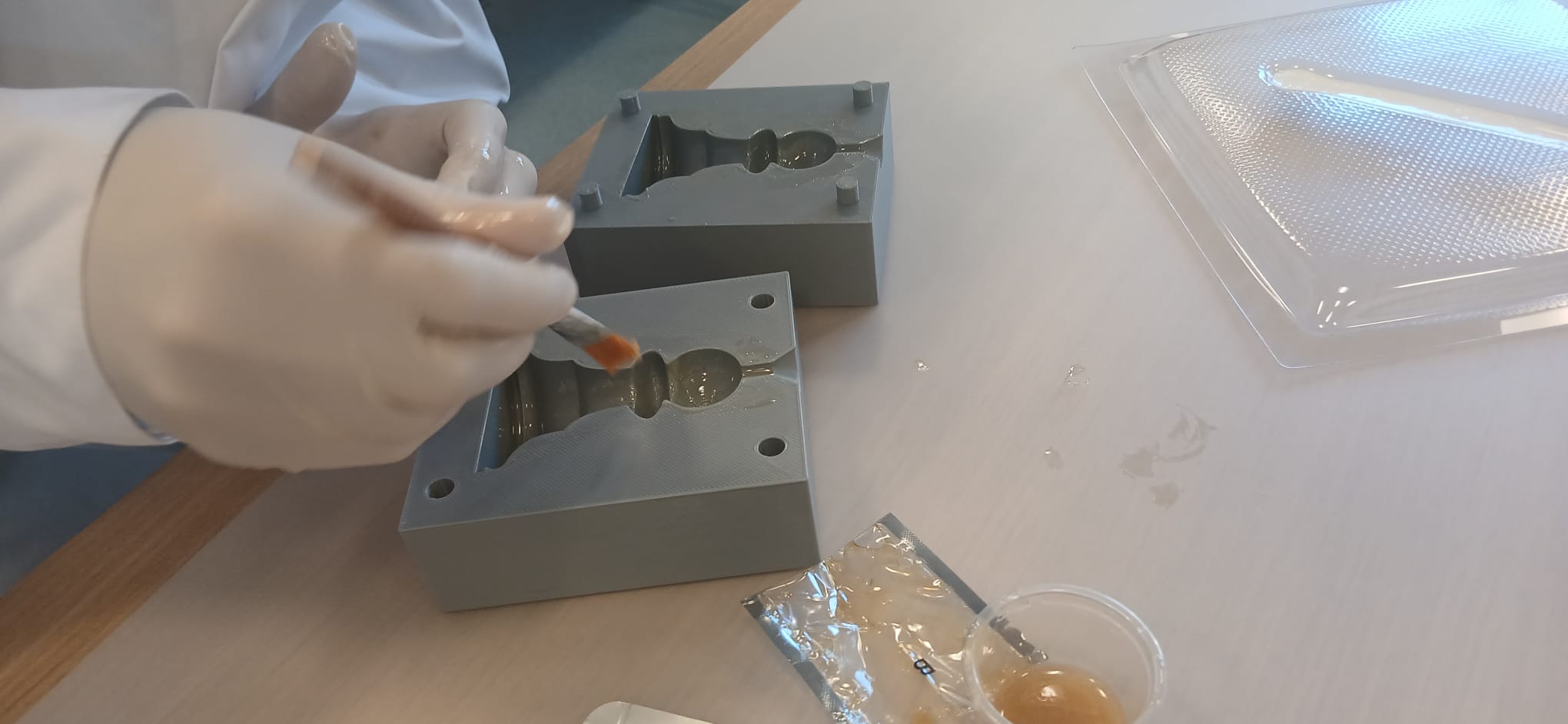
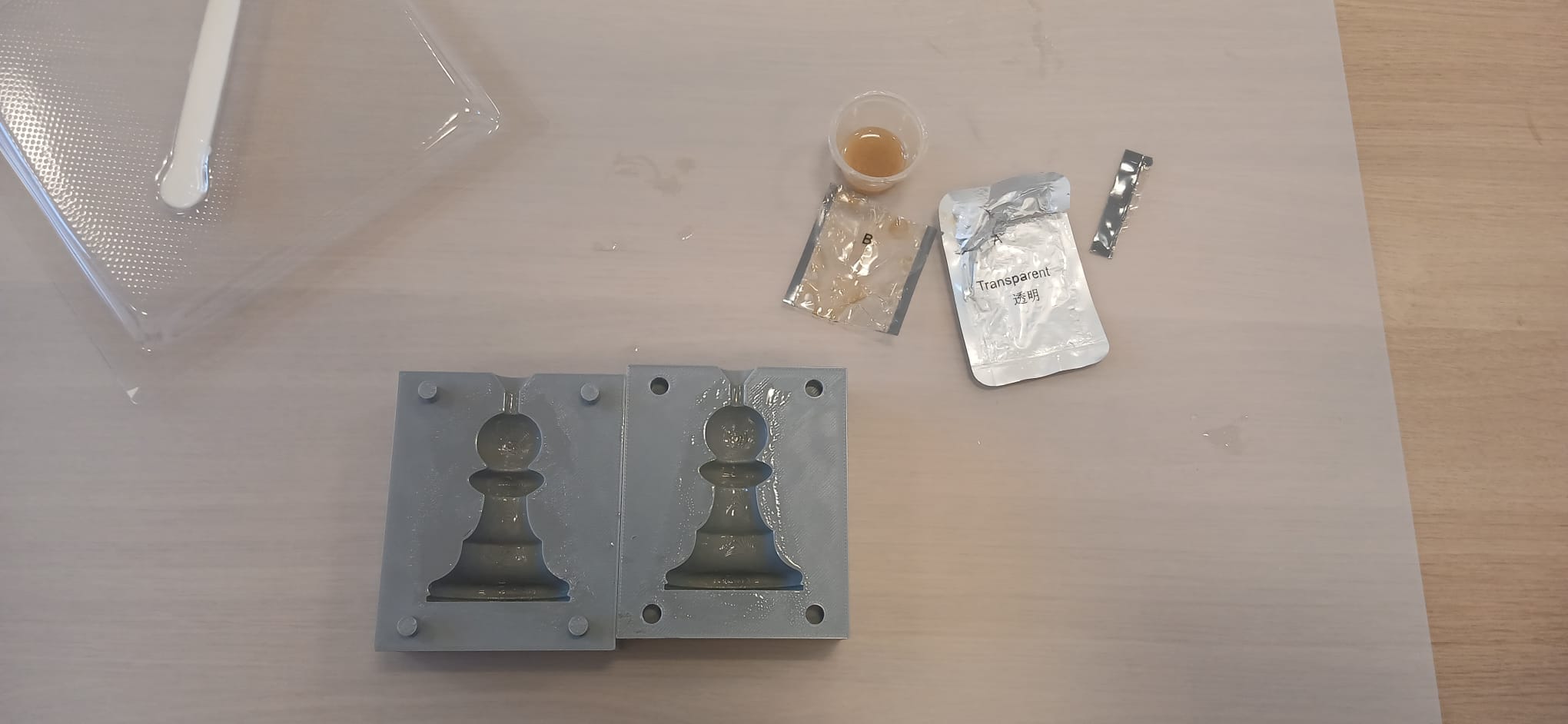
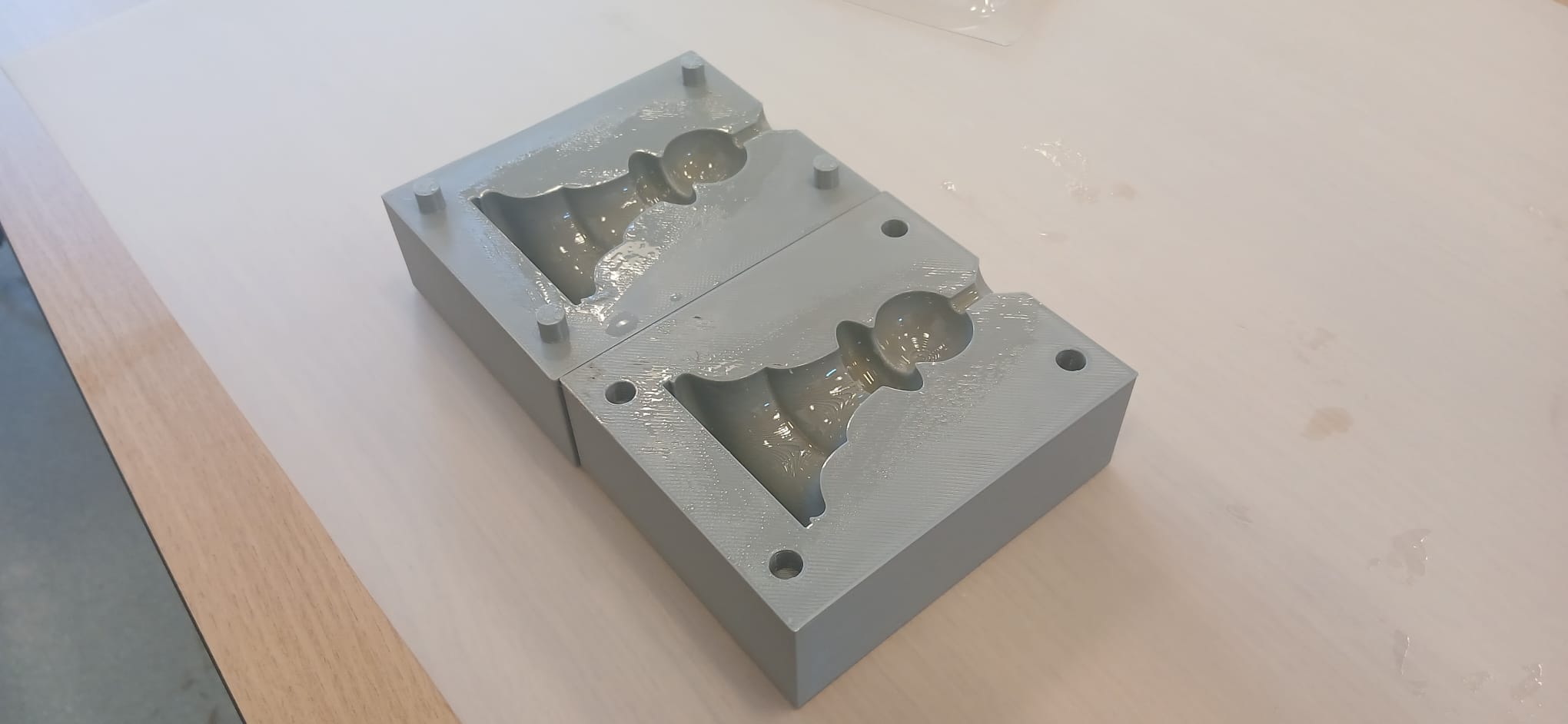
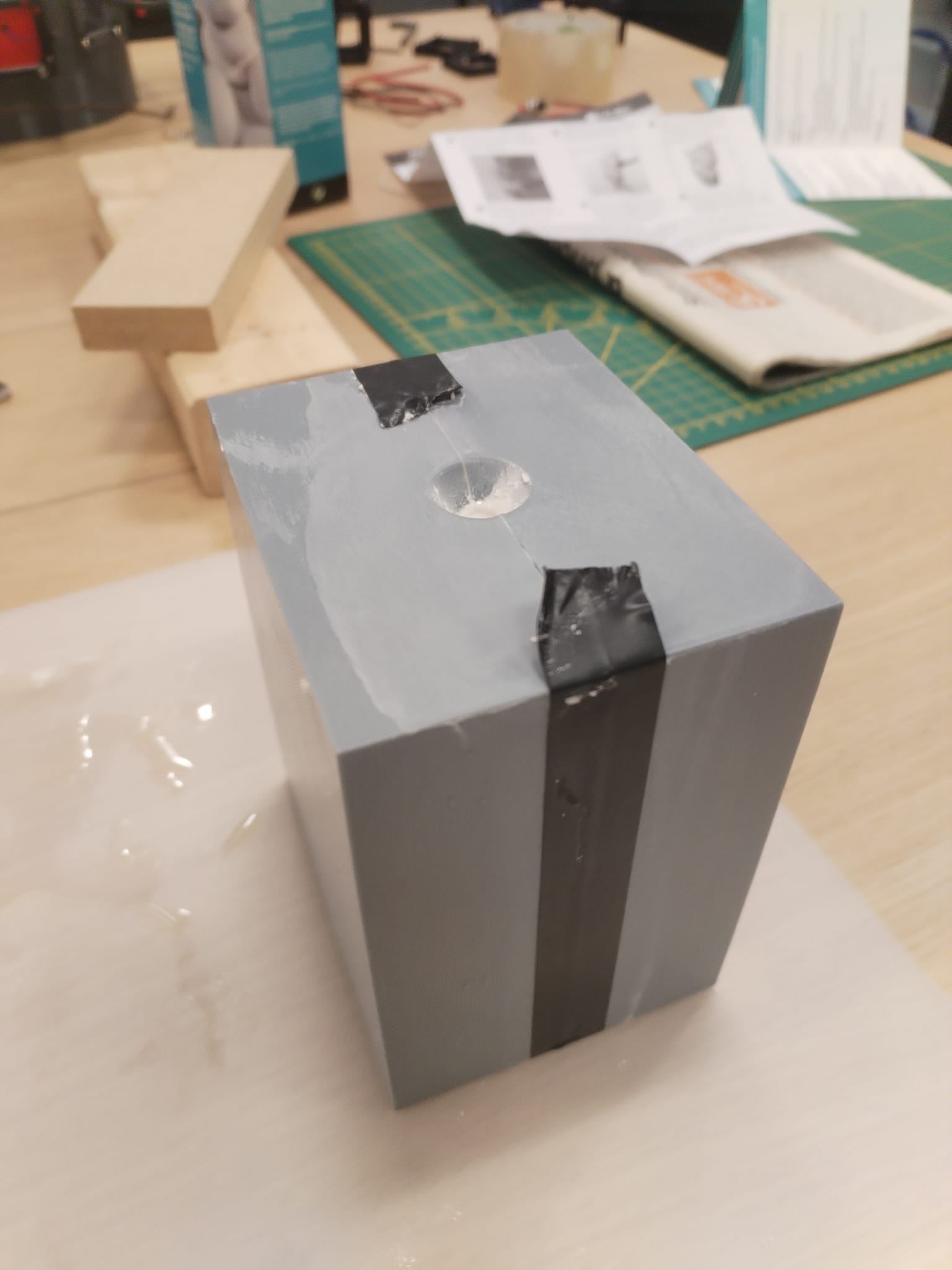
I used a surface coating product to smooth the mold surface and make the production process invisible.
Plaster Casting<
I used plaster for the casting.
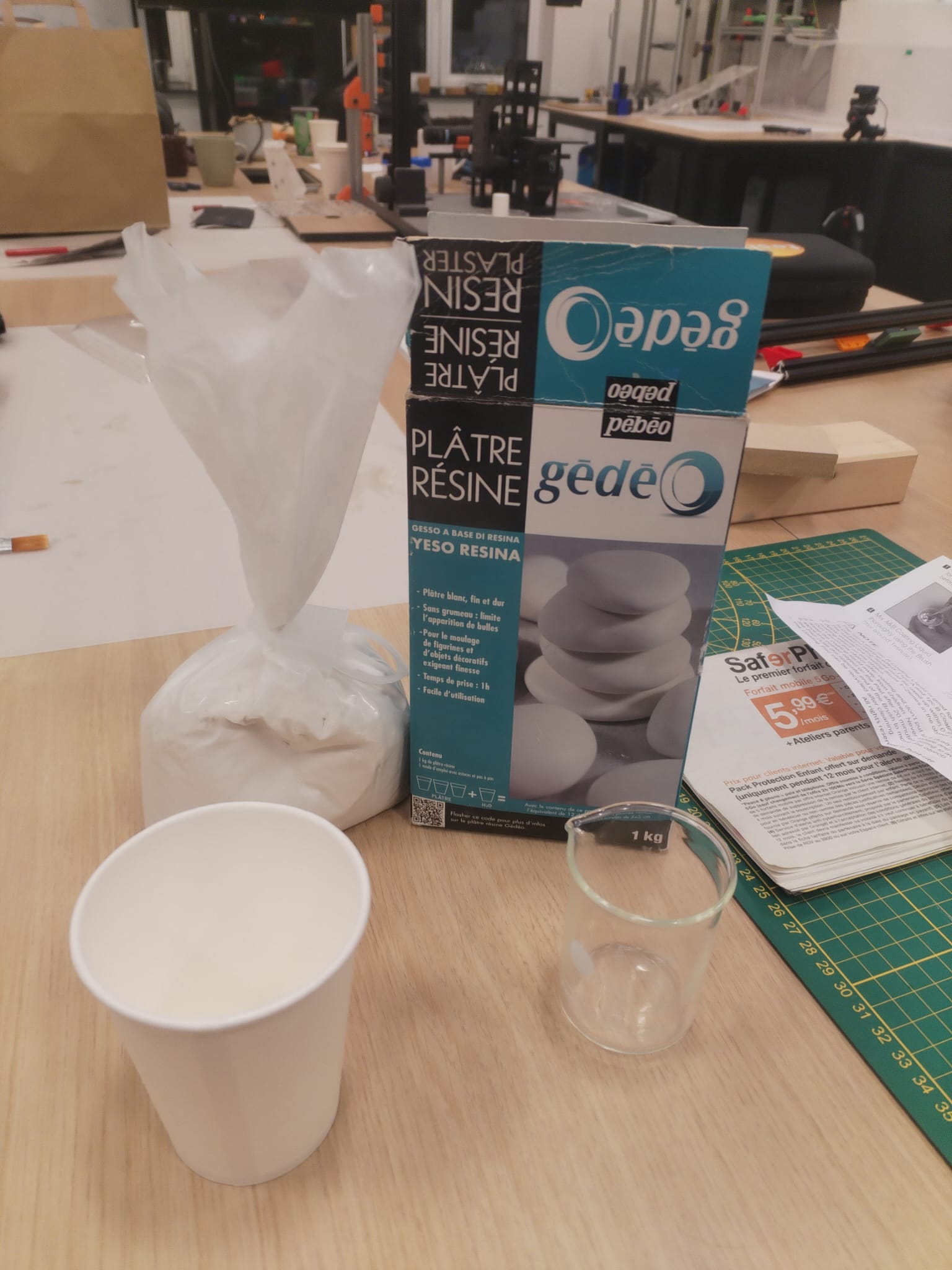
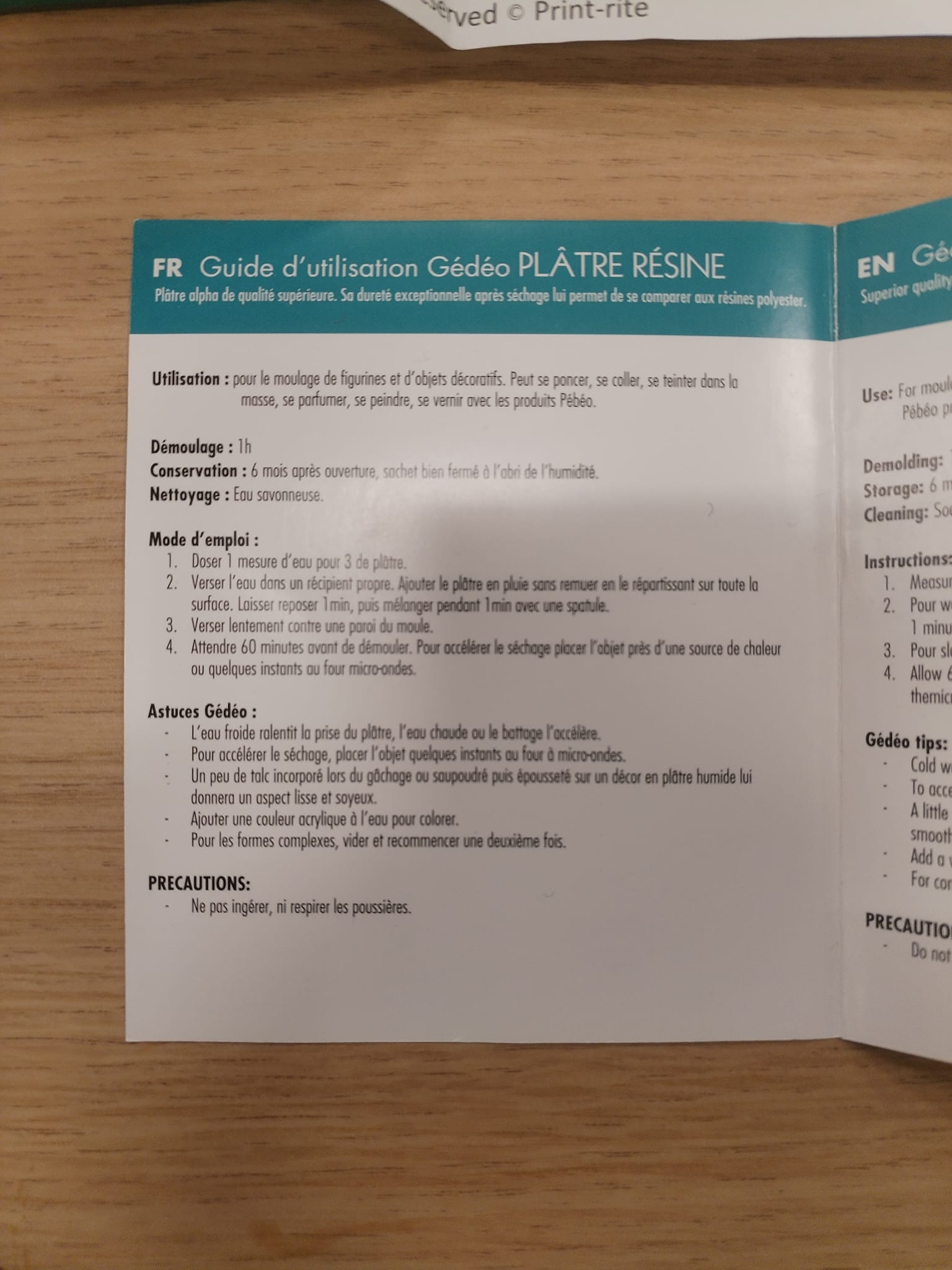
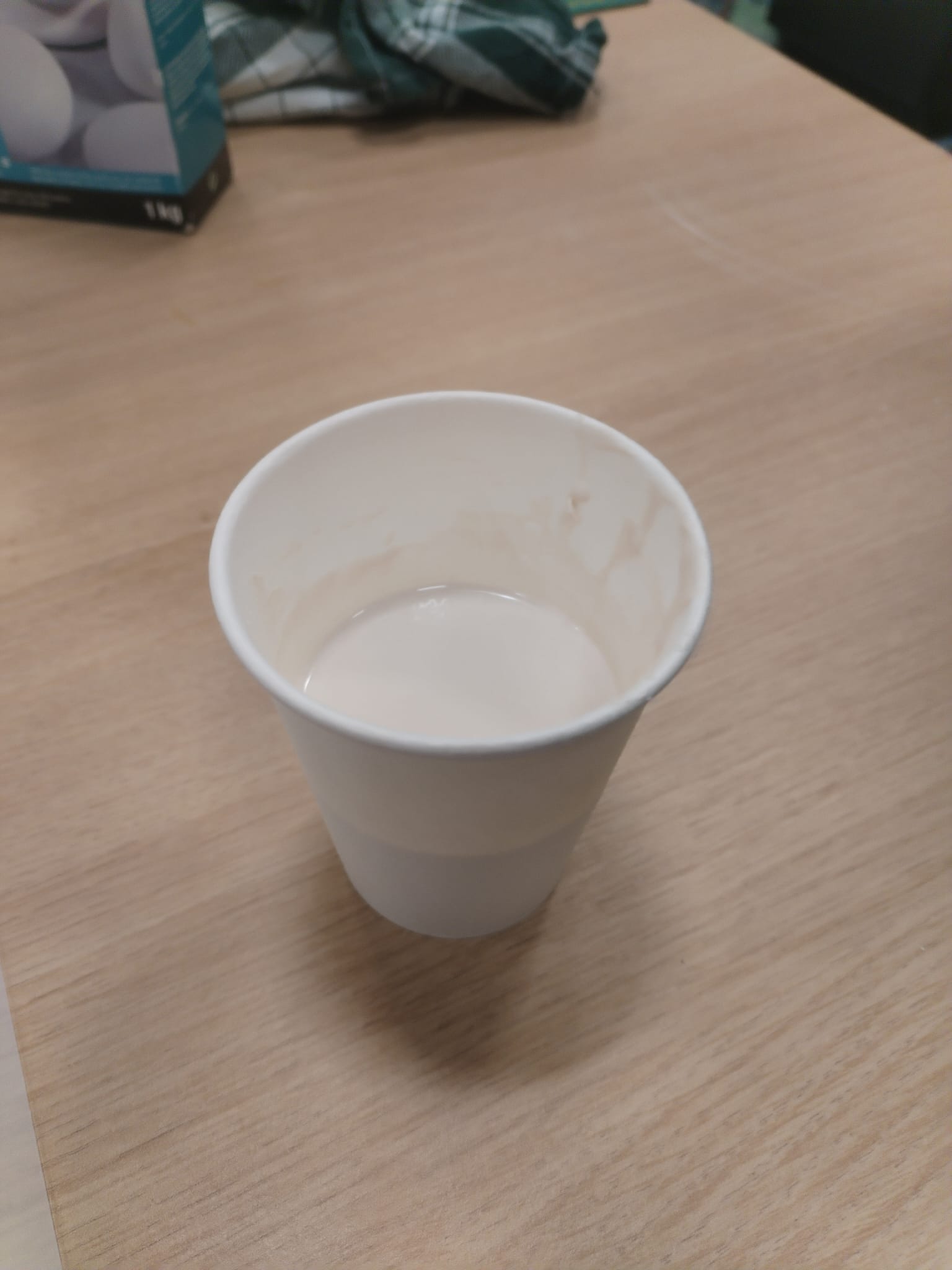
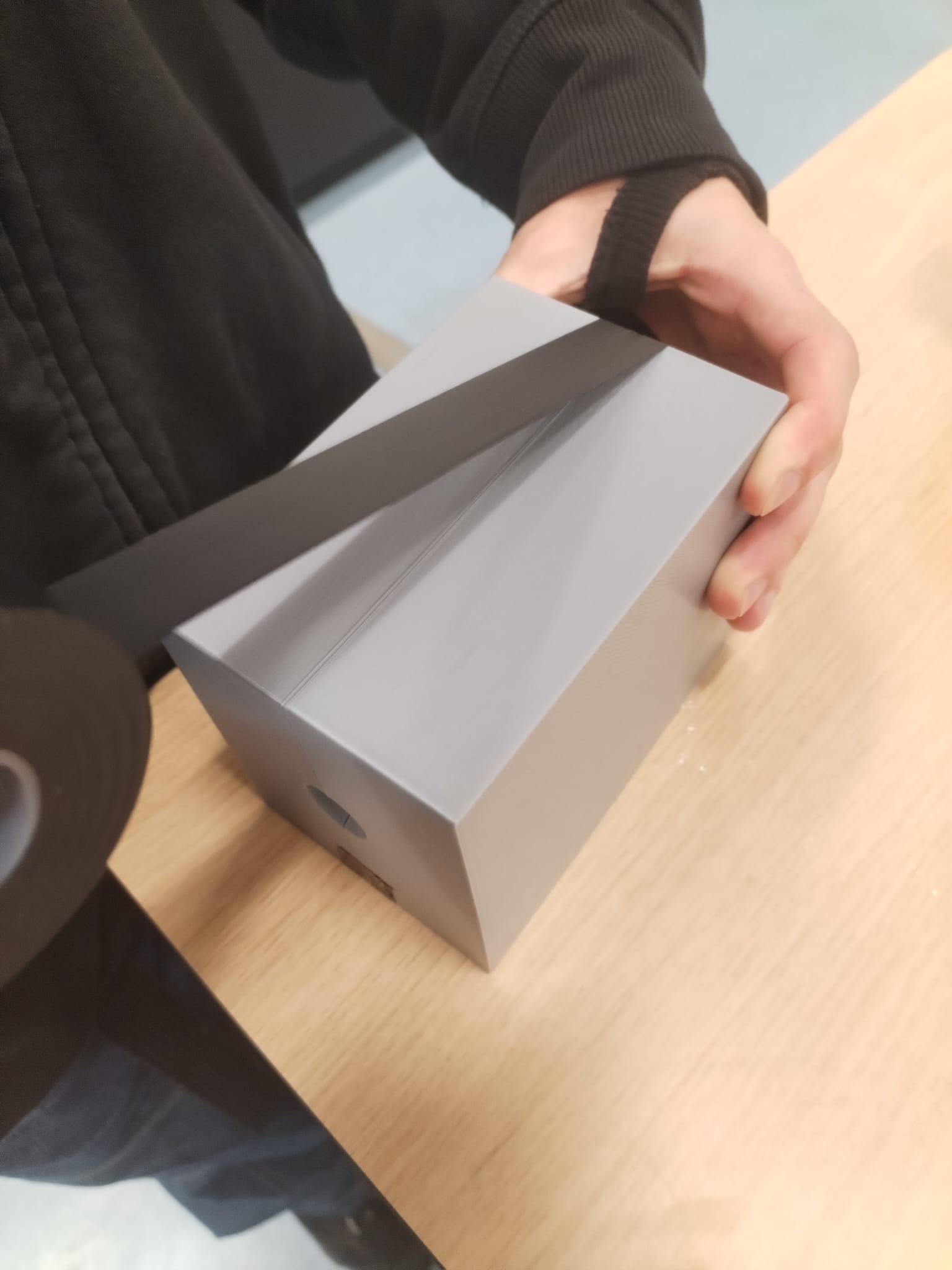
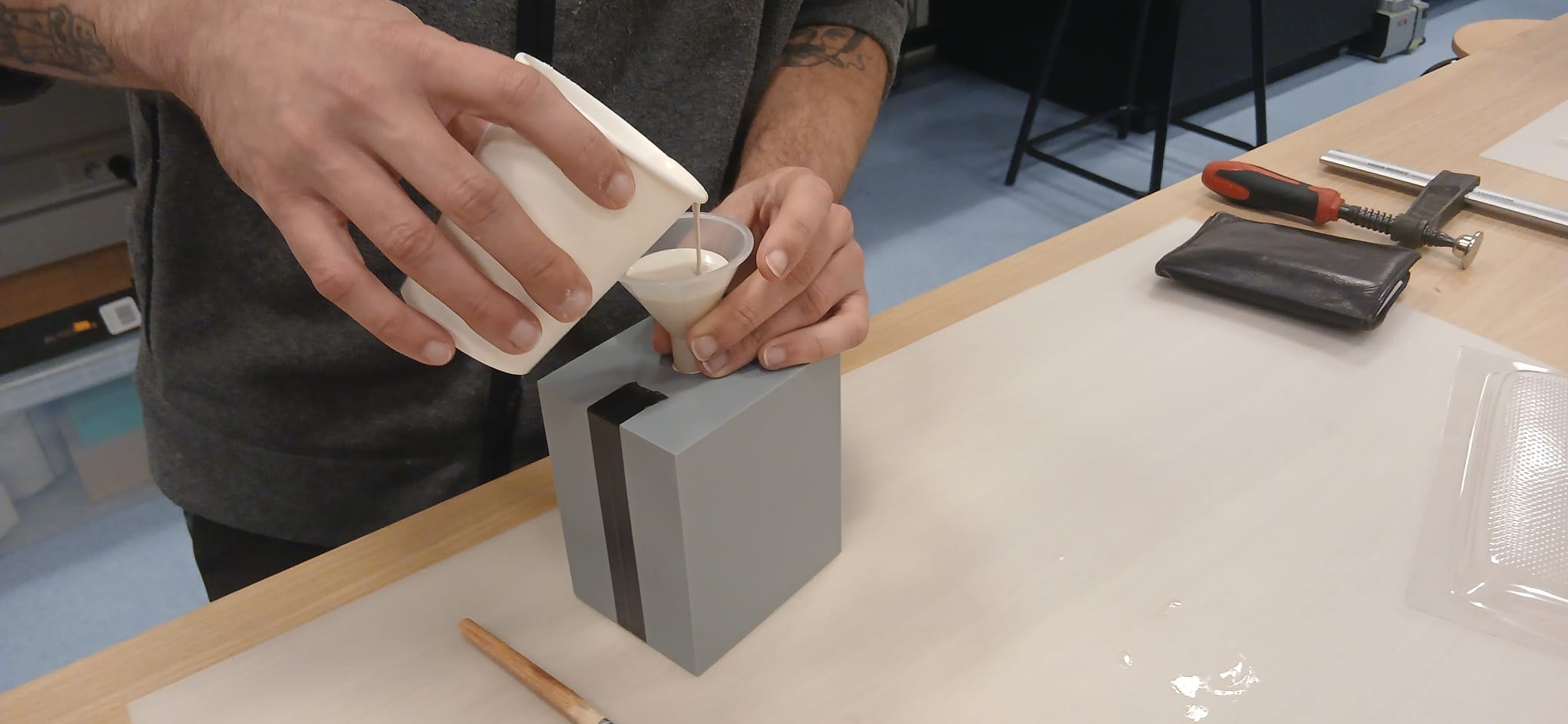
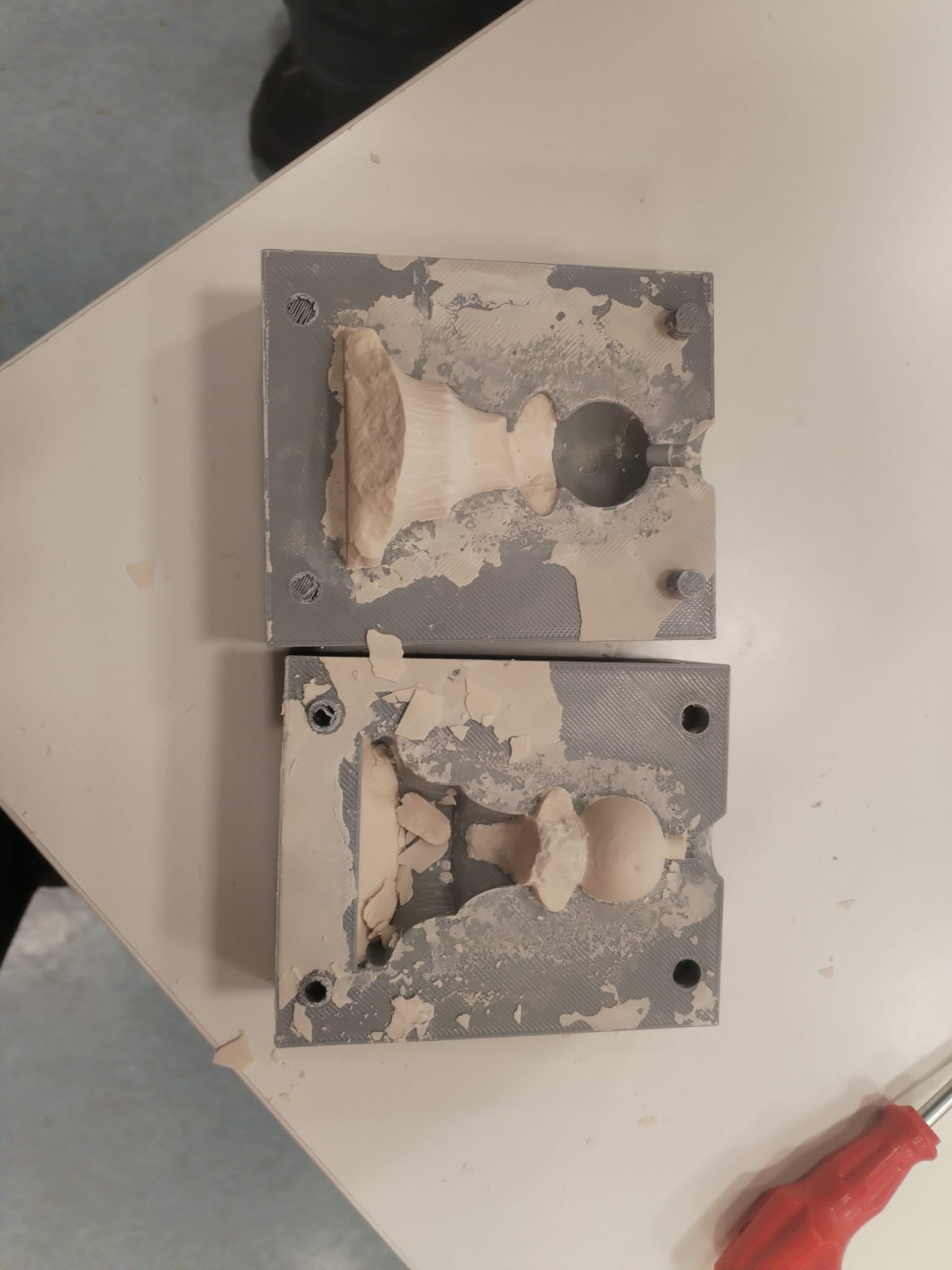
I did not work as expected. Next time, I will wait a bit longer and find a way to open the mold more carefully.