3. 3D scanning
Without access to a physical 3D scanner, I opted for hunyuan AI , an AI-powered 3D generation platform capable of creating 3D models from images or videos.
3.1. Scanning Subject - Hand Winnower
I selected the hand winnower as my scanning subject — a traditional agricultural tool I used frequently during my childhood.
Known as "Fengche" (风车) or "Fenggui" (风柜) in the China Huizhou Hakka dialect, the hand winnower dates back to the Han Dynasty. This ingenious device harnesses wind power to separate grain from chaff and impurities.
Constructed primarily from wood and bamboo, it features a grain funnel, a wind chamber with hand-cranked fan blades, and four sturdy legs resembling a sedan chair. The operator rotates a crank to generate airflow, causing heavy, plump grains to fall while lighter husks and debris are blown away.
In Huizhou Hakka farming culture, the winnower works alongside the "long" (砻, a hulling device) and stone mills to form a complete traditional rice processing system. The separated chaff was often collected as firewood, reflecting the Hakka people's sustainable, zero-waste philosophy.
Representing Hakka ingenuity in harnessing natural forces, the hand winnower remains an important cultural heritage of rural Guangdong—embodying what locals describe as the "warmth of yesterday's countryside" amid modern industrialization.
3.2. Scanning Process
3.2.1. uploaded the photo to the Hunyuan AI platform
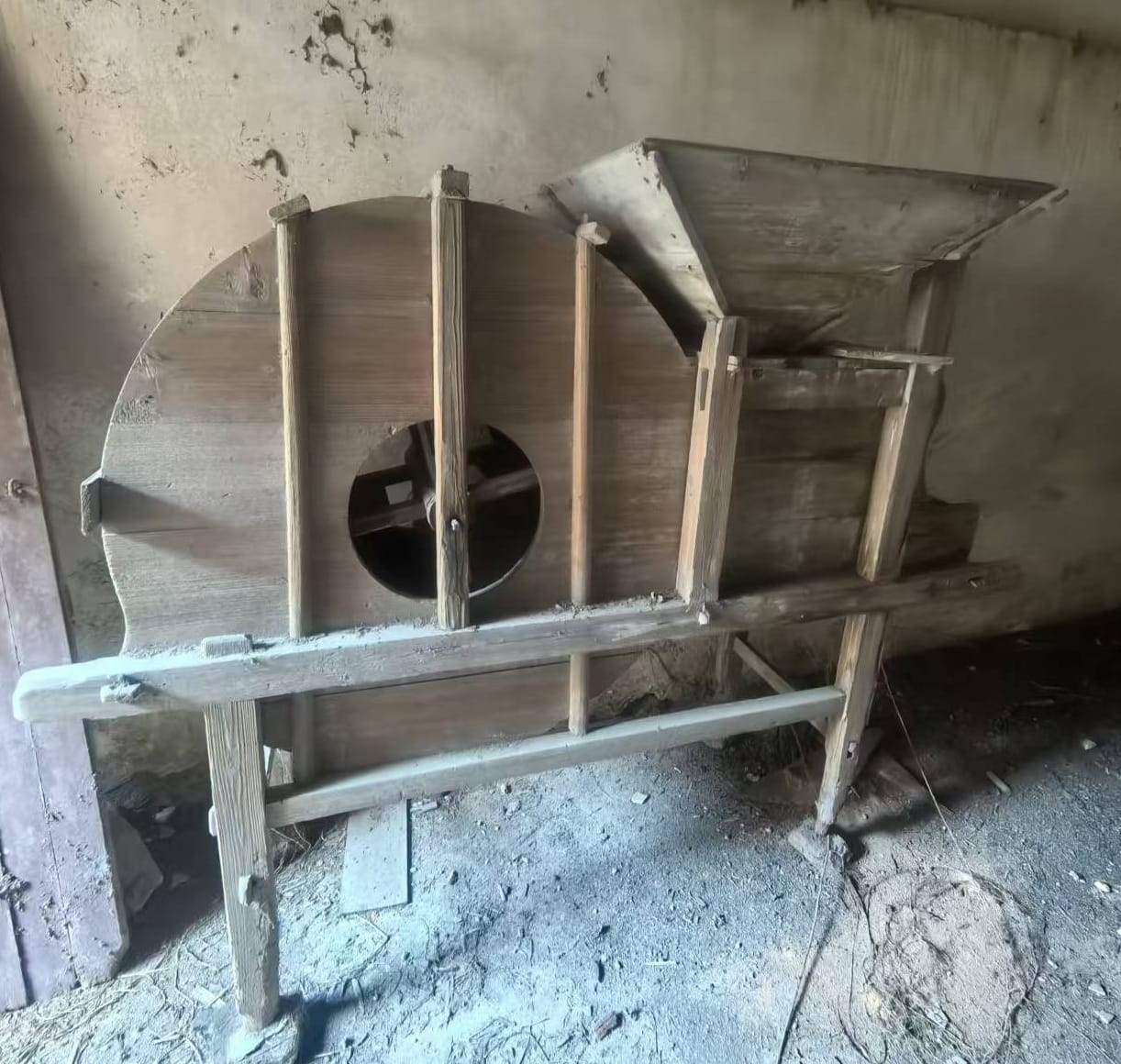
take a photo for hand winnower
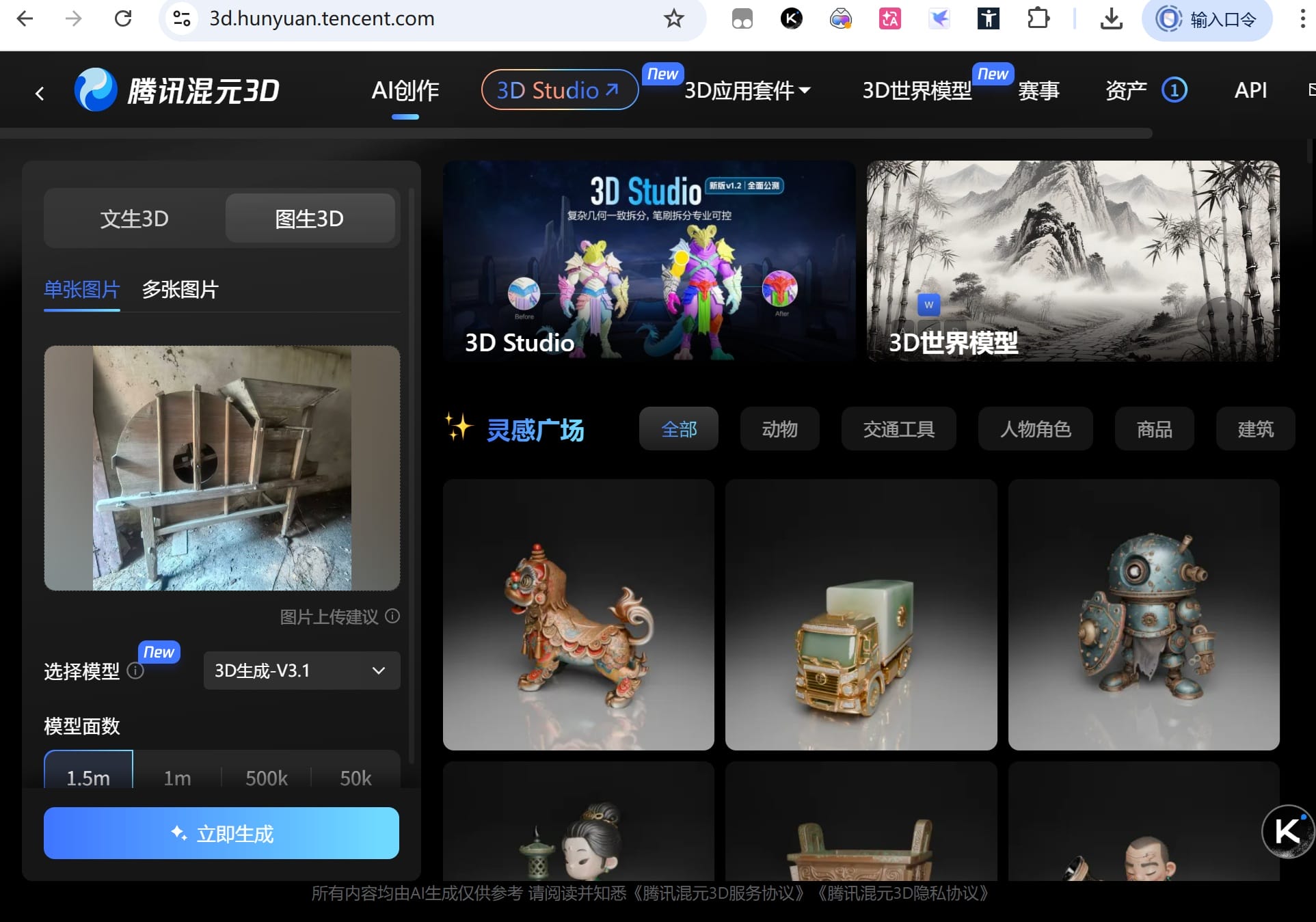
*upload the photo to Hunyuan AI *
3.2.2 Wait for the model to be generated
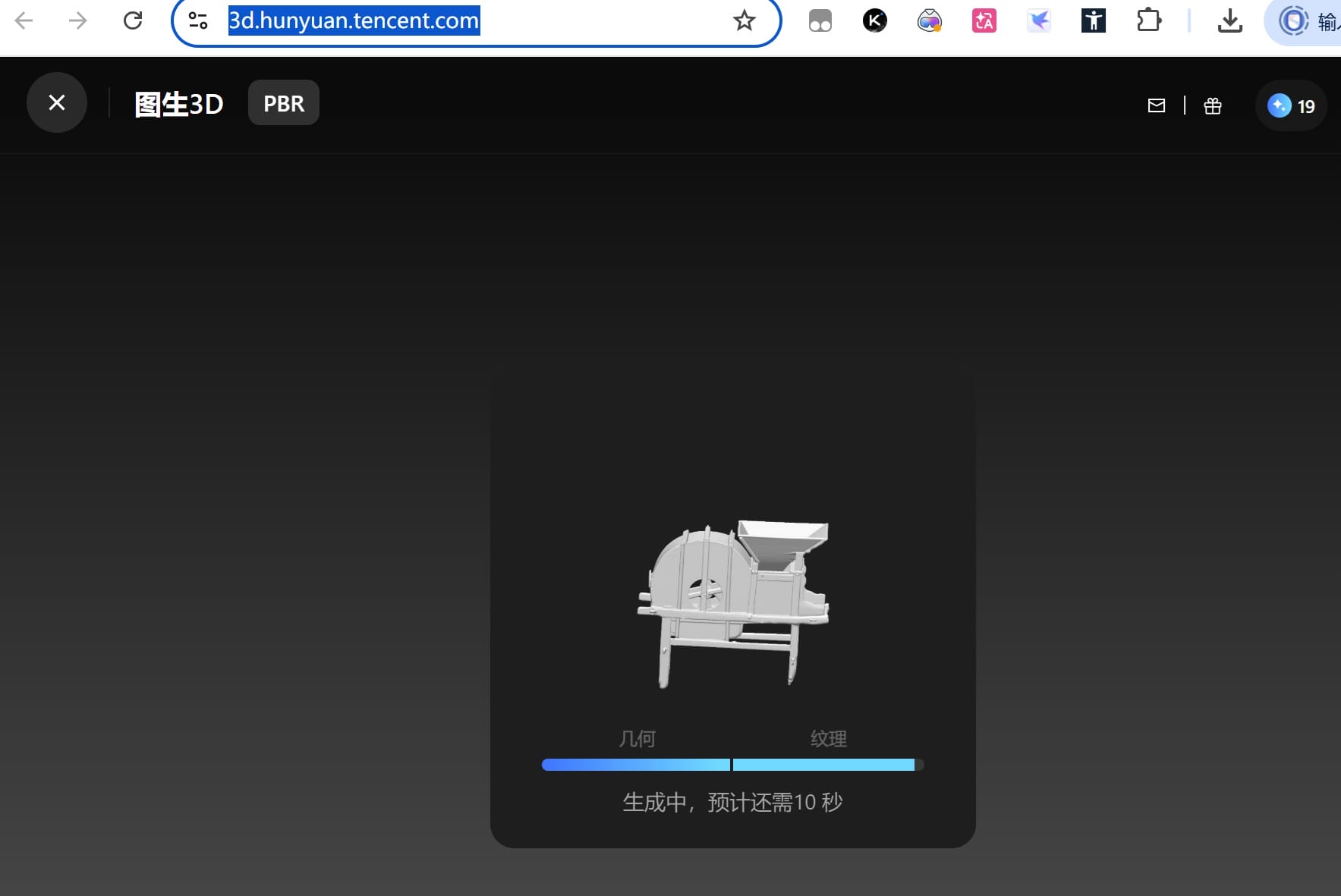
Hunyuan AI process status.
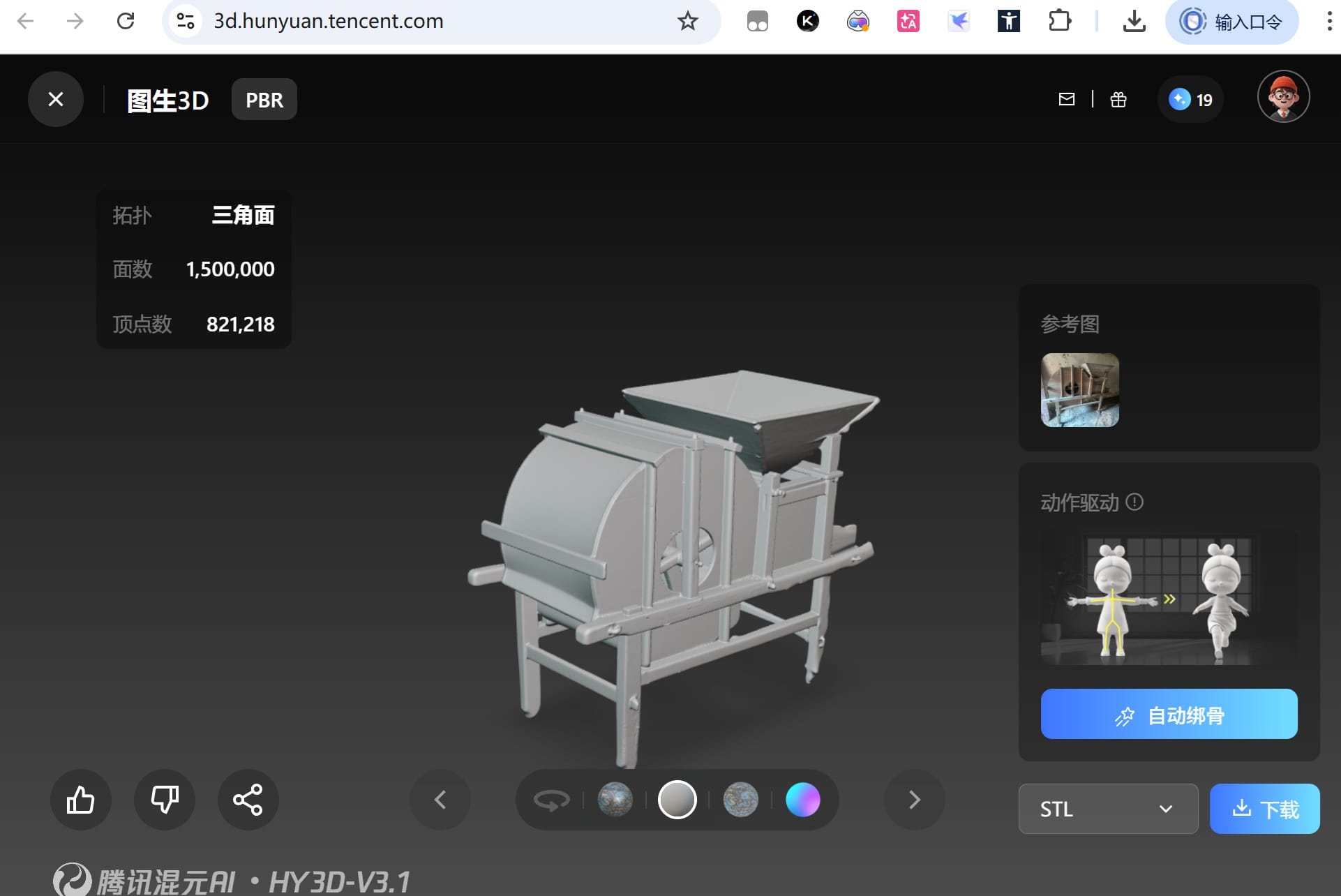
Generate a 3D model.
3.2.3. Download the model
After the processing was completed, I downloaded the 3D model(STL file).
3.3. Printing Process
3.3.1. Use Bambustudio to Open the 3D Model
I opened the downloaded 3D model in Bambu Studio..
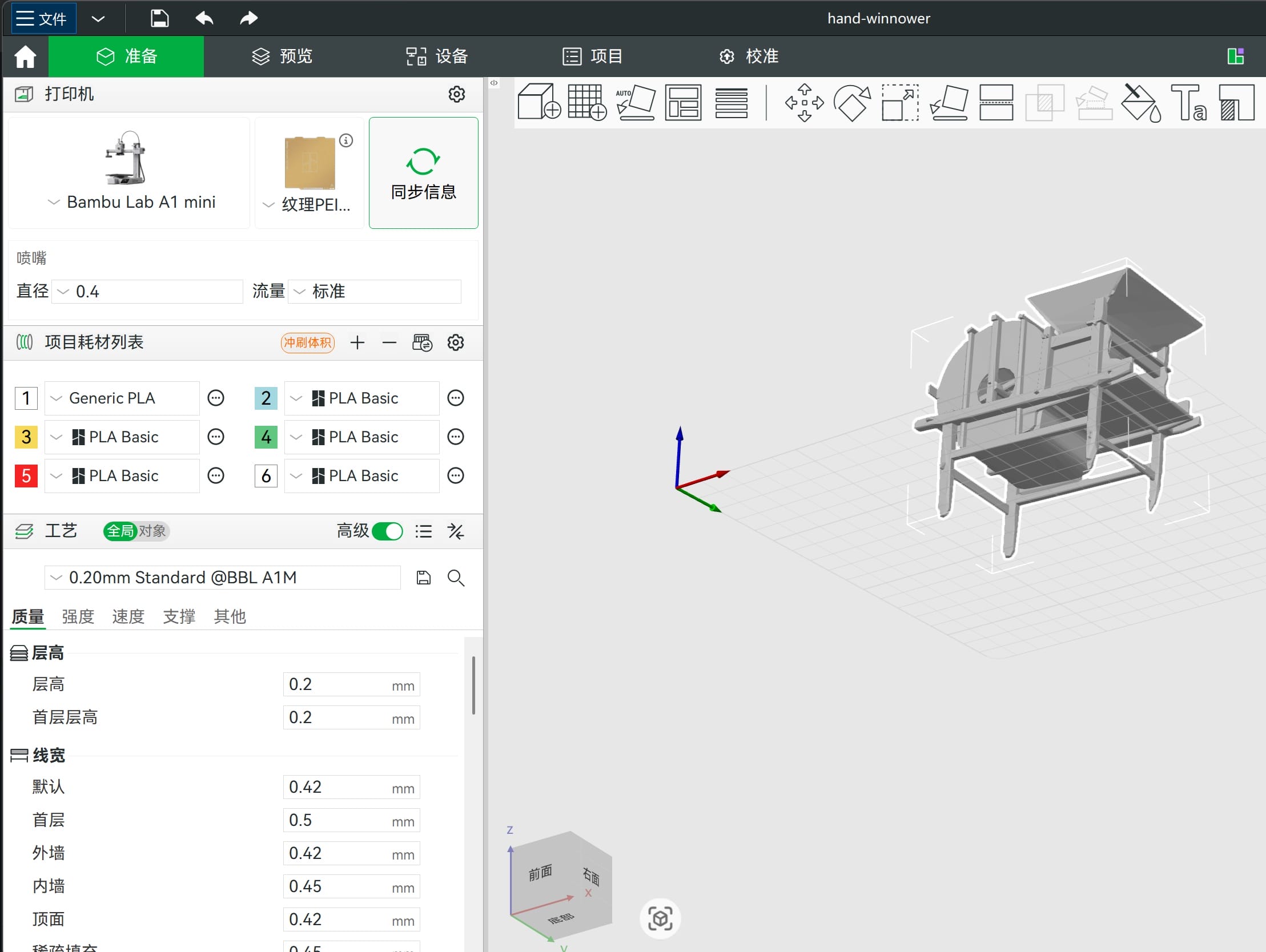
The 3D model opened , showing some imperfections.
3.3.2. 3D Printing the model
I printed the model using the Bambu A1 mini 3D printer.
After printing, I checked the model.
3.4 Resources
- Hand Winnower Obj
Download the 3D model file of the scanned object.