1. My Background
My name is Gennaro Picinni Leopardi, a Computational
Designer and M.Arch. I work across parametric
design, architectural visualization, and sustainable
urban strategies. For me, design is a challenge I
embrace with enthusiasm every time—a continuous
journey of experimentation, mistakes, and
refinement. I believe that exploring and shaping
ideas step by step leads to the most authentic and
meaningful results.
Born in Bari, Italy, I later moved north to pursue
my studies and career. I hold an M.Arch from the
University of Florence, specializing in
computational design, parametric modeling, and
architectural visualization within structured
digital workflows. My work centers on parametric
design, acoustic mitigation, sustainability, and
adaptive reuse, connecting space, materials, digital
tools, and cultural heritage through ongoing
learning and practical innovation. I am thrilled to
start this journey at Fab Academy and learn a wide
range of new skills and technologies.
2. Project A: Florence Railway Corridor
Developed as my Master's thesis, this project
focuses on the requalification of the Firenze
Statuto railway corridor in Italy. The primary
objective is to address the severe acoustic and
visual impact of the railway infrastructure on the
surrounding urban fabric, proposing a system that
mitigates noise while recovering these fragmented
areas for public use.
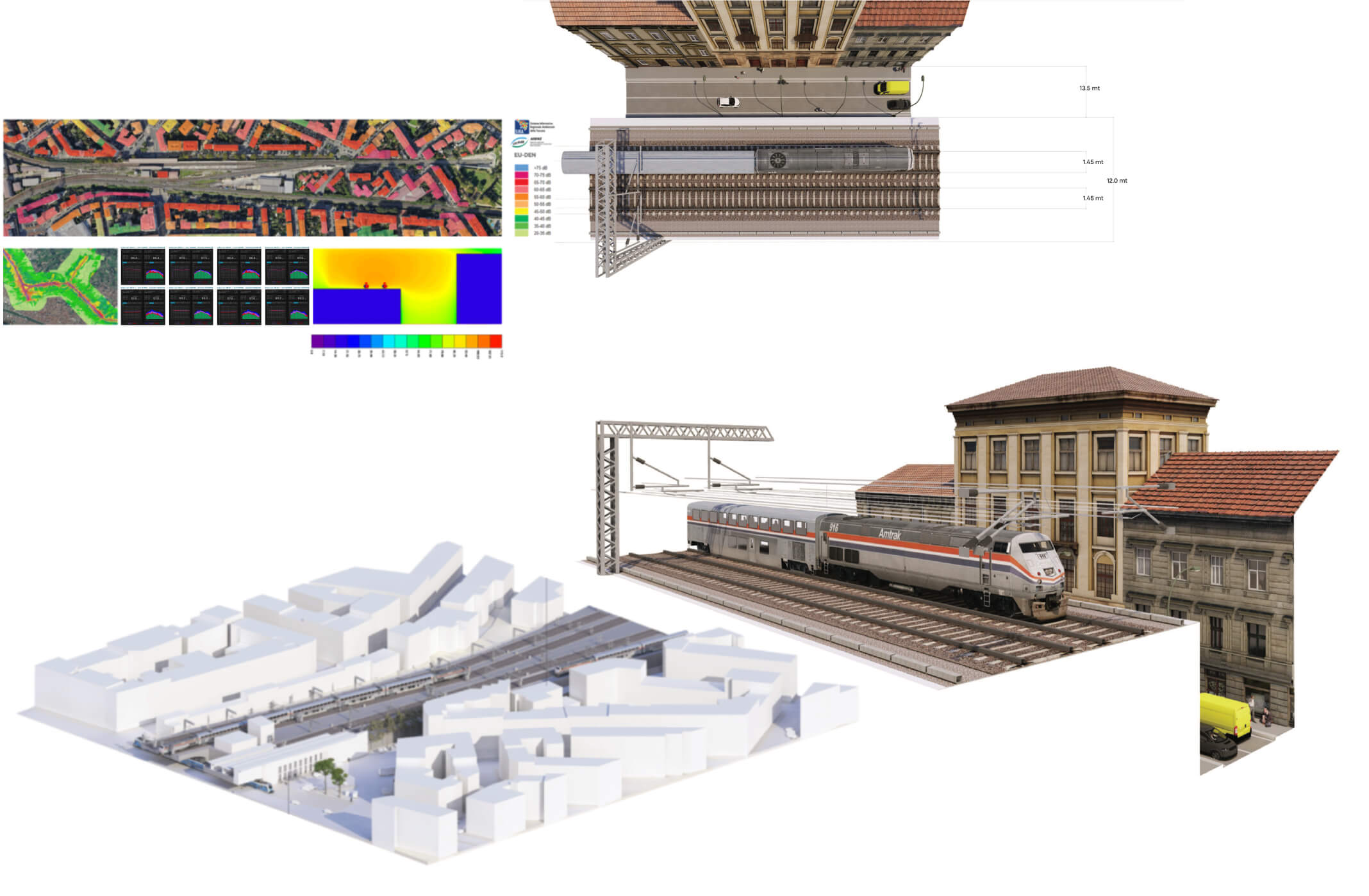
The design process began with a deep analysis of the
urban context and the existing acoustic issues,
supported by local environmental data and acoustic
principles. To tackle the low-frequency noise
generated by trains, the architectural intervention
relies on a system of prefabricated concrete tunnels
integrated with specialized acoustic panels. This
structure acts as both a functional sound barrier
and a new spatial element within the city.
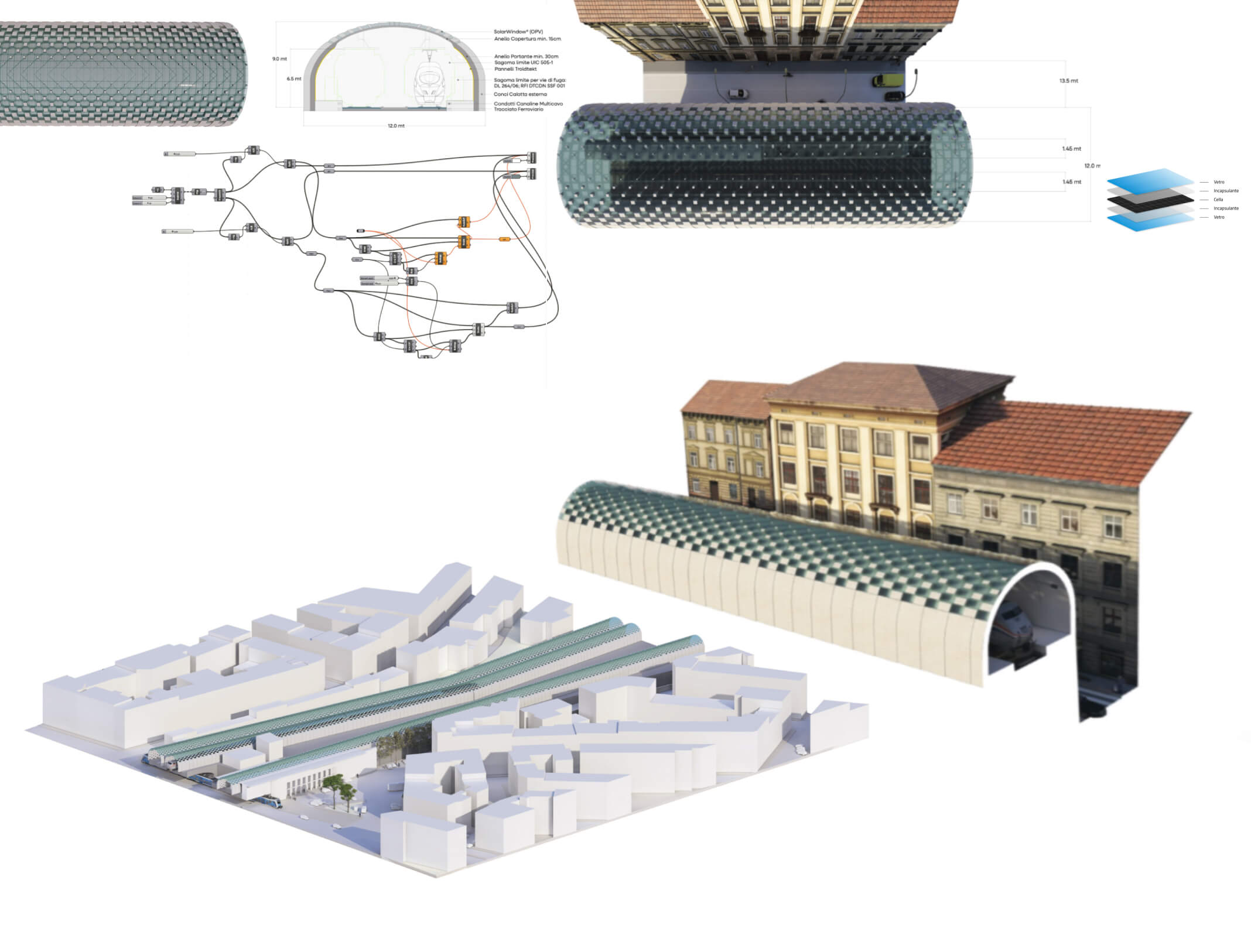
Ultimately, this strategy goes beyond mere technical
mitigation. By reconnecting the divided
neighborhoods and introducing sustainable, adaptive
solutions, the project aims to significantly enhance
urban livability and transform a disruptive
infrastructure into a cohesive, highly functional
piece of architecture.
Software used: Rhino
3D, Grasshopper, AutoCAD, Photoshop, Illustrator,
Lumion 11
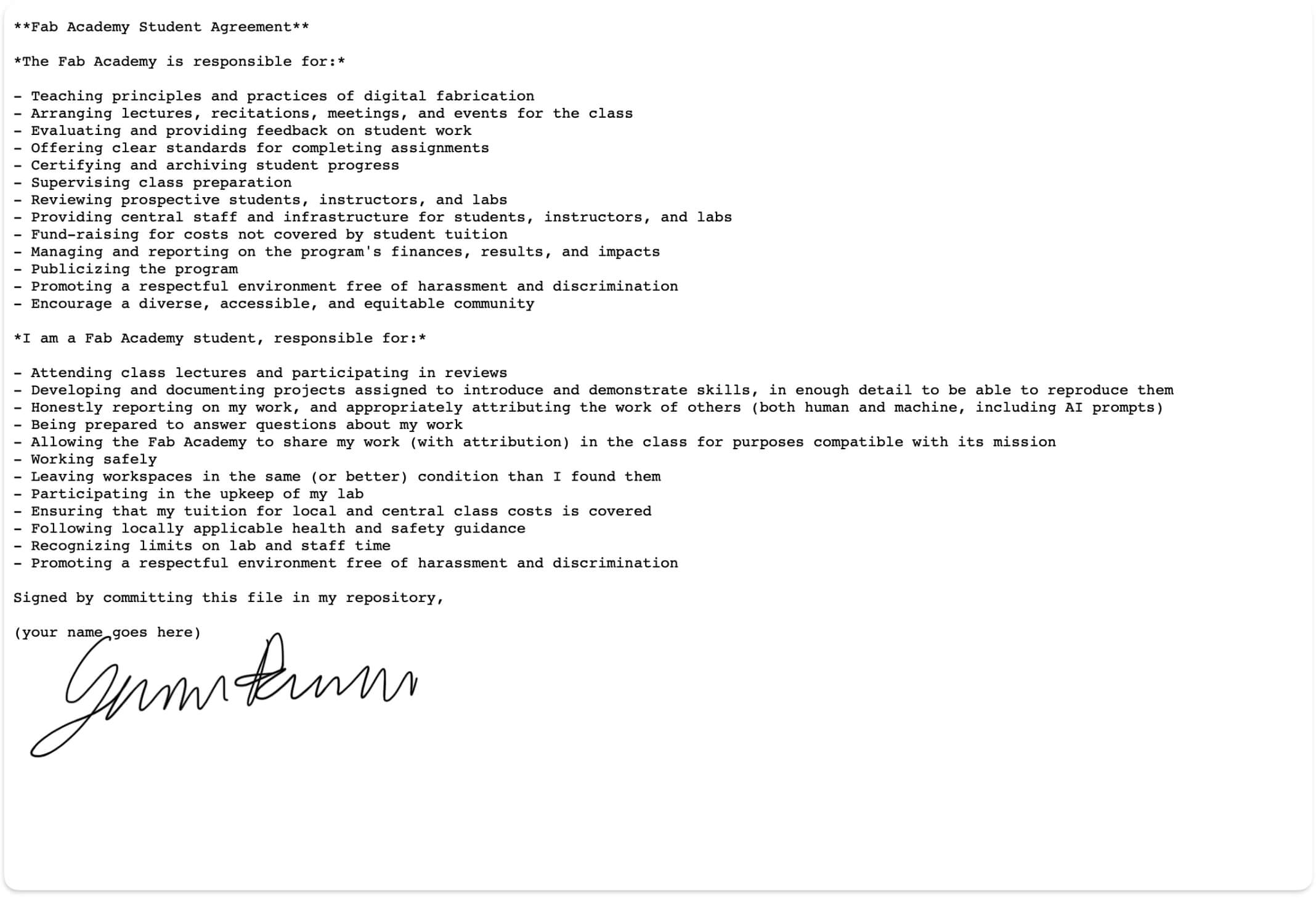
3. Signed and uploaded Student Agreement
Before diving into the fabrication processes, I
read, signed, and uploaded the official Fab Academy
Student Agreement. This document outlines my
responsibilities as a student, including documenting
my work honestly, working safely in the lab, and
contributing to a respectful learning environment. I
placed the signed copy directly into the root of my
repository.