Week 14: MOLDING AND CASTING
group assignment: • review the safety data sheets for each of your molding and casting materials, then make and compare test casts with each of them • compare mold making processes
For molding and casting materials, our lab has:
-
Smooth On’s Free Form Habitat Flex (datasheet here)
-
Smooth On’s Ecoflex Series & Gel (datasheet here)
-
LifeMOLD Silica Free Alginate (website here). The safety data sheet doesn’t appear to be linked correctly on their site but here is sheet linked on their website but it’s a product that doesn’t have the exact same name
-
We also have soap for casting!
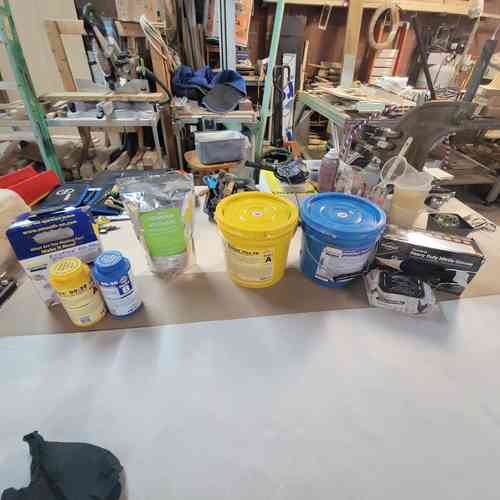
Our set up for molding and casting
Safety Precautions and Usage Info
Free-Form Habitat Flex
Safety:
- Health hazards: causes skin and eye irritation and is toxic to aquatic life
- Prevention: avoid breathing it in, wash with soap and water after use, properly contain contaminated clothing, wear protective gloves/clothing/eye + face protection
- If skin irritation occurs or it gets in your eyes call poison control/doctor
- First aid measures: fresh air, soap and water!! Until you can get to a doctor
- In case of fire: use water fog, dry chemical, or carbon dioxide foam to extinguish fire
- make sure to store safetly in tightly closed and properly labeled containers, in cool/dry/well ventilated areas
- with adequate exhaust ventilation you don’t typiclaly need respiratory protection
Info: Product Webpage
- mix-and-apply-by-hand putty
- creates semi-rigid and extremely tough display elements
- takes 90 minutes to work and get the form you want and 24 hours to form and cure
- when using as adhesive do not use the folding powder
- good for painting with acrylic paints/stains
- bonds to a variety of surfaces (foam, steel, wood, PVC, ABS plastic, concrete, etc.)
- Mix ratio: mix equal parts A + B
- Process:
-
- Optional: apply Folding Powder to work surface in 1/4’’ layer and powder gloves too to prevent sticking (we didn’t have folding powder in the lab). Apply a release agent if and where desired.
-
- Grab out equal amouns of Part A and Part B
-
- Mix product by hands while wearing vinyl or nitrile gloves until all colors streaks dissappear. If using folding powder you’ll need to powder up gloves and knead the putty together while folding the powder in
-
- Cure: After 24 hours at room temperature you can handle material.
-
- Clean uncured material with soap and water
-
EcoFlex (For Casting and Molding)
Safety:
- Wear vinyl or nitrile gloves (NOT latex gloves) and eye protection
- Avoid contact with eyes. Flush with water for 15 minutes if irritation occurs and get to doctor
- Remove from skin with waterless hand cleaner then use soap and water
- Use in properly ventilated area
Info: Product Webpage
- pourable silicone rubber that allows for fine detail
- Mix ratio: 1A:1B by weight or volume
- cured at room temperature with neglible shrinkage. Once cured its soft, strong, and stretchy
- Process:
-
- Optional: Before process, do a small scale test for to ensure cure is not inhibited (latex, tin-cure silicone, sulfur clays, and certain wood surfaces for example may cause inhibition). Do this by applying a small amount of rubber onto non-critical area. Also, one or more coatings of clear acrylic lacquer applied to model surface helps prevent inhiibition. Also optional apply a release agent. It’s kinda like cooking spray.
-
- pre-mix Part B thoroughly
-
- Dispense required amounts of Parts A and B into mixing container
-
- Mix thoroughly for 3 minutes. Scrape the sides and botom several times
-
- Vacuum degassing for eliminating entrapped air
-
- Pour mixture into a single spot at lowest point of containment field and allow a uniform flow to prevent air bubbles
-
- Allow rubber to cure at room temperature. Post-curing at high temperature for 1-2 hours will maximize performance
-
LifeMOLD Alginate (For Molding)
Safety:
- Safe for direct skin application for mosts
- If you have severe allergies to crystalline silica, calcium sulfate, or potassium titanium flouride should avoid use
Info: Product Webpage
- This is an impression material
- Alginate is a polysaccharide derived from brown seaweed and fomrs a gel when mixed with water. It is biodegradable and non-toxic
- captures fine details, easy to mix, flexible, and pliable
- will not work after most use. can get delicate impression that you can then cast into something more durable
- Mix ratio: 2.5 parts room temperature water by volume to 1 part LIFEMOLD (distilled water reccommended)
- Correct mix will be smooth and creamy like thick yogurt
- Working time up to 4-5 minutes and set time 2-3 minutes with 80 degree
- Process:
-
- Gather materials
-
- Mix the Alginate with proper ratios. Stir quickly to avoid lumps
-
- Apply alginate to the skin ensuring even coverage
-
- Wait for mold to set (sets on 2-10 minutes)
-
- Pour the casting material
-
Comparing Test Casts
While angela focused on documenting as we go and reading out instructions, Castor focused on mixing the materials.
LifeMOLD Alginate
Following instructions documented above, we made the mold from the alginate first:
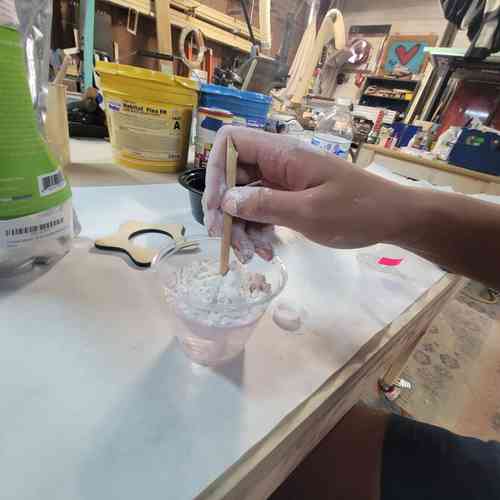
Mixing the alginate. 2.5 parts water by volume to 1 part lifemold. We noted after about 5 minutes that after stopping mixing for a moment the mixture hardened quickly so we quickly got to stirring again and then placing fingers for molding
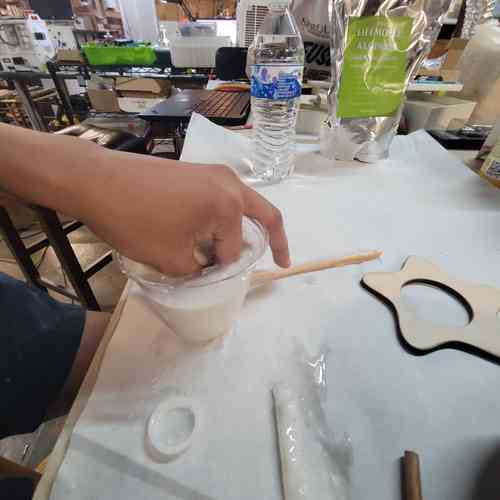
Applying alginate to skin and waiting for the mold to set. This took us about X minutes
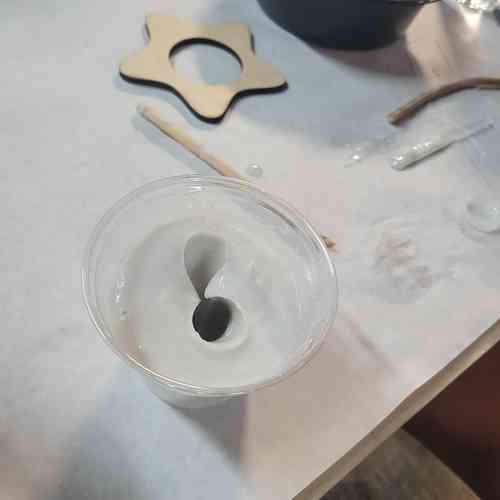
Alginate mold after setting. You can already see the fine details of the fingers if you look closely.
Now, we’re ready to pour the casting material. But gotta make it first…
Ecoflex
Following instructions documented above, we made the casting material using ecoflex next:
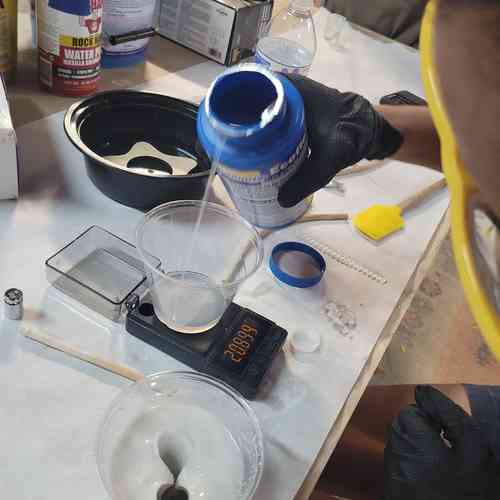
Measuring weight for part B. We poured 30 grams so we measured the same amount for part A before mixing them together
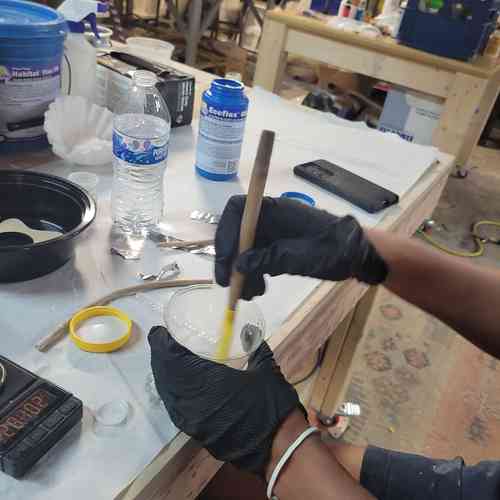
Mixing Part A and Part B (1A: 1B) for 3 minutes making sure to scrape sides and bottom.There were lots of air bubbles so tried our best to fold it in
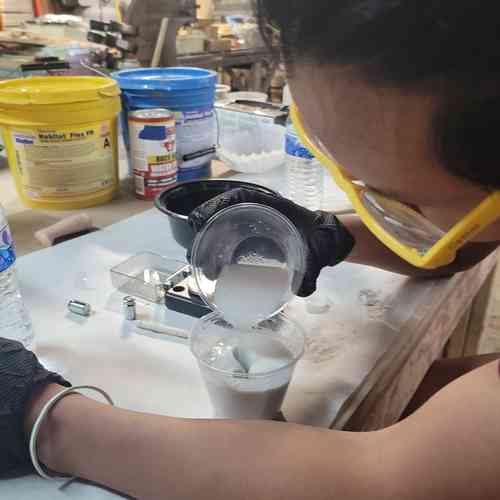
Pouring Ecoflex casting material into alginate mold
After this, we left it to cure. The cure time for this Ecoflex is 4 hours.
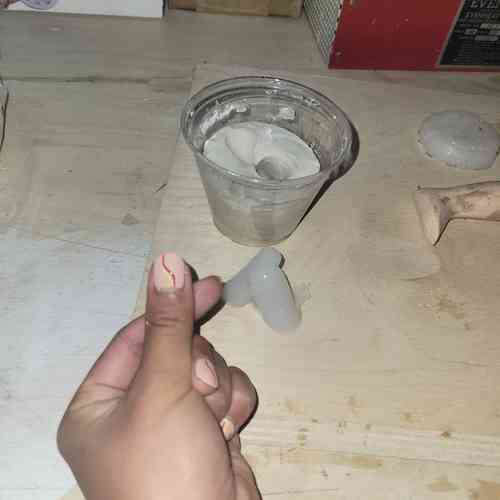
Here is the final result after curing for about 24 hours. We noticed that you can feel the thumb ridges on the ecoflex material.
Free Form Habit Flex FR
Following instructions documented above, we made a mold using the Free Form Habit Flex
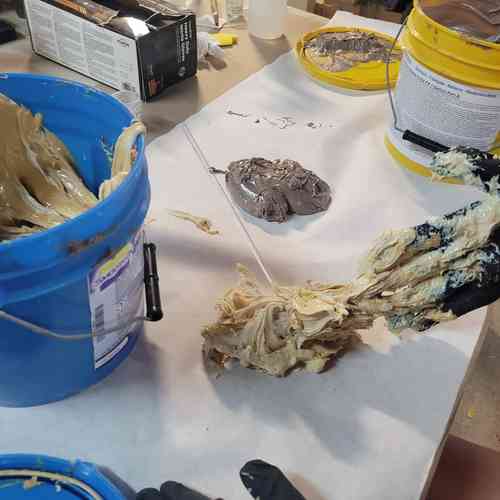
Removing putty material from containers
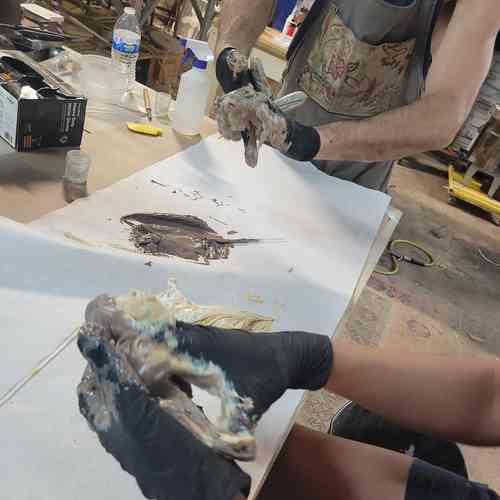
Mixing putty until all color streaks disappear. Each part is 1:1 mixing ratio.
It got real messy with the Free Form Habit Flex! We tested molding it on a variety of objects:
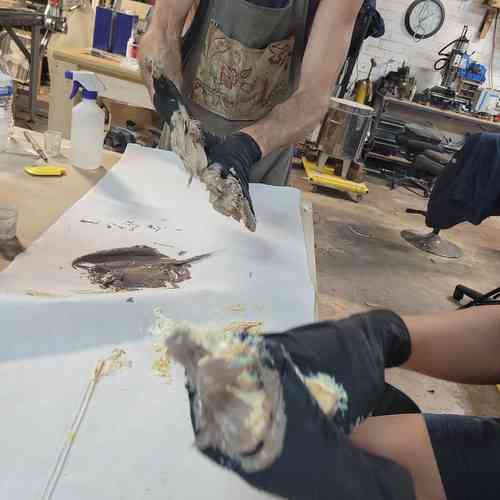
Messy!
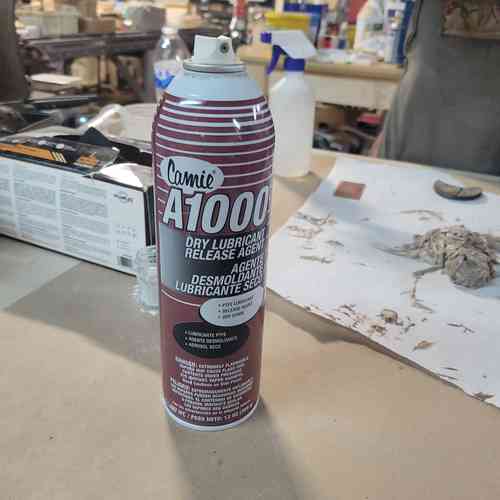
Mold release spray we used on some of our objects
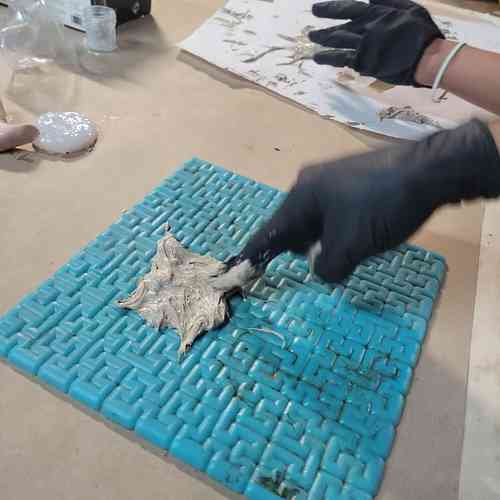
Silicone material
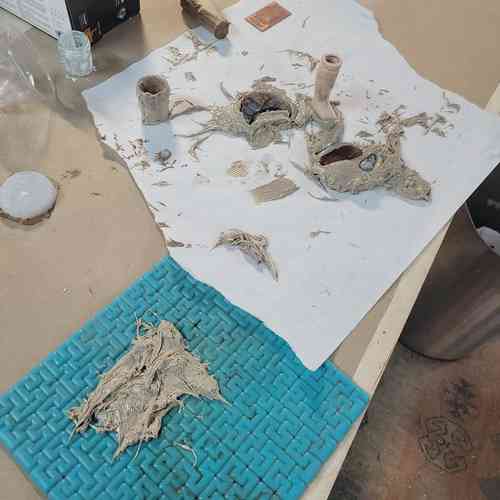
An array of objects found for molding including wooden moon, wood chip, rocks, and a baby foot.
After about 24 hours…
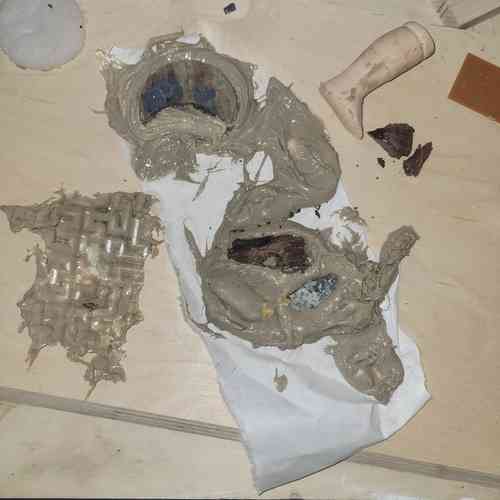
After about 24 hours here is what we have. Most objects we were not able to get unstuck from the hardened putty even those sprayed with release spray. In the future, if we wanted to use this putty, we could try using the folding powder.
Comparing Mold Making Processes
To compare printing vs millling, we referred to Fab Academy documentation and to instruction from our lab’s instructor, Will.
Sources:
Printing Molds
Printing a mold uses the additive manufacturing process of the 3D printer. The accuracy is only as good as the tolerance of the 3D printer. However, as the design becomes more geometrically complex, this doesn’t make the process more difficult.
Materials-wise, 3D printing can use the typical filaments of thermoplastics or resin 3D printers can make molds out of many different types of resin. The FFF 3D prints will have the expected finish on the surface and will require special techniques to smooth it out (for example, baby powder and UV resin). Resin molds can produce a smoother surface.
Milling Molds
Milling a mold uses the subtractive manufacturing process of the CNC Milling machine (we used Other Mill Pro). The CNC mill cuts with a high degree of precision, so it is good for preserving more detail. However, as the design gets more complicated it becomes harder to execute using the milling machine because you have to figure out toolpaths based on the shape. You also need to consider draft angle – this slight angle allows for easier removal of the mold.
For materials, in our lab we had solid blocks of polyethylene plastic. We also had machinable wax Will made from old melted down plastic bags and wax.