
Exploration I: Static Form Study
The first stage of the project focused on understanding the geometry and visual language of the flower before introducing motion. Instead of starting with a mechanism, the process began with a static exploration to define form, structure, and modular organization.
1. Conceptual Direction
The initial idea emerged from observing natural leaf structures and organic growth patterns. These references were abstracted into a radial composition, where repetition and variation generate a complex overall geometry.
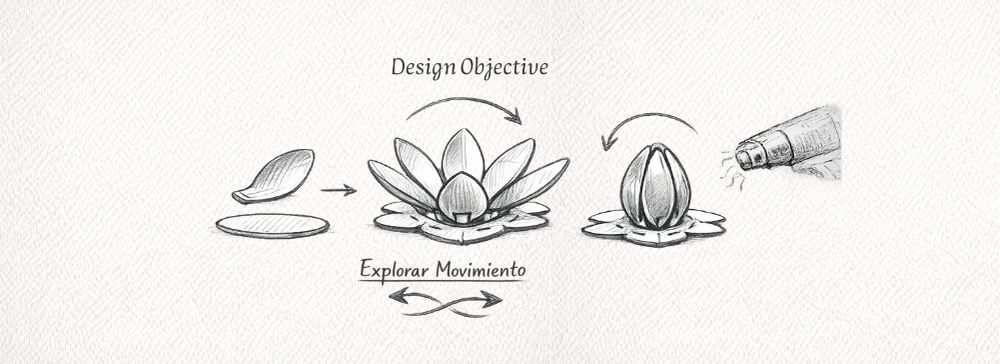
The goal was to translate organic forms into a system that could later be controlled mechanically. This meant simplifying natural geometries into repeatable and parametric elements.
2. 3D Modeling Strategy
The modeling process was developed in Rhinoceros, using a modular logic. A base petal was created and then distributed using a radial (polar array) system.
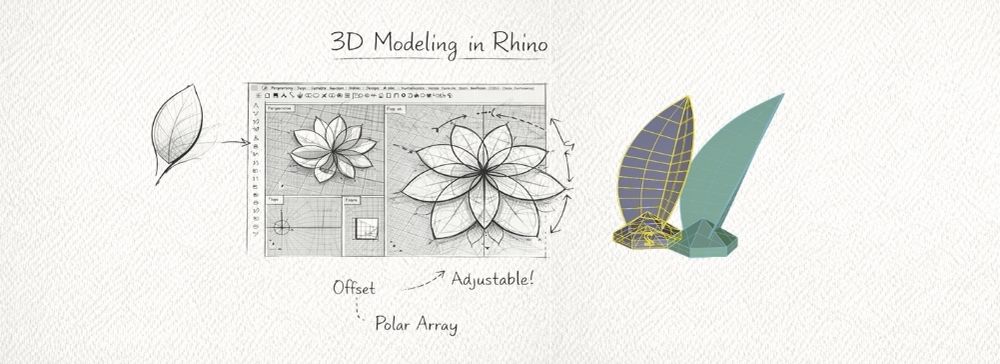
Each petal was generated using surface operations (two-rail sweep), allowing control over curvature and thickness. Although the petals share the same base geometry, their orientation changes depending on their position in the radial system.
This resulted in multiple variations of petals that together form a cohesive structure.
3. Modular Base and Organization
To organize the system, a hexagonal base was designed as the structural unit. This allowed precise positioning and repetition across the full geometry.
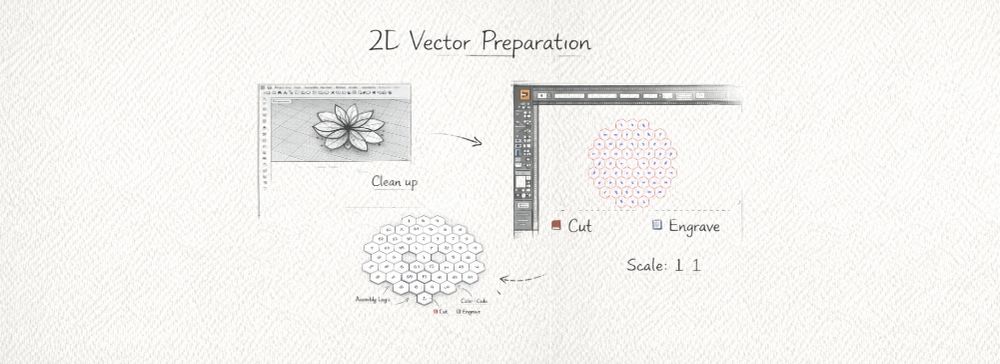
Each module was numbered to control assembly. Additionally, the base included a cavity underneath, improving stability and allowing better integration with the support structure.
4. Preparation for Fabrication
Once the geometry was defined, the model was prepared for fabrication. The petals were exported as STL files and organized in Bambu Studio.
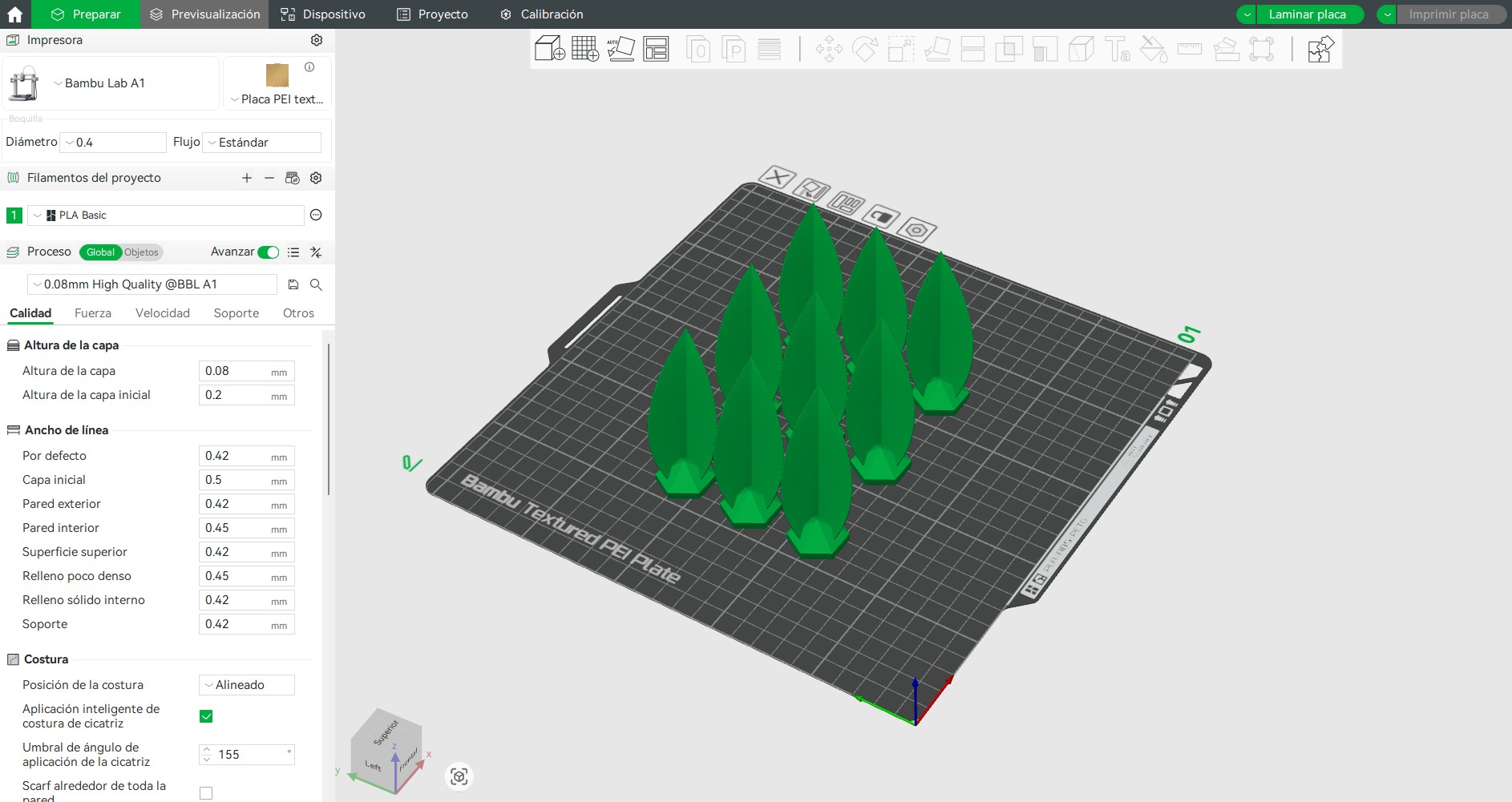
Key decisions during slicing:
- Layer height: 0.12 mm for balance between detail and speed
- Material: PLA
- Thin wall detection activated
- No supports required due to controlled overhang angles
5. 3D Printing and Physical Results
The petals were printed in groups, allowing validation of both individual components and the system as a whole. Each print batch included multiple variations of the same geometry, ensuring consistency while testing orientation and surface quality.
Eeach petal required manual post-processing. Due to the thin geometry and the use of PLA, small imperfections such as stringing, rough edges, and minor surface inconsistencies were present.
To address this, each piece was carefully cleaned using manual tools, removing excess material and refining the edges to improve both aesthetics and mechanical behavior. This step was important to ensure smooth interaction between components during assembly.
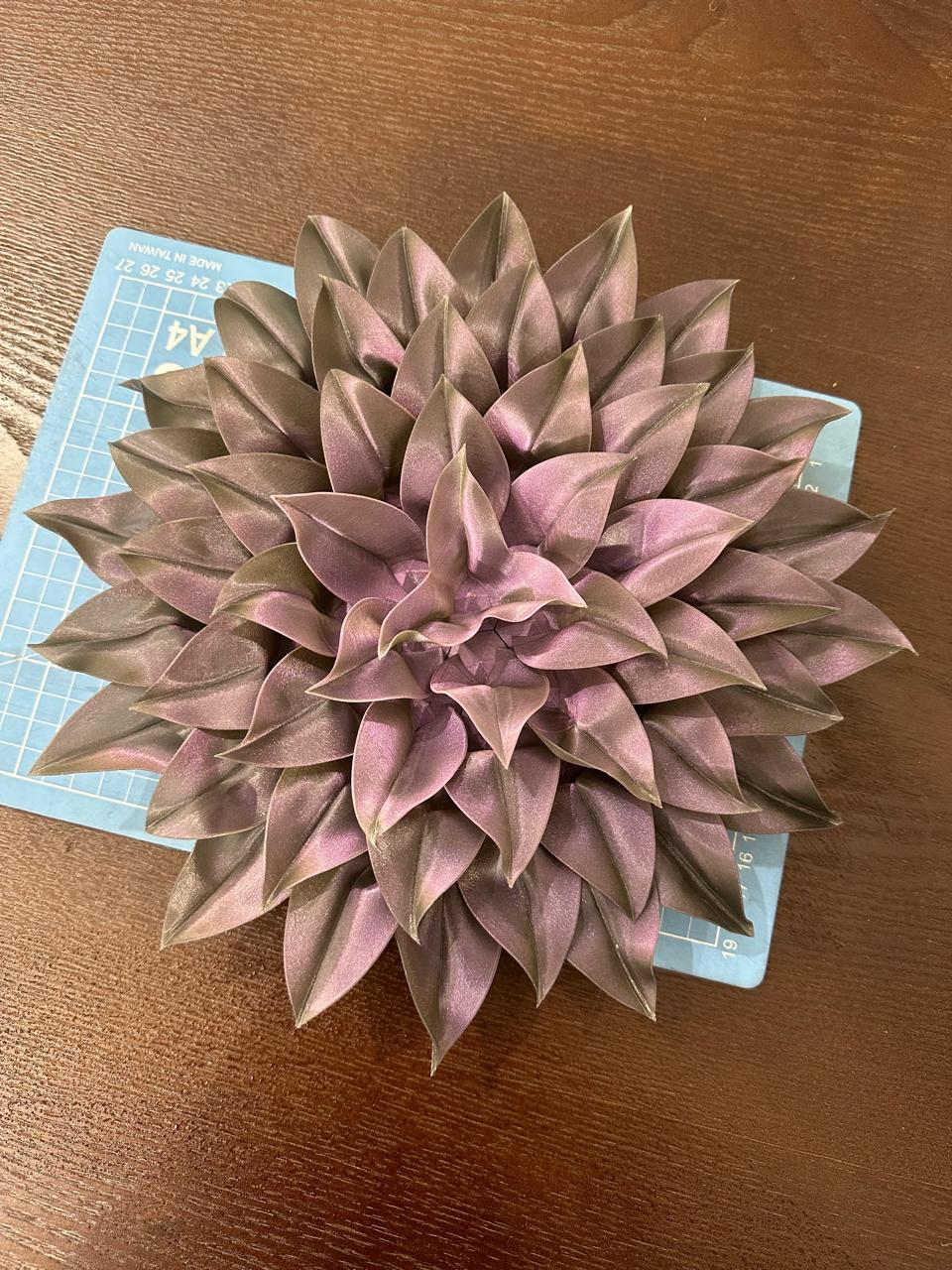
After cleaning, the petals were manually heat-formed to achieve a more organic and dynamic curvature. Controlled heat was applied progressively, allowing the material to soften without deforming the structural base.
While the material was still flexible, each petal was shaped by hand to introduce curvature and variation, mimicking natural leaf behavior. This process transformed the initially rigid printed parts into expressive elements with a more organic appearance.
The final result demonstrates the transition from a purely geometric system to a more organic and material-driven form. This phase established the visual identity of the project and validated the feasibility of working with thin, deformable printed elements.
Key Learnings
- Separating geometry from final deformation allows better control of fabrication
- Modular systems simplify complex radial compositions
- Material behavior (PLA + heat) plays a key role in the final expression
- This stage defined the visual and structural foundation of the project
At this point, the project was still static, but it established the essential logic needed to later introduce movement.
For a more detailed explanation of the process, you can visit the corresponding assignment pages.