 18.1.0
INTRODUCTION
This week (and next) are a bit funny in terms of assignments. With the exception of perhaps the midterm review, we aren't fabricating anything specific, but instead, we are preparing for our final project, getting our ducks in a row and tying up loose ends. I was absolutely laser focused this week, and put probably close to 50 hours in the lab just working on my final project, so much so that I haven't had the time to refine some of the things I've written, so week's documentation might feel a little rougher around the edges.
[x] Plan a final project masterpiece that integrates the range of units covered.
[x] Prepare drafts of your final project summary slide (presentation.png, 1920x1080) and video clip (presentation.mp4, 1080p HTML5, < ~minute, < ~25 MB), put them in your root directory, and check that they are linked in the final presentation schedule
Masterpiece
This week, we're tasked with preparing our final project masterpiece, which is comprised of a single slide/image and a ~1 minute video to show off all of my hard work over the last 20 weeks. No pressure, eh?
➔ Slide
My first priority was to thumb out a placeholder to show off the bare minimum. I worked like crazy this week on the system integration of the final case for the PAK, so I was already playing around with materials and renders in Fusion - so I decided to get a good still of it and throw it on a slide - and pair it with the branding I've developed in the course. Here's a little timelapse of the work in Illustrator.
What's needed for the final slide:
- Images of the real thing
- An updated render
- Images/screenshots of apps running
- Stronger description
- Callouts to different fabrication methods
- Design polish
➔ Video
To get the assignment taken care of right away, I quickly took a screen recording of my master CAD file and uploaded it to my repo so that the link could be properly linked on the presentation schedule. Then I got to dreaming...
I want to really wow with my video, so I've decided to try creating my video in the style of a commercial, or an electronics reveal video - something that combines a bit of the early 2000s aesthetics that my final project embodies with more modern kinetic product cinematography. I want to blend this with my own style and design language for the PAK (light vectorheart, metro/subway system map aesthetics, 2000s frutiger aero optimism) while still leaning in to the more common tropes used in electronics advertising in the current era.
One of the things I want to do after my intro shot is to have a stop motion disassembly of my final project and then have each of the components of the project revert back in time through the many different iterations, prototypes, test prints, failed attempts, etc. I've got a lot, and I brought all of the stuff from Peru with me to Japan (via Canada)!
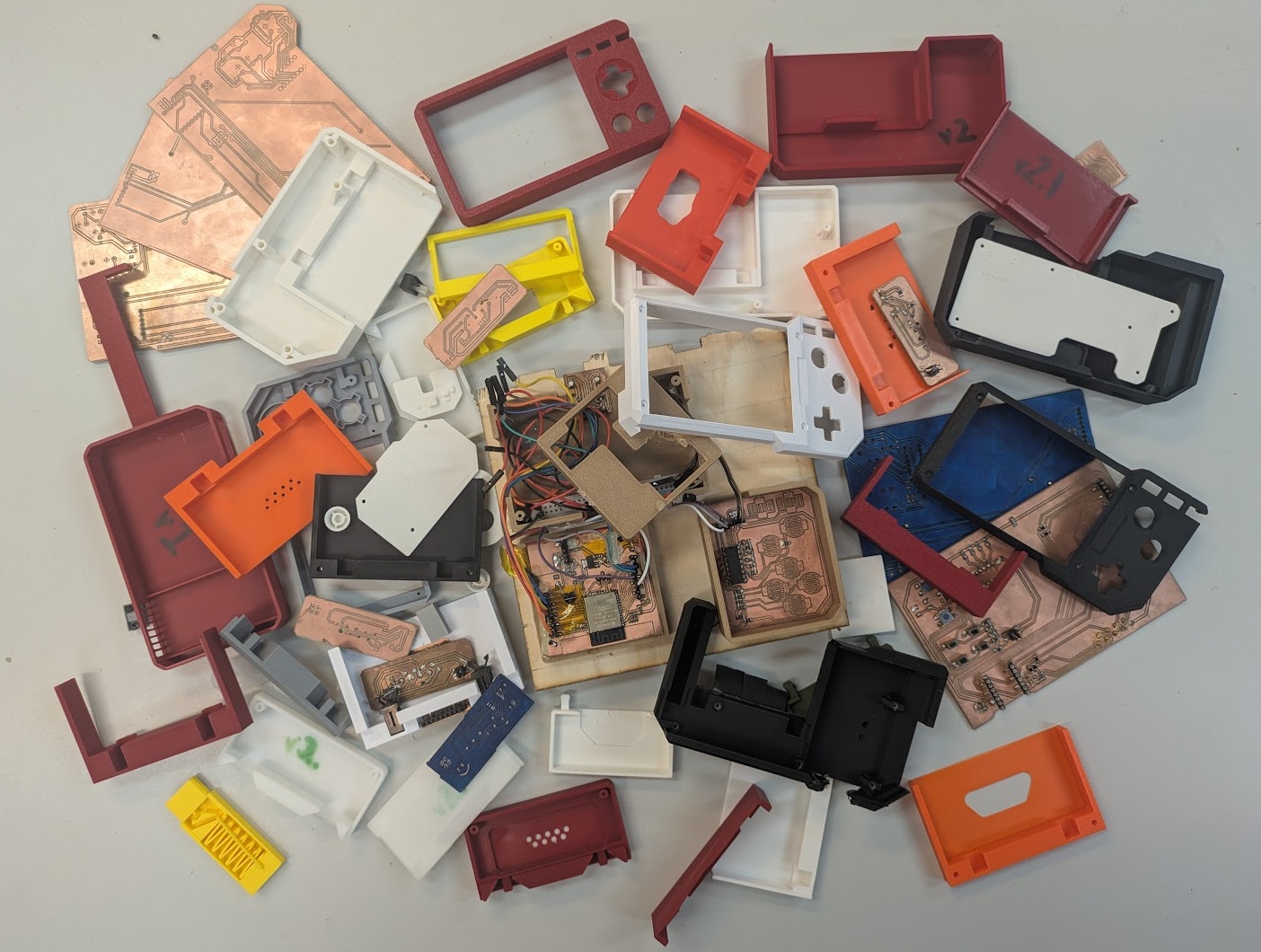
I've made videos before, but I'll admit my heyday in this kind of stuff was decades ago, so it might be a bit of a challenge. Nevertheless, I have a good foundation that I can scale up or down from. Here's a small storyboard I've sketched out and what remaining tasks I need to do before I can start filming:
"Stop Motion" Shots - Need a large white stage with good lighting
- Test with shop lights
- Buy sheet of white bristol board
- Order previous prototypes
"Clicky" Shots - Need a nice quiet place, with a good microphone (can try my own phone)
- Gameboy Advance SP Cartridge Insertion (own)
- MiniDisc Cassette Insertion (own)
- WonderSwan Cartridge Insertion (own)
- PSP UMD Insertion (need to buy one UMD)
- CD Insertion (need to buy one CD)
- VHS tape insertion (can maybe find one at Hard Off)
"Kinetic" Animation Shots - See if I can import my .step/.stl file into another program like Blender. There may be some Gen AI tools that might be able to help me with the menial animation. Worst case scenario, I can just screen record my Fusion 360 render.
General Shots
- Timelapse of assembly with me in it!
- Carrying it around?
18.3.0Project Development
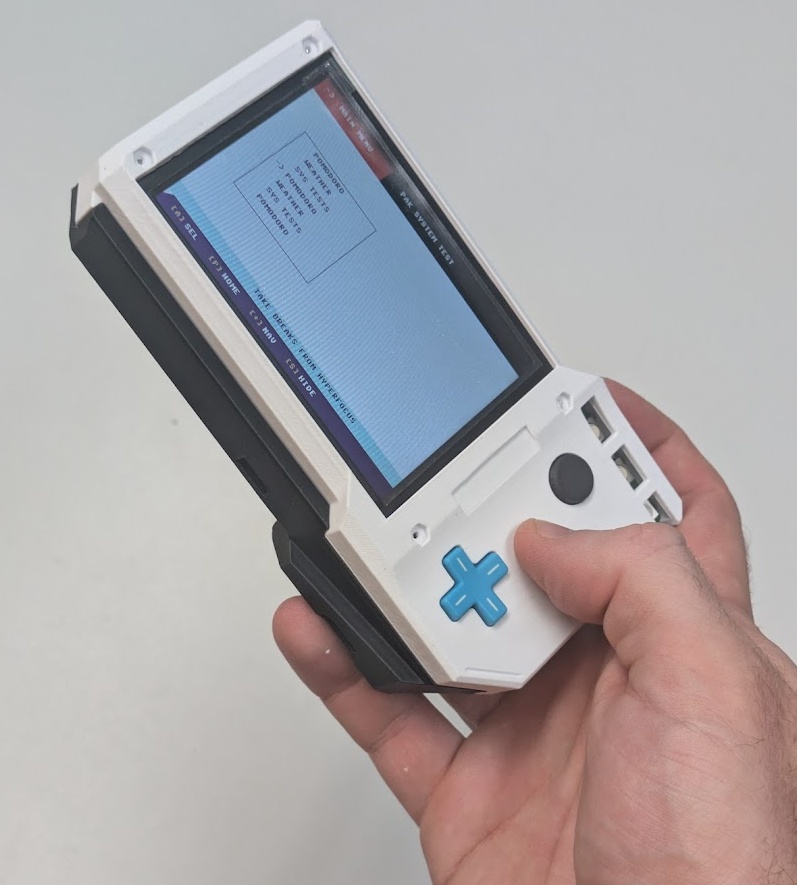
This is PAK. It is a device meant to evoke the feeling of using physical media in the year 2026. Each cartridge contains a single app, a single function. If you want to use a different application, you use a different cartridge. For this spiral, I've committed to making 2 cartridges: a Pomodoro Timer and a Weather Application, but I would love to make more!
➔ Workflow
Right now I'm in rapid prototyping and system integration. Every day in the lab I'm refining an aspect of the final design, getting closer and closer. Since I committed to the design of my main motherboard and control board (I ordered high quality PCBs from JLCPCB and I don't have the time to reorder them now!), my current workflow involves printing out iterations of the case and seeing if things fit, adding features and things I need to address, then putting it all together and using the device for a few minutes taking notes in obsidian on ergonomics, what isn't fitting right and any other things I catch that need to be addressed. It's chaotic, but it's working!
➔ Schedule
I've been assigned the first day of presentation, which is my first choice if I'm being honest! I would like to get things out of the way, but I also like the idea of having more time and excitement from the reviewers on the day of! Call me selfish! This leaves me, as of Wednesday May 27th, with about 12 days left to complete my project, and by giving myself a margin for error, I'm really making it more like 9 days. I've pretty much cleared up my schedule for the remaining time - telling myself I can go explore more of Japan after finals wrap up!
- Tue May 26 - Case Prototyping
- Wed May 27 - Case Prototyping, Cartridge Prototyping
- Thu May 28 - Cartridge Prototyping, Ship off case files to PCBway/JLCPCB for a resin print
- Fri May 29 - Cartridge Prototyping, Remaining Button Casting
- Sat May 30 - Remaining Button Casting, light pipe prototyping
- Sun May 31 - Day off
- **Mon Jun 1 ** - Application development
- **Tue Jun 2 ** - Application development
- **Wed Jun 3 ** - Application development, bill of materials
- **Thu Jun 4 ** - Application development, video editing
- **Fri Jun 5 ** - Complete project by this date, documentation, video editing
- **Sat Jun 6 ** - Day off
- **Sun Jun 7 ** - Video editing
- **Mon Jun 8 ** - Presentation Date (10pm) which leaves me with the full day/morning for any extra polish
➔ Bill of Materials
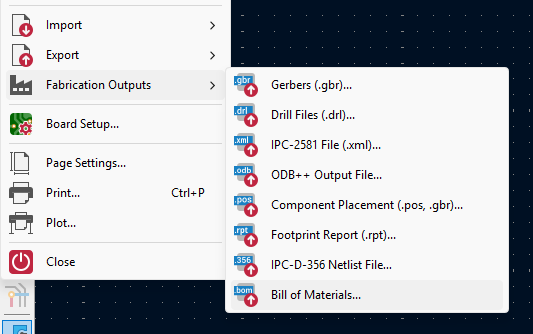
This was one I was hoping to put in some more effort into soon, but it doesn't hurt to start writing things down here and finding links when I have some extra time. A neat time is that you can have KiCAD export a Bill of Materials to help you get started!
*Note: This section has since moved to my final project page with the complete and updated B.O.M.! *
➔ Assessment
I don't normally answer the assessment questions directly in my documentation, but seeing as I'm making a bit more of a habit of it, it's probably a good idea to get these fleshed out somewhere.
-
What will it do?
The PAK is a handheld "dumb" smart device which can run a variety of apps from unique cartridges. -
Who has done what beforehand?
This whole project is very inspired of the massive and incredible console modding community. There are others in Fab Academy who have attempted other handheld portable devices, but I believe my approach with using cartridges is novel and isn't something that has been the focus before. -
What sources will you use?
I am utilizing Peter Hinch's flash memory python library to get my filesystem running.
I am drawn to aesthetics inspiration from the CARI institute's collection of various works. -
What will you design?
The case, the circuit boards (4x), the buttons, the rubber membranes underneath the buttons, the cartridge case, the software for all of the cartridges, and the operating system on the main device! -
What materials and components will be used?
It will run on a bare metal ESP32, everything else will be on a board I design. The only off the shelf component I will use is a CH340E for reliable and safe power delivery over USB-C (and to skip soldering a USB-C port myself). -
Where will they come from?
See BOM. -
How much will they cost?
See BOM. -
What parts and systems will be made?
For prototyping, I'm going to have made nearly every thing myself, but for the final production I want to have the board and outer case done by a professional manufacturing house, such as PCBWay or JLCPCB -
What processes will be used?
3D printing (both FDM and SLA) for the case and cartridge. Silicon molding and casting for the button membranes and plastic buttons themselves. Various electronics production and microcontroller programming processes required to operate software on the device -
What questions need to be answered?
This isn't really a question of what's left, because at this point I feel like I have all of the big questions figured out, but generally... How simple is it for me to make personal consumer electronic devices moving forward? I'd love to continue iterating and making more hyper specific devices for fun, for my own home, and for artistic purposes! -
How will it be evaluated?
My incredible documentation! and... whether or not it can play Doom