Final Project Overview
The final project is an interactive climbing wall designed to promote
emotional development and well-being through movement, play, memory,
and positive reinforcement. The system challenges children to follow illuminated routes,
remember visual sequences, and interact with responsive climbing holds that communicate
with the electronic system.
The integration stage involved connecting the physical structure, electronic hardware,
embedded programming, wireless communication, user interface, and feedback mechanisms
into one coherent experience.
From Individual Components to a Complete System
Throughout the academy, each assignment contributed a specific element to the final project.
During this week, those elements stopped being isolated exercises and became part of a
functional product.
The wall structure was digitally designed and fabricated using CNC technology.
The climbing holds were modeled in Rhino and produced using
resin 3D printing. The electronic control system was developed around an
ESP32 microcontroller, while LEDs, touch-sensitive inputs, and audio feedback
created the interaction between the child and the system.
The challenge was ensuring that every subsystem communicated correctly
while maintaining reliability, safety, and ease of use.
Physical Structure
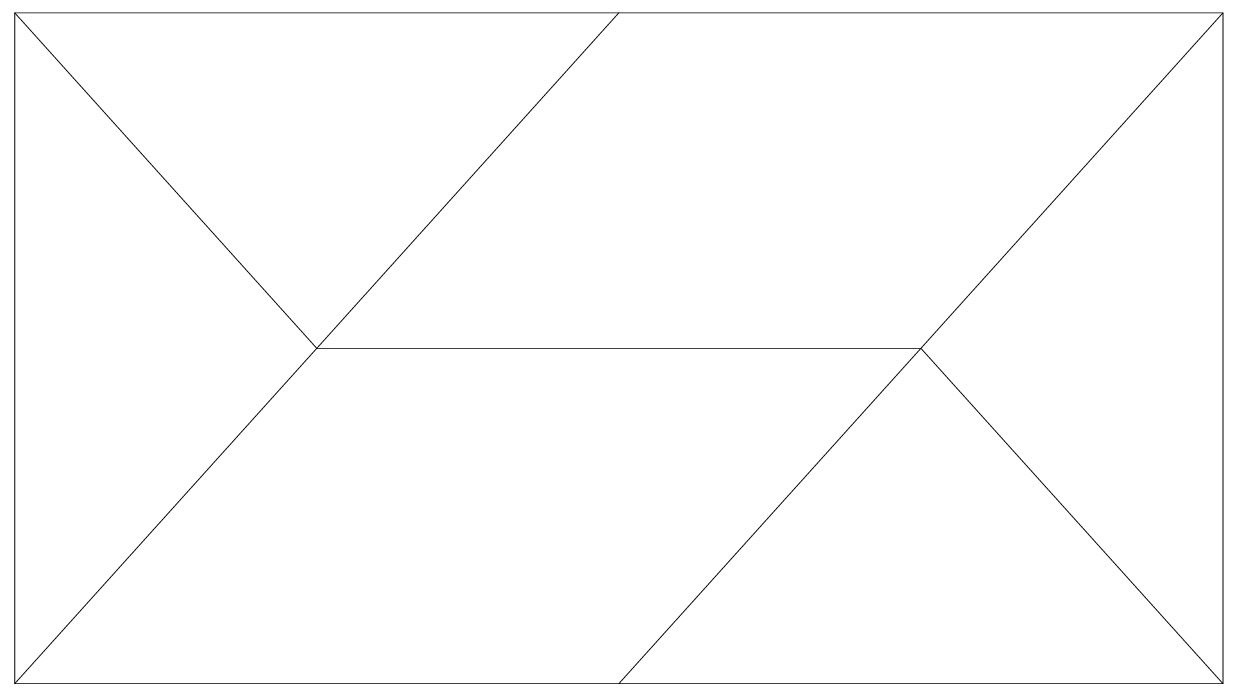
The main body of the project consists of an Playwood climbing wall
manufactured using a ShotBot CNC machine.
Designing the structure digitally allowed precise positioning of the climbing holds,
electronic components, cable routing, and mounting points. The CNC fabrication process
ensured repeatability and accuracy while reducing assembly time.
The structure was conceived not only as a support surface but as an
integrated platform capable of housing electronics, wiring, and interaction elements
without exposing sensitive components to users.
Interactive Climbing Holds
A key feature of the project is the development of
custom climbing holds that combine mechanical and electronic functions.
The holds were designed in Rhino and manufactured through
resin 3D printing to achieve detailed geometries and comfortable ergonomics.
Each hold incorporates a push button that acts as an input device
within the game.
Instead of serving only as climbing elements, the holds become
interactive interfaces capable of detecting user actions and sending information
to the control system.
WEEK 2
WEEK 17
Light-Based Interaction
The main activity of the wall is based on illuminated routes.
When a game starts, LEDs indicate a sequence that the child must observe and remember.
The illuminated pattern creates a path across the wall, transforming the climbing activity
into a cognitive challenge that combines movement, memory, and attention.
As the participant interacts with the holds, the system verifies whether the selected
sequence matches the programmed route. This approach combines physical exercise with
concentration and problem-solving skills.
Web Application Connection
To improve flexibility and adaptability, the wall can be controlled through a
web application.
The application communicates wirelessly with the ESP32, allowing the selection of
different routes, difficulty levels, and interaction modes. This communication layer
makes it possible to update activities without modifying the physical installation.
The application also serves as a management tool for therapists, educators, or instructors
who may wish to adapt the experience according to the needs of each child.
WEEK 15
Positive Feedback System
An important aspect of the project is the incorporation of
immediate feedbackthroughout a lightening effect.
Once the correct sequence has been completed, the system generates a light response
that confirms success and rewards the user's achievement.
The combination of visual guidance, tactile interaction, and visual feedback creates
a multisensory experience that supports emotional well-being and learning through play.
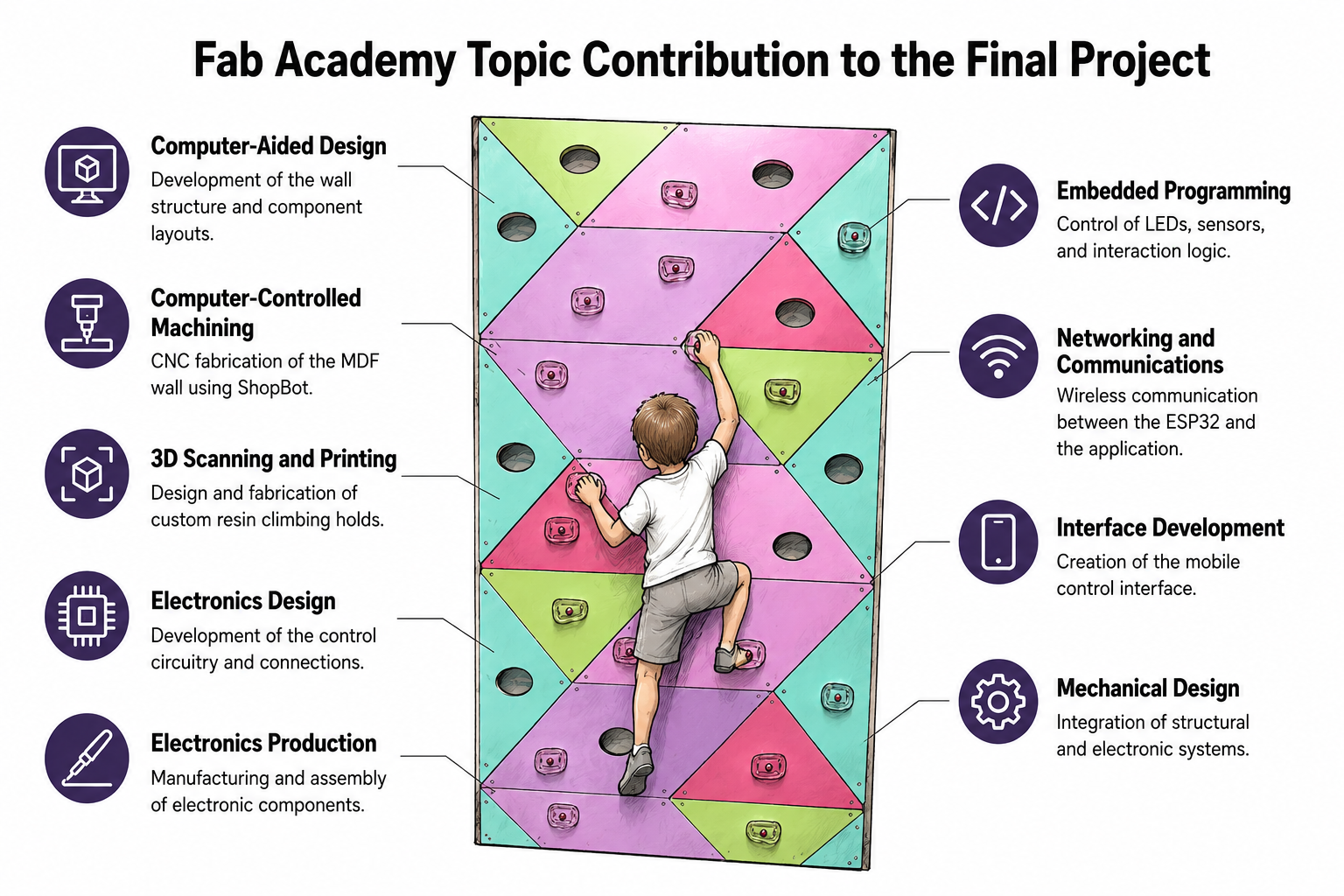
How the Different Fab Academy Assignments Were Integrated
The final prototype combines knowledge acquired throughout multiple weeks of Fab Academy.
| Fab Academy Week |
Contribution to the Final Project |
| Computer-Aided Design |
Development of the wall structure and component layouts. |
| Computer-Controlled Machining |
CNC fabrication of the Playwood wall using ShopBot. |
| 3D Scanning and Printing |
Design and fabrication of custom resin climbing holds. |
| Electronics Design |
Development of the control circuitry and connections. |
| Electronics Production |
Manufacturing and assembly of electronic board. |
| Embedded Programming |
Control of LEDs, switch, and interaction logic. |
| Networking and Communications |
Wireless communication between the ESP32 and the application. |
| Interface and Application Programming |
Creation of web application interface. |
Reflection
System integration revealed that the most complex part of the project was not designing
individual components but making them operate together as a
seamless experience.
Every modification affected multiple areas of the project. Changes in the hold design
influenced sensor placement, electronic routing affected the internal structure,
and software updates impacted the interaction flow.
By the end of the process, the project evolved from a collection of independent assignments
into a complete interactive product capable of combining digital fabrication,
electronics, programming, and user-centered design to support emotional development and
well-being through play.