Assignment Requirements
The assignment required us to:
- Design and manufacture the mechanical components.
- Build and assemble the machine.
- Operate the mechanism manually.
- Document the complete design and fabrication process.
Mechanical Design
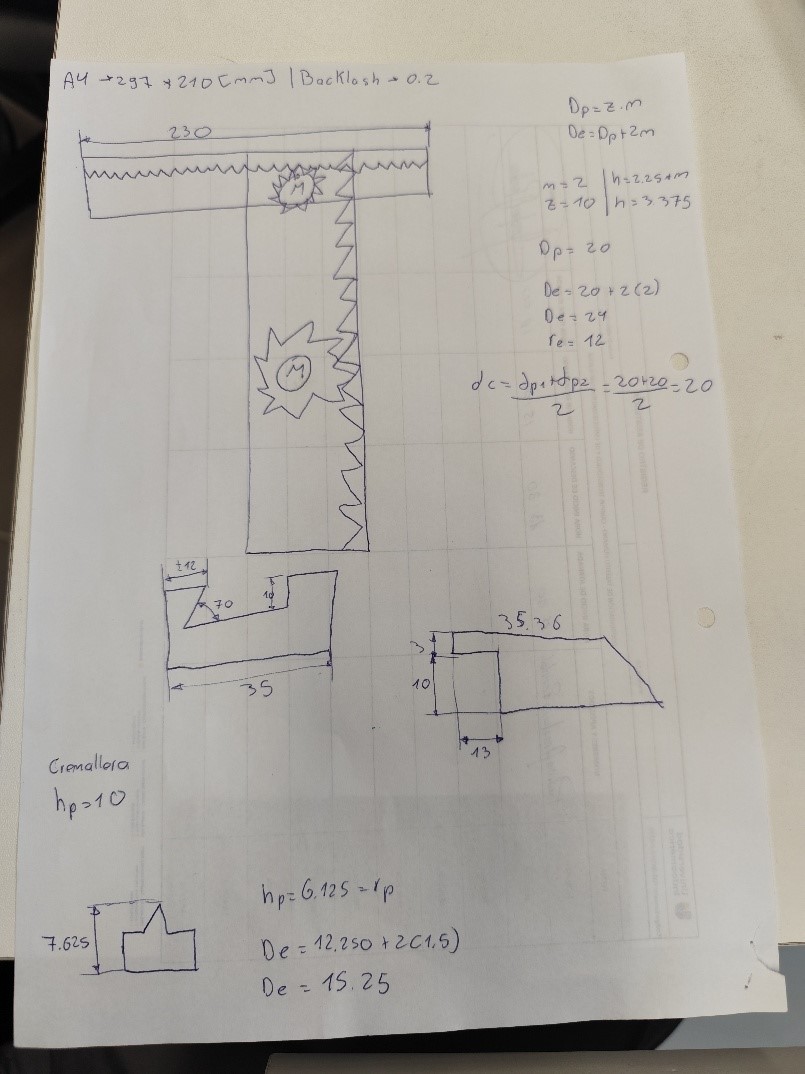
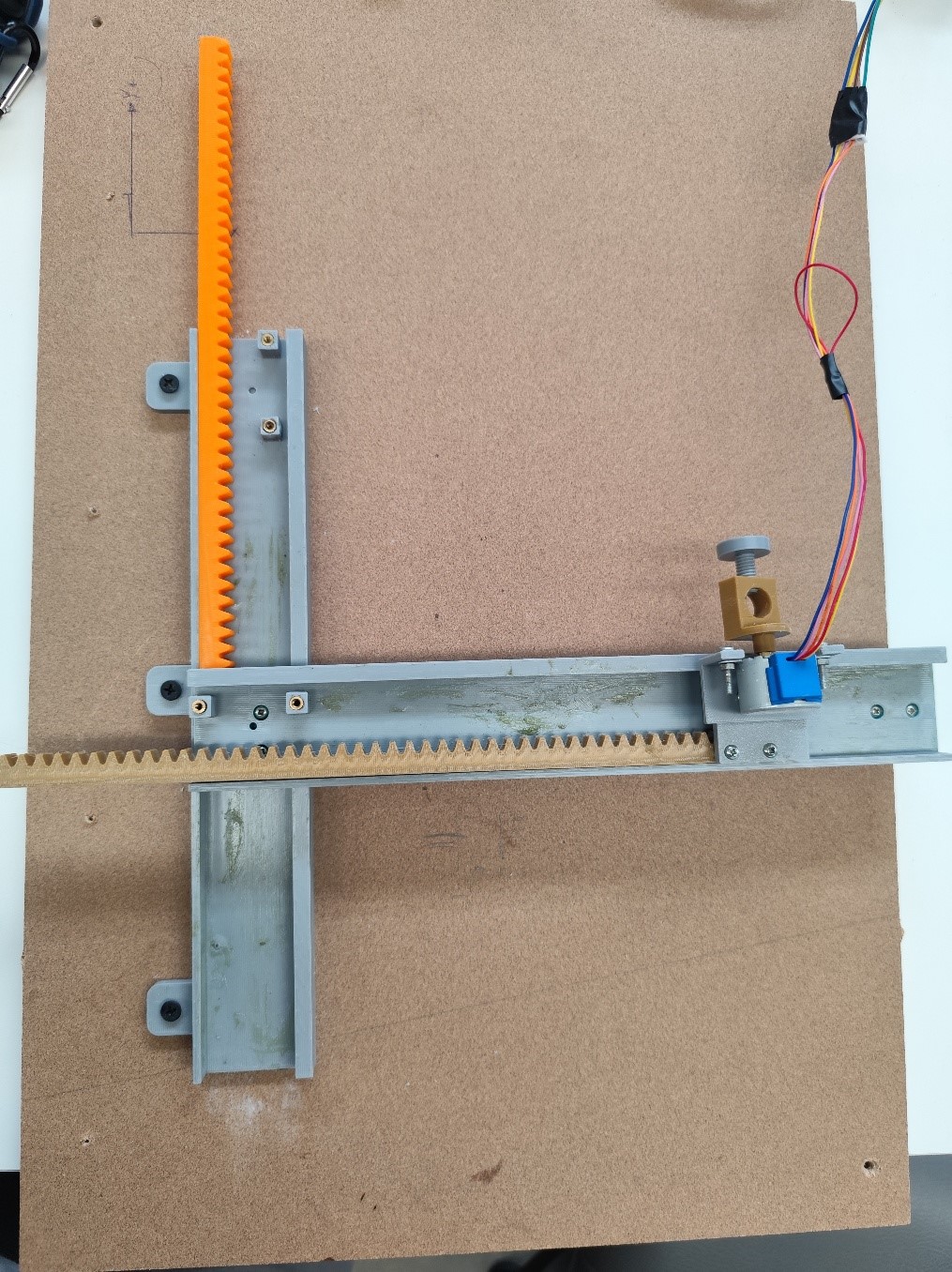
At the begginign we start with the mechanical design, a preliminary sizing process was required due to the implementation of a
rack-and-pinion transmission system. Fundamental gear theory was reviewed to ensure proper meshing conditions,
adequate module selection, and reliable motion transfer. Based on the estimated working envelope of the machine,
the dimensions of the gears and racks were defined to guarantee smooth movement and consistent linear displacement and perfect drawing line .
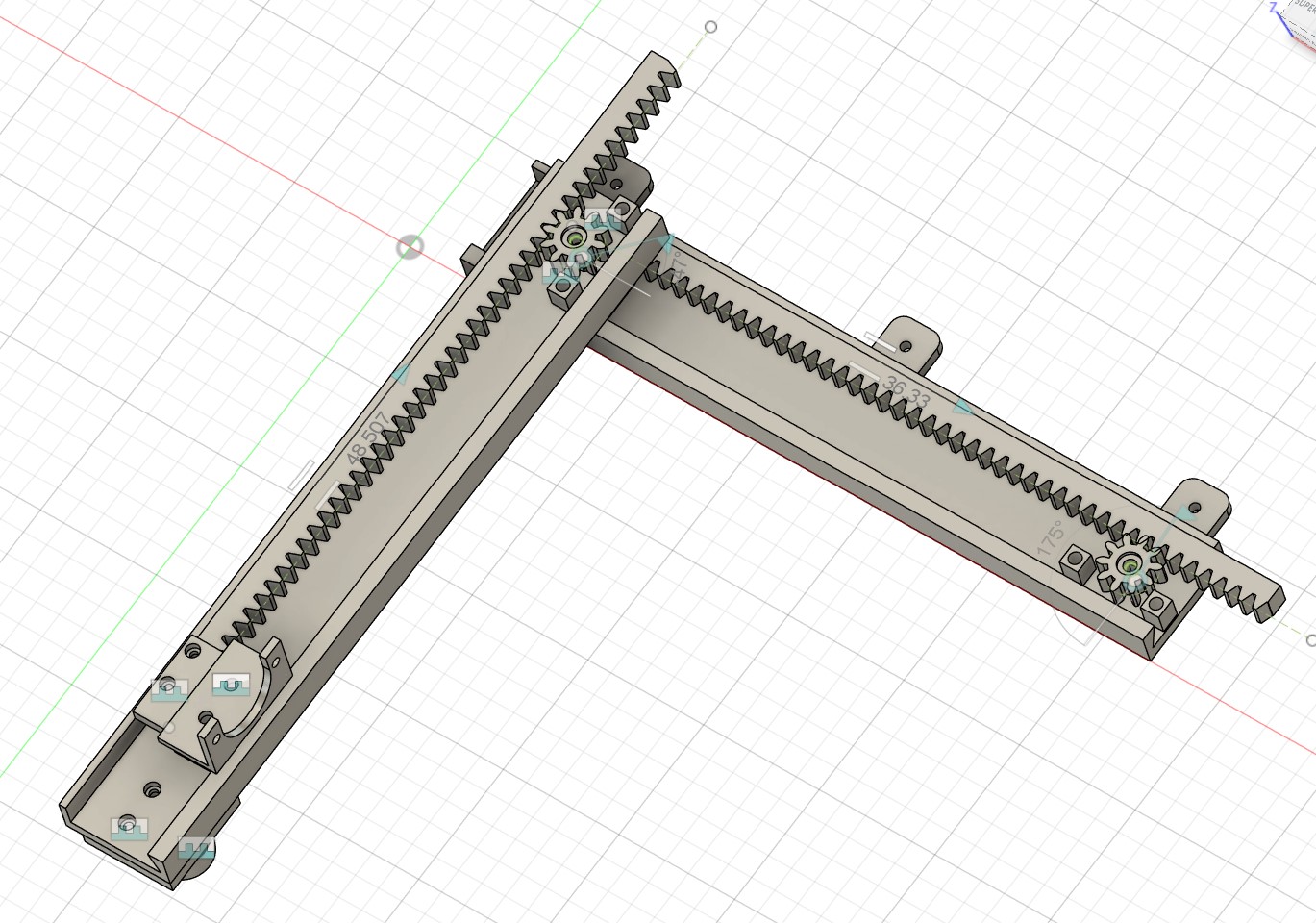
With the main kinematic parameters established, all custom components were designed and modeled in
Fusion 360, considering both structural integrity and easy way the assemble.
We put a special attention to the integration of the X–Y carriage system and the alignment
of the guiding elements to maintain precision during operation because of the machine purpuse which is for architecture representation and precise drawing.
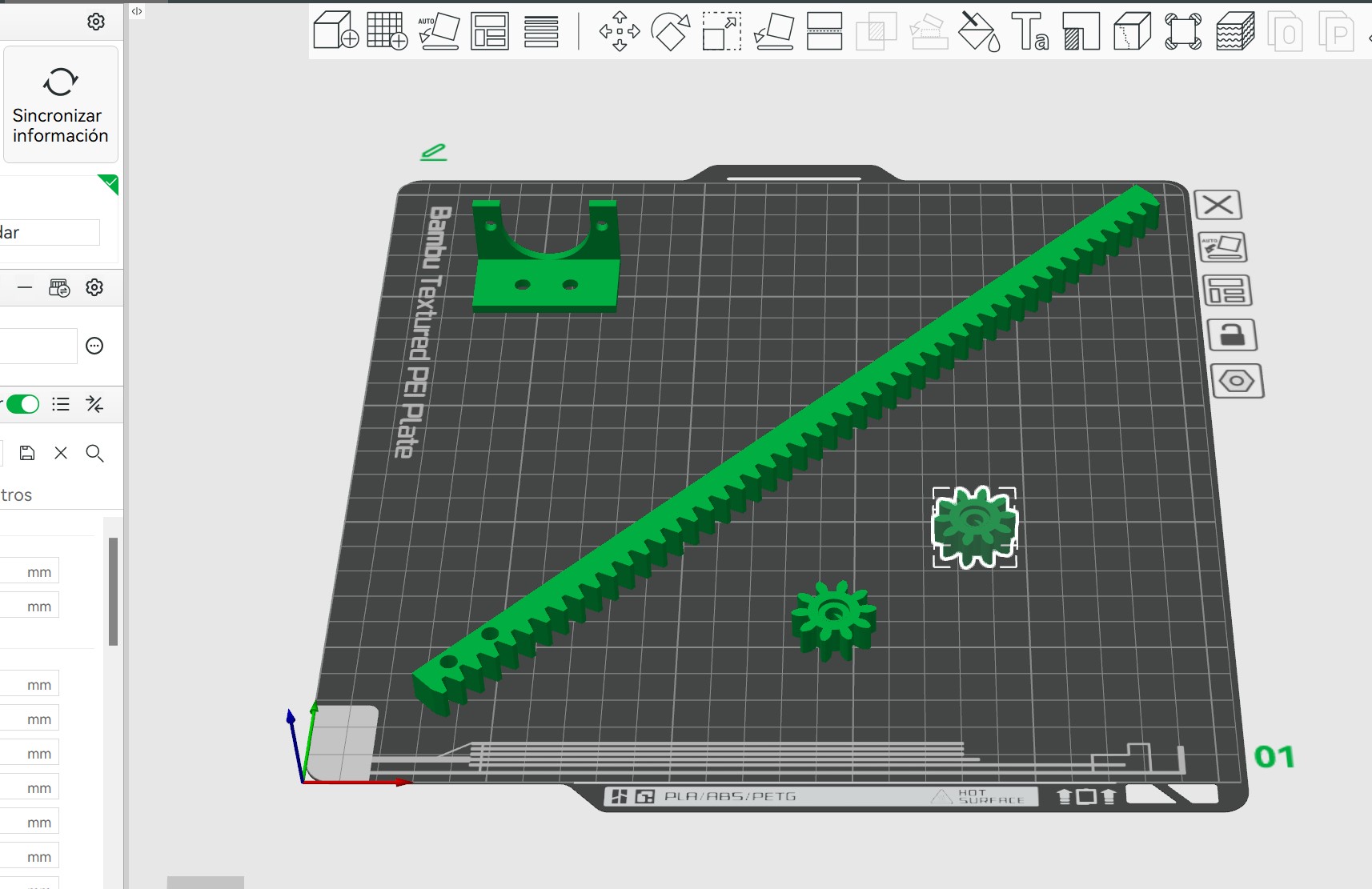
All components were fabricated using additive manufacturing (3D printing).
For all the moving parts, we seleted a reduced layer height to improve surface quality and dimensional accuracy.
After fabrication, we didnt even need to sand any of the pieces to reduce friction and improve sliding performance, because all topcoat surfaces of all components we just fine after 3D printing.
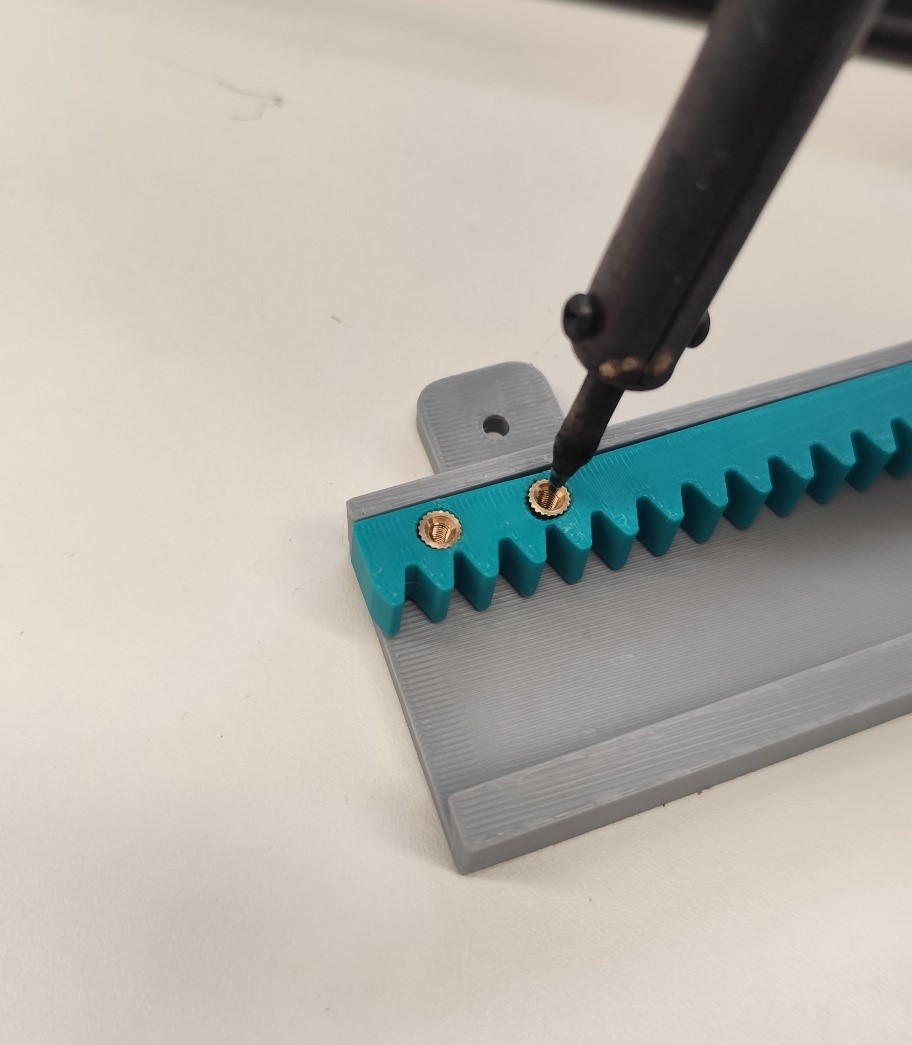
The design also incorporated heat-set threaded inserts, which were installed using a soldering iron.
This solution provided stronger mechanical connections and allowed repeated assembly and disassembly using standard screws
without damaging the printed components.
Finally, the complete system was assembled and tested. A lithium-based grease was applied to all sliding interfaces
to reduce friction, improve efficiency, and minimize the load transmitted to the motors during operation.
Conclusions
This assignment provided valuable experience in integrating digital design,
fabrication, and mechanical assembly into a single workflow.
Beyond learning how to design and manufacture machine components, we gained a deeper understanding of
motion systems, tolerances, assembly strategies,
and mechanical optimization.
From an architectural perspective, we found this project particularly interesting because it explores a workflow opposite to the one commonly used in our field. Architects typically move from manual sketches toward digital models and fabrication. In this case, we experienced the reverse process: transforming a digital design into a physical machine capable of producing drawings and movements in the real world.
We also see potential applications of this type of machine in architectural education.
It can help students understand concepts related to digital fabrication,
machine design, automation, coordinate systems,
and computer-controlled manufacturing. More importantly, it demonstrates how digital information can be translated into physical actions, effectively bridging the gap between design and production.