Mid Term Review
Final Project Planning
During this week we will review and make schedule for the final project, as well as a list the tasks that needs to be completed.
My final project is almost complete, you can check it here!.
During this week we will review and make schedule for the final project, as well as a list the tasks that needs to be completed.
My final project is almost complete, you can check it here!.

The conceptual design phase has been completed. Through sketching, ideation, and system definition, the project architecture, interaction logic, and physical components were established. The next stage focuses on fabrication, assembly, electronics integration, and system validation.
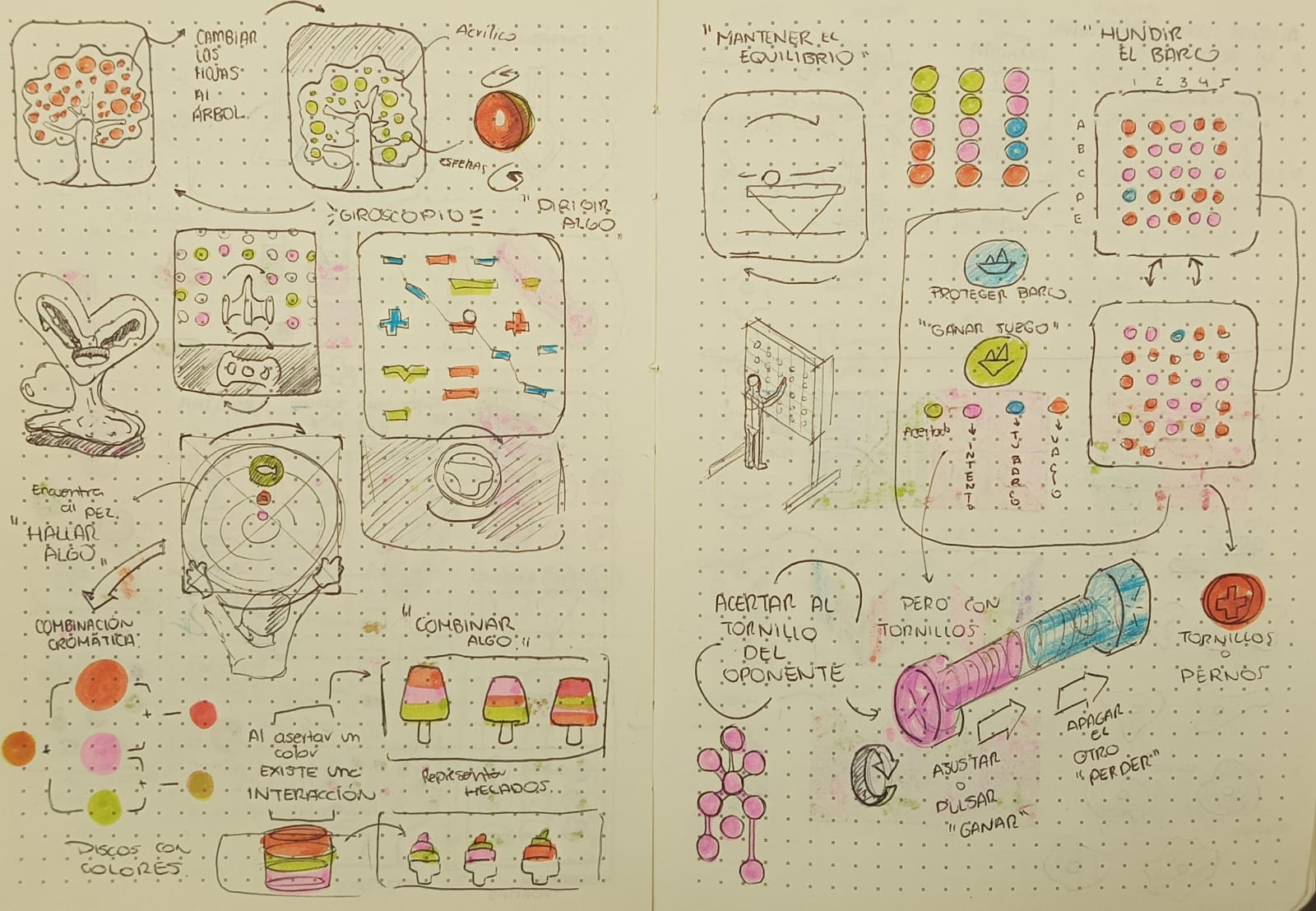
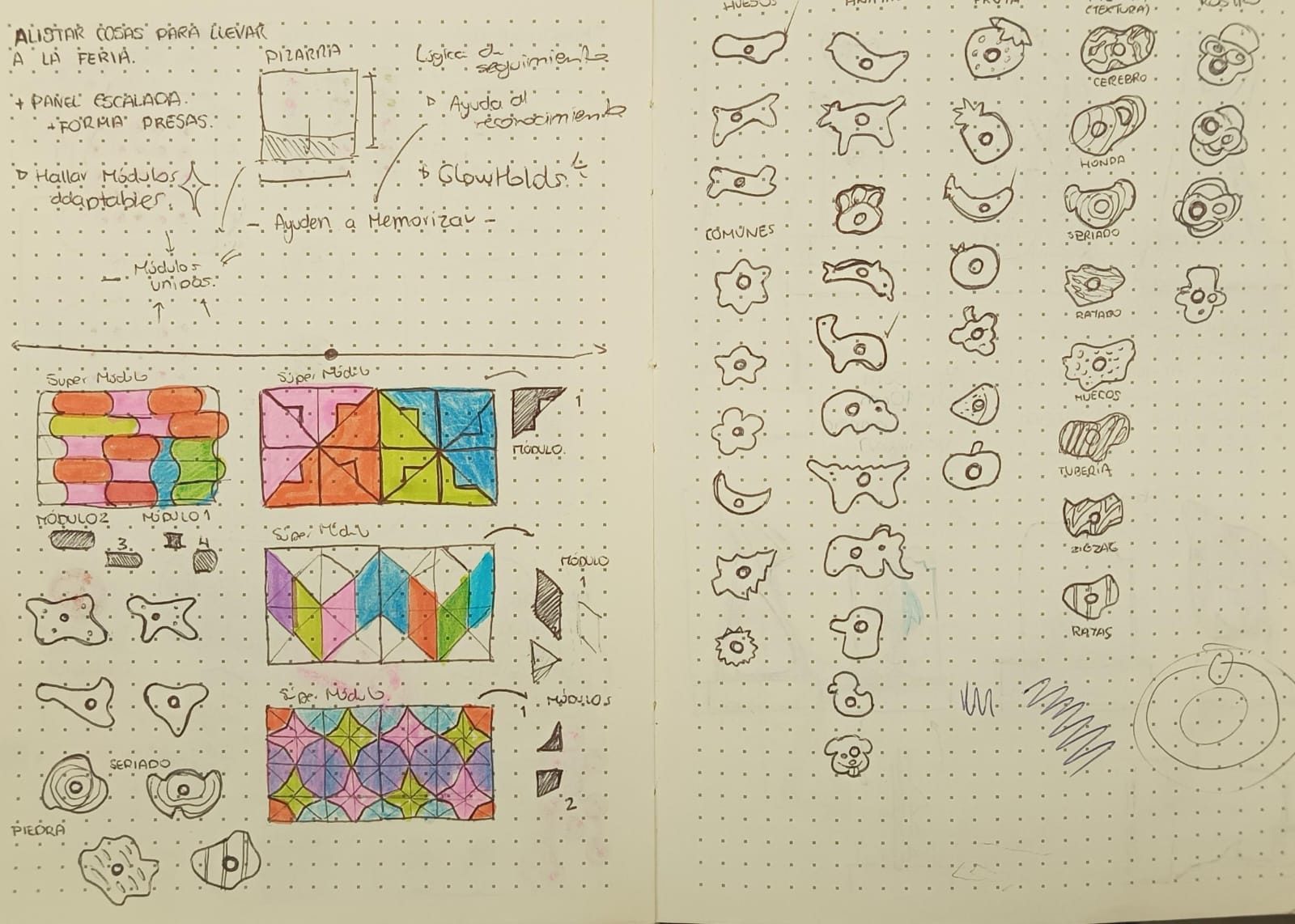
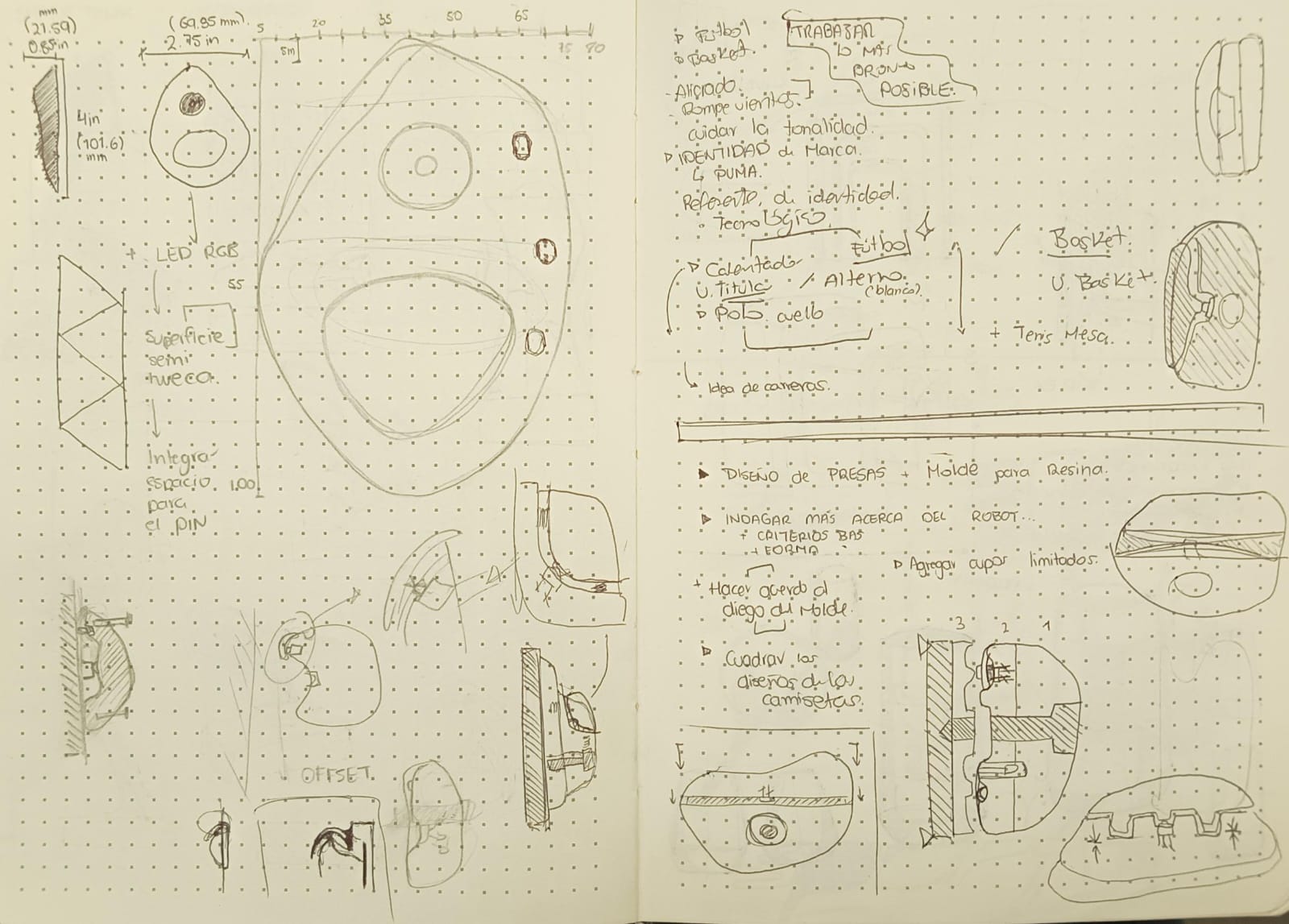
The project development follows the planned schedule shown in the Gantt chart, where the required Fab Academy assignments progressively contributed to the final project. The schedule is currently being followed as planned, and all completed assignments continue to support the development and integration of the final prototype.
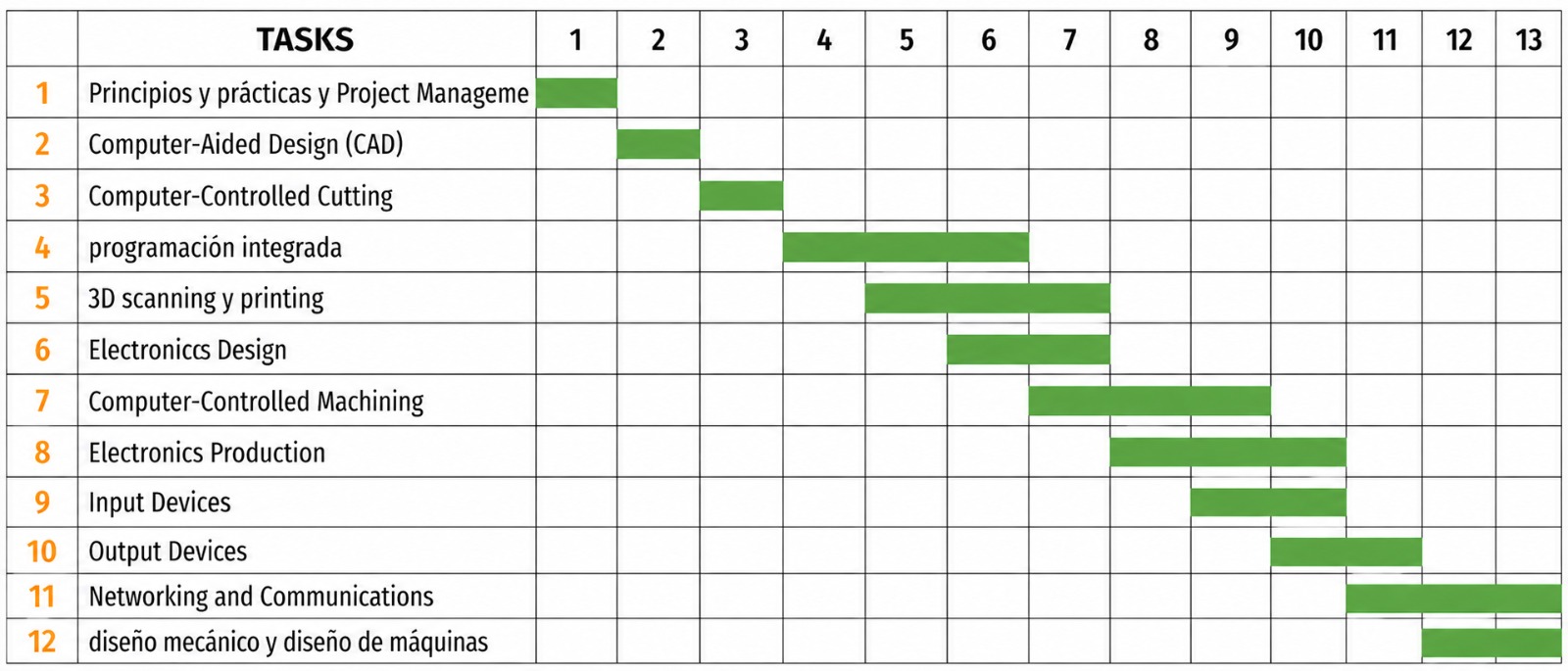
CNC fabrication, assembly system, and architectural framework.
3D design, molds, resin casting, LEDs, and touch interaction.
Custom PCBs, sensors, microcontrollers, and embedded programming.
Wireless communication, mobile application, and system control.
CNC machining of panels, fabrication of joints, and assembly of the climbing wall framework.
3D modeling, mold fabrication, resin casting, finishing, and LED integration.
PCB production, soldering, sensor integration, and electronics validation.
Embedded programming, wireless communication, mobile app development, and testing.
Assembly, calibration, troubleshooting, documentation, and final presentation.
User Interface & System Control
WiFi / Bluetooth Data Exchange
Processing, Logic and Communication
Input Detection
Visual Feedback
3D Printed Molds, Resin Casting and Electronics Integration
CNC Fabricated Architectural Framework
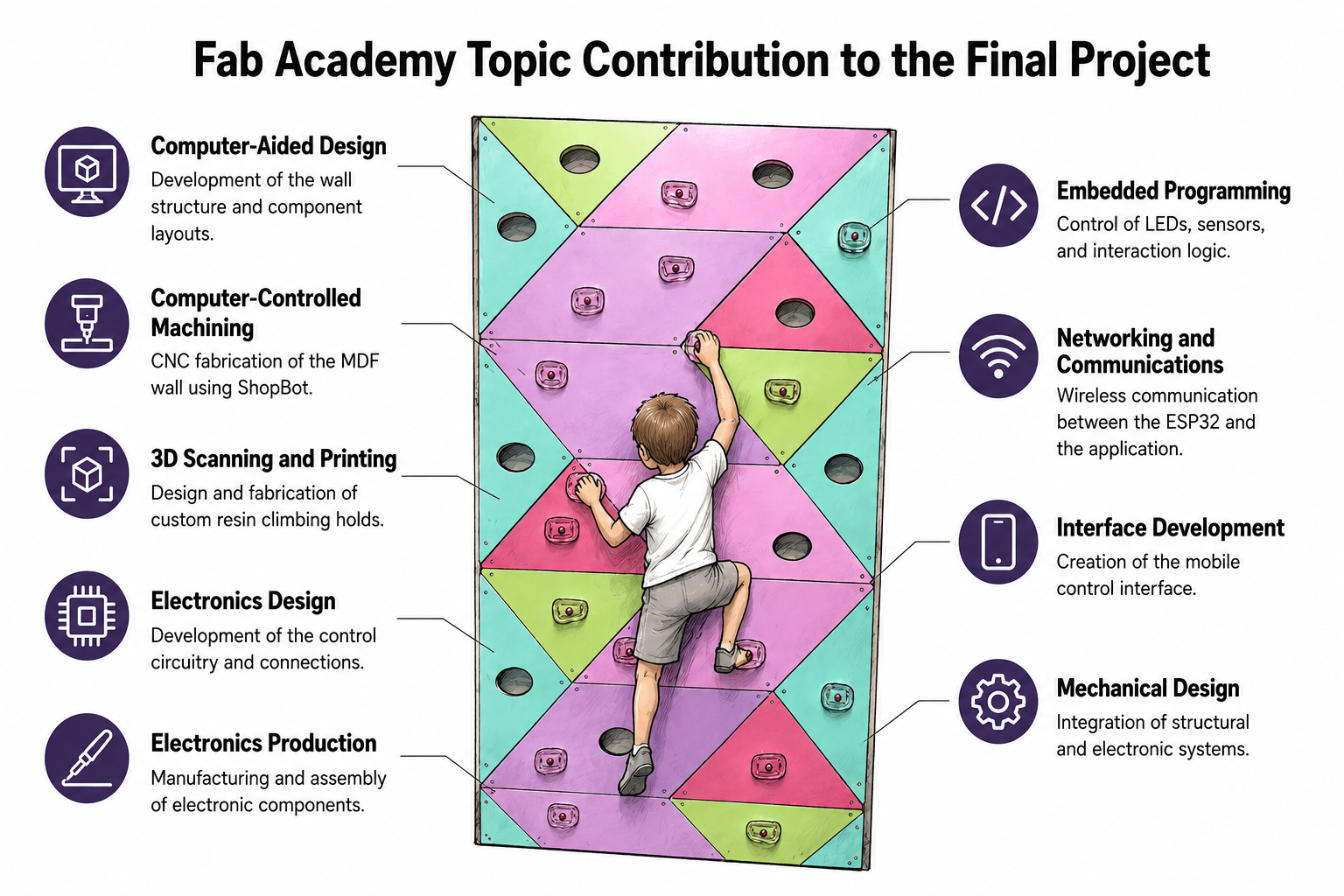
Computer-Aided Design (CAD), Computer-Controlled Cutting, Embedded Programming, 3D Scanning and Printing, Electronics Design, Computer-Controlled Machining, Electronics Production, Input Devices, Output Devices, Networking and Communications, and Mechanical Design all converge into a single interactive climbing system combining digital fabrication, electronics, embedded intelligence, wireless communication, and user interaction.