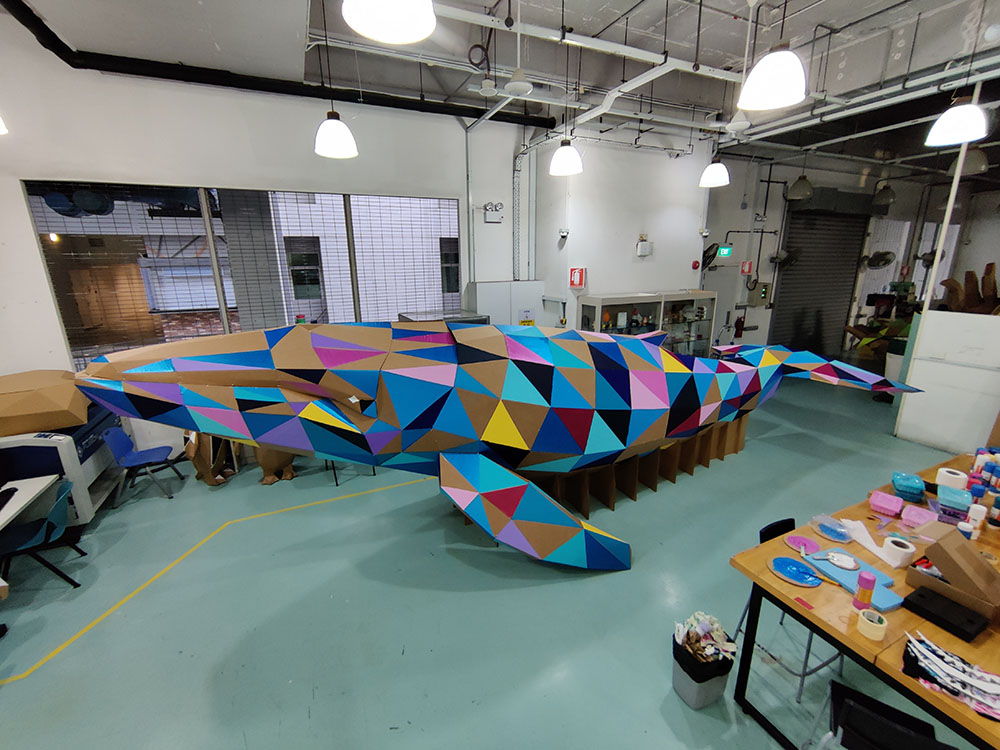
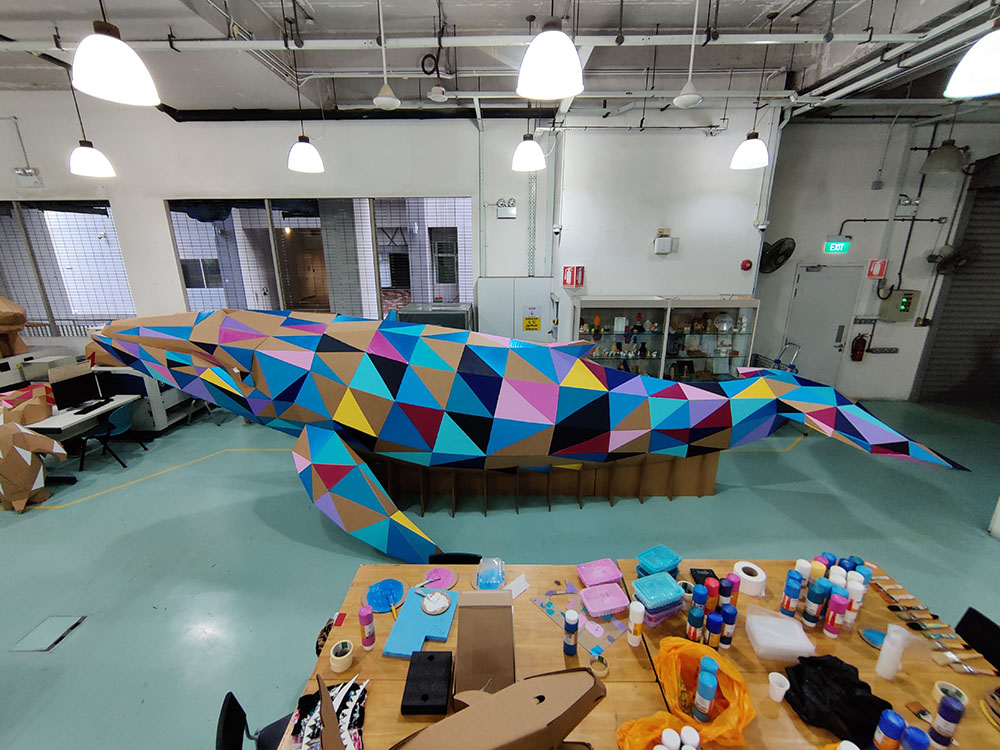
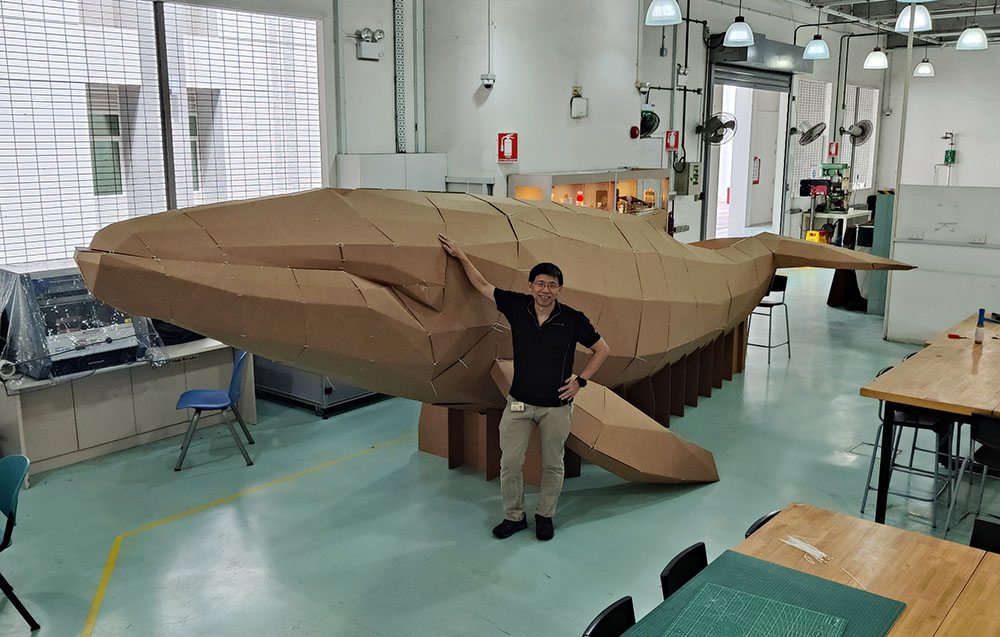
Bartholomew Ting beside the unpainted eight-metre cardboard Whale in the workshop
Fab Academy 2023 · Weekly documentation

Week 18: Project development

From first templates to public installation: seven weeks of fabrication, teamwork, electronics, problem-solving, and reflection.

01 · Overview

Seven weeks. Eight sculptures. One public exhibition.

The project developed from an early ambition to make cardboard sculptures feel alive into a coordinated family of endangered marine animals centred on an interactive eight-metre Whale.

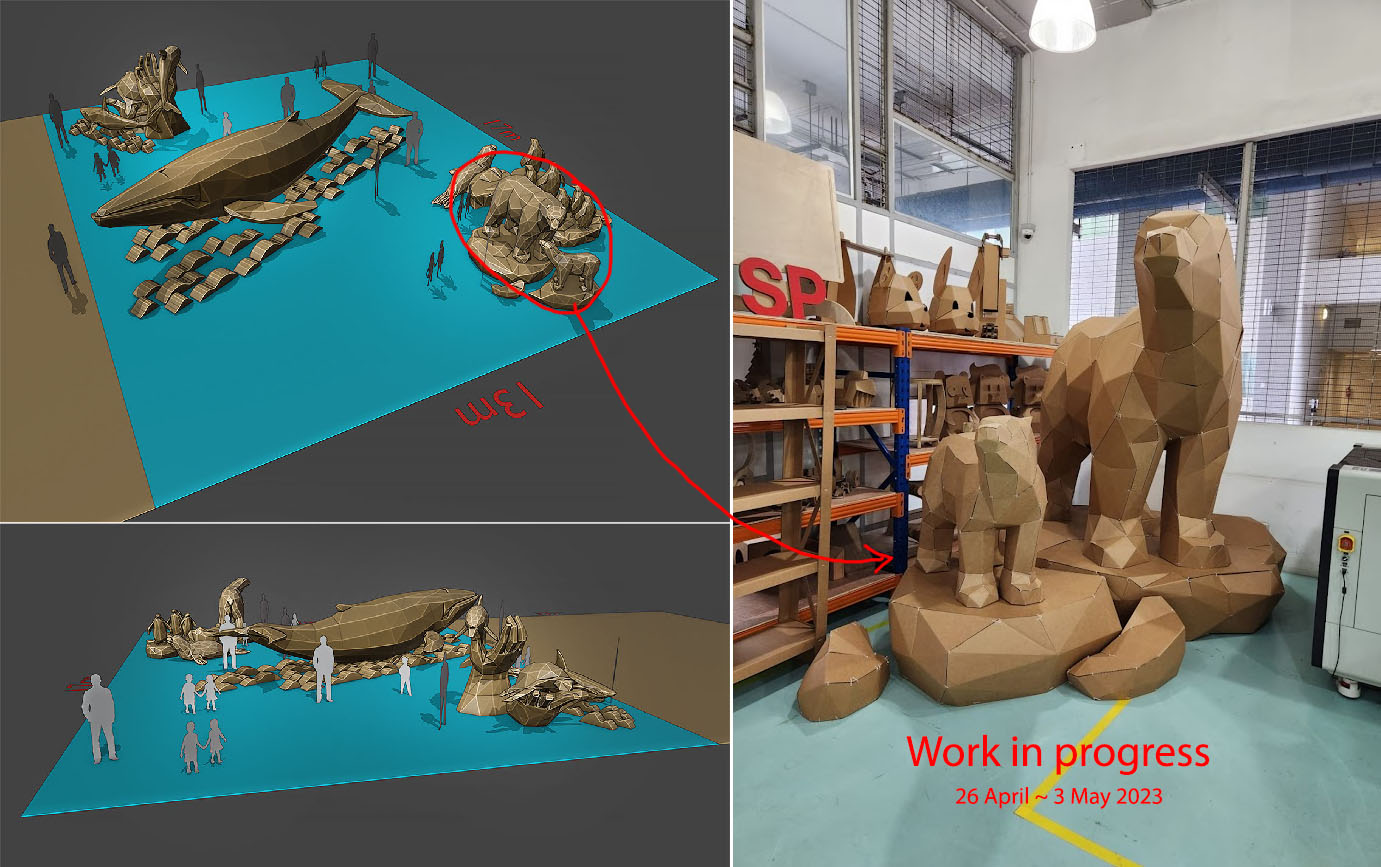
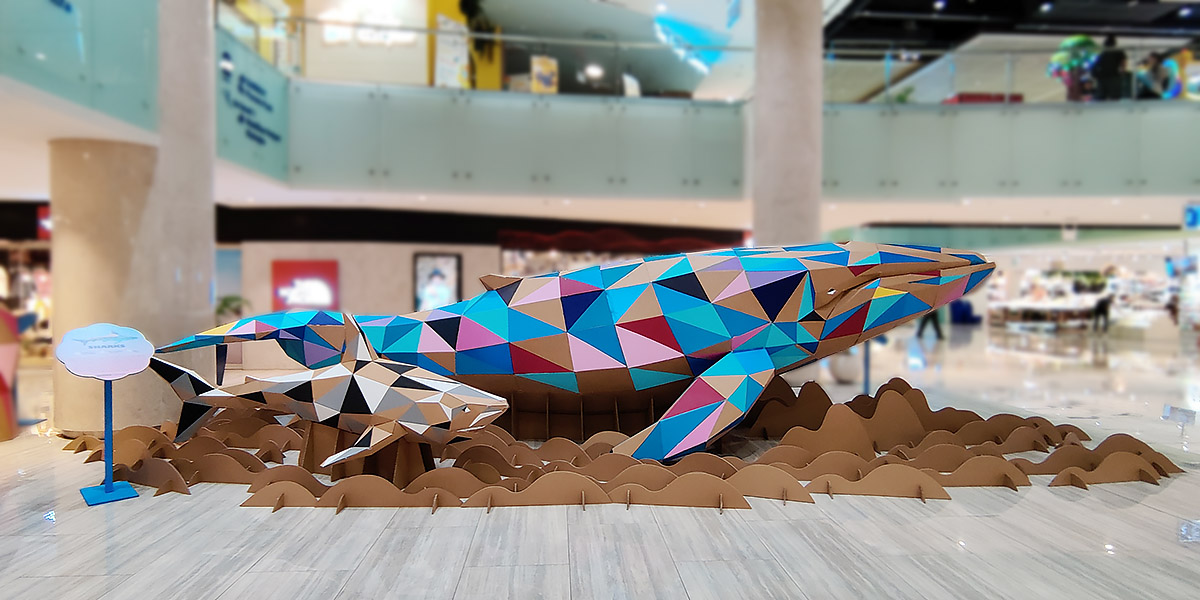
Construction began in late April with mother-and-cub polar bears. The full exhibition would eventually include polar bears, a whale, dolphins, a turtle, a seal, and penguins across a 16 × 13-metre area at Marina Square from 26 May to 11 June 2023.

Sensors and actuators introduced movement, sound, and light. The Whale’s electronics drew directly from the Fab Academy electronics-design modules, while the full-scale shell demanded careful template preparation, flatbed cutting, assembly, painting, and logistics.

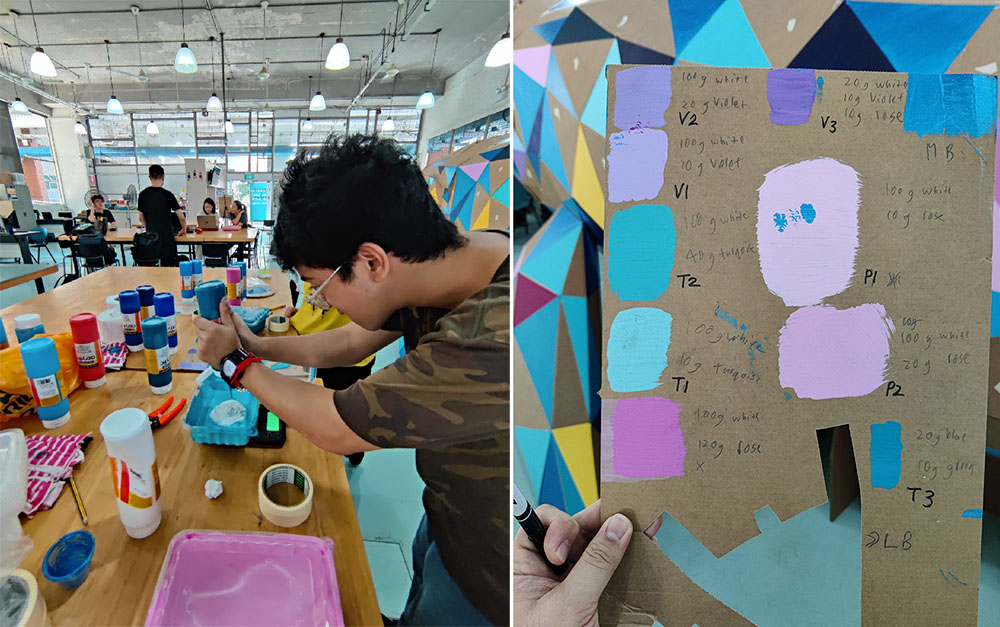
Acrylic colour initially dried darker than expected, so the team tested mixes with additional white paint to achieve a softer pastel palette. Alongside the large builds, 1,000 mini cardboard Whale kits had to be delivered by 22 May—adding a second production deadline.
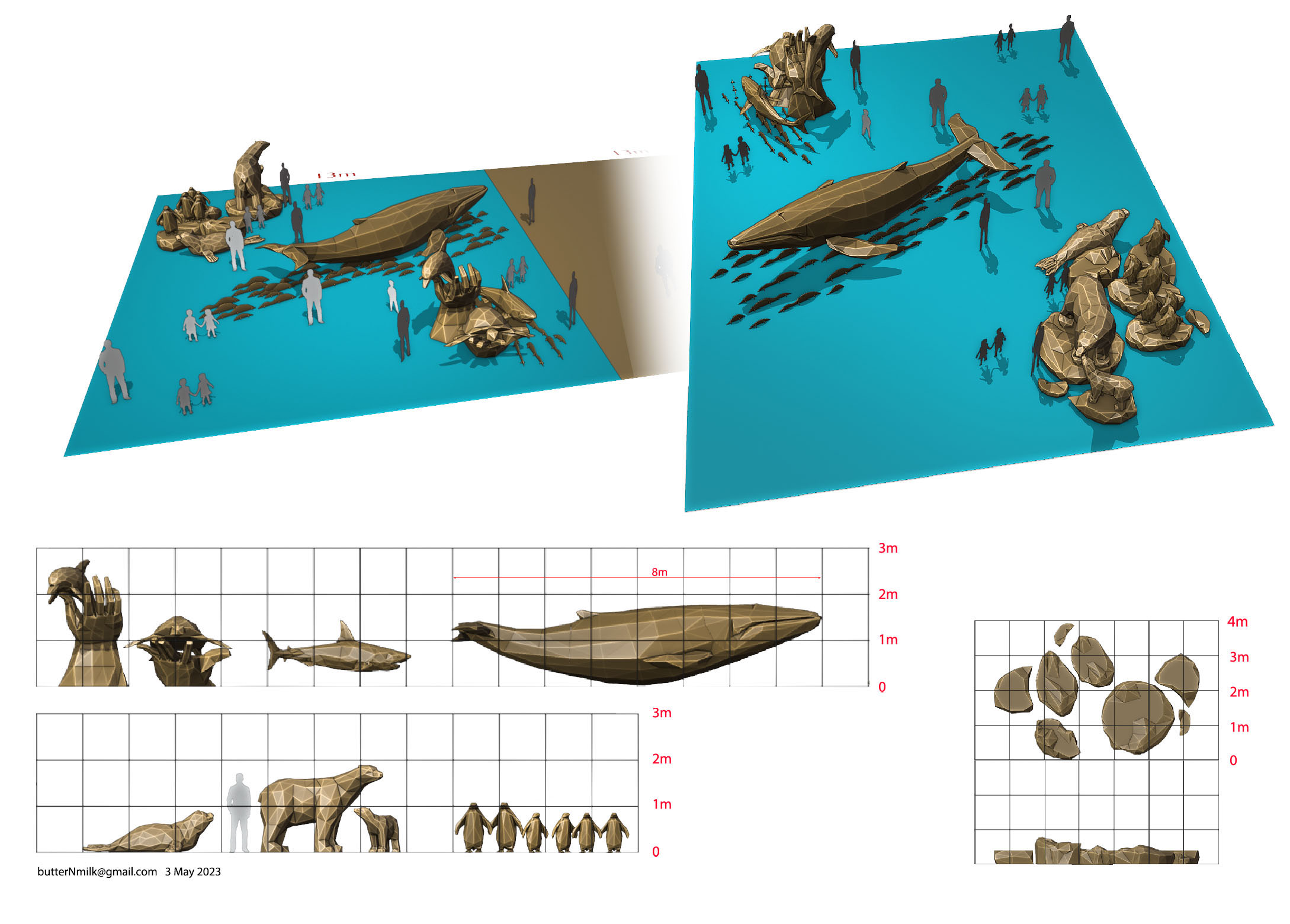
Early spatial and scale studies for the marine-animal installation
Early spatial and scale studies
Polar-bear concept and work-in-progress model
Polar-bear concept and prototype
02 · Foundation

24 April–5 May: templates become structure.

The first two weeks established the production system: preparing templates, cutting the polar bears and Whale, assembling the internal structure, and building a working rhythm with the Fablab team.

24–28 April

Testing the visual language

Templates for the mother and cub polar bears were prepared and cut at the Fablab, then assembled for display within a week. The goal was already larger than static sculpture: visitors approaching the installation would trigger movement, sound, and possibly lighting through sensing and actuation.

Mother and cub polar-bear sculptures under development
The first sculpture family established the fabrication approach.
1–5 May

Building the Whale’s internal frame

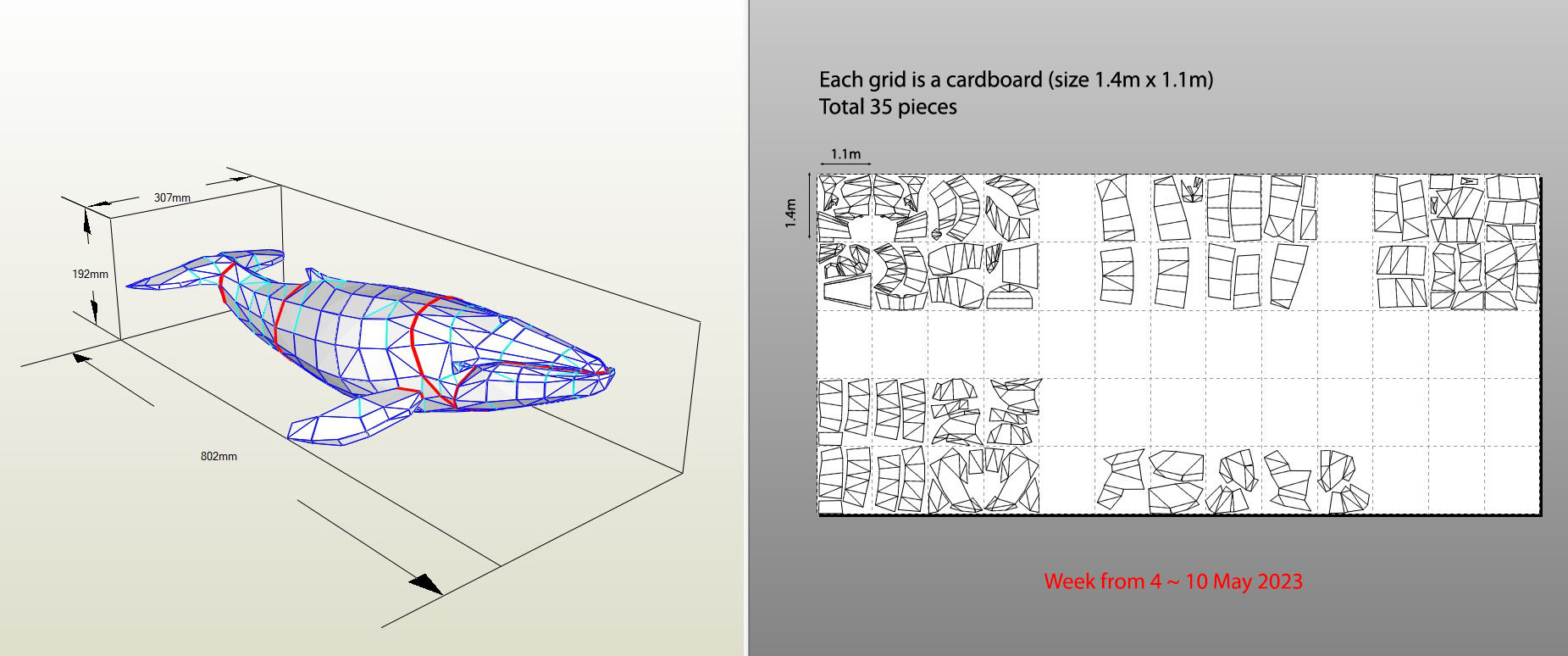
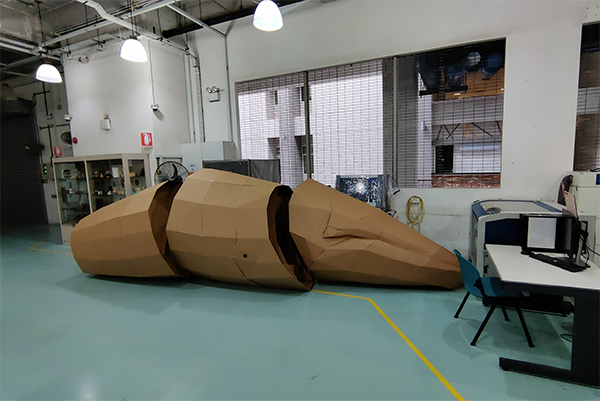
Preparing and cutting the Whale templates—especially the internal structure—was time-consuming. Student assistants and colleagues helped maintain momentum, while project priorities shifted toward meeting the fixed exhibition deadline.

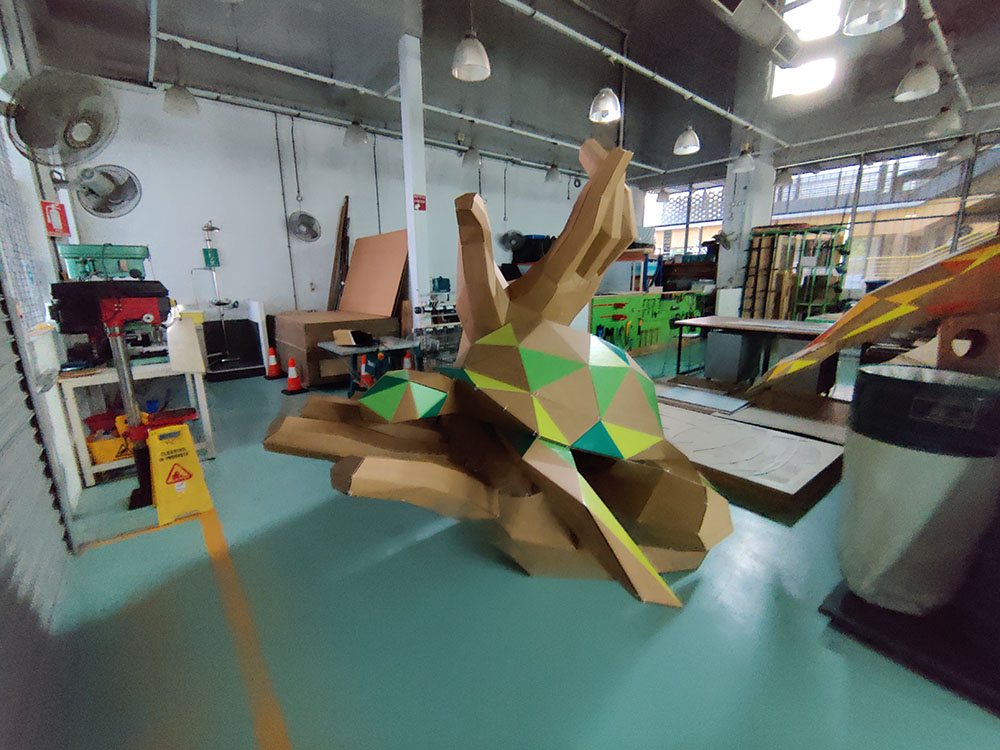
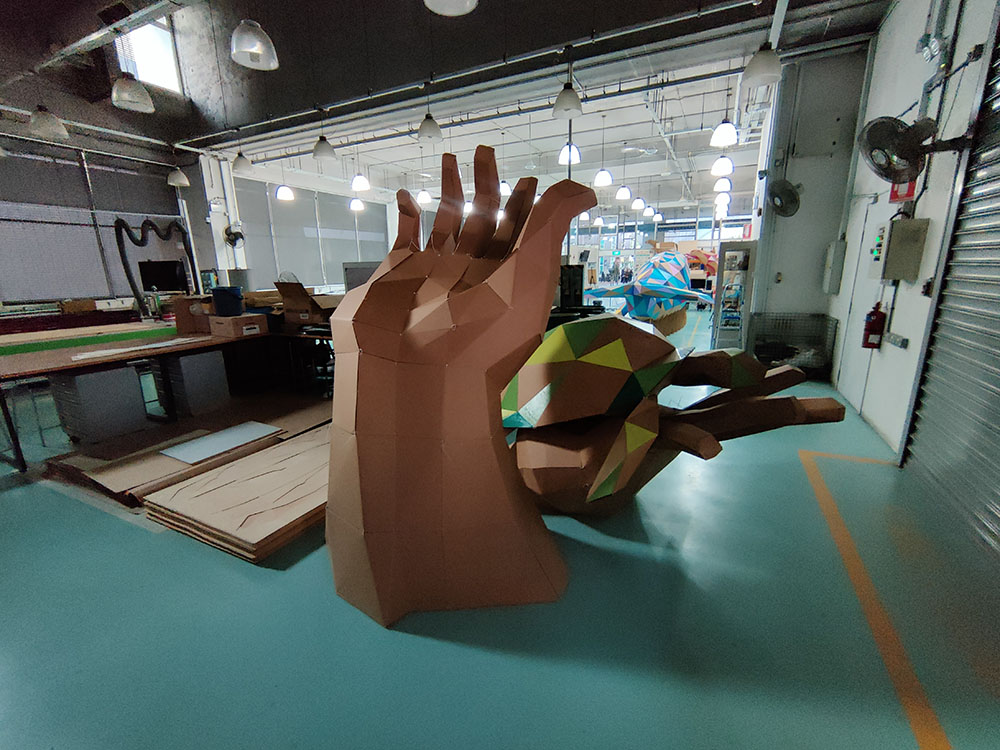
Whale template and cutting layoutPartially assembled cardboard Whale in the workshop
03 · Fabrication

8–19 May: assembly, colour, and a family of animals.

With the Whale’s form standing, work expanded into painting, hand-finishing, companion sculptures, and the sustained team effort needed to complete a public-scale installation.

Completed unpainted cardboard Whale with Bartholomew Ting
The completed cardboard shell before painting

From brown board to a recognisable character

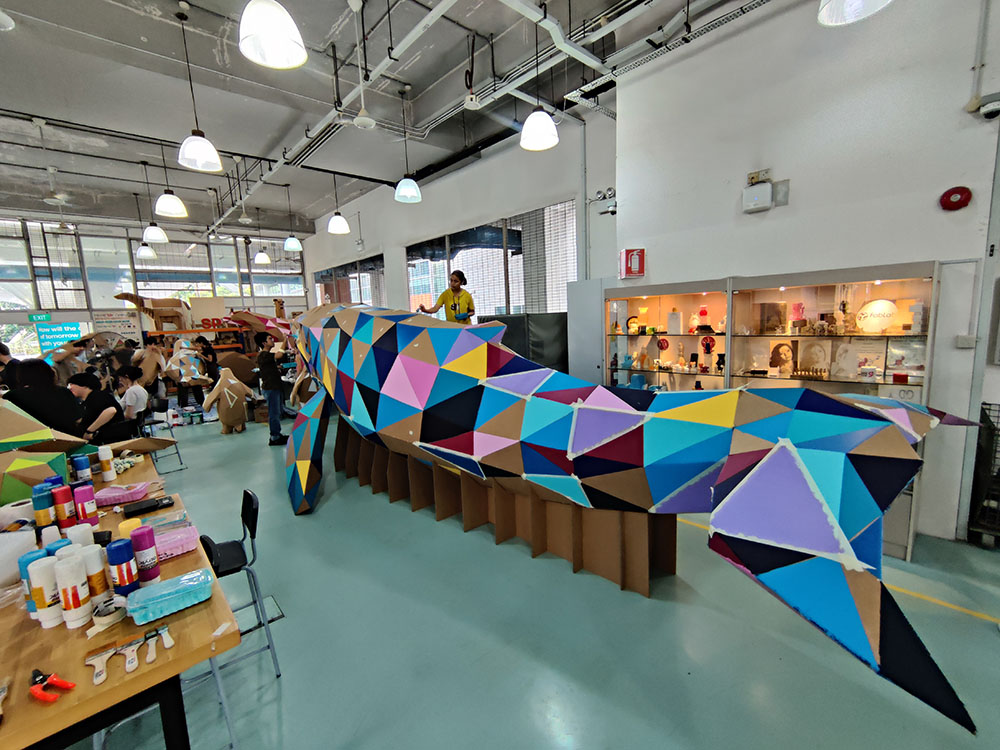
The Whale’s low-poly surfaces created a natural map for colour. Testing showed that acrylic tones darkened as they dried on cardboard, so the palette was adjusted with carefully measured white paint.

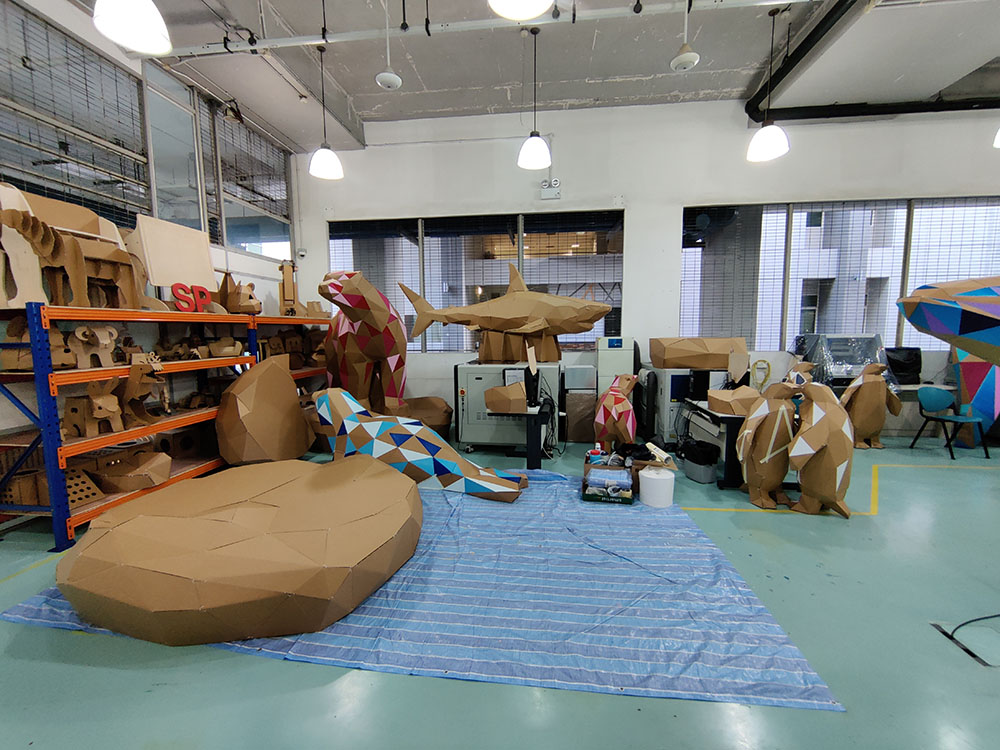
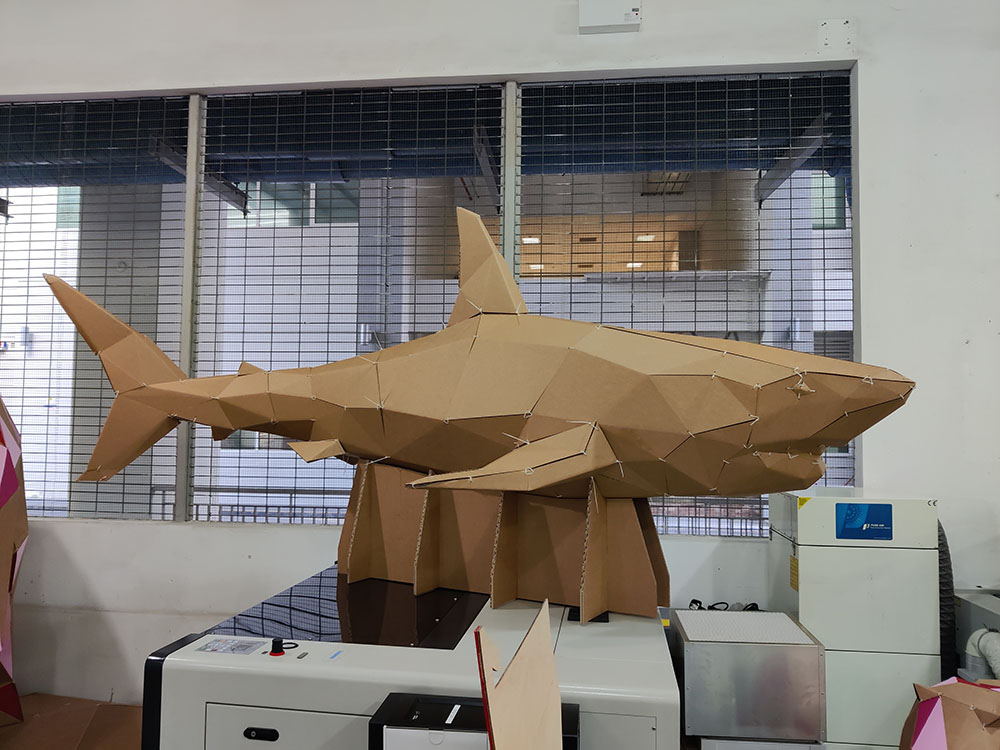
At the same time, dolphins, turtles, seals, and penguins moved through their own cutting, assembly, and finishing stages.

Completed structural assembly
Painting the Whale
Hand-finishing the surface
Dolphin and turtle development
Companion sculptures in progress
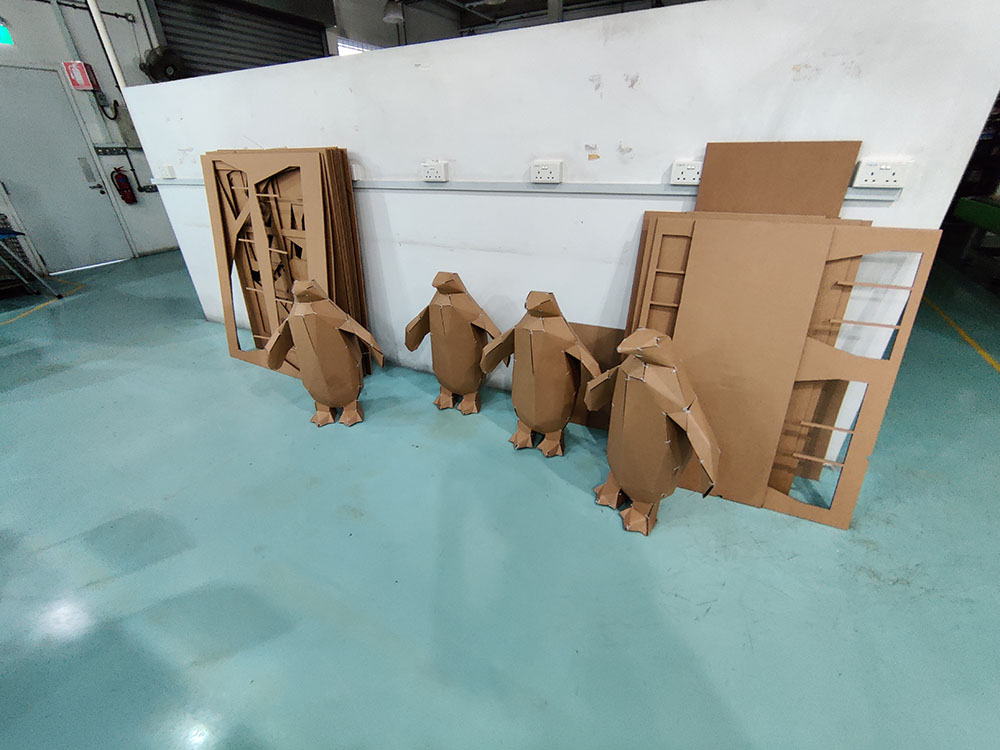
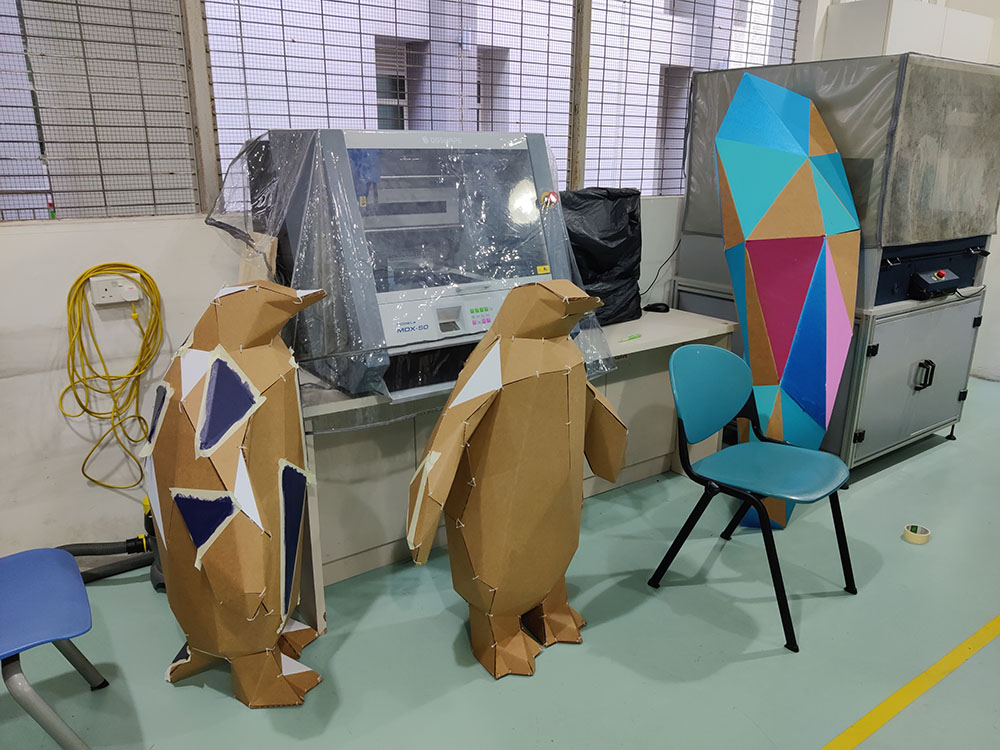
Seal and penguin fabrication
Week 16 fabrication progress, view 1
Colour planning
Week 16 fabrication progress, view 2
Surface painting
Week 16 fabrication progress, view 3
Team production
Week 16 fabrication progress, view 4
Low-poly detailing
Week 16 fabrication progress, view 5
Whale finishing
Week 16 fabrication progress, view 6
Companion animals
Week 16 fabrication progress, view 7
Workshop coordination
Week 16 fabrication progress, view 8
Painting in progress
Week 16 fabrication progress, view 9
Final colour checks
Week 16 fabrication progress, view 10
Preparing for installation
Painting and finishing during the final production week
04 · Installation

22–26 May: moving an eight-metre Whale.

Fabrication gave way to logistics: packing, transport, on-site assembly, instruction media, final positioning, and the first public interaction at Marina Square.

Open the Marina Square move-in plan
Moving the installation on site
Final assembly at Marina Square
Mini Whale instruction-video production
The eight-metre Whale responds to visitors
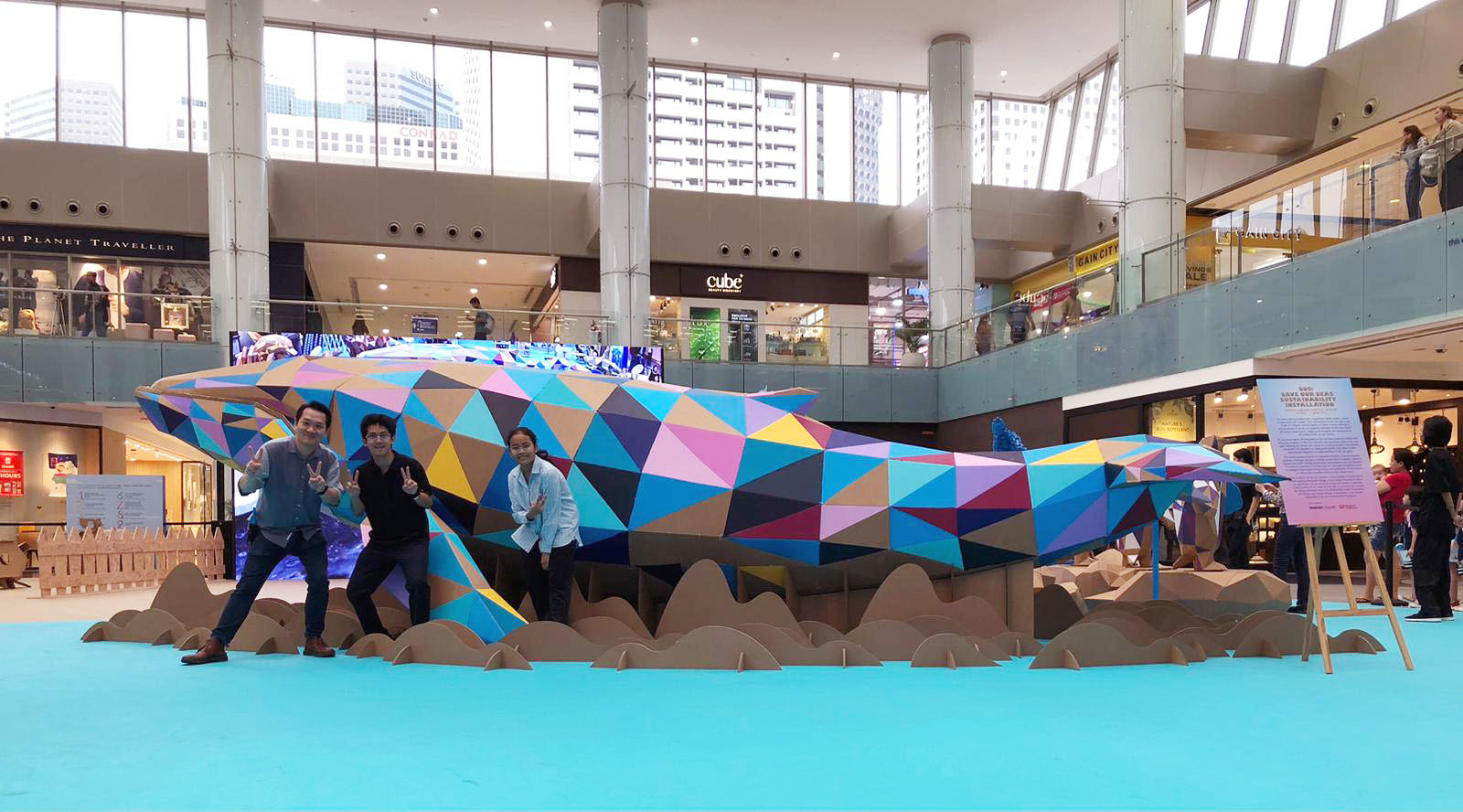
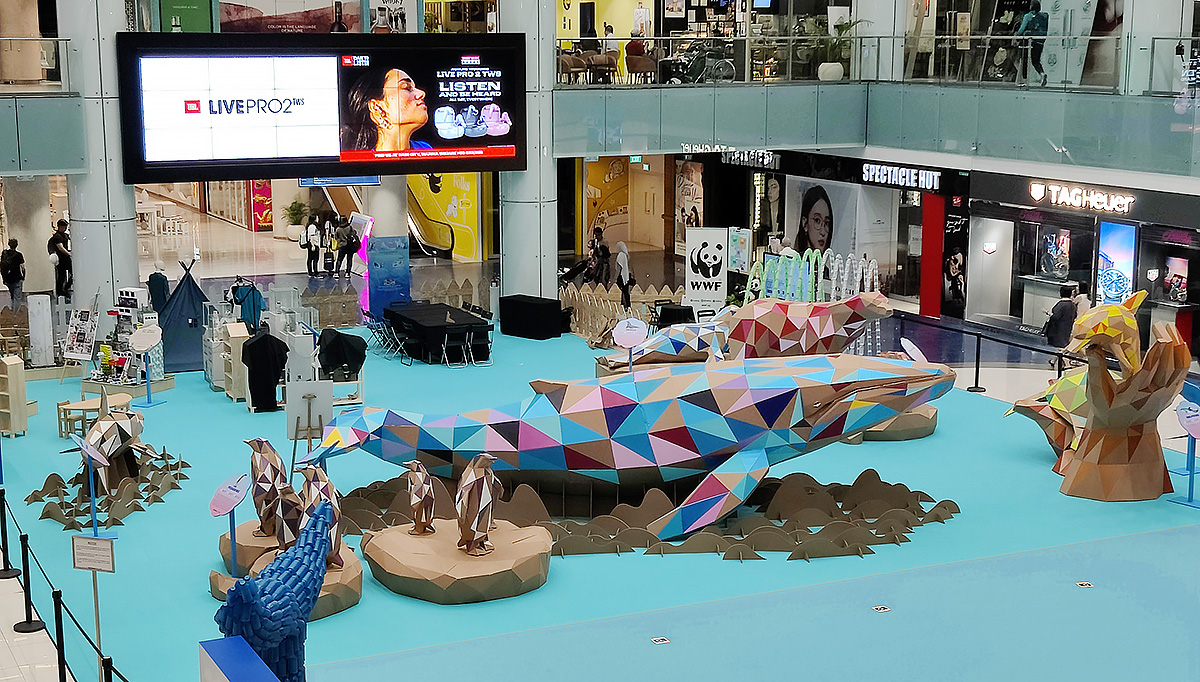
Completed marine-animal installation at Marina Square
The completed Whale and its makers at Marina Square

The normal-speed mini Whale instructions remain available at for.edu.sg/whale.

05 · Integration

29 May–7 June: electronics give the Whale movement.

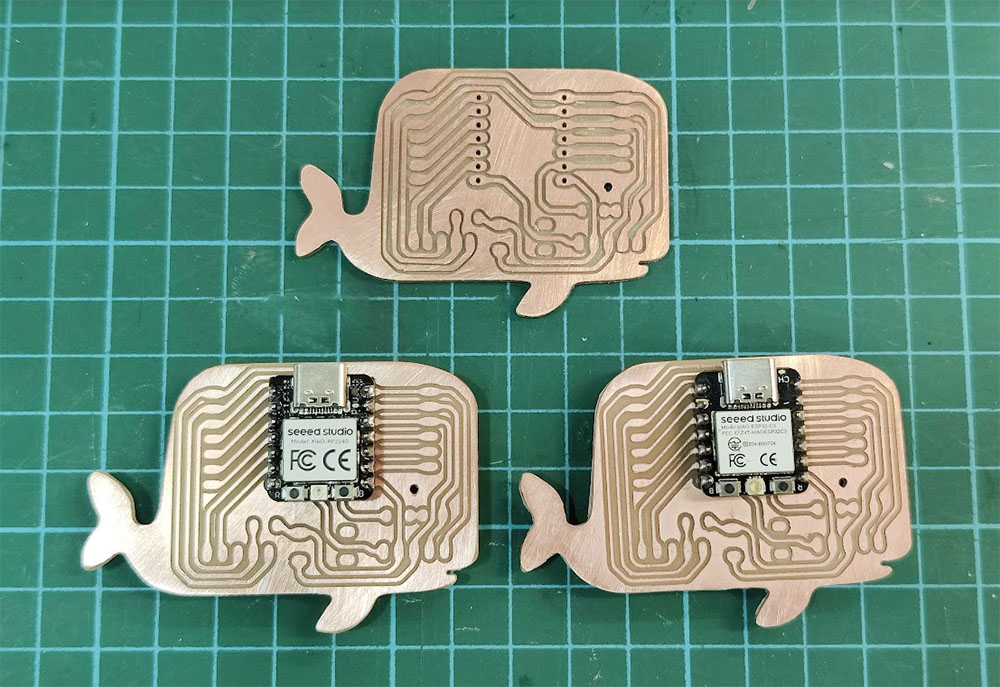
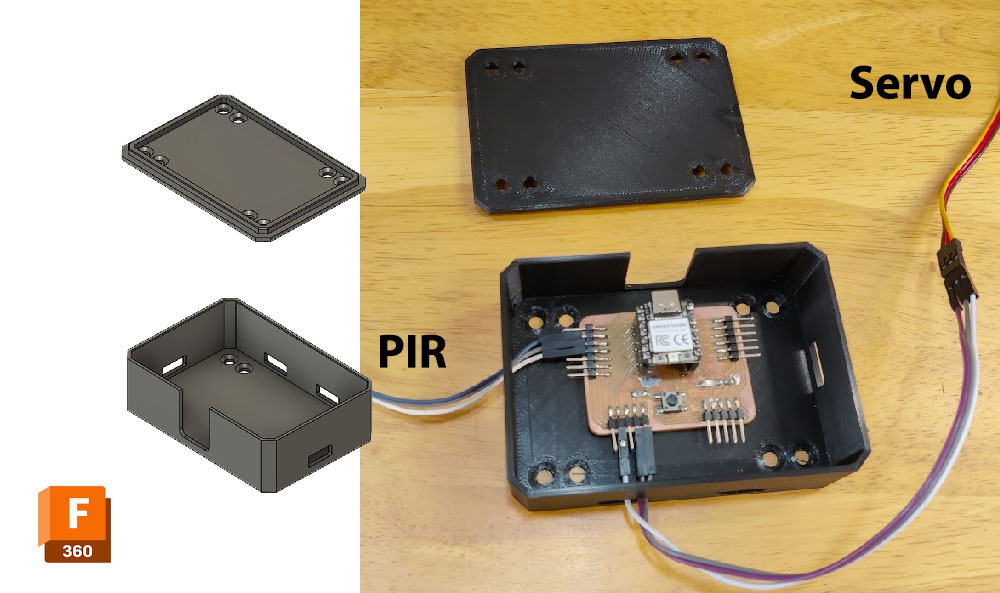
A Whale-shaped PCB, 3D-printed enclosure, PIR sensing, and servo actuation connected the physical sculpture to its interactive behaviour.

Whale-shaped PCB
Whale-shaped PCB
3D-printed electronics casing
3D-printed integration case
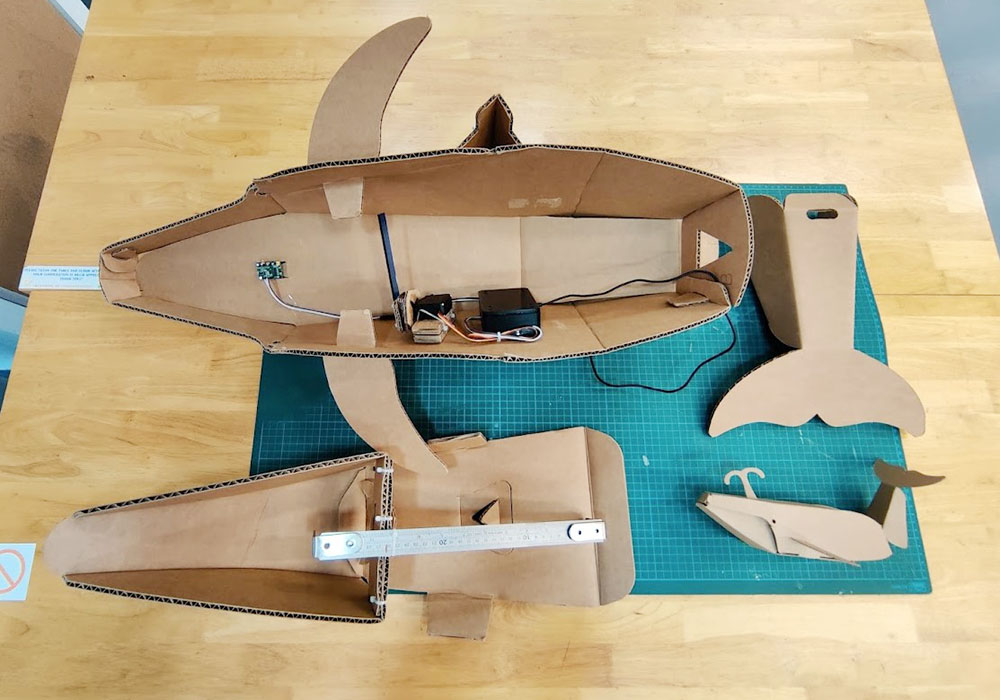
Servo and electronics integrated into a medium cardboard Whale
System integration inside a test Whale
Low-force automata test
Final PIR-and-servo prototype
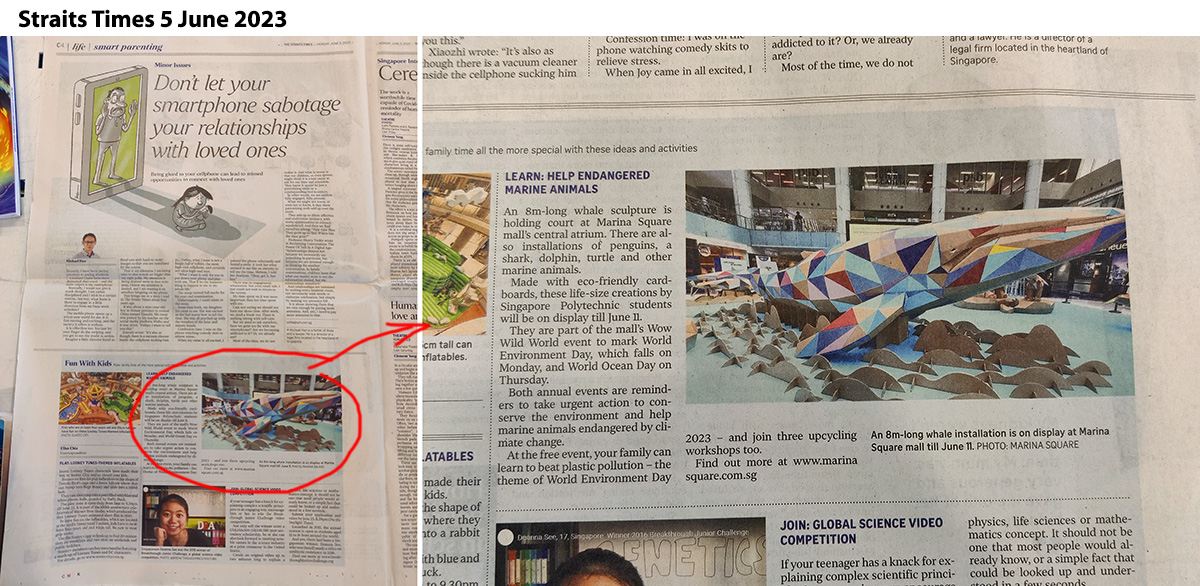
Cardboard project featured in The Straits Times
The project featured in The Straits Times
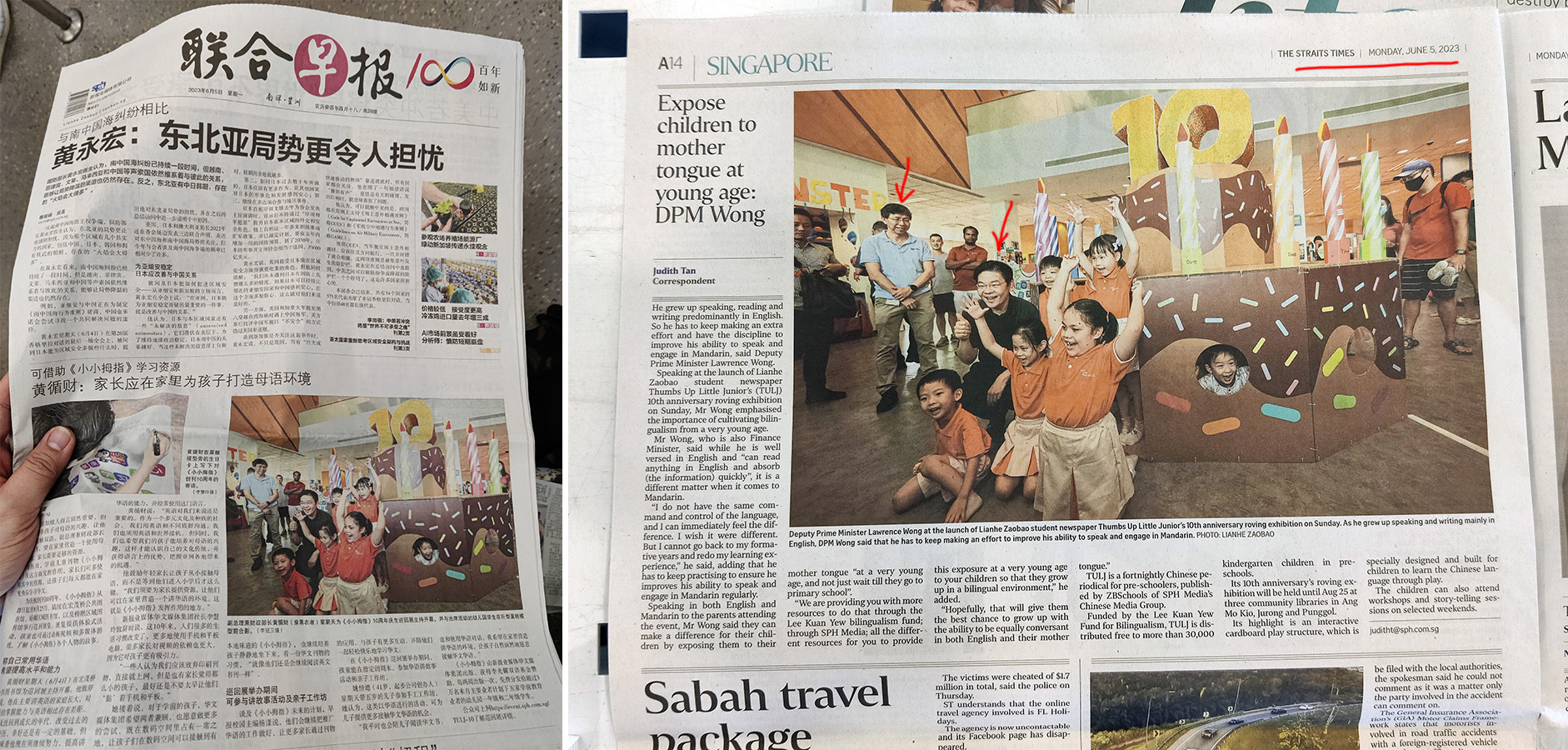
Singapore Polytechnic Fablab project featured on the newspaper front page
Fablab work featured on the front page
Another interactive Fablab project
View the 7 June final presentation
06 · Reflection

12–16 June: move-out, acceptance, and lessons.

The exhibition closed on 11 June. The sculptures moved from the central atrium to new locations, while the mini Whale instructions and the FAB23 proposal advanced into their next stage.

Moving the sculptures after the exhibition
Revised mini Whale instruction video
Bird’s-eye view of the Whale in its later Marina Square location
Bird’s-eye view of the later location
Completed Whale in its final Marina Square location
The Whale in its final location
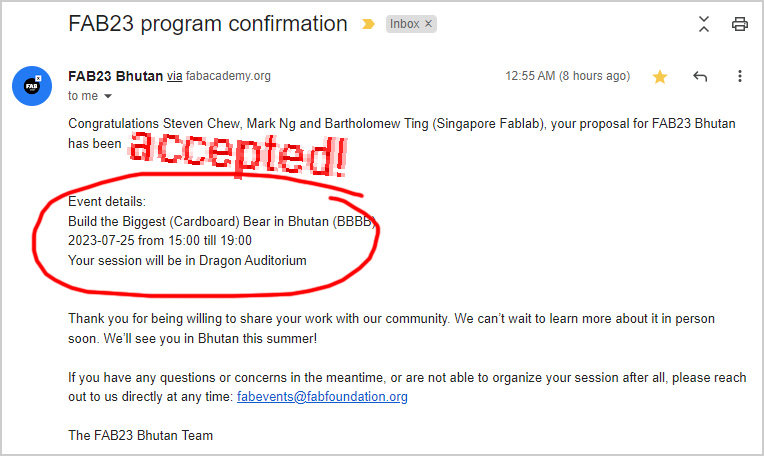
Acceptance letter for the FAB23 workshop proposal
FAB23 proposal acceptance
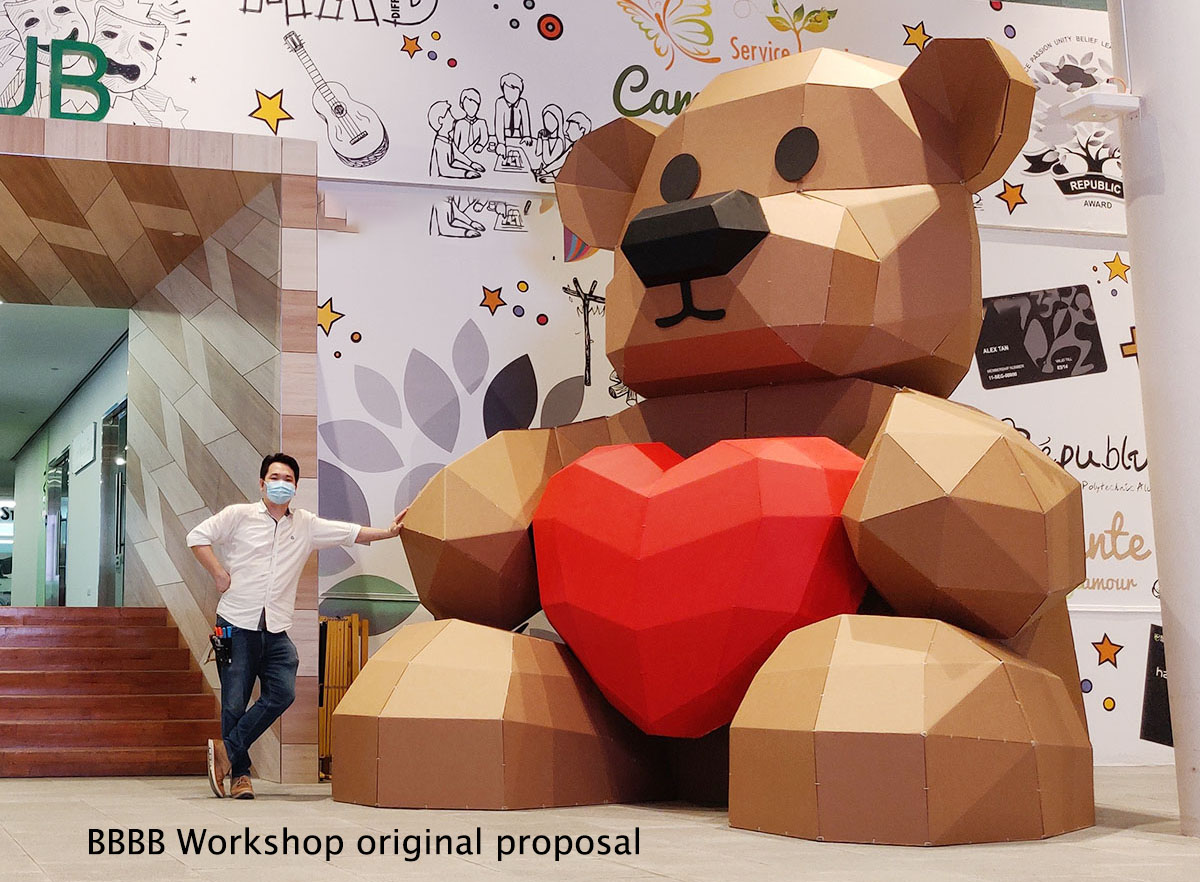
Cardboard workshop proposal for FAB23
Workshop proposal for FAB23

“Taking Fab Academy 2023 was no longer only about reaching the finish line—it became about meeting the community in person and recognising everyone who made the work possible.”

WHAT WORKED

Scale through iteration

An early ten-metre ambition was reduced to eight metres after discussing time and delivery constraints. The result remained visually powerful while becoming achievable.

Paint experiments solved the darker-than-expected colour problem by establishing repeatable mixes for a pastel finish.

WHAT CHANGED

Team planning under pressure

When the original student-helper arrangement fell through, a new group was recruited quickly. The disruption reinforced the need for clearer reward, staffing, and communication processes.

QUESTIONS

Processes beyond fabrication

  • Who owns contract drafting?
  • How should temporary staff be engaged?
  • How can students be motivated and supported?
  • What is the purchase-order process?
  • Who coordinates public communications?
WHAT I LEARNED

Delivery depends on teamwork

The project confirmed that successful delivery depends on collaborative effort. The Fablab team’s commitment made it possible to meet a demanding revised deadline with care and precision.

What happened when?

A client enquiry in February led to meetings, budget confirmation, and project paperwork. Production began in late April and targeted a 26 May opening. When the client requested delivery one day earlier, additional resources were mobilised and the revised deadline was met.