01. DISSEMINATION PLAN & FUTURE PROBABILITIES
Dissemination Plan & Commercialization
At this stage, S.C.O.R.E. is strictly a personal and academic project. I am currently focusing on finishing my engineering degree and do not have plans to commercialize this system, seek venture funding, or write a business plan. However, I still want to raise awareness and share what I've built with the right audience.
My target demographic consists of amateur football players and university teams who cannot afford expensive professional radars. As the captain of my university soccer team, my immediate dissemination plan is to deploy the S.C.O.R.E. prototype during our actual training sessions. This will allow my teammates to use the system, providing me with real-world feedback while naturally raising awareness of the project within the local sports community.
Licensing Strategy
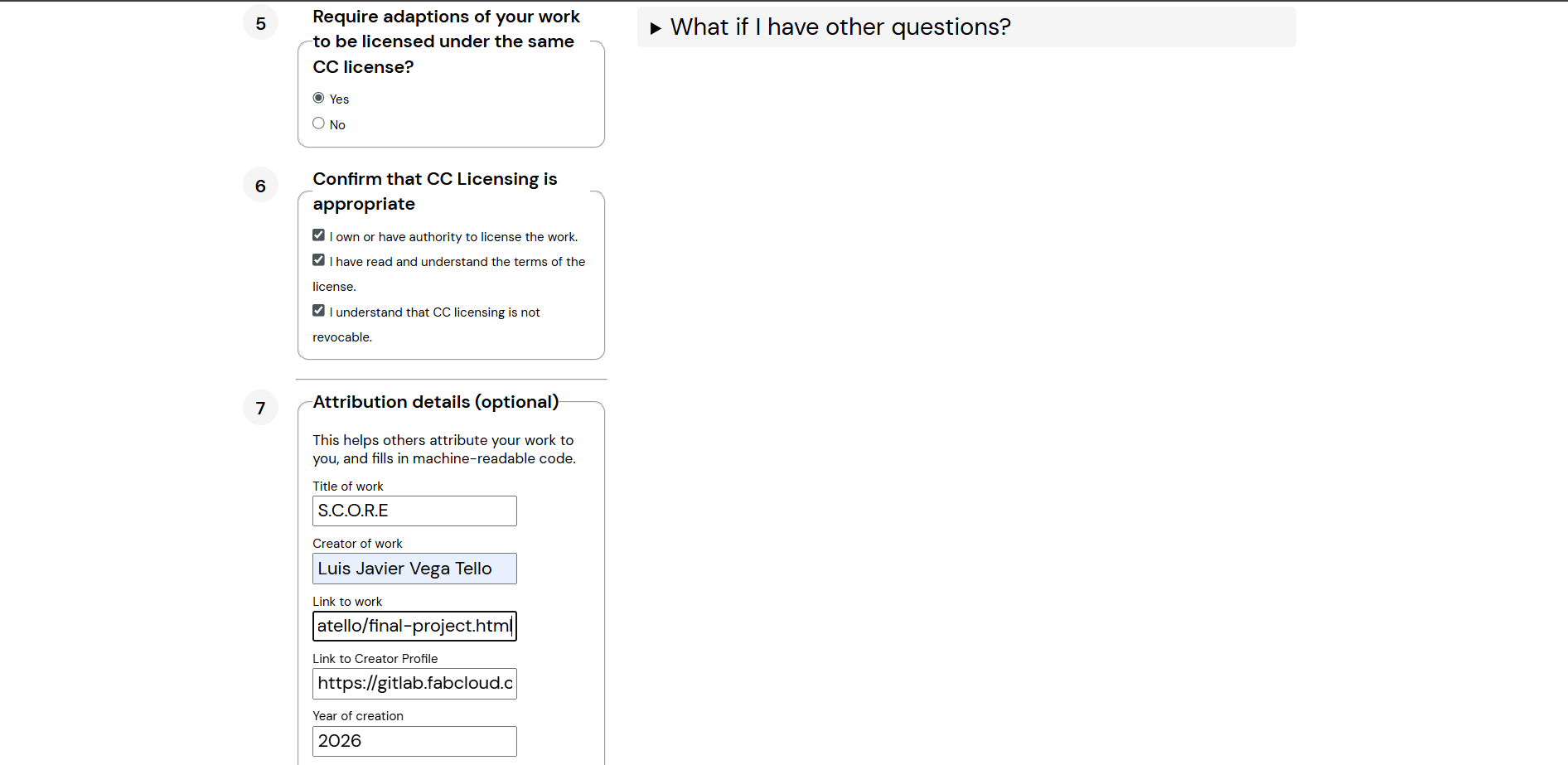
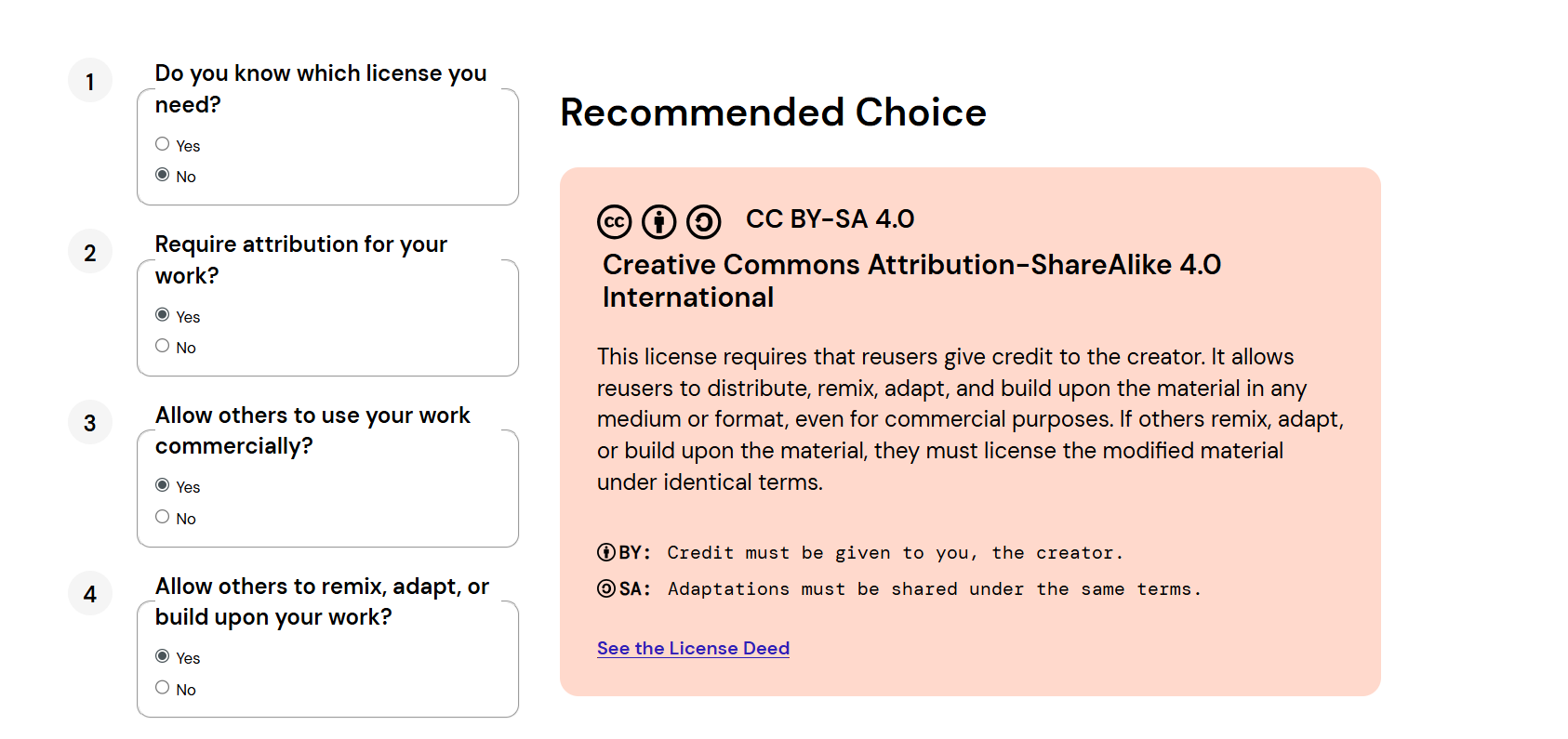
Since my goal is not to make a profit but to contribute to the open-source and sports tech community, I have decided to release this project under a Creative Commons Attribution-NonCommercial 4.0 International (CC BY-NC 4.0) license. This means anyone can download my CAD files, PCB traces, and code from my repository to build their own S.C.O.R.E. system for personal or academic use, but they are strictly prohibited from commercializing or selling it.
Outlined future possibilities and how to make them probabilities
- Internal Power Management: Currently using external 5V power banks. I will make S.C.O.R.E. fully autonomous by integrating 18650 LiPo batteries and TP4056 charging circuits into the next iteration of the PCB.
- Cloud Database Logging: The current Web Dashboard is local. By adding an MQTT bridge, I can send shot data to a cloud database so players can track their historical progress over a season.
- Sunlight Visors: To make the system 100% reliable at noon, I will design 3D-printed extended "visors" to physically block direct UV interference on the infrared receivers.
02. TASKS EVALUATION
What tasks have been completed?
- Additive Manufacturing: All 3D printed PLA housings, joints, and enclosures are designed, printed, and tested.
- Electronics Design: Both Master and Slave custom PCBs are milled, soldered, and successfully regulating logic-level voltages (SS14 Diodes).
- Programming & Networking: The ESP-NOW ultra-low latency connection between posts is perfectly stable. The Asynchronous Web Server displays the local UI flawlessly.
- Kinematic Logic: The code successfully filters noise, runs the
micros() timer, and calculates accurate km/h based on the 30cm sensor gap.
What tasks remain? / Planned what will happen when?
Very few. The hardware integration is complete. The remaining tasks for the final days are purely documentation and media production:
- Edit and compress the final 1-minute presentation video.
- Design the final summary slide.
03. WHAT WORKS & WHAT DOESN'T?
What's Working Perfectly?
The ESP-NOW wireless protocol exceeded expectations; the Slave post transmits data to the Master instantaneously without any wires crossing the goal. The E18-D80NK Sensors (3-meter variant) reliably detect high-speed objects. The Velcro Mounting System makes deployment extremely fast and adaptable to any PVC or metal post.
What's Not Working (or needs tuning)?
Direct, intense sunlight. Infrared sensors can sometimes be "blinded" by the sun's UV rays if hitting the receiver at a specific angle. While the software debouncing filter helps, a physical hardware adjustment (longer shading hoods on the 3D cases) is required for midday outdoor reliability.
04. RESOLVED QUESTIONS
What questions needed to be resolved?
- How do I stop the sensors from triggering randomly?
Resolved: I discovered the "phantom goals" were caused by Wi-Fi power spikes dropping the 5V line. Resolved by writing a non-blocking software debounce code that waits 20ms to verify if the signal is a real ball or just electrical noise.
- How do I connect industrial 5V sensors to a 3.3V board without frying it?
Resolved: By adding SS14 Schottky Diodes pointing away from the board. This blocks the higher voltage but allows the sensor to pull the board's internal pull-up resistor to Ground.
- How do we handle the "CORS" issue on local web servers?
Resolved: Explicitly programming the ESP32 to handle HTTP OPTIONS requests and sending Access-Control-Allow-Origin: * headers.
05. WHAT HAVE I LEARNED?
This project was a masterclass in system integration. Over the course of S.C.O.R.E., I learned:
- Industrial NPN Logic: Understanding the difference between Active-High and Active-Low circuits, and how Normally Closed (NC) sensors operate.
- Wireless Topologies: Learning that standard Wi-Fi isn't always the answer. ESP-NOW peer-to-peer communication is infinitely better for hardware triggers requiring ultra-low latency.
- Hardware Troubleshooting: Realizing that software bugs are sometimes actually hardware power issues .
- Asynchronous Web Servers: Serving dynamic HTML/CSS/JS directly from an ESP32 microcontroller without an external computer.
- Communications: I used a "Master - Slave" architecture for efficient data exchange.
06. GENERATING MY LICENSE
01 | CHOOSER QUESTIONNAIRE