
✦ Connecting Everything together
This week focused on integrating the different subsystems of my final project into a unified interactive product. The main objective was to connect the embedded electronics, ambient lighting, holographic display and interaction logic into a single functional architecture capable of creating an immersive visual experience.
✦ Final Project Overview
Final Project Overview
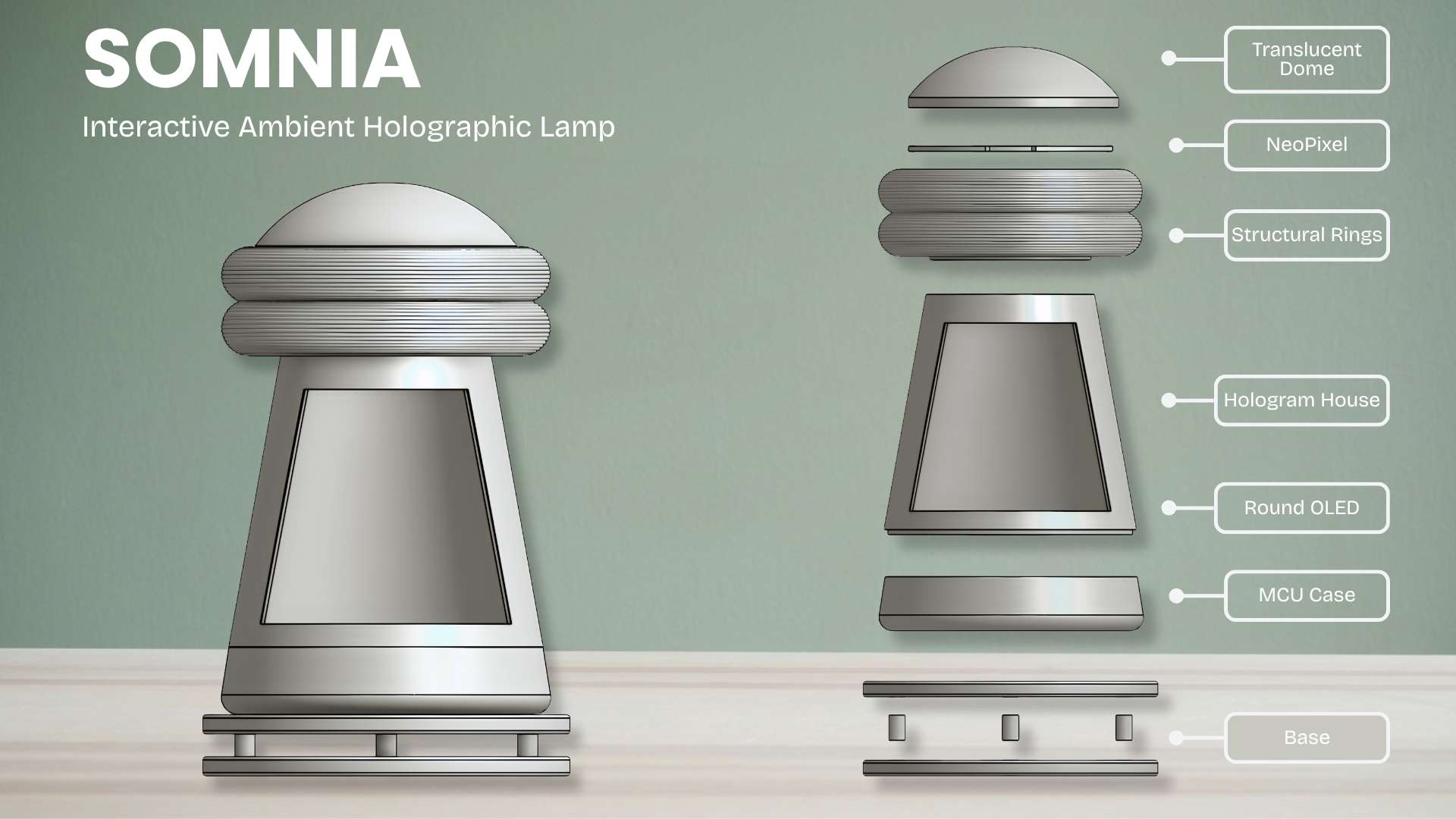
My final project is an interactive ambient lamp that combines soft illumination and holographic visualization. Inspired by mushroom-like forms and calm aesthetics, the lamp was designed to create an immersive visual experience through the combination of ambient lighting, digital content and optical illusion.
The project integrates a Pepper's Ghost holographic chamber using an OLED display and a 45-degree acrylic reflector to create floating visual effects such as stars and abstract animations. It integrates a NeoPixel as an interactive visual element rather than a conventional source of illumination. The system is controlled by a Seeed XIAO ESP32-C6 PCB and combines embedded electronics, digital fabrication and programming.
✦ General System Architecture
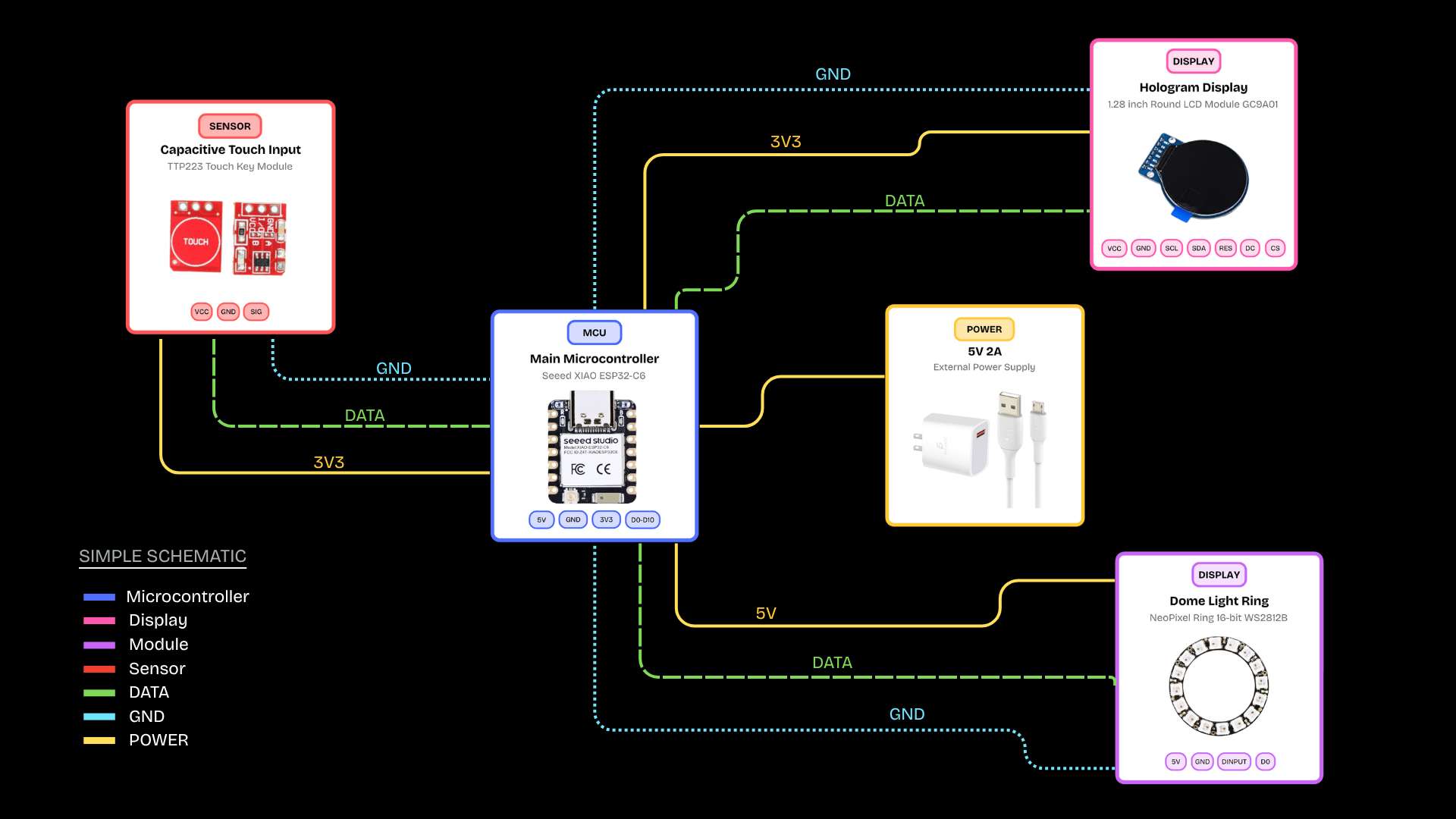
The lamp is organized into three main subsystems: interaction, illumination, and visualization. A capacitive touch sensor acts as the primary input, sending signals to the Seeed XIAO ESP32-C6 microcontroller. The microcontroller then coordinates the different outputs, including the NeoPixel lighting system and the OLED-based holographic display.
✦ Physical Integration
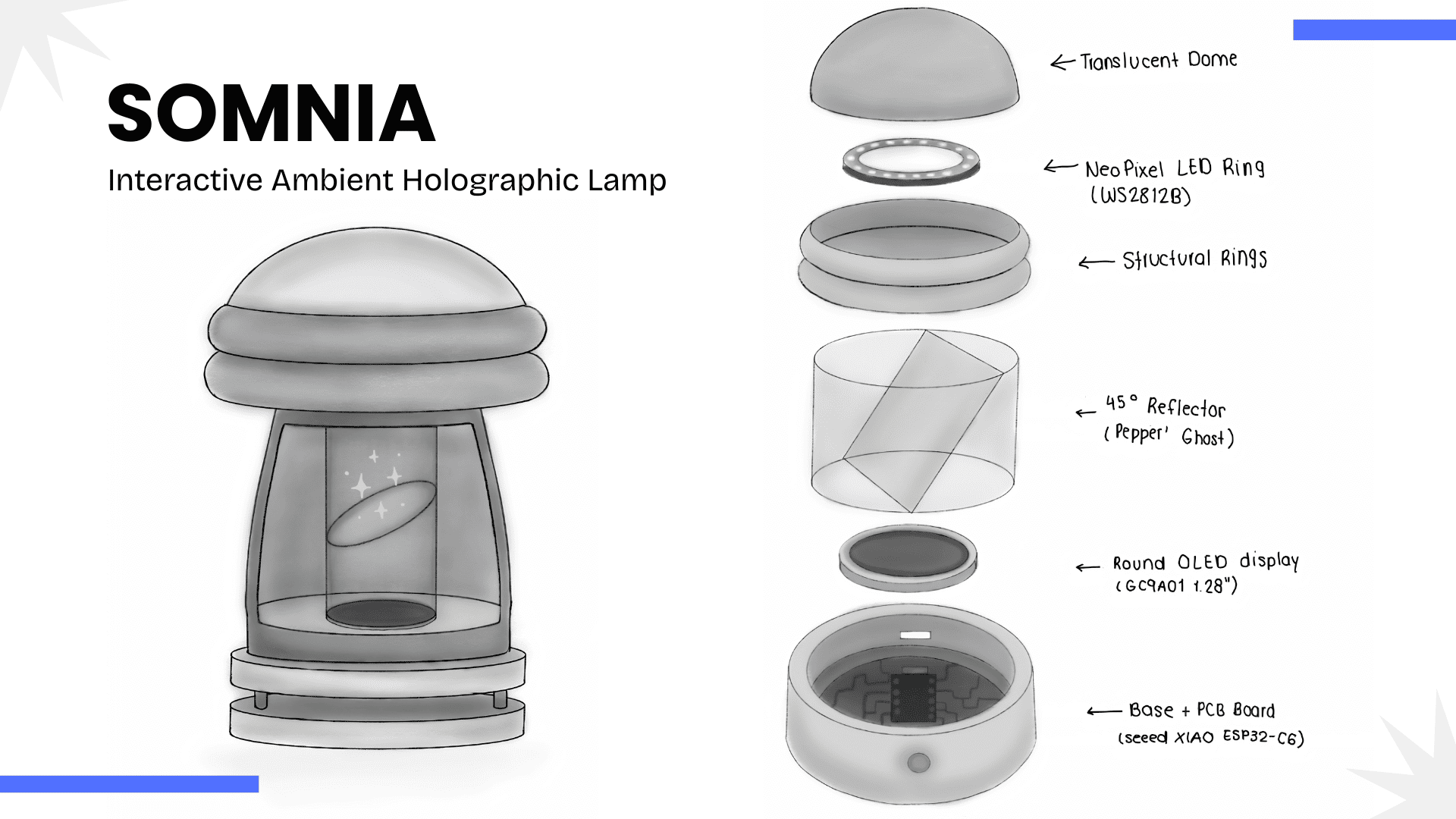
The physical integration focuses on organizing the lighting, holographic, and electronic subsystems into a compact enclosure. The lamp is composed of three main sections: the upper lighting assembly, the central holographic chamber and the lower electronics compartment.
Packaging
The base is constructed from two laser-cut MDF rings connected by wooden dowels, forming a rigid supportable base for the light fixture. The OLED display and custom XIAO ESP32-C6 PCB are mounted within this lower compartment, allowing the wiring to remain hidden from the user.
Most of the visible enclosure, including the dome, structural rings and internal supports, was designed as 3D printed parts. These components use press-fit and alignment features to simplify assembly while maintaining the intended mushroom-inspired form.
✦ Electronic Integration
The electronic system is centered around a custom Seeed XIAO ESP32-C6 PCB responsible for controlling the different interactive and visual subsystems of the lamp. The microcontroller manages the NeoPixel lighting animations, holographic display output, and capacitive touch interaction.
✦ Wiring & Power Distribution
Wiring & Power Distribution
The OLED display is connected directly to the main PCB due to its fixed position inside the holographic chamber. The NeoPixel ring is connected through flexible internal wiring routed vertically through the lamp structure. The cables are guided internally near the support rails to keep the exterior clean.
An external 5V 2A power supply was selected to ensure reliable operation of all electronic subsystems while simplifying power management and maximizing available current for the lighting and display components.
✦ Holographic System
The lower section of the lamp integrates a compact Pepper's Ghost holographic system designed to generate soft floating atmospheric visuals inside the transparent chamber.
Pepper's Ghost
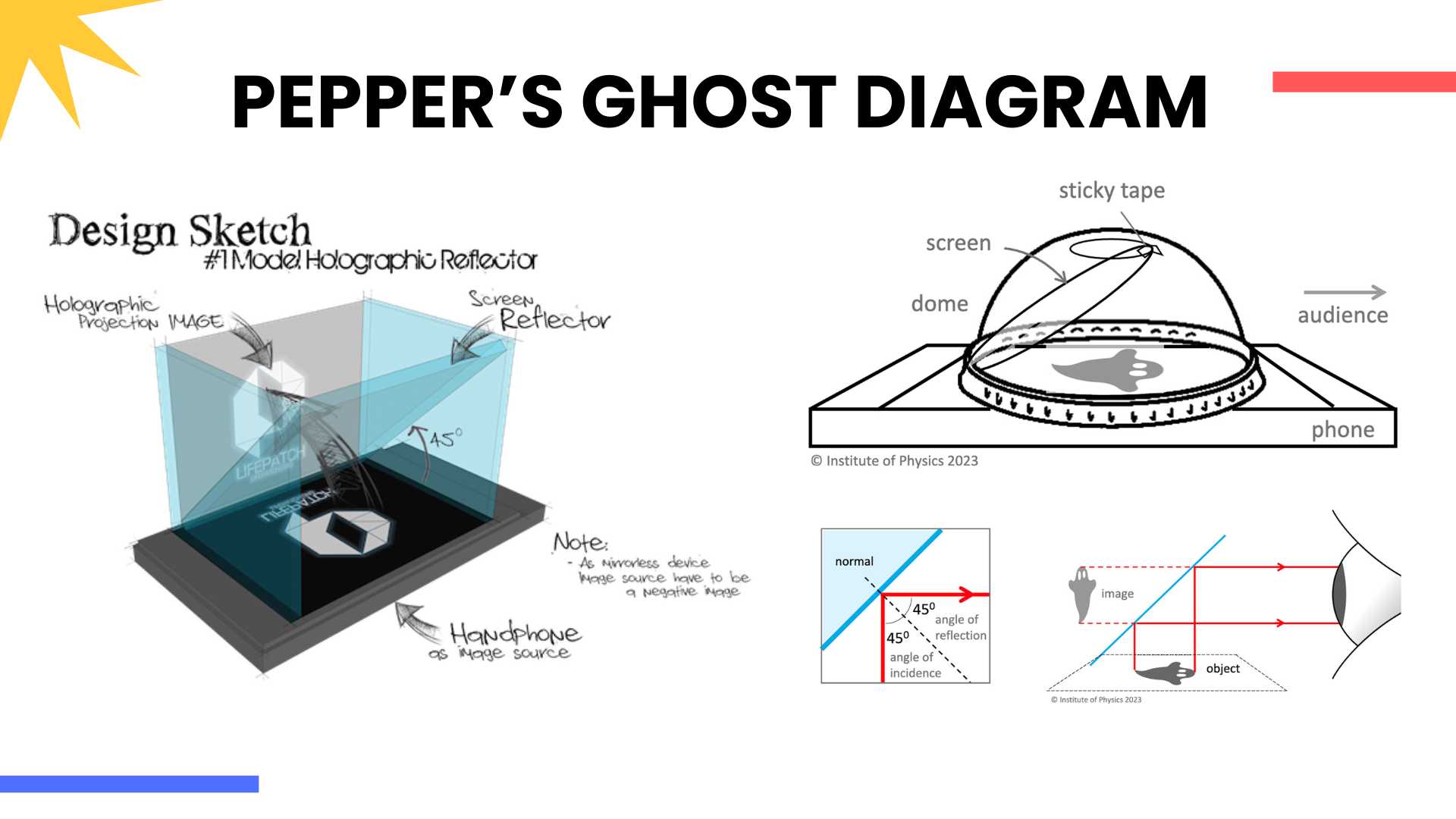
Pepper's Ghost is an optical illusion that uses reflection to make an image appear as if it's floating in space. In this project, a round OLED display is positioned horizontally at the bottom of the chamber, facing upward. Above the display, a transparent acrylic panel is placed at a 45-degree angle.
When animations are displayed on the screen, the light reflects off the angled acrylic surface toward the viewer. Because the acrylic remains nearly invisible, the reflected image appears to float unsupported inside the chamber rather than looking like a conventional screen.
✦ Interaction Logic
The interaction system was designed to provide a simple and intuitive experience. Through touch and WiFi connectivity, users can control the lamp’s lighting and holographic effects, allowing the different visual subsystems to work together as a unified ambient experience.
Interaction Logic
The lamp operates through two states: OFF and ON. A touch on the TTP223 sensor activates the NeoPixel lighting, holographic display, and WiFi interface. Additional touches cycle through three lighting modes, while the GC9A01 display continuously generates animations for the Pepper’s Ghost holographic effect.
✦ Fabric Processes
The project combines additive manufacturing, laser cutting, electronics production and embedded programming. Also 3D printed parts, laser-cut components and a custom PCB are integrated into a single compact product.
✦ Final Thoughts!
This week was dedicated to consolidating the final project architecture and defining how the different subsystems interact. By refining the design, electronics, holographic system, and user experience, the project evolved into a more focused and achievable product.
Although a servo-based kinetic mechanism was initially considered, the scope was simplified to focus on the holographic experience, lighting system, electronics, and user interaction. While the movement feature remains a potential future improvement, prioritizing a smaller and more cohesive system will allow for a more robust and successful final implementation.
✦ Download Here!
In this section, you can find the downloadable source files developed during this week.