Week13
Week 13 Group assignment:
- Review the safety data sheets for each of your molding and casting materials
- Make and compare test casts with each of them
- Compare printing vs milling molds
Reviewing SDS (safety data sheets)
Wave silicone gum
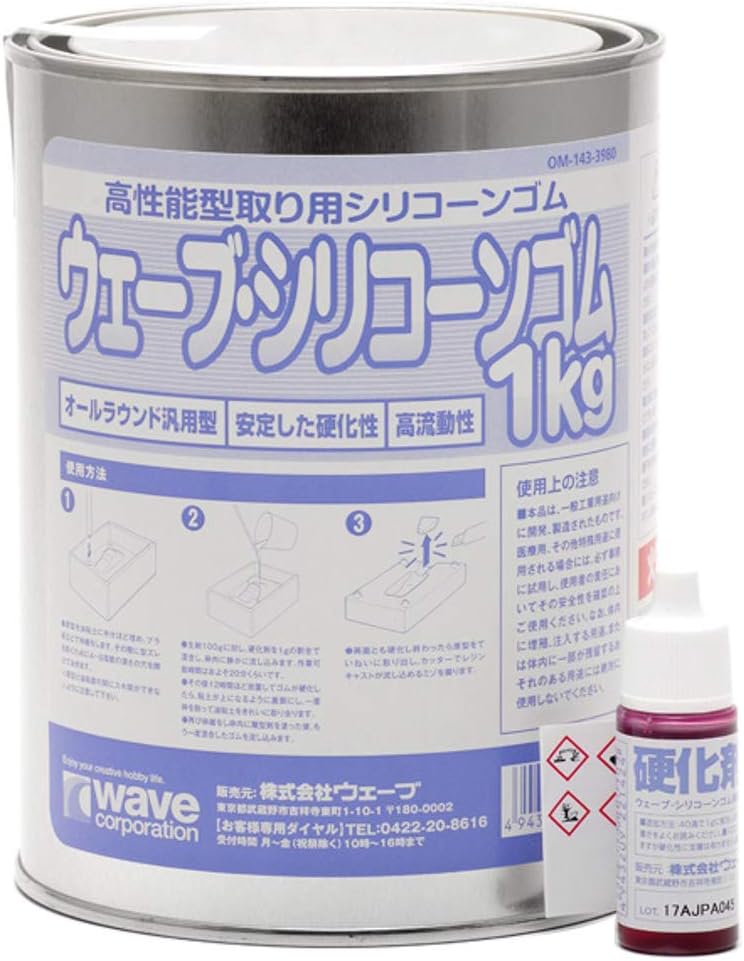
We purchased Japan locally popular silicone gum, Wave Silicone gum 1kg. When we looking for MSDS of this products, we found Tamiya-san’s page. Here are MSDS for Base and Curing agent.
According to the SDS, cure agent contains “Dibutyltin dilaurate”, organotin. The tin catalyst facilitates a reaction between the silicone polymer chains and the cross-linker. Cross-linker should be also contained in cure agent.
Tin cure type by-product alcohol, and it will evaporates out of the mold. So tin-cure silicone undergoes a small amount of shrinkage (typically 1% or less) over the first 24–48 hours.
Wave resin cast Ex.
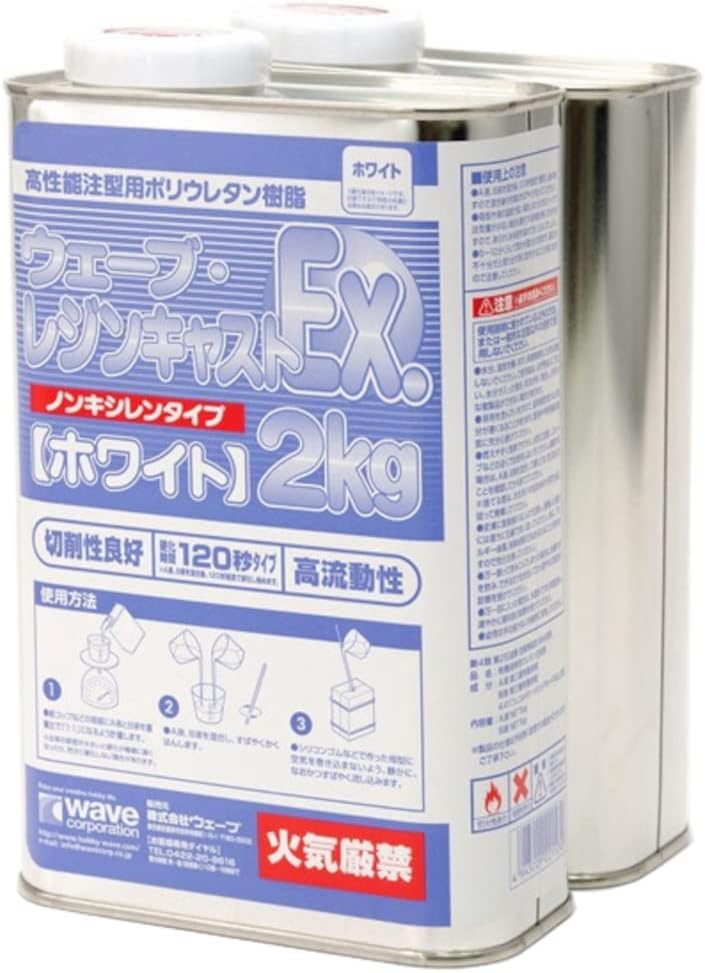
This brand is popular for Japanese modelers. MSDS for Liquid A and Liquid B.
According to the datasheet, A liquid contain “N,N,N’,N’-Tetrakis(2-hydroxypropyl)ethylenediamine”, and it has -OH (hydroxyl group) so this should be resin. B liquid contain “Methylenebis(4,1-phenylene) diisocyanate”, so it looks base hardener.
When we mix them, the isocyanate groups (-N=C=O) and the hydroxyl groups snap together, forming a urethane bond (-NHCOO-). Because each molecule has multiple “hands” (functional groups), they link up in every direction to create a massive, rigid 3D molecular grid.
SANAAA White epoxy resin
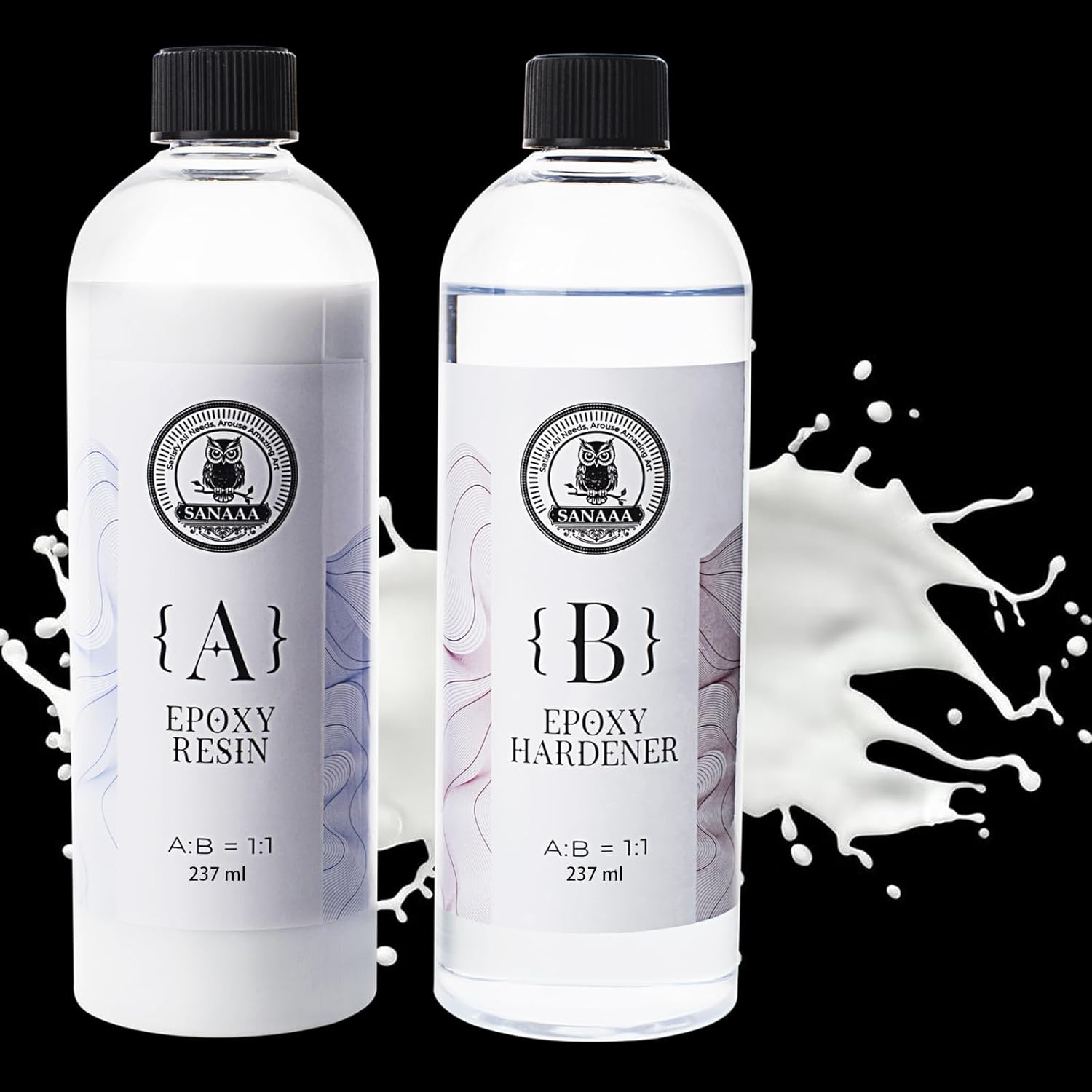
I purchased this because it is available on Amazon Japan, affordable and will be delivered quickly. We still could not get SDS of this product.
When mixed, the hardener molecules attack the epoxide groups of the resin, forming a permanent chemical bond. This turns the short, liquid chains into a massive, interconnected cross-linked structure.
UV resin
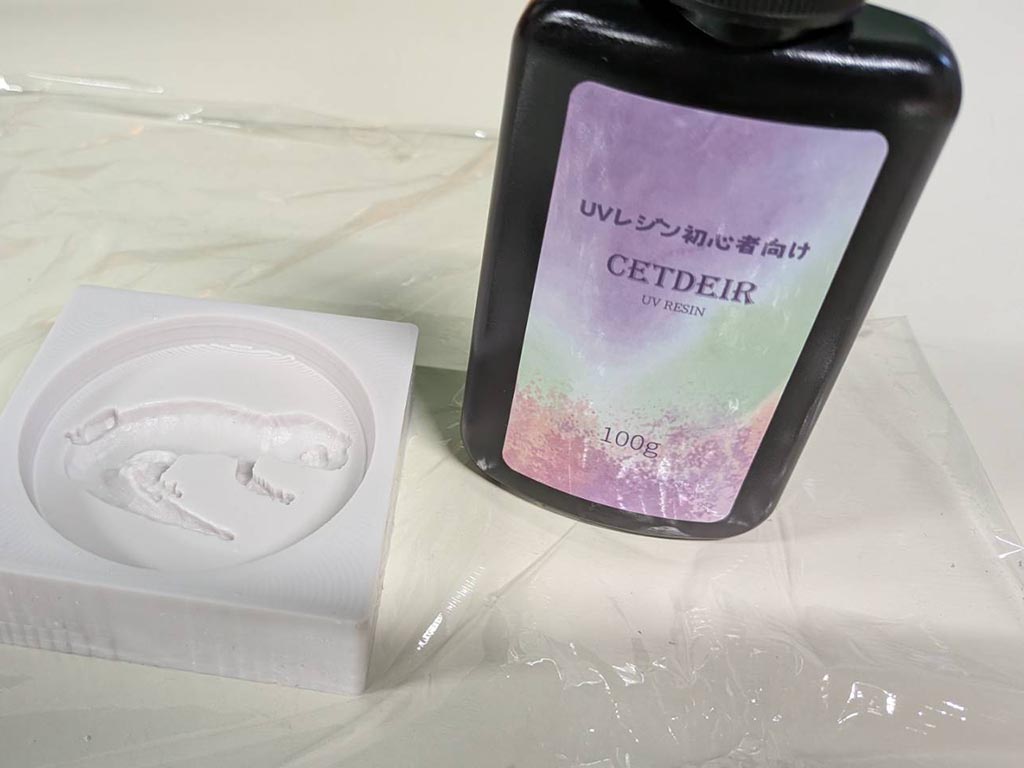
Bara purchased this resin from Amazon Japan. We still could not get SDS of this product.
The liquid contains photoinitiators. When exposed to UV light, these molecules absorb the energy and become highly reactive “radicals.” These radicals act like a biological catalyst, forcing the surrounding monomers to link together instantly. In seconds, the liquid molecules form a rigid 3D polymer network.
Summary
Let me summarize compare epoxy, polyurethane and UV resin.
| Feature | Epoxy | Polyurethane | UV resin |
|---|---|---|---|
| Cure mechanism | Step-growth | Chain-growth | Photopolymerization |
| Cure Speed | Slow (hours to days) | Fast (minutes to hours) | Instant (Seconds) |
| Viscosity (Flow) | Medium/High (Syrup-like) | Low (Water-like) | Medium (Varies by type) |
| Moisture Sensitivity | Low | Very High (will foam up) | Low |
Protection
We should have protection to handle resins. Here are required protections for each resins.
Mask
| Material | Recommended mask | Reason |
|---|---|---|
| Silicone (Addition-cure) | Standard Mask | Addition-cure types are generally odorless and safe with basic ventilation. |
| Epoxy | Organic Vapor Respirator (Mandatory) | Epoxy releases invisible, toxic vapors at room temperature. Because these vapors are strong sensitizers (causing permanent allergies), a standard dust or surgical mask will offer no protection. |
| Polyurethane | Organic Vapor Respirator (Mandatory) | Polyurethane contains isocyanates, which are highly toxic to the lungs. Inhaling even a tiny amount can trigger severe respiratory distress or asthma. Strict vapor filtration is absolutely vital. |
| UV resin | Organic Vapor Respirator (Large projects) or Activated Carbon Mask (Small crafts) |
UV resin releases toxic, sharp-smelling vapors during the rapid chemical reaction under UV light. For small crafts, a disposable carbon mask is sufficient, but an organic vapor respirator is required for high-volume work. |
Glove
| Glove material | Suitability & characteristics |
|---|---|
| Nitrile | Provides the best relative resistance against epoxy, polyurethane, and UV resin monomers. |
| Latex | Not Recommended. Chemicals and allergens easily permeate latex, making it ineffective for resins. |
| Vinyl (PVC) | Not Recommended. UV resin monomers easily penetrate vinyl, offering virtually no protection. |
Eye protection
| Material | Recommended eye protection | Reason |
|---|---|---|
| Silicone | Standard safety glasses | Protects eyes from accidental splashes during aggressive mixing or pouring. The main hazard is physical impact rather than highly aggressive chemical vapors. |
| Epoxy | Safety glasses with side shields | Epoxy hardeners are strong corrosives and sensitizers. Standard glasses leave gaps; tight-fitting goggles or wrap-around side shields prevent liquid splashes and heavy vapors from reaching the eyes. |
| Polyurethane | Tight-fitting chemical splash goggles (Mandatory) | Polyurethane contains isocyanates, which are severe lacrimators (tear-producing agents). Normal safety glasses do not block the airborne mist or vapors that cause painful burning, swelling, and temporary blindness. |
| UV Resin | UV-Blocking Safety Glasses | Dual-purpose protection: it blocks liquid resin splashes (e.g., when popping bubbles) and filters out harmful UV wavelengths from the curing lamps, protecting your corneas and retinas from UV damage. |
Test cast
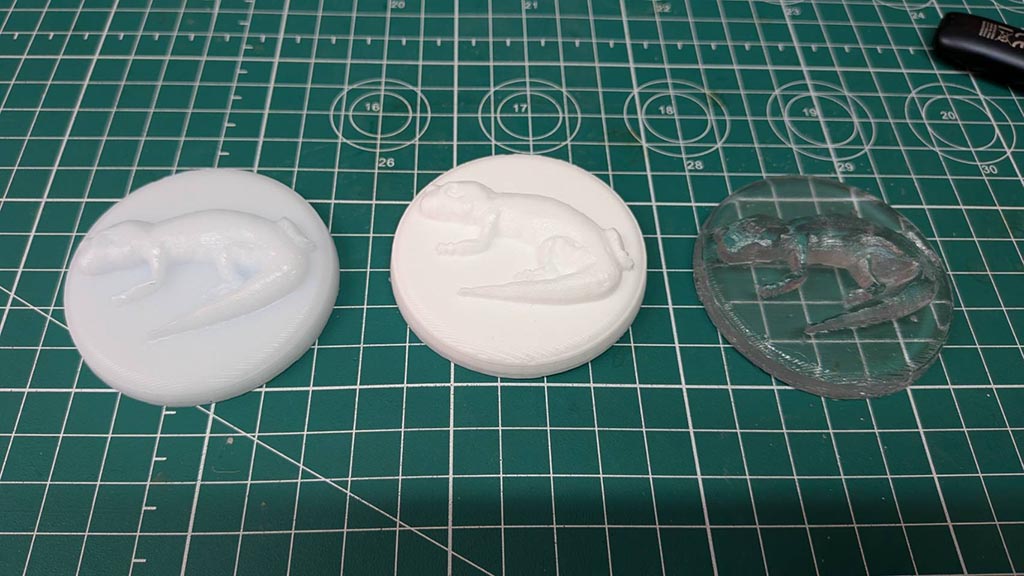
Bara’s mold is single sided, so his mold is suitable to try all three kind id resin. From left, epoxy, polyurethane, UV.
Polyurethane harden in 5-10 minutes and flow was low, so it fits to cast small things.
UV resin took a time to harden with UV light, so Bara used sunlight and it works!!
Compare printing vs milling molds
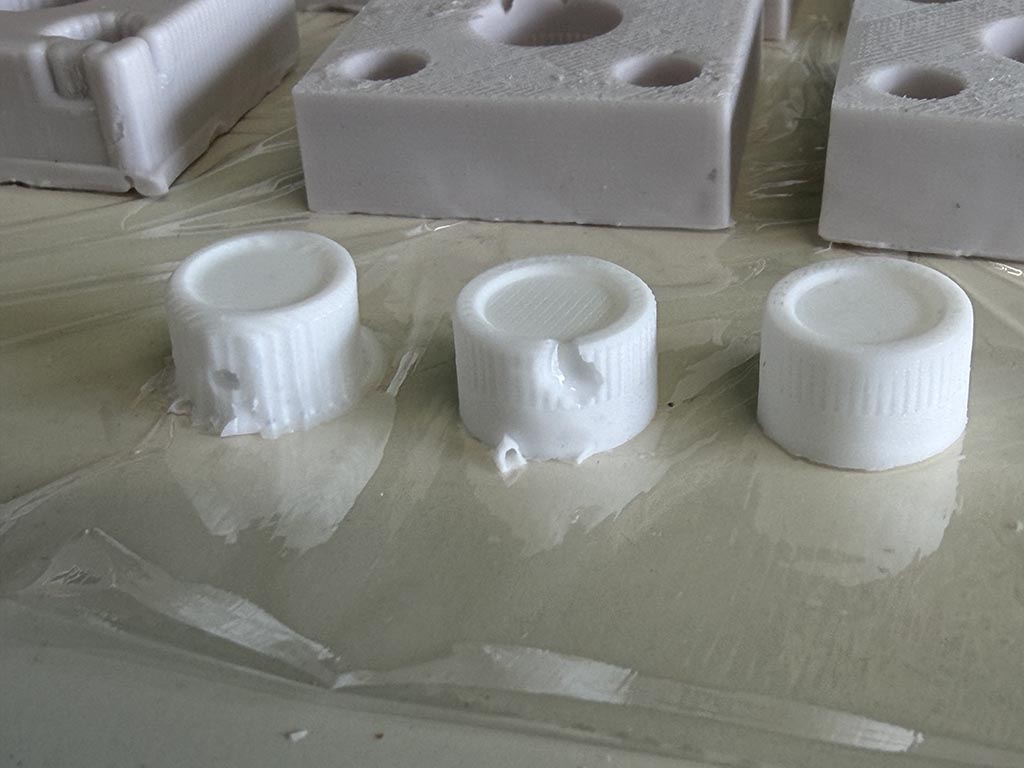
Because Yoshi printed with 0.08mm layer height, we’re happy with the quality of the 3D printed mold except traces on top layer. 3D printing mold is good at reproduce details. .1 mm things are hard to reproduce with milling.
We had concern about layer lines but actually it was not problem with 0.08mm layer height printing. For top layer traces, we may able to erase it with ironing.