Week 18
Applications and Implications, Project Development
1.Have you answered these questions?
- I.Created a dissemination plan for your final project✅
- II.Outlined future possibilities and described how to make them probabilities✅
- III.What tasks have been completed, and what tasks remain?✅
- IV. What's working? what's not?✅
- V. What questions need to be resolved?✅
- VI.Planned what will happen when?✅
- VII.What have you learned?✅
2. Assignment Requirements:
° Develop a plan for dissemination of your final project.
Complete your final project, tracking your progress.
3. Introduction: Invention, Intellectual Property and Income-Class with Walter Gonzales Arnao
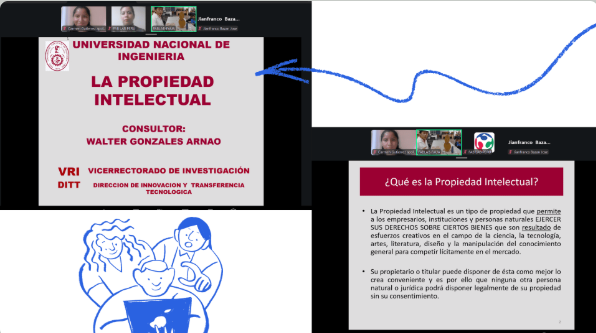
For the “Invention, Intellectual Property and Income” topic, we had the opportunity to attend a session led by Walter Gonzales Arnao, an intellectual property expert and member of Fab Lab UNI. During the presentation, he explained the core principles of intellectual property, highlighting concepts such as trademarks, slogans, and the value of safeguarding creative ideas and innovative developments.
The session invited us to consider how intellectual property strategies can be applied to our own projects by identifying elements that may be protected and enhanced, including product design, packaging, branding, color schemes, icons, and other visual components. It also emphasized the importance of creating projects with a distinctive identity that clearly communicate their purpose, differentiate themselves in the market, and generate opportunities for long-term growth and impact.
4. Intellectual Property & License
TYMKA is released under the Creative Commons Attribution-NonCommercial-ShareAlike 4.0 International International License (CC BY-NC-SA 4.0).
This license allows other makers, students, and educators to share, study, and adapt the project for non-commercial purposes, provided that proper credit is given and any derivative work is distributed under the same license. This approach supports open learning while protecting the project from unauthorized commercial use.
5. Why Did I Choose This License?
The CC BY-NC-SA 4.0 license aligns with the educational goals of TYMKA and the open-source philosophy promoted by Fab Labs. It encourages collaboration, knowledge sharing, and community-driven improvement while ensuring that the project remains accessible to future users.
At the same time, the non-commercial clause prevents unauthorized commercial exploitation, and the share-alike requirement guarantees that future modifications continue to benefit the educational community.
6.Target Audience🎯
TYMKA is designed for students, educators, makers, and Fab Lab communities interested in learning electronics, programming, and digital fabrication through interactive experiences.
The project is particularly suitable for beginners and educational institutions seeking practical tools that encourage experimentation, creativity, and problem-solving skills.
7. 📢 How Will I Reach My Target Audience?
The dissemination strategy focuses on digital platforms, academic events, and maker communities. Project updates, tutorials, and demonstrations will be shared through Instagram, TikTok, LinkedIn, YouTube, and the Fab Academy documentation website.
Additional outreach activities include participating in Fab Lab exhibitions, technology fairs, workshops, and educational presentations. These channels will help increase visibility and encourage collaboration.
8.Dissemination Plan
All design files, source code, and documentation will be published through the Fab Academy website and GitLab repository to ensure accessibility and reproducibility.
Additional content such as demonstration videos, assembly guides, tutorials, and user manuals will be created to facilitate adoption by educators, students, and makers interested in replicating or adapting the project.
9.Future Income Possibilities
Although TYMKA is currently an open educational project, it has the potential to evolve into a sustainable product through various income opportunities.
Future possibilities include educational workshops, custom kits for schools, consulting services, online courses, and collaborations with educational institutions and Fab Labs.
10.Income Strategy
Potential income models for TYMKA include:
- I.Educational DIY kits✅
- II.Ready-to-use classroom versions✅
- III.Workshops and training sessions✅
- IV. Online courses and tutorials✅
- V.Consulting services✅
- VI.Sponsored educational programs✅
- VII.Partnerships with schools and universities✅
These strategies could support the long-term sustainability and scalability of the project.
11. 🚀 Future Possibilities and Probabilities
Future versions of TYMKA may integrate artificial intelligence, voice recognition, cloud connectivity, data logging, and wireless firmware updates.
To transform these possibilities into reality, the project will require continuous testing, user feedback, partnerships with educational institutions, and iterative improvements based on real-world use cases.
12. ✅ Completed Tasks and Remaining Work
| Phase | Progress |
|---|---|
| 1.System concept definition | |
| 2. Electronic design and PCB fabrication | |
| 3. Embedded programming | |
| 4.Integration of input and output devices | |
| 5.CAD modeling and enclosure design | |
| 6.Initial testing and validation | |
| 7. Documentation development |
| Phase | Progress |
|---|---|
| 1. Final enclosure optimization | |
| 2. Extended user testing | |
| 3. User experience improvements | |
| 4. Final system integration | |
| 5.Demonstration video production |
13. ⚙️ What's Working? What's Not?
Working
°ESP32-S3 communication
OLED display visualization
°Sensor integration
°Audio playback with DFPlayer Mini
°Power management system
°Modular architecture
Needs Improvement
°Cable organization
User interface optimization
°Mechanical assembly tolerances
°Long-term reliability testing
14. Questions to Be Resolved
Several aspects still require further evaluation, including enclosure optimization, manufacturing costs, scalability, and long-term durability.
Additional questions involve defining the most suitable commercialization model, improving user experience, and identifying new educational applications for the system.
15. Planned Timeline
Phase 1 – Final Integration
Complete hardware assembly and optimize cable management.
Phase 2 – User Testing
Evaluate system performance with potential users and gather feedback.
Phase 3 – Documentation
Finalize project documentation, videos, and replication guides.
Phase 4 – Dissemination
Publish content on digital platforms and present the project at educational events.
16. 📚 What Have I Learned?
This assignment helped me understand that innovation goes beyond technical development. Creating a successful project requires considering intellectual property, dissemination strategies, sustainability, and future opportunities.
I learned the importance of building a strong project identity, planning long-term growth, and documenting each stage to maximize accessibility, reproducibility, and impact.
© 2026 Jianfranco Hugo Bazan Jose – Licensed under Creative Commons Attribution-NonCommercial-NoDerivatives 4.0 International (CC BY-NC-ND 4.0)