Assignments
Assignment
- Develop a plan for dissemination of your final project.
- Complete your final project, tracking your progress.
Project Origin and Motivation
The idea for the Octopus Gripper came from following recent developments in adaptive gripper technology. Traditional rigid grippers struggle with objects that have irregular geometry, they need precise positioning and often damage delicate surfaces. A new generation of soft grippers inspired by biological systems like octopus tentacles and starfish are changing that. These grippers can conform to almost any shape, distribute force evenly, and handle objects that would be impossible for a rigid claw.
I wanted to explore whether this kind of gripper could be fully fabricated in a Fab Lab, designed in Inventor, printed in TPU, controlled wirelessly with custom PCBs, without relying on pneumatics or expensive actuators. The answer was yes, using servo-driven Dyneema tendons running through segmented TPU vertebrae.
A dissemination plan describes how this work will be shared with the people who could benefit from it. The goal is to make everything, design files, firmware, fabrication process, and documentation, freely available so that students, educators, researchers, and makers can build on it.
Intellectual Property and License
I used the Creative Commons license chooser to decide which license fits the project best. The main considerations were: I want people to be able to use, share, and modify the project freely, but I want credit to be given, and I do not want it used for commercial purposes without permission.
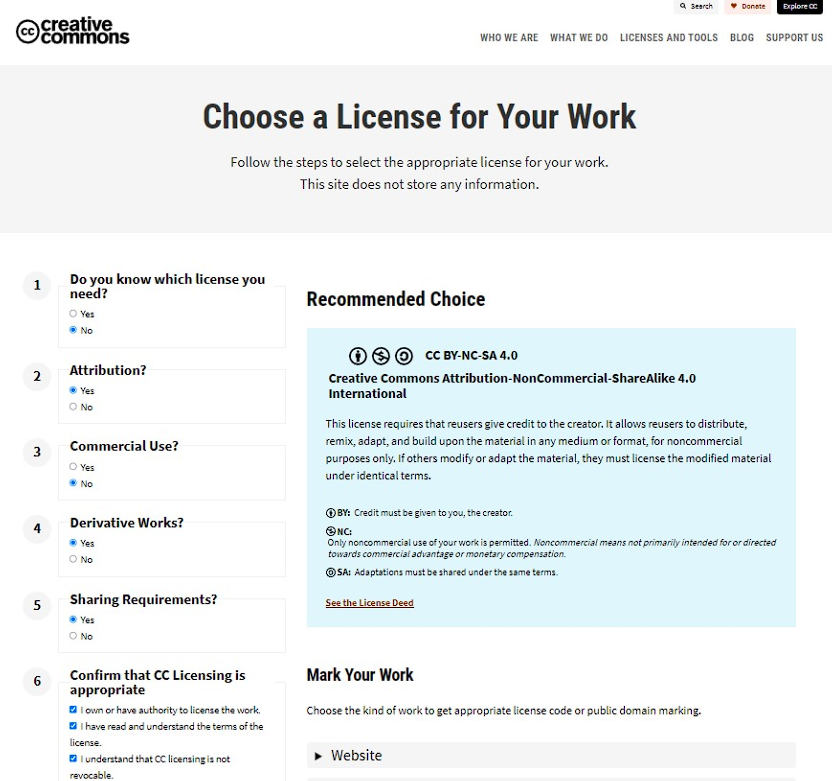
After going through the chooser (attribution required, no commercial use, share-alike), the recommended license was:
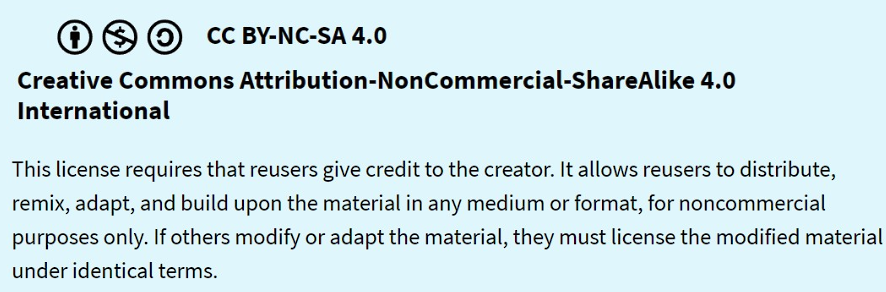
I chose this license because the Octopus Gripper is an educational and research project. I want anyone to be able to build it, improve it, and document their version, always giving credit to the original work, and always keeping it open and non-commercial. This way the project keeps growing as a community resource.
Target Audience
The Octopus Gripper is a soft robotics project that sits at the intersection of fabrication, electronics, wireless communication, and bio-inspired design. Several different groups could benefit from it:
Students and educators
University and high school students studying robotics, electronics, or digital fabrication. The gripper is a practical, hands-on project that covers many disciplines at once.
Soft robotics researchers
Researchers exploring soft actuators, tendon-driven systems, and flexible end-effectors for collaborative robots. The TPU tentacle design and Dyneema tendon approach are replicable and modifiable.
Makers and Fab Labs
Anyone with access to a 3D printer, PCB milling machine, and basic electronics tools can replicate the full system. The project is designed to be Fab Lab fabricatable from start to finish.
Cobot integrators
Engineers working with collaborative robots like the UR3 who need a low-cost, soft, wireless end-effector that can be adapted to different gripping tasks.
STEM education
The wearable glove interface makes the system intuitive and engaging, a good demonstration project for workshops, STEM events, and robotics outreach.
Fab Academy community
Other Fab Academy students and alumni who want to learn from or build on the project as a reference for their own final projects or research.
Key Message and Goals
The Octopus Gripper demonstrates that soft robotics can be accessible. You do not need expensive industrial hardware or complex control systems to build a functional gripper. With a 3D printer, a milled PCB, off-the-shelf components, and open-source firmware, anyone can build a bio-inspired robotic system that works wirelessly in real time.
Educational goal
Show that digital fabrication skills, 3D modeling, PCB design, embedded programming, BLE communication, can be combined into one coherent project that covers the full Fab Academy curriculum.
Technical goal
Provide a fully documented, reproducible soft gripper design with open files, parametric CAD, firmware, and assembly instructions that anyone can follow and adapt.
Community goal
Contribute a reference project to the Fab Academy archive so future students can build on it, improve the design, and explore their own variations of wearable-controlled soft robotics.
Personal goal
Continue developing the gripper after Fab Academy, improve grip force, add more tentacles, explore different actuation methods, and eventually test it in real industrial pick-and-place scenarios.
Open Source Dissemination Plan
The project will be fully open and free to access. All files will be published and documented so that anyone can reproduce or adapt the gripper without needing to contact me first.
What will be published openly
- Autodesk Inventor CAD files for all 3D-printed parts (tentacles, hub, glove frame)
- Fusion 360 PCB design files for both the glove board and the gripper board
- Full Arduino firmware for both XIAO ESP32-C6 boards (BLE TX glove and BLE RX gripper)
- Bill of materials with component sources and approximate costs
- Step-by-step assembly and fabrication documentation on this Fab Academy page
- Print parameters for TPU 95A tentacles and PLA structural parts
- Schematic diagrams and PCB layout exports (Gerber, DXF)
Where it will be shared
-
Fab Academy documentation page
The primary source, everything is documented here with images, code, parameters, and process notes. Accessible to anyone through the Fab Academy archive.
-
GitHub repository
All firmware, PCB exports, and design files will be published in a public GitHub repository with a clear README, setup guide, and CC BY-NC-SA license.
-
Printables / Thingiverse
The STL files for the tentacles, hub, and glove frame will be uploaded to Printables or Thingiverse so makers can find and download them directly, even without accessing the full documentation.
-
Fab Lab ULima
The physical project and documentation will remain at Fab Lab ULima as a reference for future students and as a demo for STEM outreach events and workshops at the university.
Funding and Scaling
The current version of the project was built entirely within the Fab Lab using lab equipment and a budget of approximately $87 USD in components. There is no commercial intention at this stage.
The most realistic path would be as an educational kit, a packaged version of the gripper with all components, printed parts, and a guided assembly manual targeted at university robotics courses or STEM workshops.
Open-source grants (e.g. NLnet Foundation, Prototype Fund), university research funding, or crowdfunding through platforms like Crowd Supply that specialize in open hardware projects.
The project is still a prototype. The priority right now is documenting it well and making it reproducible. Commercialization would require improving grip force, durability, and adding safety features for real industrial use.
A modular gripper platform that Fab Labs and universities can build locally, no expensive supply chains, no proprietary components, just standard tools and open files. That is the real value of keeping it open.
Final Project Progress
Current completion status of each component of the Octopus Gripper:
Status, Questions, and Lessons Learned
BLE communication between both XIAO ESP32-C6 boards (glove TX and gripper RX) is stable and low-latency. The TPU tentacles flex and recover reliably. Servo-driven Dyneema tendons produce consistent bending across all four fingers.
The UR3 adapter mount still needs fine-tuning, there is minor play when the gripper is under lateral load. Grip force on smooth cylindrical objects is inconsistent and depends heavily on tendon pre-tension at assembly.
Can grip force be improved by changing TPU shore hardness or tentacle wall thickness? Is there a more repeatable way to set tendon pre-tension during assembly? Would adding fingertip texture patches improve friction on smooth objects?
TPU print settings matter enormously — small changes in layer height and infill percentage change flexibility dramatically. BLE on the XIAO ESP32-C6 required careful packet timing to avoid dropped commands.
What will happen when
-
Week 19 (this week)
Finalize UR3 adapter, complete assembly documentation with photos, upload all firmware and CAD files to GitHub.
-
Final presentation
Demo the full wireless glove-to-gripper system live. Record a short video of the gripper picking up objects of different shapes for the documentation page.
-
Post-Fab Academy
Publish files on Printables and GitHub, share demo video on Instagram and LinkedIn, leave the physical project at Fab Lab ULima as a reference and STEM demo unit.