TrailNAV — prototype and development record
I am developing a solar-assisted offline waypoint-navigation device. My goal is to let a hiker save a location and see the direction and distance back to it without using mobile data.
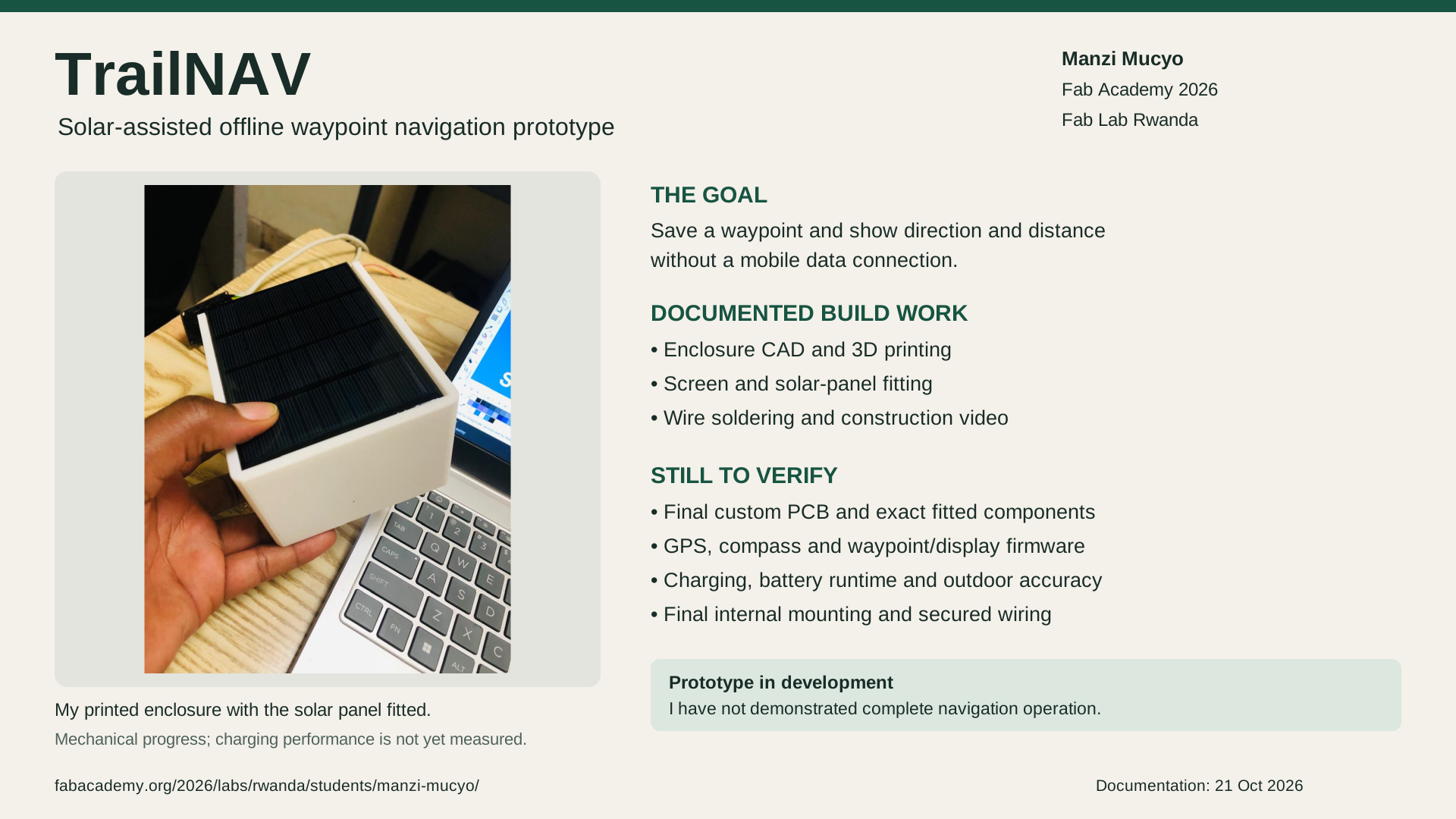
Current status, 21 October 2026: my archive shows enclosure CAD, 3D printing, screen/solar-panel fitting and wire soldering. It does not yet establish a complete working navigation device. I need to verify the final electronics, firmware and power system before making performance claims.
What I designed and fabricated
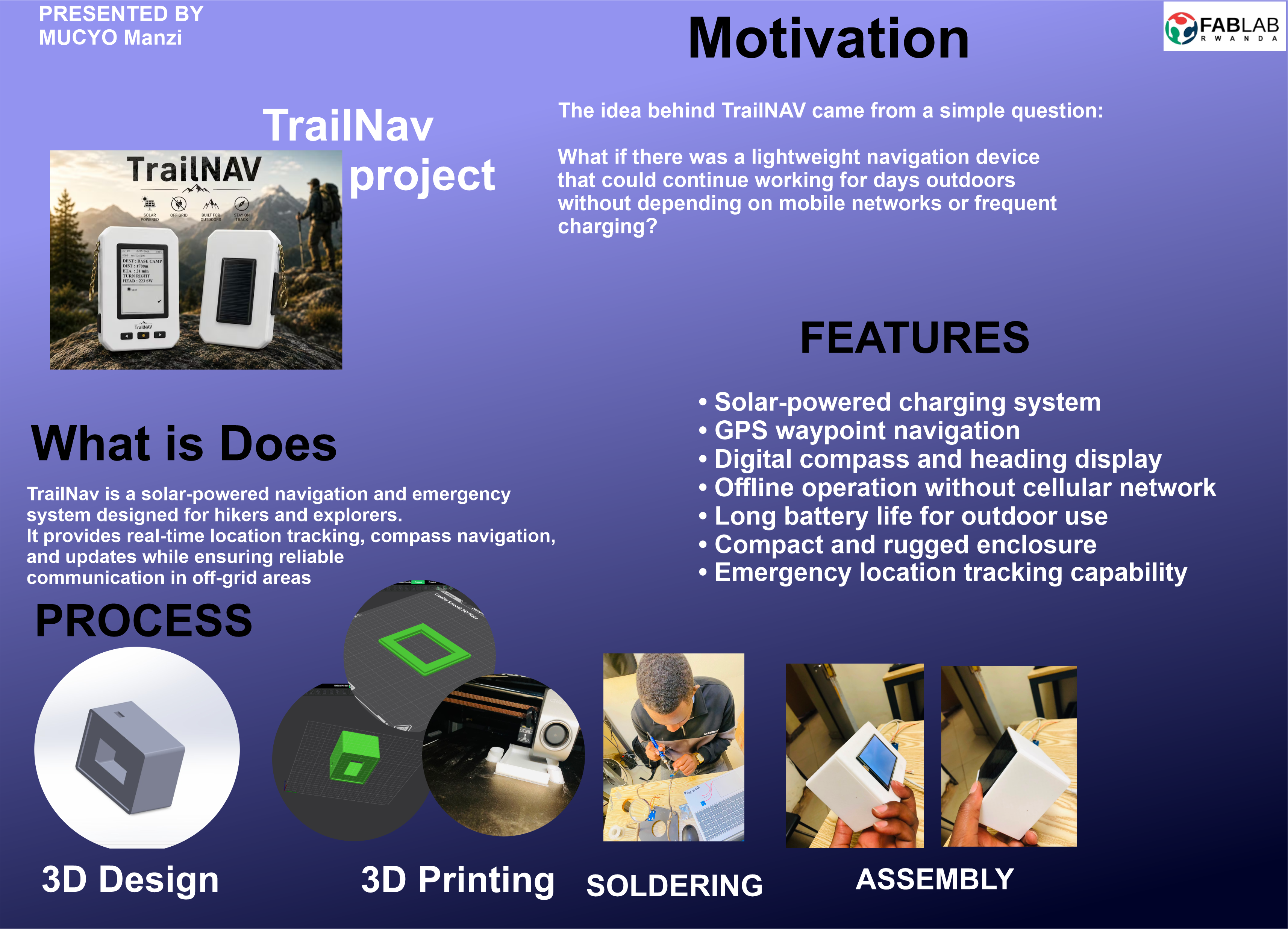
I designed an enclosure with openings for the screen and solar panel, sliced the parts and printed them. These photographs and CAD screenshots record that work. I still need to recover the original editable enclosure CAD and identify all as-built dimensions.
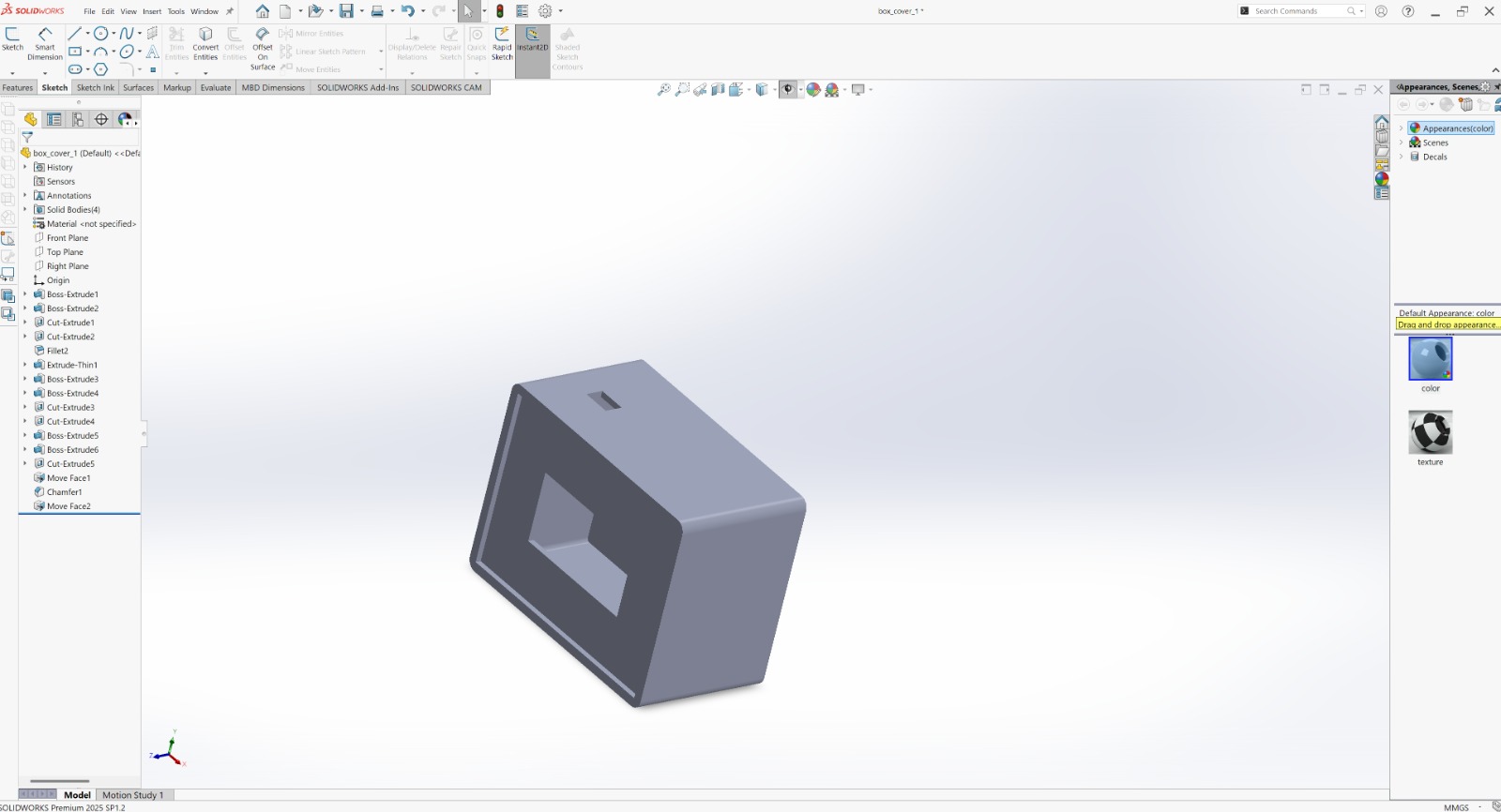
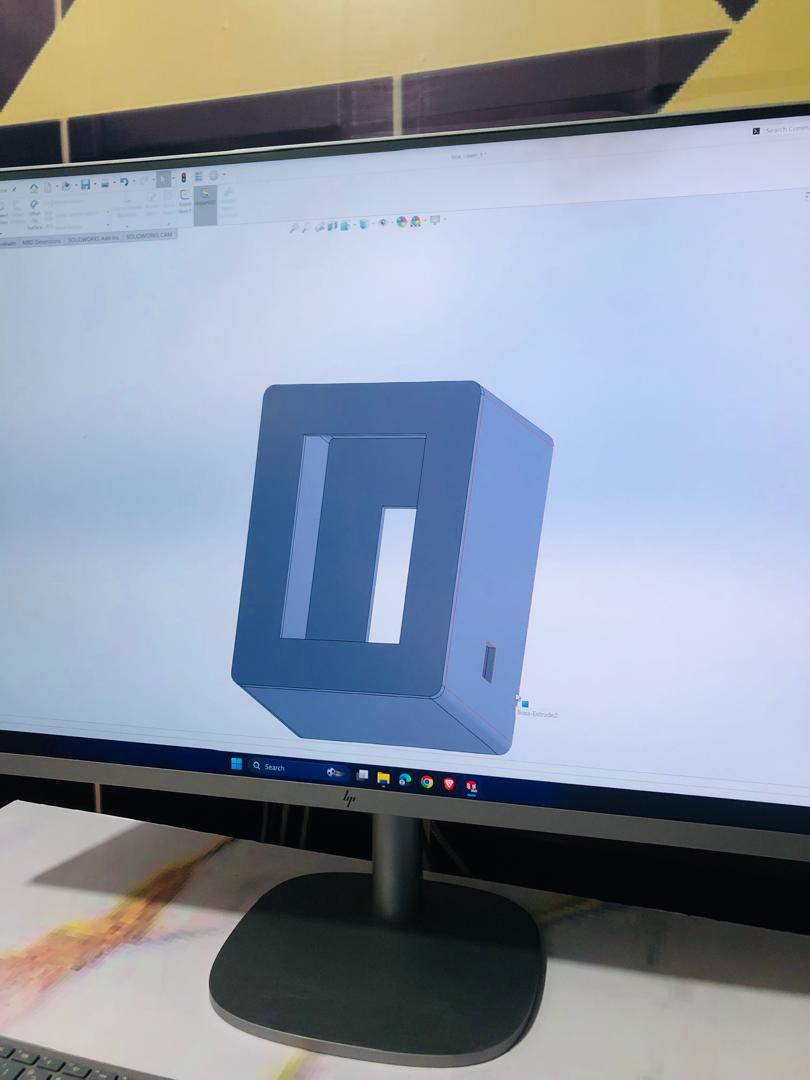
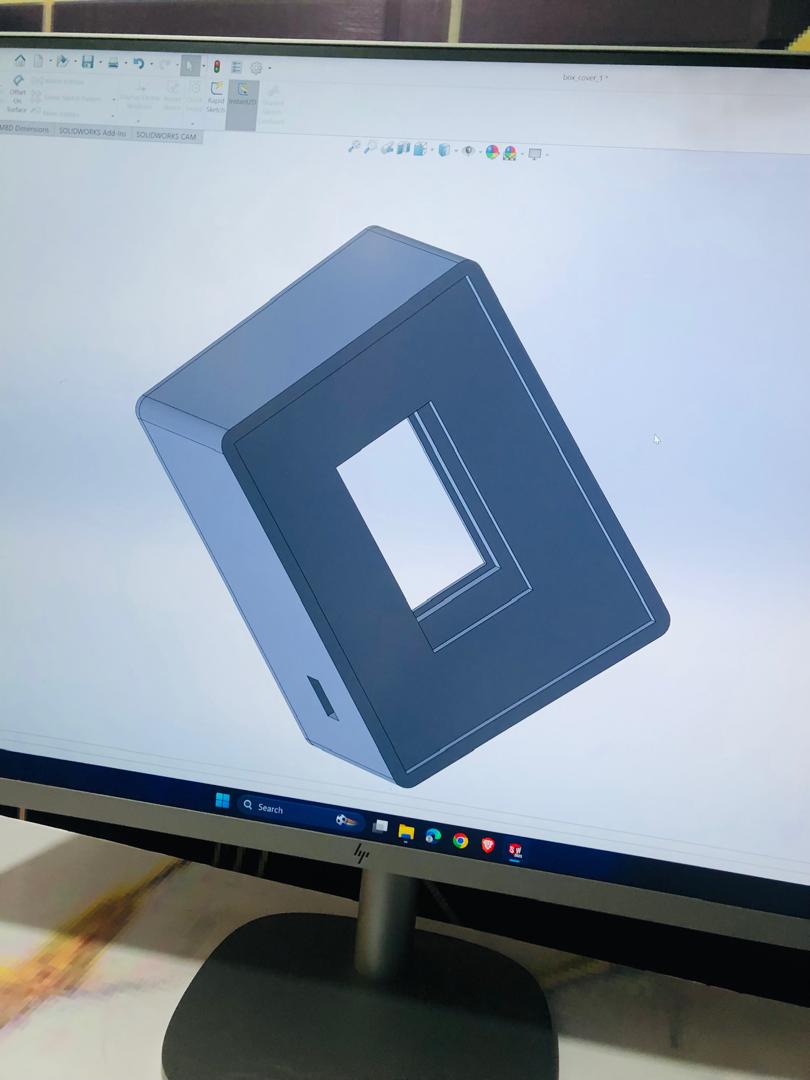
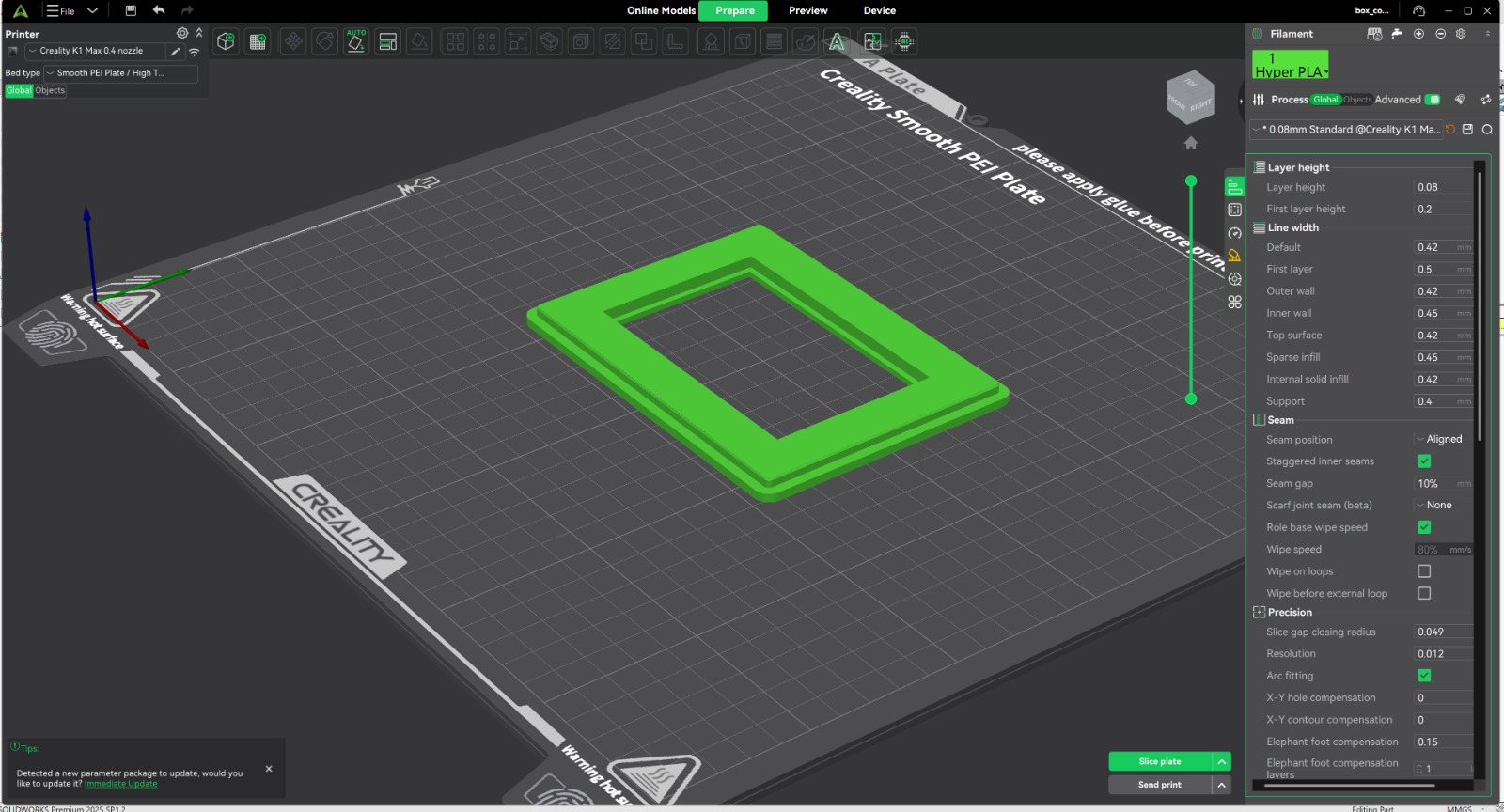
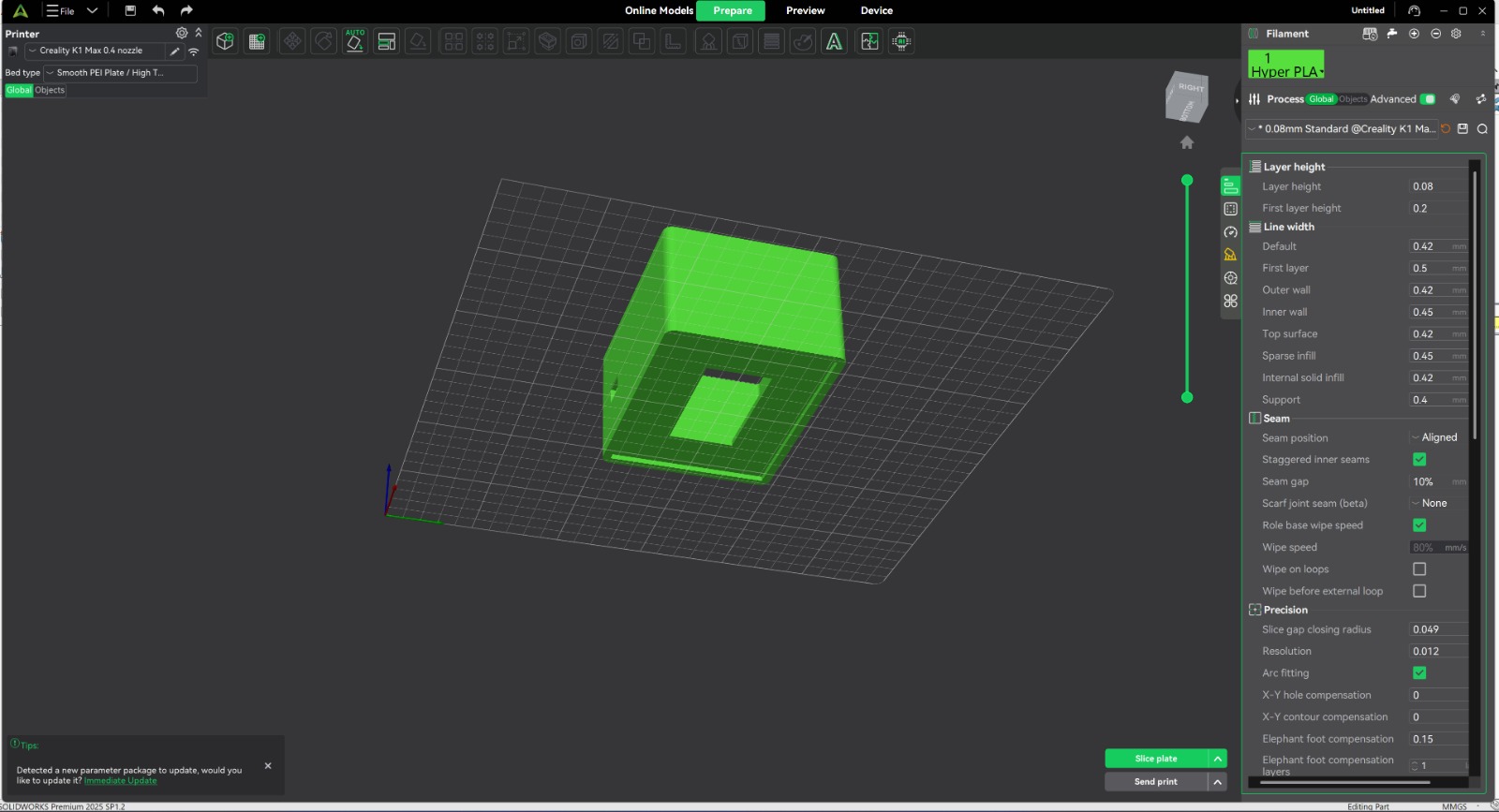
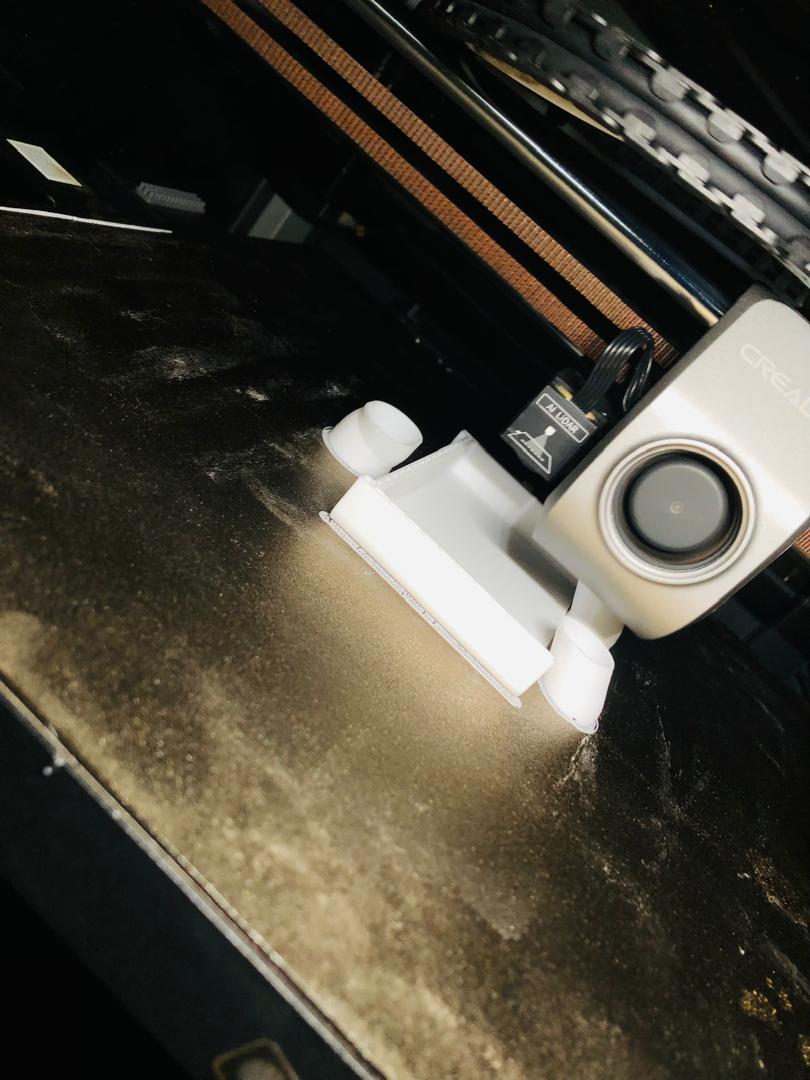
My CAD exercises document the tools I practised. The project packaging work is in System Integration.
Proposed system and actual parts to verify
The intended signal path is GPS and compass inputs → my embedded controller → waypoint storage and display output. A solar panel would supply a suitable charging circuit and battery, with regulation matched to the electronics. My midterm diagram is a proposed architecture, not a verified pin-level wiring diagram.
The earlier BOM names a XIAO ESP32-C6 and E-Ink display, while the presentation and screen-test code show different hardware. I must identify the exact fitted controller, GPS and screen before publishing the as-built connections or choosing compatible firmware.
This is my provisional planning BOM, copied from the recorded prices rather than new supplier quotes. It is not yet the verified as-built parts list. The differences between unit and line prices need an explanation; I have not assumed they are taxes.
| Planned item | Qty | Recorded unit price (RWF) | Recorded line price (RWF) | Verification needed |
|---|---|---|---|---|
| Planned XIAO ESP32-C6 | 1 | 20,000 | 23,600 | The earlier supplier link named ESP32-C3. Actual final controller and cost need verification; the presentation shows an ESP32 development module. |
| Planned u-blox NEO-M8N GPS | 1 | 19,682 | 19,682 | The earlier supplier link named NEO-6M. Module label and receipt still needed. |
| Planned QMC5883 compass | 1 | 4,500 | 5,310 | Earlier reference: Faranux GY-271/QMC5883L module; purchase and fitted part not verified. |
| Planned 2.7-inch E-Ink display | 1 | 27,080 | 27,080 | The earlier link named a 3.5-inch TFT, and my screen-test source targets a TFT. I must identify the screen actually fitted. |
| Planned 3.7 V battery | 1 | 9,000 | 10,620 | The earlier reference was a 500 mAh LiPo. Actual capacity and receipt need confirmation. This does not include an MPPT controller. |
| Planned 12 V solar panel | 1 | 8,900 | 10,502 | The earlier 12 V/100 mA description and 1.5 W link differ. I need the panel label and measured output. |
| Charger/regulator, PCB, connectors and enclosure material | To confirm | Not recorded | Not recorded | These items still need their own BOM entries and costs. |
The six recorded line prices sum to 96,794 RWF. That subtotal excludes the unpriced items and is not a final project cost. I need receipts and exact component identities before treating it as a verified budget.
Electronics and source files
I designed and fabricated an RP2040 development board during Electronics Design and Electronics Production. Its archived files are linked there. I have not established that this is the final TrailNAV navigation board.
I still need the final project schematic, PCB layout, fabrication/testing record and a pin map for GPS, compass, screen, controls and power. A commercial development board in a prototype does not by itself demonstrate my own final PCB design.
The archived TFT screen-test sketch draws patterns and a TrailNAV splash screen. Its GPS/heading text is static display content; that program does not read a GPS or compass. It is not the navigation firmware.
I need to archive the actual navigation code, board/core settings, dependencies and uploaded version. I also need to document a qualifying subtractive project part; PCB milling alone is electronics production under the final-project criteria.
Packaging and integration
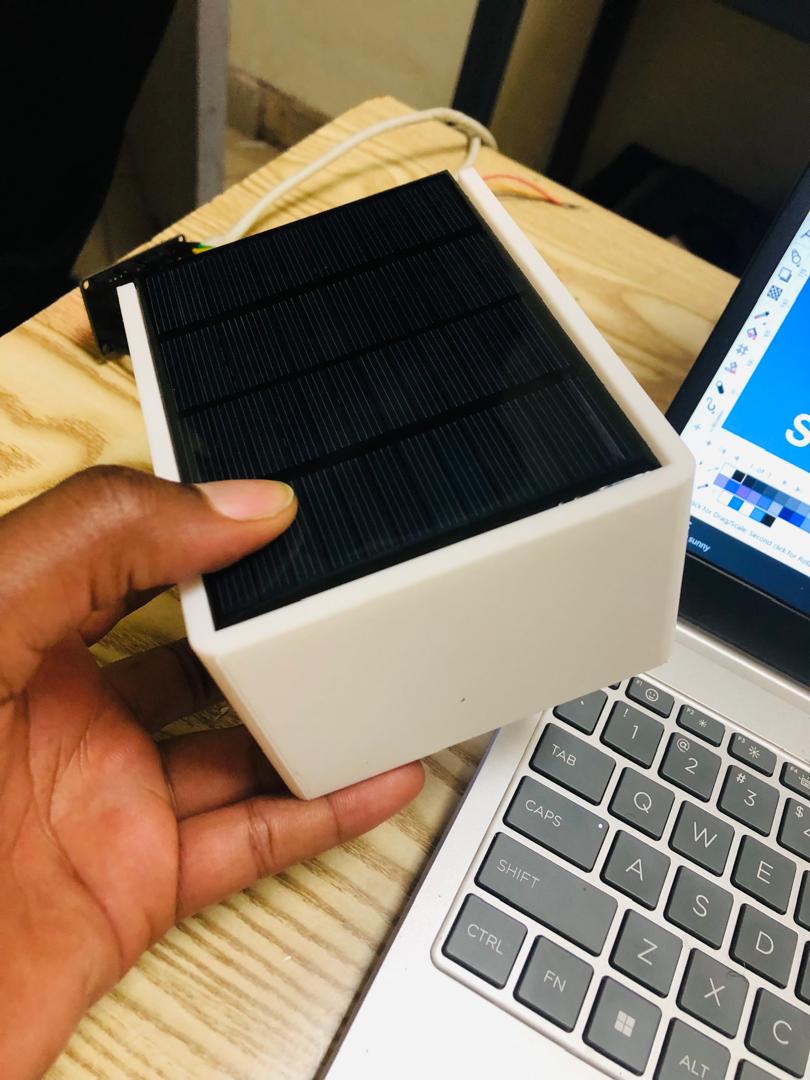
I checked the screen and solar-panel fit and soldered wires for integration, as shown in Week 15. I still need dedicated internal mounts, final PCB and battery placement, connector and wire routing, a verified power diagram and a closed-enclosure functional test.
Testing: evidence still to collect
My previous draft described GPS reception, successful bus communication and solar charging without providing the corresponding logs or working navigation program. I am keeping those claims unverified until I add the measurements and demonstration. These are planned checks, not reported results.
| Function | Planned check | Current result |
|---|---|---|
| GPS location | Record a satellite fix outdoors with time, coordinates, fix quality and comparison against a known reference. | No result or error measurement archived. |
| Waypoints | Save a waypoint, restart the device, retrieve it and show the distance/heading changing while moving. | Navigation firmware and demonstration still needed. |
| Compass | Record calibration and compare headings at known directions. | No calibration log archived. |
| Offline operation | Demonstrate the complete workflow without a network connection. | No complete navigation demonstration archived. |
| Power and solar | Identify the charging circuit; log battery voltage/current and charging behavior under recorded conditions. | Charging circuit and measurements need verification. |
| Runtime | Run a timed battery test at a recorded load and display update rate. | No runtime measurement archived. |
| Packaging | Show internal mounts, secured wiring, connectors and closed enclosure operation. | Enclosure fit is photographed; internal integration remains. |
Development plan
| Order | Planned work | Evidence needed to move on |
|---|---|---|
| 1 — inventory | Confirm controller, GPS, screen, battery and charging circuit; reconcile the BOM. | Part labels, receipts and power/interface requirements. |
| 2 — electronics | Identify/design and fabricate the final PCB; recover editable sources. | Schematic, PCB, fabrication record and board test. |
| 3 — firmware | Read GPS/compass, implement waypoint storage and drive the actual display. | Uploaded source versions and observed outputs. |
| 4 — integration | Mount the electronics and battery; route and secure the wires. | CAD, internal photos and an assembled-device test. |
| 5 — validation | Run the navigation, charging and runtime tests. | Measured results against the test plan. |
| 6 — presentation | Update the slide/video with actual functionality and review the archive with my instructor. | Final source files, working demonstration and review feedback. |
This is my proposed order of work, not a record of completed sessions. I still need to agree calendar dates and lab access with my instructor; I have not backdated a schedule to the original course weeks.
The proposal, costs and remaining questions are also documented in Week 17. My dissemination and licence decisions are in Week 18.
Presentation draft
The slide and construction video are formatted at 1920 × 1080. The original portrait video has been fitted inside a landscape frame without cropping away the construction footage. This is a format correction; I still need footage of the complete device performing the navigation task.
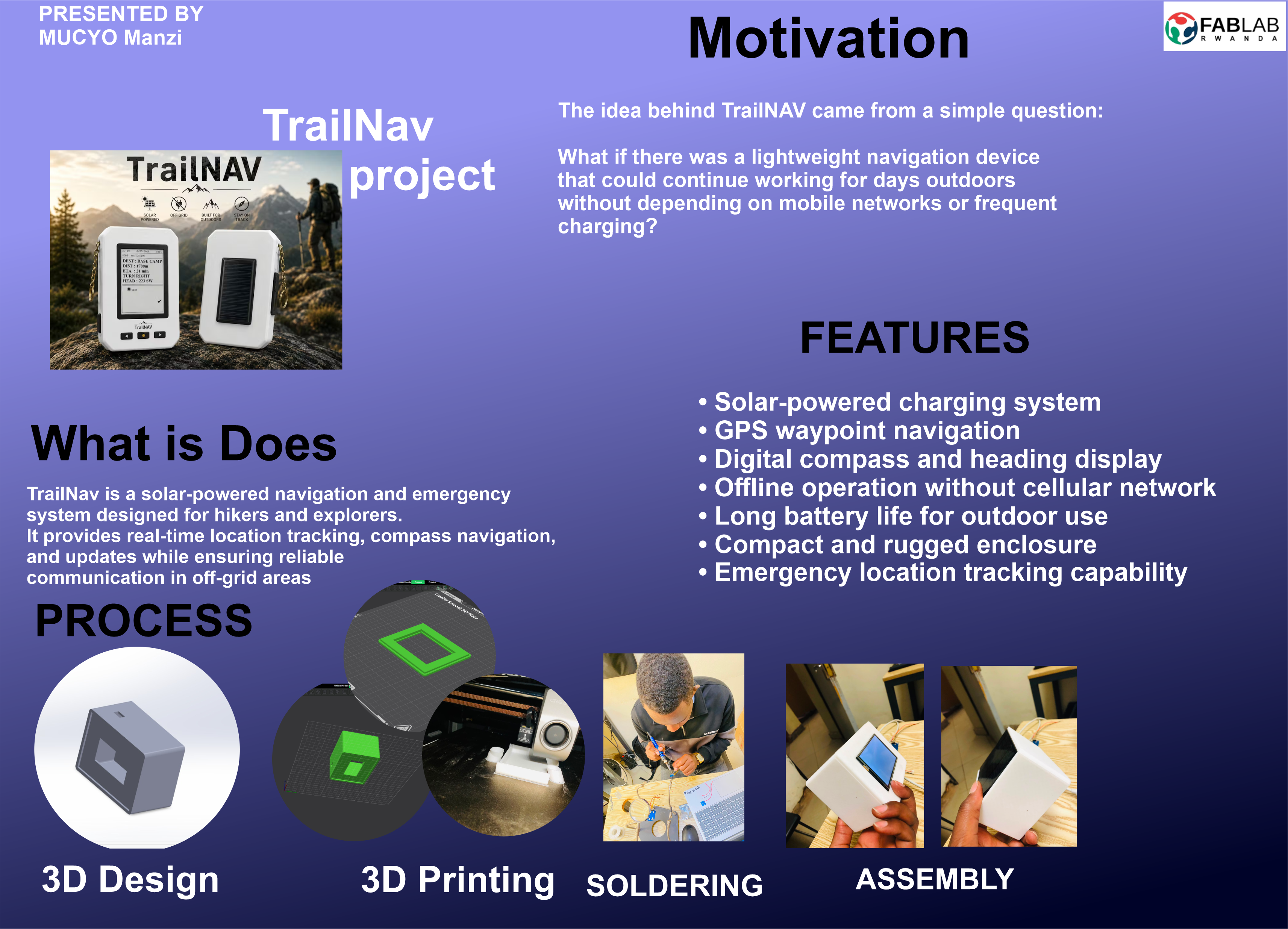
Editable slide source · Original portrait construction video · Original presentation image
Sources, assistance and licence
I acknowledge the lab and my teammates for the shared machine work; my individual contribution still needs the file-level record described in Week 12. I acknowledged Albert UWURUKUNDO for the plasma process in Week 16.
Claude assisted the starting website, and Codex assisted this documentation revision. The prompts and scope are recorded in my AI-assistance note. I still need the exact prior-work/code references and an explicit, compatible licence choice. No new licence is asserted by this revision.