Defining the intellectual property strategy, licensing model,
commercialization opportunities, and future economic impact of
the FAB Encloser V1 project.
The InventionPrintVault Pro
The invention developed during Fab Academy is called
PrintVault Pro.
PrintVault Pro is an intelligent environmental control system
designed to monitor and regulate temperature and humidity inside
a controlled enclosure. The system combines custom electronics,
embedded programming, mechanical design, user interfaces, and
remote monitoring capabilities into a single integrated product.
The project was developed as a solution for filament storage and
conditioning in additive manufacturing environments. Through the
use of sensors, heating elements, ventilation systems, a camera,
and a custom monitoring interface, the system helps maintain
optimal conditions for materials used in 3D printing.
What makes PrintVault Pro unique is the integration of multiple
fabrication disciplines into a single platform. Instead of relying
on commercial off-the-shelf products, the system was designed,
fabricated, programmed, and assembled from the ground up using
digital fabrication techniques learned throughout Fab Academy.
Intellectual PropertyOpen Knowledge
Intellectual Property (IP) refers to the legal framework that
protects creations of the mind, including inventions, designs,
software, documentation, and creative works.
During the development of PrintVault Pro, several original
elements were created:
Mechanical enclosure design.
Custom electronic PCB.
Embedded firmware.
Monitoring and control interface.
System integration architecture.
Project documentation.
Rather than restricting access to these developments, the project
follows an open knowledge philosophy that encourages learning,
collaboration, and adaptation while maintaining recognition of
authorship.
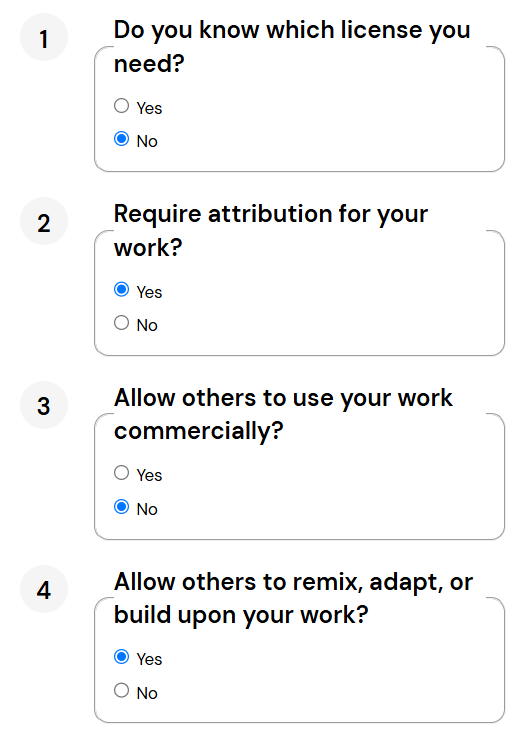
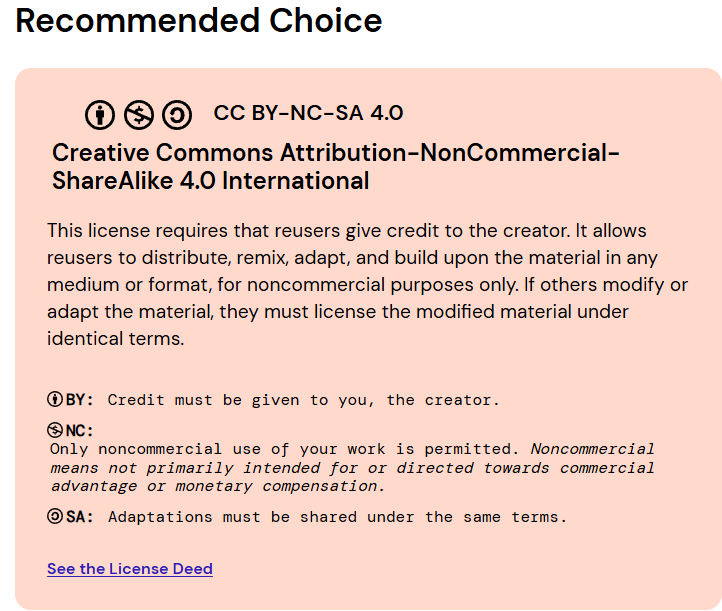
The material cannot be used for commercial purposes.
Any derivative work must be distributed under the same license.
This licensing model aligns with the collaborative principles of
the Fab Lab network while ensuring that the original creator
receives proper credit for the work.
Why This License?Decision Process
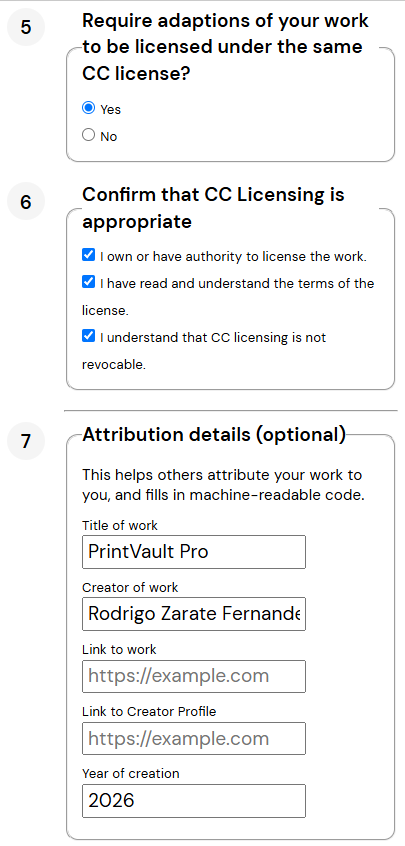
The CC BY-NC-SA 4.0 license was selected because it offers a
balance between openness and protection.
One of the primary goals of Fab Academy is to share knowledge and
enable others to learn from existing projects. By adopting this
license, future students, makers, researchers, and educators can
study, replicate, and improve the project.
At the same time, the NonCommercial clause prevents third parties
from directly selling the work without permission, while the
ShareAlike clause ensures that future improvements remain open
under the same licensing conditions.
Potential Income SourcesBusiness Opportunities
Although the project is licensed under a non-commercial Creative
Commons license, several future business opportunities could be
explored through separate commercial agreements or future product
versions.
Custom Manufacturing
Fabricating and assembling customized versions of PrintVault Pro
for makerspaces, universities, and 3D printing businesses.
Educational Kits
Developing learning kits that teach electronics, fabrication,
programming, and environmental monitoring concepts.
Consulting Services
Providing design, integration, and automation services based on
the technologies developed during the project.
Premium Versions
Future versions could include cloud connectivity, mobile
applications, predictive maintenance, and advanced analytics.
Workshops and Training
Offering training courses focused on digital fabrication,
embedded systems, and smart manufacturing.
Value PropositionMarket Impact
The main value of PrintVault Pro lies in its ability to combine
multiple technologies into a practical solution that improves the
reliability of additive manufacturing workflows.
By reducing material degradation caused by humidity and improving
environmental control, the system can help users reduce failed
prints, save material, and increase productivity.
In educational environments, the project serves as a complete
example of interdisciplinary engineering that integrates
mechanical, electronic, and software design.
Future DevelopmentNext Steps
Future iterations of the project could include additional
intellectual property assets such as:
Registered industrial designs.
Trademark protection.
Commercial licensing agreements.
Expanded software platforms.
Advanced monitoring systems.
Cloud-connected infrastructure.
These developments would enable the transition from an educational
prototype into a market-ready product while preserving the
project's open-source roots.
Reflection
Week 18 provided an opportunity to think beyond fabrication and
engineering, considering how innovation creates value and how
creators can responsibly share their work.
Through the CC BY-NC-SA 4.0 license, PrintVault Pro contributes
to the open-source and Fab Lab communities while maintaining
recognition of authorship and encouraging future collaboration.
Understanding intellectual property and potential business models
is essential for transforming a technical prototype into a
sustainable real-world solution.