Week 5: 3D Scanning and Printing
Additive Manufacturing
According to the group's 3D printing page.3D printing, also known as additive manufacturing, is a process of creating three-dimensional objects from a digital file by depositing material layer by layer.
How It Works
- 3D model is created in CAD software.
- The model is sliced into layers.
- The slicer generates G-CODE.
- The printer executes movements and material deposition.
3D Scanning Technology
3D scanning is the reverse process of 3D printing. Instead of creating a physical object from a digital model, it captures the geometry of a real object and converts it into a digital 3D model.Devices such as the CR-Scan Raptor use advanced optical systems to accurately capture surface geometry and fine details.
Resin 3D Printing
Anycubic Overview
Anycubic is a manufacturer of consumer and professional 3D printers, especially known for its resin (MSLA) printers such as the Photon series.Along with the hardware, Anycubic provides slicing software (like Photon Workshop) that allows users to prepare 3D models for printing by configuring supports, hollowing models, setting exposure parameters, and generating the final print file.
Here you can download AnyCubic Photon Workshop .

Import the STL File
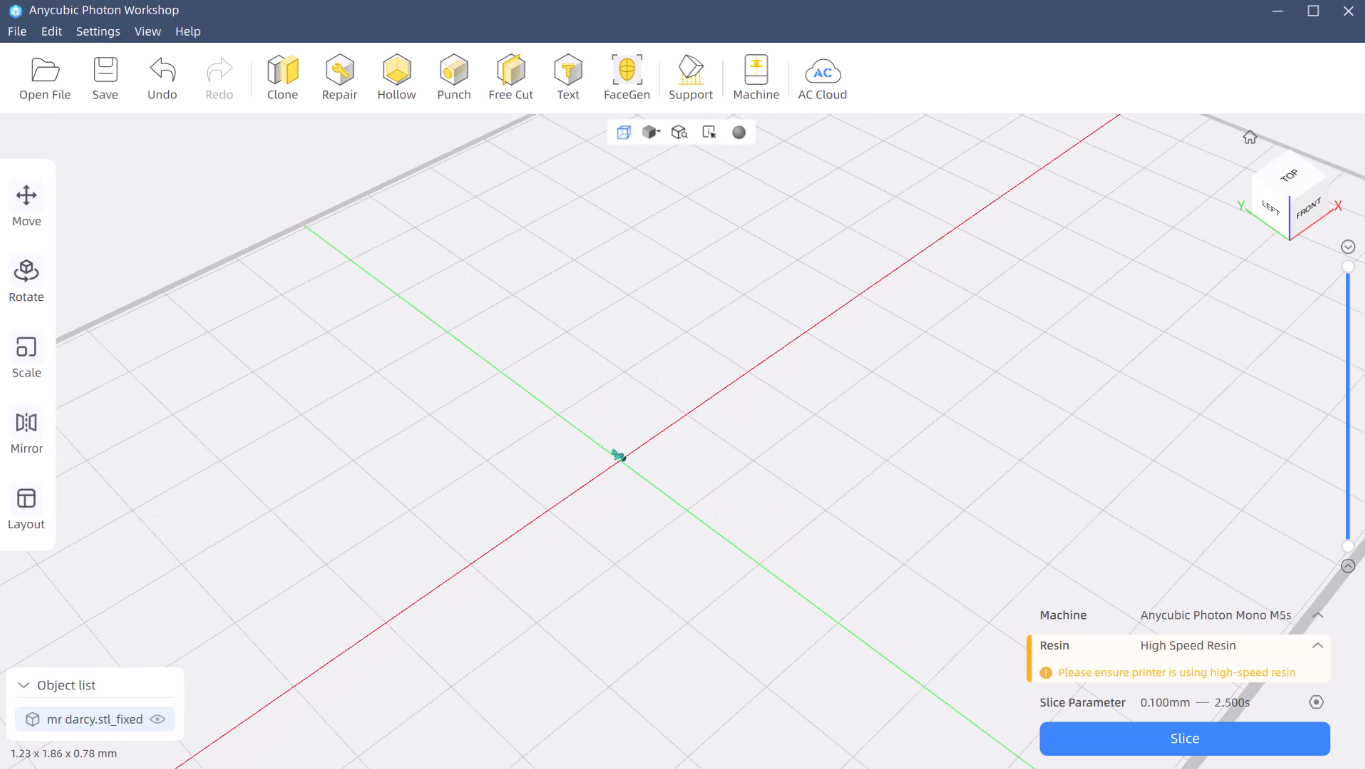
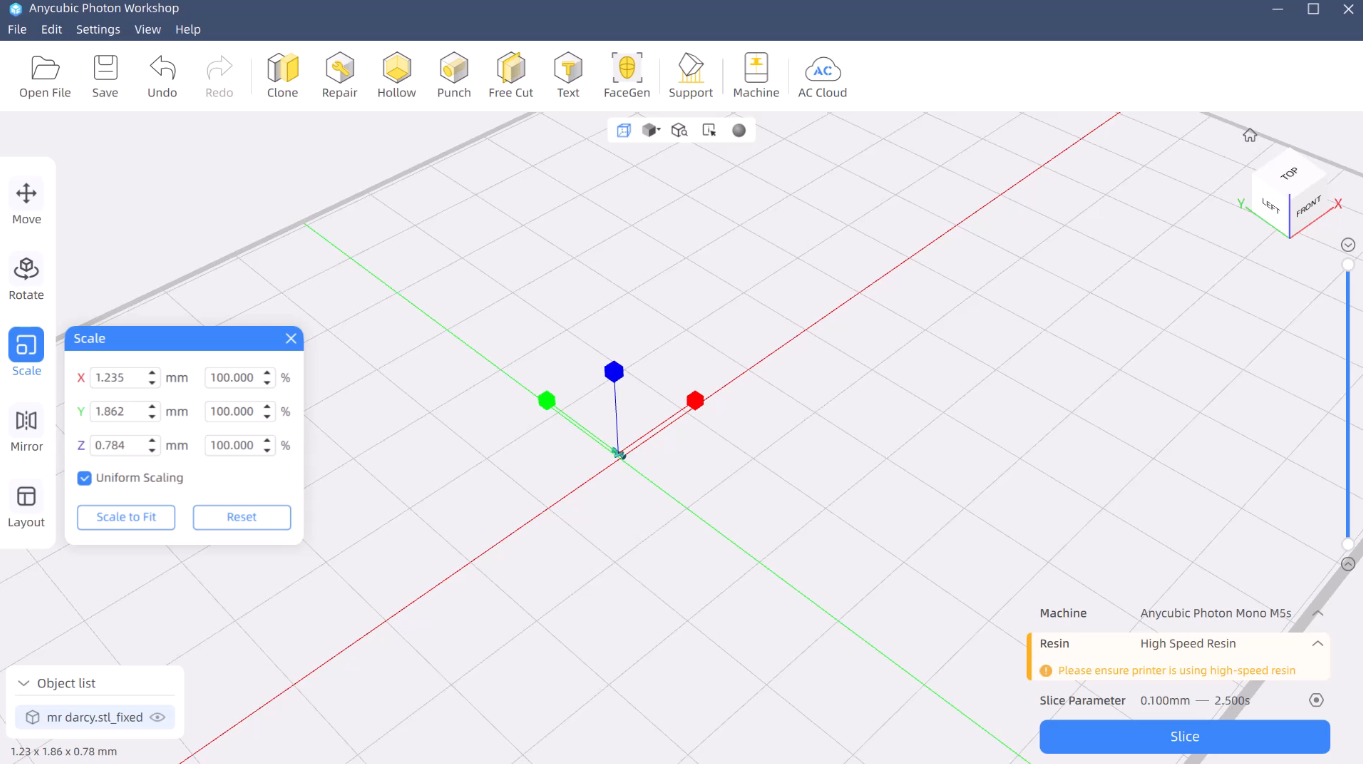
1- The first step is importing the STL file into the workspace of the slicing software.Once imported, the model appears in the 3D environment where it can be positioned, scaled, or modified before printing. And to modify the part, the tools located in the top toolbar and the right-side panel are used.
Hollow the Model
2- The first step before printing is to hollow the model using the Hollow tool. Assign an appropriate thickness to its walls. In my case, I selected a thickness of 3 mm. The Hollos function is useful for saving resin and preventing it from detaching from the bed, which in this case is upside down.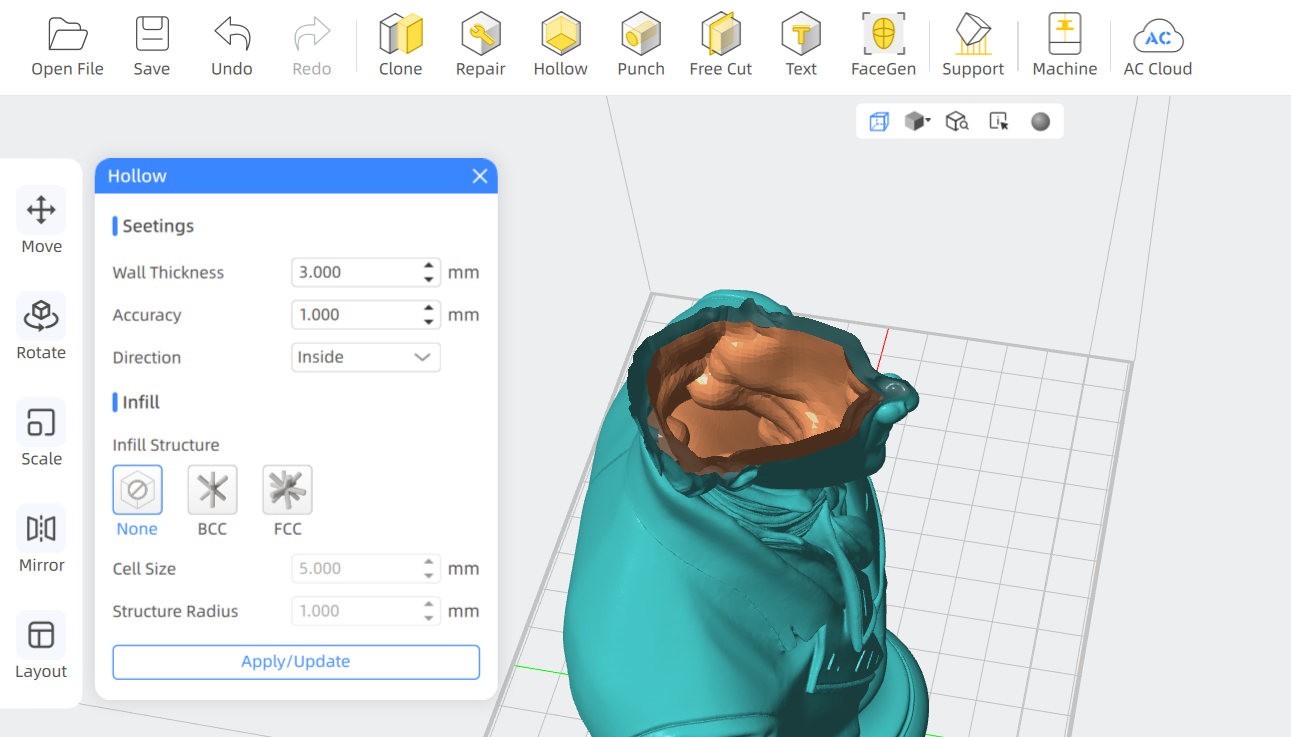
Punchw the Model
3- We will then add two holes in order to release the air inside the figure and the residual resin.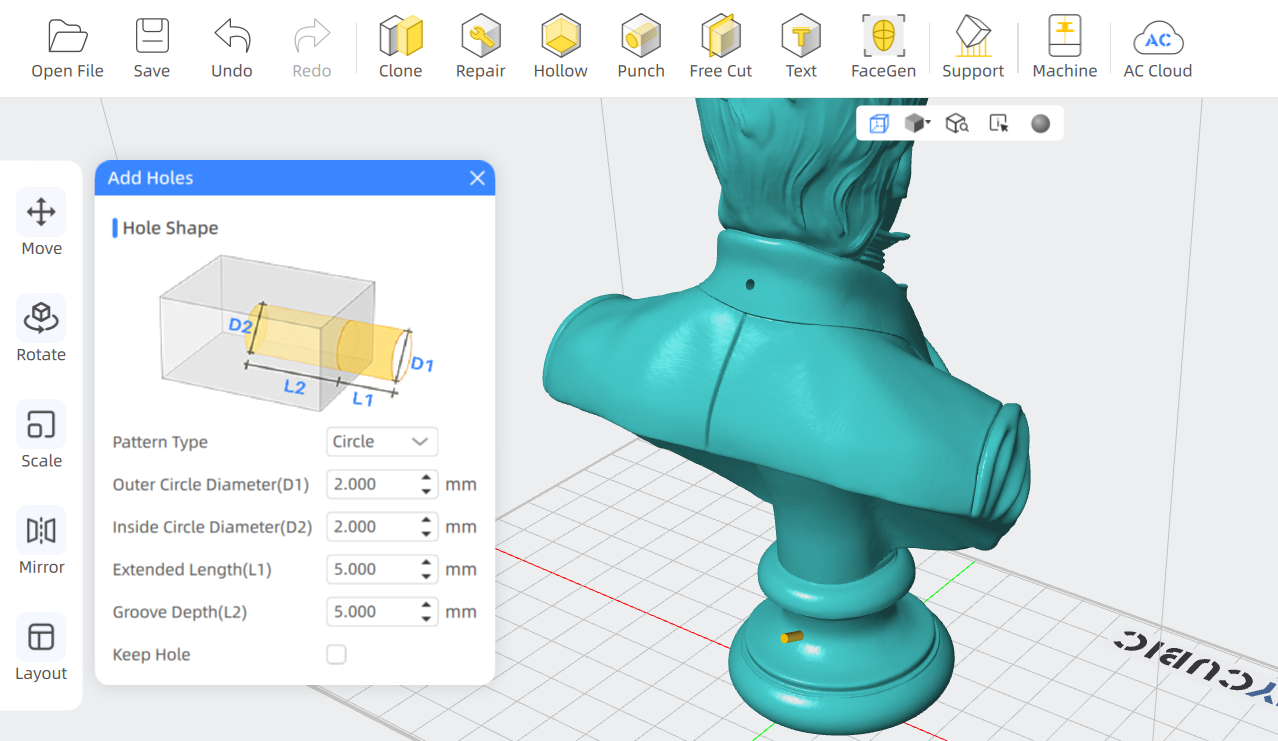
Supports Setup
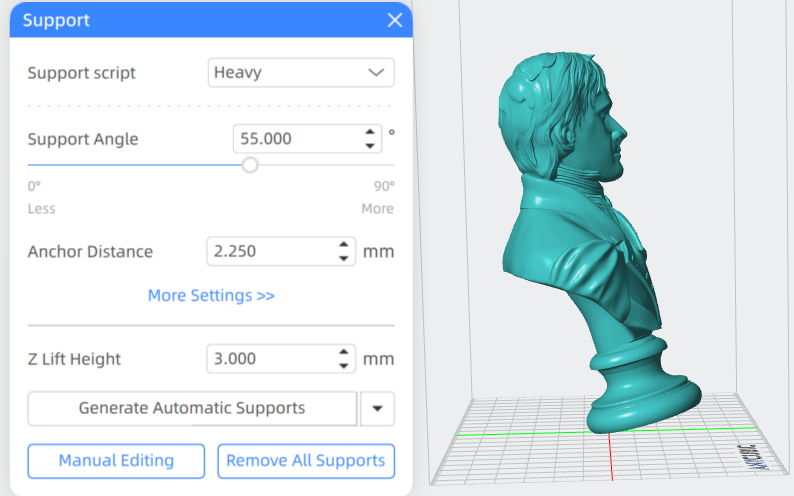
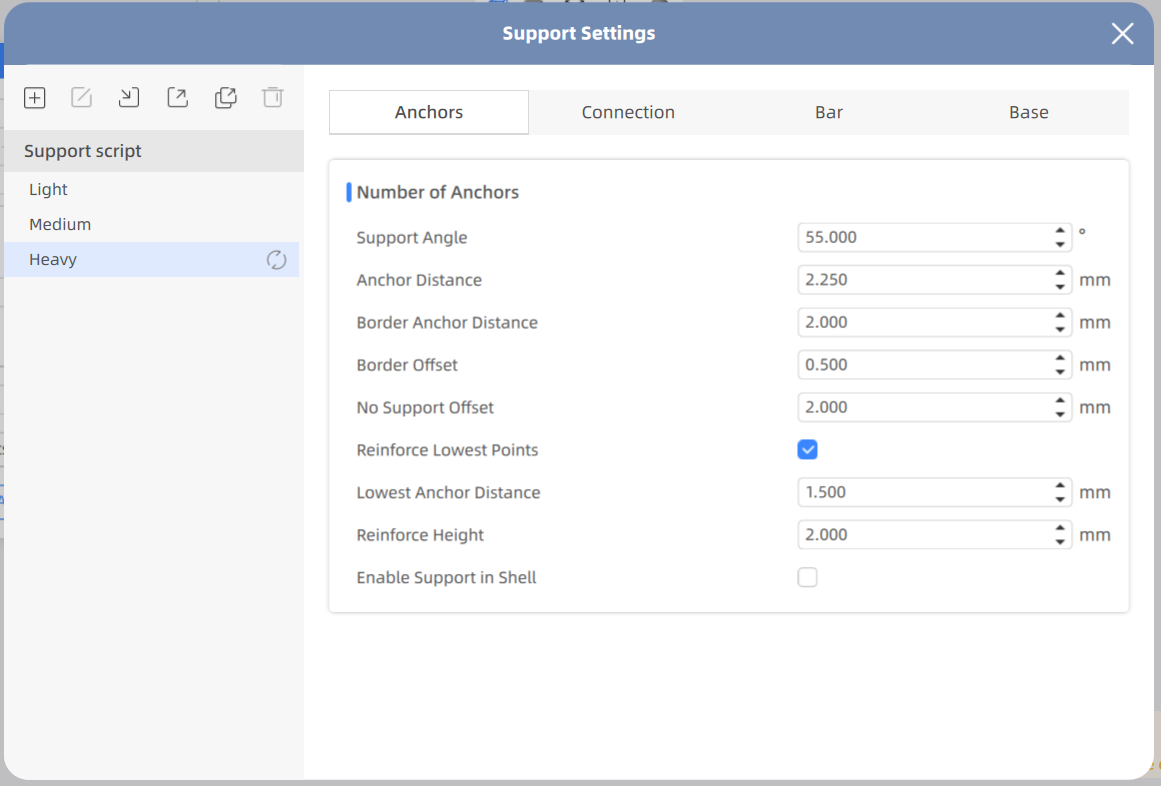
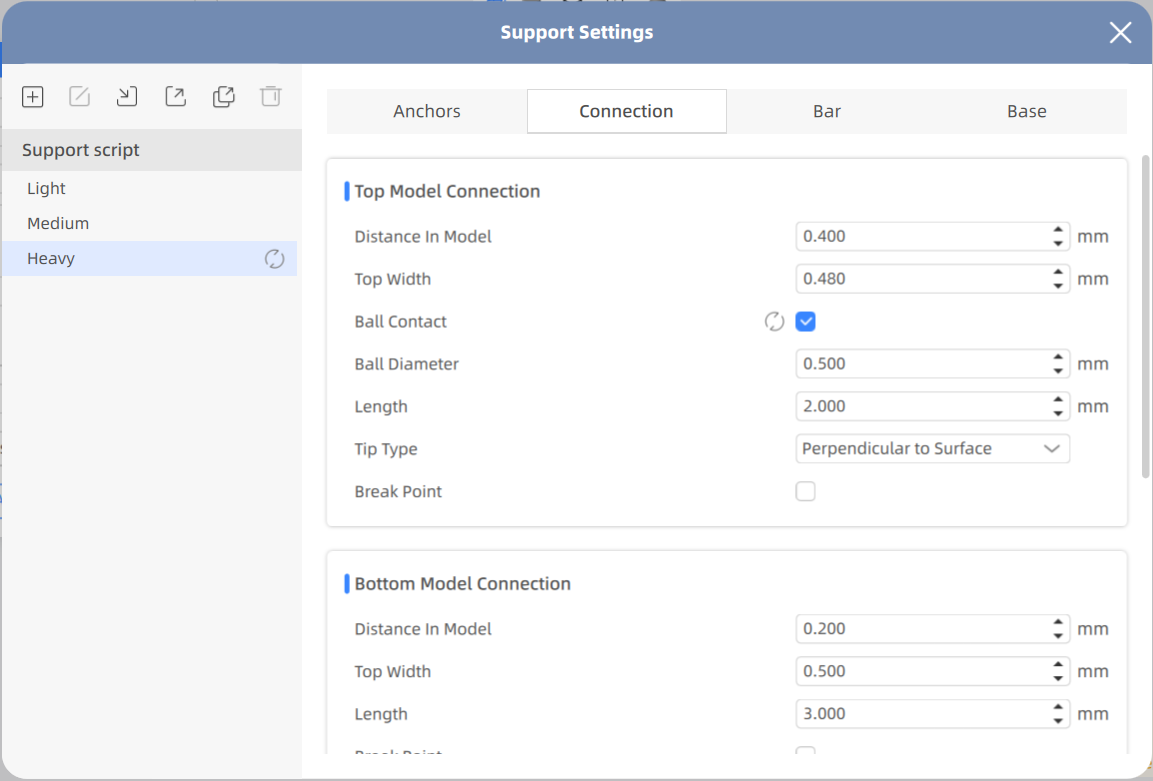
4- Next, we tilt the model approximately 15 degrees to minimize the surface area of each layer. This significantly reduces suction force during layer separation, improves print quality, allows better resin drainage, and decreases the risk of detachment from the build plate.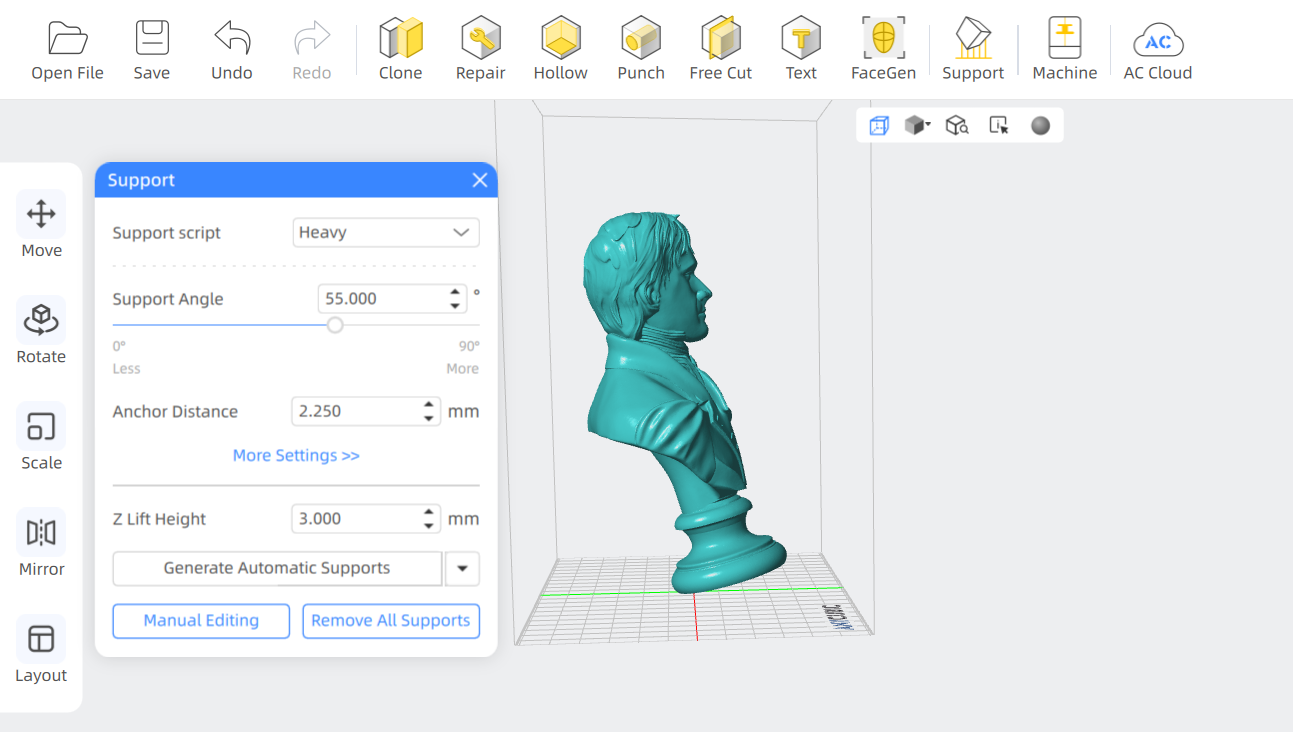
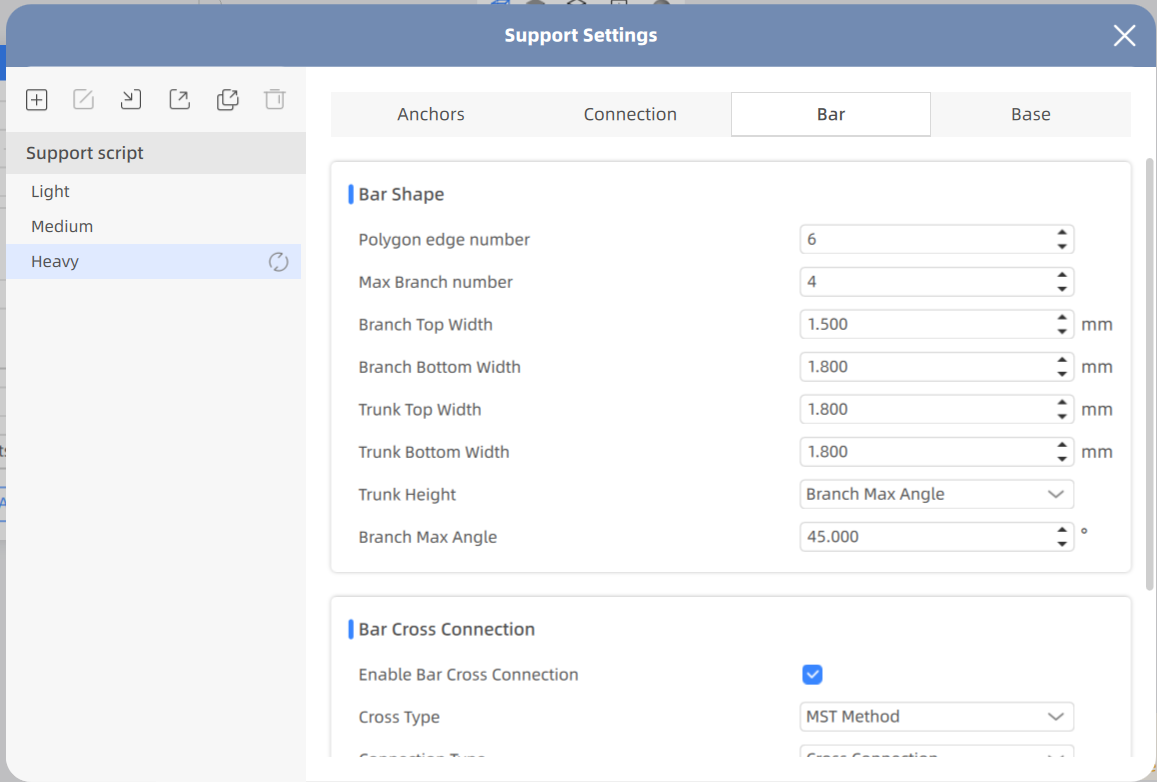
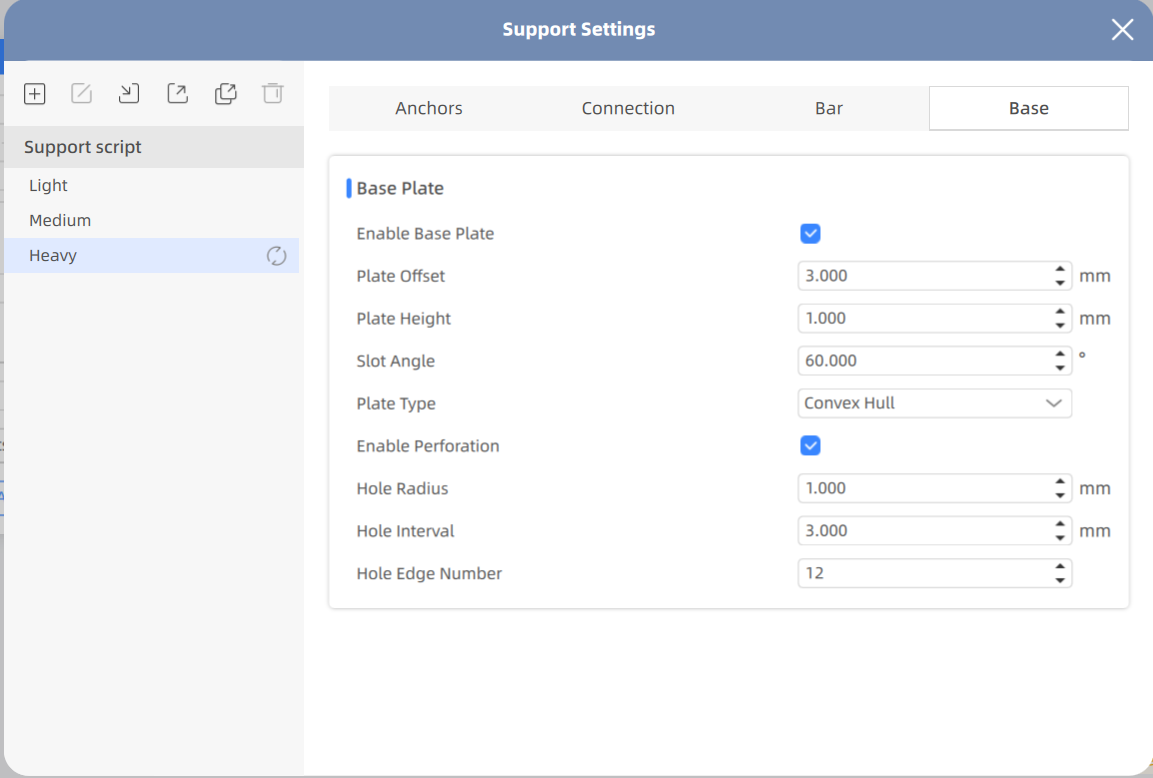
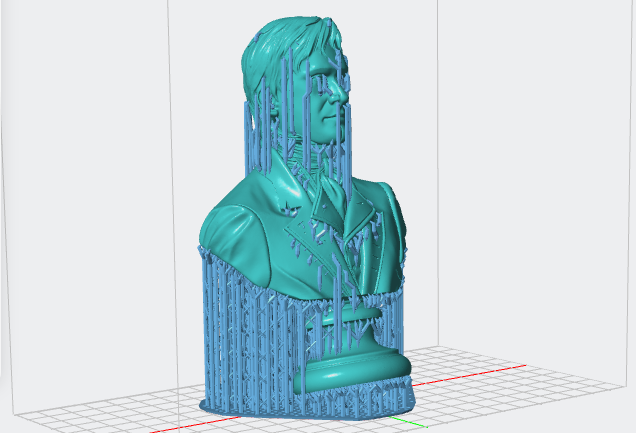
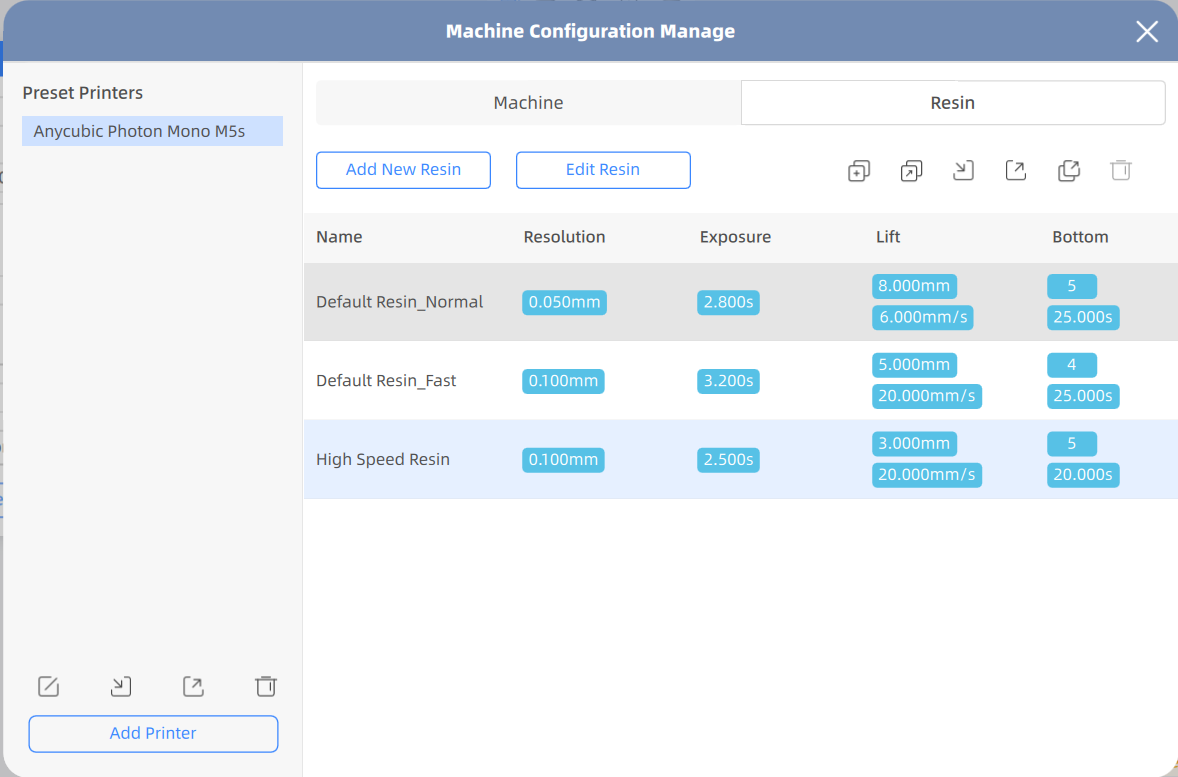
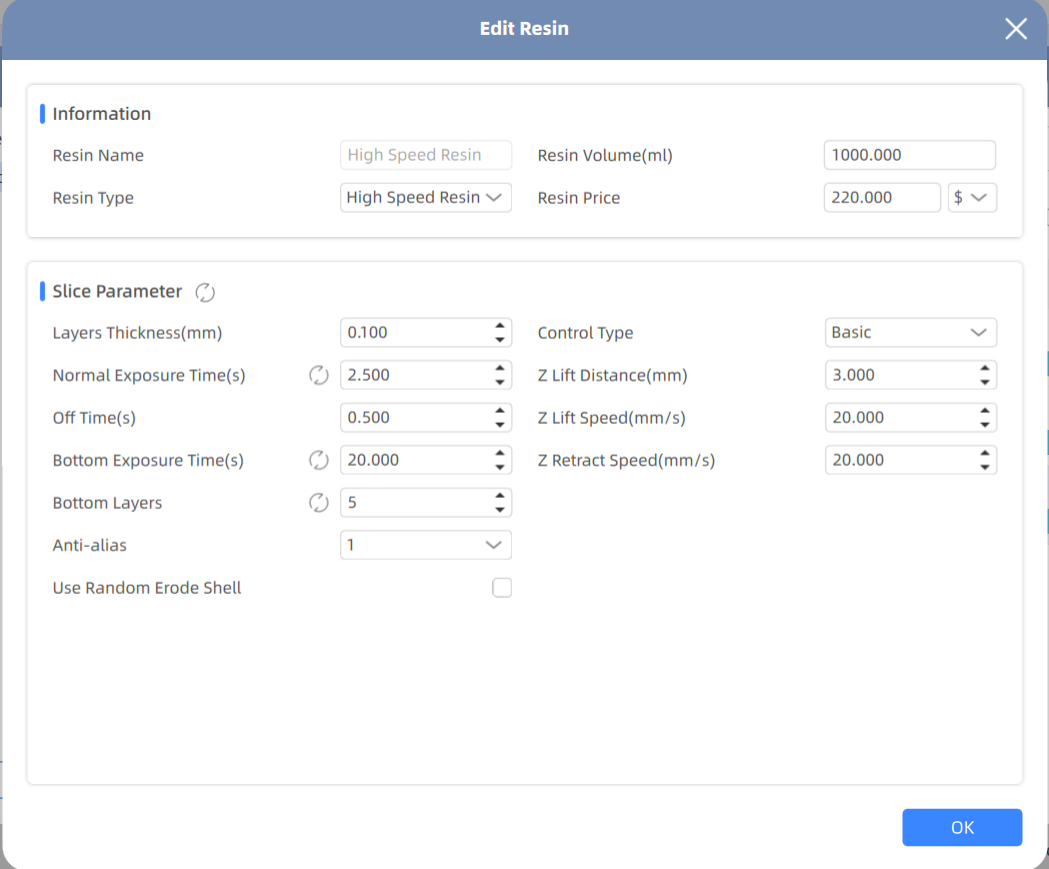
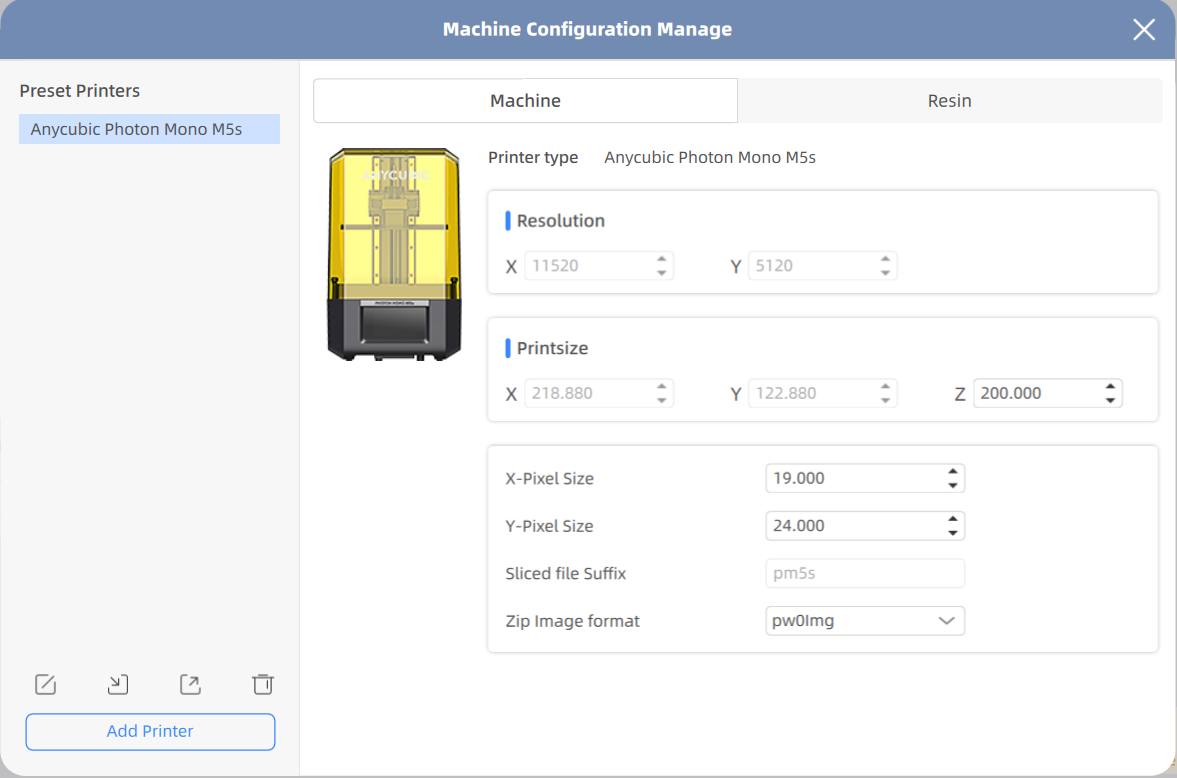
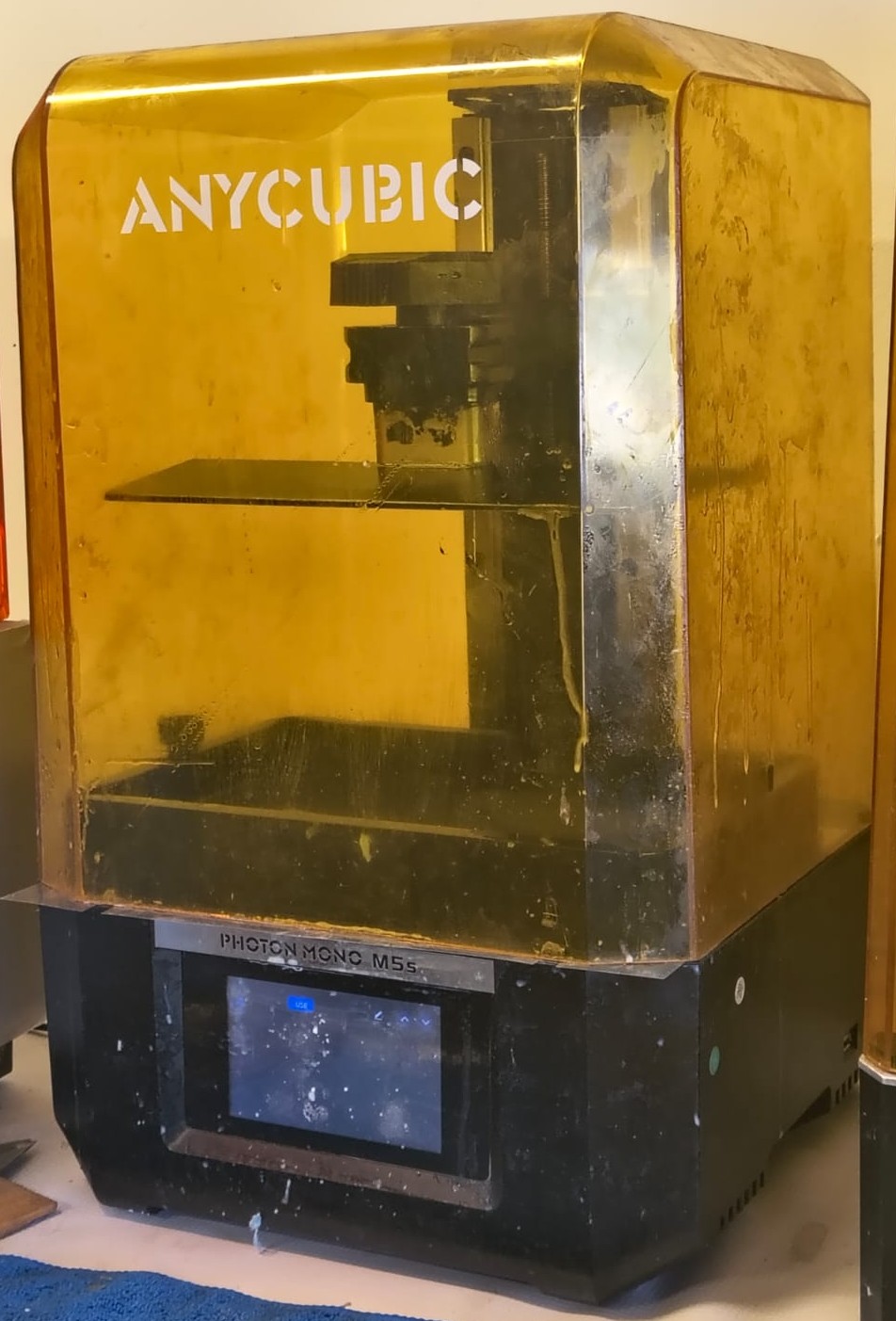
Next:
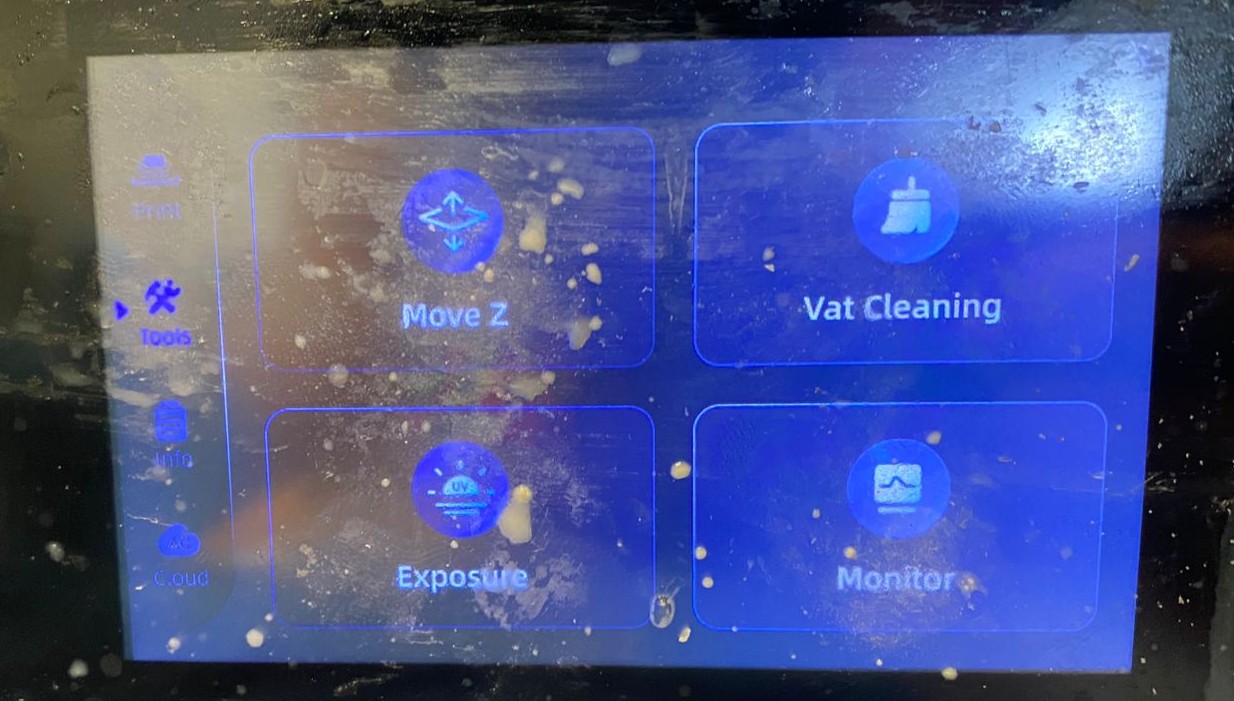
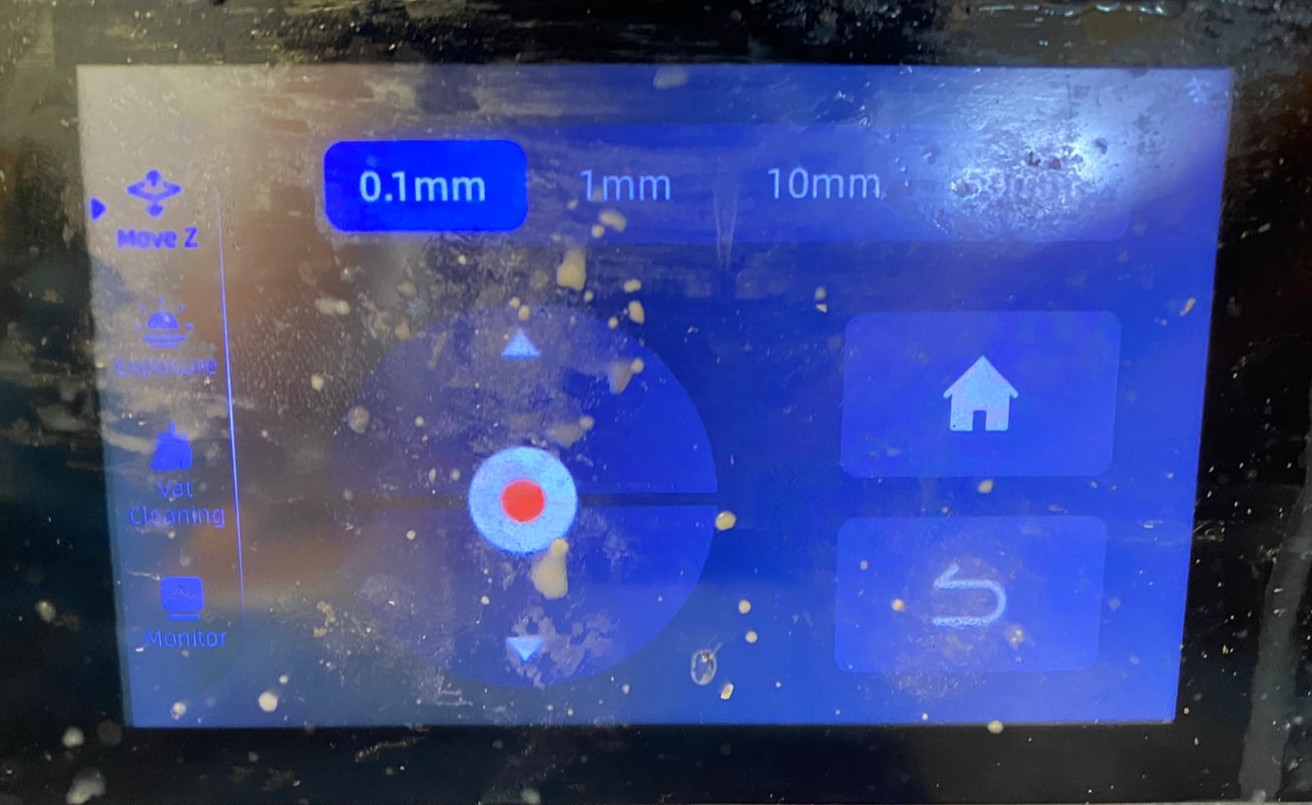
- Use the Move menu to raise the build plate to a comfortable working height.
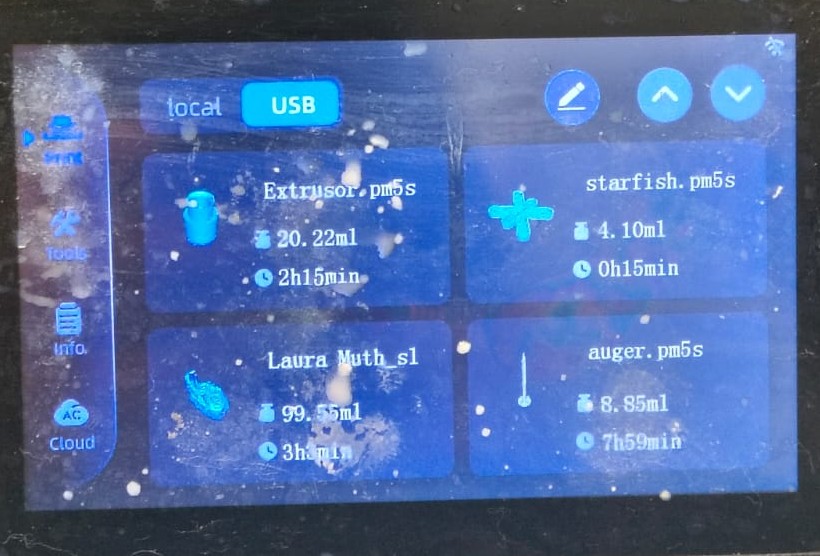
- Return to the main menu and select the file from the USB drive.
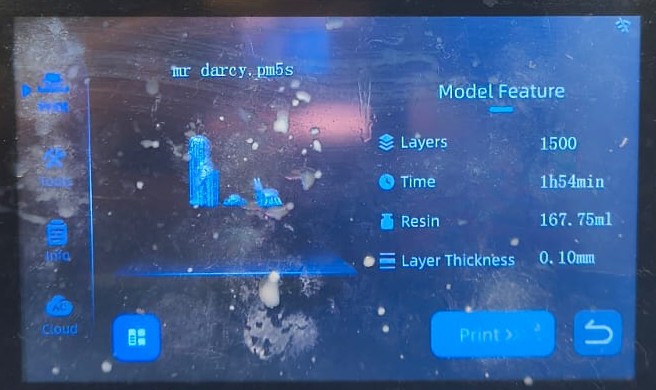
- Start the printing process. The machine will begin lowering the build plate into the resin and curing layer by layer until the object is completed.
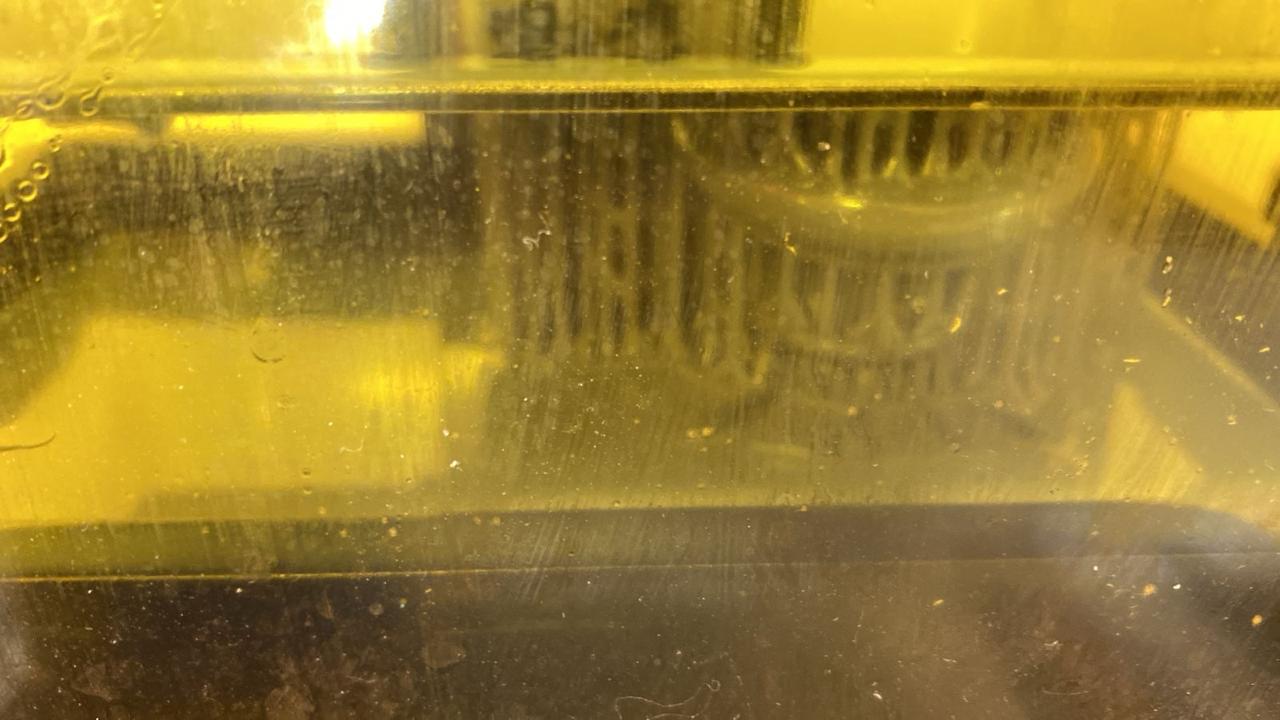
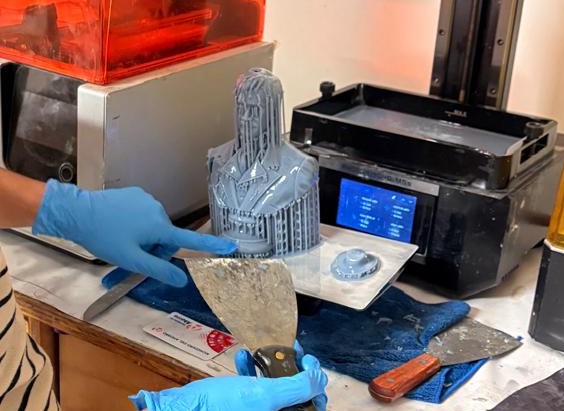
- Carefully remove the build plate.
- Detach the printed part using a scraper.
- all supports carefully to avoid damaging the surface of the model.
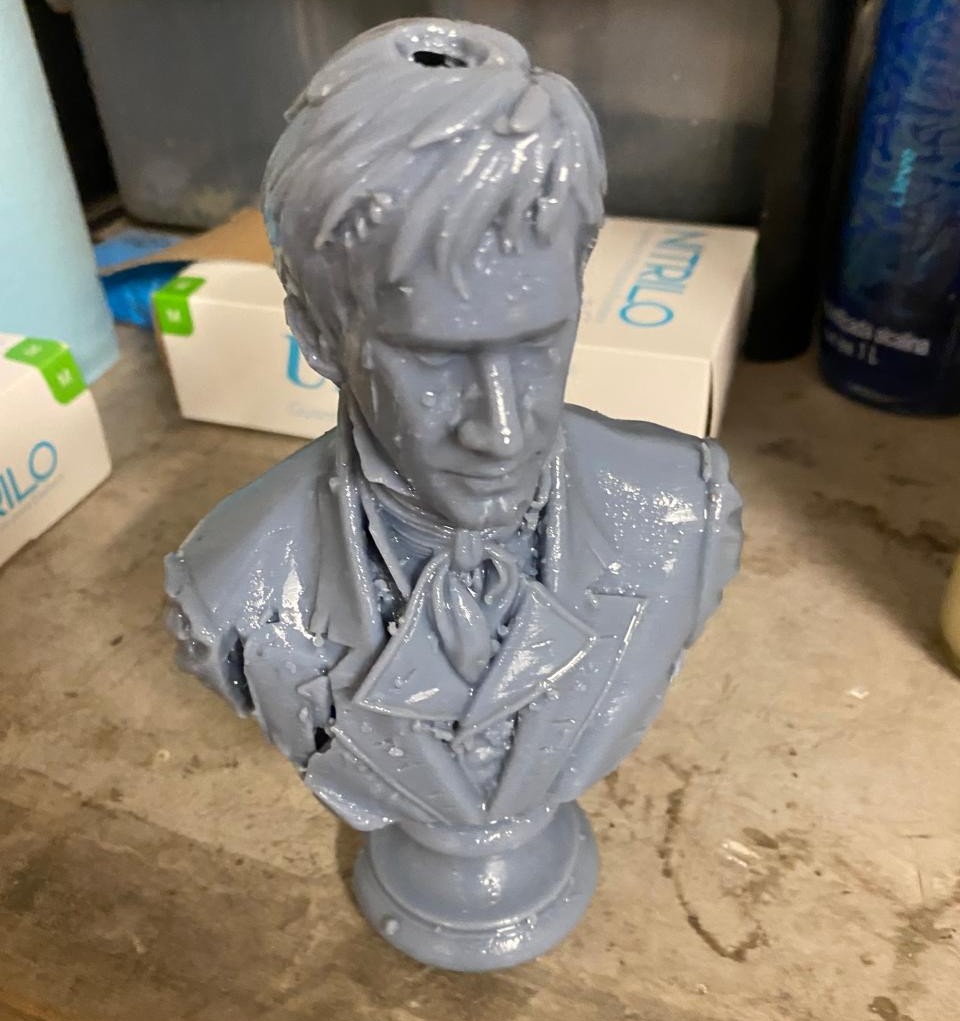
- Clean the piece using a paper towel and isopropyl alcohol (IPA) to remove uncured resin.
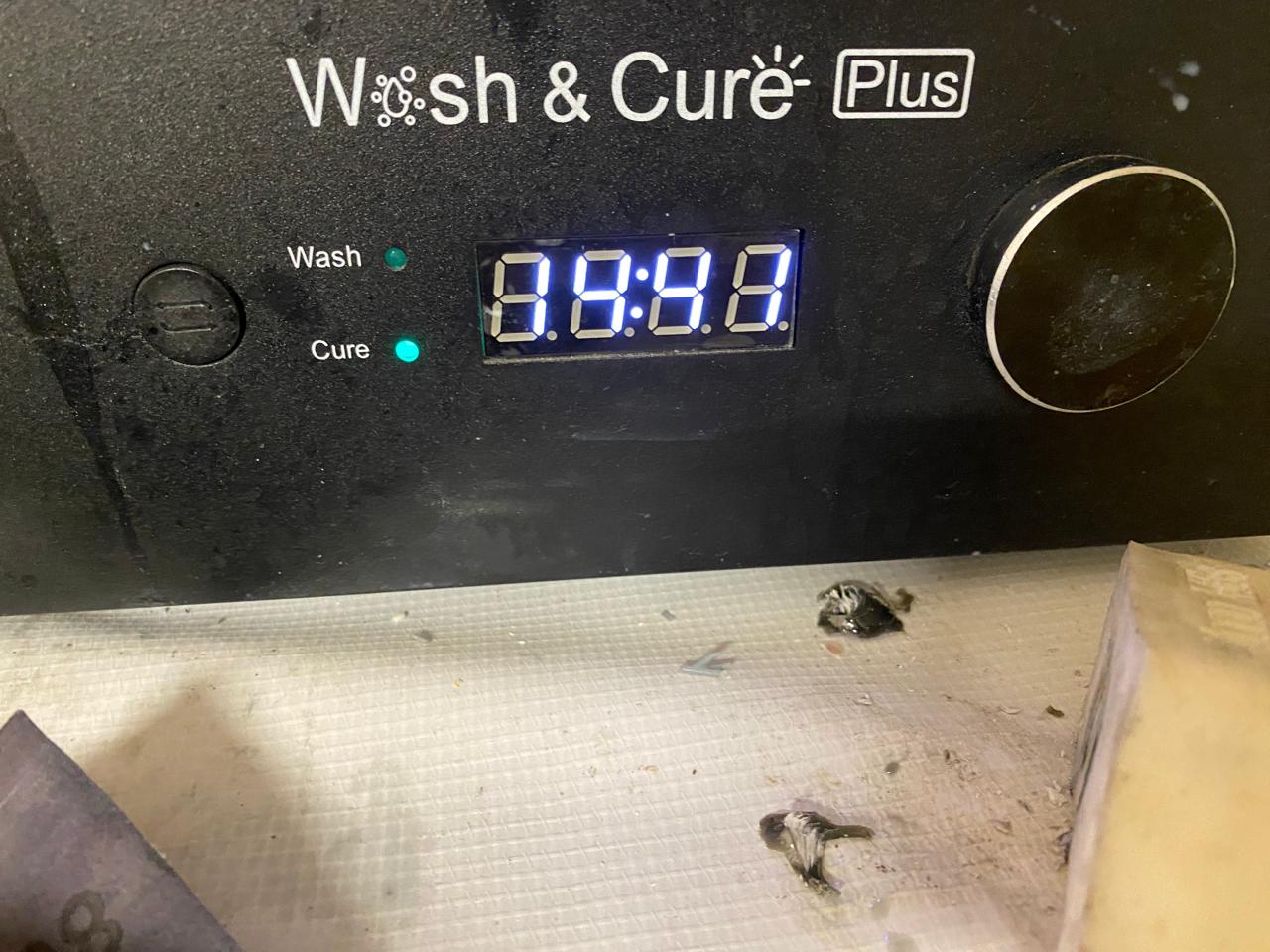
- Then place the model into the Anycubic Wash & Cure 3 machine.
- Use the curing function to fully harden the resin under controlled UV light exposure.
Filament 3D Printing
3D scanning
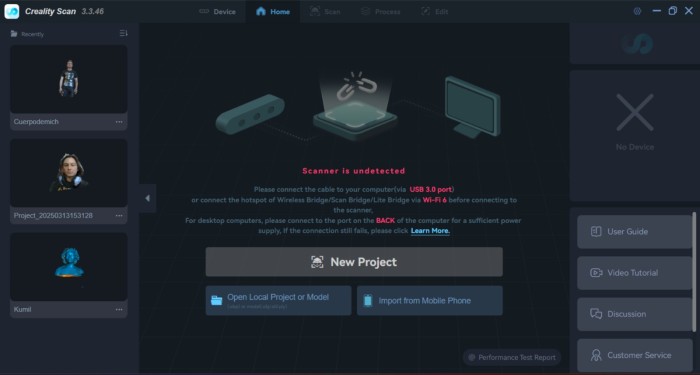
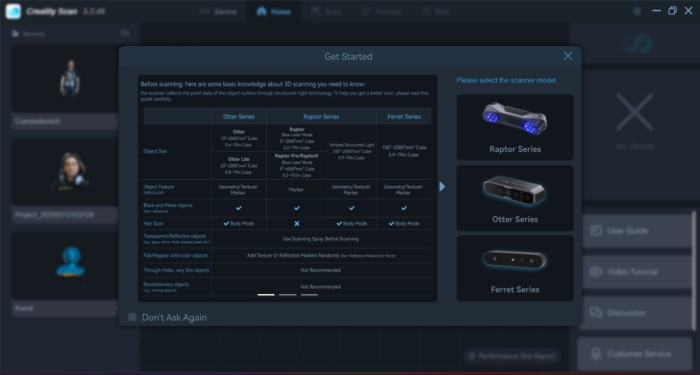
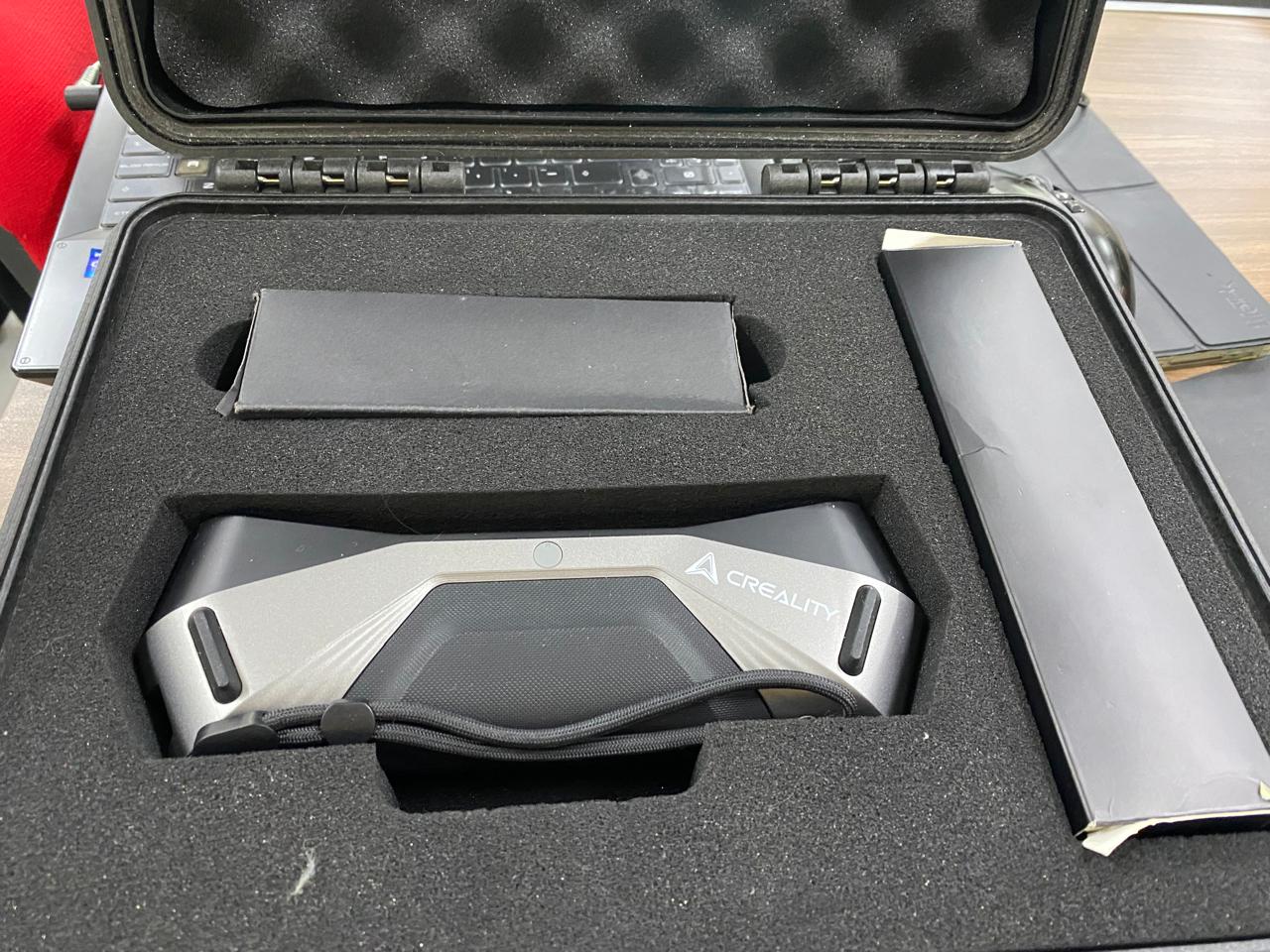
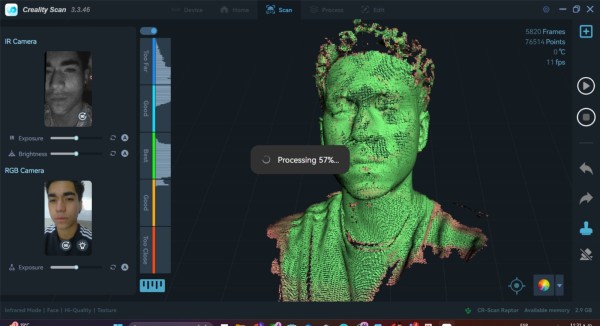
For the 3D scanning process, the CR-Scan Raptor was used. This scanner belongs to the Creality ecosystem and operates with CrealityScan.CrealityScan is the official 3D scanning software developed by Creality. It allows users to control compatible scanners, perform calibration, process scan data, align frames, generate meshes, optimize geometry, and export ready-to-use 3D models.

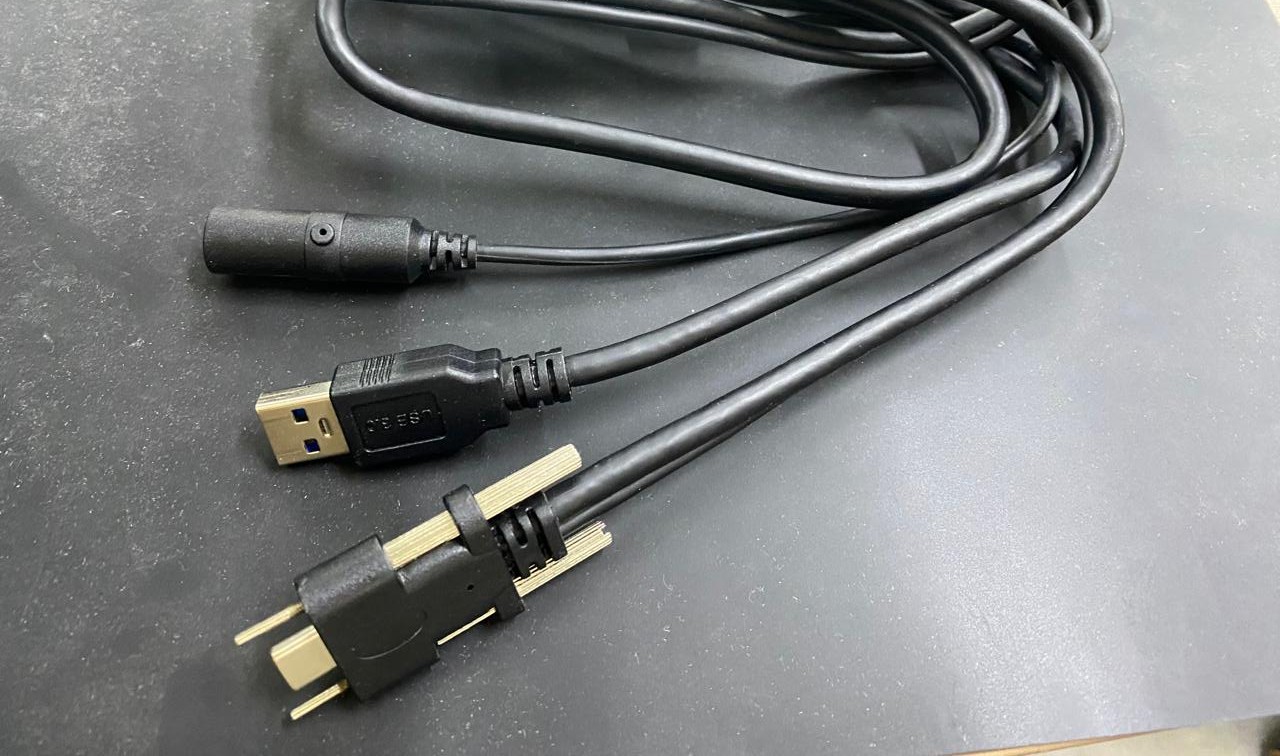
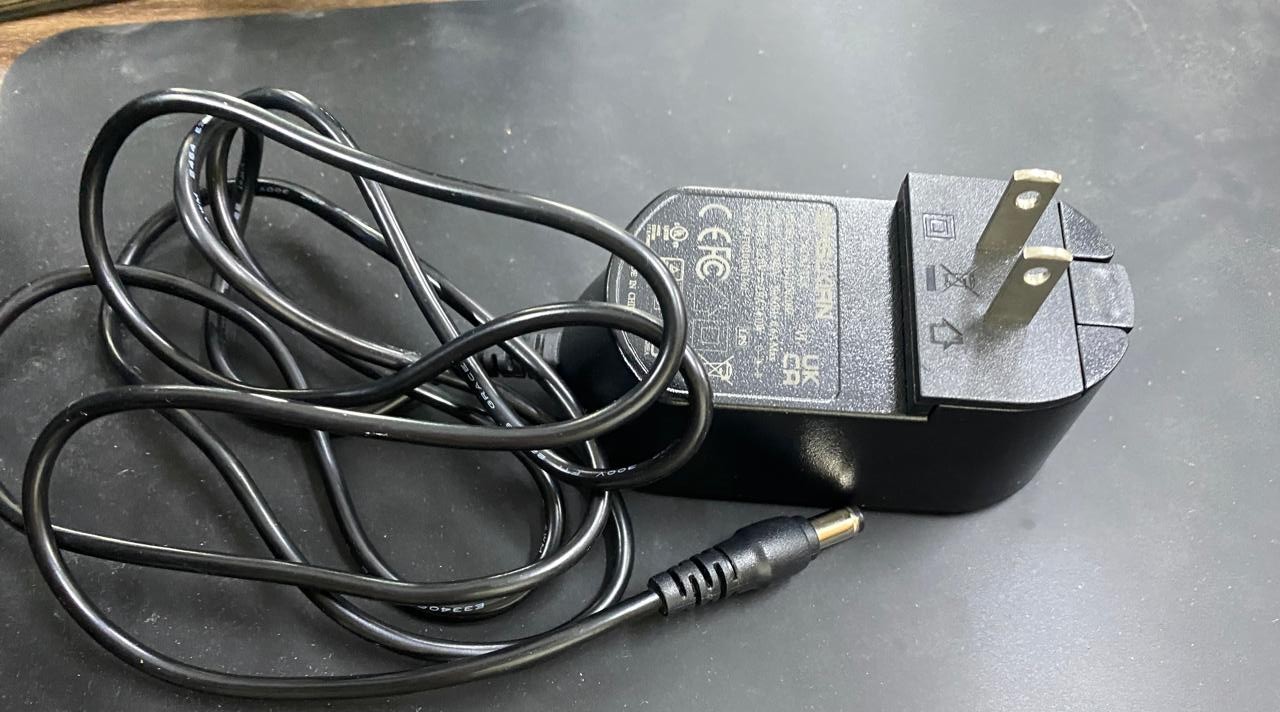
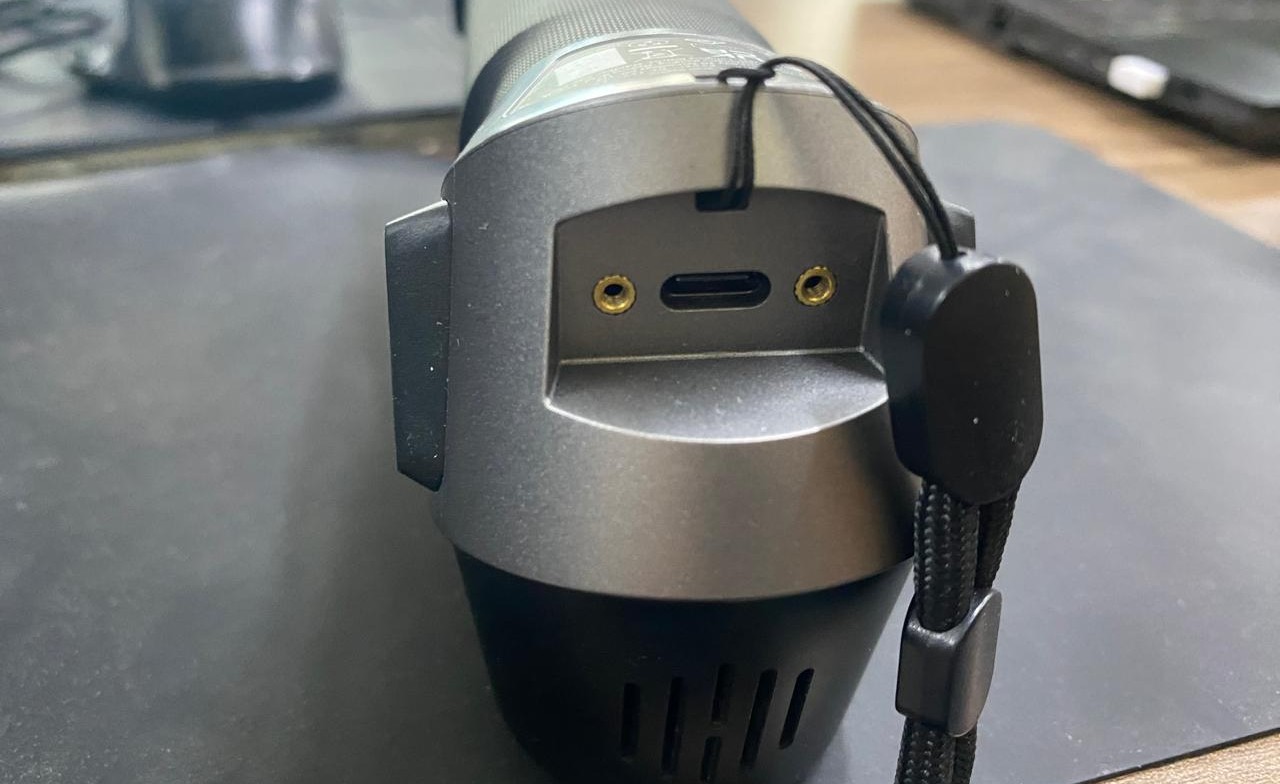
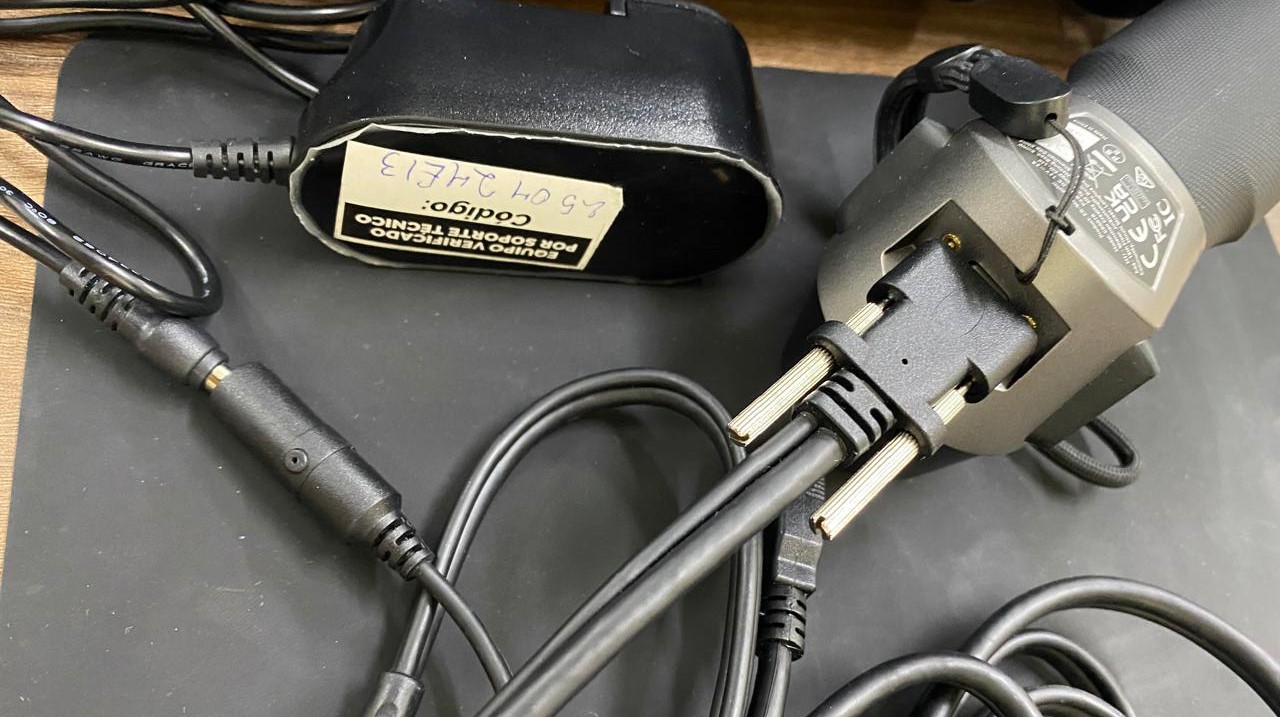
- The scanner unit
- HDMI cable
- USB cable
- Power supply connector (female jack input)
- Additional accessories included in the kit
Calibration Process
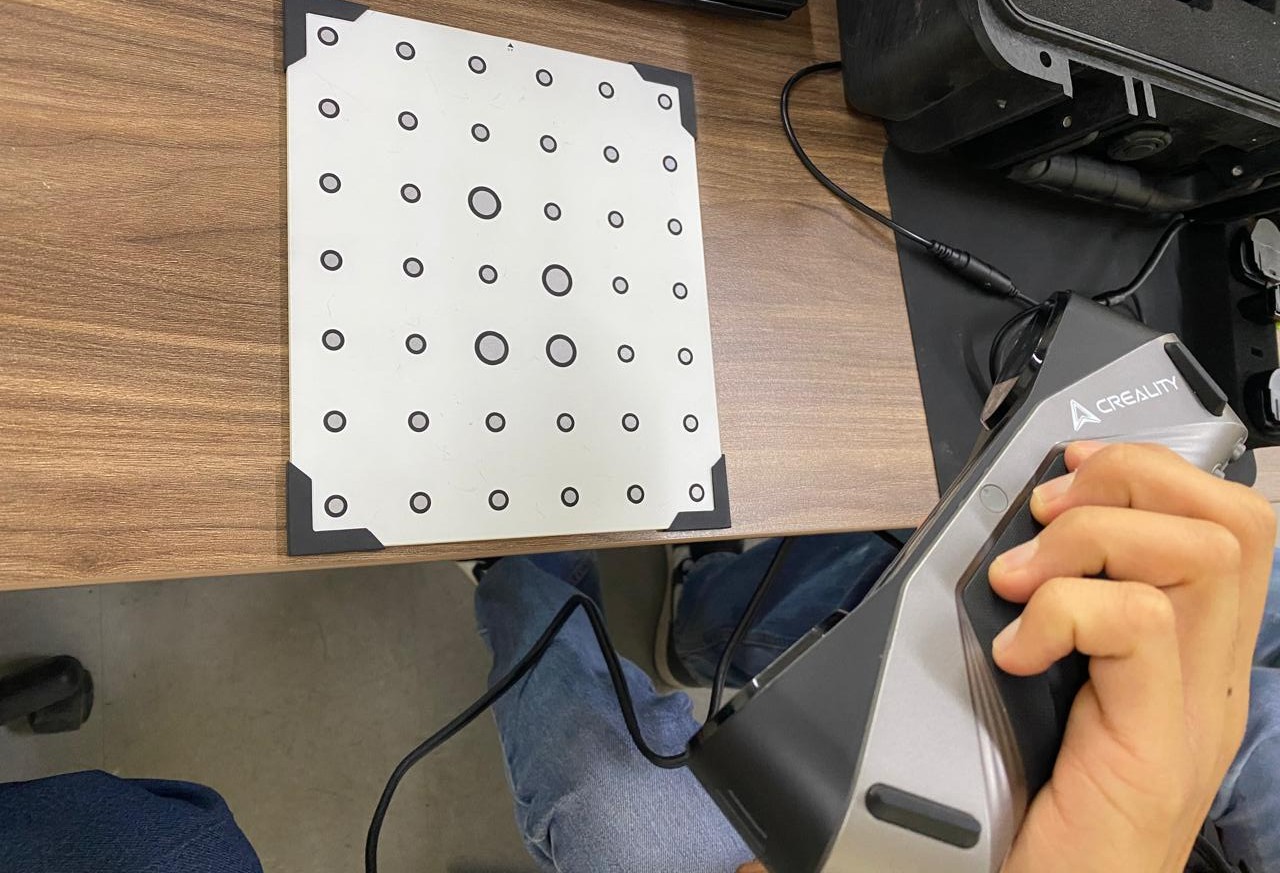
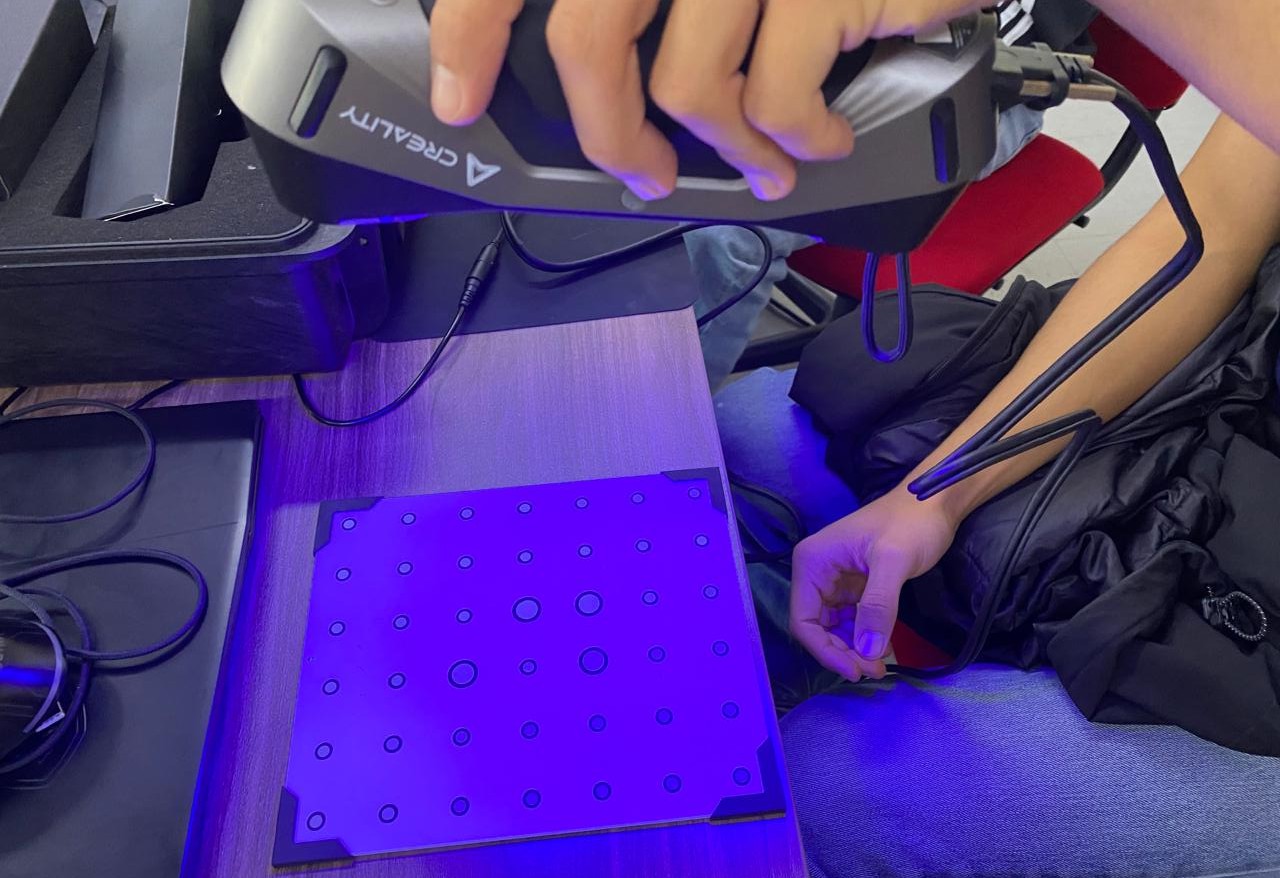
- The kit includes a calibration board with coded reference points.
- This board is used to calibrate the scanner’s laser and optical system to ensure dimensional accuracy.
Creating a New Project
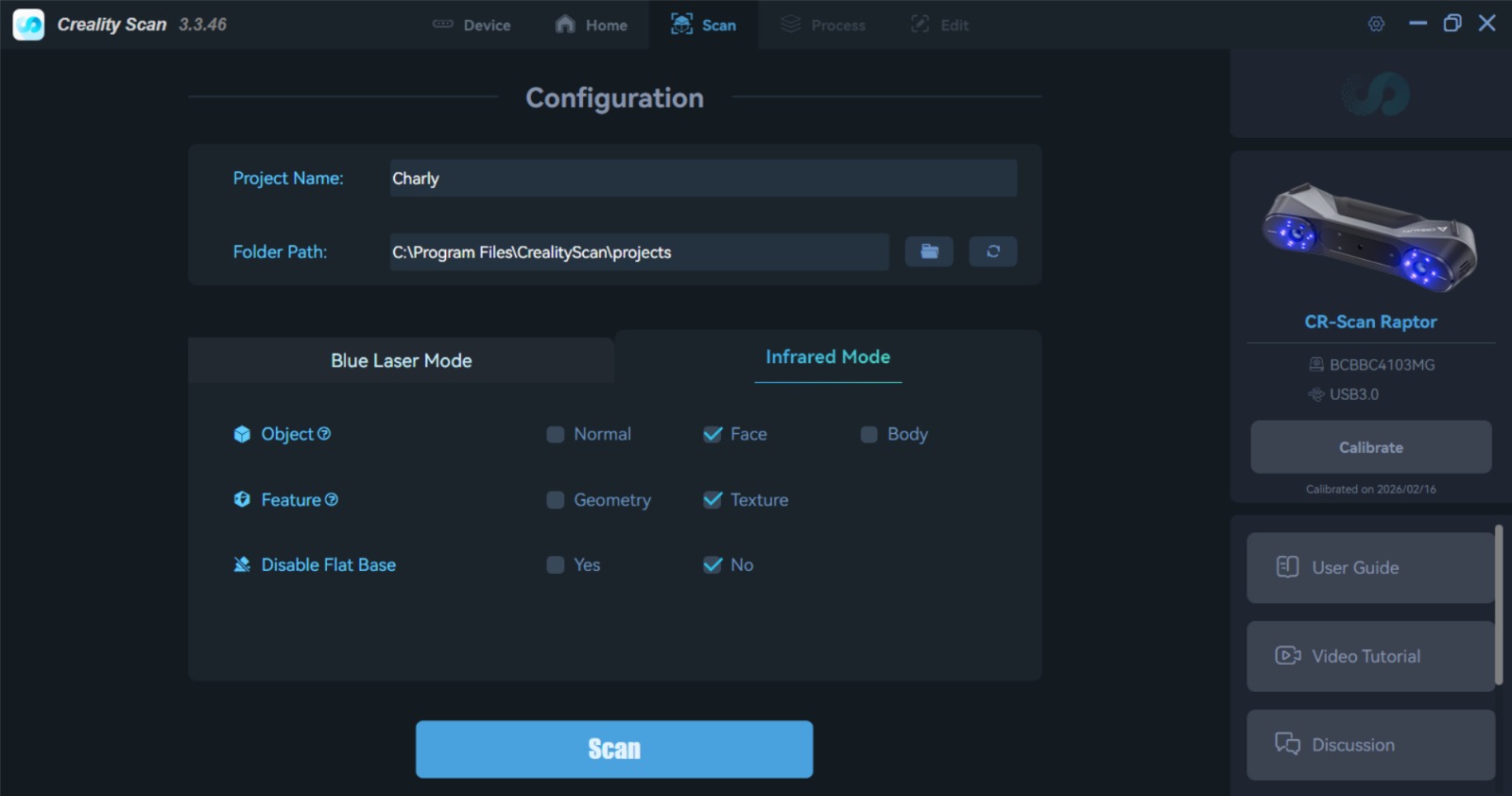
- Once calibration is complete, a new project is created within the software.
- The user selects the scanning mode depending on the object size and required precision.
Scanning Process
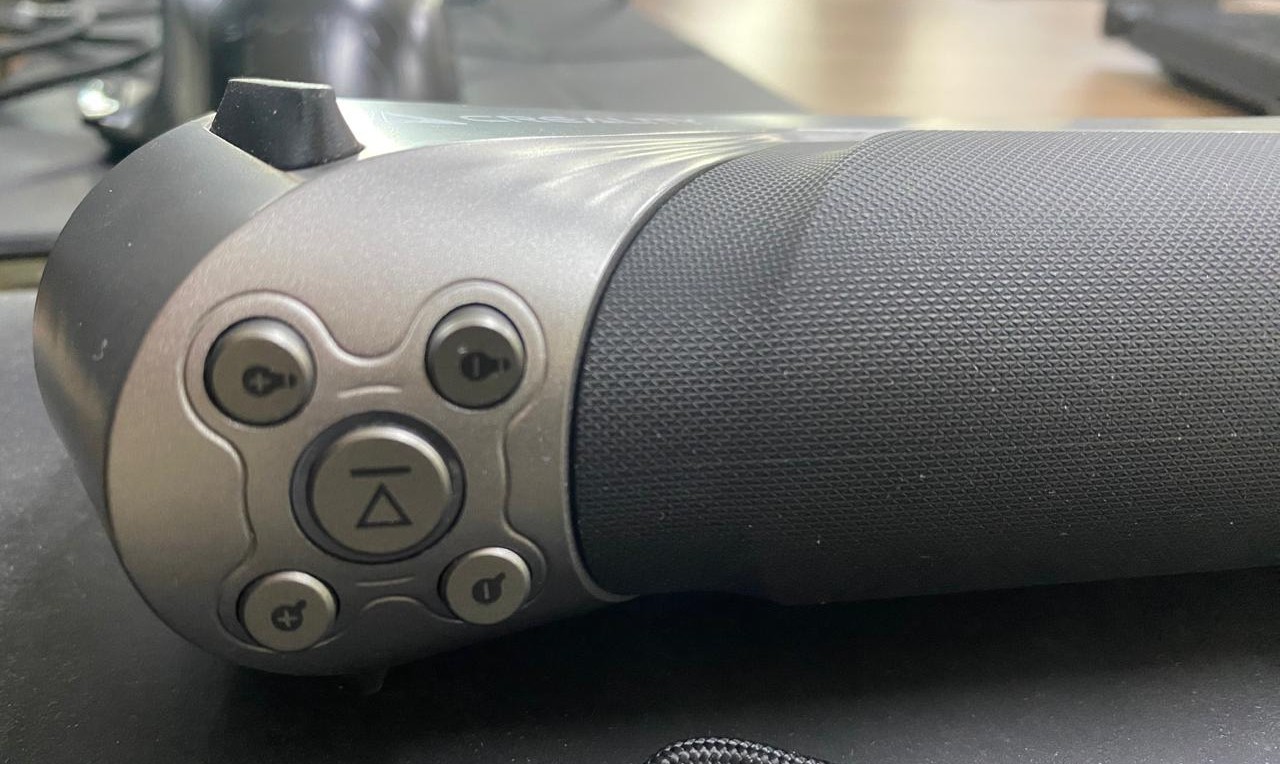
The scanning workflow is intuitive:- The scanner includes built-in physical buttons that allow starting the scan directly from the device.
- The process can also be initiated from the CrealityScan application.
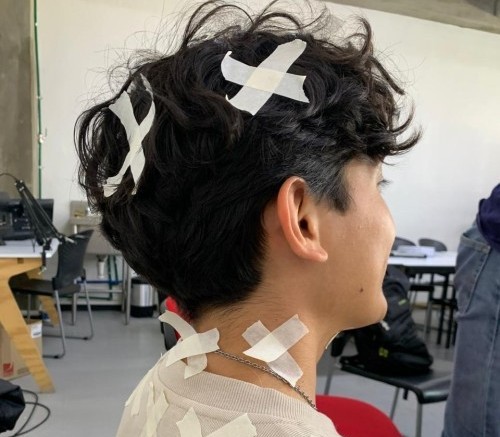
- The operator simply moves the scanner around the object while maintaining proper distance and steady motion.

Exporting the Model
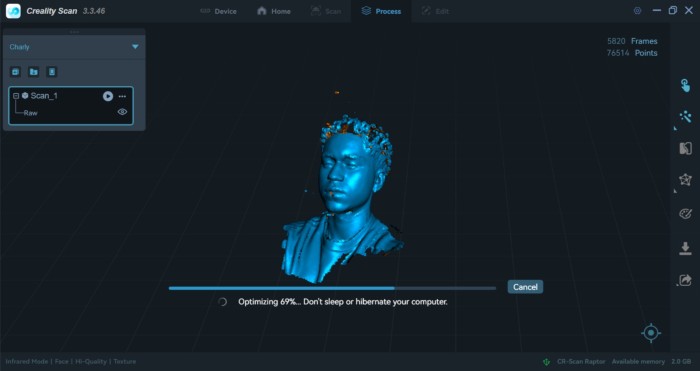
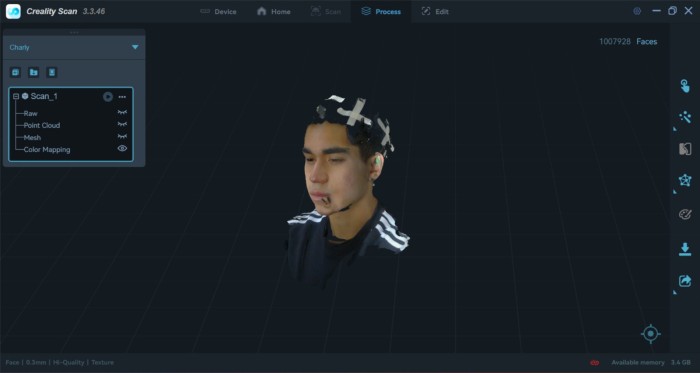
- Once scanning is complete, click “One-click Process” This automatically performs alignment, noise removal, mesh generation, and basic optimization.
- After processing, select Export.
- The file can be saved in formats such as STL or OBJ for further use in CAD software or 3D printing.


My Piece
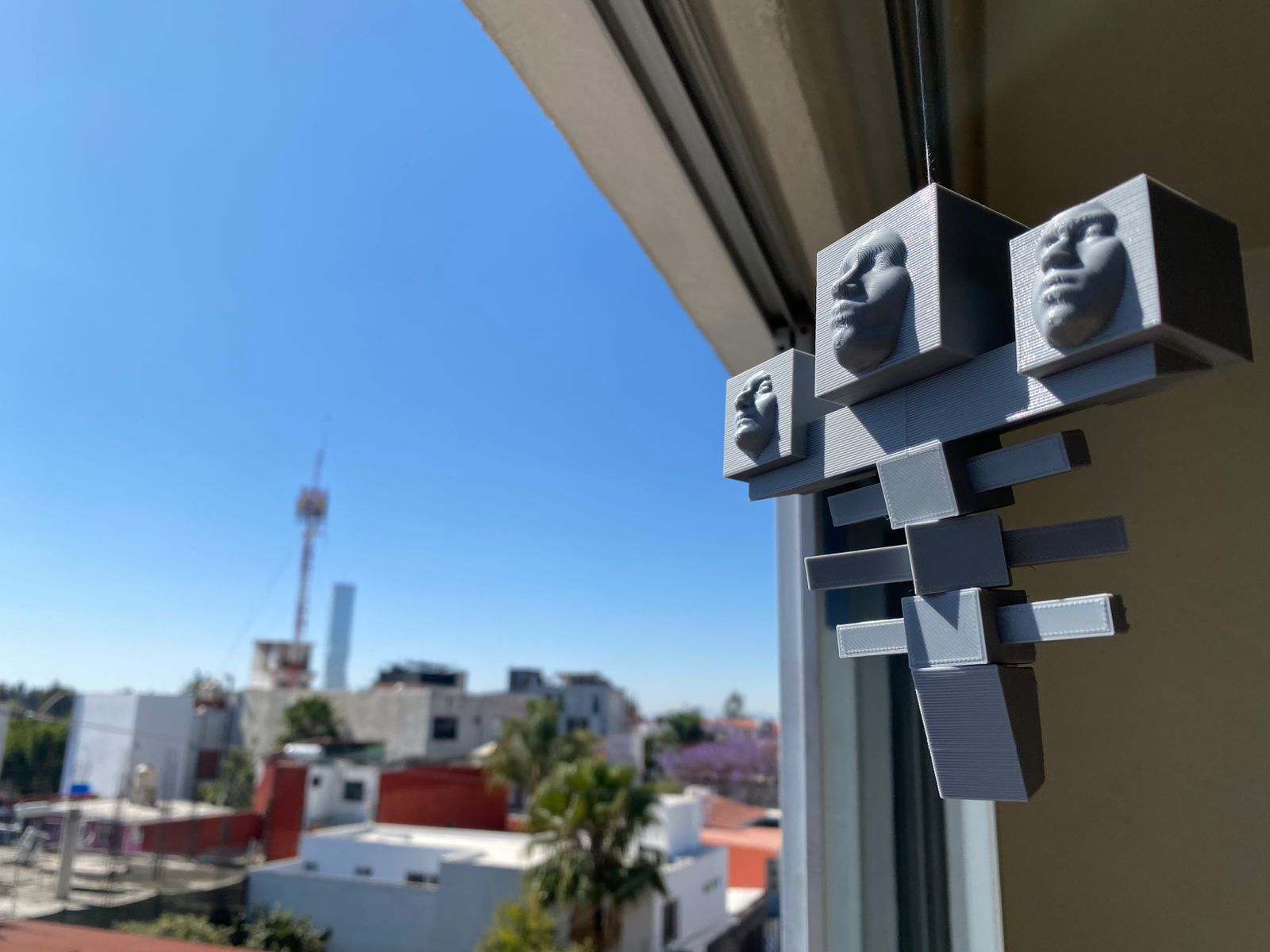
The figure designed is the Wither from Minecraft.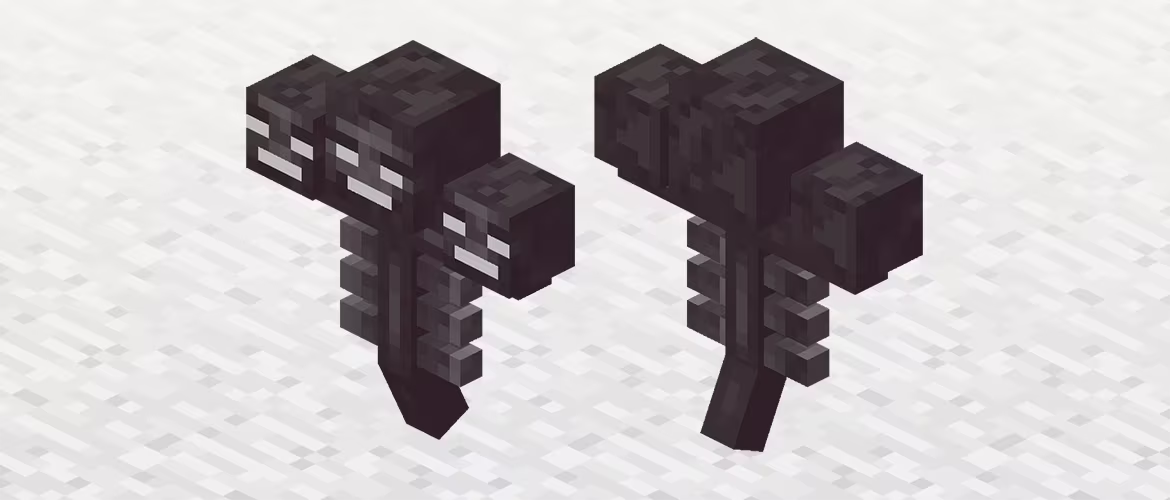
Creating the Skeleton
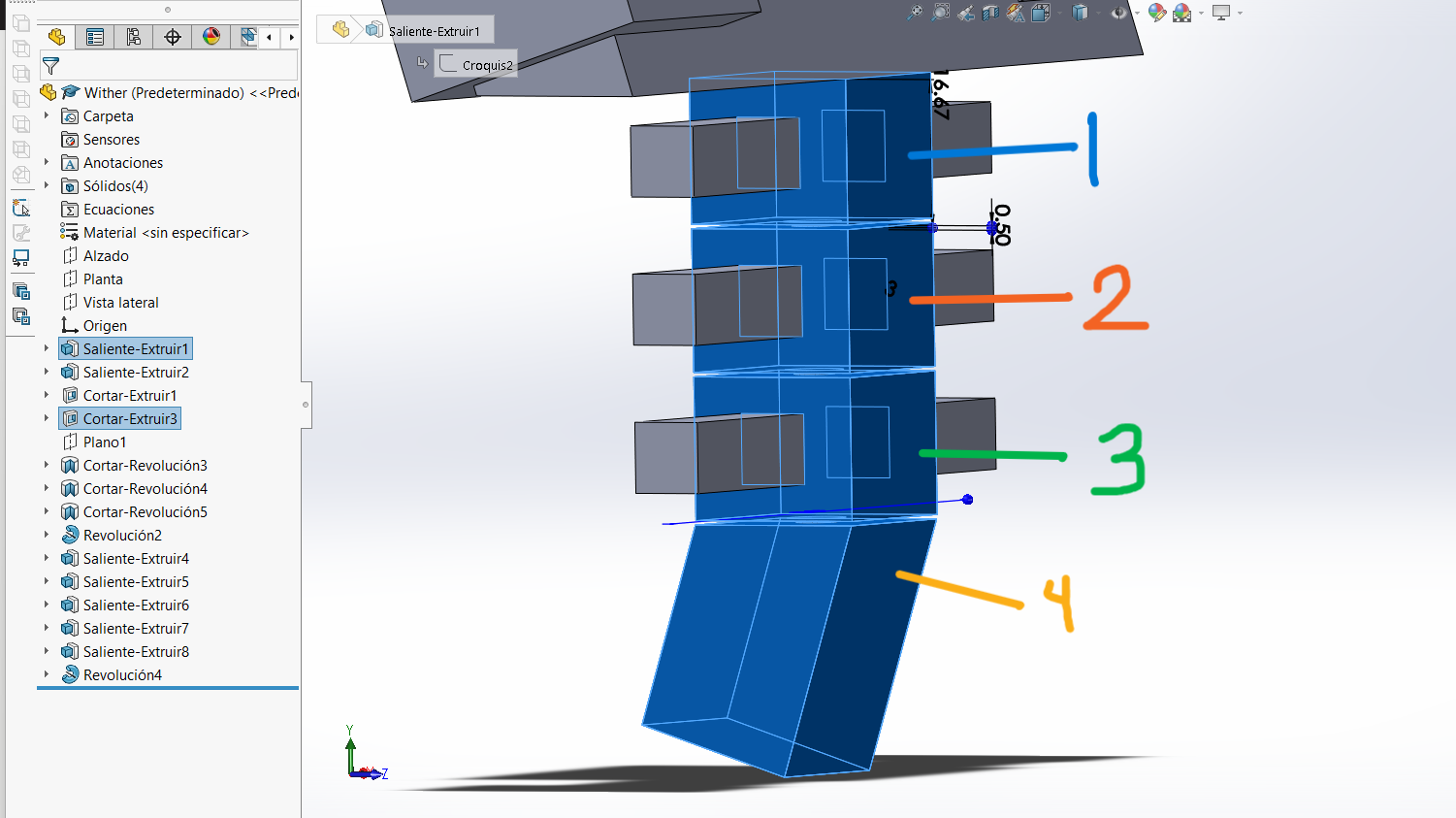
The first step is to create a sketch on the lateral plane and extrude a segmented skeleton divided into four modules.These four modules represent:
- Modules 1–3 → Main body segments
- Module 4 → Tail
Creating the Ribs
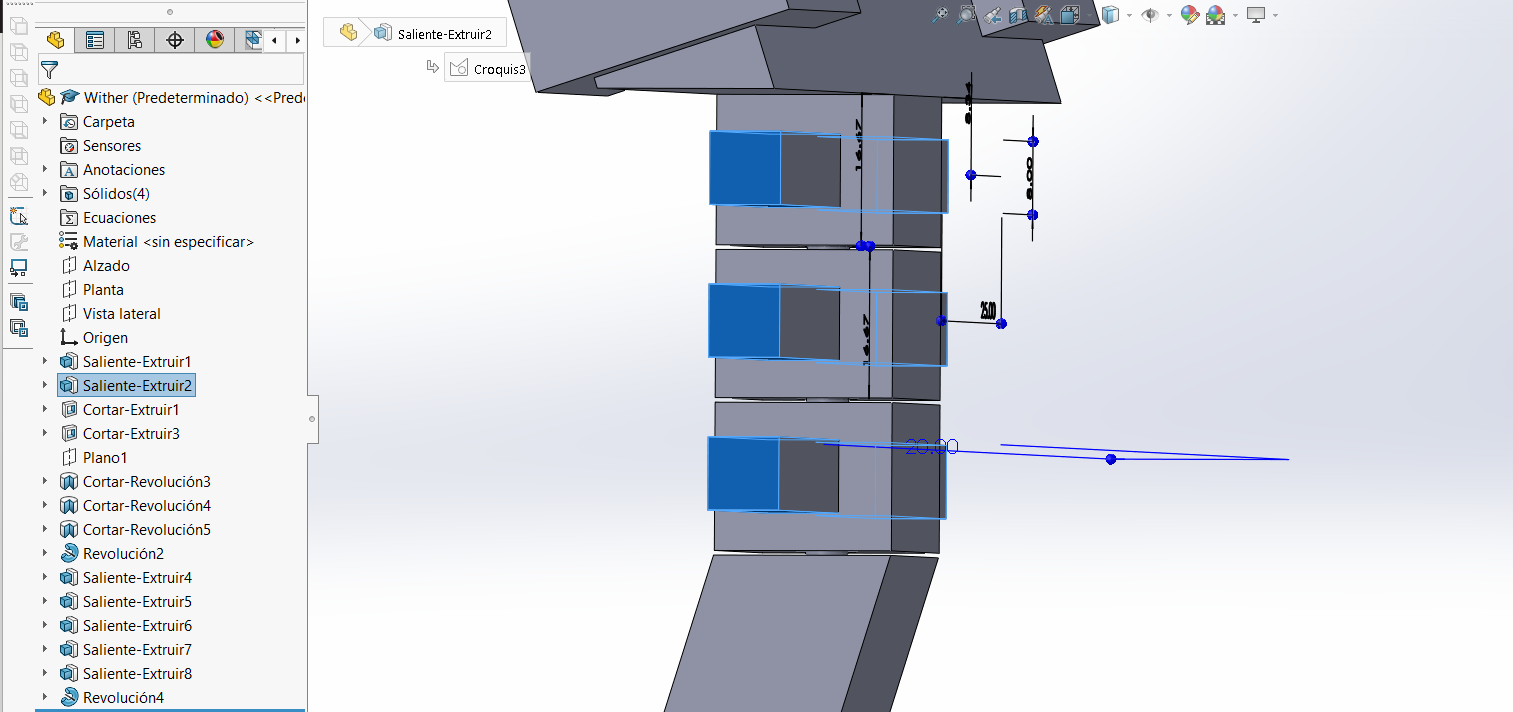
The next step is to create the ribs for modules 1–3 (module 4 acts as the tail).These ribs are simply square profiles extruded a few centimeters.
Symmetry Setup
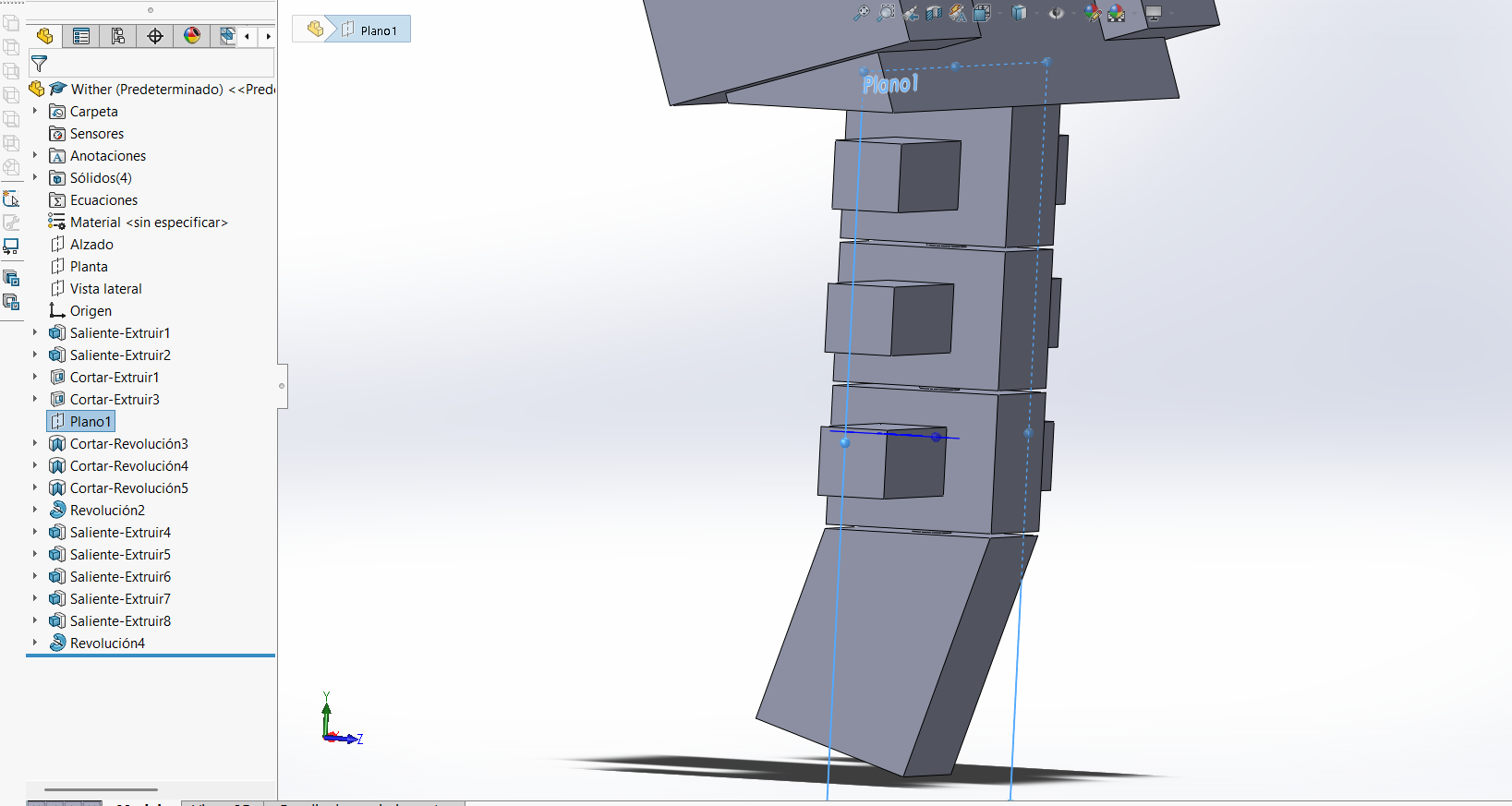
To facilitate the creation of moving parts and ensure perfect alignment, a construction plane must be created by Geometry → PlaneThis plane should be positioned at the center of the skeleton.
It helps to:
- Maintain symmetry
- Mirror features accurately
- Ensure proper alignment of rotational joints
Moving Geometry
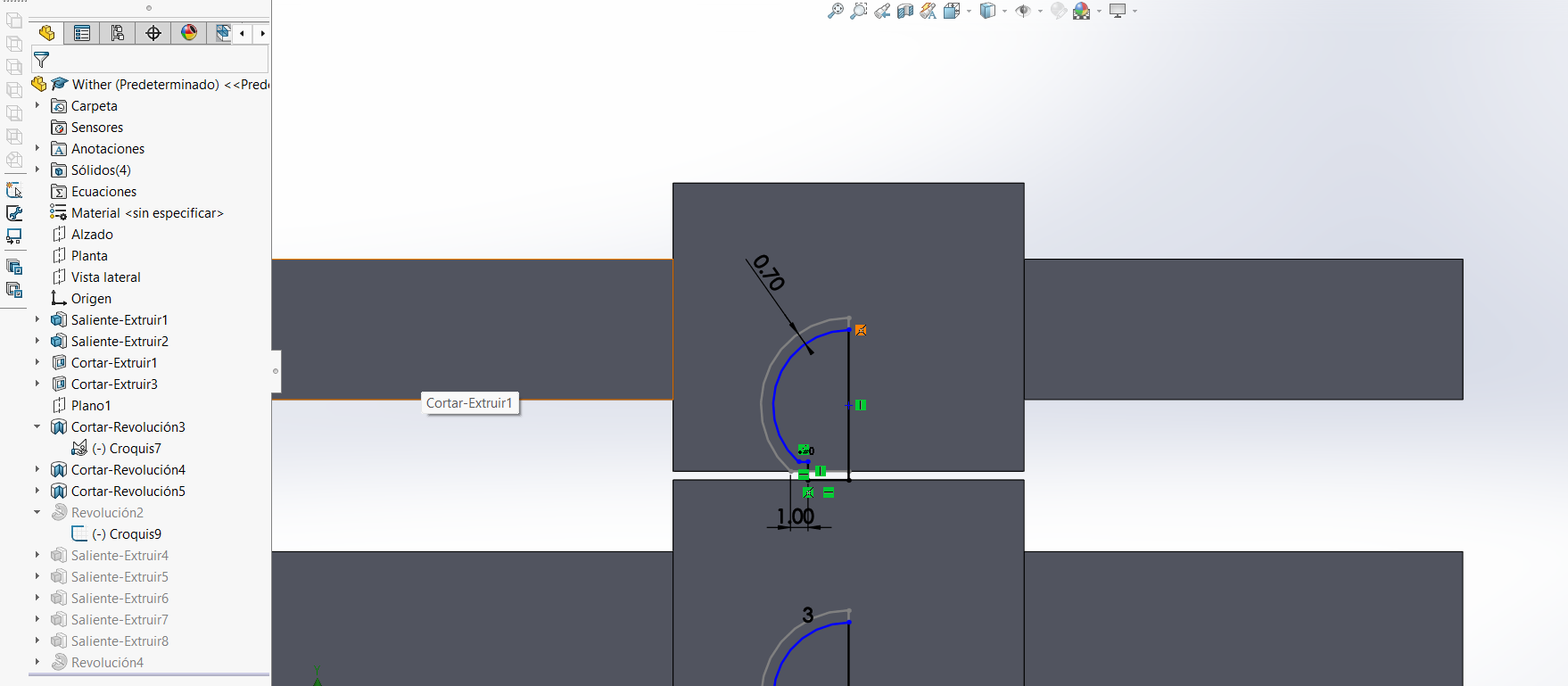
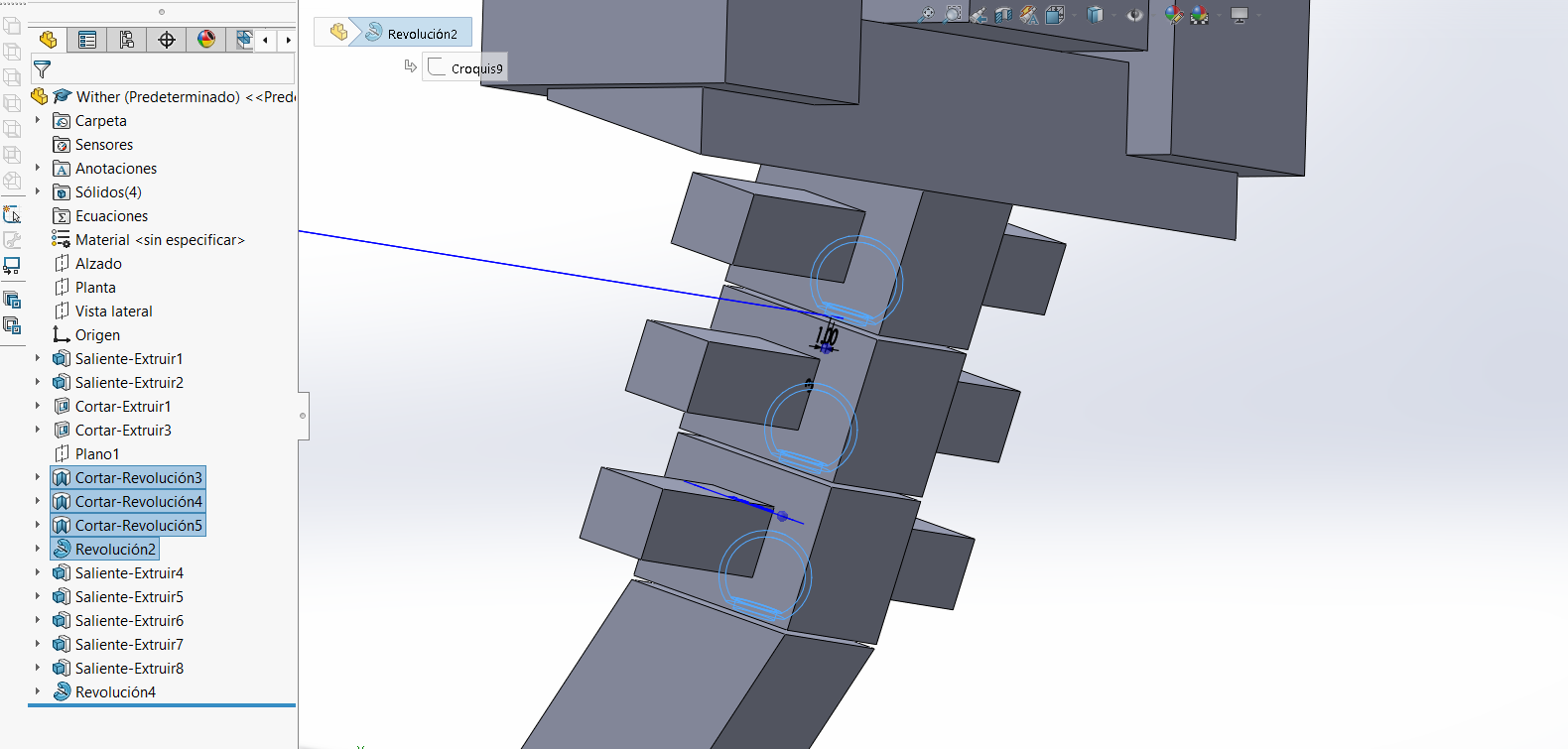
When designing articulated or moving parts for FDM (filament) printers, certain design rules must be followed to ensure functionality.Important FDM Design Rules for Moving Parts:
- Clearance Rule → A gap between moving parts is required.
- Recommended tolerance for standard FDM printers: 0.5 mm – 0.8 mm
Creating the Heads
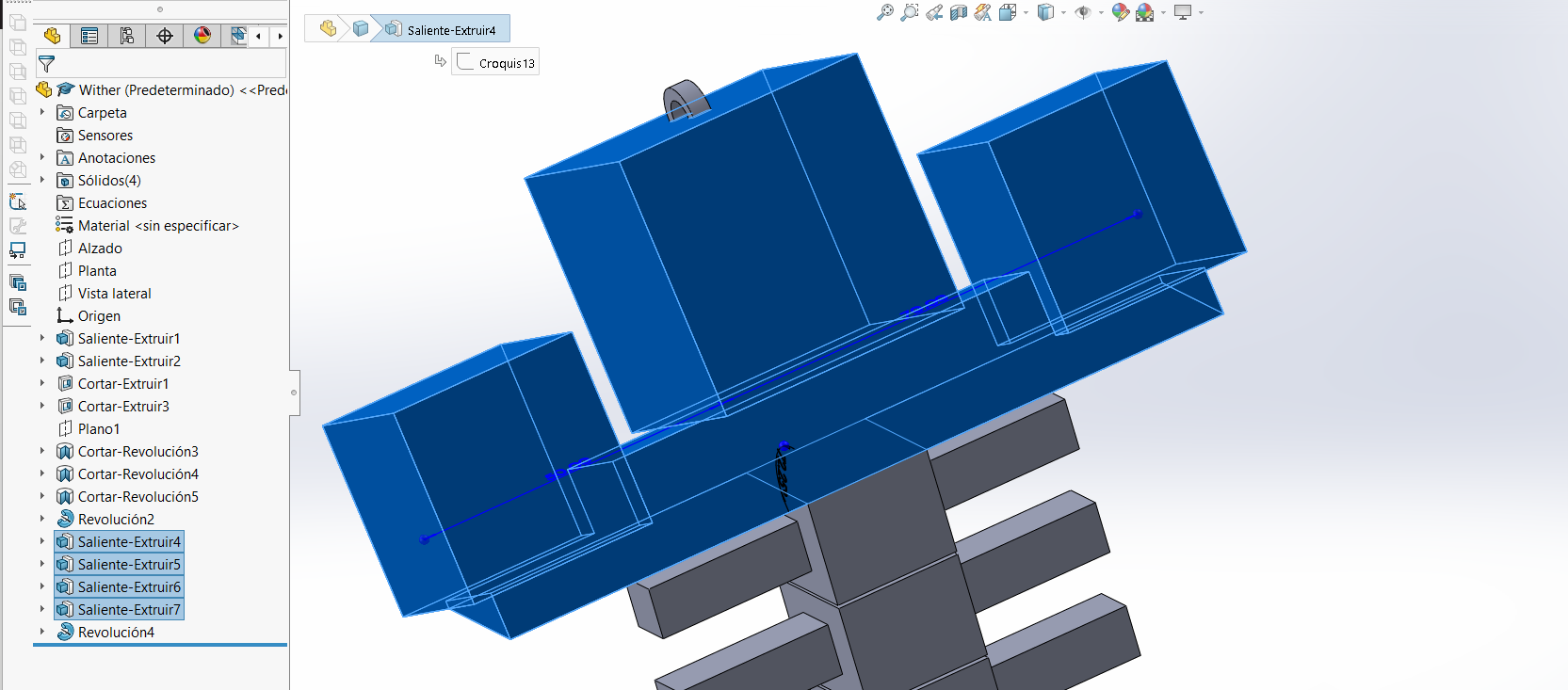
To create the Wither’s heads:- Extrude a bar on the top of module 1.
- Create three cubes.
- Distribute them evenly along the bar.
Extra: Hanging Ring
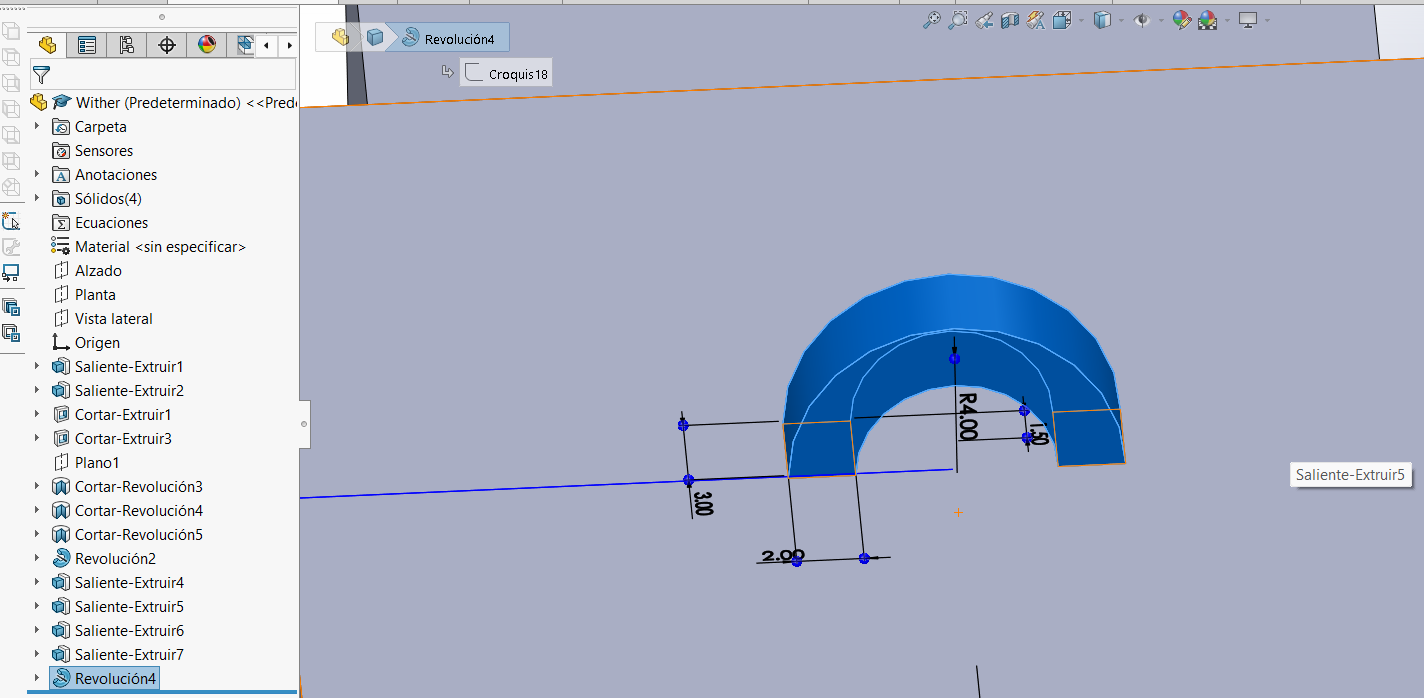
To allow the piece to be hung anywhere, a ring is added on top of the main head.Design consideration:
- The ring must have sufficient thickness (minimum 2–3 mm).
- The internal hole must respect FDM clearance rules if integrated with moving parts.
Meshmixer
Is a free software developed by Autodesk intended for easy creation of 3D mashups.Lets you sculpt, repair, slice, hollow, and blend STL/OBJ files. And you can download here.
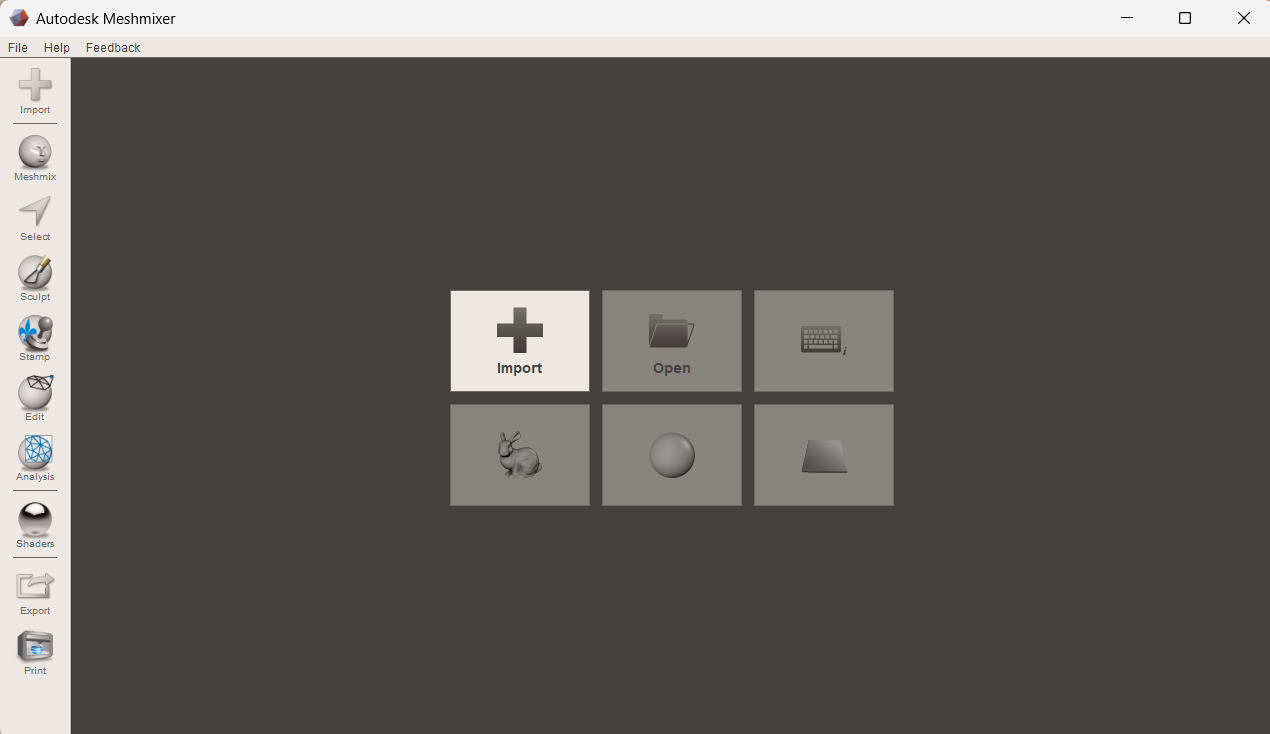
1- Importing the STL File
An STL file can be imported either:- From the main screen
- From the Files tab within the software.
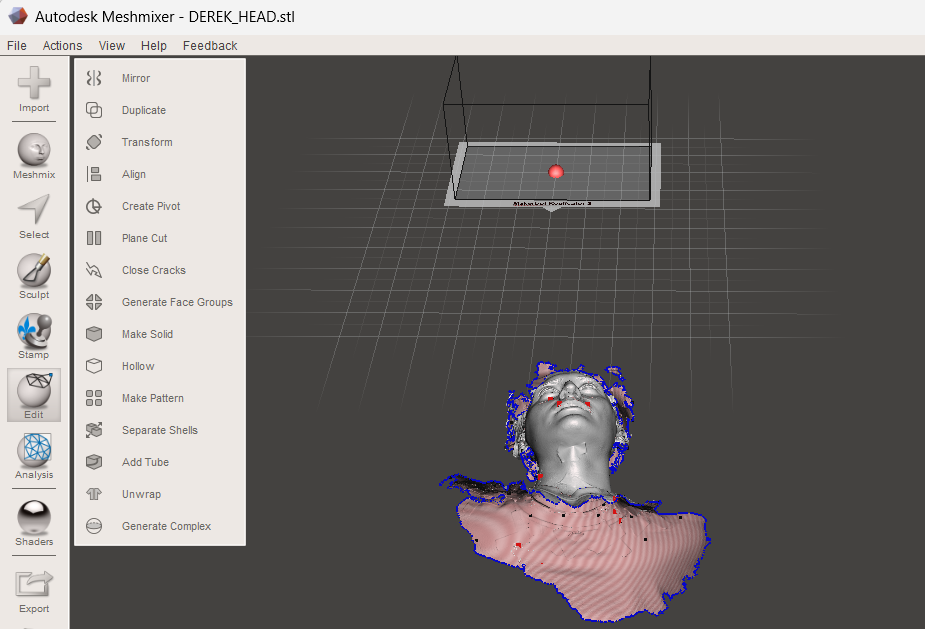
2- Converting the Mesh into a Solid
With the STL placed in the workspace, the next step is to convert the mesh into a solid body.This is important because:
- Mesh bodies are composed of triangular facets.
- Solid bodies allow parametric editing and advanced modifications.
- Many modeling tools require solid geometry to function properly.
- Move
- Rotate
- Reposition
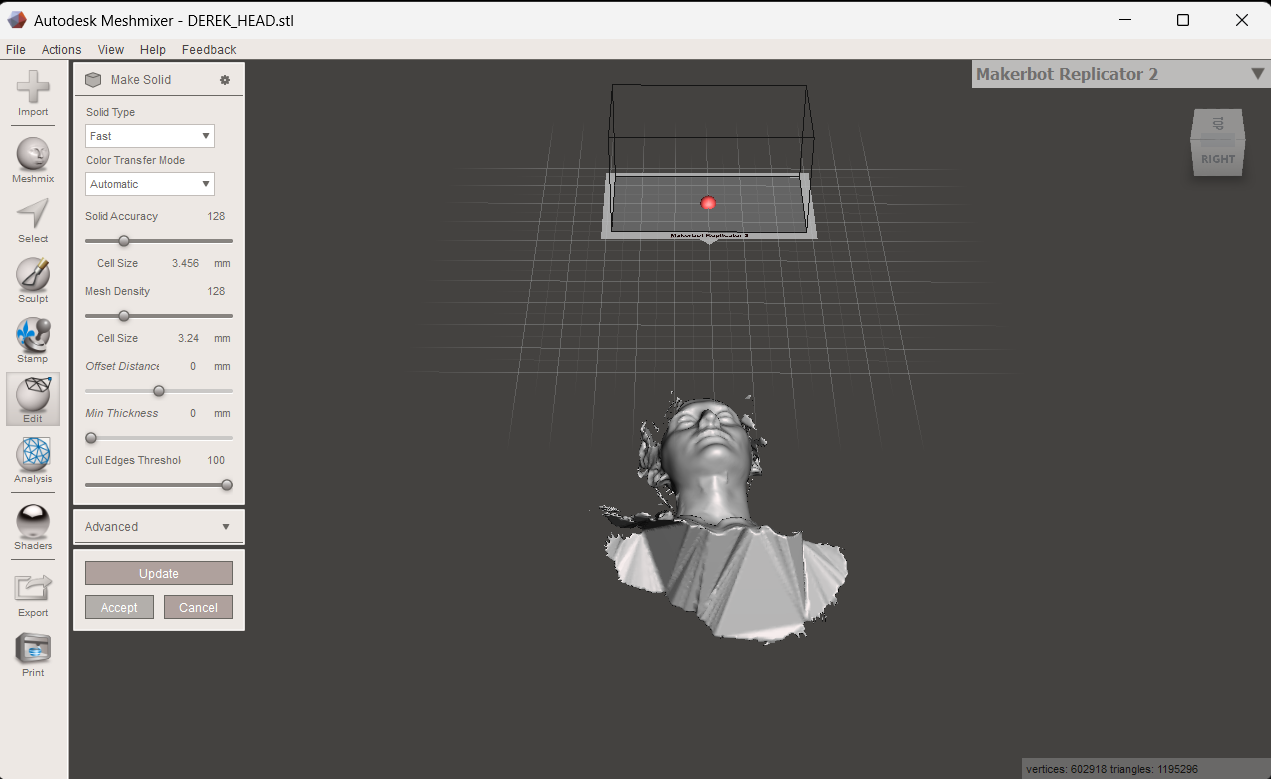
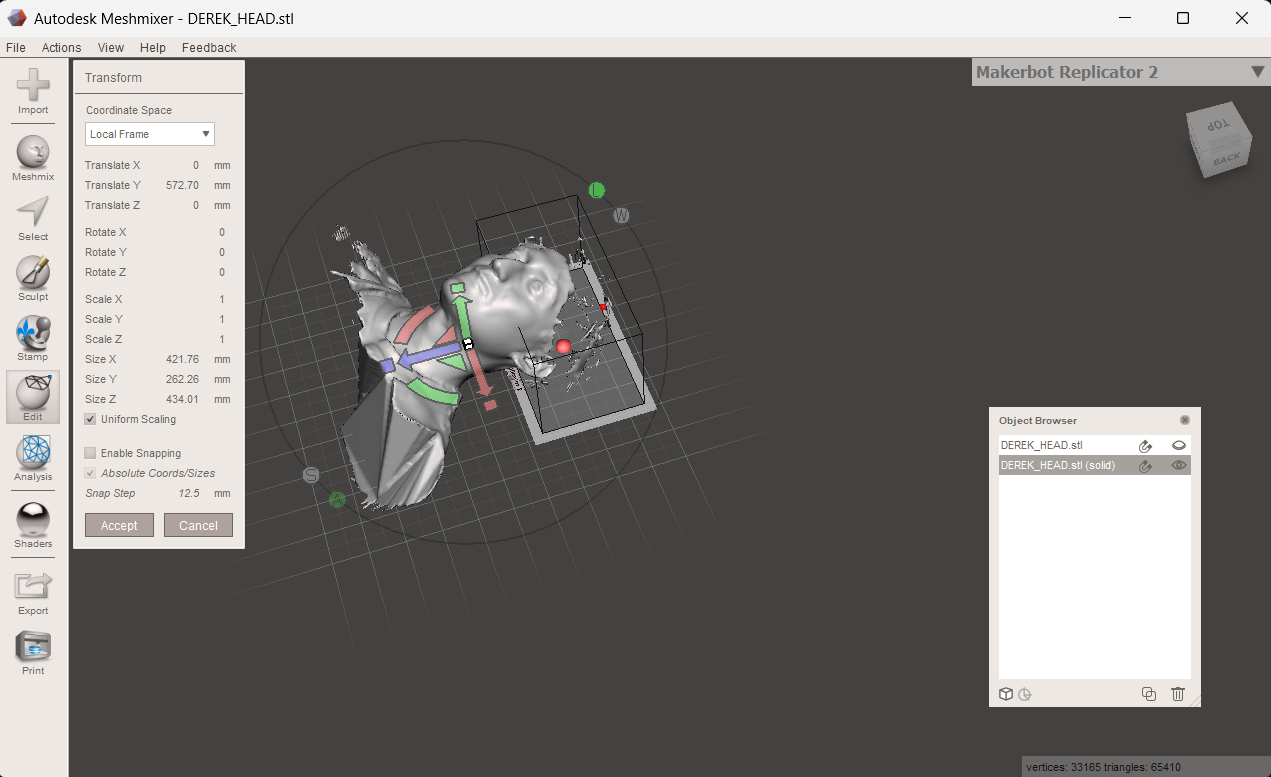
3- Scaling and Cleaning the Geometry
Once the model is properly positioned:- It can be scaled to the desired dimensions.
- Using the Select tool, unwanted mesh areas or unnecessary geometry can be removed.
- Print reliability
- Surface quality
- Processing performance
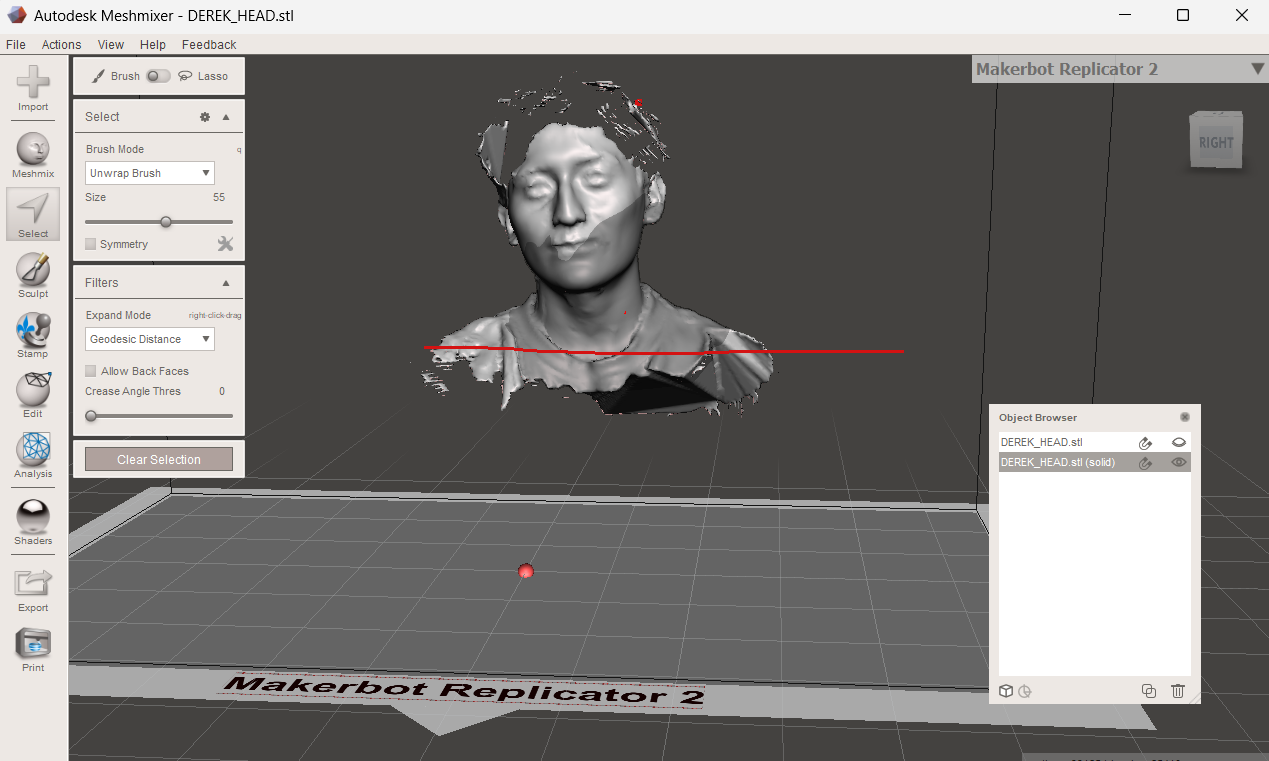
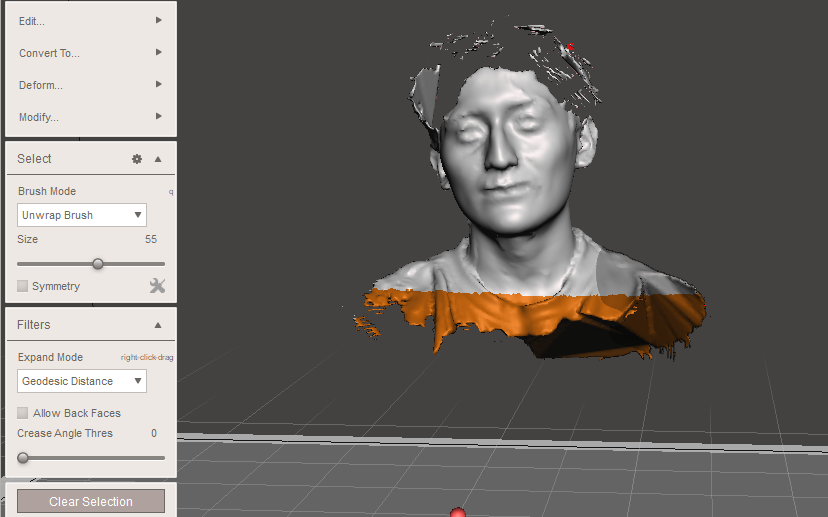
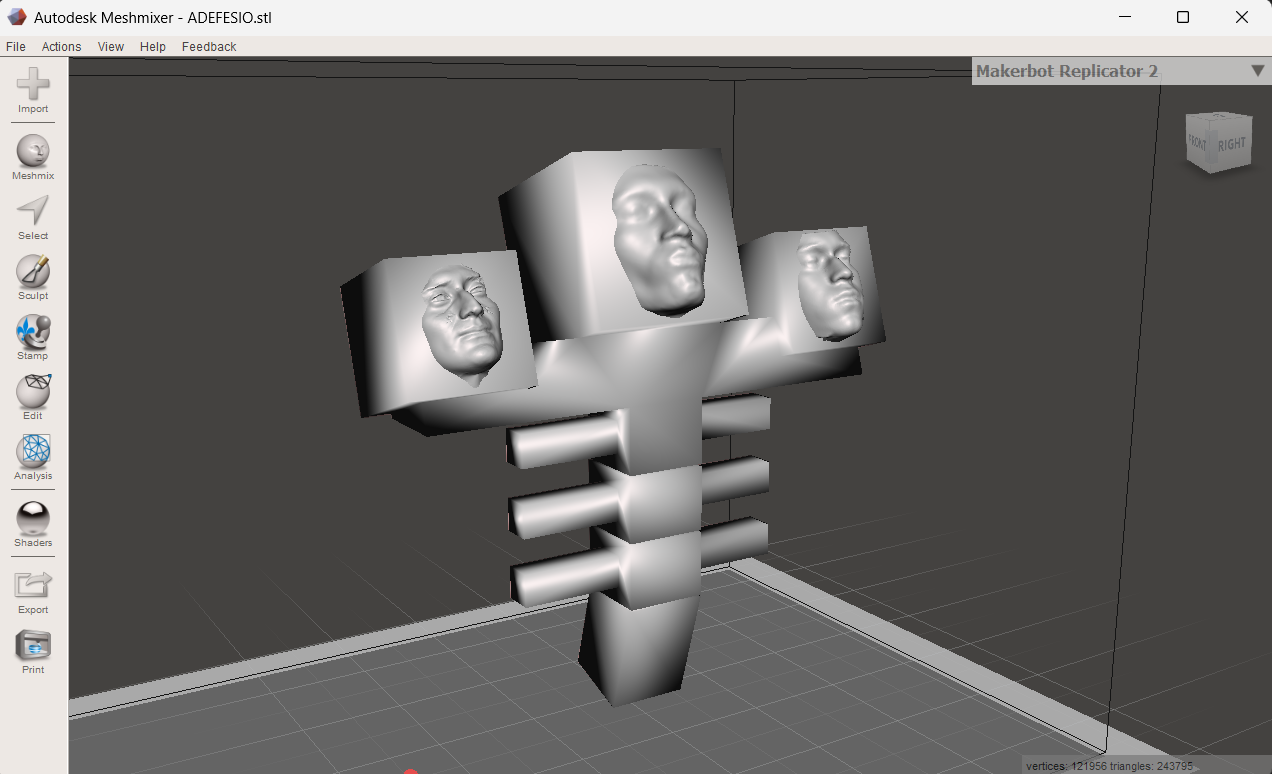
And with that workflow… we arrive at this masterpiece.
UltiMaker Cura Overview
UltiMaker Cura is a slicing software used to prepare 3D models for filament (FDM) printers.In simple terms, Cura converts a 3D model (STL) into G-code, which is the language the 3D printer understands. It allows users to configure printing parameters such as layer height, speed, temperature, supports, and adhesion settings.

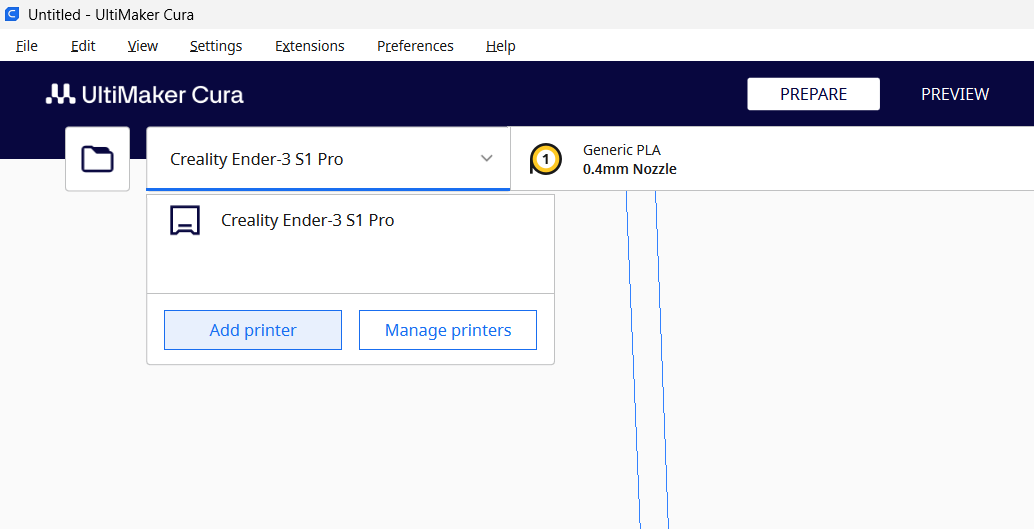
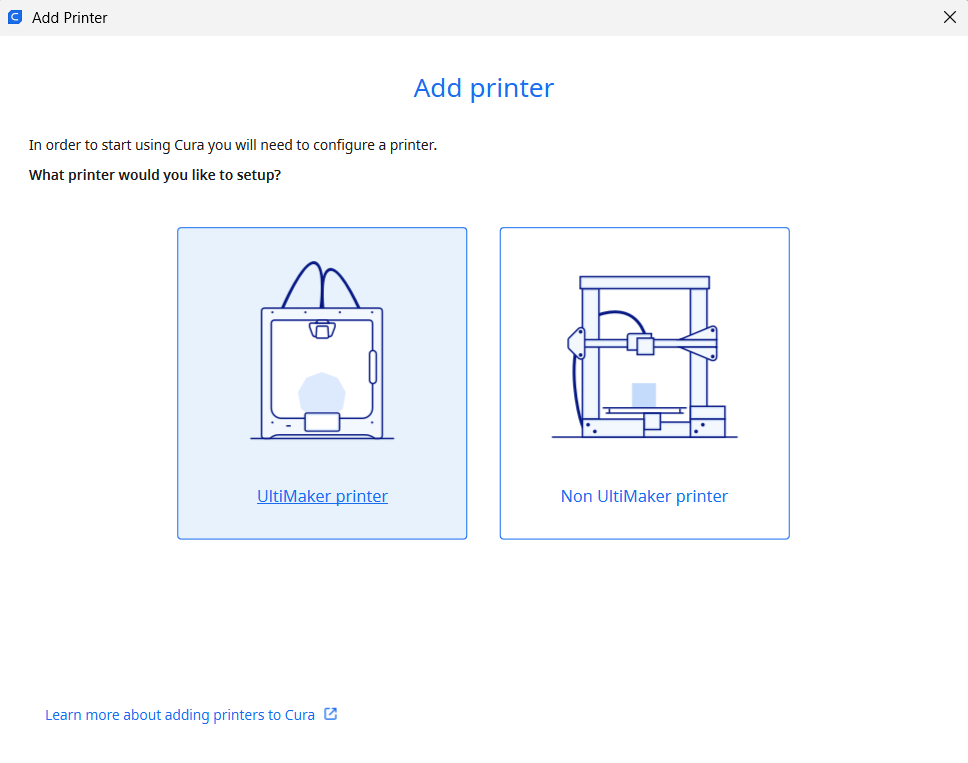
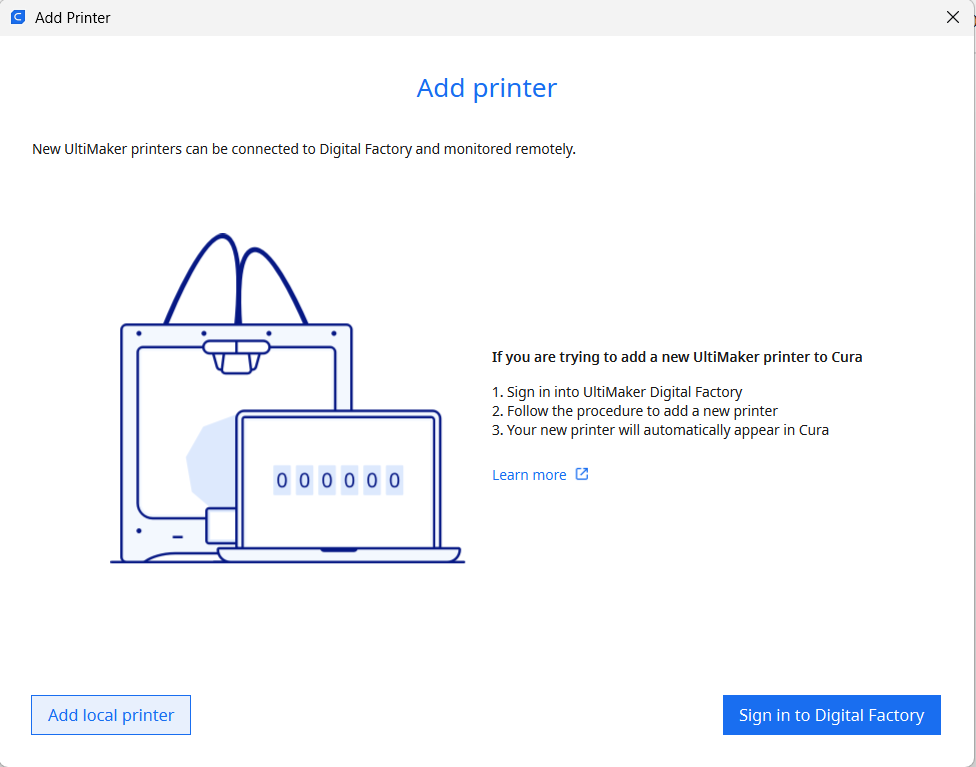
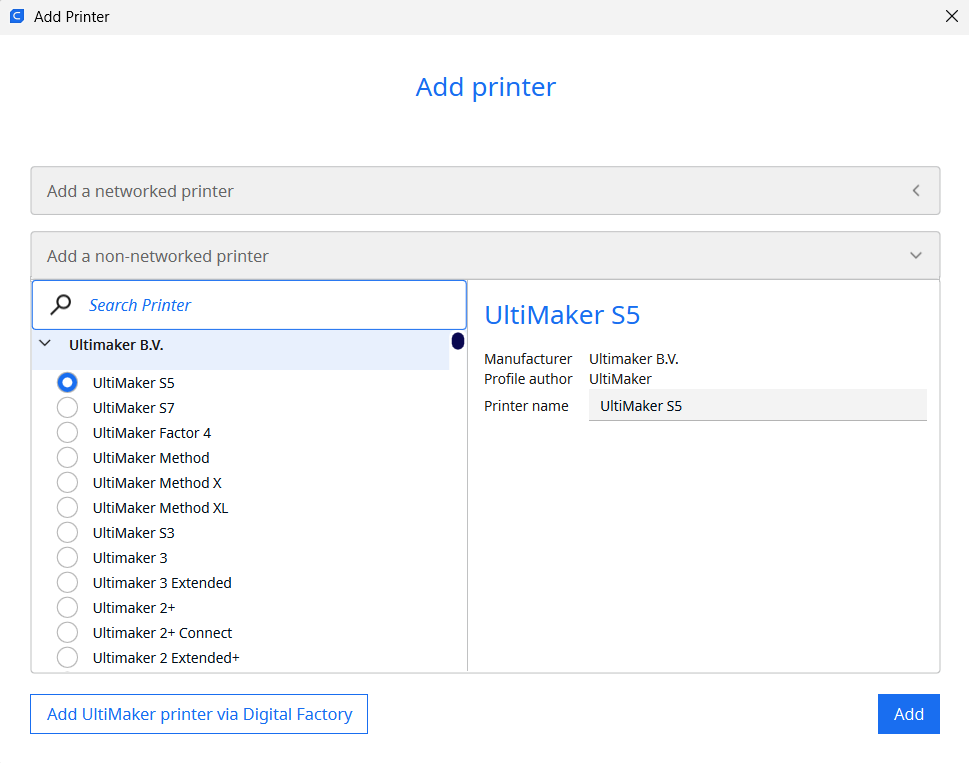
1- Selecting the Printer
Once the application is open, the first step is to select or add a printer:- Click on the top tab and select Add Printer.
- Choose whether your printer belongs to the Ultimaker group or is a non-Ultimaker machine.
- Finish by adding your local printer from the list provided in the menu.
2- Importing the STL File
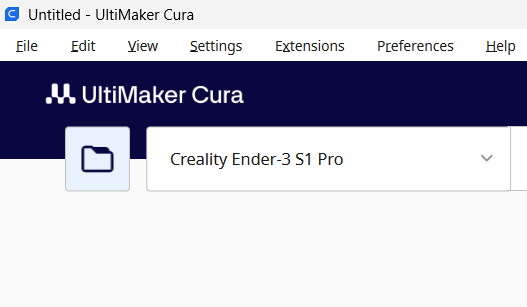
After setting up the printer:- Import the STL file from the Files tab
- Click the folder icon located in the upper toolbar.
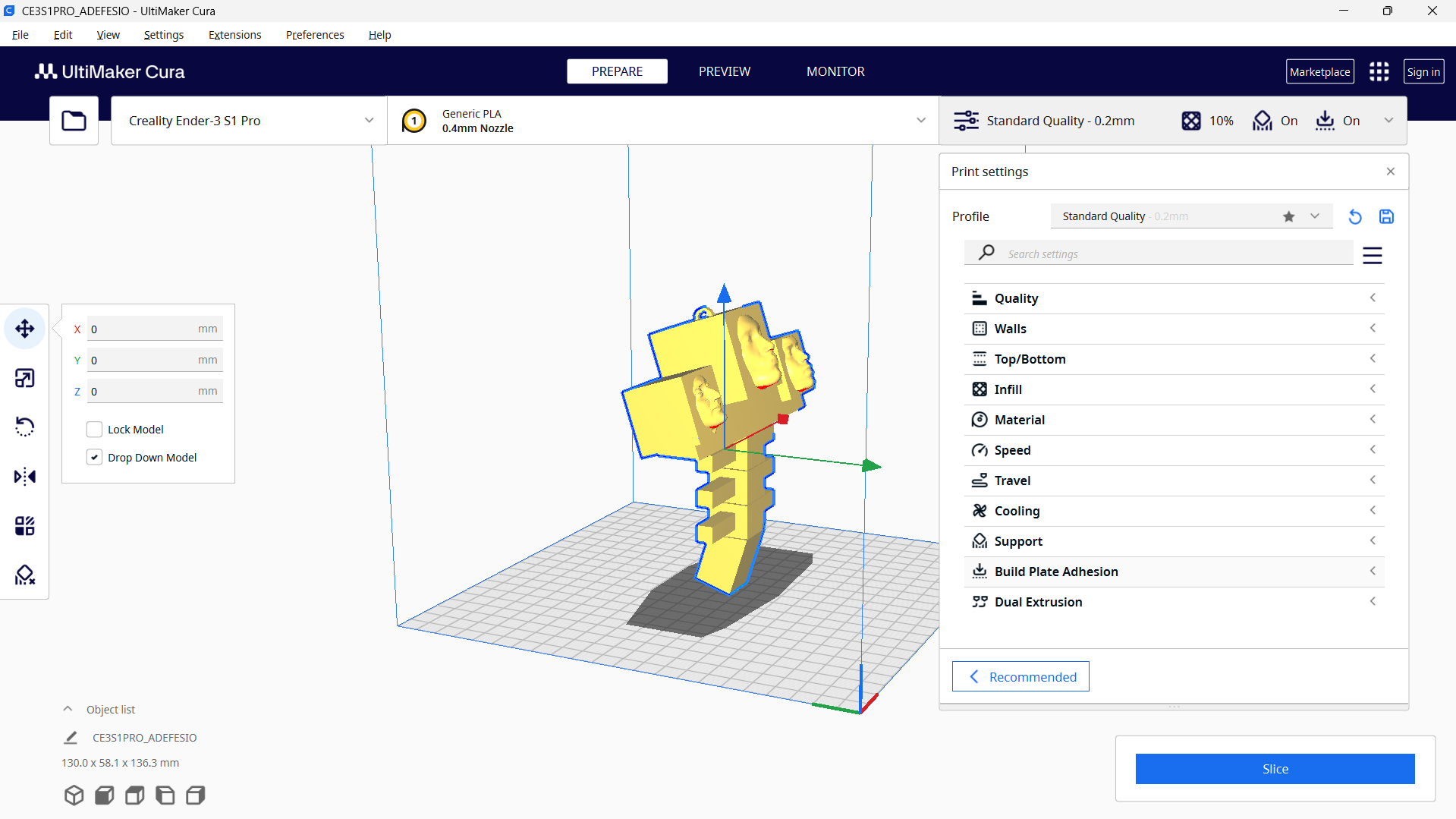
3- Workspace
The Cura workspace is divided into:- Left Sidebar
Move
Scale
Rotate
Mirror
- Top Bar
Project import icon
Selected printer
Selected filament material
Print settings profile
Contains transformation tools to manipulate the model in 3D space:
At the top of the interface, you will find:
Print settings profile:
Quality:- Sets the overall print resolution and layer height of the model.
Walls:- Controls the thickness and number of outer walls of the object.
Top/Bottom:- Defines the number of solid layers on the top and bottom surfaces.
Infill:- Determines the internal structure density and pattern of the model.
Material:- Sets nozzle temperature, bed temperature, and flow rate according to the filament type.
Speed:- Controls how fast the printer moves while extruding material.
Travel:- Manages non-printing movements and retraction settings.
Cooling:- Controls the cooling fan speed during printing.
Support:- Generates temporary structures to hold overhangs and complex geometries.
Build Plate Adhesion:- Adds structures like Skirt, Brim, or Raft to improve bed adhesion.
Dual Extrusion:- Allows printing with two materials or colors using a dual-extruder printer.
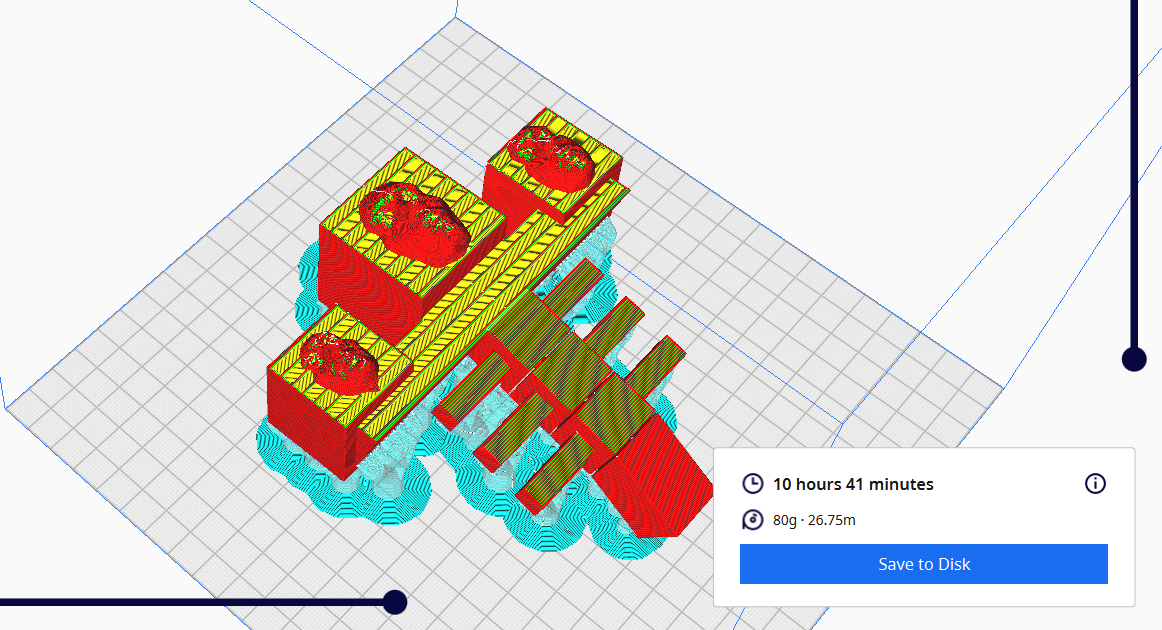
4- Slicing and Preview
Once the parameters are configured:- Click the Slice button located at the bottom of the settings panel.
- Click Preview to visualize how the printer will build the object layer by layer.
- Click Save to Disk.
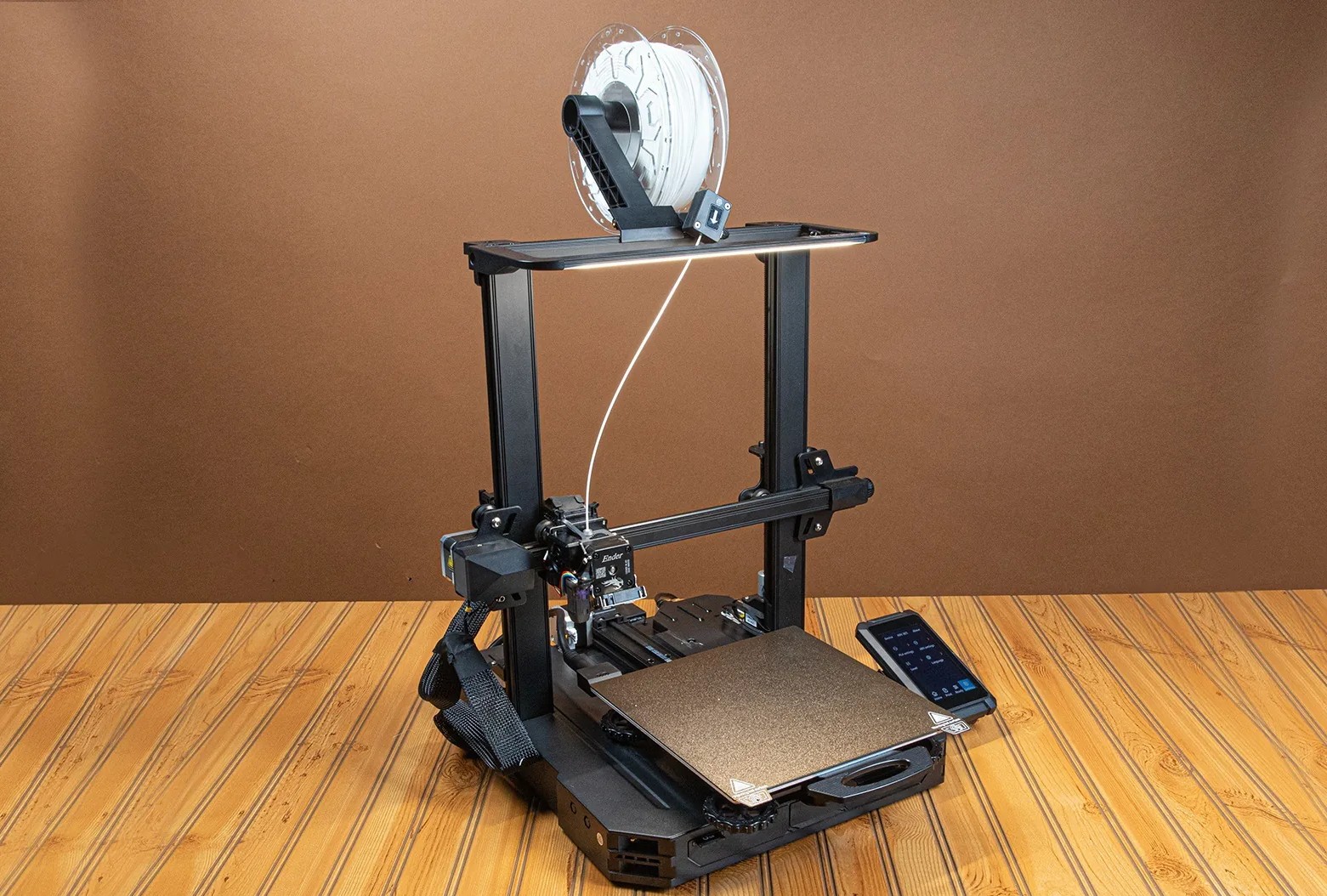
To access it from the computer, we use an SD to USB-C adapter (in this case), allowing us to transfer files easily.
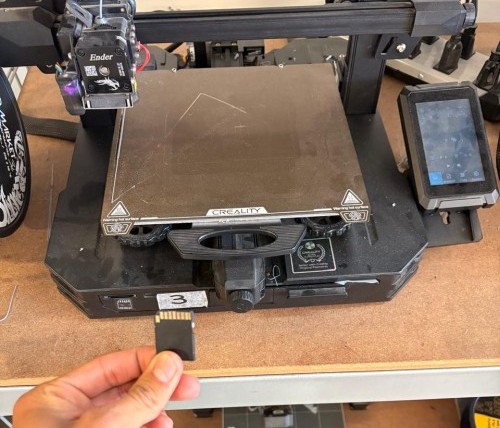
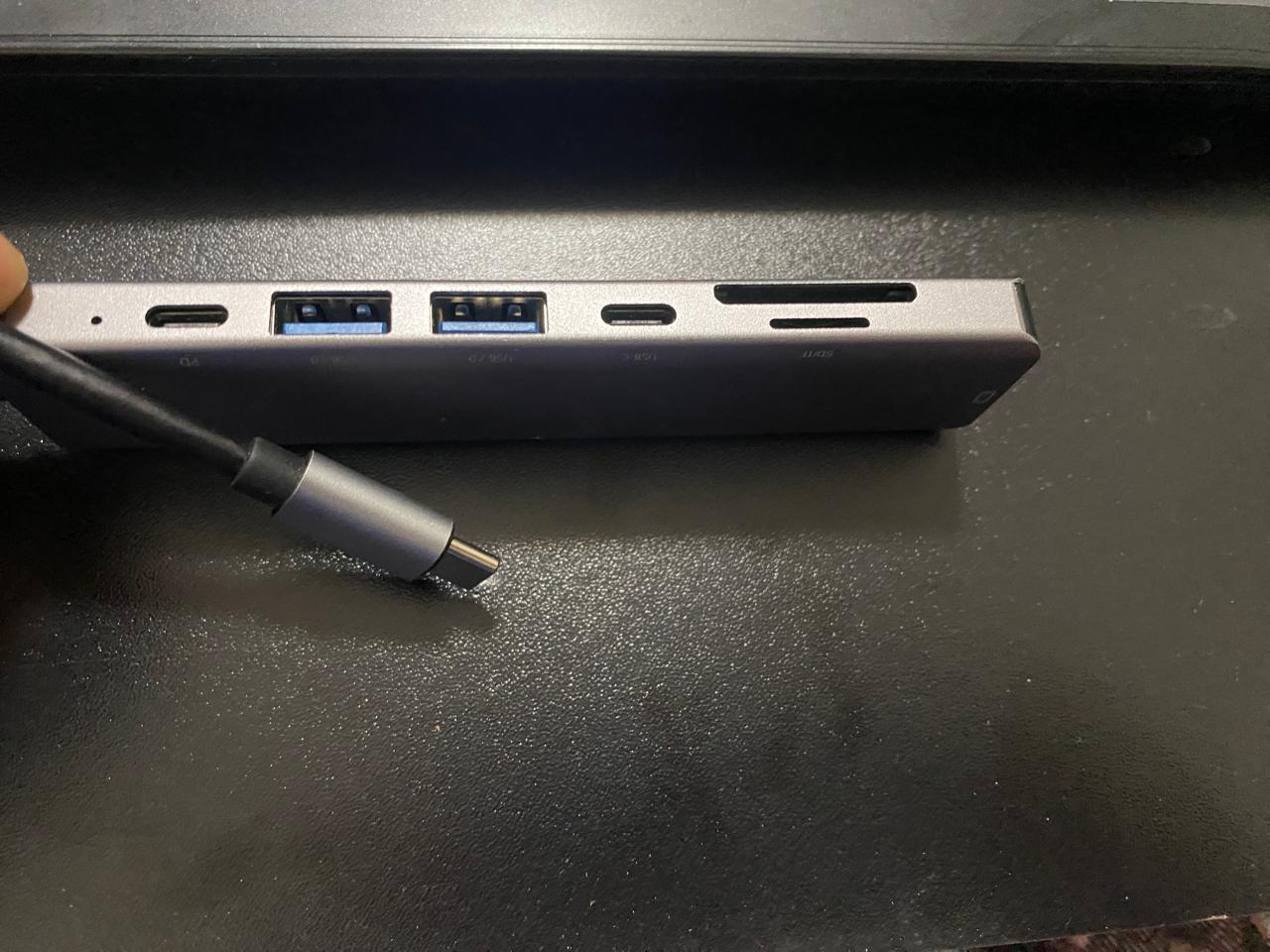
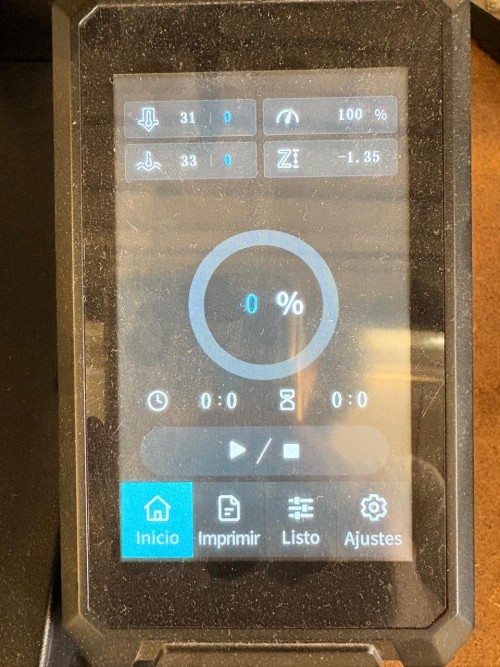
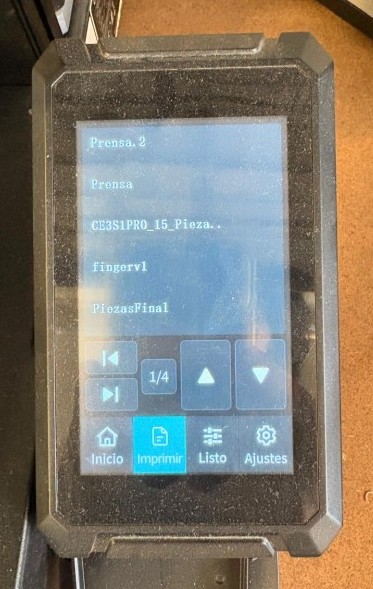
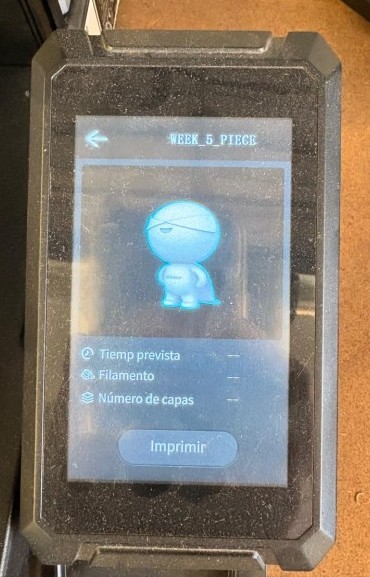
On the printer’s touchscreen interface, we navigate to the “Print” menu.
Inside this menu, we search for the file using the name previously assigned in the slicer software.
After selecting the file, we simply press Start
Advantages and Limitations of 3D Printing
Advantages
- Design freedom: Allows the creation of complex geometries and internal structures that are impossible or very costly to achieve with traditional subtractive manufacturing.
- Rapid prototyping: A digital model can be turned into a physical part in hours, significantly reducing iteration time during the design process.
- Low-cost tooling: No molds, dies, or custom fixtures are required. The same machine can produce entirely different parts back to back.
- Material efficiency: Additive processes deposit material only where needed, reducing waste compared to CNC machining which removes material from a solid block.
- Accessibility: Desktop FDM and resin printers are widely available and affordable, bringing fabrication capability directly to labs, classrooms, and individuals.
- Customization: Each part can be unique without any additional cost, enabling on-demand, personalized production.
Limitations
- Anisotropic strength: FDM parts are typically weaker along the Z axis (layer bonding direction) compared to the XY plane. Layer adhesion is a structural weak point under tensile or shear loads.
- Surface finish: Layer lines are visible on FDM prints. Achieving a smooth surface requires post-processing such as sanding, priming, or chemical smoothing.
- Print time: Large or detailed parts can take many hours. High-quality settings (smaller layer height, more perimeters) significantly increase print duration.
- Support structures: Overhanging geometry requires support material that must be removed after printing, adding post-processing time and potentially leaving surface marks.
- Material properties: Consumer FDM materials like PLA have limited thermal and chemical resistance. Engineering-grade materials (PETG, ABS, Nylon) require higher-end printers with enclosures and hardened nozzles.
- Dimensional accuracy: Thermal expansion and contraction during printing can cause warping or shrinkage, affecting dimensional precision, especially on large flat parts.
- Resin hazards: Resin-based processes (SLA/MSLA) involve photopolymer resins that are toxic and require careful handling, ventilation, and proper waste disposal.
Results
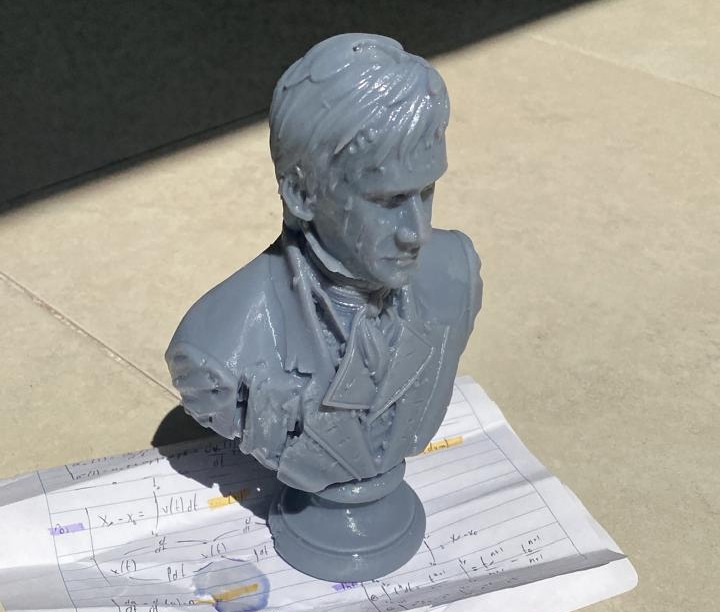
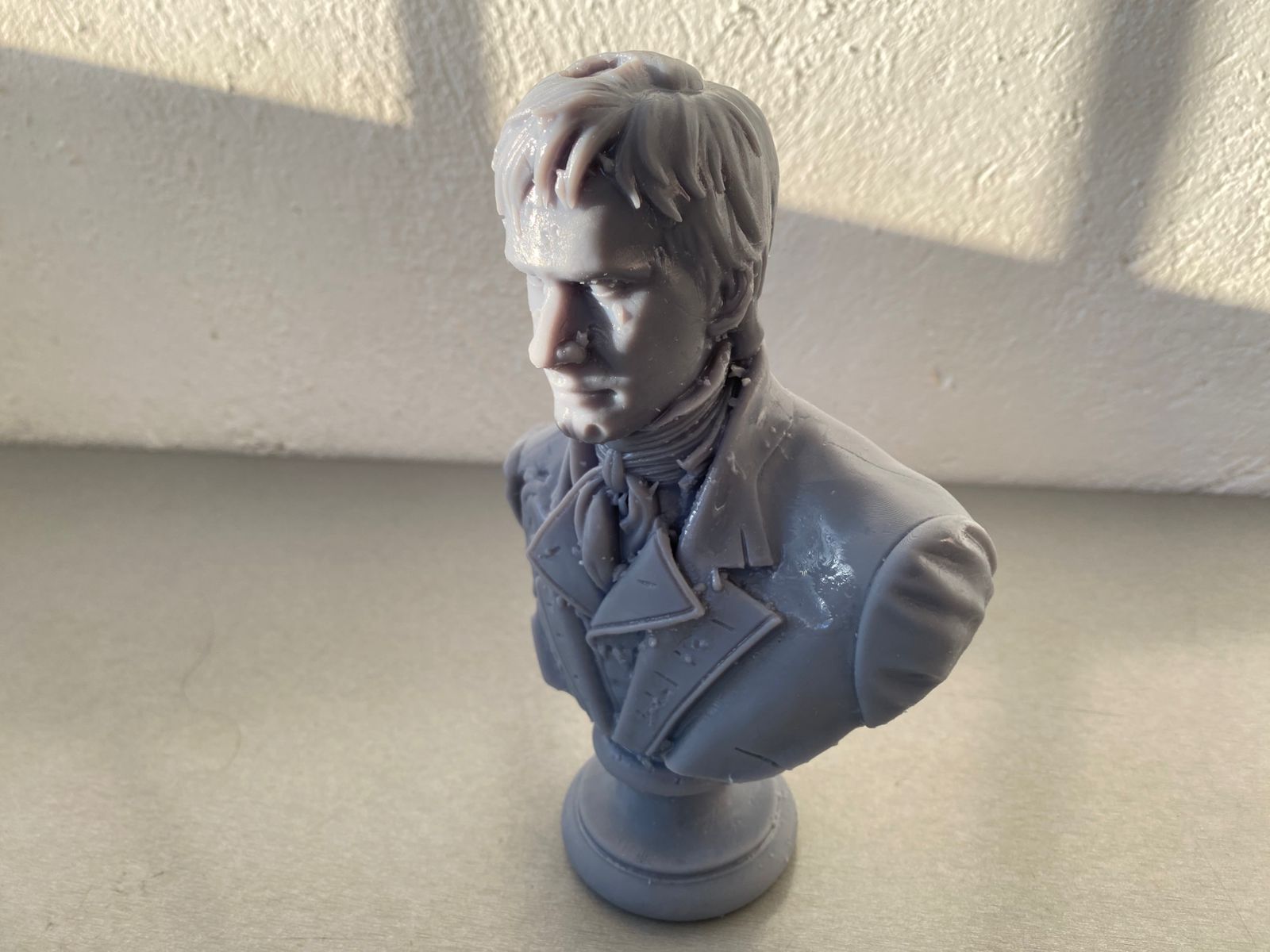
Resin 3D Printing
Filament 3D Printing
Files
The Mr. Darcy statue is the intellectual property of arturosierraq, and it can be found on Cults3D.