Week 18: Invention, Intellectual Property and Income
Before starting
This week focuses on analyzing the future of KINGER, evaluating its current status, identifying remaining challenges, planning future development, and defining how the project could evolve beyond Fab Academy.Future Development
The current version of KINGER demonstrates the feasibility of running a local AI assistant on a Raspberry Pi while maintaining voice interaction, memory management, and hardware feedback through LEDs and physical controls. Although the project already achieves its primary objective as a personal assistant, there are several opportunities for future development.
Short-term Goals
The next step is to complete the UART communication between the Raspberry Pi and the XIAO microcontroller. This communication will improve the integration between the different hardware modules and allow future peripherals to be added more easily.
Another goal is to optimize the power distribution system. Currently, the project aims to power all components directly from the Raspberry Pi's 5V outputs in order to reduce the number of cables and simplify the internal arrangement of the electronics. Additional testing is required to ensure that the available current is sufficient for stable operation.
Medium-term Goals
One of the planned improvements is to allow KINGER to communicate with a personal computer through SSH commands. This would enable voice-controlled automation routines such as opening applications, launching websites, starting music playback, or executing predefined work environments.
The development of a web interface is also being considered. This interface would allow users to configure settings, review system information, and manage future features without directly accessing the Raspberry Pi.
Long-term Goals
The long-term vision for KINGER is to evolve from a personal voice assistant into a local AI experimentation platform. The current hardware limitations of a Raspberry Pi 5 with 4 GB of RAM restrict the size and complexity of the language models that can be used. Future versions may incorporate more powerful hardware or optimized AI models capable of understanding whether a spoken sentence is a command, a question, or part of a conversation without requiring explicit instructions.
Another possibility is transforming KINGER into a local AI server capable of providing services to multiple devices while maintaining user privacy and independence from cloud-based solutions.
Dissemination Plan
After completing Fab Academy, I plan to document the development process through short videos published on TikTok and Instagram. These videos will explain how the project was designed, programmed, and assembled, allowing other makers to learn from the process and provide feedback.
The social media publications will include links to the Fab Academy documentation page so that viewers can access detailed technical information, design files, and project documentation. Community feedback may also help identify improvements, new applications, and future development opportunities.
Current Status
Several core functionalities have already been completed:
- Voice recognition.
- Speech synthesis.
- Memory system.
- Alarm system.
- Audio output.
- LED status feedback.
- Physical button controls.
The remaining tasks focus primarily on UART communication and future expansion features such as PC control and a web-based management interface.
Open Questions
Although the system is fully functional, several technical questions remain:
- Can all peripheral devices be reliably powered directly from the Raspberry Pi's 5V outputs?
- How can the response time be reduced to make conversations feel more natural?
- Would additional microphones significantly improve voice capture performance?
- What hardware upgrades would be required to run larger and more capable AI models locally?
These questions will guide future testing and development efforts.
Lessons Learned
One of the most valuable lessons learned during this project was the importance of learning new development environments. While I had previously modified Raspberry Pi-based projects, KINGER required building an entire system from scratch, including software architecture, hardware integration, and AI deployment.
Another important lesson was related to mechanical design. Designing a modular enclosure that could be assembled using screws and multiple printed parts proved significantly more challenging than creating simple one-piece 3D printed objects. This process highlighted the importance of planning assembly methods, tolerances, maintenance access, and component placement from the beginning of the design process.
Finally, the project reinforced the importance of local AI systems. By using an Ollama model running entirely on the Raspberry Pi, all interactions remain on the device, providing a higher level of privacy while demonstrating that useful AI assistants can be developed without relying on cloud services.
© Copyright
Copyright is a form of legal protection that automatically grants creators exclusive rights over their original works. These rights include the ability to reproduce, distribute, modify, publish, and authorize the use of the work. In the context of digital projects, copyright helps identify ownership and establishes the conditions under which other people may use the material.Creative Commons is a non profit organization designed to provide creators with standardized licenses that make it easier to share their work while retaining certain rights.
Instead of requiring a custom legal agreement, creators can choose from a set of predefined licenses that clearly specify how others may use their work. In this project, Creative Commons was used to generate the license information that will be displayed in the footer of the Fab Academy documentation page.
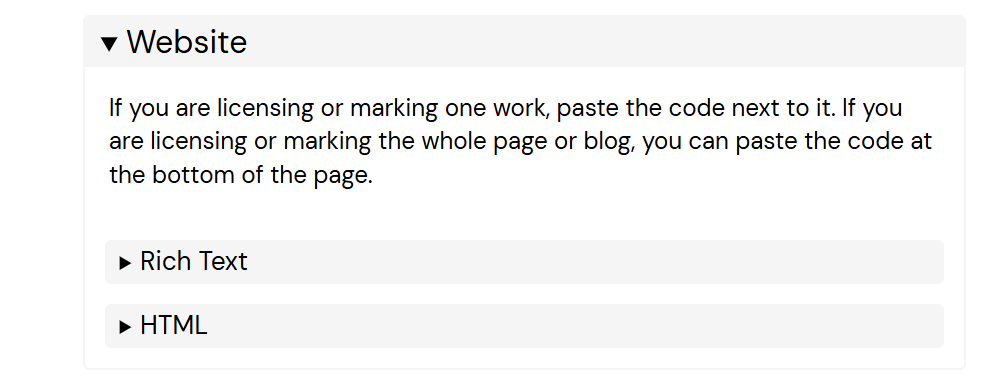
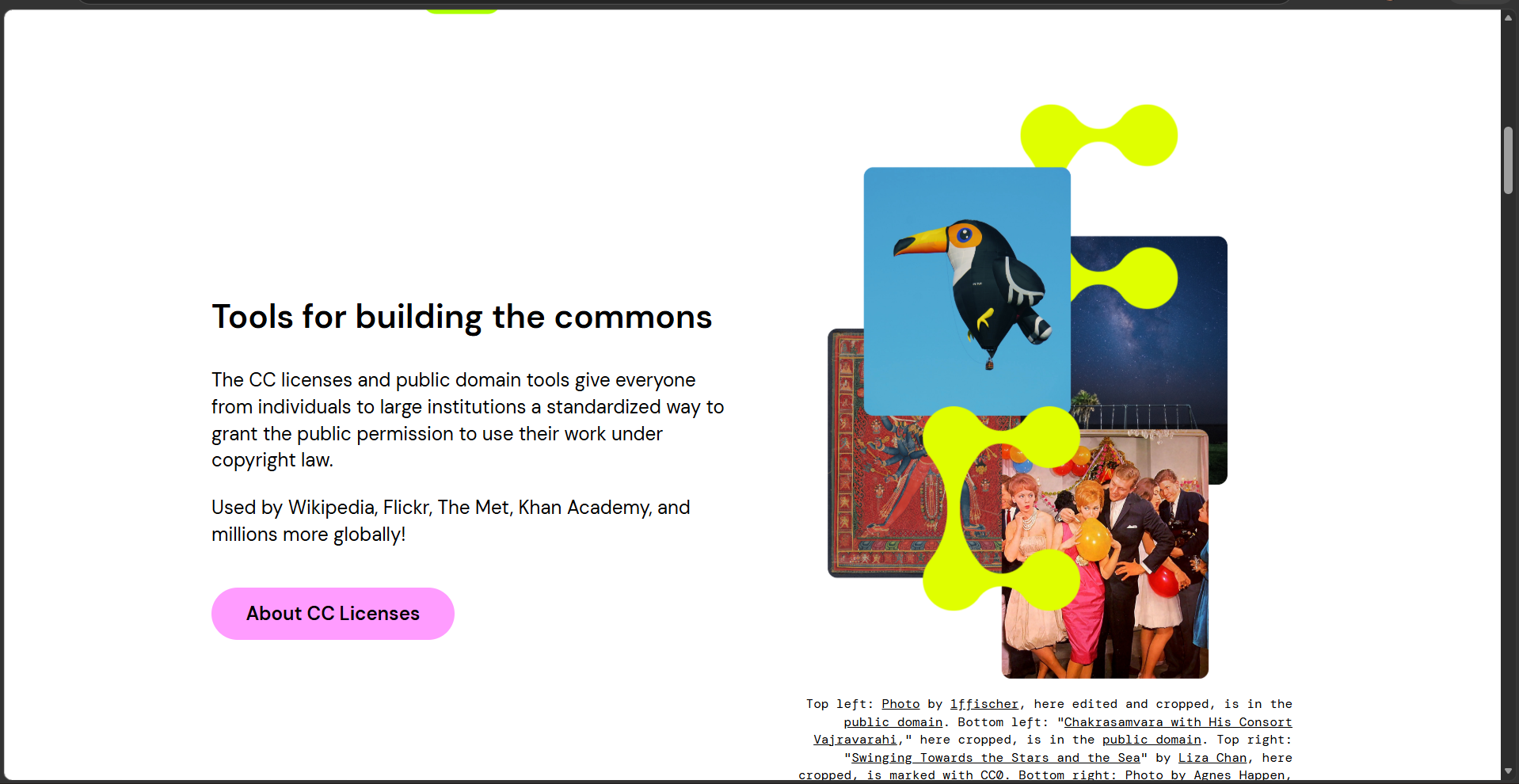
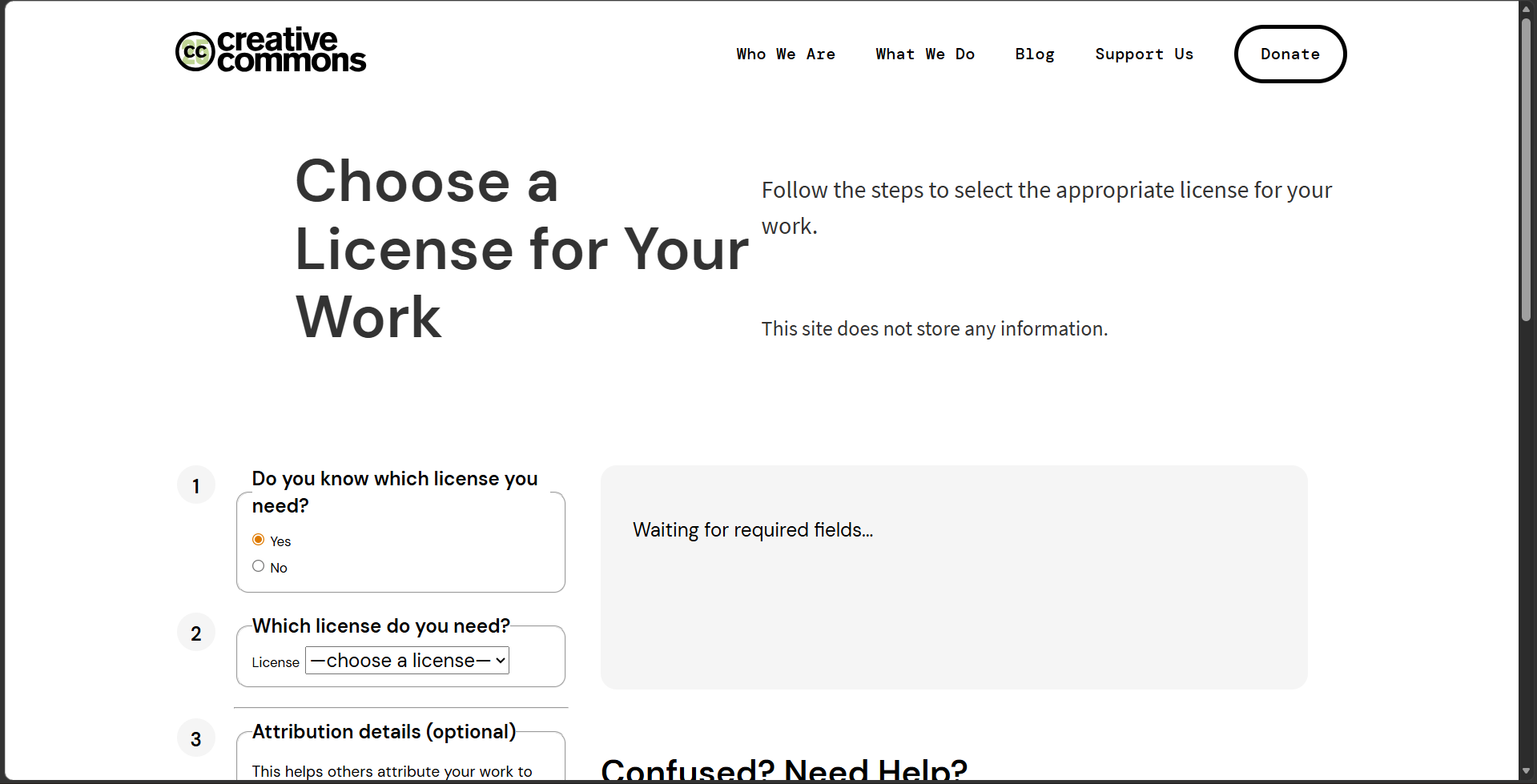
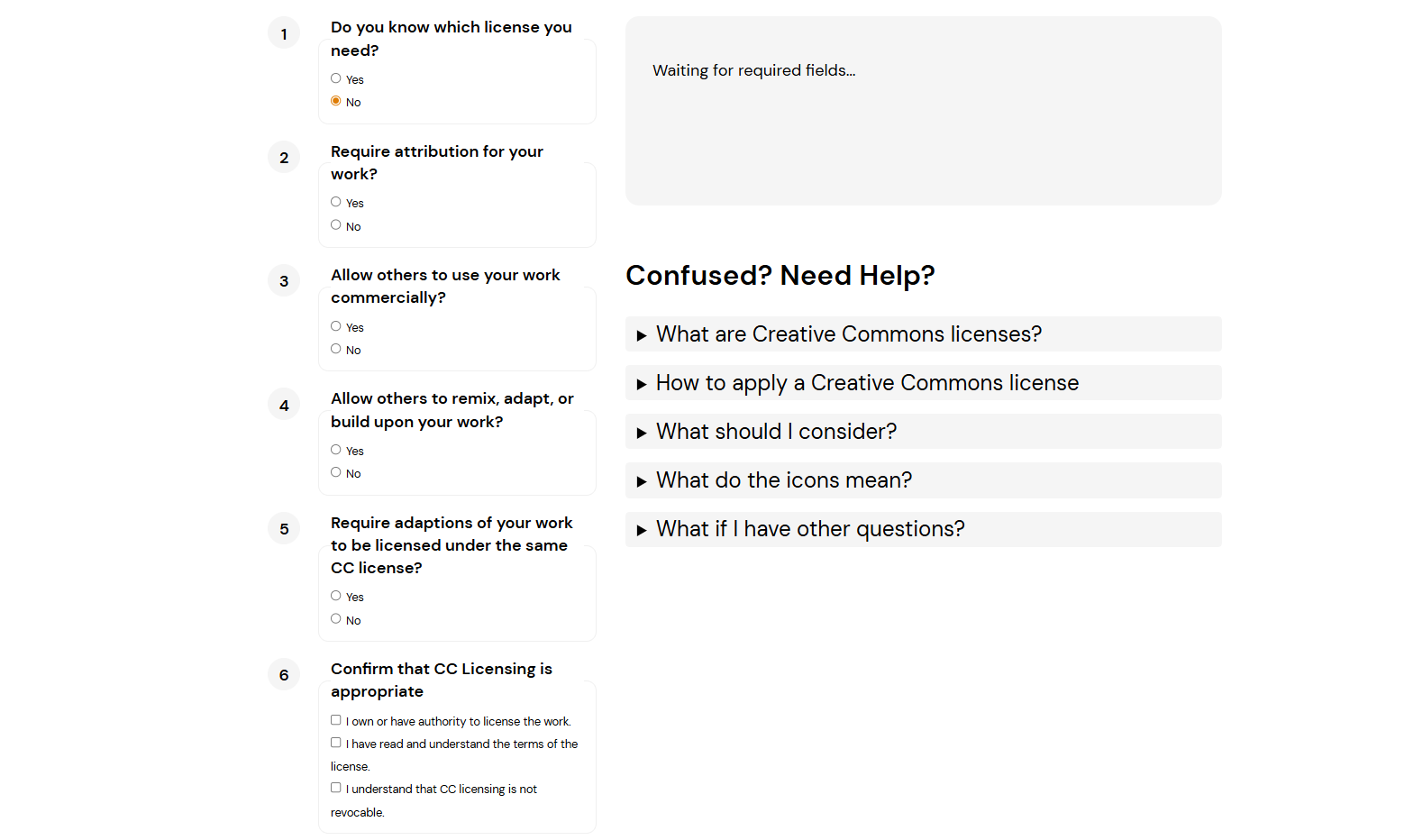
When accessing the License Chooser section, the following menu appears. This tool guides users through a series of steps to determine which license best fits their project.
1- License Selection
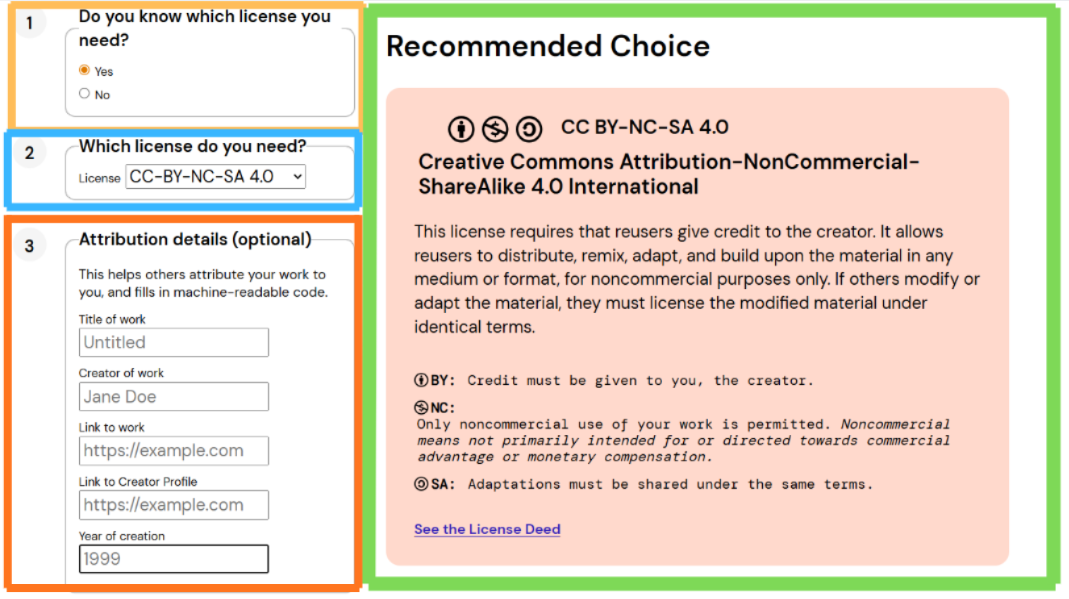
The first step is to indicate whether the creator already knows which license is required.
- If the desired license is already known, it can be selected directly from the available options.
- If not, the chooser provides a short questionnaire with simple questions regarding attribution, commercial use, modifications, and sharing conditions. Based on the answers provided, the system recommends the most appropriate license.
2- Recommended License
After answering the questionnaire, the recommended license for this project was CC BY-NC-SA 4.0 (Attribution–NonCommercial–ShareAlike 4.0 International).
This license allows other people to copy, distribute, and adapt the work as long as they:
- Give appropriate credit to the original author.
- Do not use the work for commercial purposes.
- Share any modified versions under the same license.
3- Project Information
The next section allows additional project information to be included. Although this step is optional, it is recommended because it provides proper attribution and makes the project easier to identify. The following information was included:- Project name (KINGER).
- Author name.
- Project documentation URL.
- Author profile URL.
- Year of publication.
Generating the Footer