17. Applications and Implications
What will it do?
As soon as your alarm time goes off, it will start making noise and run around your room. The sensors will help it dodge furniture so it doesn't get stuck in a corner, so the only way to silence it will be to get out of bed, chase it, and press its off button.
Who's done what beforehand?
There are mobile alarm clock concepts on the market (like the classic "Clocky" that rolls away to escape). In addition, in the community there are multiple obstacle-avoiding robots and digital clocks with alarms, but this project integrates both: an autonomous navigation system with evasion, precise timing (RTC), and audio playback.
What sources will you use?
Datasheets: For the ESP32-C6 chip, the TB67H451AFNG motor driver, and the DS3231 RTC module.
Software Documentation: SDK references and MicroPython/C libraries for reading analog sensors.
What will you design?
I will design the hamster's base in SolidWorks and then the shell in Blender. I also made the board with a Xiao ESP32-C6 since it has Wi-Fi and this will simplify the connection to an interface where I can set the alarm.
What materials and components will be used, how much will they cost, and where will they come from?
| Item | Details | Qty | Unit Price ($) | Source/Link |
|---|---|---|---|---|
| PCB | ||||
| Female pin | - | 25 | - | - |
| 10k resistor | 1206 smd | 1 | - | - |
| 0 resistor | 1206 smd | 3 | - | - |
| AMSL117 3.3v regulator | - | 1 | - | - |
| 0.1uF capacitor | 1206 smd | 2 | - | - |
| TB67H451AFNG | - | 1 | - | - |
| Attiny | 412 | 1 | - | - |
| XIAO-ESP32C6 | - | 1 | 7 | UElectronics |
| Mechanical | ||||
| PLA filament | - | - | 20 | InovaMarket |
| Black acrylic | 40.6 x 30.5 x 0.3 centimeters | 1 | 23 | Amazon |
| Plush fabric | - | 1 | 17 | - |
| Mini Wheel | - | 1 | 1.40 | AliExpress |
| Electronic Components | ||||
| Micro DC motor | 6V 300 RPM | 2 | 4 | AliExpress |
| RTC sensor | - | 1 | 4 | MercadoLibre |
| Copper | - | 1 | 6 | AliExpress |
| Speaker | - | 1 | 0.45 | AliExpress |
| DFplayer Mini MP3 | - | 1 | 2 | UElectronics |
| Analogic Sensor | 4-50 cm | 3 | 3 | AliExpress |
| Battery | 9V- 4200 mWh | 1 | 17 | Steren |
| TOTAL COST: $118.85 | ||||
What parts and systems will be made?
- Structural System: 3D printed shell and motor mounts.
- Electronic System: Manufacturing and soldering of the main PCB board, which has three separate boards: the main one where the Xiao ESP32 is located, the motor board, and the board for the 3 analog sensors.
- Navigation and Logic System: Obstacle avoidance logic reading the array of 3 analog sensors, time interrupt from the RTC module, and PWM activation for the motor driver.
What processes will be used?
- PCB manufacturing
- 3D printing
- Programming
- Laser cutting
- 3D modeling
What questions need to be answered?
1. With only 3 sensors, will the hamster be able to "see" well around it, or does it have blind spots that will cause it to get stuck in the corners of your room?
2. Will the noise made by the speaker be loud enough to wake you up, or will it sound too low?
3. How long will the robot's battery last before having to recharge it, taking into account the energy spent by the motors when it runs away?
How will it be evaluated?
The project will be successful if it meets the following operational criteria:
- Precision: The RTC module triggers the alarm sequence exactly at the programmed time.
- Autonomous Mobility: The robot navigates the floor, successfully dodging obstacles using the analog sensor array.
- Sound: The amplifier and speaker play the alarm sound correctly while the robot is in motion.
How was the process?
The first thing I focused on was making the hamster shell in blender which the process you can find in the Final Project, I did this to later be able to do the electronics taking into account the available space, once I had the shell I started doing the electronics design and then when I started to manufacture them, while the mono fab was working what I did was place the plush fabric and assemble the base.
The last thing I did was the interface and the programming since I had to do these two things at my house and not in the fab lab laboratory, so first I had to have 100% finished what I had to do in the fab lab.
Problems I had
During the development of my project, I had some problems regarding how I had planned it versus how I was changing it. The problems I had were the following:
Motor placement
At first, so that the wheels wouldn't hit the base of my hamster, I had placed the mounts for my motors very close to the edges of the base.
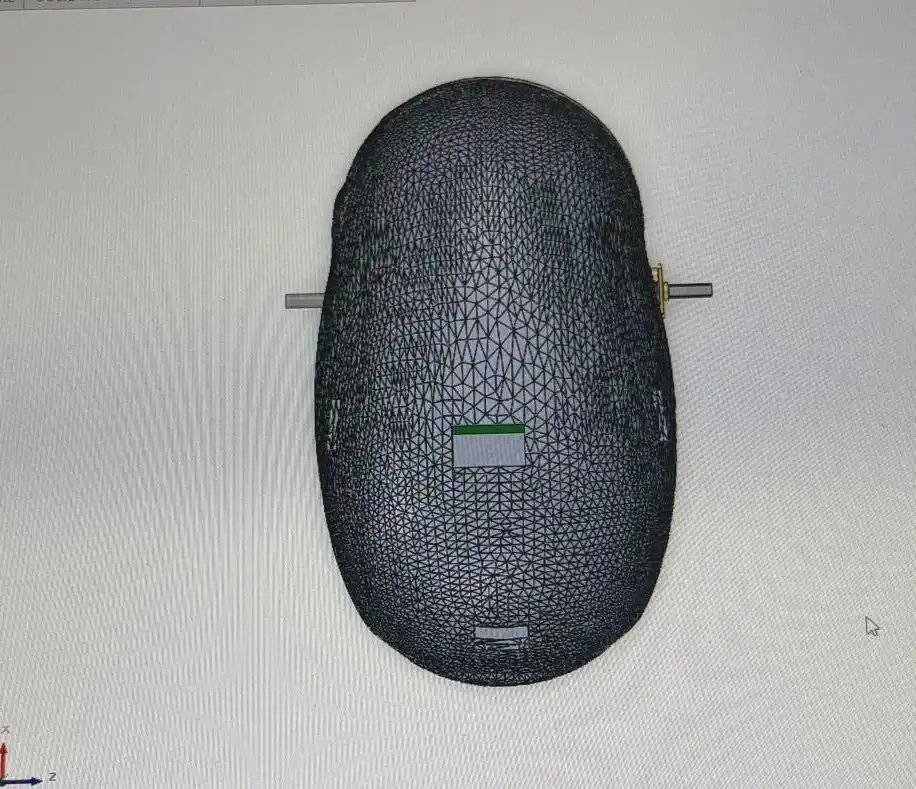
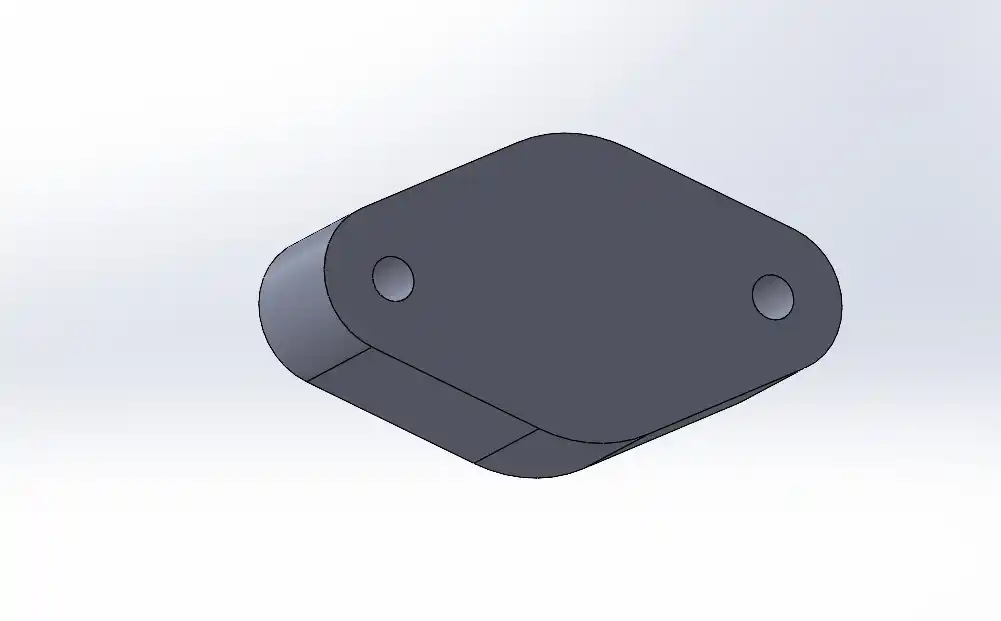
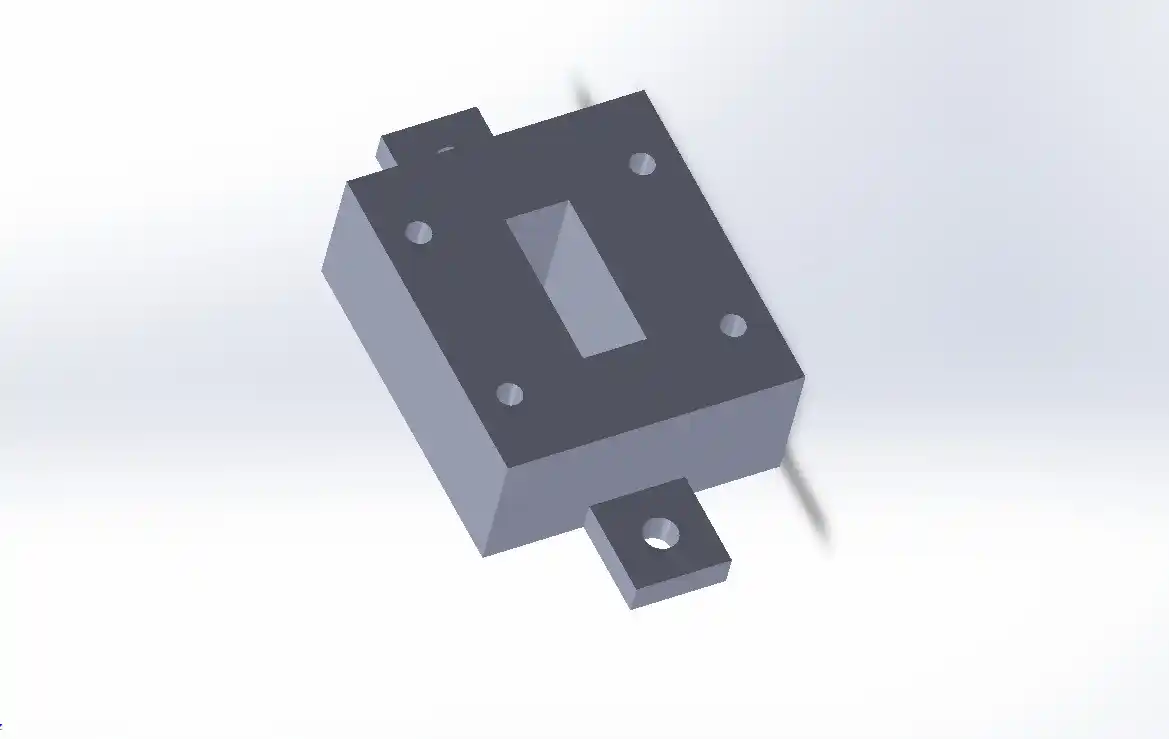
As can be seen in the original design, the motors protruded from the shell, which, when put into the final design, made it not look cute enough. So I decided to modify the base to move the motor mounts to the center, although this meant the hamster had to be taller so the wheels wouldn't hit the base. Therefore, I also made height standoffs for the motor base and for the caster wheel, which were the following:
Interface
At first, I had problems not being able to read the topics in MQTT. After asking around why I had this problem, I realized that my university's network was the one blocking the operation of MQTT. So, for all the testing of my project, I did it at home to avoid having this problem.
Design
My main idea was for my alarm to be shaped like a hamster, so I had to make the shell and then cover it so it would have a cute design. But the first test I did with plush-type fabric was with a brown color. When I finished it, I thought it looked cute, but my fab classmates teased me saying it looked like a rat because of the shade I had chosen.
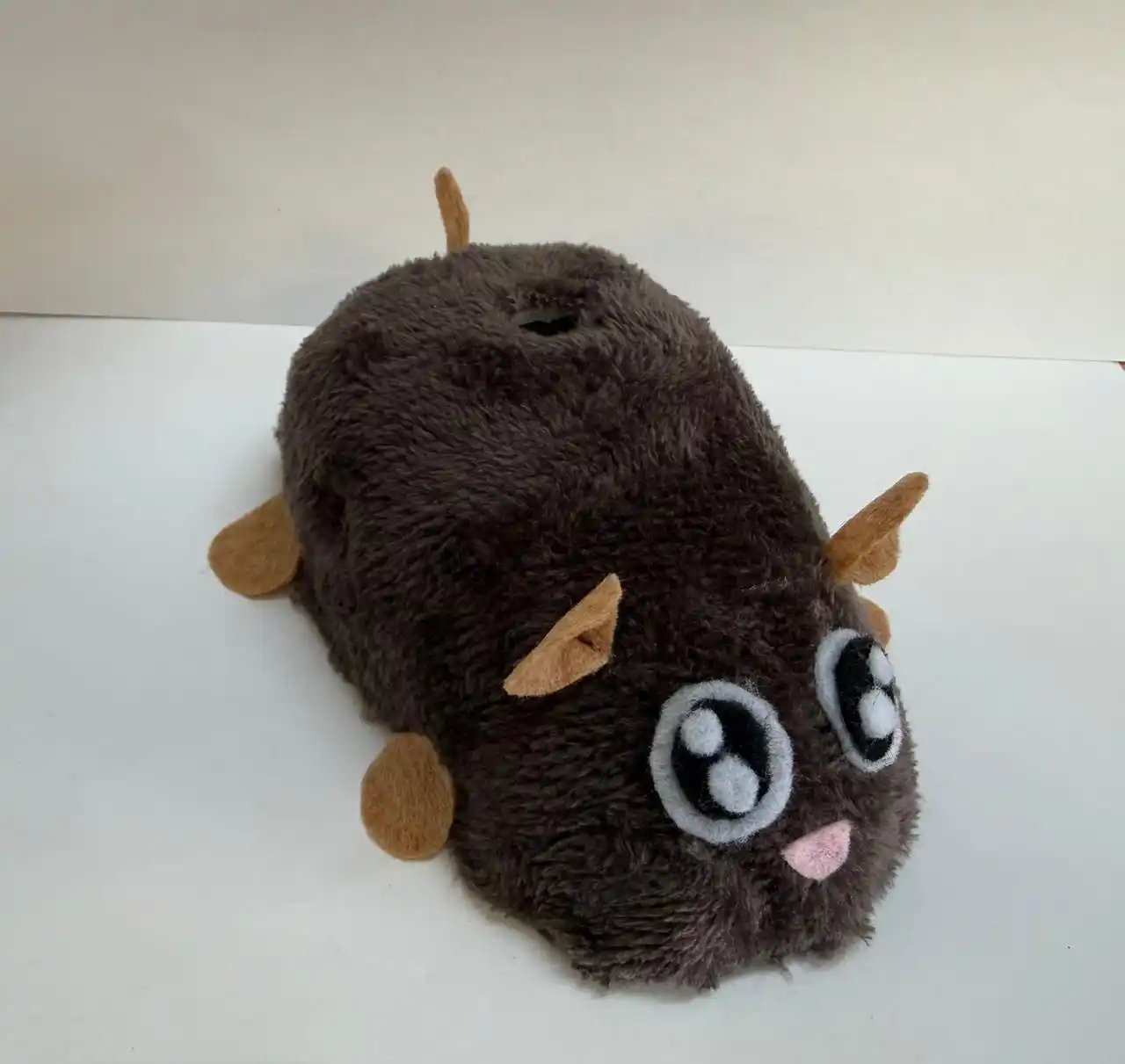
So, to make it look cuter, more hamster-style, I decided to change the fabric for a fluffier one in a lighter color.

Battery
At first, when I was doing tests, I had to remove the screws from the base to be able to take out the battery. Since it was a time-consuming process, I decided to redesign the shell to make a hole in it so the process of removing and putting in the battery would be faster.
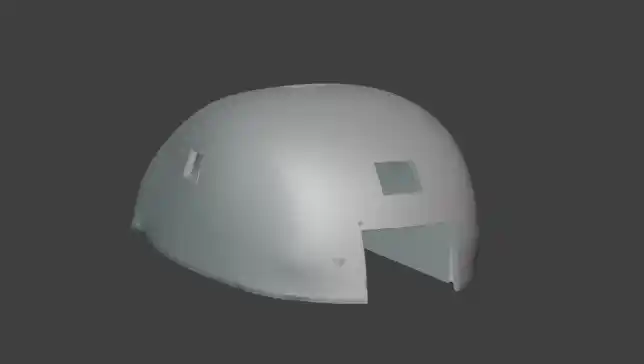
This way, I only had to lift the fabric a little and pull the battery to disconnect it.