Project Roadmap & Future Outlook
To successfully transition this prototype into a functional commercial product, the engineering and business development goals have been structured into logical implementation phases.
Short-Term Goals
- Ergonomic Remote Control: Redesign the handheld controller casing to make it significantly more compact, lightweight, and anthropometrically optimized for a better user grip.
- Enclosure Optimization: Refine the physical battery housing and overall structural enclosures to optimize space layout and increase shock resistance for internal electronic components.
Medium-Term Goals
- Advanced Telemetry & Control System: Upgrade remote control components and integrate responsive transceiver loops to continuously monitor real-time velocity data, ensuring smoother acceleration and braking control profiles.
- Powertrain Shift (Hub Motors): Transition from the current 5060 external outrunner motor configuration to an integrated Hub Motor setup. This alternative streamlines the overall vehicle installation and eliminates exposed drive wear parts.
- Commercial Form Factor Finish: Upgrade the external aesthetics and material choices of the prototype, transitioning the build layout away from an open maker prototype into a polished, consumer-ready commercial grade standard.
Long-Term Goals
- Modular D.I.Y. Architecture: Standardize the physical design into a "moderately easy" and intuitive kit assembly process. This enables end-users to build their own vehicle from scratch, delivering an engaging self-assembly build experience.
- Branding & Creative Packaging: Design custom, high-fidelity retail packaging and functional unboxing layouts essential for a official product launch.
- Social Media & Marketing Infrastructure: Deploy dedicated social platform channels supported by target-rich paid ad campaigns and structured marketing to scale initial audience reach.
Dissemination & Commercialization Strategy
1. Business Model & Product Offering
The dissemination roadmap focuses on establishing a sustainable business footprint in the micromobility market through two clear commercial paths:
- The Modular Conversion Kit: Retailing a standalone, universal powertrain integration kit. This configuration enables consumers to easily retrofit standard non-motorized vehicles (longboards, skateboards, scooters) into intelligent electric transport assets.
- Ready-to-Ride (RTR) Ecosystem: Launching fully pre-assembled electric vehicles (e.g., complete electric skateboards). By optimizing technical resource tracking, these units will be positioned as budget-friendly alternatives to premium premium tiers currently leading the market space.
2. Target Demographic & Market Fit
The primary target audience consists of urban commuters within a 12 to 50 age demographic. This segment naturally embraces modern transport alternatives and seeks tech options to bypass public transit congestion or long walking commutes, yielding an efficient, cost-effective long-term transport investment return.
3. Digital Marketing & E-Commerce Infrastructure
For an emerging tech startup, high visual reach is crucial. The market launch strategy will rely heavily on structured performance marketing across social platforms to efficiently lower initial customer acquisition costs (CAC).
Utilizing my web development capabilities, I will deploy a secure direct-to-consumer (D2C) e-commerce storefront. A dedicated digital checkout layout is critical to scale geographic audience outreach past local regions.
4. Logistics & Component Sourcing
To preserve healthy gross margins while offering competitive pricing, strategic material sourcing is essential. The production flow will leverage qualified global distribution channels (such as AliExpress hubs or direct component manufacturers) to purchase raw mechanical elements and electronic components in high volume batches, lowering unit overhead.
Technical Retrospective & Iterative Engineering
While the hardware architecture implemented in my baseline prototype effectively validated the mechanical principles of electric propulsion, the actual field testing and development cycle highlighted key areas for optimization:
Powertrain Mechanics: The Shift to Hub Systems
The initial build iteration utilized an outrunner motor with a classic mechanical belt drive. Although torque performance was reliable, the assembly phase exposed the difficulties of installing custom timing drive pulleys onto standard wheels. This particular mechanical installation runs a high risk of compromising the structural material integrity of the wheel structure—a safety parameter I did not fully prioritize before initial testing.
Migrating to integrated Hub Motors houses the powertrain completely inside the wheel radius. This design direction completely resolves complex pulley alignments, maximizes physical space, and eliminates the need for structural wheel modifications.
Electronics Layout: Custom PCB Prototyping
The current remote control design can be streamlined further. Future production models will phase out loose internal modules and wire routing, replacing them with an application-specific custom PCB designed in professional EDA software and manufactured via an certified fabrication facility. This implementation will drastically minimize the final electronics footprint while boosting control reliability.
[ MISSION: INTELLECTUAL PROPERTY LICENSING ]
Determine IP Protection
I started by exploring the Creative Commons website to evaluate my options. Since choosing the right legal framework can be complex, I navigated to their "Chooser" tool. It provides a simple interactive questionnaire that helps clarify the permissions you want to grant to the public.
If you already have a clear idea of your requirements, you can access their selection menu directly via the button below:
ACCESS CC CHOOSER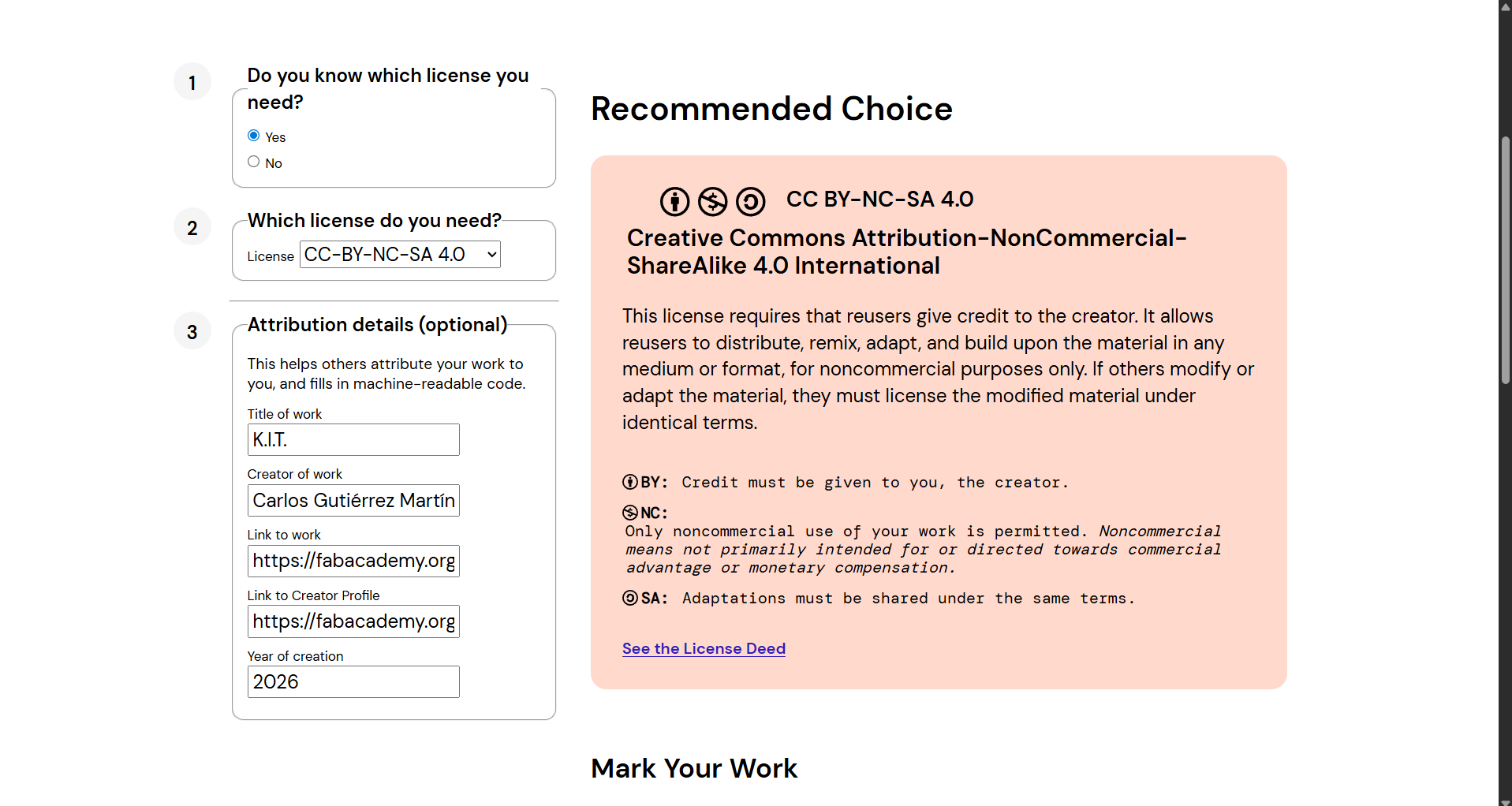
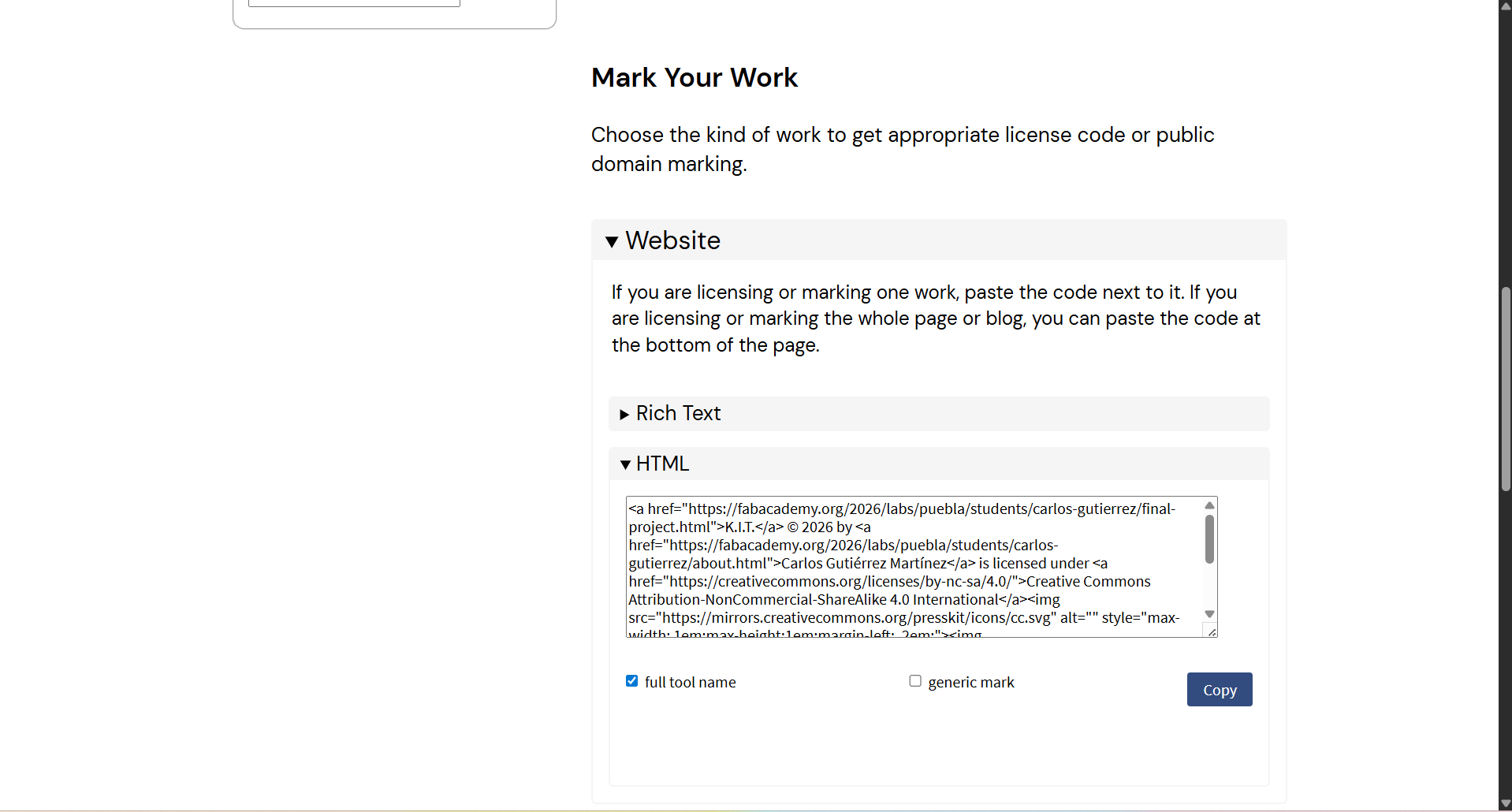
License code
Once you finish filling in your license details, you can scroll down on the website and find an option titled HTML, which will allow you to copy a footer from your project's license directly to your page, as you can see below.