
Packaging Design and Fabrication
To facilitate transportation, storage, and presentation of the final prototype, a custom packaging system was designed and fabricated using laser-cut micro-corrugated cardboard. The packaging was developed specifically for the geometry and assembly requirements of the kinetic flower, ensuring that all components could be securely positioned while minimizing movement during handling.
The packaging consists of two main elements: an external box and an internal support structure. Both parts were designed digitally and fabricated using laser cutting, allowing precise dimensions and rapid production through a flat-pack manufacturing approach.
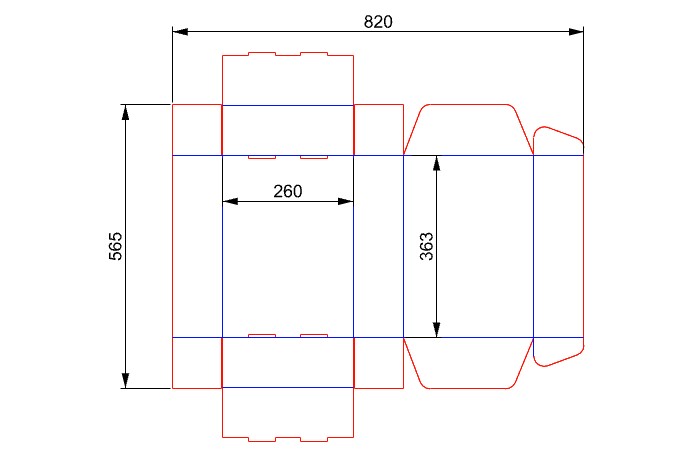
1. External Box
The outer packaging serves as the primary protective enclosure. It was designed as a foldable structure that can be assembled without additional rigid components, reducing material consumption while maintaining sufficient strength for transportation and storage. The geometry was optimized for laser cutting and efficient material usage.
The box was manufactured from micro-corrugated cardboard, a lightweight material that provides a balance between structural rigidity, low weight, and ease of fabrication. Folding tabs and locking features were incorporated directly into the design, enabling quick assembly and disassembly.
2. Internal Support Structure
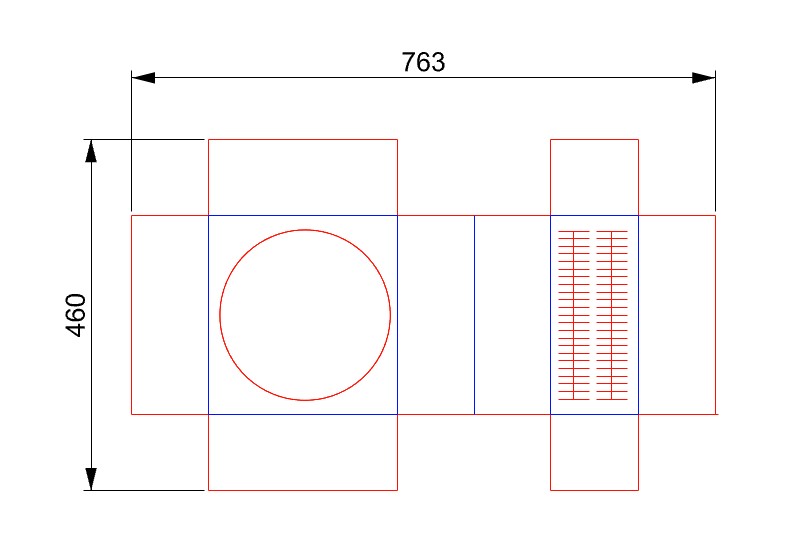
The second component of the packaging is an internal insert designed to position and protect the different parts of the artifact. When folded, this structure creates additional rigidity inside the package while simultaneously acting as a support system for the prototype.
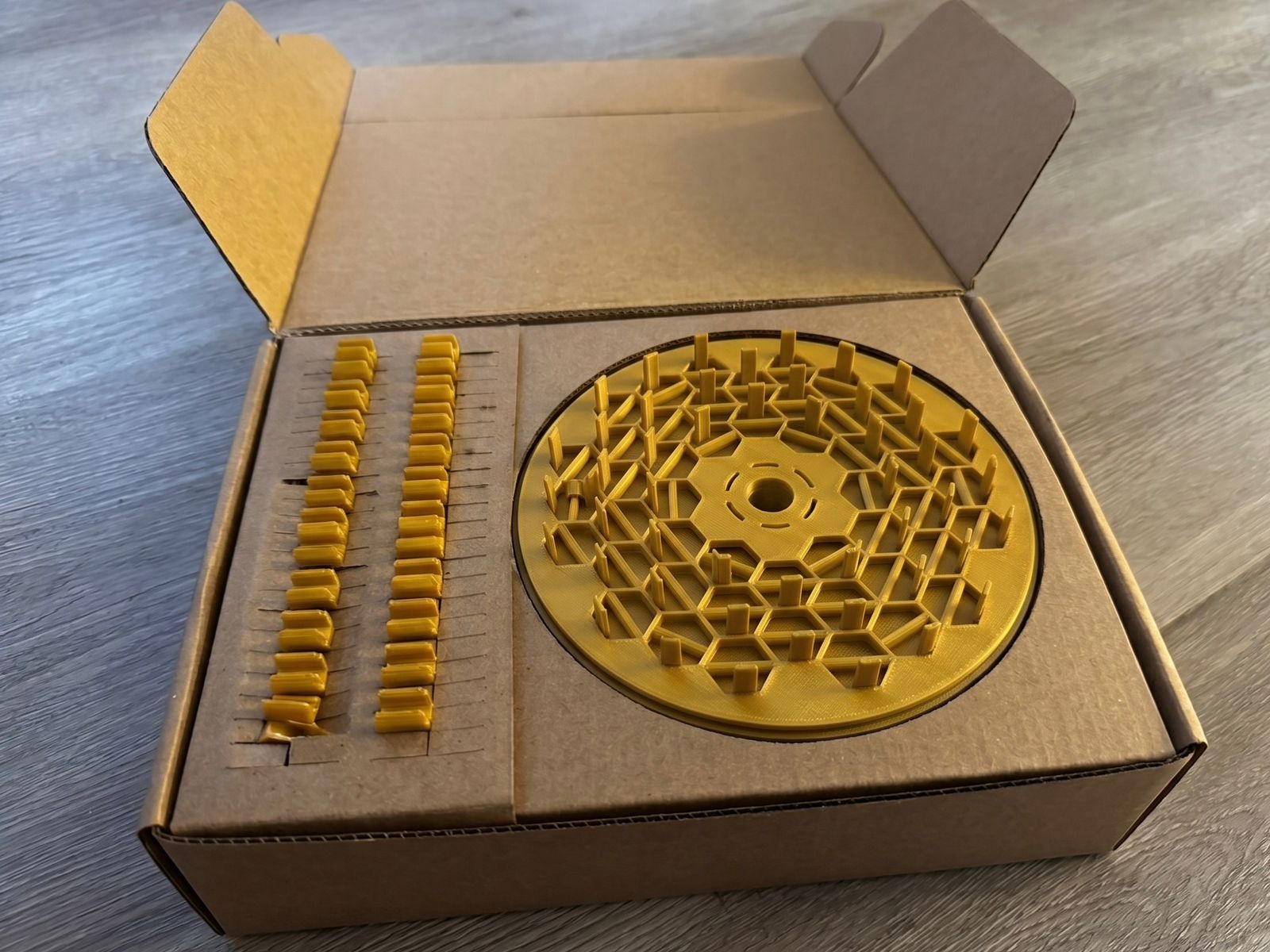
A circular compartment was incorporated into the design to accommodate the main flower assembly, including the mechanical structure, electronics, and integrated components. This central support prevents unwanted movement and distributes loads more evenly throughout the package.
In addition, a series of custom laser-cut slots were integrated into the insert to hold the individual petals. Since the petals had been thermoformed and no longer maintained a flat geometry, each slot was dimensioned to accommodate their curved shape while keeping them separated from one another. The petals are stored upside down, allowing them to rest securely without deformation or contact with the main structure.
3. Design Considerations
The packaging was designed not only as a protective container but also as an extension of the fabrication process. By using laser-cut micro-corrugated cardboard, it was possible to create a lightweight, low-cost, and fully customized solution tailored to the geometry of the final artifact.
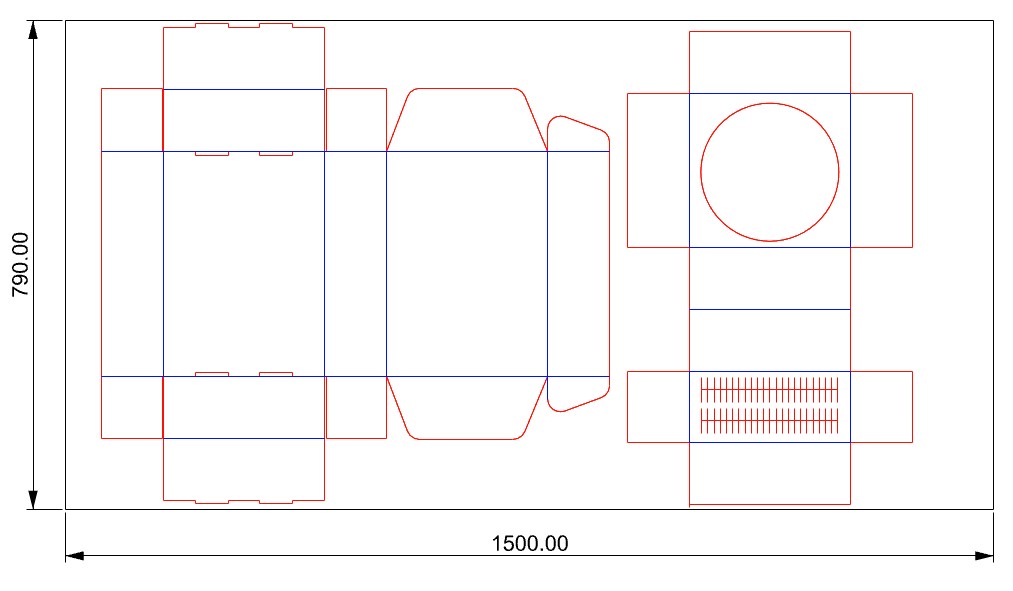
In addition to the functional requirements of the package, the layout of all components was optimized according to the dimensions of the available cardboard sheet. The external box and internal support structure were arranged within a fabrication area of approximately 1500 mm × 790 mm, maximizing material utilization while minimizing waste. This nesting strategy ensured that all packaging elements could be manufactured efficiently from a single sheet.
4. Fabrication Process
Once the packaging design was completed, the cutting layouts were exported and prepared for fabrication using a laser cutting machine. Both the external box and the internal support structure were manufactured from micro-corrugated cardboard, a material selected for its low weight, flexibility, and structural performance when folded.
The laser cutter enabled the precise production of both cutting lines and fold lines directly from the digital design. This approach ensured dimensional accuracy while allowing rapid fabrication and assembly of the packaging components.
After cutting, the pieces were manually folded and assembled. Particular attention was given to the internal support structure, as its geometry relies on a series of folds that generate rigidity once assembled. These folded sections create a self-supporting structure capable of maintaining the position of the flower components during storage and transportation.
The circular holder and the petal slots were tested and adjusted to ensure proper fit. Minor dimensional refinements were made to guarantee that the thermoformed petals could be inserted and removed without excessive force while remaining securely positioned inside the package.
5. Final Packaging Result
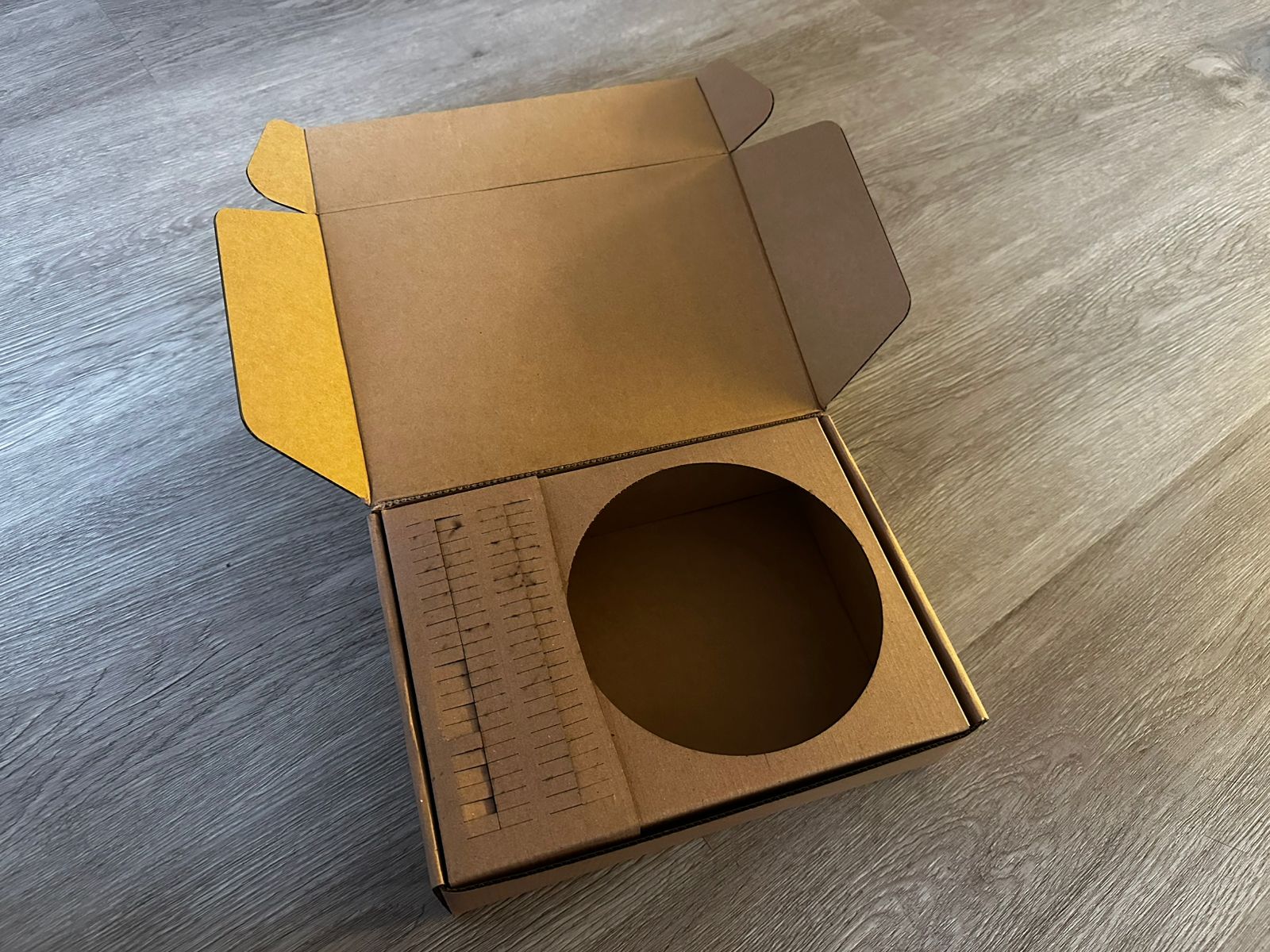
The final packaging successfully integrates protection, organization, and presentation into a single fabrication solution. The external box provides structural protection, while the internal insert securely positions both the main flower assembly and the individual thermoformed petals.
The circular compartment accommodates the complete flower mechanism, including the structural, mechanical, and electronic subsystems. Meanwhile, the dedicated slots maintain the petals separated and protected, preventing deformation or accidental damage during handling.
The use of a custom-designed insert allows all project components to be stored within a compact volume while maintaining a clear and organized arrangement. This improves transportation, simplifies assembly preparation, and enhances the overall presentation of the artifact.
Beyond its functional role, the packaging extends the design language of the project by applying the same digital fabrication principles used throughout the development of the artifact. As a result, the packaging becomes an integral part of the final project rather than simply a container.
Download Files
The design files used in this assignment can be downloaded below.