Week 19 – Invention, Intellectual Property and Income
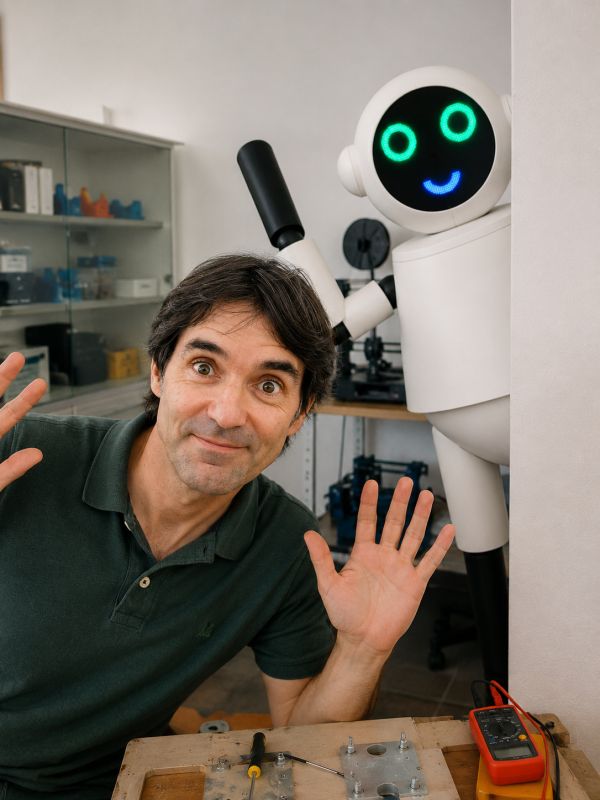
This week is focused on Invention, Intellectual Property and Income. The main objective is to develop a dissemination plan for my final project, analyse future possibilities and explain how the project could be shared with other people.
My final project is called FABI, a friendly interactive robot designed to attract children to the Fab Lab and encourage positive environmental behaviour through interaction, lights, movement and emotional communication.
FABI is not only a technical prototype. It is also an educational and communication project that combines robotics, digital fabrication, embedded programming, MQTT communication and environmental awareness.
Assignment and Learning Outcomes
The weekly assignment is:
- Develop a plan for dissemination of the final project.
- Complete the final project, tracking the progress.
Learning Outcomes
- Develop a plan to share my work.
- Formulate future opportunities for the final project.
- Summarise and communicate the essence of the project development.
- Reflect about intellectual property and possible income models.
Checklist
- Created a dissemination plan for the final project.
- Outlined future possibilities.
- Described how these possibilities could become real opportunities.
- Documented the current status of the project.
- Reflected about licensing and intellectual property.
What Tasks Have Been Completed, and What Tasks Remain?
| Task | Status |
|---|---|
| Definition of the robot concept | Completed |
| Research of similar robots and references | Completed |
| MQTT communication tests | Completed |
| RGB LED control | Completed |
| ToF proximity sensor tests | Completed |
| Stepper motor control tests | Completed |
| Mechanical design of the arms | In progress |
| Final body assembly | In progress |
| Internal electronics packaging | Pending |
| Final video and presentation slide | Pending |
What's Working? What's Not?
| Working | Needs Improvement |
|---|---|
| MQTT communication with Node-RED | Final cable organization |
| ESP32 control system | Mechanical integration of the arms |
| RGB LED reactions | Final external finishing |
| ToF distance detection | Power distribution inside the robot |
| Motor movement commands | Reliability during long demonstrations |
What Questions Need To Be Resolved?
- How can I make the arm movement safer and smoother?
- How can I protect the electronics inside the robot?
- How can I make the wiring cleaner and easier to maintain?
- How can I improve the emotional interaction with children?
- How can I make FABI easier to transport and demonstrate?
- How can I make the final robot look more like a finished product?
Planned What Will Happen When?
| Period | Planned Work | Status |
|---|---|---|
| Week 19 | Dissemination plan and intellectual property reflection | Completed |
| Week 19 | Continue mechanical integration | In progress |
| Week 20 | Finish electronics packaging | Pending |
| Week 20 | Complete final robot assembly | Pending |
| Final week | Record final video and prepare final presentation | Pending |
Dissemination Plan
A dissemination plan explains how the project will be shared with the people or groups that may be interested in it. In the case of FABI, the objective is not only to show the final robot, but also to share the learning process behind it.
FABI is mainly an educational and inspirational project. It is designed to be shown in Fab Labs, schools, workshops and public demonstrations where children can discover robotics and digital fabrication in a playful way.
Target Audience
- Children visiting the Fab Lab.
- Students interested in robotics and electronics.
- Fab Academy students and instructors.
- Makers and digital fabrication communities.
- Educational centres.
- People interested in environmental awareness projects.
How I Will Share The Project
- Through my Fab Academy documentation website.
- Through the final presentation slide and video.
- Through demonstrations at Fab Lab León and Fab Lab Ponferrada.
- Through possible workshops with children.
- Through social media posts showing the robot and its development.
- Through conversations with other makers and educators.
Intellectual Property
FABI has been developed as part of Fab Academy 2026. The project uses open technologies such as ESP32, MQTT, Node-RED and Arduino libraries.
My intention is to keep the project open for educational use. I do not want to create a closed commercial product at this stage. I prefer that other students and makers can learn from the documentation and adapt the idea to their own projects.
Possible License
A possible option for the documentation of FABI is to use a Creative Commons license, allowing people to share and adapt the project for educational and non-commercial purposes. https://creativecommons.org/licenses/by-sa/4.0/
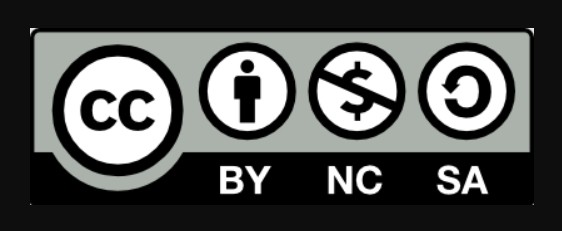
If the project evolves into a more advanced version in the future, the license could be reviewed depending on the objective: education, workshops, public demonstrations or commercial development.
Income and Funding Possibilities
At this moment FABI is not intended to generate income directly. However, the project could create future opportunities in education, workshops or public activities.
| Possibility | Description |
|---|---|
| Educational workshops | Use FABI as a tool to teach robotics, electronics and digital fabrication. |
| Fab Lab demonstrations | Use the robot to attract visitors and explain maker technologies. |
| Environmental campaigns | Use FABI to encourage children to participate in activities such as collecting trash. |
| Improved robot kit | In the future, the design could become an educational kit. |
| Public exhibitions | Use FABI in science fairs, open days or technology events. |
Future Possibilities
FABI can continue growing after Fab Academy. The current version is a prototype, but it opens many possibilities for future development.
- Add voice or sound interaction.
- Improve the arm mechanism.
- Add more sensors.
- Create different emotional behaviours.
- Improve the external design and finishing.
- Create a mobile version.
- Use artificial intelligence for more advanced interaction.
- Prepare a workshop version for children.
How To Make These Possibilities Probabilities
To make these ideas real, the next step would be to continue testing the prototype with real users, especially children and educators. Their feedback would help decide which improvements are really useful.
The most realistic development path is to first improve reliability, safety and packaging. After that, more advanced features such as sound, voice or artificial intelligence could be added.
What Have I Learned?
This week helped me understand that a project is not finished when the prototype works. It also needs a plan to be shared, explained and improved in the future.
- I learned how to think about the audience of my project.
- I learned the importance of documenting the process clearly.
- I learned that intellectual property depends on the future purpose of the project.
- I learned that open documentation can help other people build on my work.
- I learned how to connect technical development with educational impact.
Summary and Reflection
FABI started as a friendly robot idea and has become a complete project that integrates many Fab Academy skills: digital fabrication, electronics, embedded programming, networking and interaction design.
The main value of FABI is not only the robot itself, but the idea of using technology to create curiosity, emotional interaction and positive environmental behaviour.
My dissemination plan is focused on sharing FABI as an open educational project. The future possibilities include workshops, demonstrations, environmental activities and improved robotic interaction.
Credits and Acknowledgements
- Project design and development: Oscar Cela Cobo.
- Fab Lab support: Fab Lab León / Fab Lab Ponferrada.
- Technical development based on Fab Academy assignments.
- English translation and documentation support were assisted with ChatGPT.
- All fabrication, testing and integration work were reviewed and adapted by me.