Week 12
Mechanical Design, Machine Design
Contents
Group assignment: Mechanical Design | Machine Design
This week gave us the opportunity to take a step further and face a much more complete challenge: designing, building, and programming a functional machine as a team.
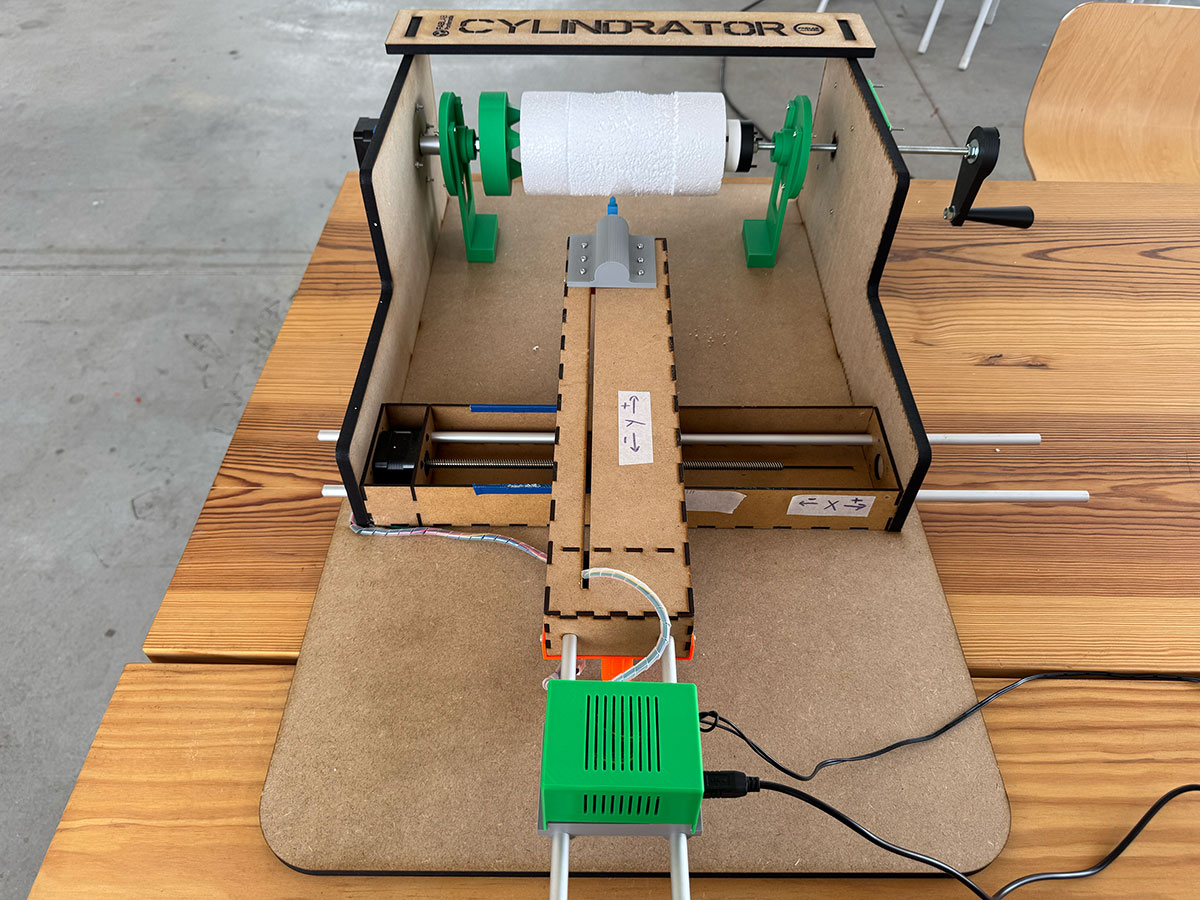
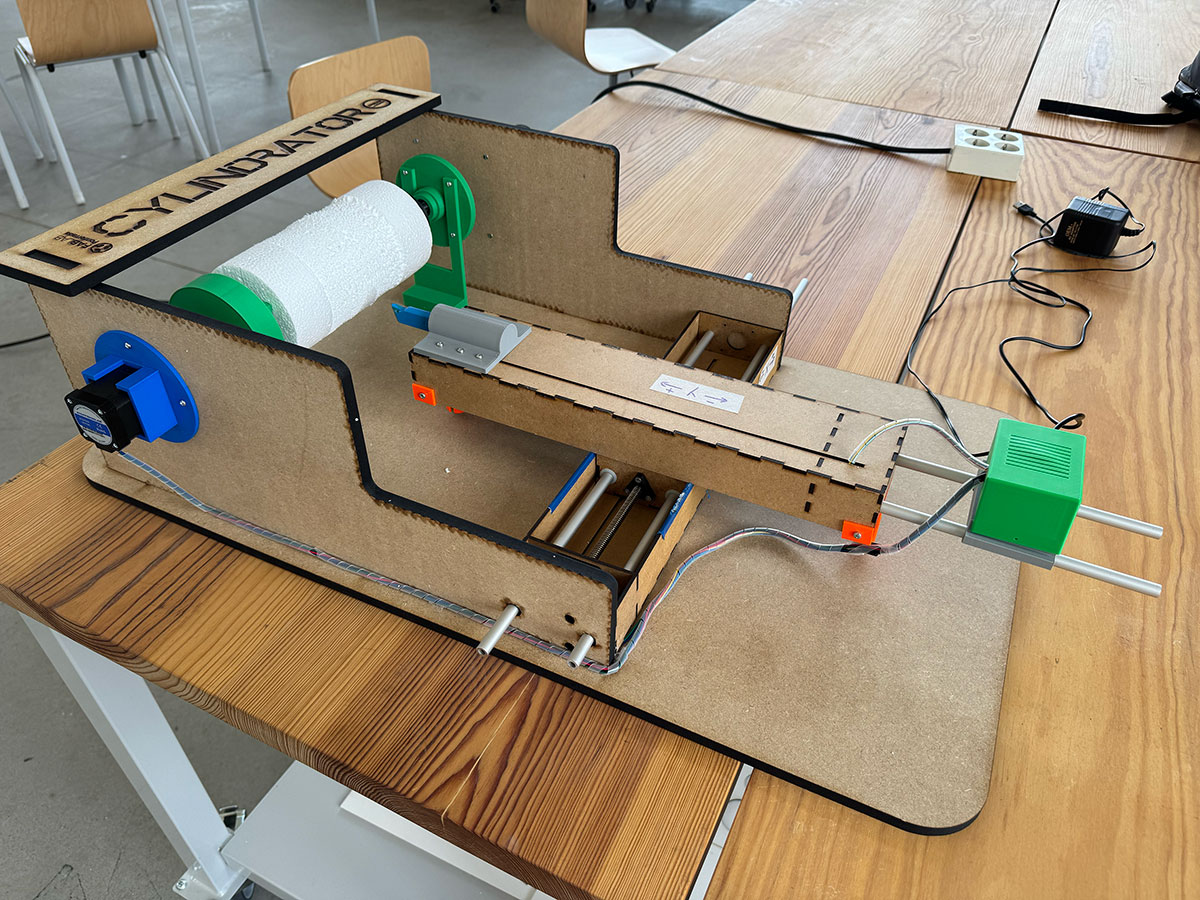
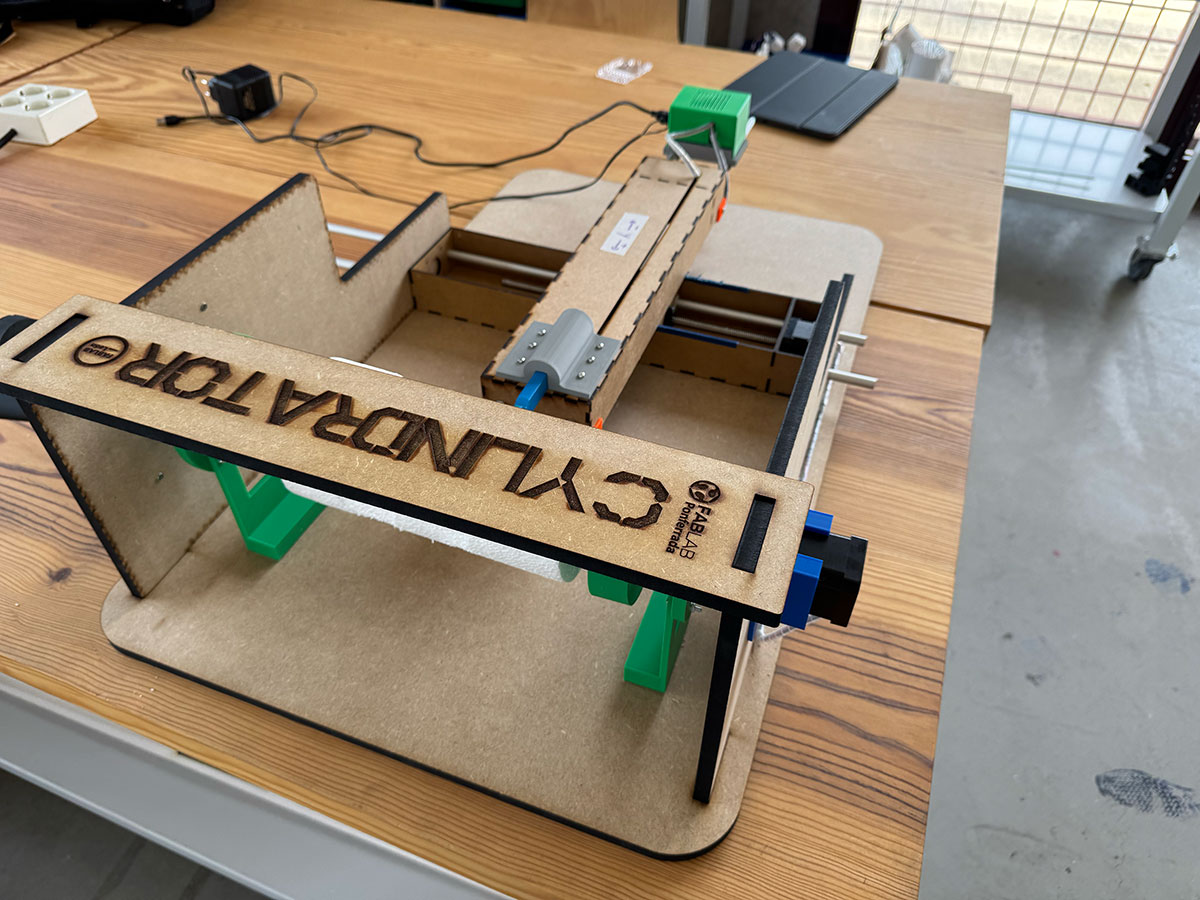
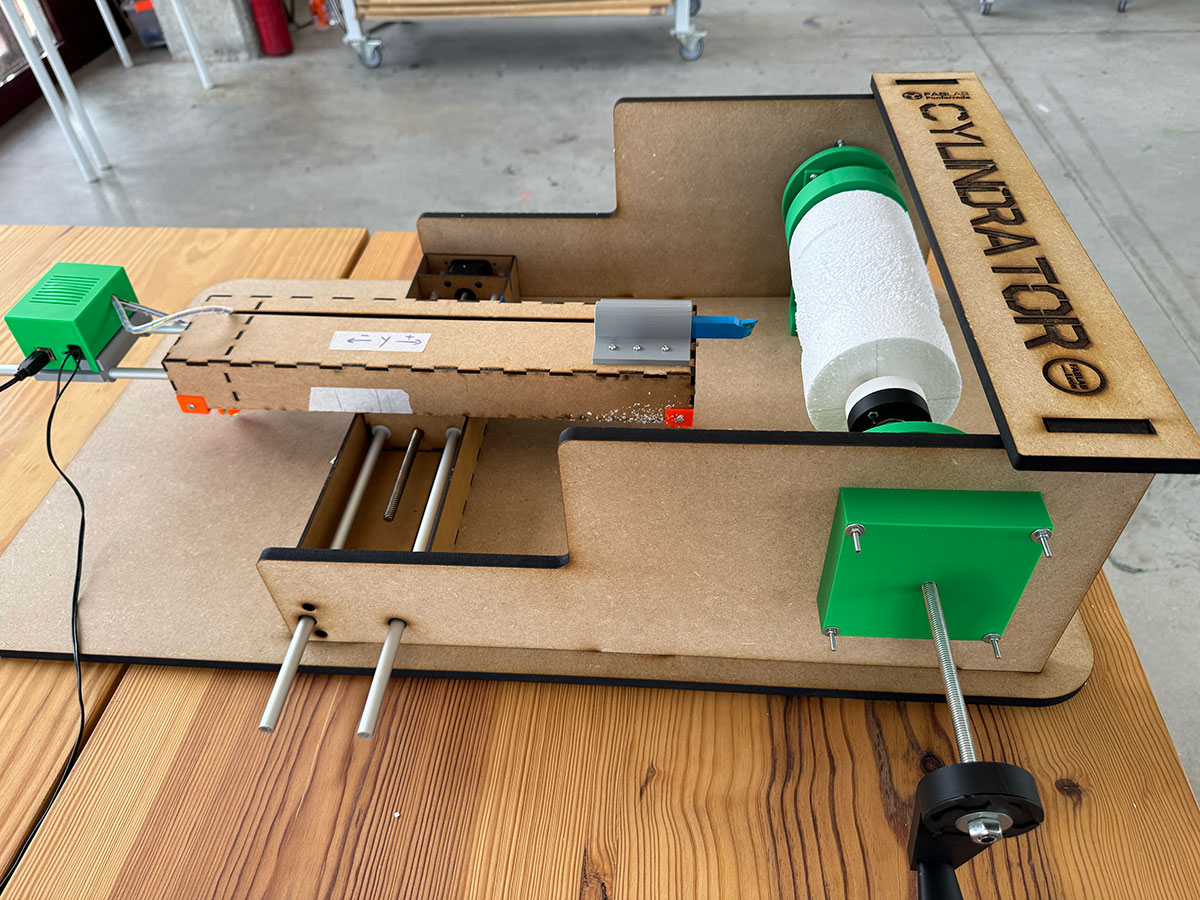
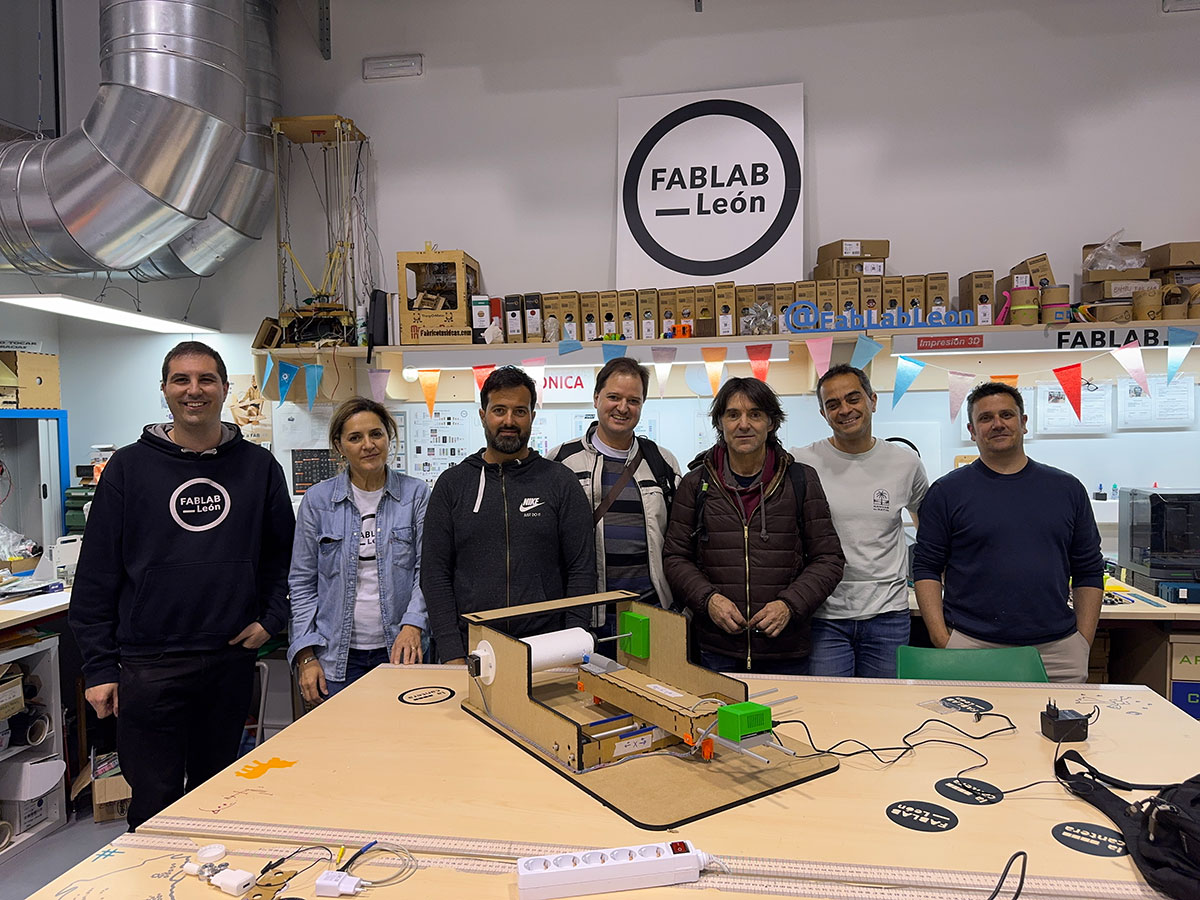
After considering different options at the beginning of the week, and with the guidance of our instructors at Fab Lab León, we decided to take as a starting point one of the machines developed by Fab Lab Milan Opendot in FabAcademy 2015 ↗️, which simulates the operation of a lathe. We found it to be a very interesting reference, not only because of the concept itself, but also because it allowed us to better understand the relationship between mechanics, electronics, and control.
Starting from that reference, our goal was not simply to replicate it, but to evolve and improve some of its parts, adapting the machine to our needs and to the resources available. At the same time, we wanted to document the whole process as completely as possible, making sure we understood each decision we took during the development.
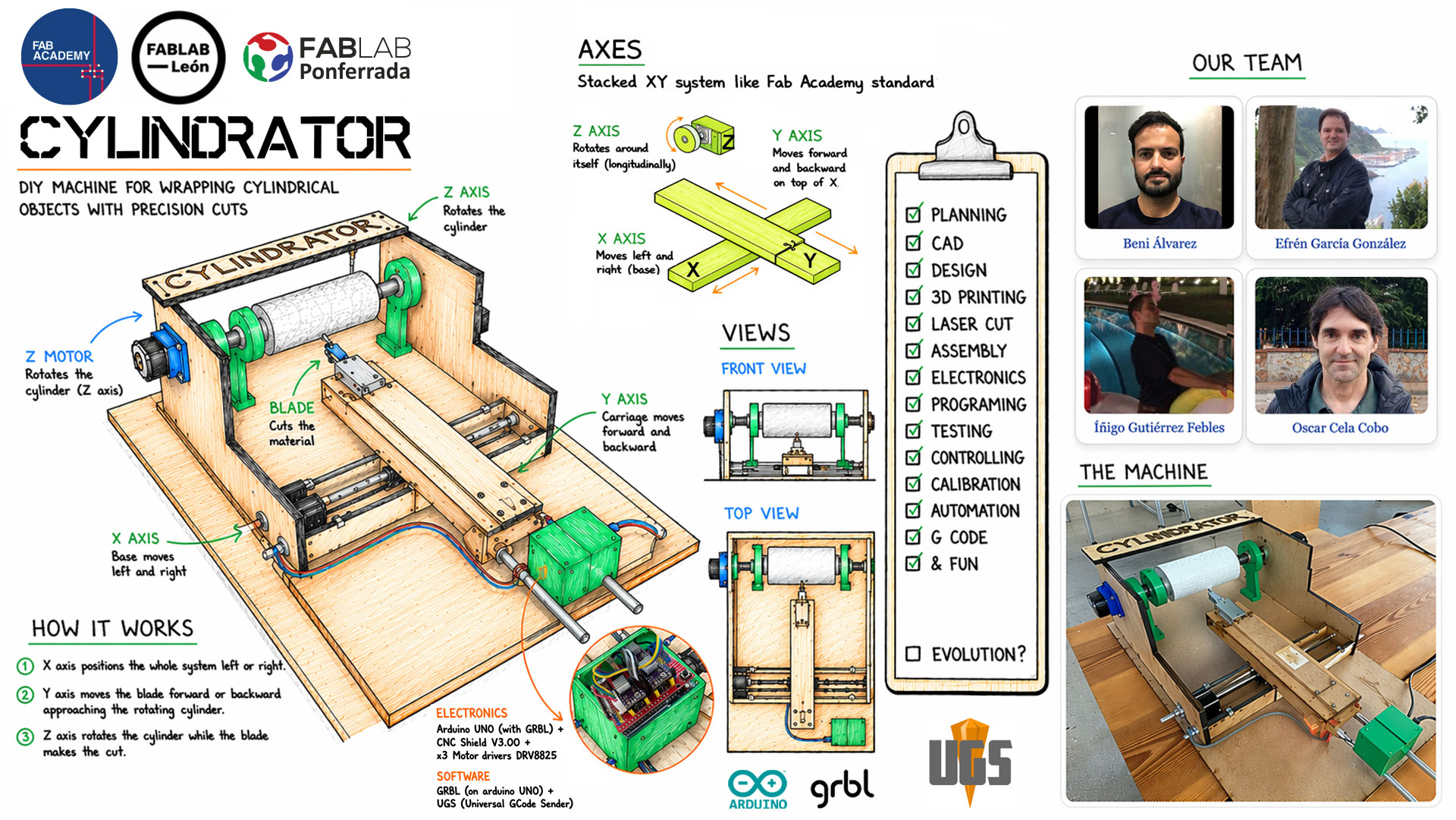
From a technical point of view, the machine is based on a three-axis system controlled by stepper motors. In our case, we used three stepper motors for the X, Y, and Z axes. One of the main differences compared to the original Opendot design is that we replaced the drill they used to generate the rotation of the Z axis with a third stepper motor. This gives us greater control over the movement and makes the integration with the control system much more consistent.
Full document group site:
MTM Documentation - FabLab León 2026 Group Page
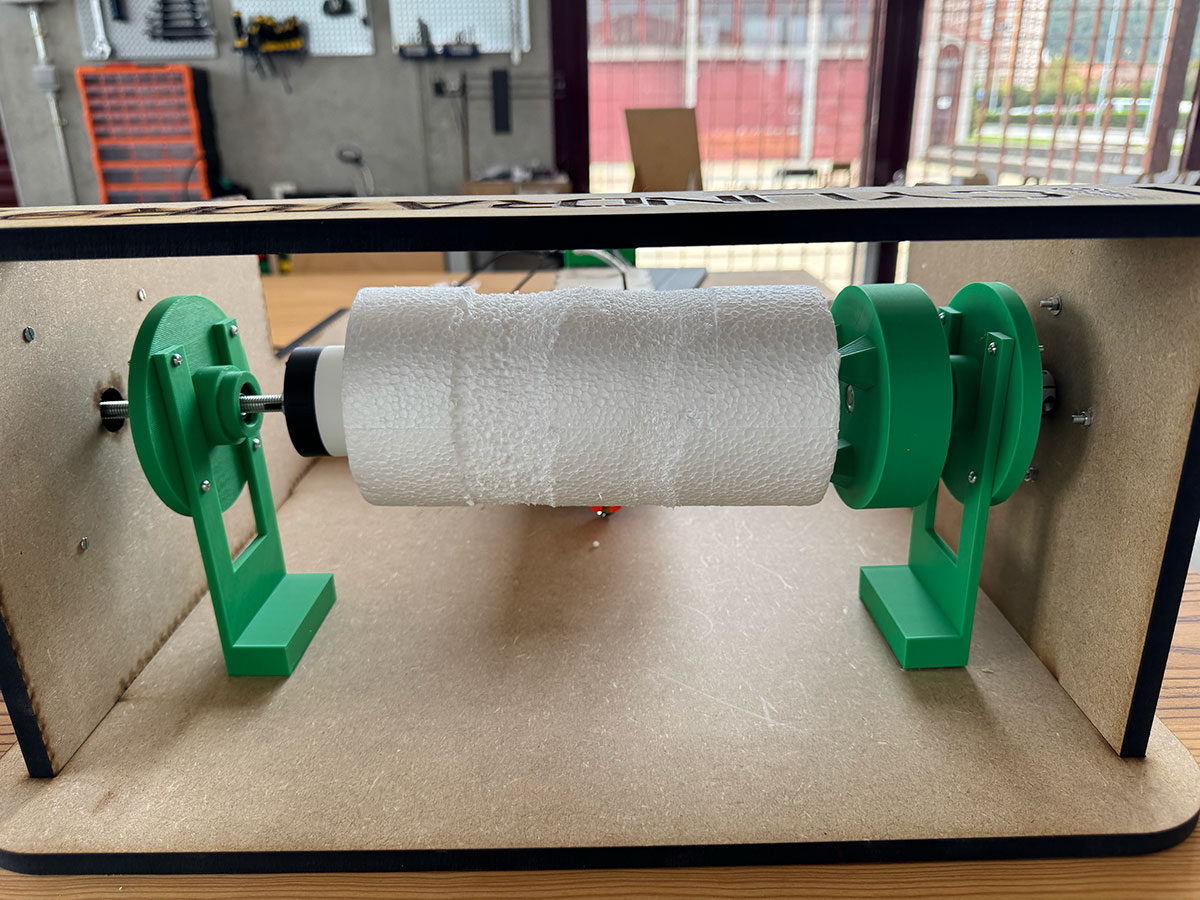
CYLINDRATOR The machine (final photos)
Slide

Video
High quality video available on Vimeo ↗️.
Individual assignment
Document your individual contribution.
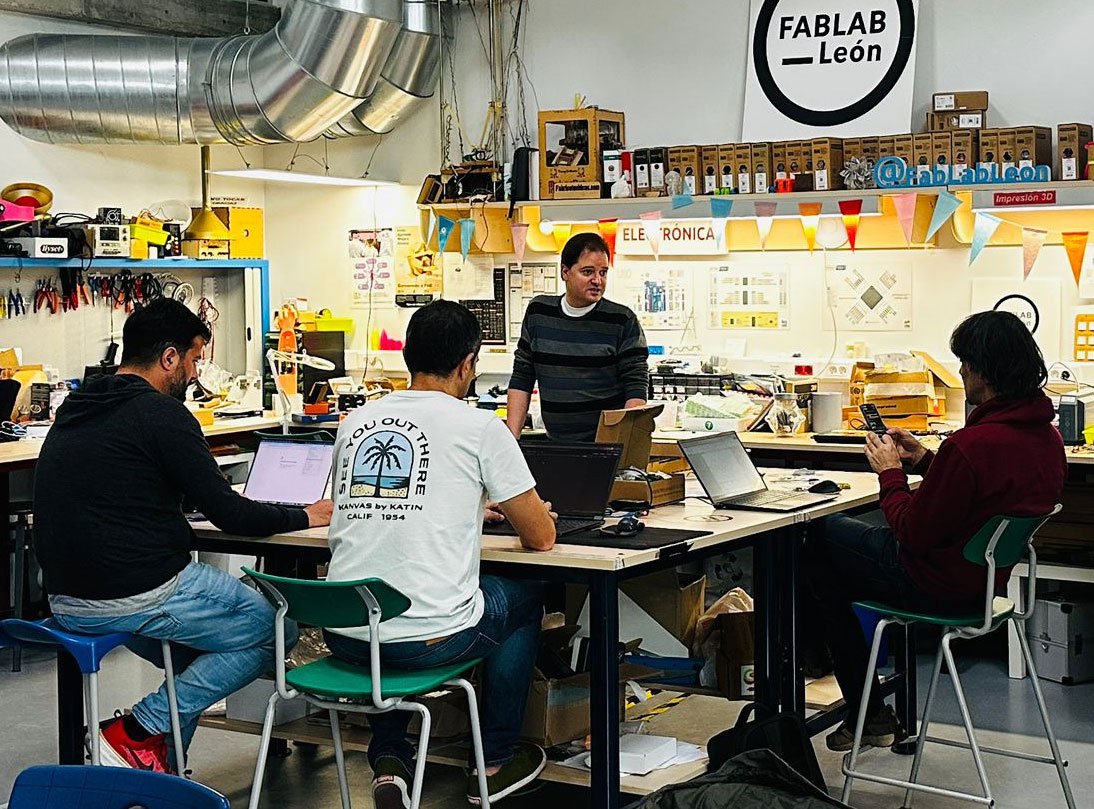
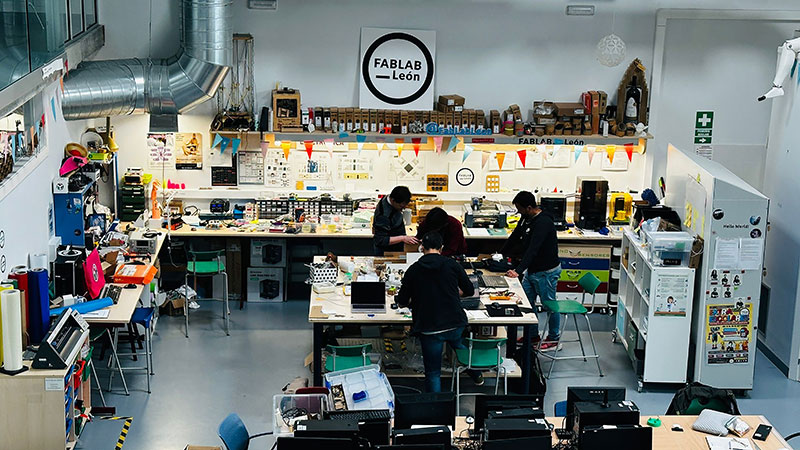
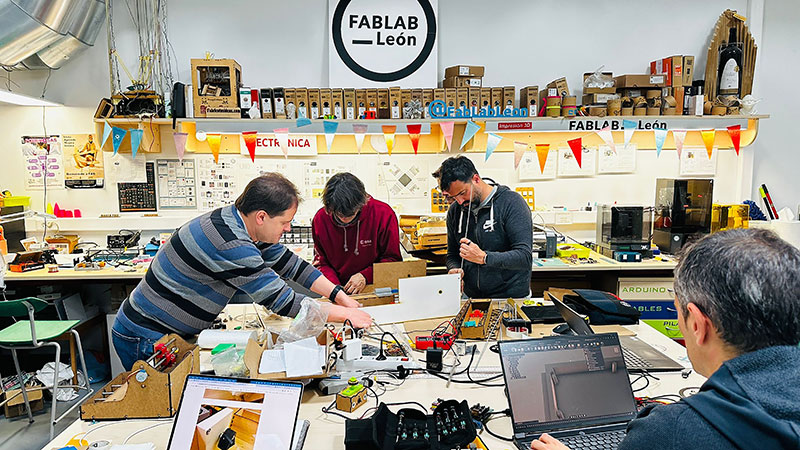
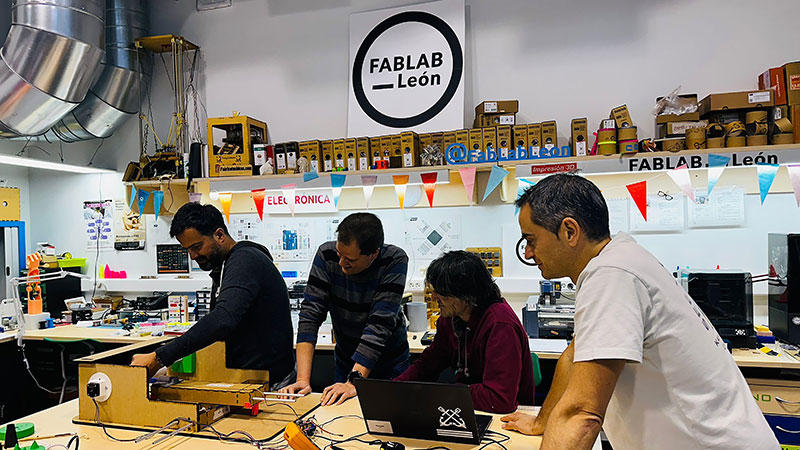
In terms of teamwork, although all of us were globally involved in the project, following and contributing to every stage, we also divided some tasks in order to optimize time. This allowed us to move forward in parallel on different areas such as design, fabrication, and electronics, while maintaining a shared vision of the project and ensuring the active participation of all team members across all areas.
Project task planning
| Task | Responsible |
|---|---|
| Planning | Team & Local instructor |
| CAD | Óscar & Efrén |
| 2D Design | Efrén & Óscar |
| 3D Design | Íñigo & Óscar |
| 3D Printing | Íñigo & Beni |
| Laser Cut | Beni & Efrén |
| Assembly | Beni & Efrén |
| Electronics | Íñigo |
| Programming | Óscar |
| Testing | Team |
| Controlling | Team |
| Calibration | Team |
| Automation | Team |
| G-code | Team |
| Slide & Video | Beni |
| Html documentation site | Beni |
| Fun 😄 | All (Team & instructors) |
Within the development of CYLINDRATOR, I actively participated in several key stages of the project, combining both hands-on fabrication work and the final communication and documentation tasks. Although the entire team was globally involved throughout the process, my role was mainly focused on the physical fabrication of the machine, the visual presentation of the project, and the final HTML documentation.
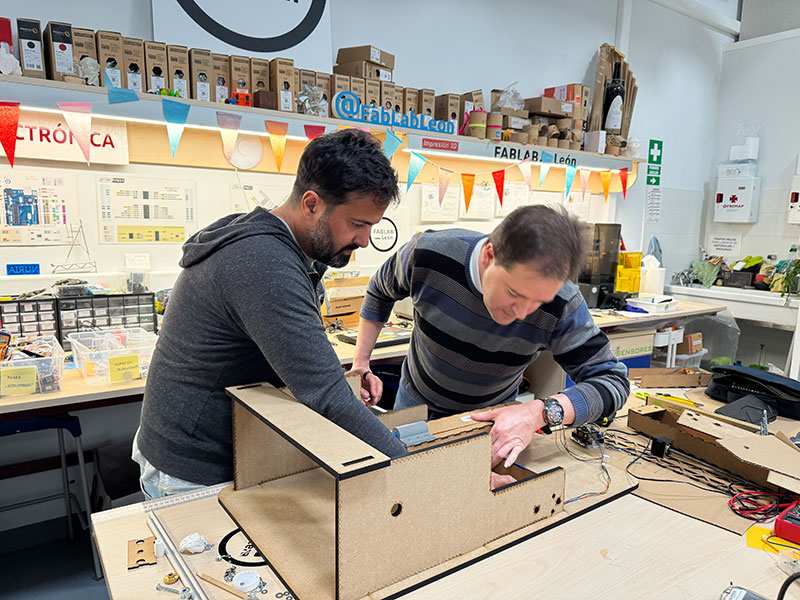
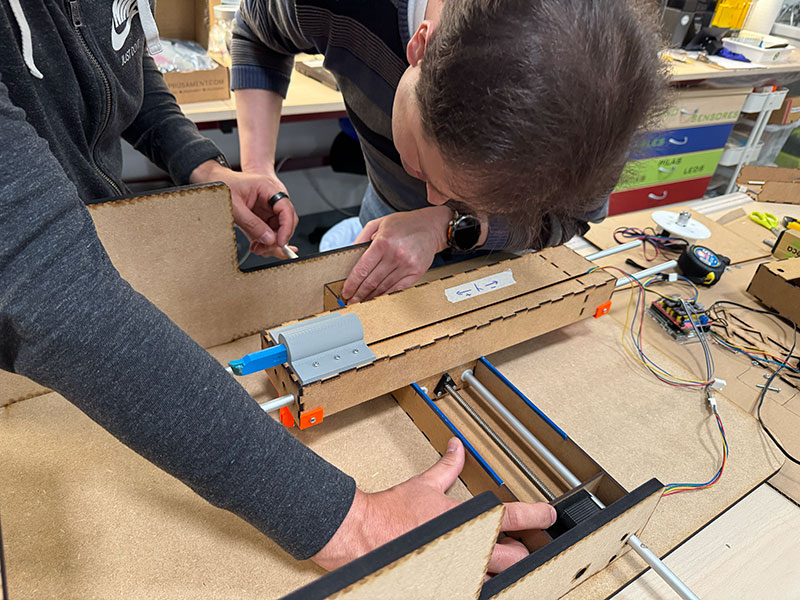
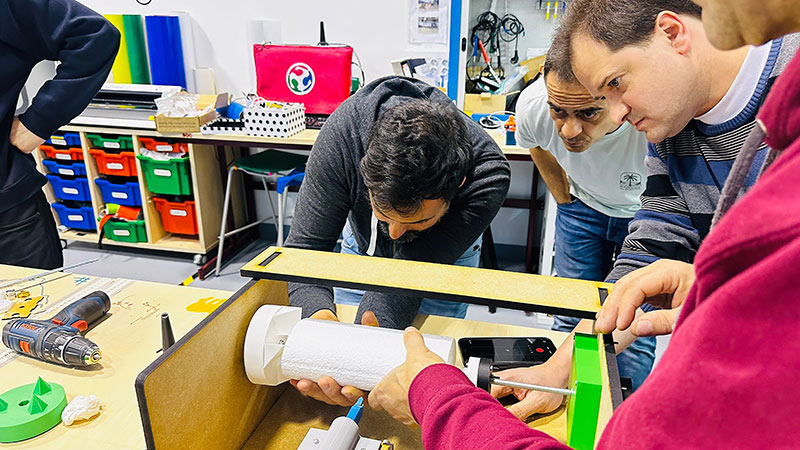
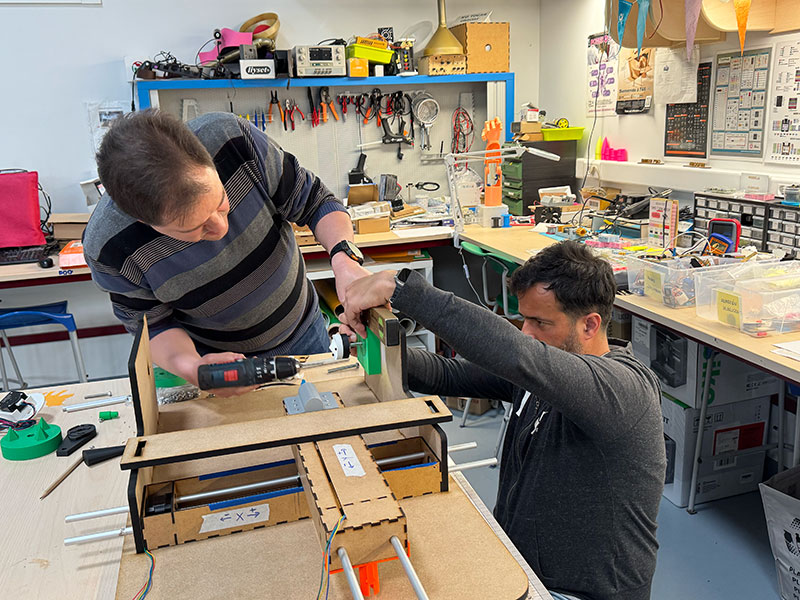
One of my main contributions was in the digital fabrication phase, especially in laser cutting and assembly, both carried out together with Efrén. This involved directly working on preparing, cutting, and assembling many of the parts that shaped the machine’s structure. It was not just about producing individual pieces, but also about ensuring that everything fit properly, that the structure made sense once assembled, and that the system could evolve from an initial idea into a fully functional machine.
I also contributed to the 3D printing process, working alongside Íñigo. This phase was particularly important, as several printed parts were used as supports, reinforcements, or adaptations within the system. My involvement focused on turning digital designs into real components, validating their functionality within the assembly, and helping improve the overall robustness of the machine as the build progressed.
Beyond fabrication, I took part in the shared team tasks related to the setup and validation of the machine, including testing, control, calibration, automation, and G-code testing. This means I was not only involved in building the machine, but also in verifying its behavior, observing how the axes responded, contributing to necessary adjustments, and helping ensure that the system operated in a stable and consistent way.
Another key part of my work was related to the project communication. I was responsible for creating the final slide, the presentation video, and the HTML documentation website. This required gathering and organizing all the work done throughout the week, selecting the most relevant information, structuring it clearly, and presenting it in a visually engaging and easy-to-understand way. The goal was not only to show the final result, but to build a narrative that explains both the process and the decisions behind the project.
More specifically, developing the HTML documentation involved transforming the entire project into a clear, structured, and navigable webpage. This included integrating images, videos, technical explanations, test results, downloadable files, and material lists. This part was especially important, as in Fab Academy it is not only about building a working machine, but also about being able to document the process properly so others can understand, review, and potentially replicate it.
Overall, my contribution was strongly focused on ensuring that the project not only worked physically, but could also be clearly communicated and understood. On one hand, I collaborated directly in the fabrication and assembly of the machine; on the other, I took responsibility for presenting and documenting the entire process, helping to deliver a complete and well-structured final result.
Week questions/tasks
Final reflection
Throughout this project, I learned to understand a machine not just as a collection of parts, but as a complete system where mechanics, electronics, and control are fully interconnected. The experience of going from an initial idea to a fully functional machine allowed me to strengthen my skills in digital fabrication, assembly, and system integration, while also understanding the importance of continuously iterating, testing, and refining the design.
In addition, being responsible for the documentation helped me realize that clearly explaining and structuring a project is just as important as building it, since it enables others to understand and replicate the work. Overall, this project has been key in developing a more comprehensive view of machine design and collaborative work within a real engineering and fabrication environment.
Credits
I would like to thank the instructors Nuria ↗️, Pablo ↗️, and Adrián ↗️ for their guidance and support throughout this assignment.
Also thanks to Javier ↗️ (FabLab Ponferrada Manager) for facilitating our access to the fablab.
I am also grateful to my FabAcademy’26 León group mates — Efrén ↗️, Íñigo ↗️, and Óscar ↗️ — for sharing knowledge, ideas, and troubleshooting together, making the learning process more collaborative and enriching.
All texts were written in Spanish and translated into English using Google Translate and ChatGPT.