Make a Lamp with Fablab | Workshop Journey
Ideation
When we were asked to propose workshops for the maker community, to welcome people into these spaces, share what we had learned, and build a community around making, I thought of combining what I had been practicing with what I had learned during Fab Academy. This became the core idea behind the “Make a Lamp” workshop.
I have been practicing origami for the past eight years and have been conducting workshops around it, both formally and informally, with an emphasis on making it accessible and inclusive. After learning digital fabrication, I started thinking about how some of these processes could be combined to create a better, faster, and more accurate workflow, while still being simple enough for a beginner to understand in a workshop setting.
That is why I decided to make a lamp rather than make the workshop solely about folding.
I proposed the workshop as a combination of several basic making skills: 2D drafting, laser cutting and scoring, folding, assembly, and finally, taking home a product that the participants had made themselves.
Testing
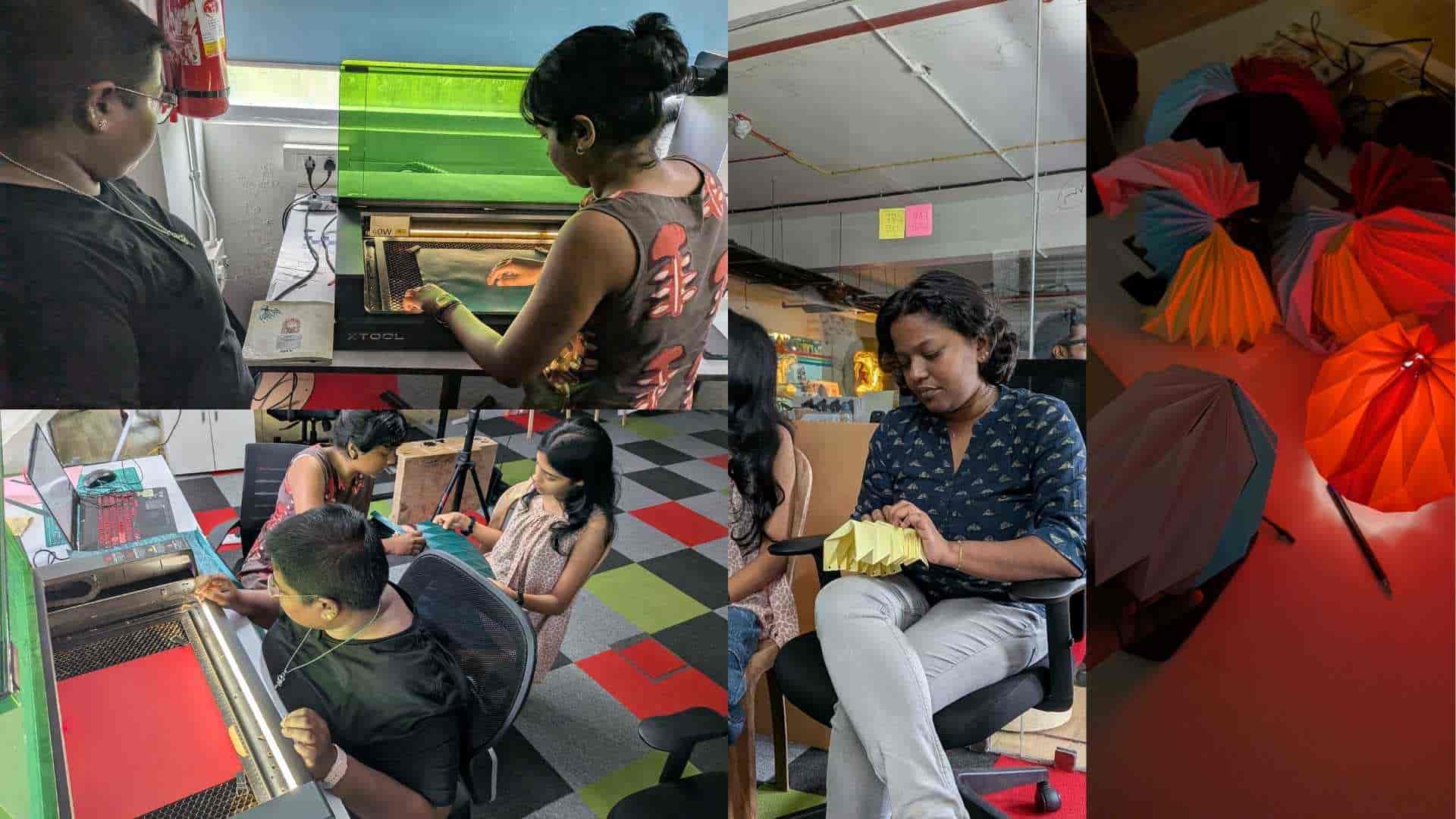
To develop the lamp, I first started experimenting with basic crease patterns that I drew in Fusion and had laser-cut and scored on different kinds of paper. I tested handmade paper as well as synthetic sheets to understand which material would work best.
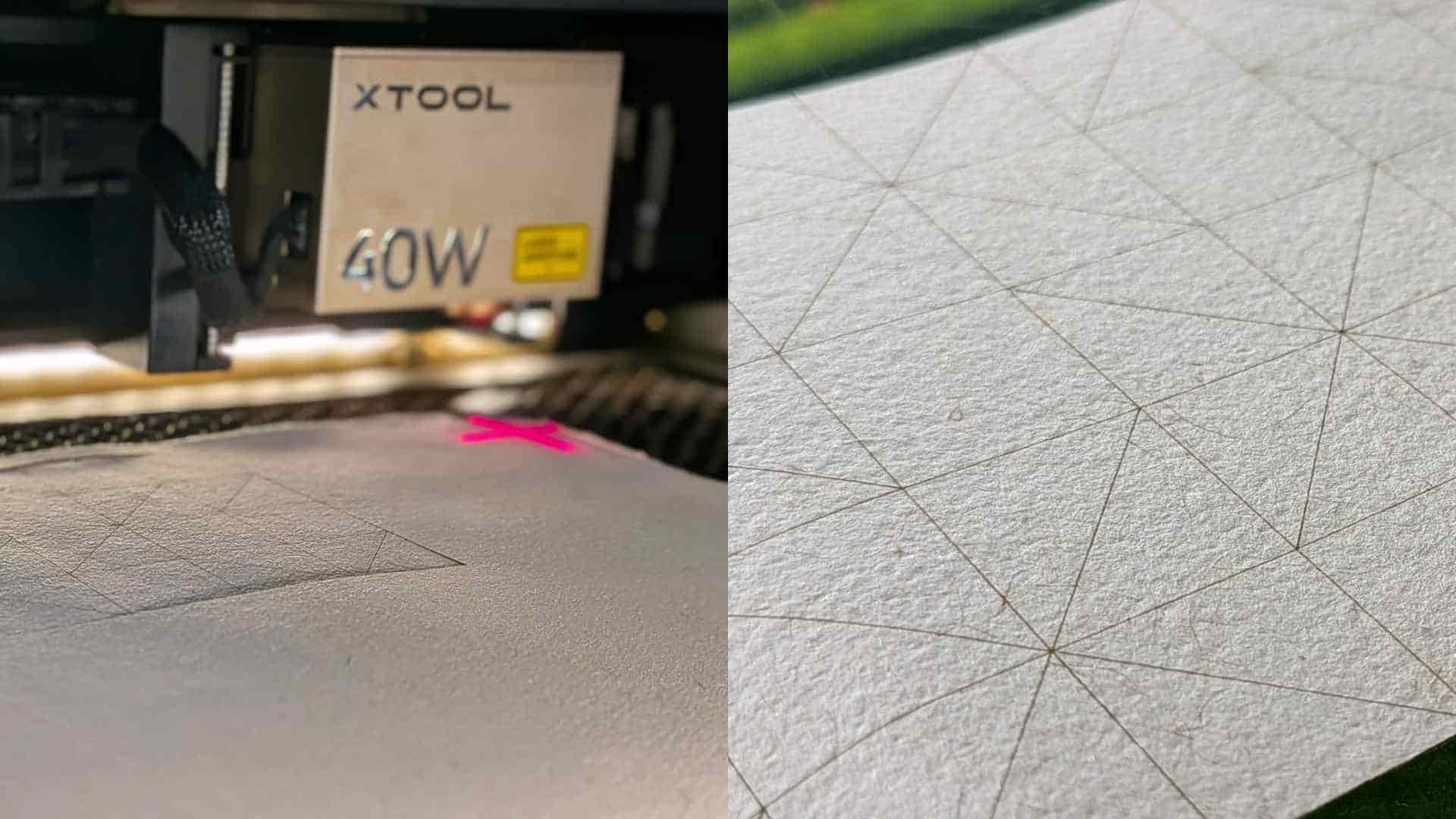
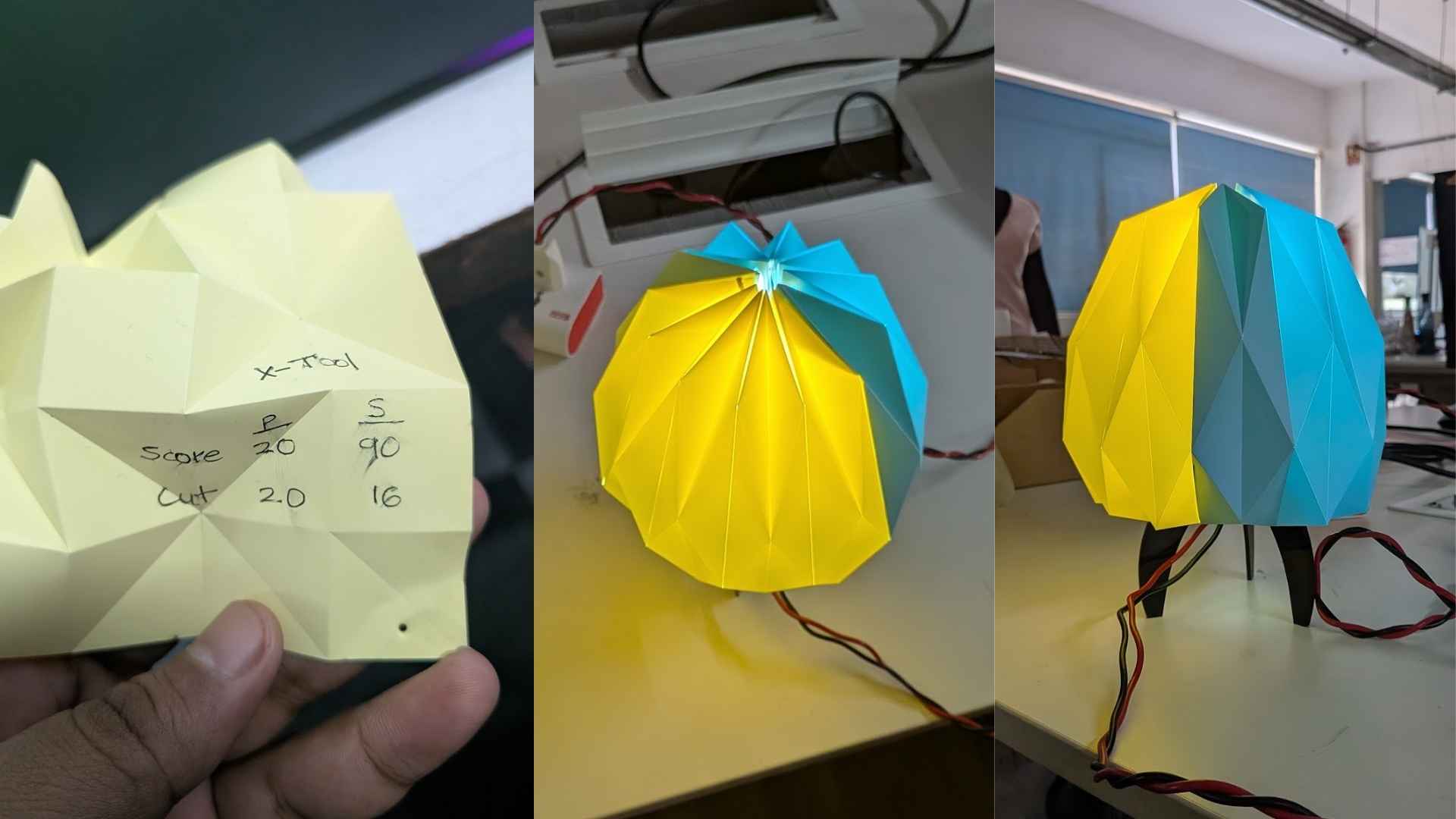
Ashtami helped me figure out the appropriate laser-cutting and scoring values and test them out. We eventually decided to use a synthetic sheet. It worked particularly well for a lamp because the light could pass through the material and create a soft glow beyond the apertures. It also handled the laser well, did not tear easily, and was less affected by humidity or the heat generated by the lamp.
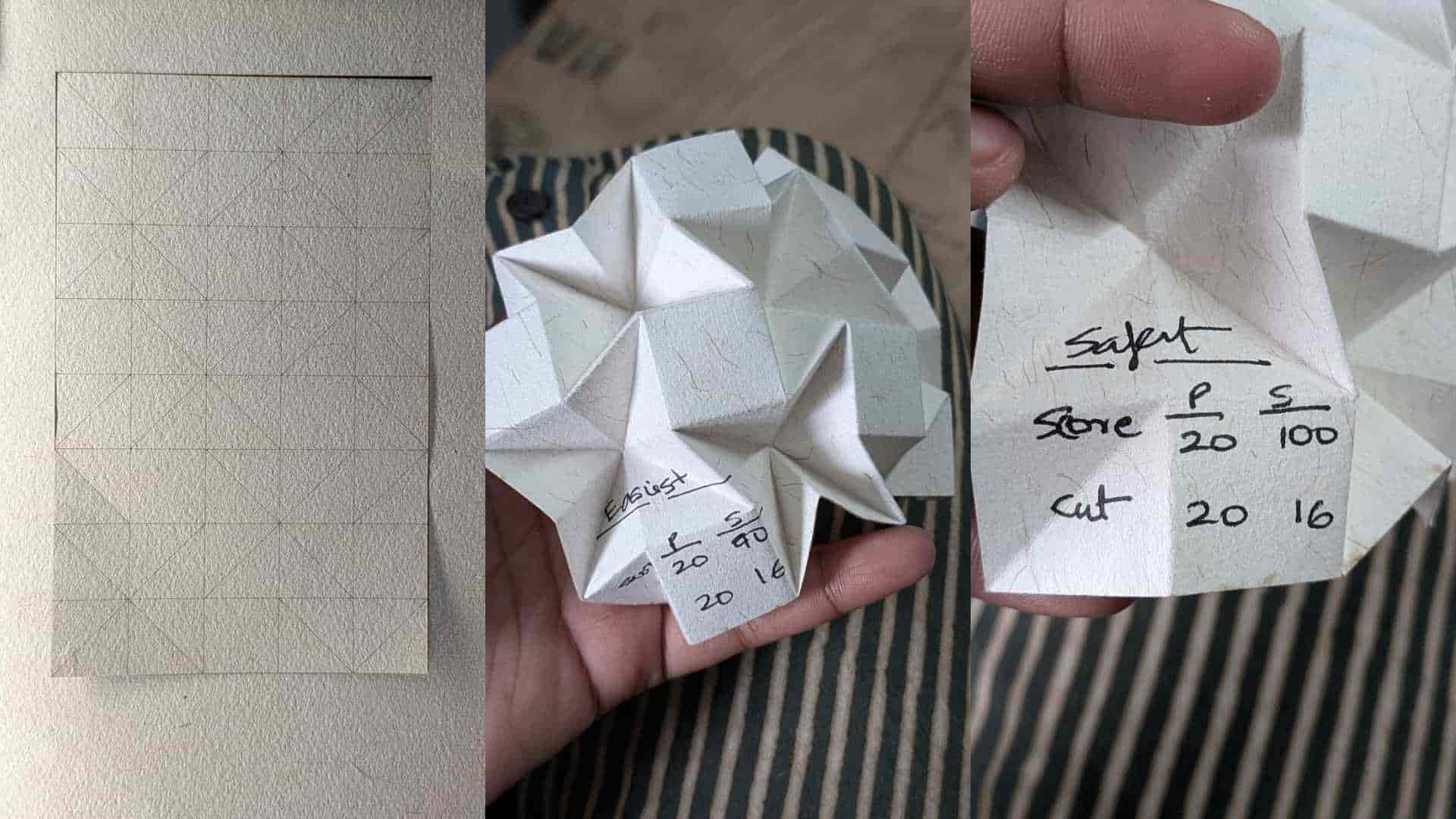
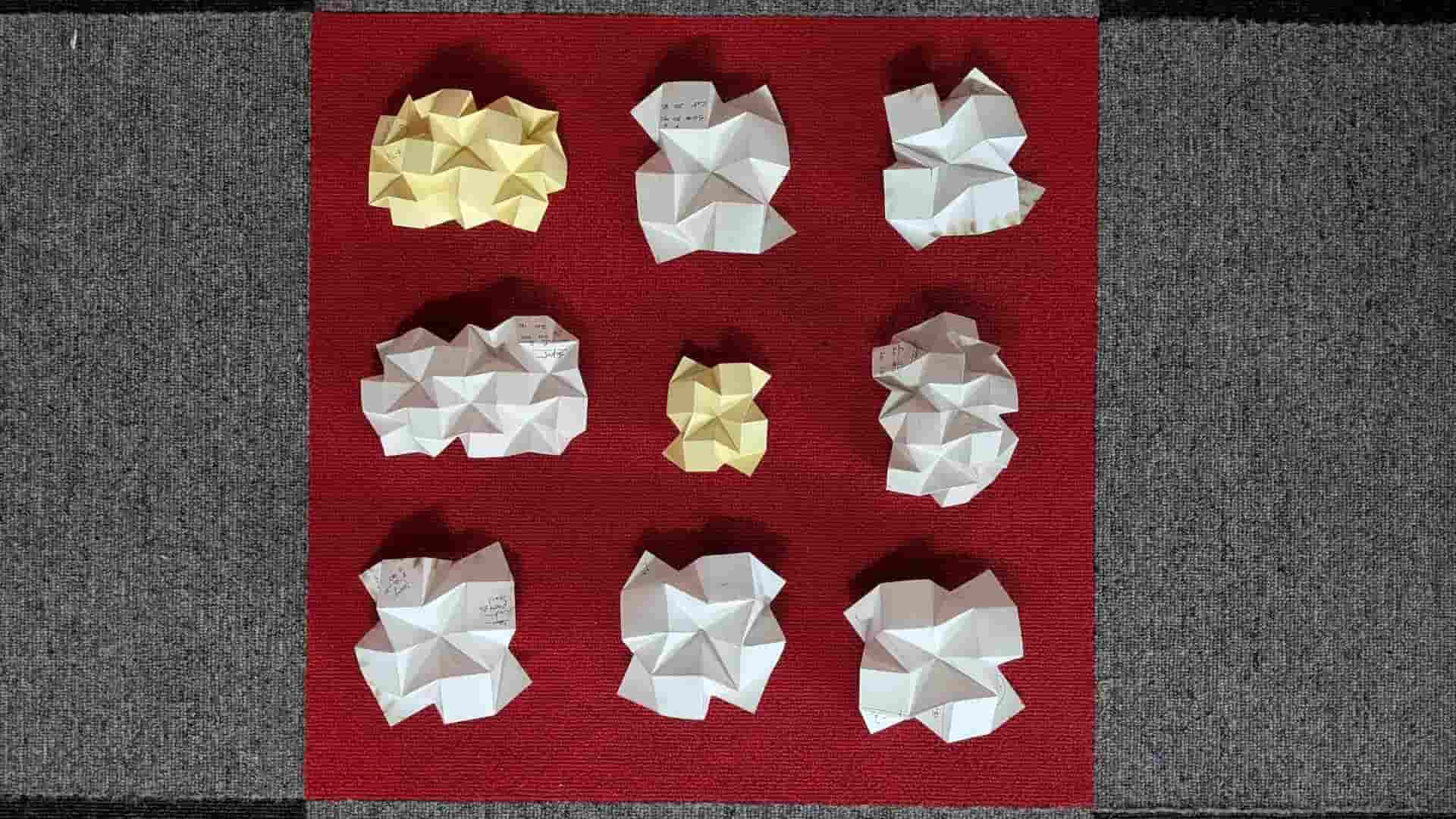
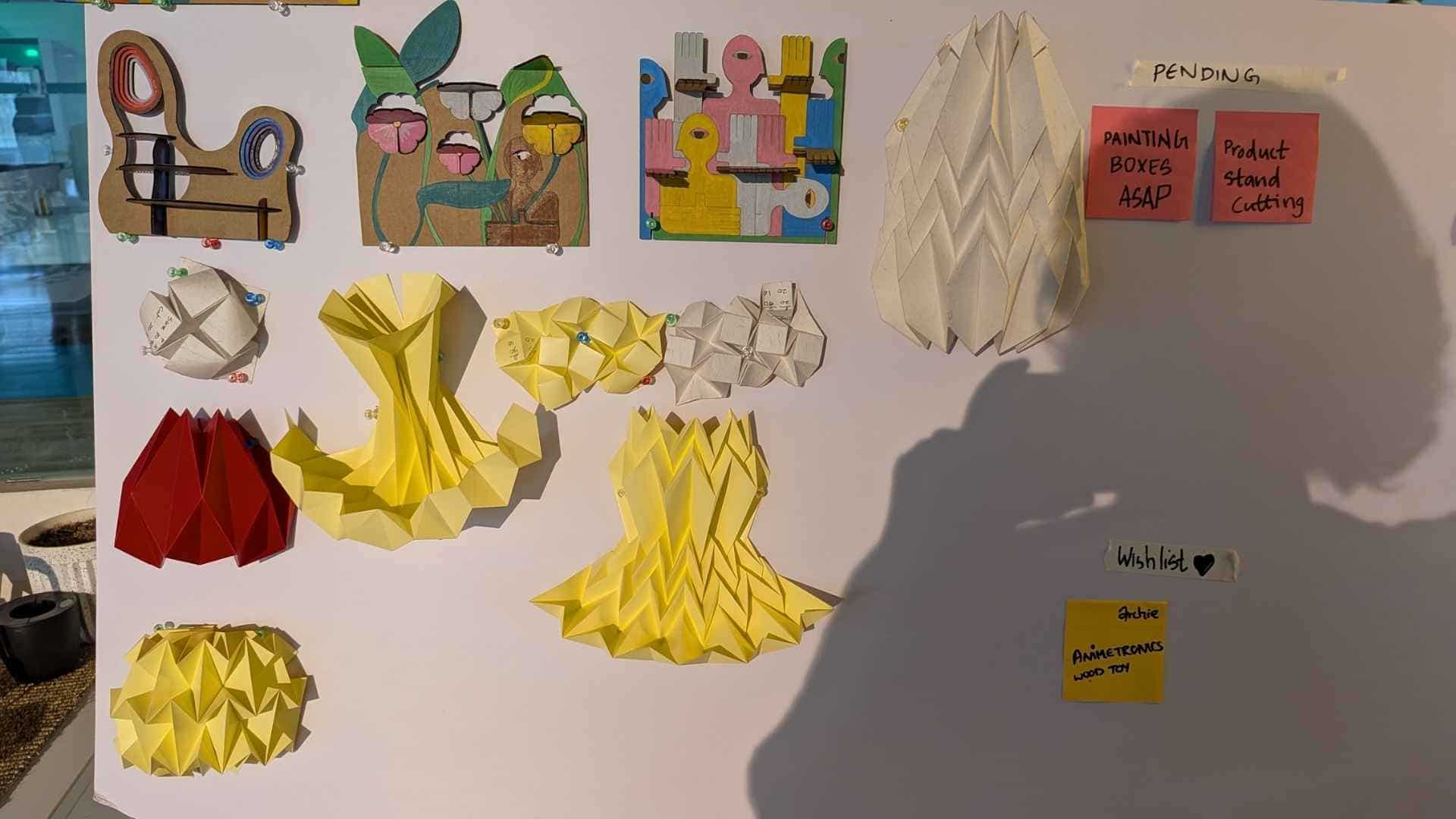
After folding and testing a few different options, I narrowed it down to one pattern. I chose the one with the simplest folding logic and the clearest sequence of folds, so that it would be easier for a first-time participant to understand.
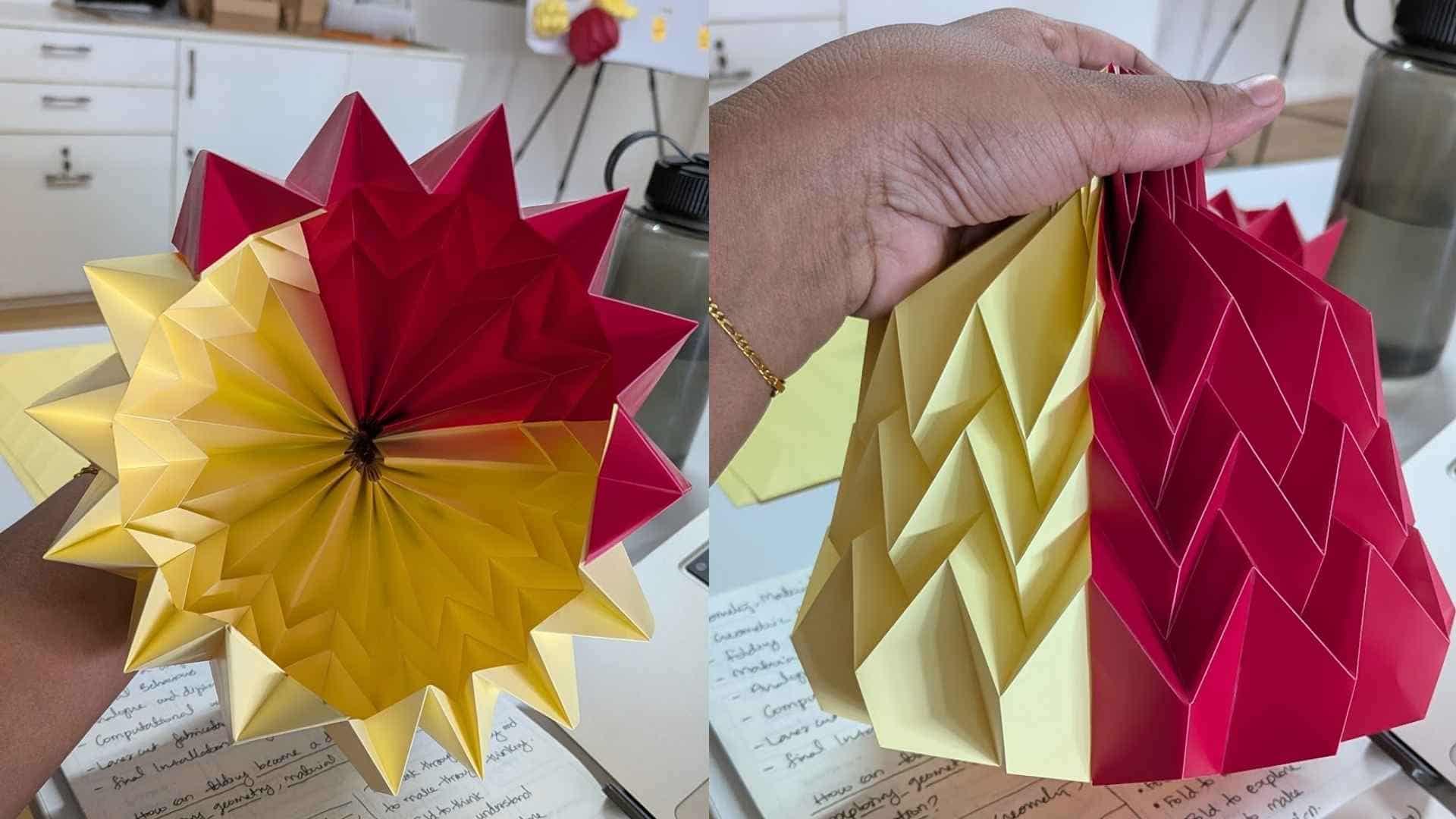
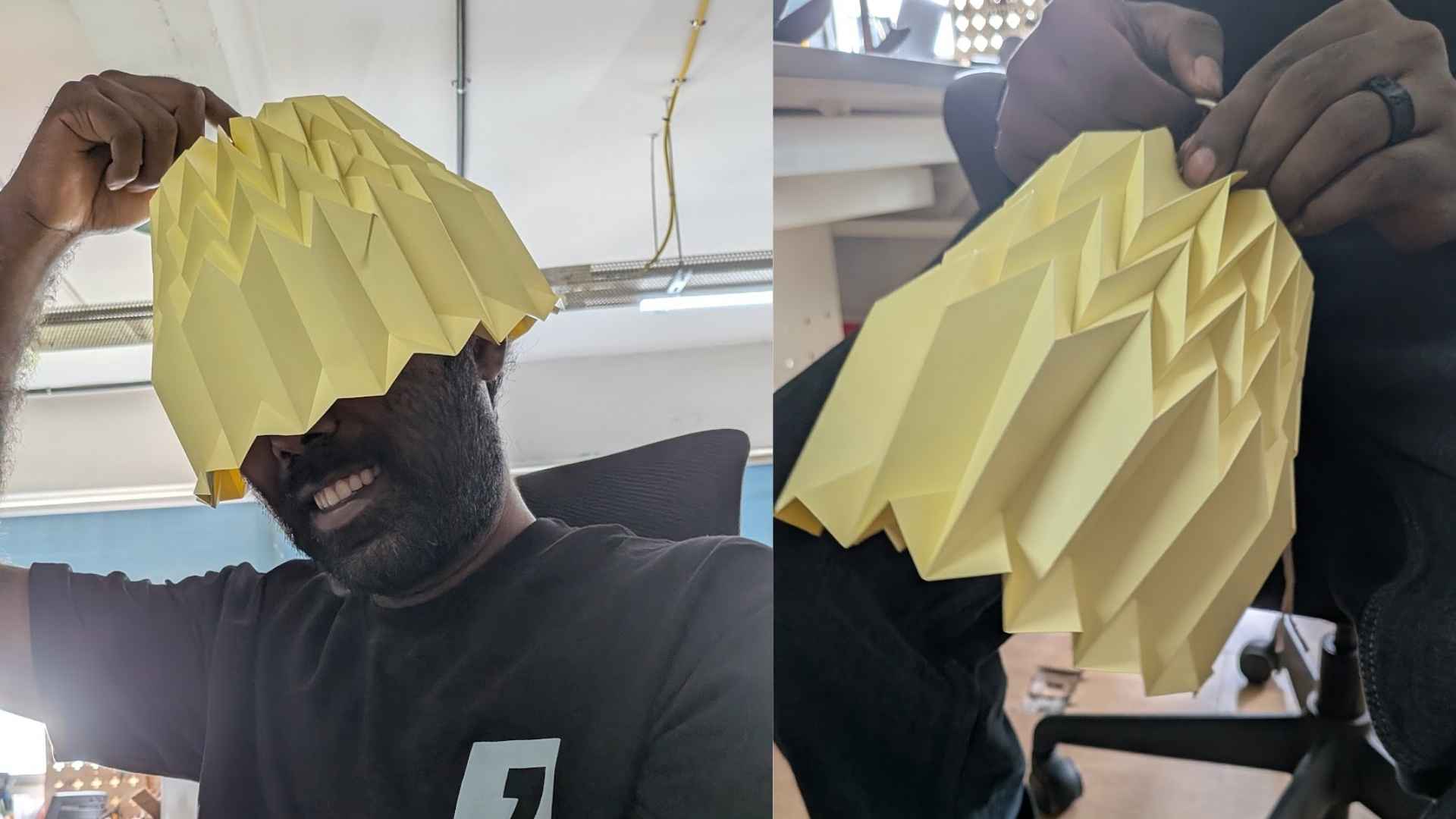
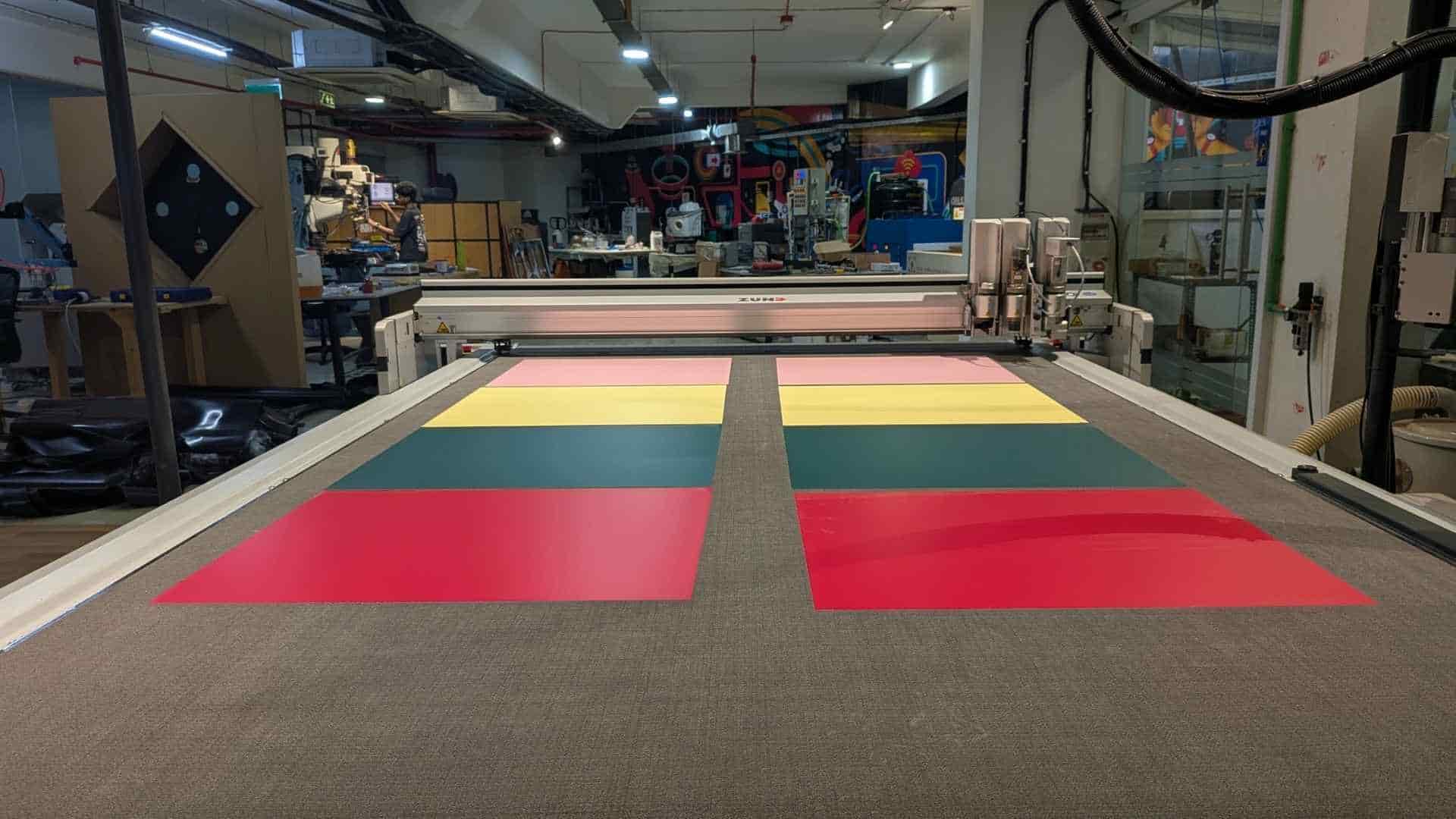
During the testing stage, all of us went to Phoenix Enterprises to source the synthetic sheets. They had several colours available, so we picked out a few samples to experiment with. Once we had the sheets, we also started exploring different colour combinations and how they would work with the folded form.
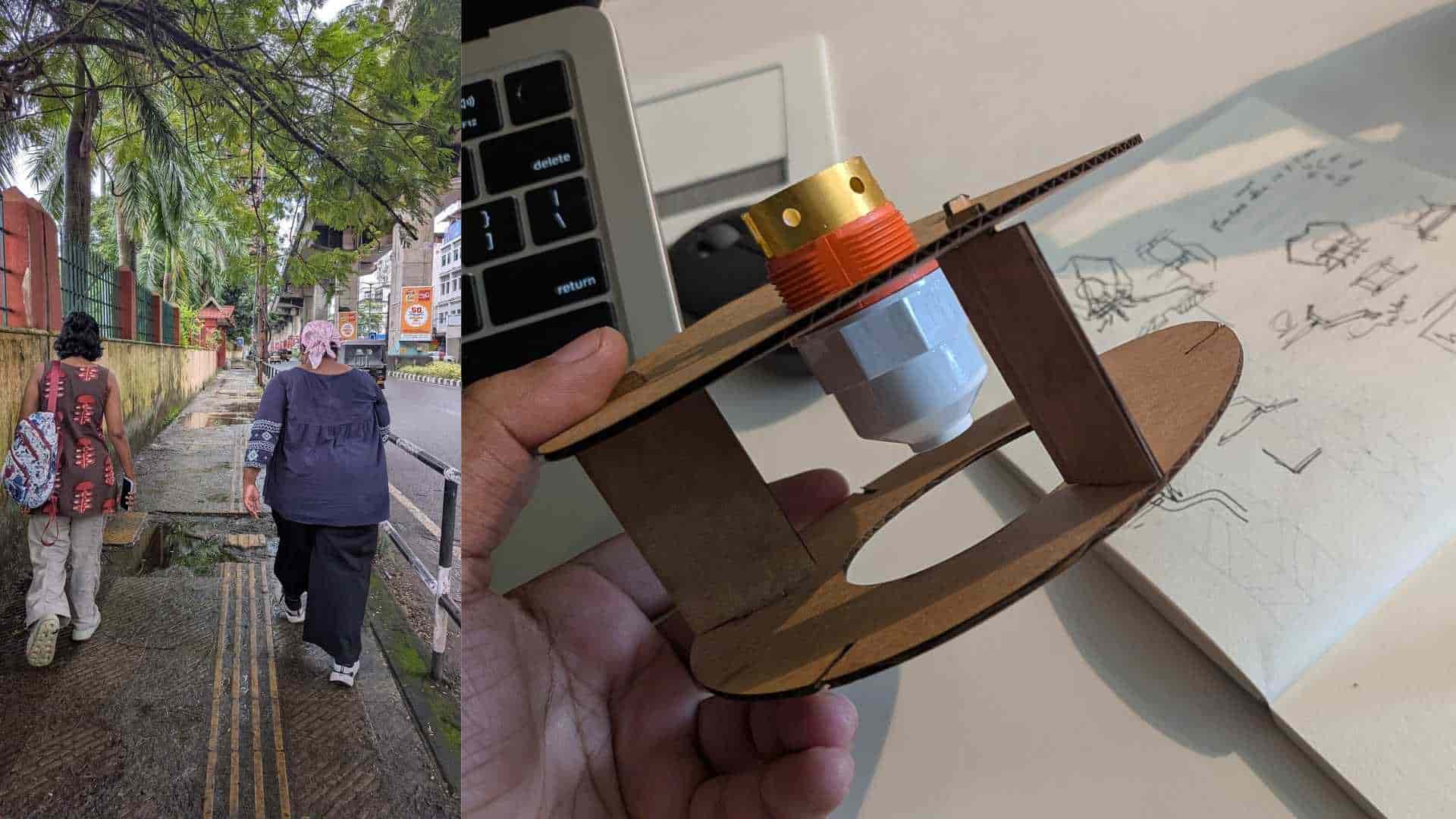
Then came the harder part: designing a stand for the lamp.
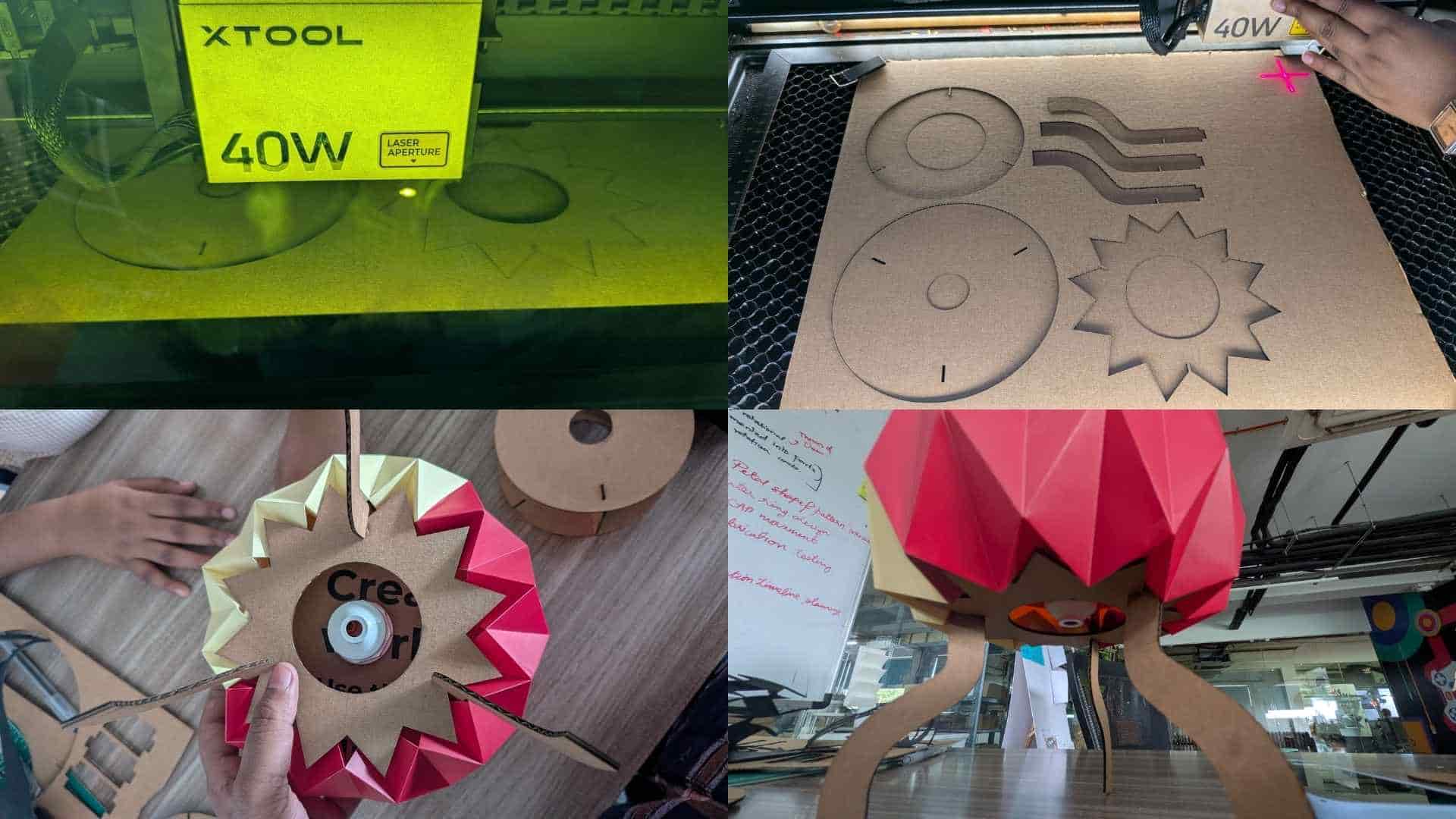
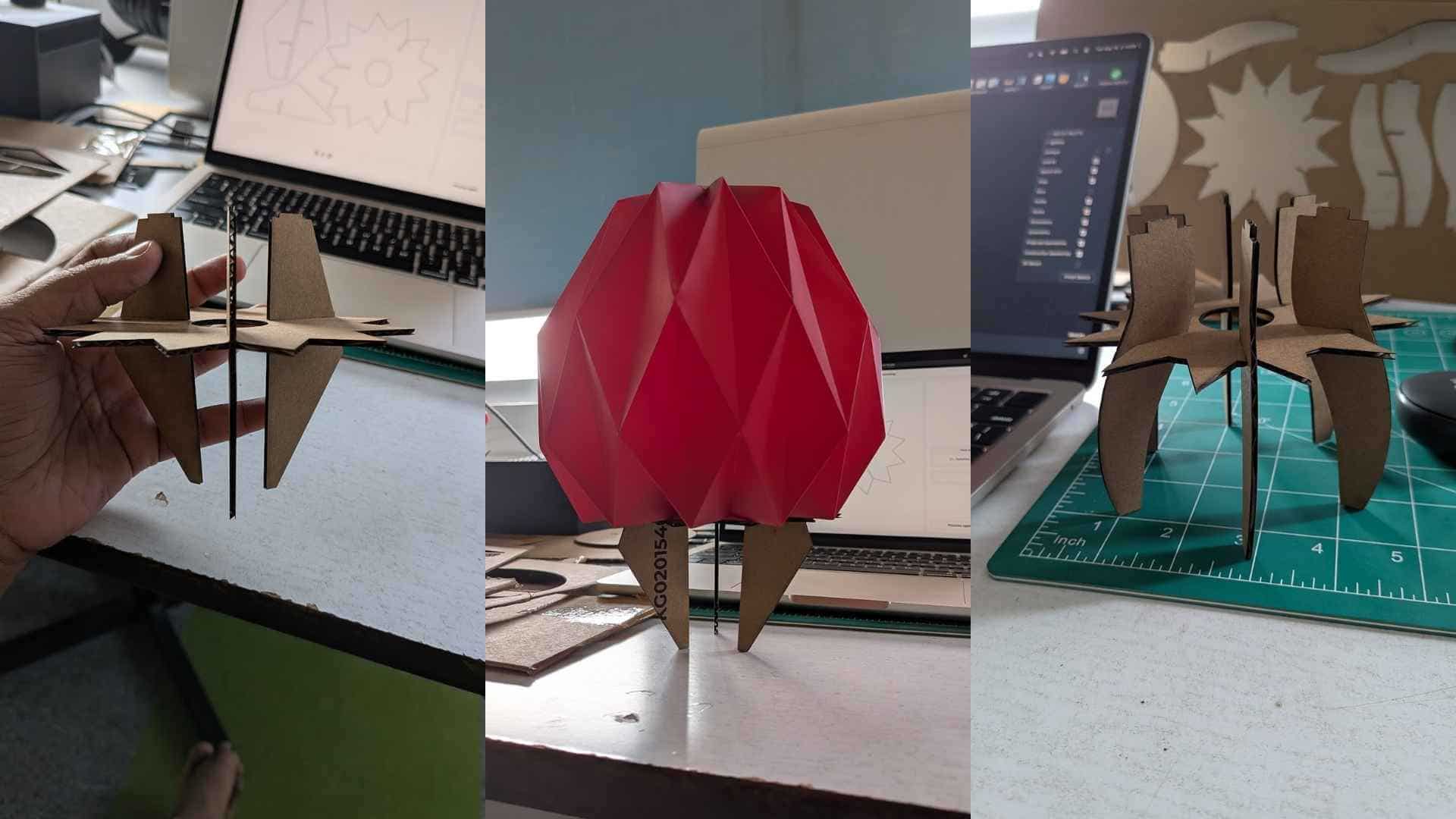
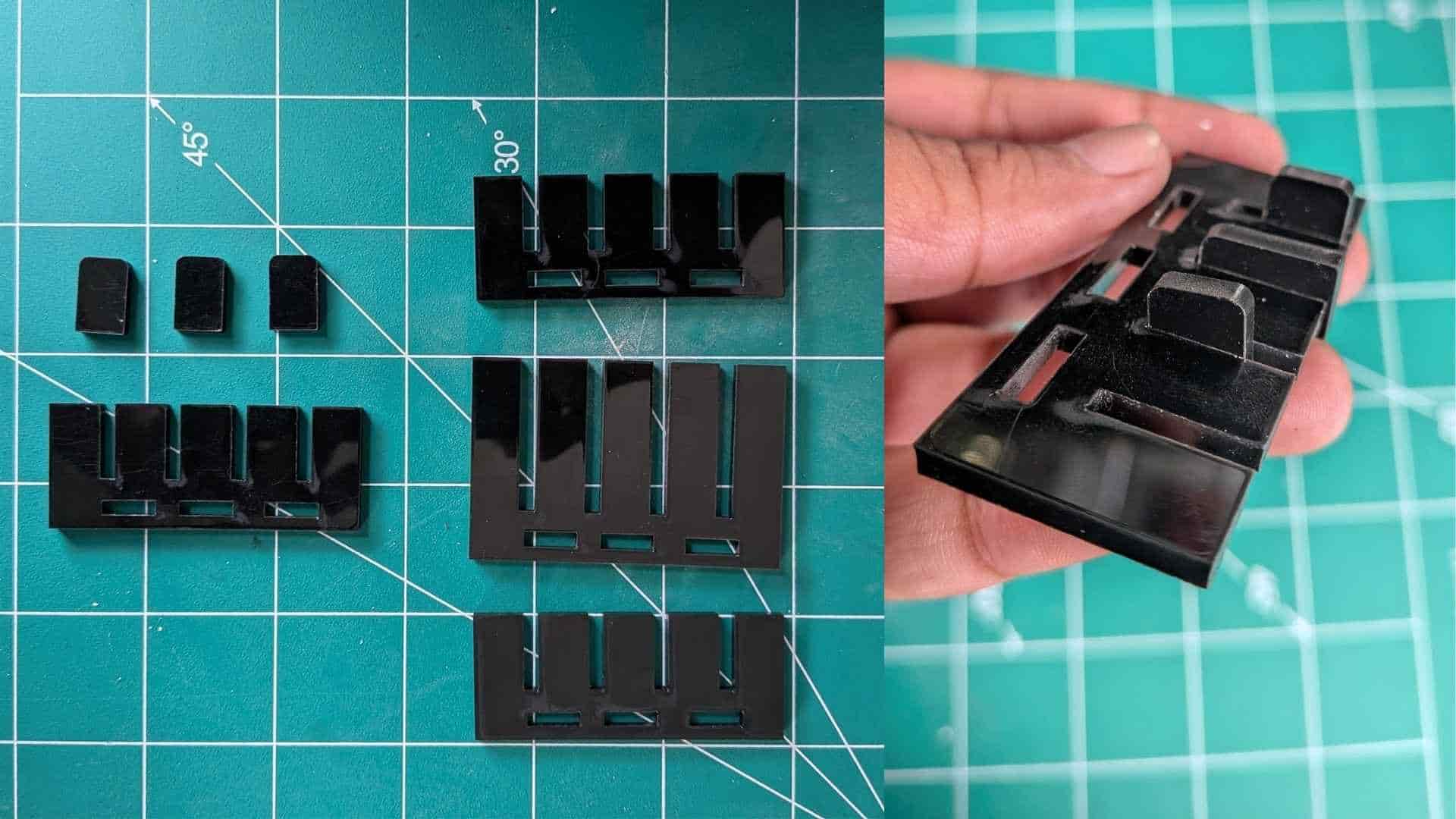
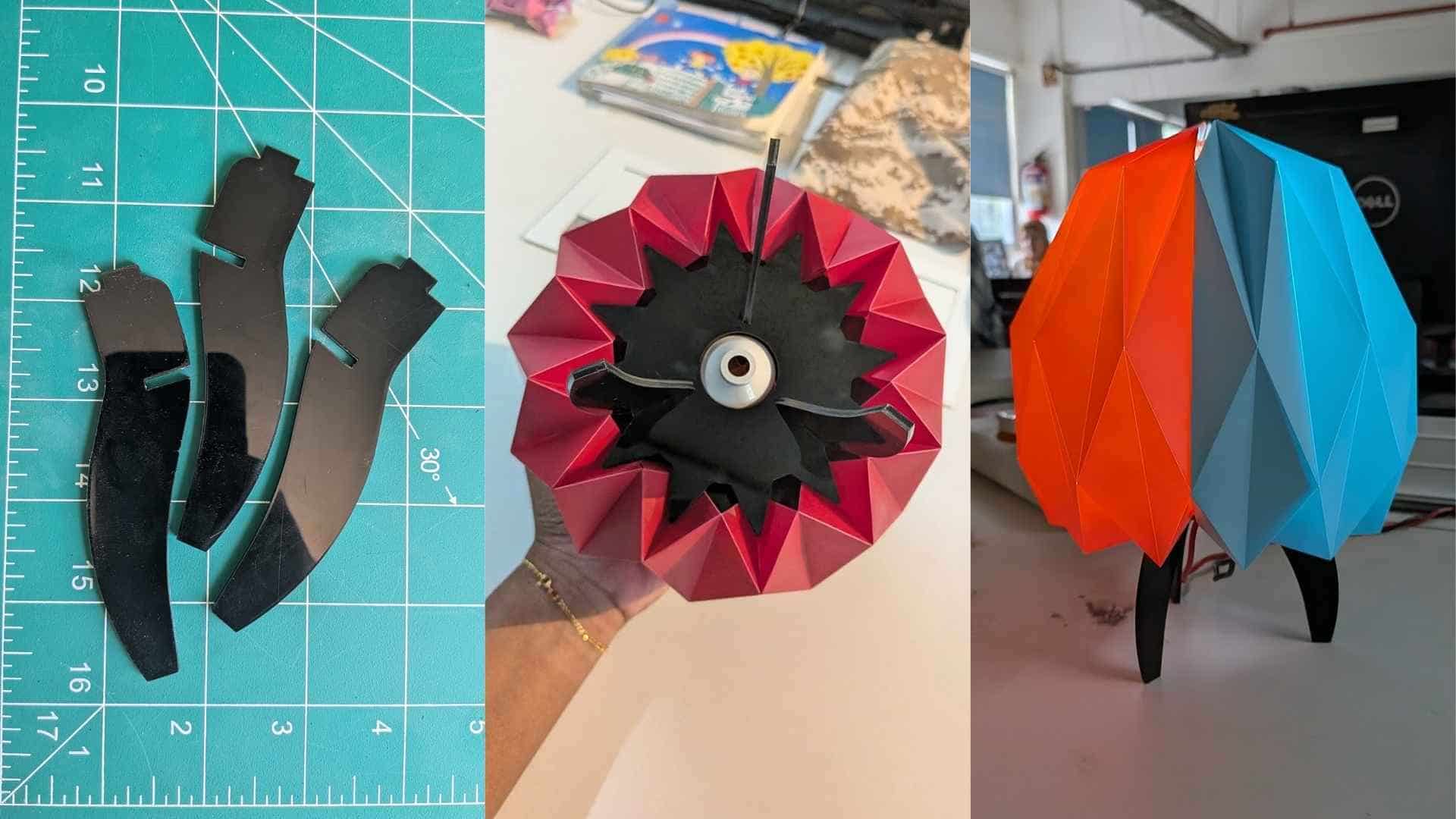
This actually took more time than developing the lampshade itself. I tried several iterations, experimenting with the number of legs, their shape, curvature, orientation, and how they would hold the folded sheet. I initially tested these using cardboard prototypes and later moved to acrylic.
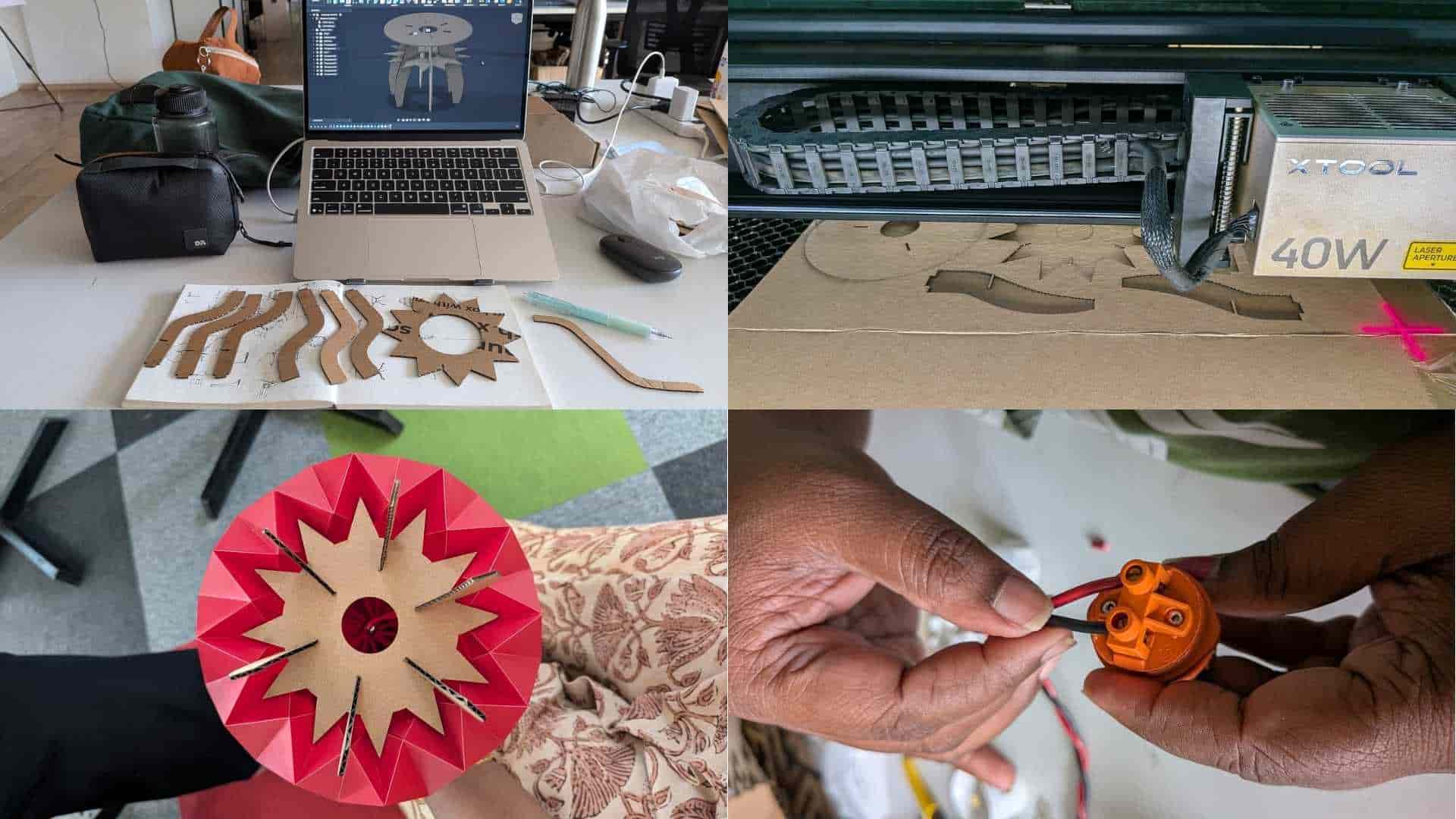
We also procured the sample materials ourselves: the synthetic sheets, wire, plug, holder, and bulb. Once we had a clearer idea of the total requirements, we prepared the list and got the remaining materials procured through Mufeed.
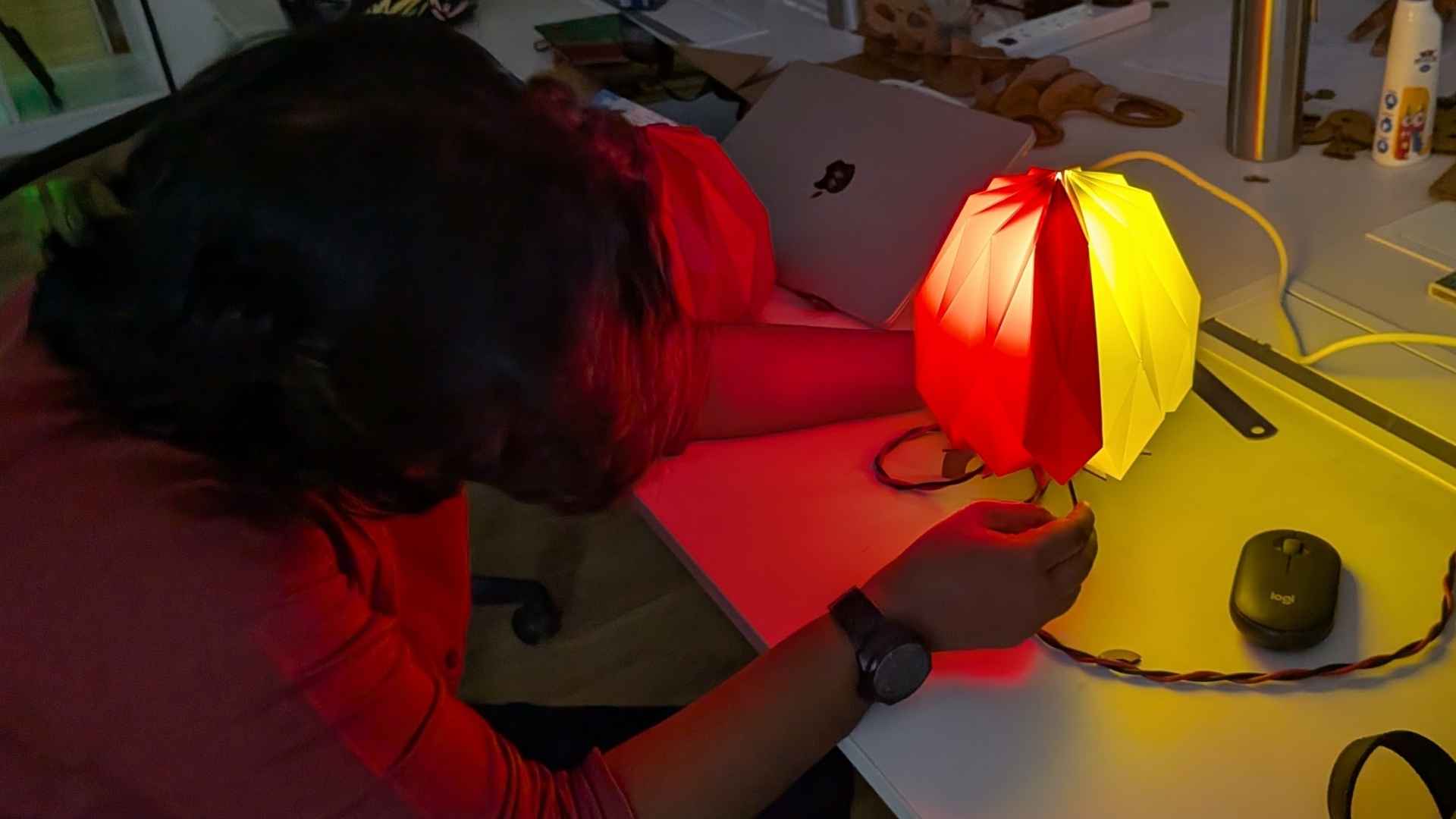
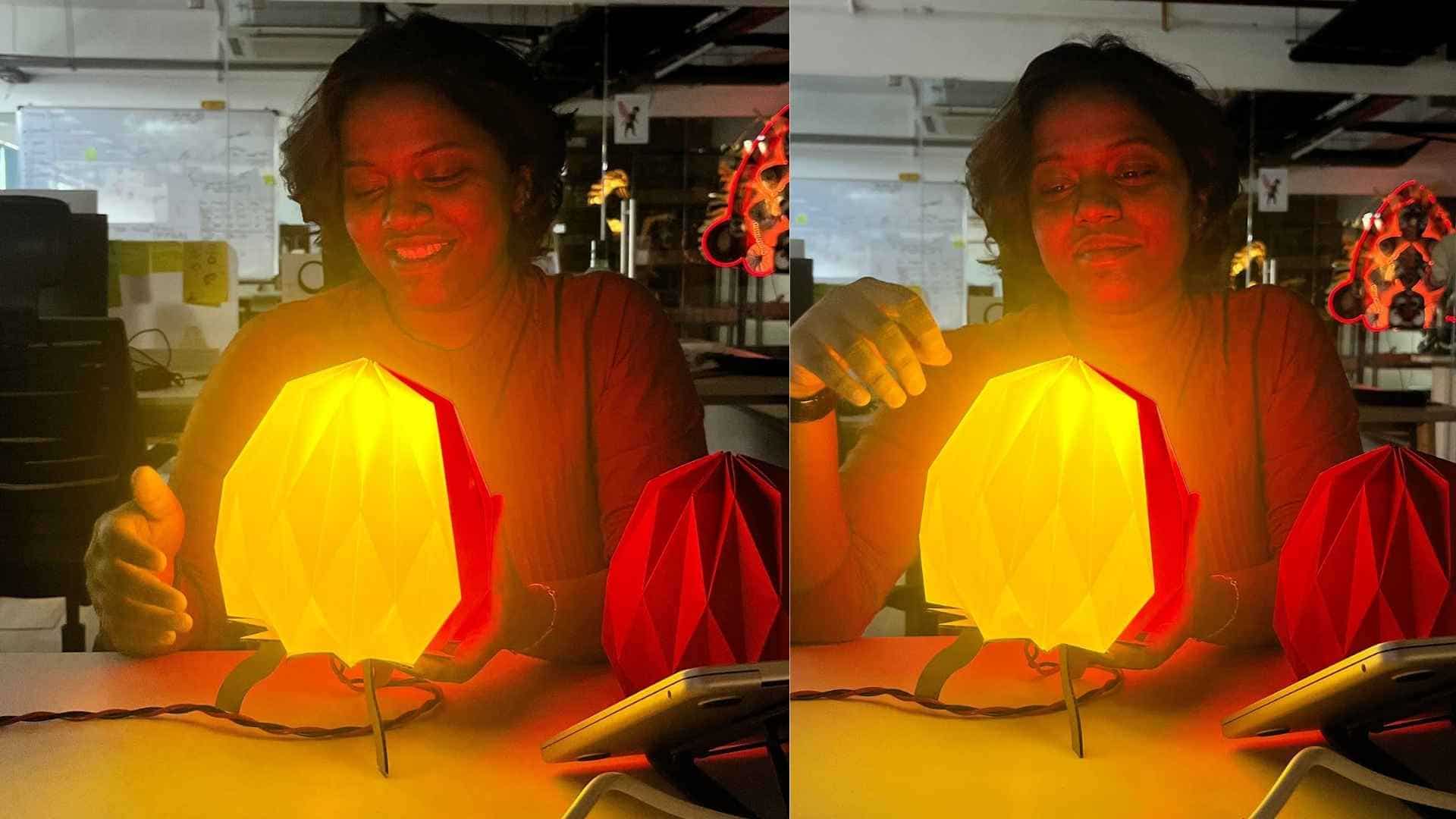
We tried both single-colour sheets as well as combinations of two colours. Both worked surprisingly well, and it was exciting to finally see the folded samples lit up and watch the colours and patterns come alive with the light.
For the acrylic version, we also had to work out the kerf. That meant quite a few rounds of testing before we arrived at a value that gave us a reliable fit.
Workshop Preparations
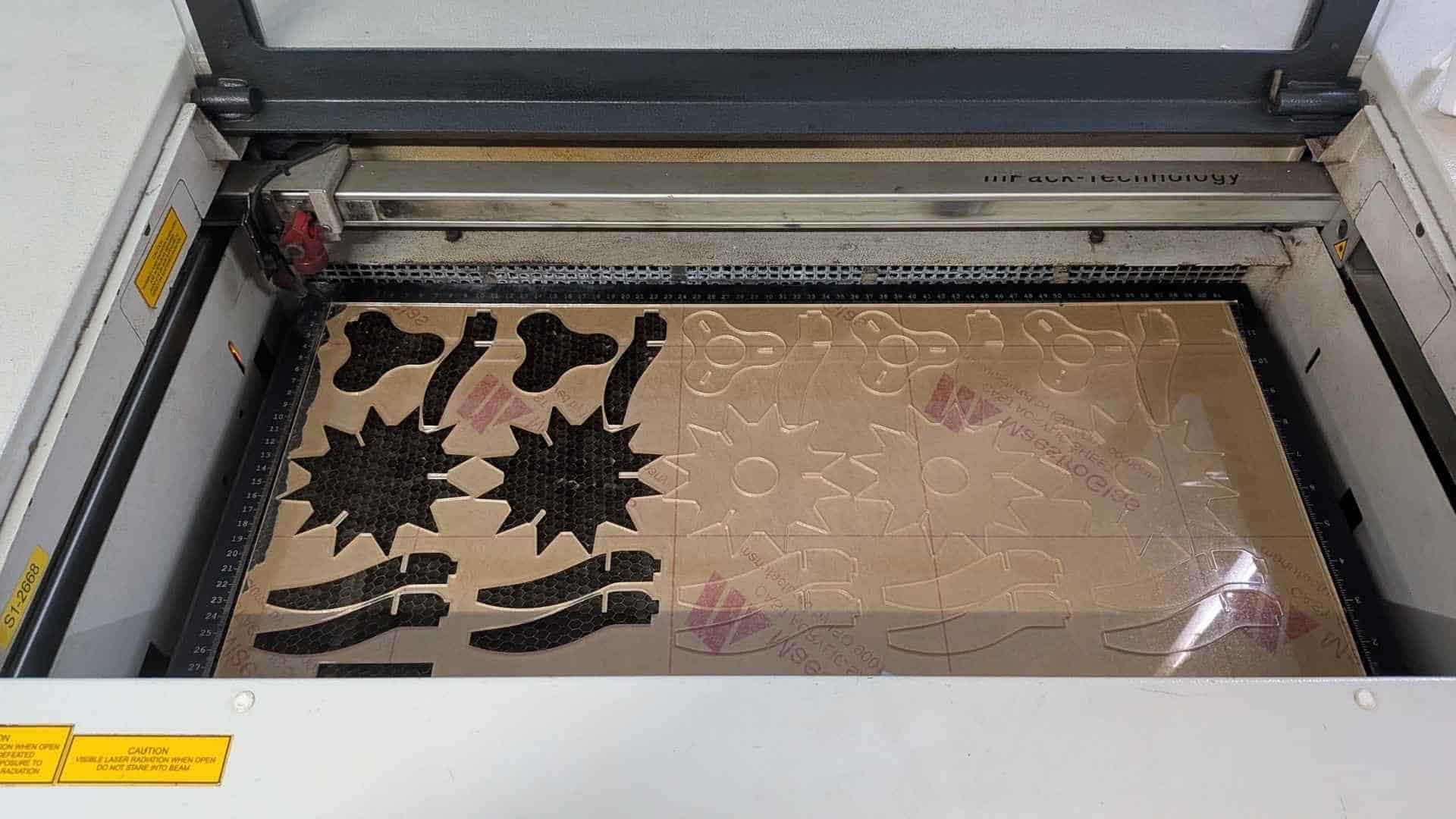
Once we had achieved a workable kerf value and completed a few more trials, we finalized the leg design in black acrylic. We then had to reproduce the same design in clear acrylic, since that was the material we intended to use during the workshop.
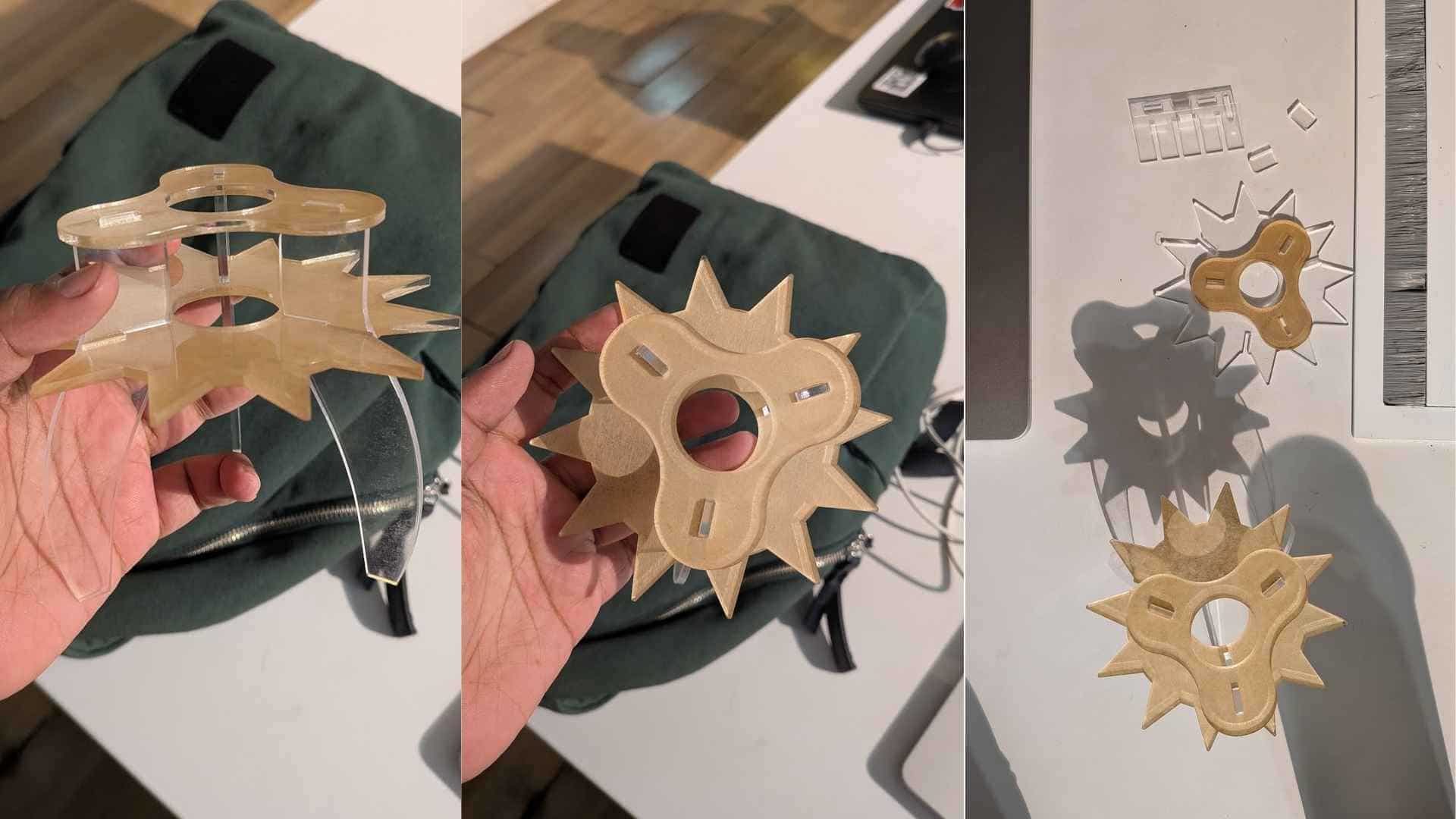
For this, we had to use the Trotec laser cutter instead of the xTool S1, as the S1 did not support clear acrylic.
The kerf tests had to be done again. All four of us took turns producing enough sets for the workshop, along with a few extra sets in case something went wrong, and one set for each of us.
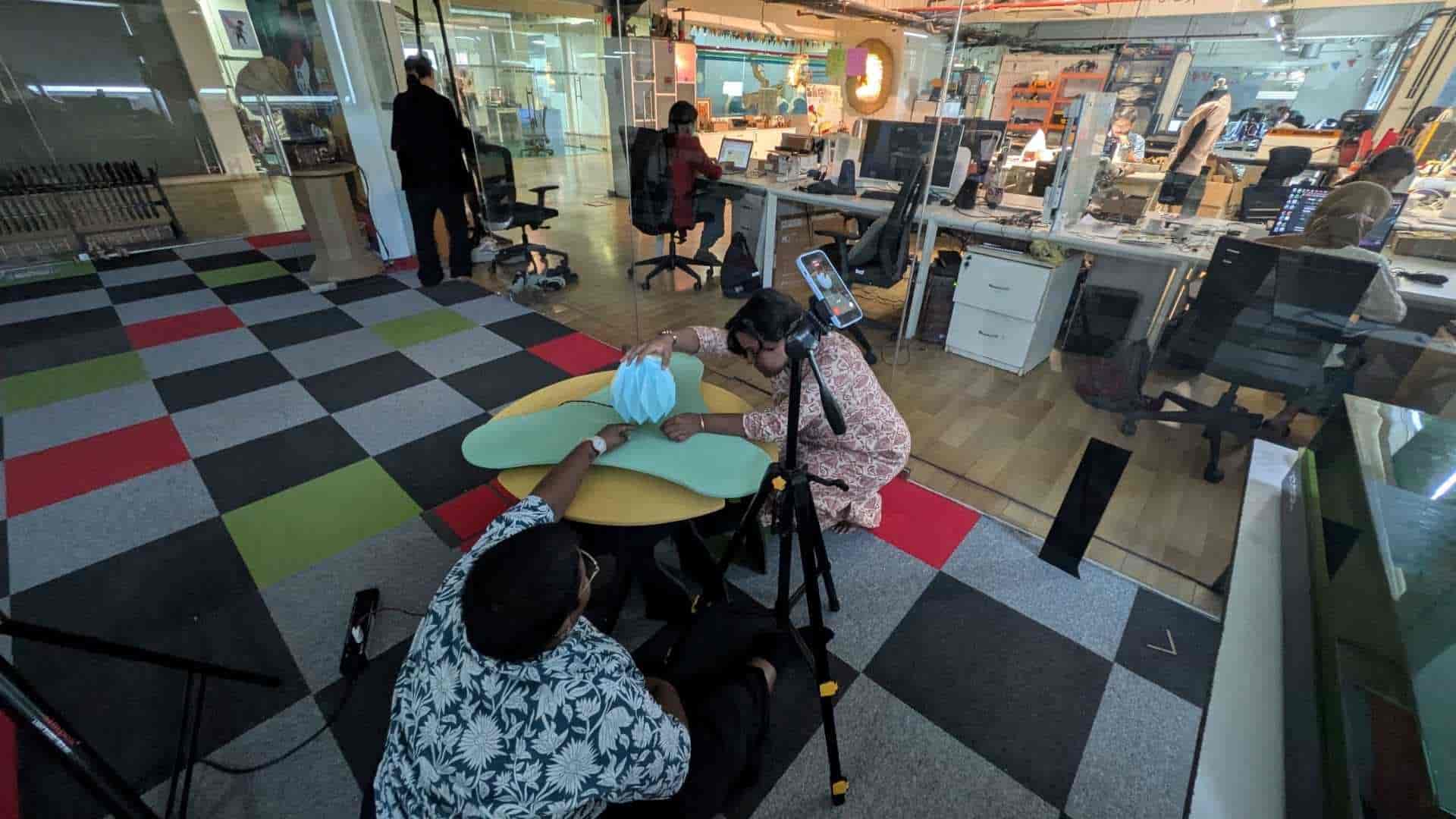
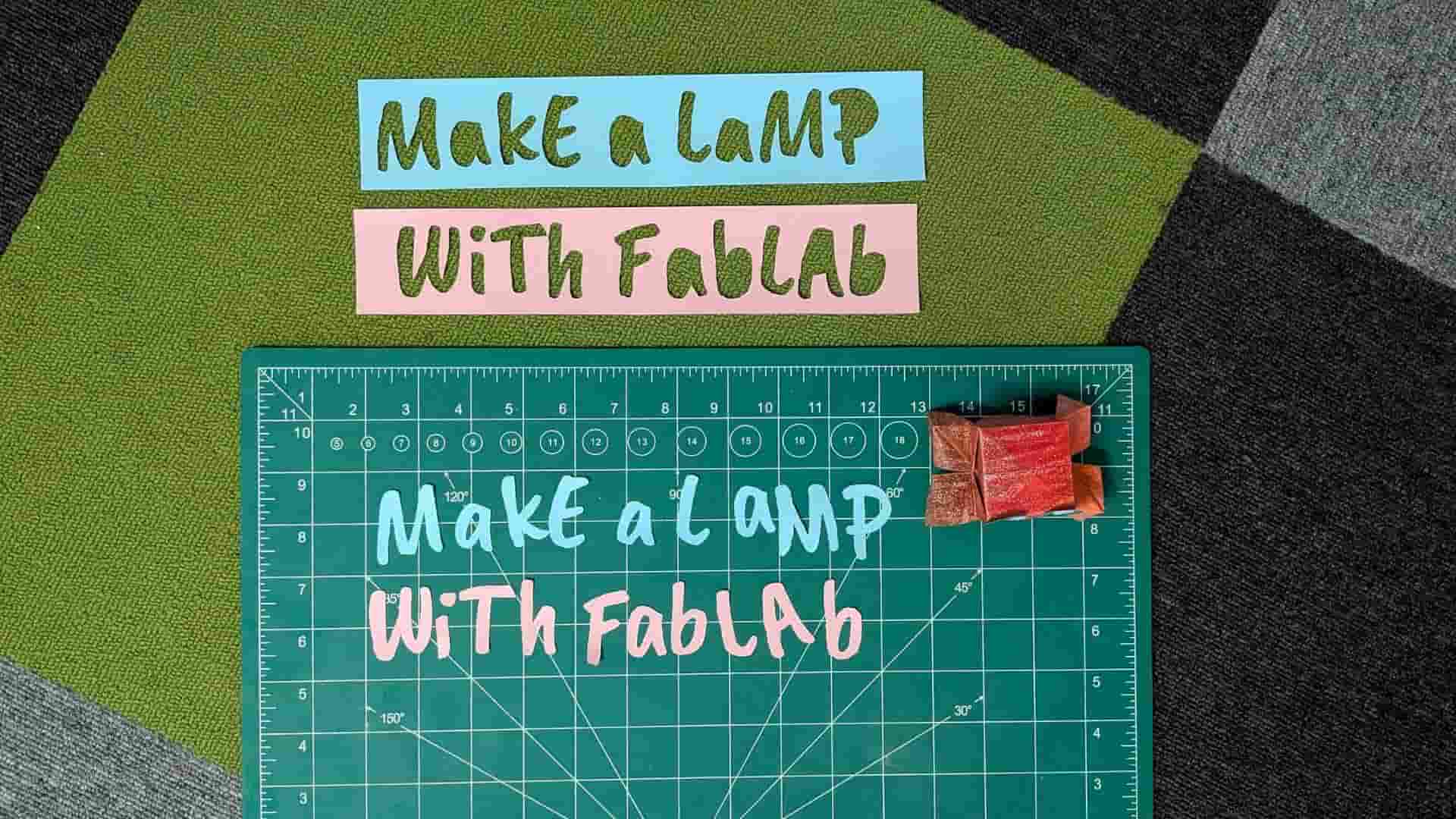
Alongside the technical preparation, Ashtami and I worked on the marketing materials, including posters and reels. Ardra helped create the Google Form, and all of us worked together on the workshop presentation and its content. We were also putting up stories on Instagram regularly to keep potential participants engaged and curious about the workshop.
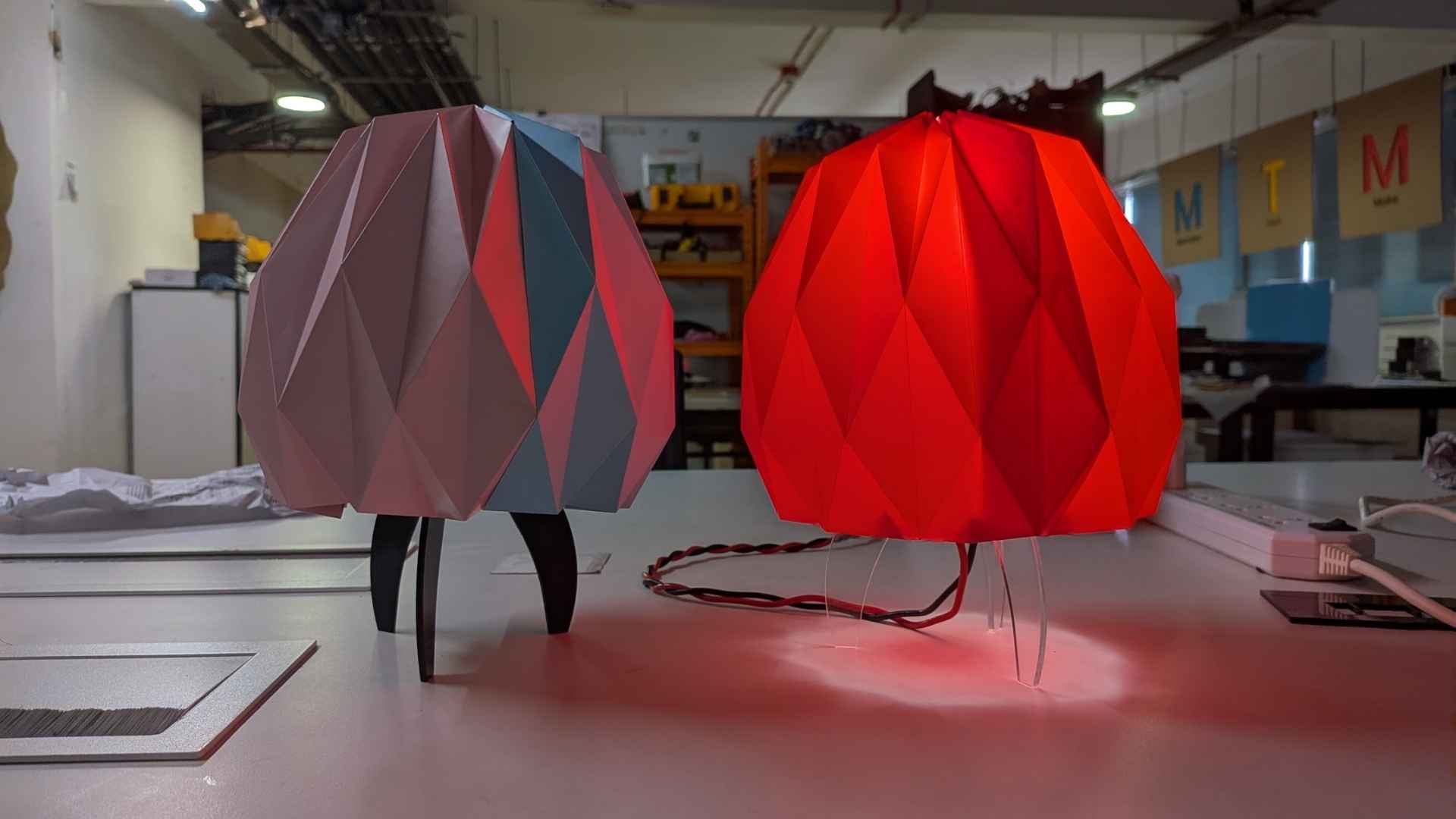
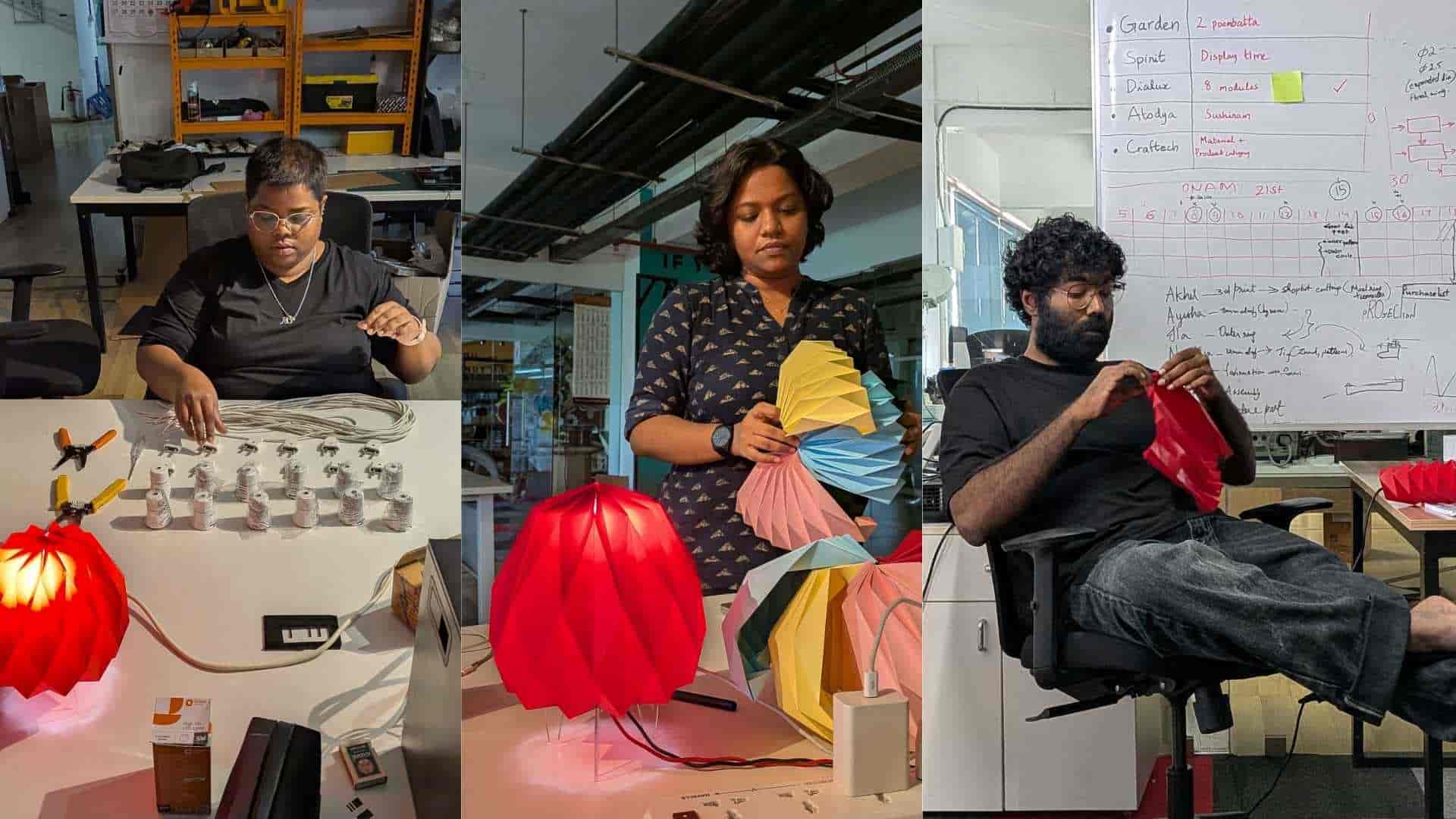
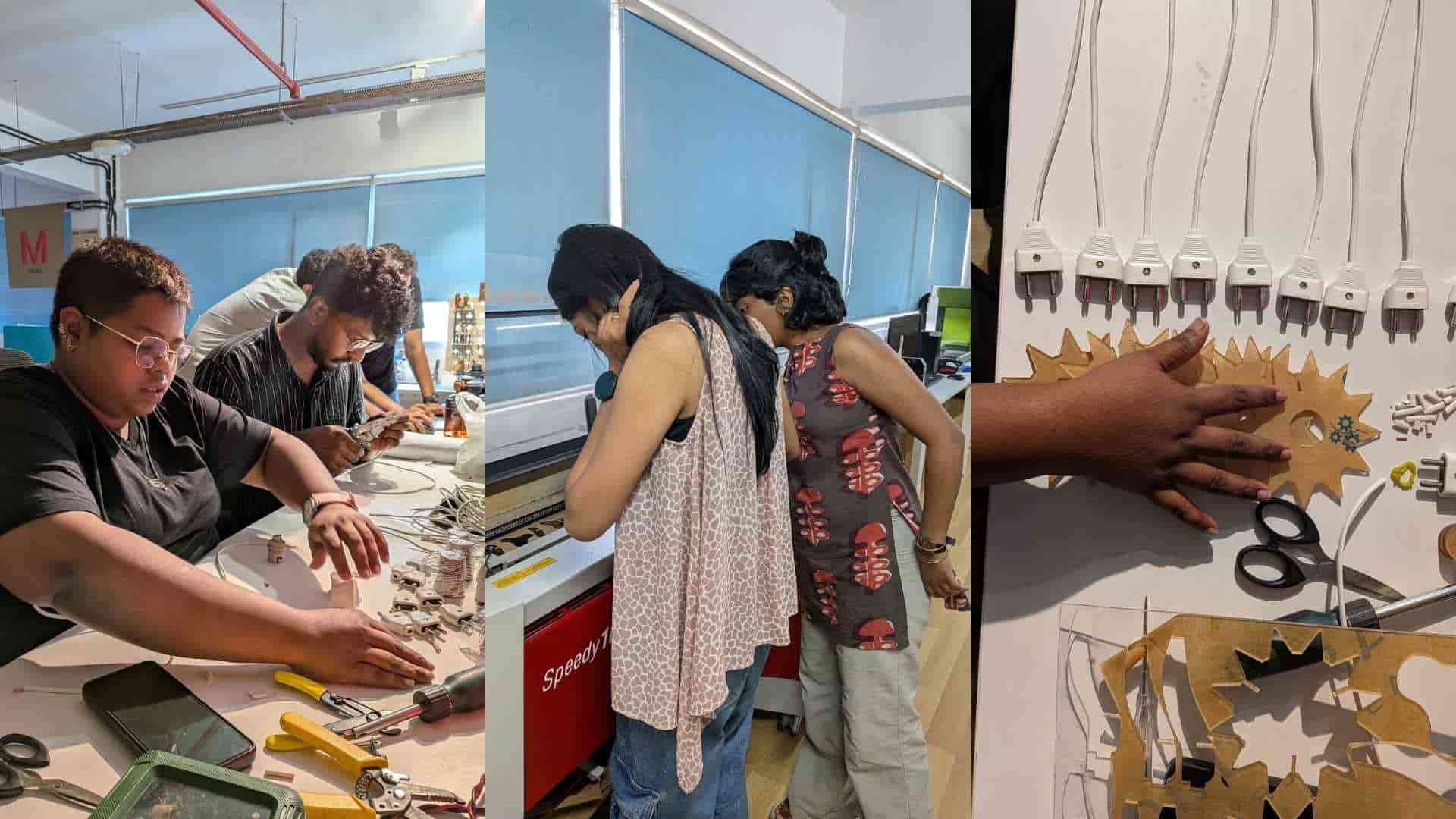
Ardra helped us prepare the wire, plug, holder, and bulb sets, along with Alwin, and also taught the rest of us how to put them together. We all ended up learning quite a bit during the preparation of the workshop itself.
Workshop
The workshop itself was divided into different phases so that responsibilities could be shared and the process would be easier to manage during the session.
We planned to begin with an introduction to Kerala Startup Mission, Super Fablab, the facilities, and the kind of work that happens there, followed by an introduction to the four of us as facilitators. Architha was in charge of this part.
I would then introduce the participants to folding, followed by a small demonstration explaining the logic behind the fold.
After that, Ardra would take over the 2D drafting section using FreeCAD. This was planned as a live drawing and drafting session, where participants would follow along and recreate the same pattern themselves.
Once everyone had their crease pattern ready, Architha would introduce laser cutting, the tools, and the concept of kerf, followed by Ashtami introducing the xTool S1 that we were using for the workshop.
She would then explain the process, parameters, safety precautions, testing, and the values required for the laser cutting and scoring.
The participants would then be guided through the xTool software, where they would prepare their files and get their sheets laser-cut and scored.
Once a participant had their sheet ready, they would move to the folding station, where I would demonstrate the folding process and help them work through it. This would be followed by assembling the lamp using thread, tape, and the acrylic leg sets.
At this stage, everyone would help wherever needed, since most of the other activities would already be completed.
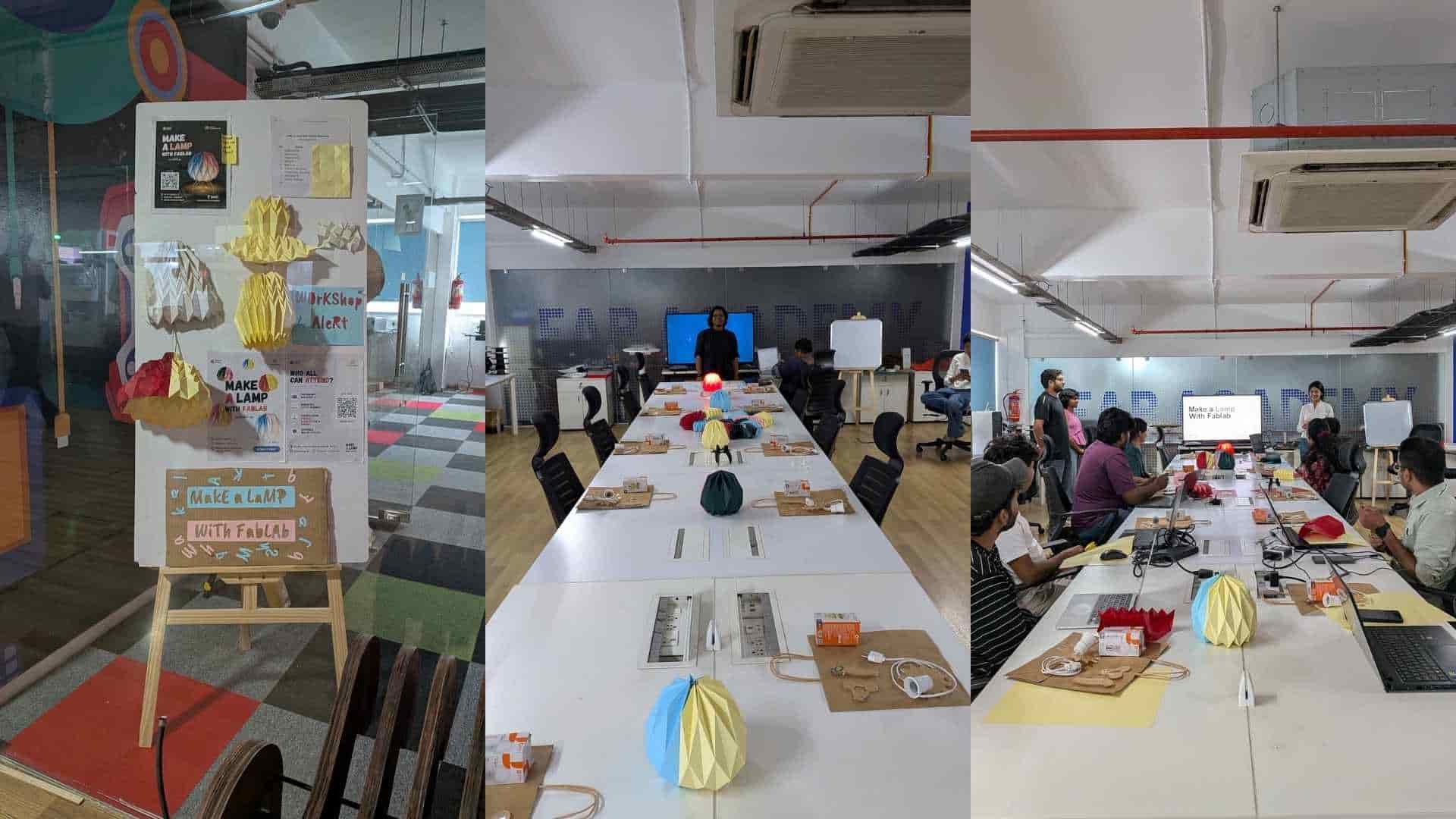
We had planned for 10 seats, but the workshop ended up having two additional participants, our Creative Fellow Ayisha and Mufeed’s sister.
The workshop was originally planned from 10:00 AM to 1:00 PM, but eventually extended until around 4:30 PM.
We also started later than planned. Some participants arrived late, and although they had been instructed to download and install the open-source software before the workshop, none of them had done so. Downloading and installing the software, and waiting for everyone to arrive and get set up, took up almost an hour of the workshop.
It was a useful reminder that the actual duration of a workshop is rarely the same as the duration written on the poster.
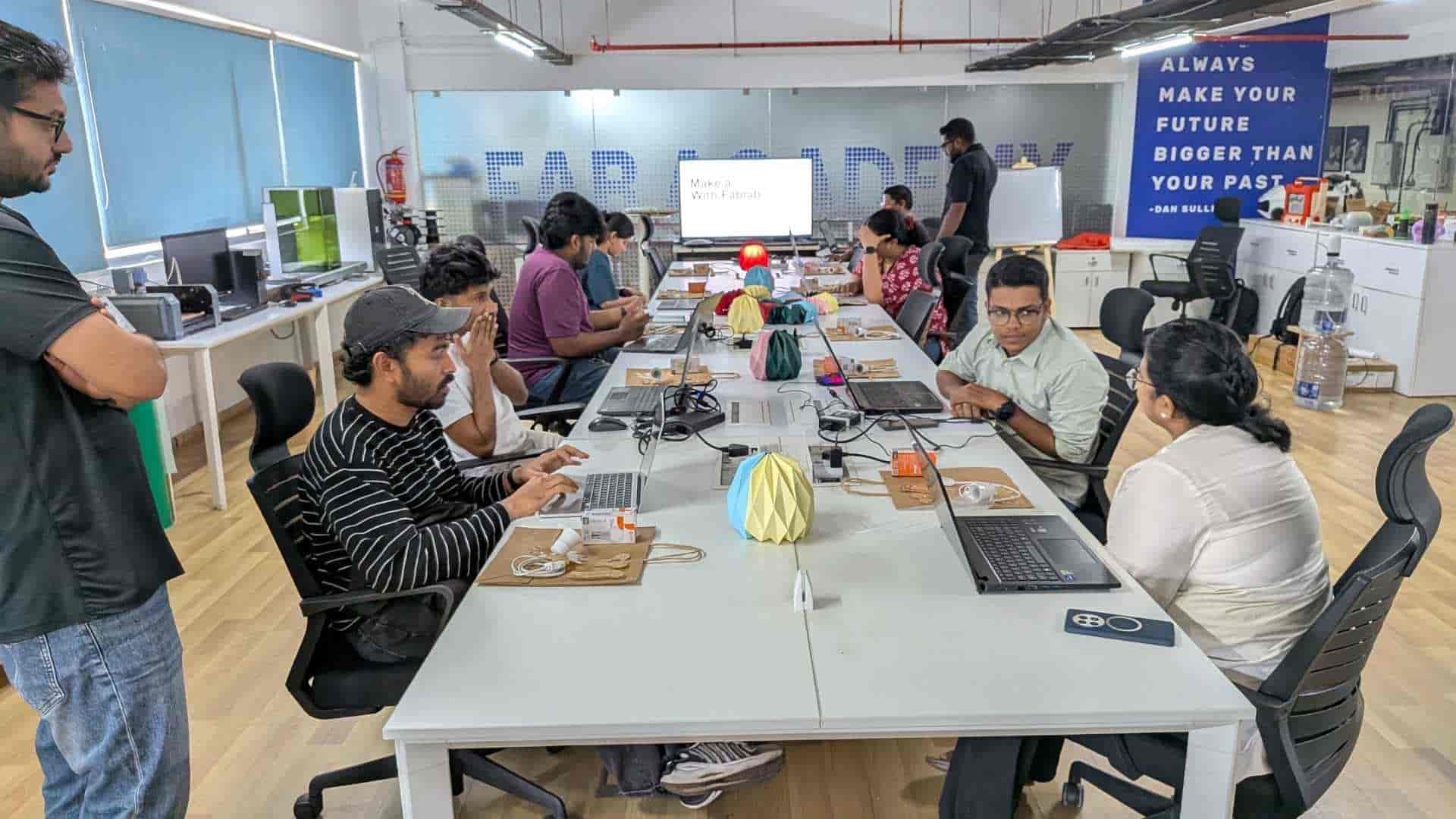
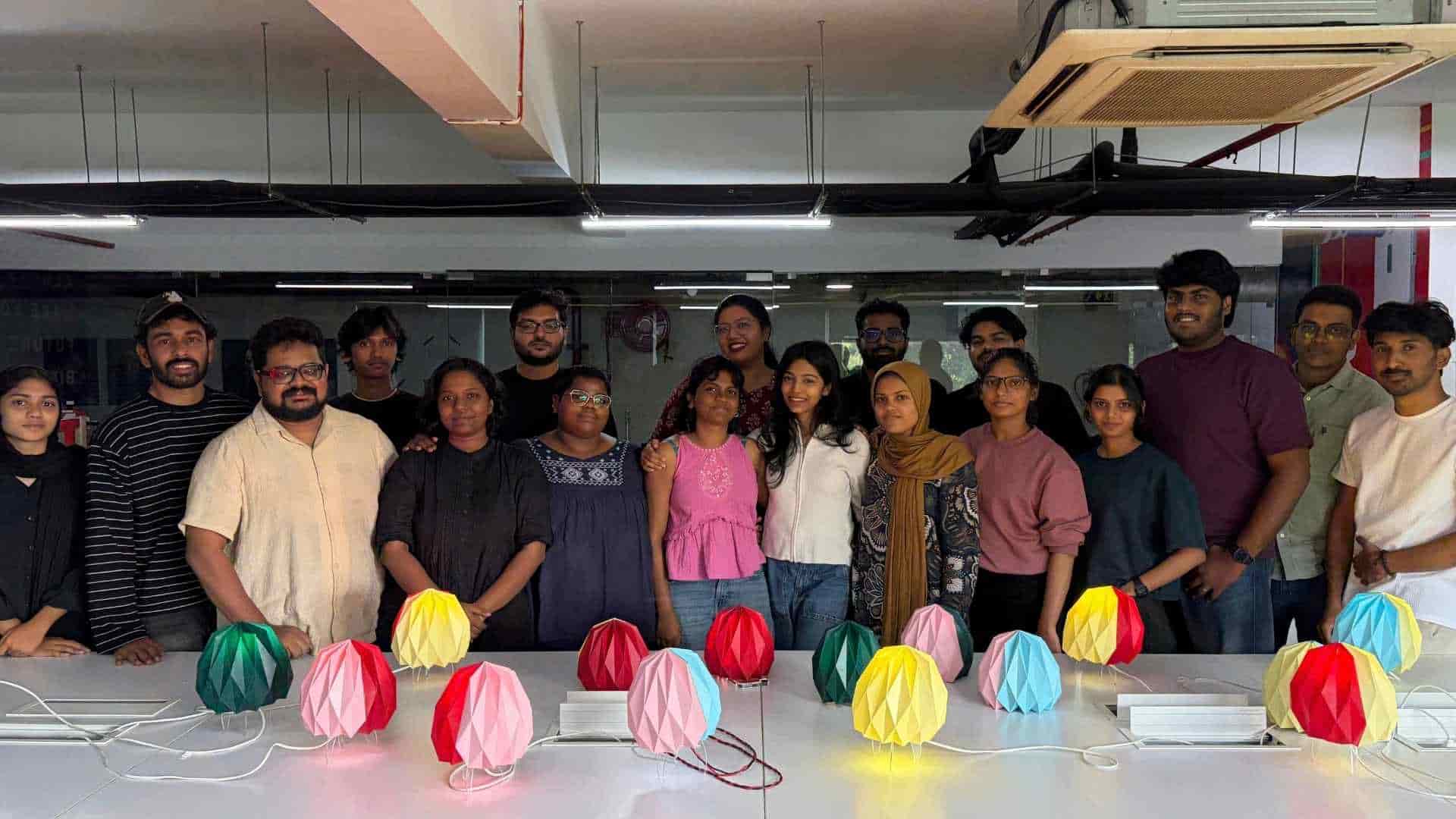
The rest of the process is probably better captured through the photographs and videos from the workshop. From drafting and laser cutting to folding and assembly, the participants worked through the entire process themselves and eventually left with a lamp that they had designed, fabricated, folded, and assembled.
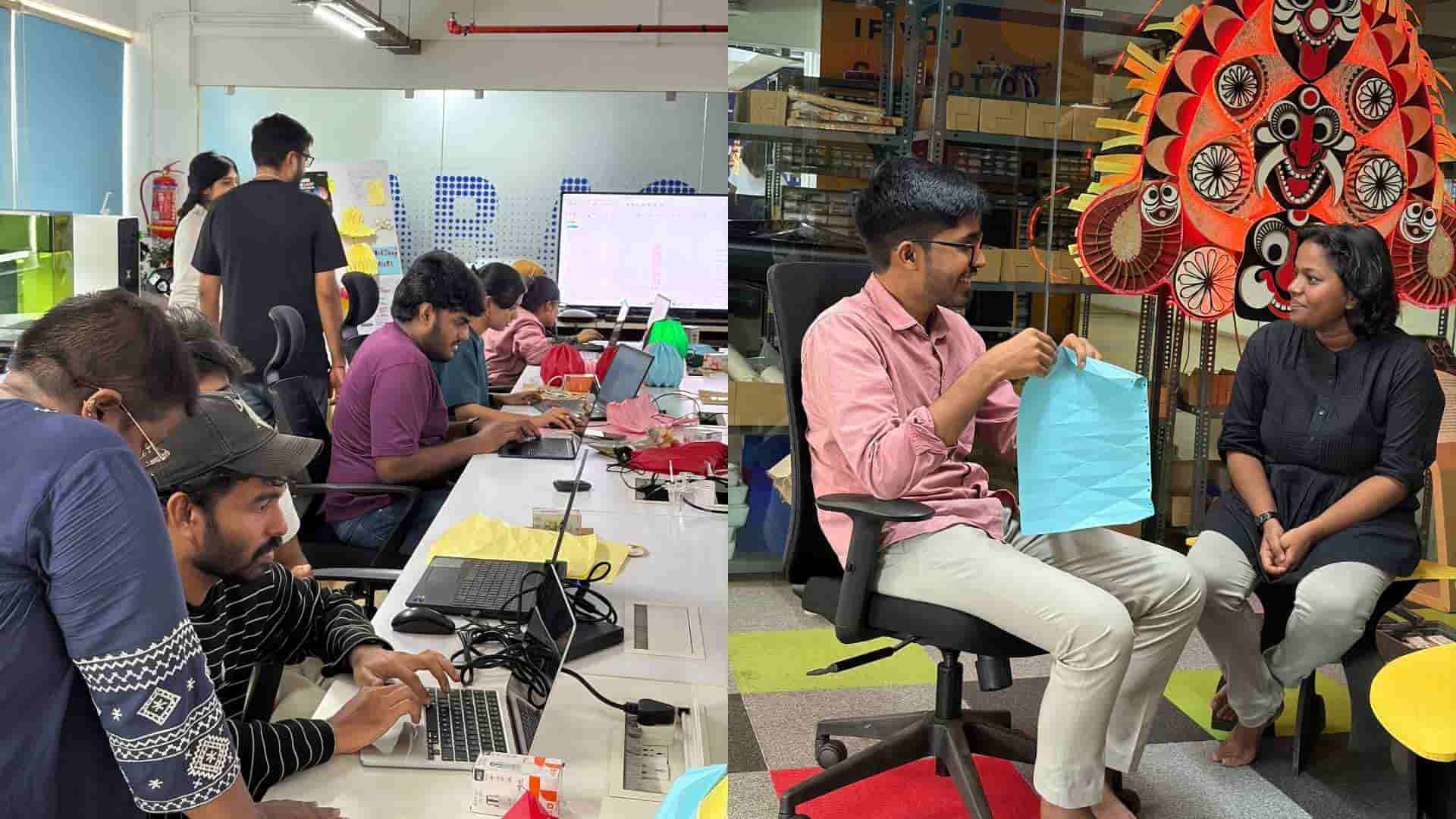
The feedback from the participants was encouraging. Many of them spoke about what they had learned through the process and asked about the possibility of conducting more workshops of a similar nature. Some also specifically requested that we conduct more such sessions.
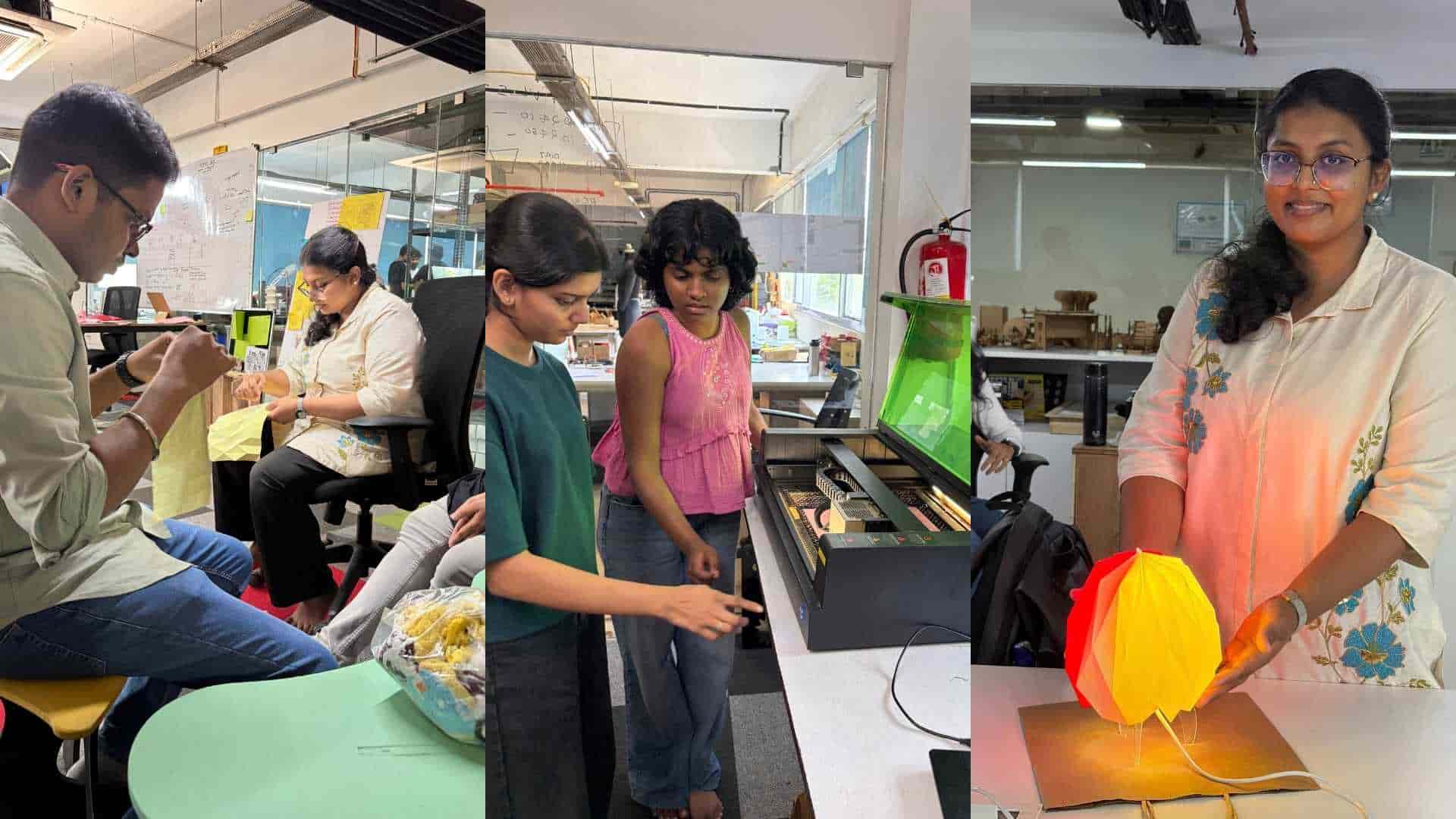
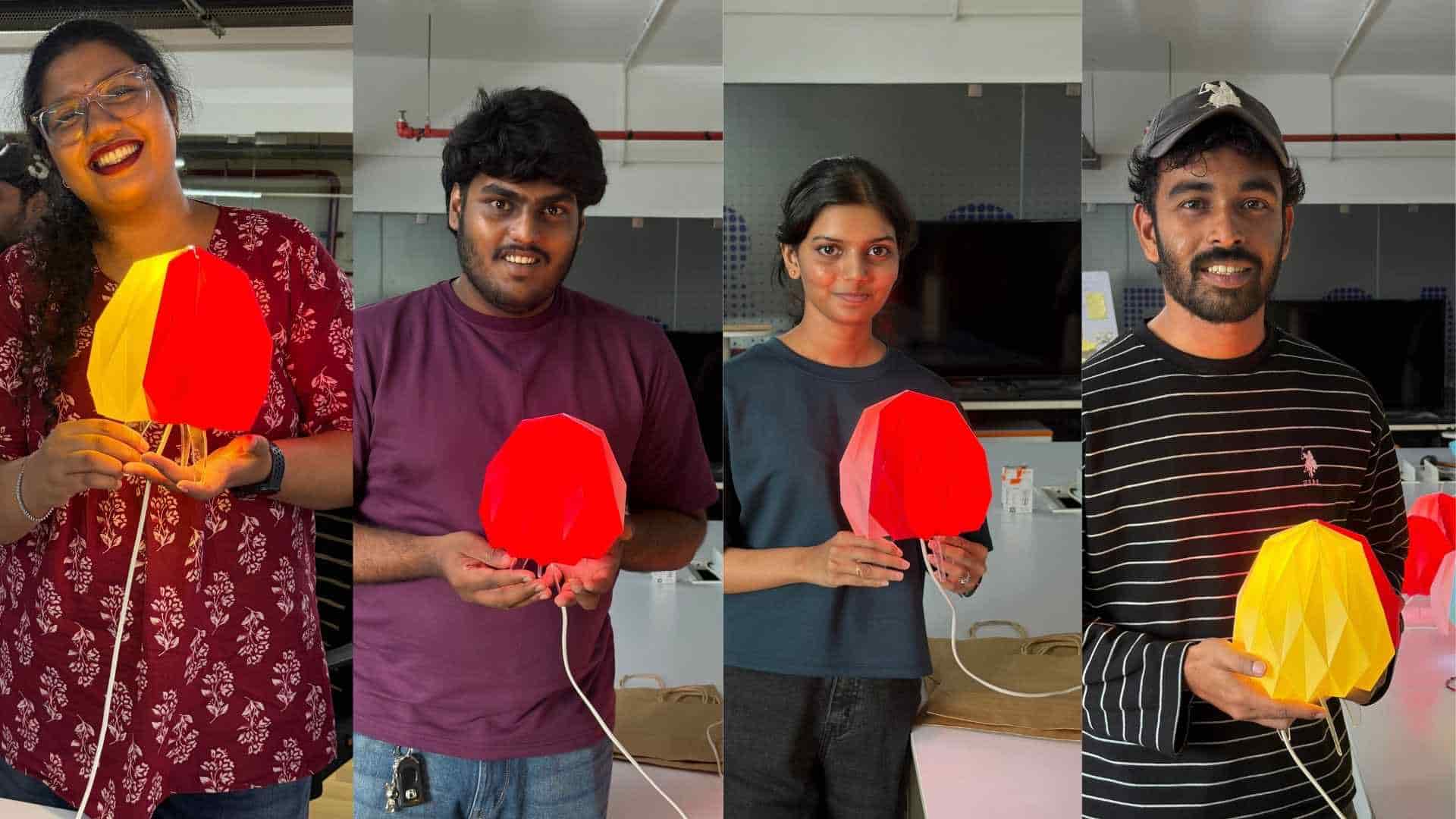
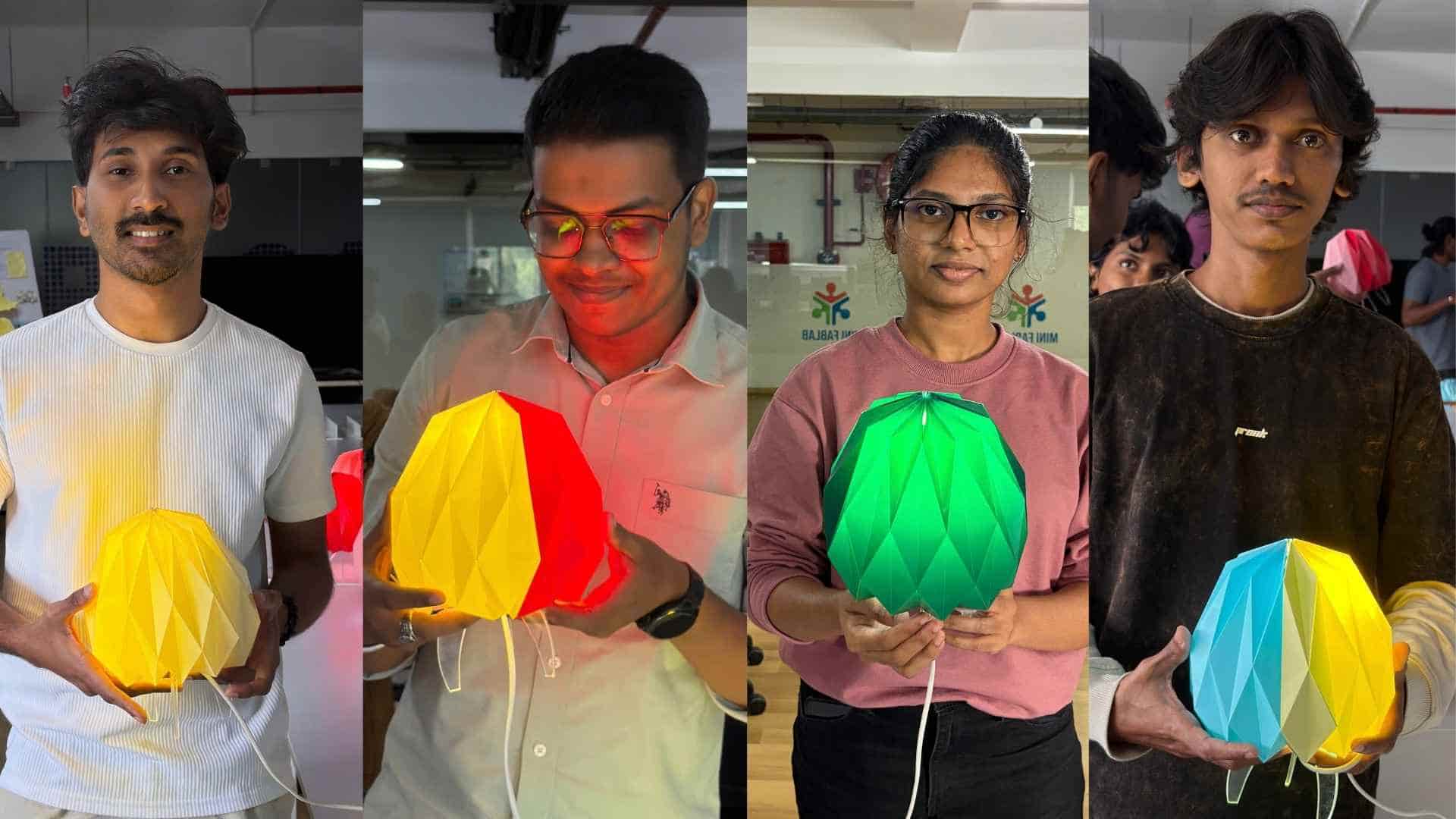
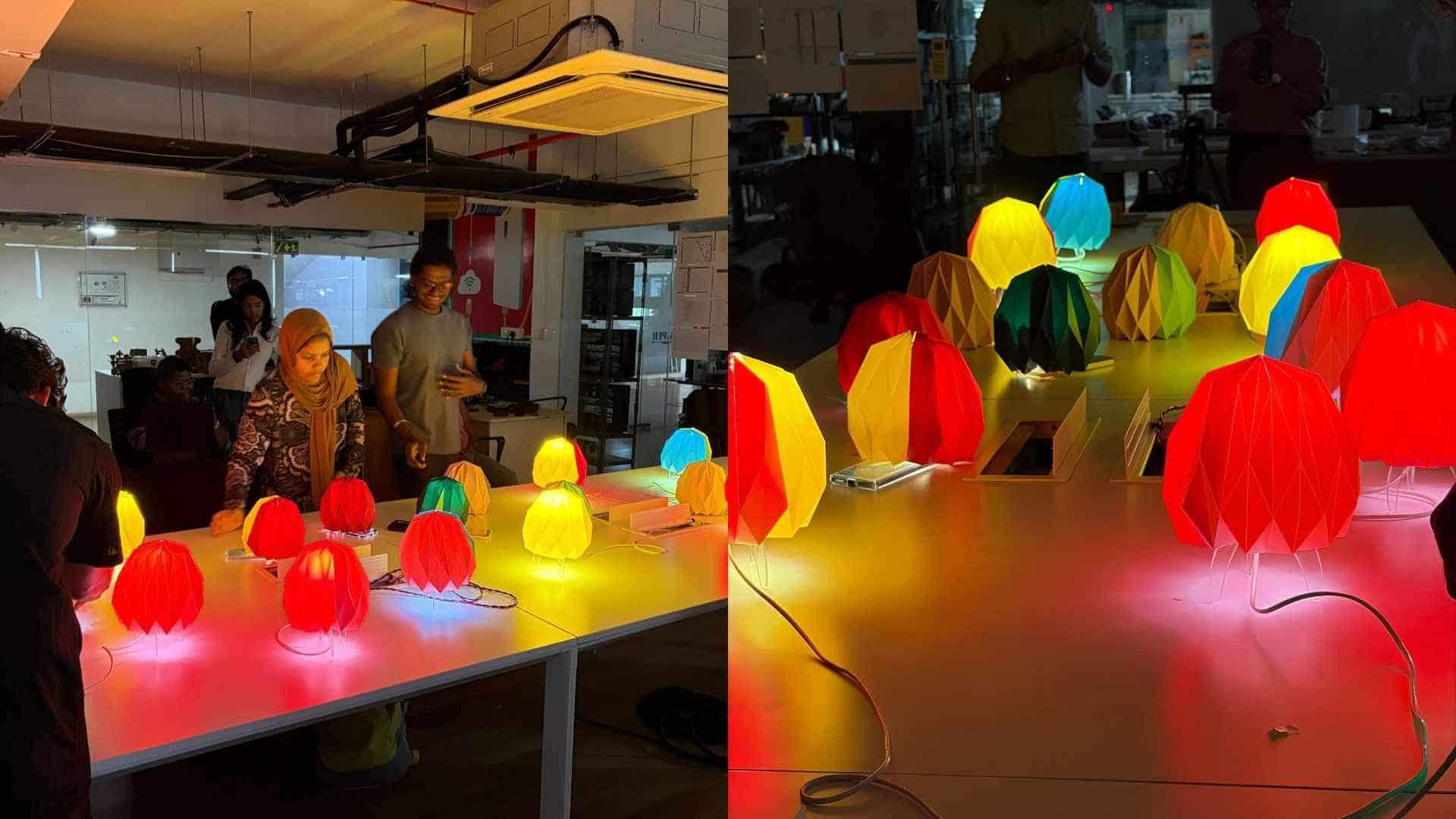
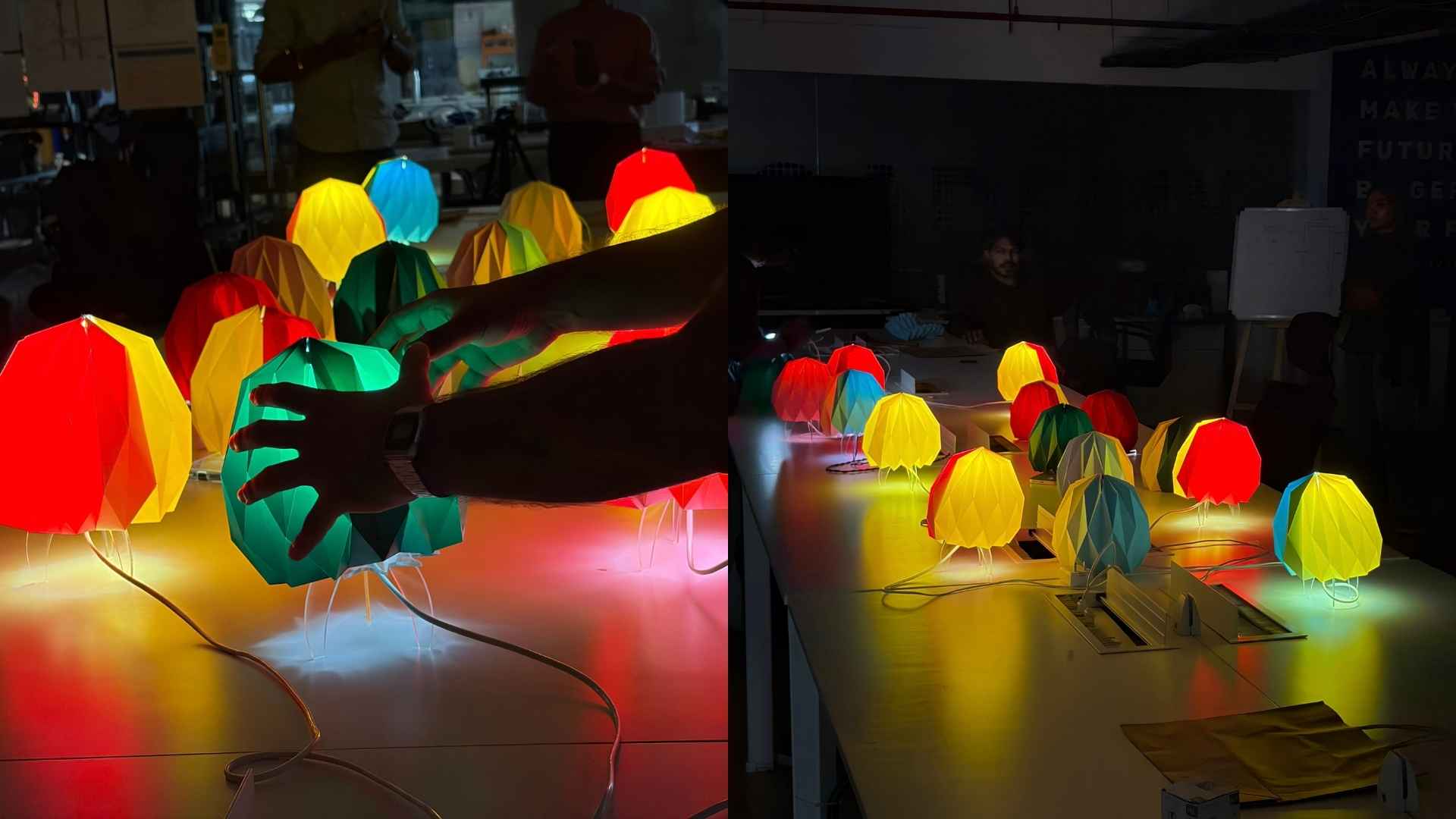
More than just making a lamp, the workshop became an opportunity to bring together folding, digital fabrication, material testing, and hands-on making into one process, and to see how people encountering these tools for the first time responded to them.
Acknowledgements
This workshop would not have been possible without the incredible support of Ashtami, Ardradevi, and Archita. All three played a huge part in planning, procuring materials, preparing, and delivering the workshop. A lot of the work that made the workshop happen took place well before the actual workshop day, and it was very much a collective effort.
Abhishek played the role of our practice participant before the workshop, helping us test and rehearse the flow, and continued to support us during the actual workshop.Mufeed supported us in getting the materials procured and ready on time, and also helped circulate the workshop and marketing content.
Akhil helped us document the workshop, capturing the process through photographs and videos that also became part of this documentation.
The workshop was therefore not just the result of what happened on the day itself, but of all the planning, testing, troubleshooting, preparation, and support that happened behind the scenes. It was a genuinely collaborative effort, and I am grateful to everyone who contributed to making it happen.