Week 19: Invention, Intellectual Property, and Income
Assignment
Complete your final project, tracking your progress:
Intellectual Property
Source: The World Intellectual Property Organization
What is Intellectual Property?
Intellectual property (IP) refers to creations of the mind, such as inventions; literary and artistic works; designs; and symbols, names and images used in commerce.
IP is protected in law by, for example, patents, copyright and trademarks, which enable people to earn recognition or financial benefit from what they invent or create. By striking the right balance between the interests of innovators and the wider public interest, the IP system aims to foster an environment in which creativity and innovation can flourish.
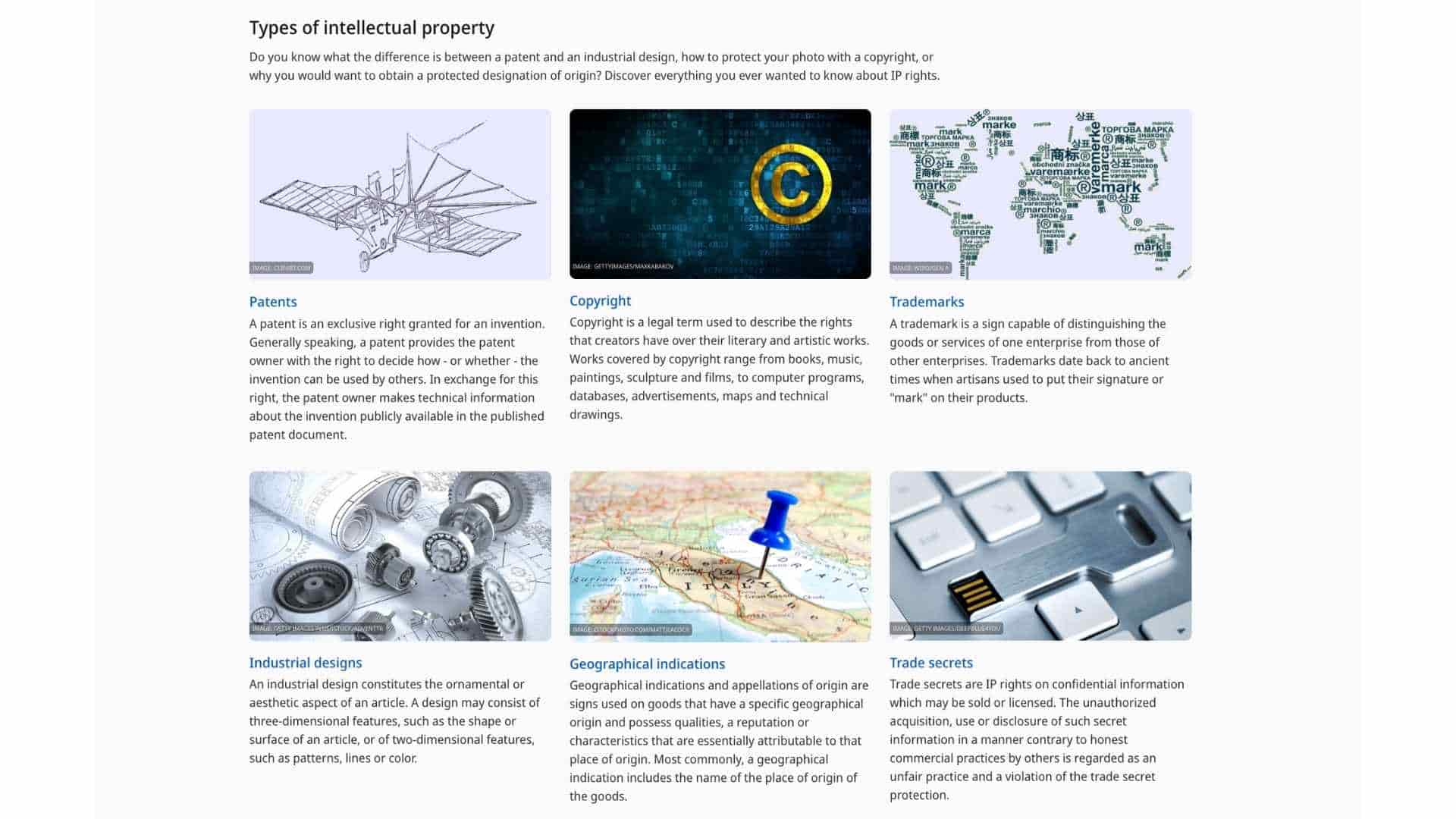
IP India - Intellectual Property India | Government of India
Source: ipindia.gov.in
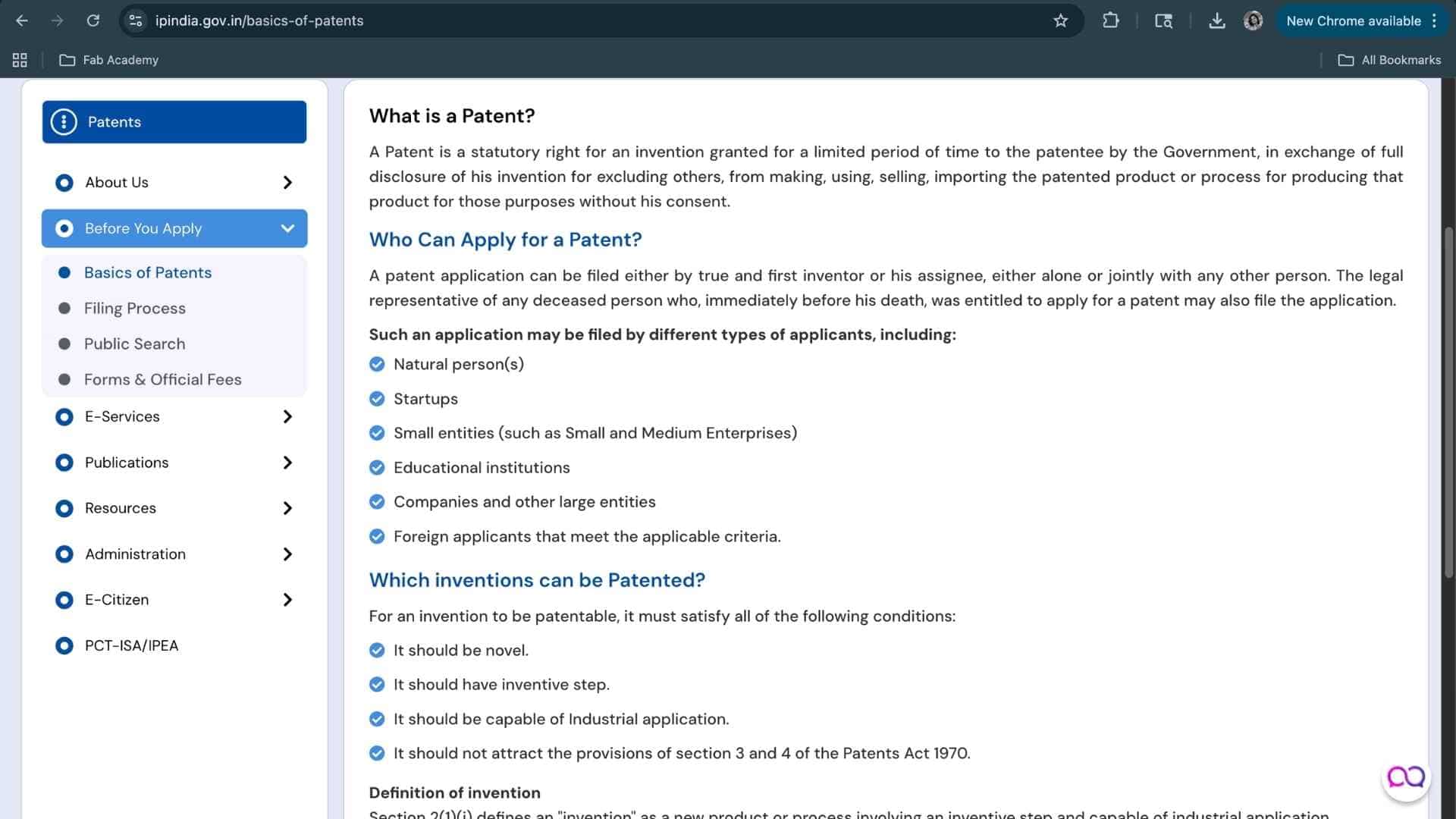
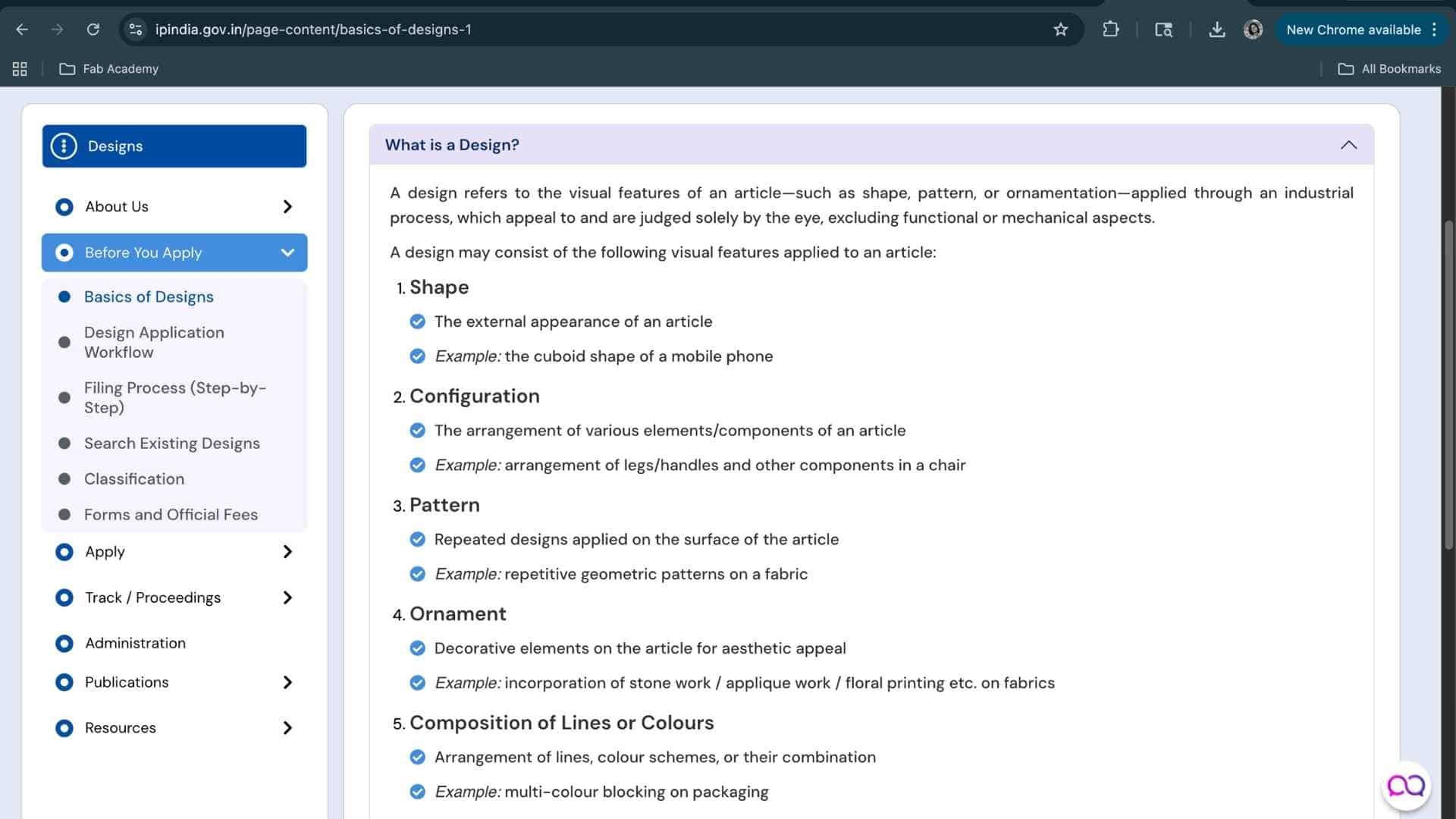
Intellectual Property and Commercialization Considerations in India
Sources: www.startupindia.gov.in ipflair.com www.intepat.com
Developing a product involves more than designing and building it. If an invention has commercial potential, it is important to understand how it can be protected, scaled, and brought to market. The following sections provide a brief overview of patents, international protection, and startup opportunities in India.
How to File a Patent in India
Patent applications in India are filed through the Indian Patent Office.
The inventor prepares a provisional or complete specification and files it with the Indian Patent Office. After publication and examination, objections are addressed before the patent is granted.
Patent Protection Outside India
Patents are territorial rights. A patent granted in India protects an invention only within India.
Inventors seeking protection abroad can file directly in other countries or use the Patent Cooperation Treaty (PCT) route.
The PCT allows a single international application to be submitted before entering the national phase in selected countries.
The PCT does not provide a worldwide patent. Protection must still be pursued separately in each country.
Startup India and Entrepreneurship
Startup India is a Government of India initiative that supports innovation and entrepreneurship through mentorship, incubation programs, networking opportunities, funding support, and intellectual property assistance.
Recognized startups may receive benefits such as patent facilitation, reduced government fees, and access to various support programs.
Company Structures in India
| Structure | Best For | Key Benefit |
|---|---|---|
| Sole Proprietorship | Individual founders | Simple setup and complete ownership |
| Partnership Firm | Small teams | Shared ownership and responsibilities |
| LLP | Small startups | Limited liability with flexibility |
| OPC | Single founder ventures | Company benefits with one owner |
| Private Limited Company | Growth-oriented startups | Investor-friendly and scalable |
| Public Limited Company | Large businesses | Can raise capital from the public |
Product development extends beyond design and fabrication. Understanding intellectual property, international patent protection, and suitable business structures is important when transforming an idea into a commercially viable product.
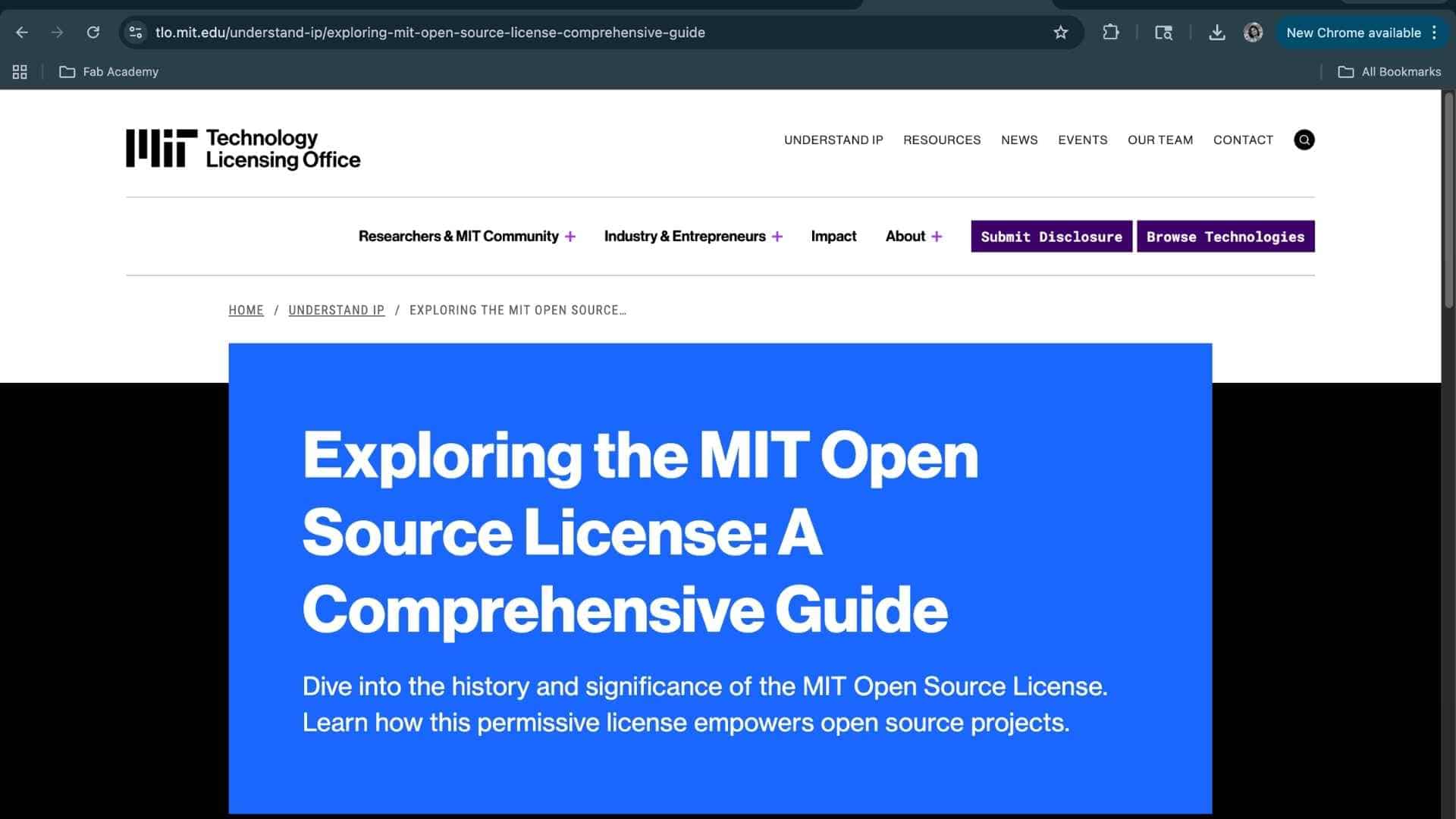
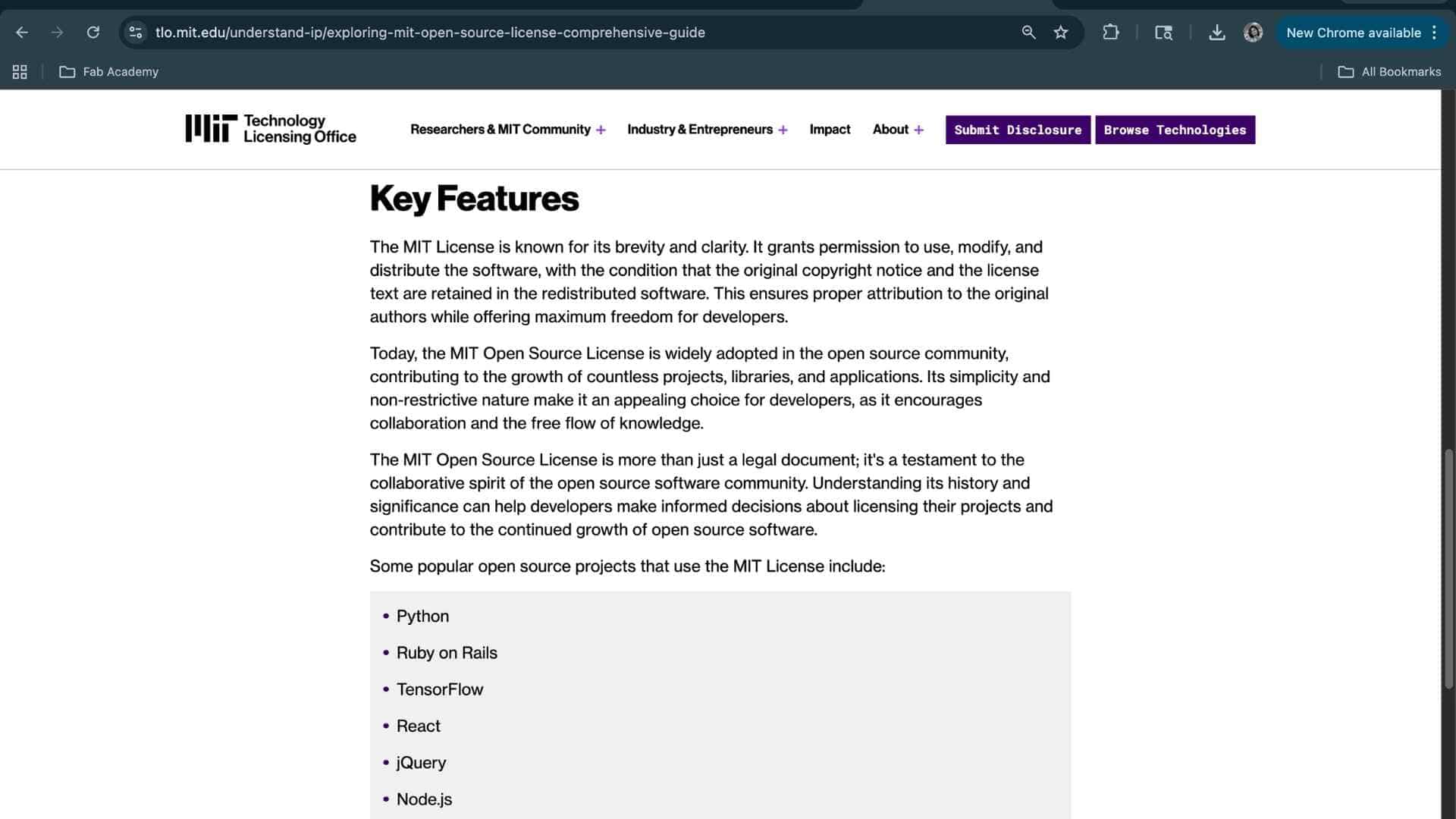
MIT License
Source: mit open source license
CERN Open Hardware Licence
Source: CERN
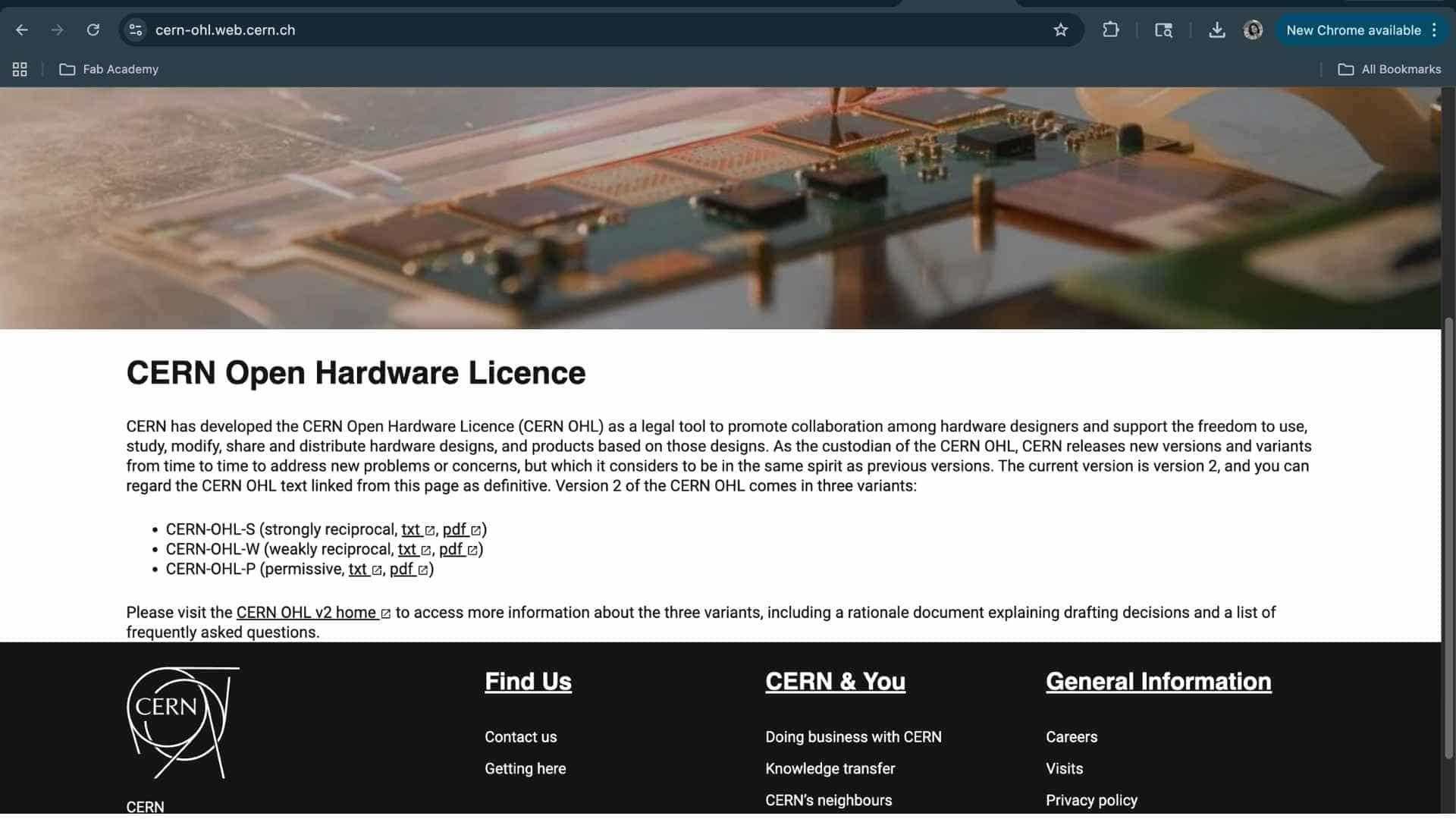
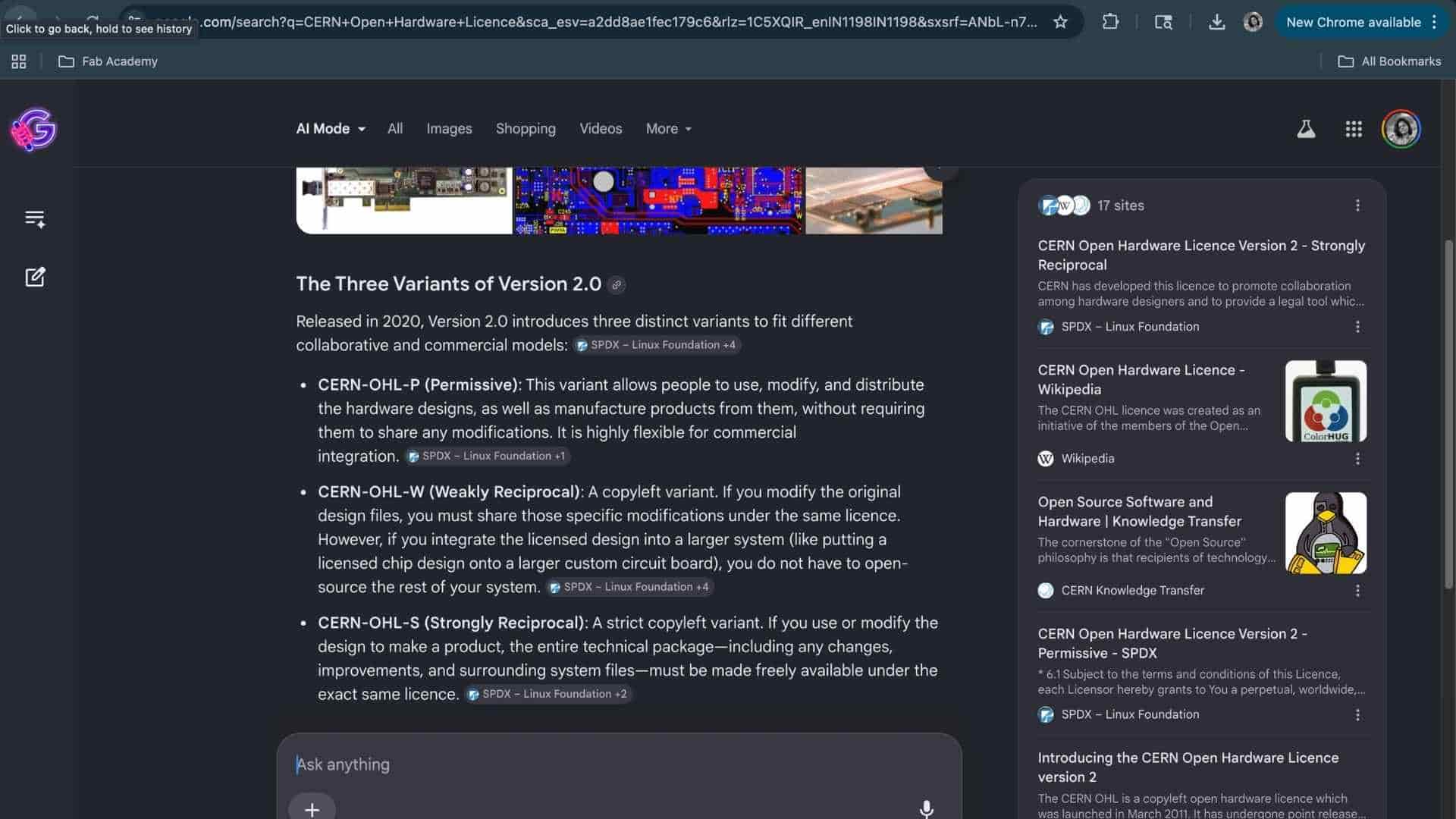
The CERN Open Hardware Licence (CERN-OHL) is a legal framework created by CERN to govern the sharing, modification, manufacture, and distribution of open-source hardware designs and their resulting physical products. First launched in 2011, it fills a critical gap because traditional open-source software licences (like the GPL or MIT) do not translate well to physical components, manufacturing layouts, and patent laws.
Creatives Commons License
Creative Commons (CC) is an international nonprofit organization dedicated to helping build and sustain a thriving commons of shared knowledge and culture. Together with its global community, CC develops tools and supports implementations that aim to increase access to knowledge.
The CC Licenses
What are Creative Commons licenses?
Creative Commons licenses are legal tools that help you grant copyright permissions to the general public.
Read more at creativecommons.org
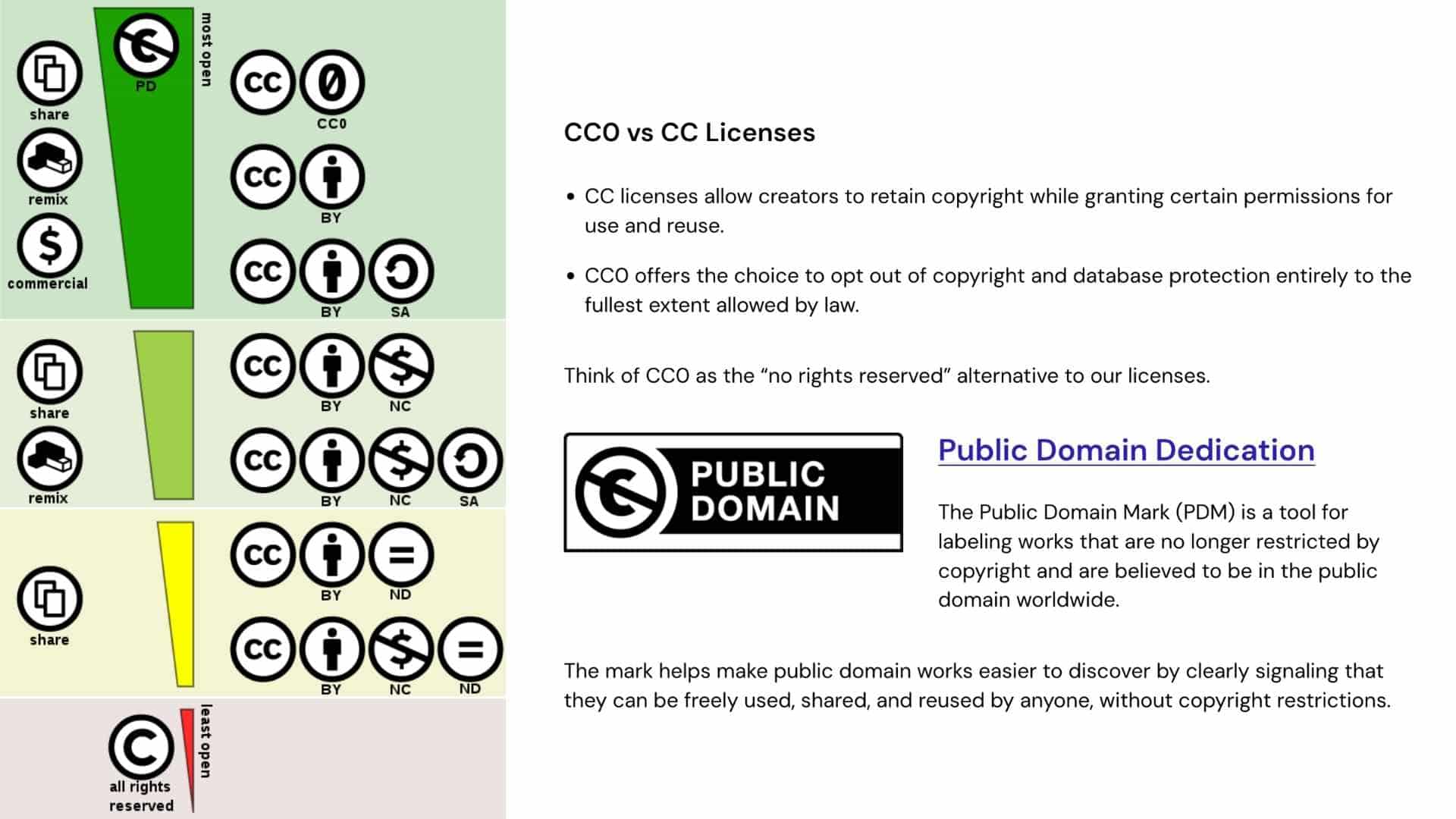
There are six different license types, listed from most to least permissive:
Prompt used on Chat GPT: Convert the following content into HTML clickable cards. Highlight CC BY-NC-SA as Selected for Penny Pal.
CC BY
Share, remix, adapt, and use commercially with attribution.
Open Source StyleCC BY-SA
Derivatives allowed, but must stay under the same license.
No EditsCC BY-ND
Sharing allowed, including commercially, but no modifications.
Non-CommercialCC BY-NC
Others may adapt and share, but not for commercial use.
Selected for Penny PalCC BY-NC-SA
Non-commercial use only. Adaptations must use the same license.
Most RestrictiveCC BY-NC-ND
Sharing only. No commercial use and no modifications.
Public Domain
CC licenses allow creators to keep their copyright while granting the public permission to use their works under clearly defined terms.
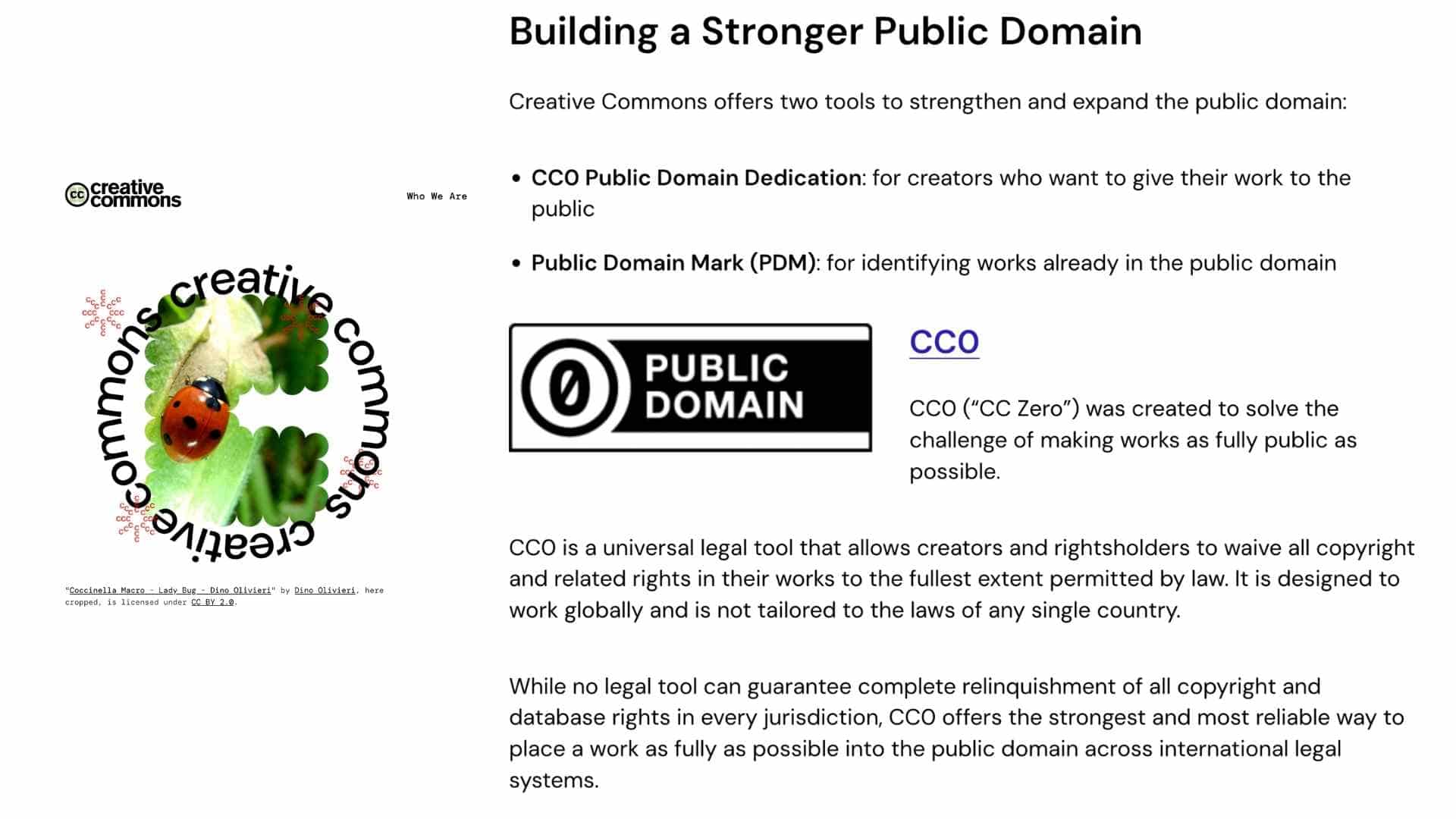
The public domain tools enable creators and rightsholders to go one step further by dedicating their works to the public domain, making them free for anyone to use, for any purpose, without restriction. These tools also help identify and label works that are already free of known copyright restrictions, making them easier to discover and reuse worldwide.
What is the Public Domain?
The public domain includes works that are not restricted by copyright, either because copyright has expired or because rights were never applicable. Public domain works belong to everyone and can be freely used, shared, adapted, and built upon, without permission.
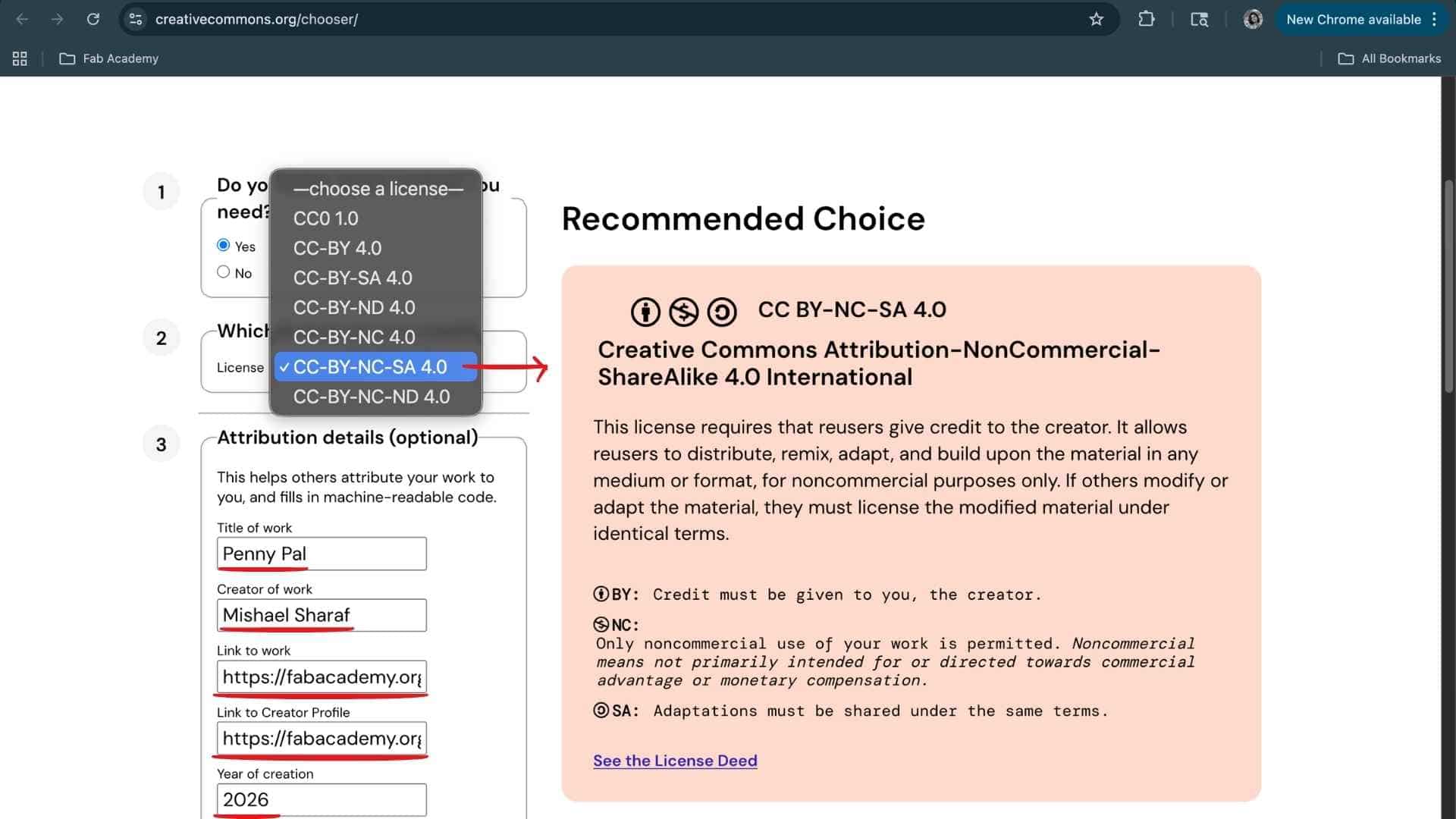
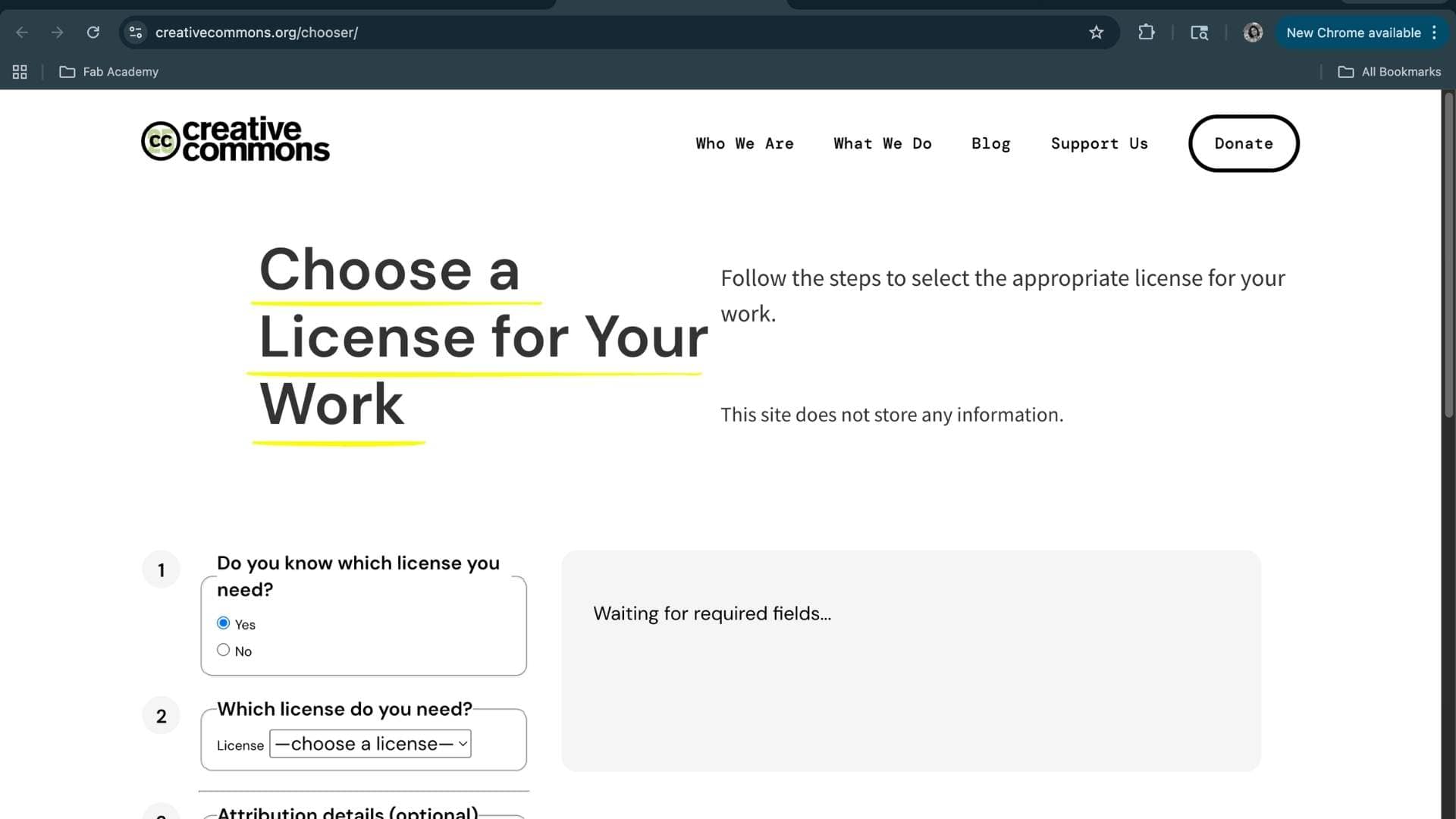
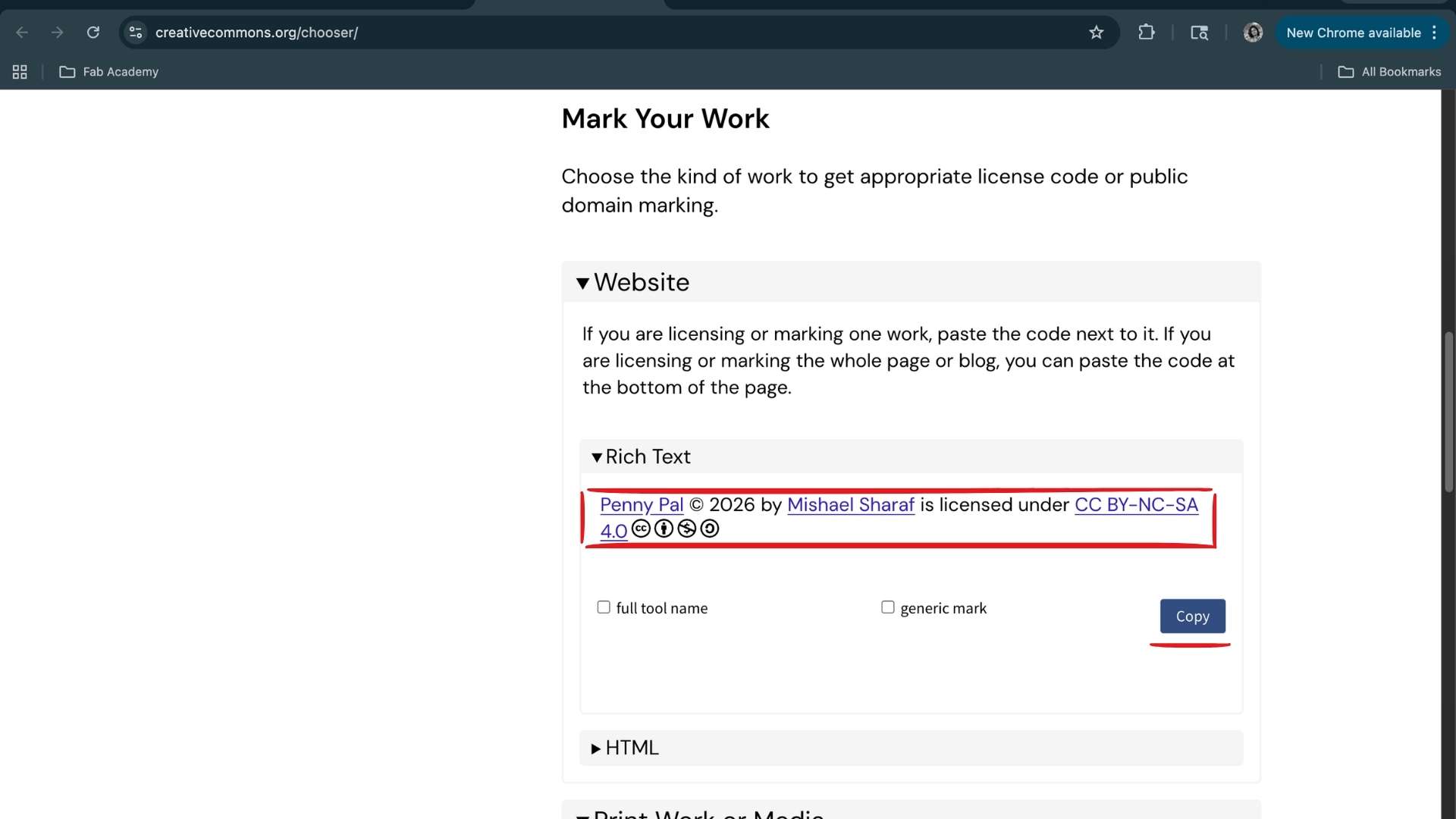
After reading through the different Creative Commons licenses, I chose CC BY-NC-SA 4.0 for my project. I then added the required details, such as the TITLE OF WORK, CREATOR OF WORK, and LINKS to WORK and CREATOR PROFILE. Once completed, the Mark Your Work section generates the text/HTML code for the license. Simply copy and paste this code into your final project page.
Chat GPT Prompt: HTML for clickable card for the project license details.


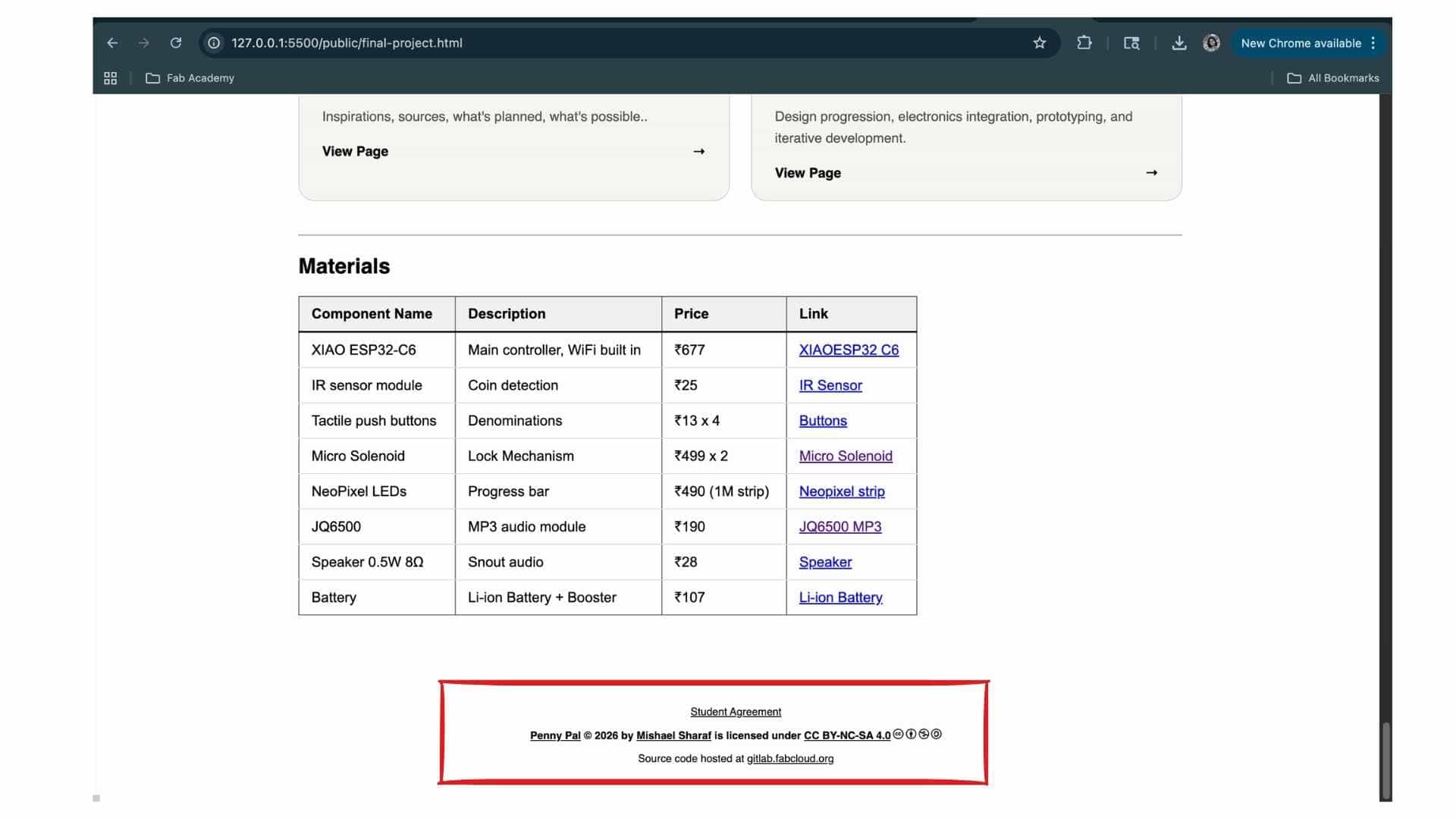
Added the license to final project page:
Dissemination Plan
I plan to share Penny Pal through my Fab Academy website, making the documentation, design files, source code, and project details openly available.
Beyond the final project presentation, I hope to use Penny Pal in workshops and educational settings to encourage conversations around financial literacy, digital fabrication, and the role of thoughtfully designed educational toys in learning. I joined this course to learn and teach better, so making the project open and accessible is my way of giving back to the community.
Penny Pal is released under a Creative Commons license, allowing others to study, adapt, and build upon the project while giving appropriate credit.
Project Growth Through the Local Ecosystem
Being part of Kerala's startup ecosystem gives Penny Pal opportunities to grow beyond Fab Academy. Organizations like KSUM , makerspaces, and incubators can provide support, mentorship, and connections. If I decide to continue developing the project, I can use these resources to improve the design, test it with users, and explore ways to bring Penny Pal to more children as an educational toy that teaches financial literacy.
Project Development
Design & fabrication progression, electronics integration, and iterative development of the final project.