 home
home
individual assignment
exploring neopixels and oled screen with the pulse monitor
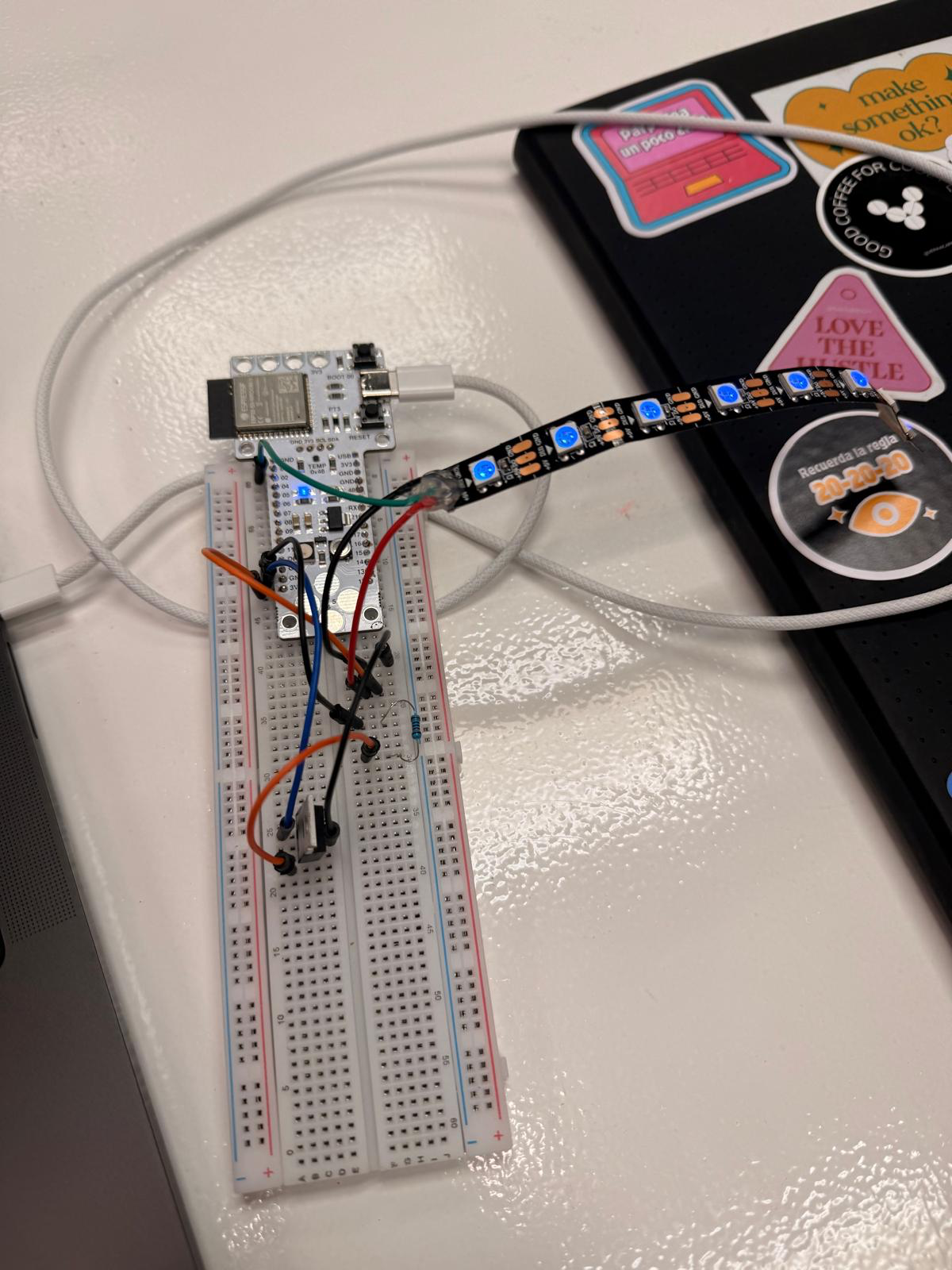
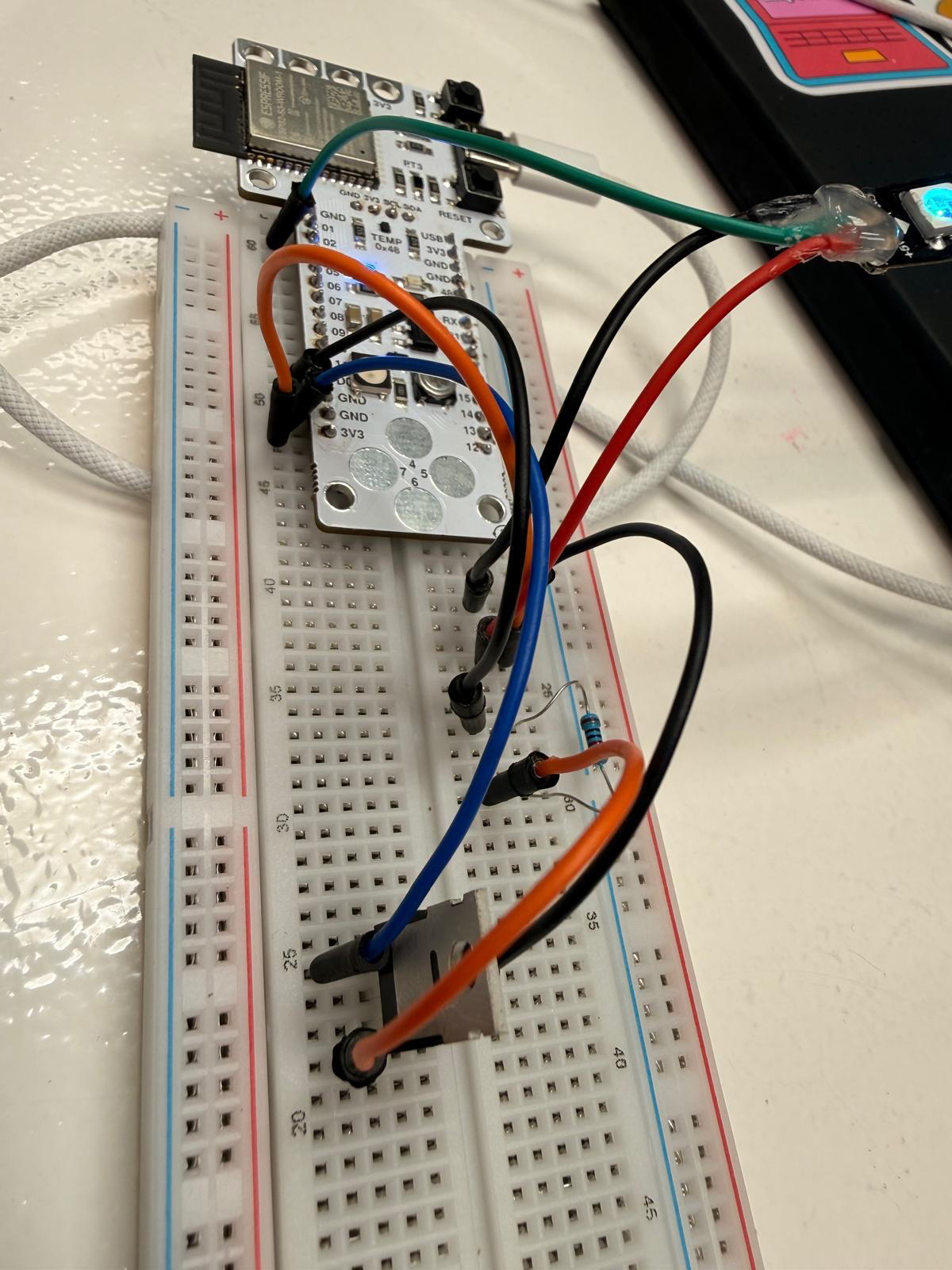
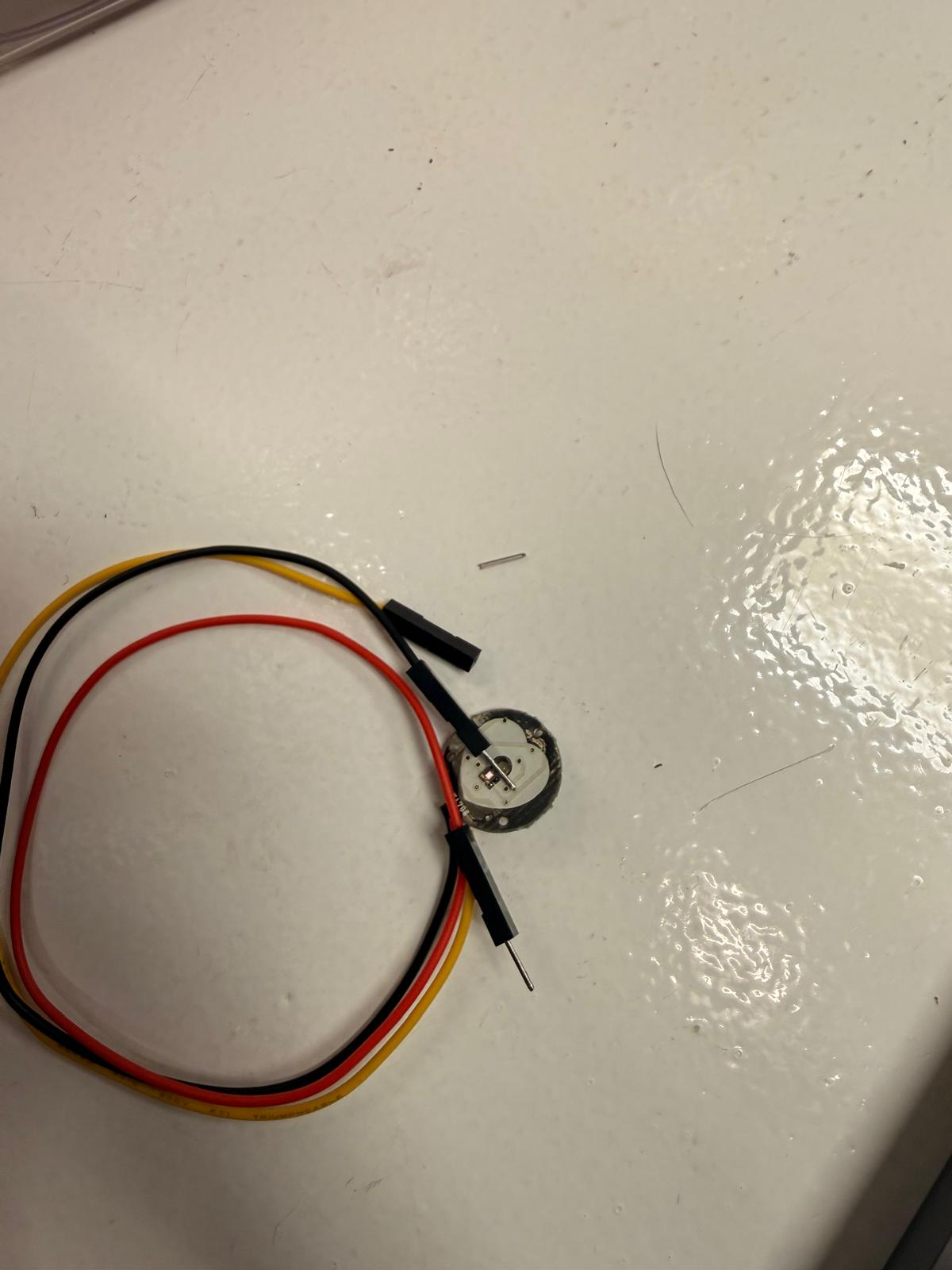
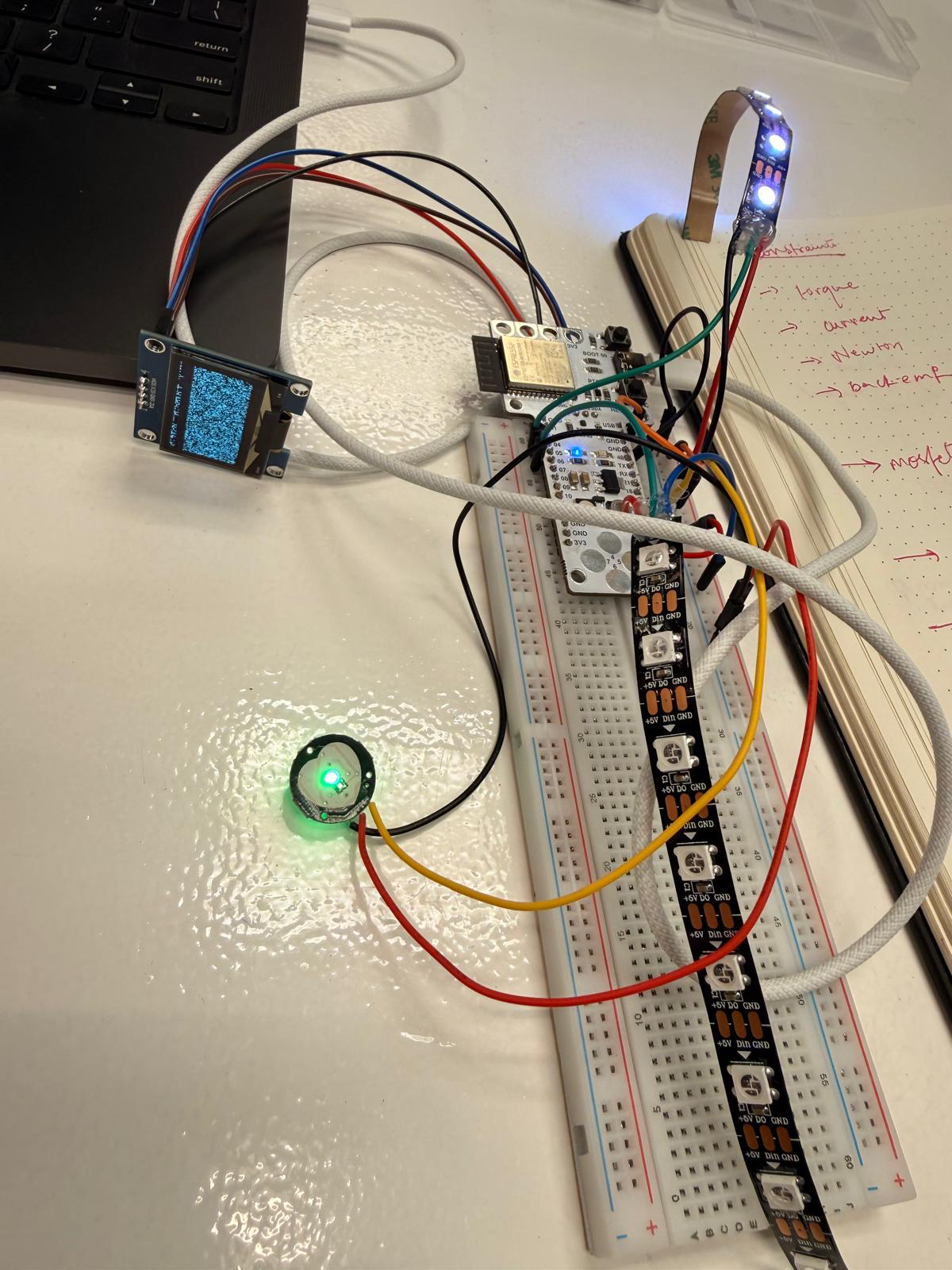
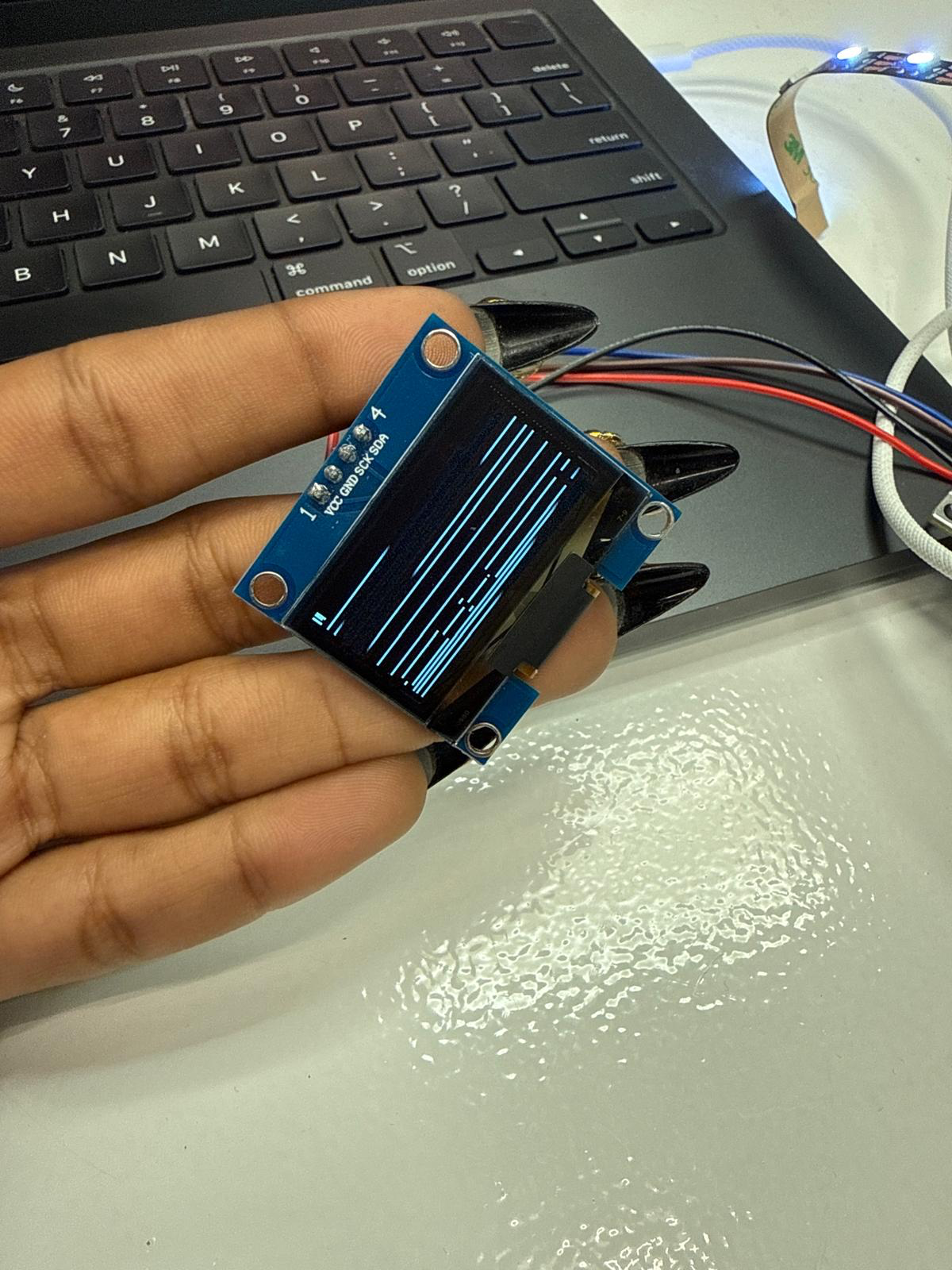
i connected the pulse monitor, a strip of neopixels to a pin in the barduino and used another pin for the oled screen.
i wrote a code to simulate a series of visuals based on the pulse sensor data.
i need to test this on the bnoard that i cut
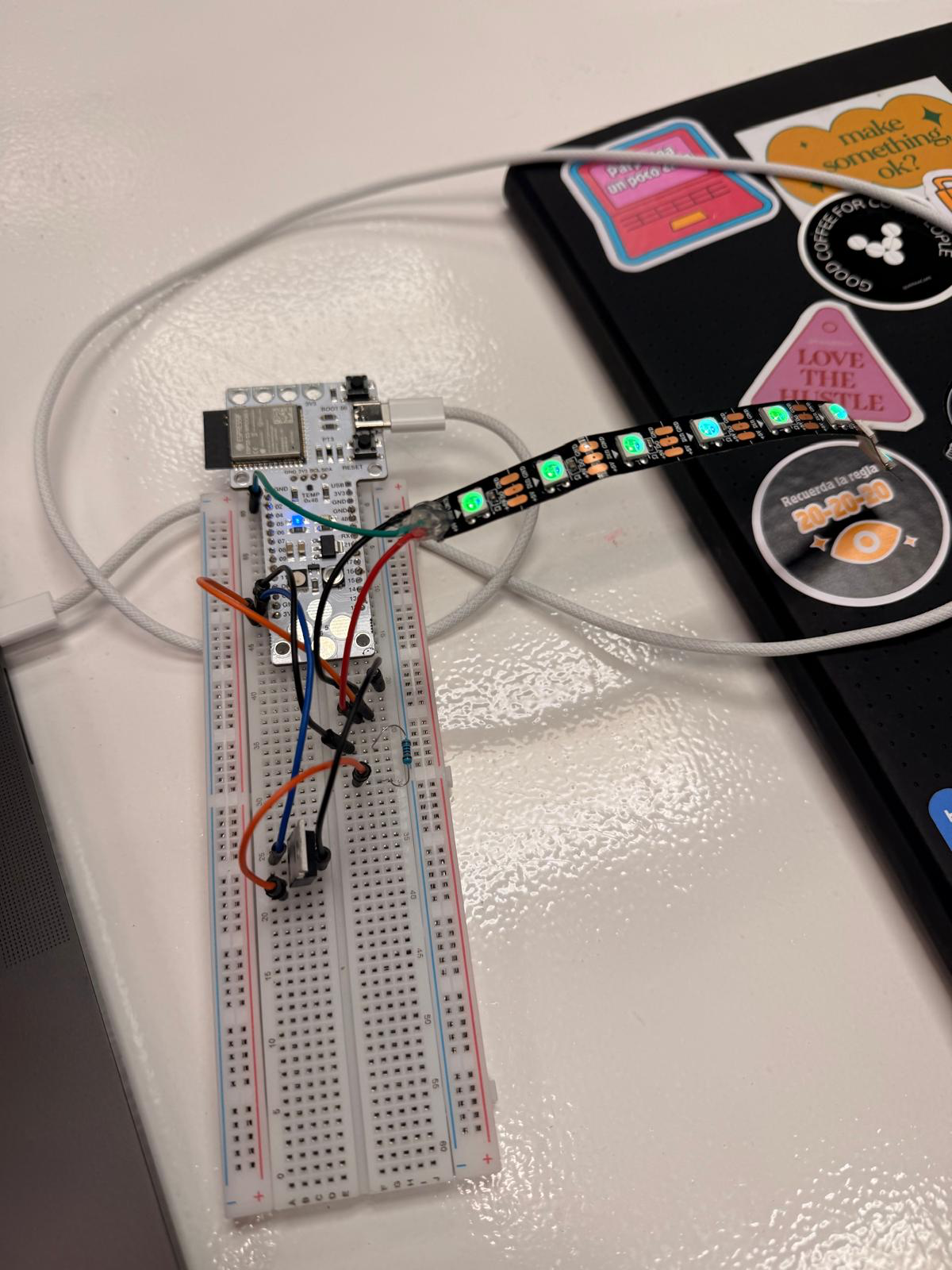
i connect the board that i made using ESP32 to a NeoPixel ring. The NeoPixel ring has 8 lights on it that can be individually controlled
it typically uses 5V but it also works with 3.3V - the voltage that's used by the ESP32 board. It's good to use a voltage regulator with an external power source of 5V for long-term and bright, white light use because it protects the circuit
I connected the board with the serial connection UART header on my board to this UART adapter that I found on Amazon
I've input this test code to see what happens
link to arduino code
Nothing happened so here is the test code I used for turning all the lights on:
link to arduino code
I put the silicone heart model I made for my final project over the lights and simulated a pulsing light. Here is the code:
link to arduino code
1
2
3
4
5
6
Reflection
The NeoPixel is a really smart device that has serial connections to each light and can be individually controlled. It can give an incredible level of customisation and special effects. I love this light. I even explored an 8x8 square new pixel. That one was really bright and looked good but it used too much current.
group assignment
here is the link to the group assignment page Group Assignment week 10
Reflection
This week it was about exploring various output devices & testing the way electricity moves through different output devices & actuators. Steppers are pretty consistent in different operating conditions. Motors show a slight increase with load. DC servo on the other hand vary greatly when in use & when not in use & when load is added.
My contribution this week was to assemble the electronics to a power source & use a multimeter to record power consumption at various states. Motors often need a MOSFET if they are bigger to regulate the currents backward flow after it’s been turned off.
The dynamic power consumption difference between the motors dictates its purpose & functionality. I had some fun surprises while setting up the multimeter. While setting up the multimeter, there were some whirring sounds in the power supply when the multimeter was set to a lower sensitivity and when it was connected in parallel.
Using a regulated power supply was fun as well. The current needed & the voltage determine the power.
P = V × I
The current spikes highlighted the importance of a flyback diode for protecting from the backflow of energy.
It is important to individually test & understand the components we use. The power calculation is crucial to a complete functional & safe circuit. Each electronic has a life & mind of its own. Components wear with time & load, especially motors. They have a wide range of uses & options for any function. Design reliable electronic systems & be very very careful with power supplies especially AC.
notes
Put your notes here.