Week 18 Applications & Implications
This week's project requirements:
Individual Assignment:Plan a final project masterpiece that integrates the range of units covered:
- What will it do?- Who's done what beforehand?
- What sources will you use?
- What will you design?
- What materials and components will be used?
- Where will come from?
- How much will they cost?
- What parts and systems will be made?
- What processes will be used?
- What questions need to be answered?
- How will it be evaluated?
Your project should incorporate:
- 2D and 3D design- Additive and subtractive fabrication processes
- Electronics design and production
- Embedded microcontroller design, interfacing, and programming
- System integration and packaging
Images/Files:
Include your original design files- Properly compress or use a zip folder if needed
- Include hero shots of your results
My Final Project Scope
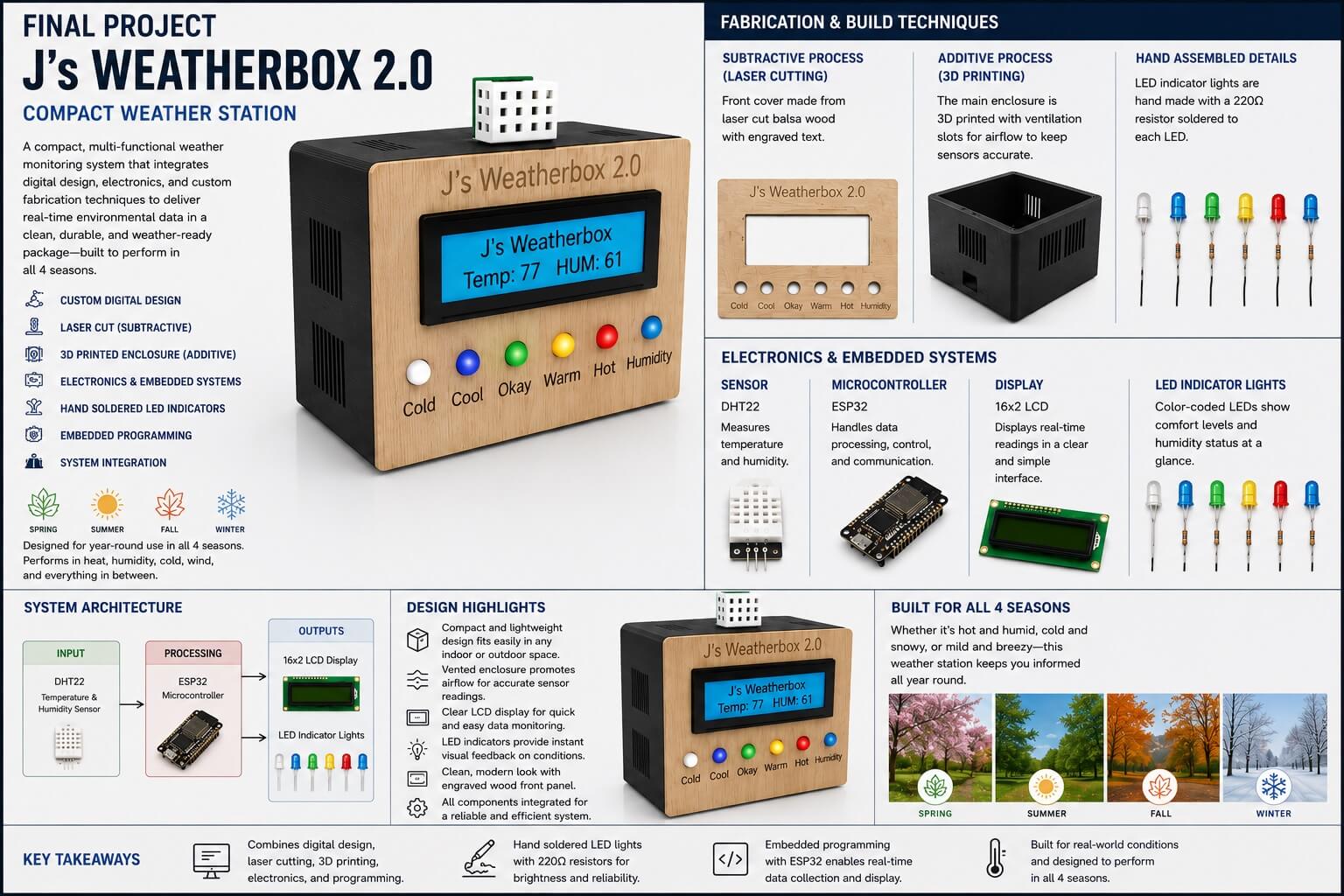
My final Fab Academy project is a compact wooden desktop weather station designed tomonitor and display environmental information in real time. The system will measure
temperature and humidity using a sensor connected to an embedded microcontroller and
display the information on a 16x4 LCD screen. Additional LED indicators will visually
represent different environmental conditions including cold, acceptable, warm, and hot
temperature ranges as well as humidity status.
The overall goal of the project is to redesign and improve an earlier prototype that
previously used a rough 3D printed enclosure. While the original prototype functioned
correctly, the enclosure quality and overall appearance did not meet the level of finish
I wanted for a final Fab Academy project. The redesigned version focuses on improved
packaging, cleaner fabrication, organized internal wiring, and a more polished finished
product appearance using wood fabrication techniques.
What Will It Do?
The device will:- monitor temperature
- monitor humidity
- display date and time
- display environmental readings on a 16x4 LCD
- visually indicate temperature conditions using LEDs
- provide a compact desktop environmental monitoring system
The LCD screen will display a similar message to:
J's Weather App
03/23/2026
12:45 pm EST
Ct: 75 Hum: 80
Who Has Done What Beforehand?
Environmental monitoring systems and desktop weather stations already exist commercially
and within electronics hobbyist communities. Previous Fab Academy students and maker projects
have also used temperature and humidity sensors together with Arduino-based systems for
environmental monitoring applications.
My own earlier prototype version of this project used a 3D printed enclosure and basic
electronics integration. This redesigned version expands upon that earlier concept by
improving the fabrication quality, packaging, enclosure design, internal organization,
and overall presentation of the final device.
What Sources Will Be Used?
Sources used throughout development include:- Fab Academy documentation
- Arduino IDE documentation
- DHT22 sensor documentation
- LCD display tutorials
- embedded programming references
- electronics tutorials
- CAD references
- GitLab documentation
- Arduino forums and maker resources
What Will Be Designed?
The following systems and components will be custom designed:- wooden enclosure
- front and rear panel layouts
- LCD mounting area
- LED placement layout
- sensor mounting location
- internal wiring organization
- CAD sketches and dimensions
- embedded programming logic
- packaging and assembly workflow
Materials and Components
- Electronics
- Seeed Studio XIAO RP2040
OR
- Arduino Uno R3 WiFi
- DHT22 Temperature and Humidity Sensor
- 16x4 LCD display
- 5mm LEDs
- resistors
- jumper wires
- USB cable
Fabrication Materials
- wood panels
- wood glue
- hot glue
- sandpaper
- polyurethane or wood finish
- mounting hardware
Where Will Materials Come From?
Most electronic components were previously purchased for Fab Academy assignments
and earlier electronics projects. Wood materials and fabrication supplies will
come from locally available scrap wood and workshop materials already available
at home. Additional hardware or replacement components may be purchased
locally if needed.
Estimated Cost
Most major components are already owned from previous projects.
Estimated additional cost:
$15–$35 USD
depending on finishing materials and replacement hardware.
What Parts and Systems Will Be Made?
Custom fabricated systems include:- wooden enclosure
- LCD cutout panel
- LED mounting system
- sensor mounting system
- internal packaging structure
- cable routing layout
- enclosure finishing and assembly
Embedded systems include:
- environmental sensing
- LCD display management
- LED control logic
- date/time display
- sensor data processing
Processes Used
The project integrates multiple fabrication and embedded systems processes including:2D Design
- sketches
- panel layouts
- wiring layouts
- dimension planning
3D Design
- concept renders
- enclosure visualization
- component spacing
Additive Fabrication
- previous 3D printed prototype enclosure concepts
Subtractive Fabrication
- wood cutting
- drilling
- sanding
- shaping
- panel fabrication
Electronics Production
- sensor wiring
- LED integration
- LCD interfacing
- power distribution
Embedded Programming
- environmental sensing
- analog/digital interfacing
- LCD control
- LED threshold logic
System Integration
- internal packaging
- enclosure assembly
- cable management
- component mounting
Questions Still To Be Answered
Questions still being explored during development include:
- optimal internal wire routing
- final sensor placement
- best enclosure finish method
- final LED threshold calibration
- long-term sensor stability
- enclosure accessibility for maintenance
How Will The Project Be Evaluated?
The project will be evaluated based on:
- successful sensor readings
- accurate LCD output
- functional LED indicators
- stable embedded programming
- enclosure quality
- internal organization
- system integration
- documentation completeness
- overall finished product appearance
Bill of Materials (BOM)
Component Quantity
- XIAO RP2040 / Arduino Uno (1)
- DHT22 Sensor (1)
- 16x4 LCD (1)
- 5mm LEDs (5)
- Resistors Multiple
- Wood Panels (6)
- Jumper Wires Multiple
- USB Cable 1
- Wood Glue / Hot Glue As Needed
- Sandpaper As Needed
- Wood Finish As Needed
Accelerated Final Project Schedule (11 Days)
Date, Goal, Estimated Hours
- Day 1 Final sketches, measurements, panel planning, component layout..........2–3 hrs
- Day 2 CAD sketches, finalize dimensions, mark wood cuts.......................2–3 hrs
- Day 3 Cut wood panels, drill LED holes, cut LCD opening.......................4–5 hrs
- Day 4 Sanding, fitting enclosure, dry assembly testing........................3–4 hrs
- Day 5 Mount LCD, mount DHT22, mount LEDs......................................3–4 hrs
- Day 6 Wire XIAO RP2040, LEDs, LCD, sensor.....................................4–5 hrs
- Day 7 Program temperature/humidity display logic..............................3–5 hrs
- Day 8 Program LED thresholds and troubleshoot.................................3–4 hrs
- Day 9 Final assembly, cable management, wood finish...........................3–4 hrs
- Day 10 Take hero shots, record video, testing.................................2–3 hrs
- Day 11 Final documentation, GitLab uploads, cleanup..........................4–6 hrs
Slide of Final Project