

Andrew Mark
Andrew Mark (b. 1996, Portland, Oregon) is a new media installation artist working across interactive and kinetic sculpture. He works with a wide variety of natural and man-made materials and uses emerging and experimental digital fabrication technologies, including PCB production, 3D printing, generative design, and design for manufacture.
His practice centers on sculptural works and full-room multimedia installations that are minimal in color and form, addressing cyclical time, altered states of consciousness, and the boundary between self and other.
His Fab Academy final project, Basin (2025), received the FAB25 Final Project Award at the Institute for Advanced Architecture of Catalonia (IAAC), Barcelona. He holds a bachelor's degree in liberal arts and sciences from Quest University, Squamish, Canada, and is the founder of Don't Panic Studio, a Portland fabrication and product development studio.
Art and personal projects
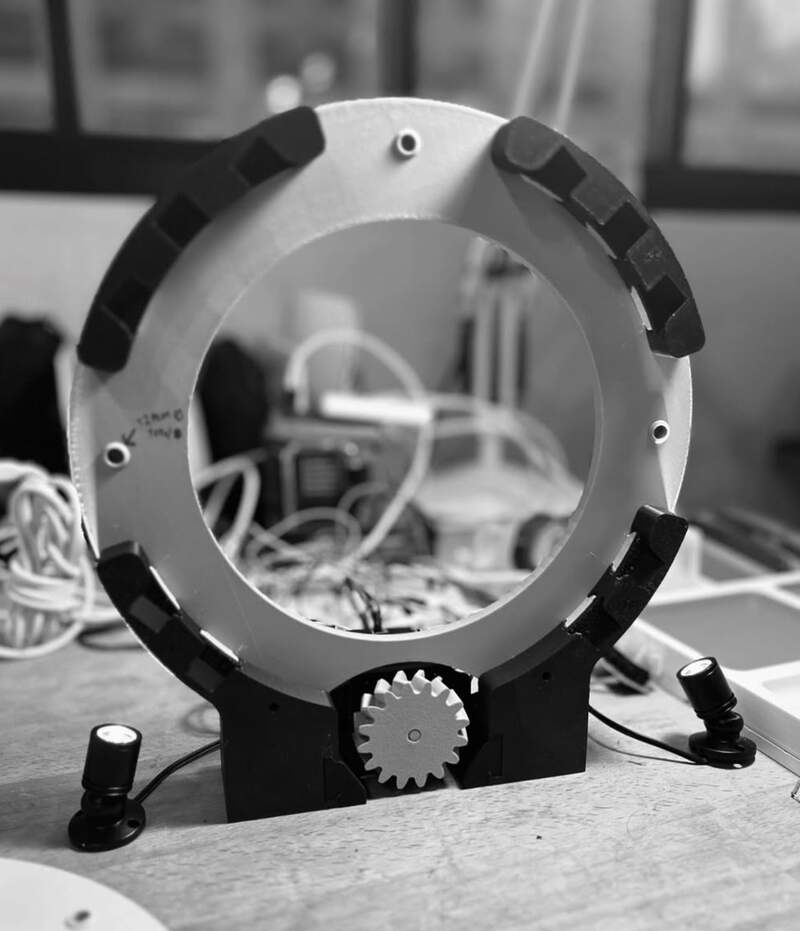
Akrasia is a kinetic sculpture about the passage of time. A stepper motor and hubless gear rotate an hourglass on a 1 minute 45 second cycle. The hourglass runs for 2 minutes, so it never quite completes its full cycle.

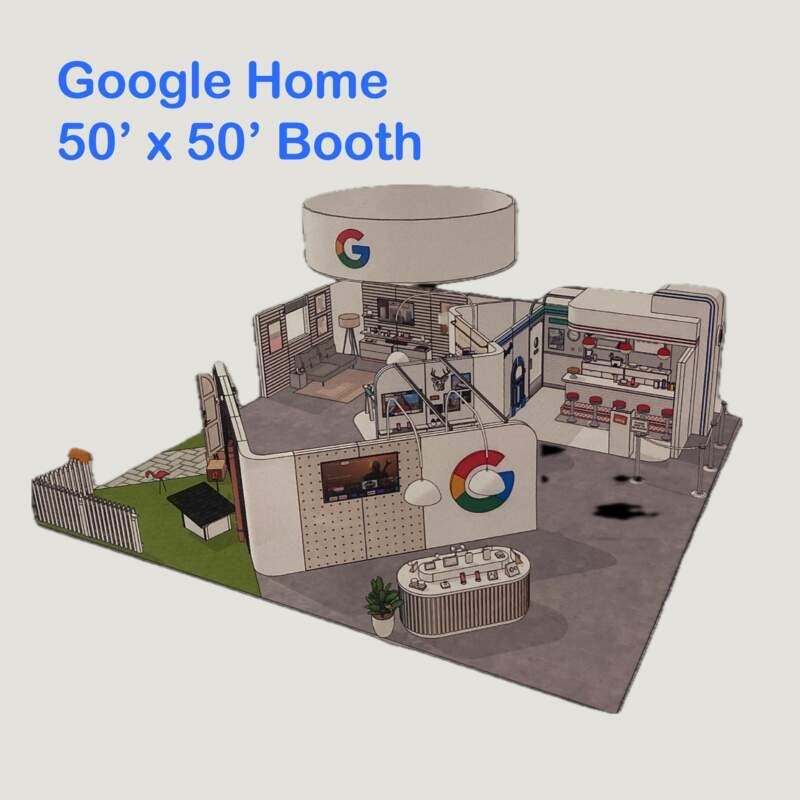
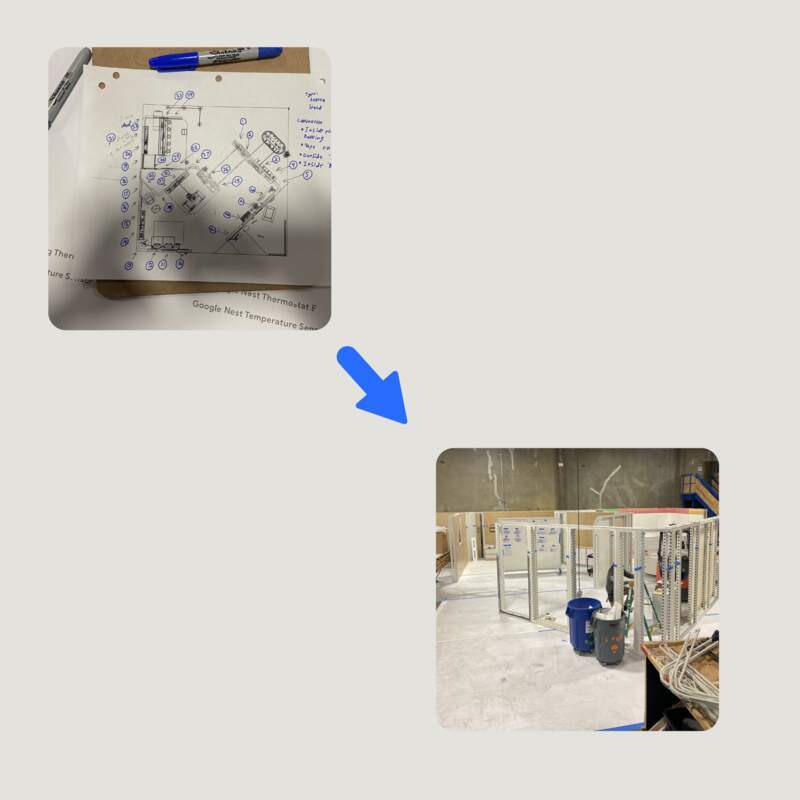
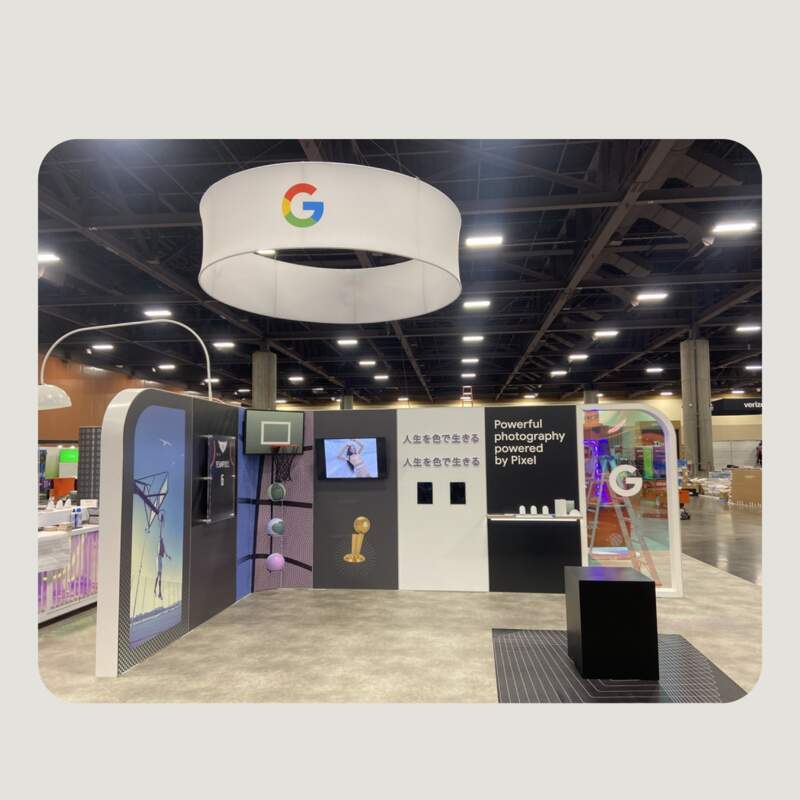
Google Home / Chrome — Convention Booth
PVS Graphics, Portland
Part of the team responsible for the design for build and fabrication of the Google Home and Chrome large-format convention booths.

Nike Campus Shoe Box — Event Piece / Activation
PVS Graphics, Portland
Part of the team responsible for the design for build and fabrication of a large-format printed cardboard Nike shoe box.


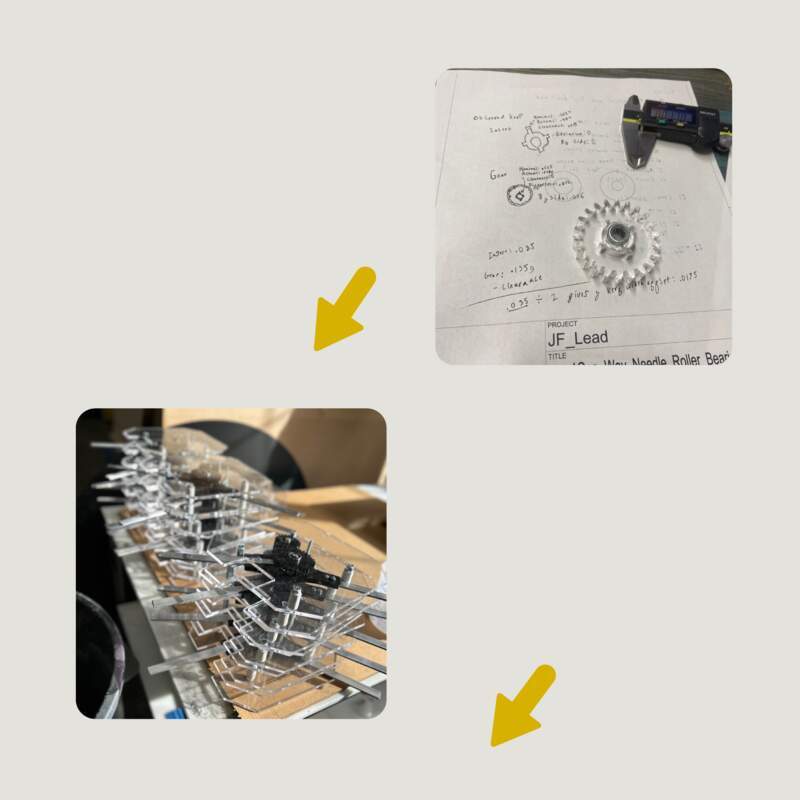
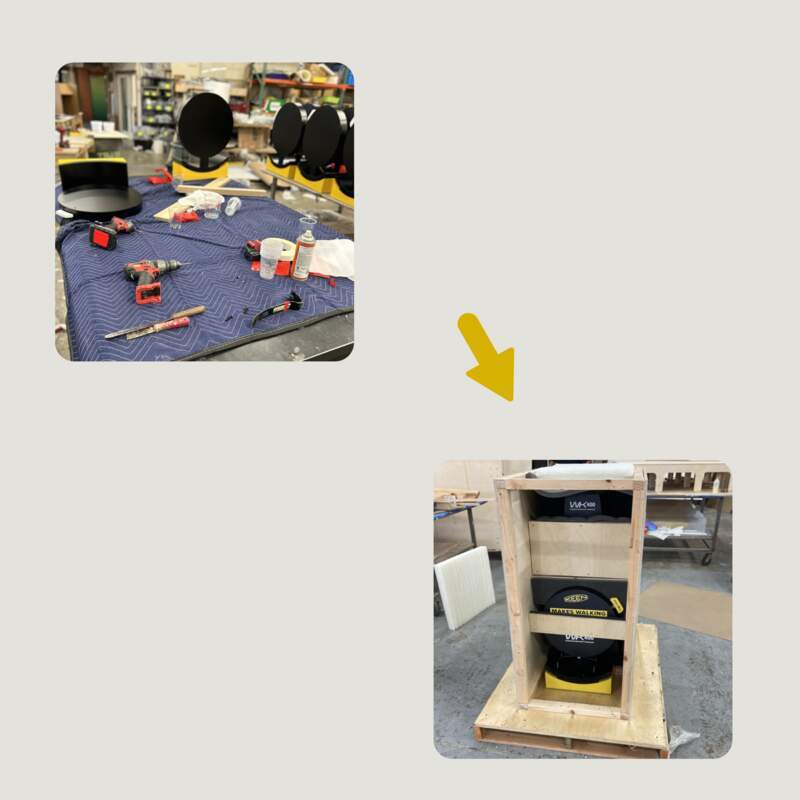
Keen Footwear WK400 — Shoe Display
PVS Graphics, Portland
Led development of the pendulum gear cassette for fabrication on our in-house CNCs. With a single downward pull, the mechanism raises and releases the shoe carrier so it swings freely.


Spirit of 77 — Custom Pop-A-Shot Scoreboards
Commission
Commissioned to rebuild a custom installation after eight years of nonstop use. I redesigned the four scoreboard displays from the ground up for reliability and repairability. The front polycarbonate frame uses a custom 3D-printed, low-infill TPU shock absorber to reduce impact force on the front panel.


