About Me
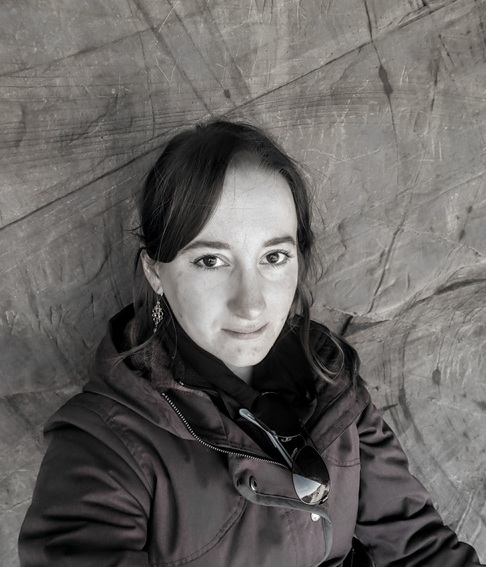
Hi, I’m Madeleine Brancaccio! I am a mechanical engineer based in metro Detroit. I’ve spent the past four years tuning and testing engines for the automotive industry, but now I have my sights on returning to school for architecture.
My Background
I am originally from Los Angeles, California but moved to New Jersey in 2003. I attended Carnegie Mellon University in Pittsburgh, Pennsylvania and graduated in 2014 with a Bachelor of Science in Mechanical Engineering. During my time as an undergraduate, I worked as a research assistant at the university’s air quality laboratory, where I became interested in mitigating combustion emissions. This landed me a job at General Motors in Detroit, Michigan, where I worked for three years testing and calibrating diesel engines to meet emissions targets. The job provided me the unique opportunity to travel throughout the United States in order to test vehicles in various extreme road conditions. I organized and led test fleets through the Rocky Mountains, through the summer heat of Death Valley, and through the switchbacks and rolling hills of West Virginia. I most recently worked for Toyota North America, where I performed similar testing for gasoline engines.
Traveling has since become a significant part of my life, and I enjoy exploring the West through solo roadtrips and hikes. I am inspired by the natural world to think about our experience of spaces. In addition to travel, I enjoy drawing, photography, and singing.
In trying to figure out my next career, I seek to combine my technical and creative interests. I found that architects were doing the work that most excited me, and that they were the visionaries reimagining spaces, cities, and adaptations to the challenges brought about by climate change. The architects I was able to talk to suggested learning digital fabrication as a first step towards empowering myself to create and to think about 3D spaces. I was thrilled to learn about the Fab Academy and to find that we had a local node right in Detroit!
Final Project Description
I am interested in constructing a sound sculpture or installation that responds to the pitch and intensity of the human voice. I am interested in using changes to the volume or shape of the space to visualize sound. A singer would step inside the space, and their audio signal would be captured via a microphone and processed through an Arduino, which would instruct the space to change according to qualities in their voice such as pitch and sound intensity. Ideally, I would like the sound to be visualized both by the singer and by the viewer, who is standing on the outside of the installation.
I have not yet settled on a final visual for the design, but I am interested in exploring a few concepts:
1) Chiaroscuro is an Italian term meaning “light and dark,” and refers to the realization of form through the contrast of light and shadow in visual art. As the singer’s voice intensifies, we can think of more of their sound as being delivered to the audience on the other side. The sound intensity can be visualized as breaking through obscurity, or stepping from shadow into the light. Maybe this can be conveyed through changes in wall thickness by adding or removing panels, or by changing the density of material (i.e. a fabric that appears opaque when bunched up but translucent when stretched out).
2) Structure could dynamically move outward (radially from singer) with higher sound intensity, and upward with higher pitch. For singing higher pitch in the head voice, vocalists often visualize the sound as traveling upwards in order to help them achieve a lift in the soft palate of the mouth, thereby creating greater resonance for higher notes. In this concept, the movements of the structure would mirror the techniques used by singers to achieve their sound.
3) One concept could visualize the process of inhaling air into the lungs and exhaling it as sound. This could be achieved with inflatable structures that would be inflated when no sound is detected and deflate according to sound intensity and/or duration of sound.
4) Concepts 1) and 2) could be combined if I can figure out a way to move more material outward and upwards in variation with pitch and intensity, thereby removing the obscurity between the audience and the singer as the material becomes less dense.