// capstone
Final Project
Final Presentation
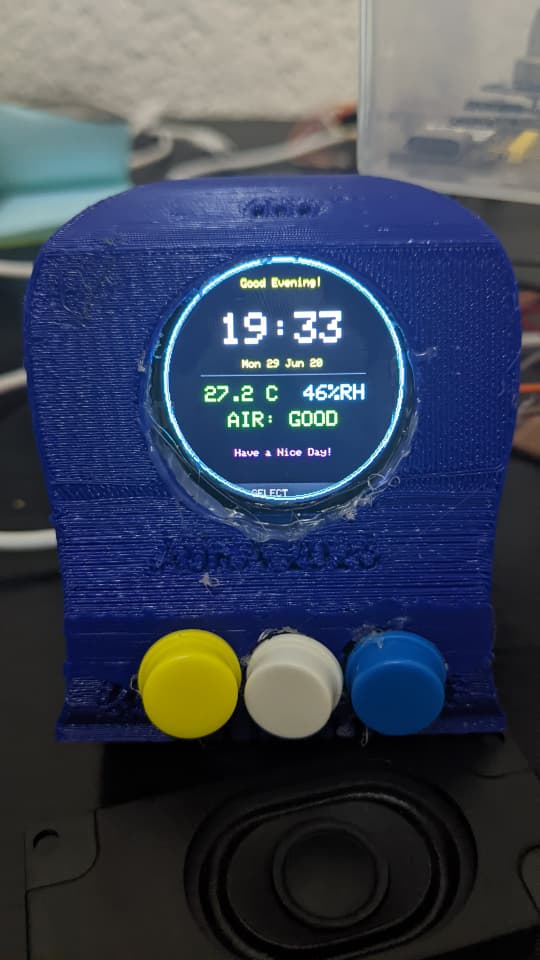
AURA
AURA is a portable, AI-powered desktop companion robot designed to assist users through friendly voice interaction, real-time environment tracking, and smart notifications. Built over an embedded ecosystem, it features an interactive TFT screen, standalone battery power, and a collection of smart sensors. It acts as an affordable accessibility tool tailored for students, elderly individuals, and visually impaired users.
Final Project Demonstration Video
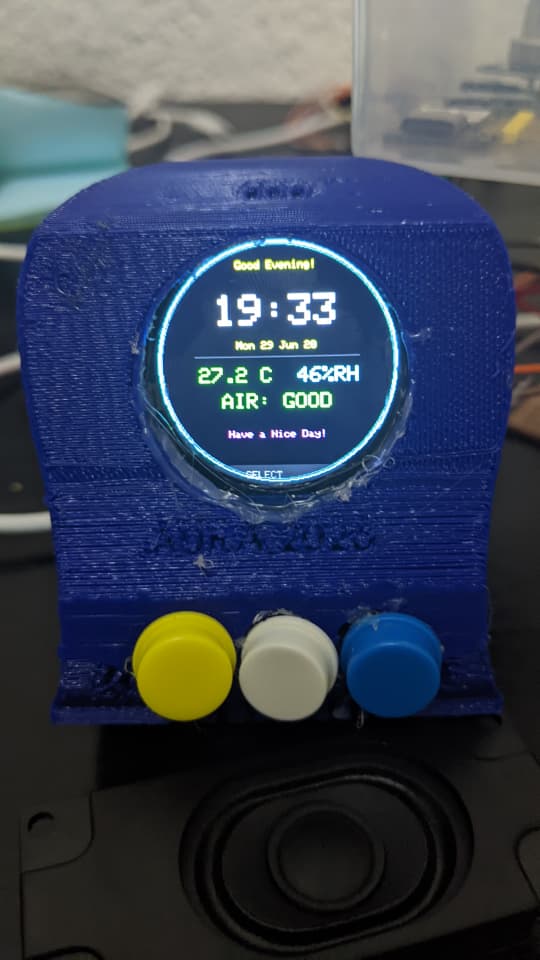
The following clip demonstrates the fully integrated working prototype of AURA. It covers the startup boot sequence, screen navigation using the button array, real-time sensor updates, WiFi time sync, and dynamic buzzer notifications.
The Inspiration Story
While studying for my bachelor's degree at the University of Rwanda, I realized how easy it was to get endlessly distracted by social media loops whenever I unlocked my phone just to look at the time or check my schedule. This often led to missed appointments and disorganized study time. At the same time, I noticed how visually impaired individuals and independent elderly folks lacked simplified, distraction-free devices to help them stay organized and secure. This inspired me to develop a physical, low-cost, and non-intrusive desktop assistant that delivers alerts safely without phone screen distractions.
Problem Statement
Commercial AI assistant devices are often expensive, non-portable, and collect personal user data under closed ecosystems. Crucially, they are rarely optimized natively for accessibility. Elderly and visually impaired groups struggle to keep track of medication windows or changing climate changes without clean audio queues. AURA solves this by combining environmental logging, voice cues, local physical controls, and locally fabricable mechanical frames into a single package.
Target Audience
Who Benefits From AURA?
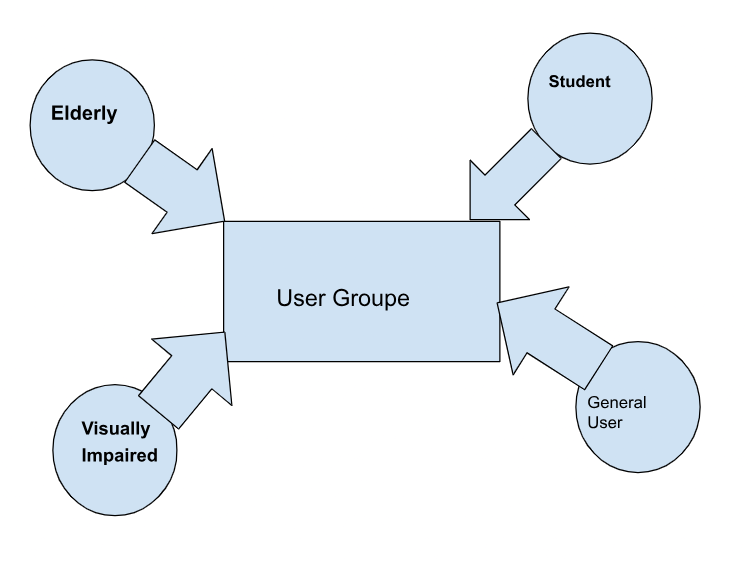
- Visually Impaired Users: Multi-frequency buzzer tones and spoken updates drop dependence on screens.
- Elderly Individuals: Clear, motion-activated medical alarms and schedule sound warnings.
- STEM Students: A clean, offline desktop toolkit for studying and schedule pacing without smartphone distractions.
- Open Source Makers: A completely modular foundation that can be easily customized or updated locally.
System Architecture
Hardware and Software Stack Integration
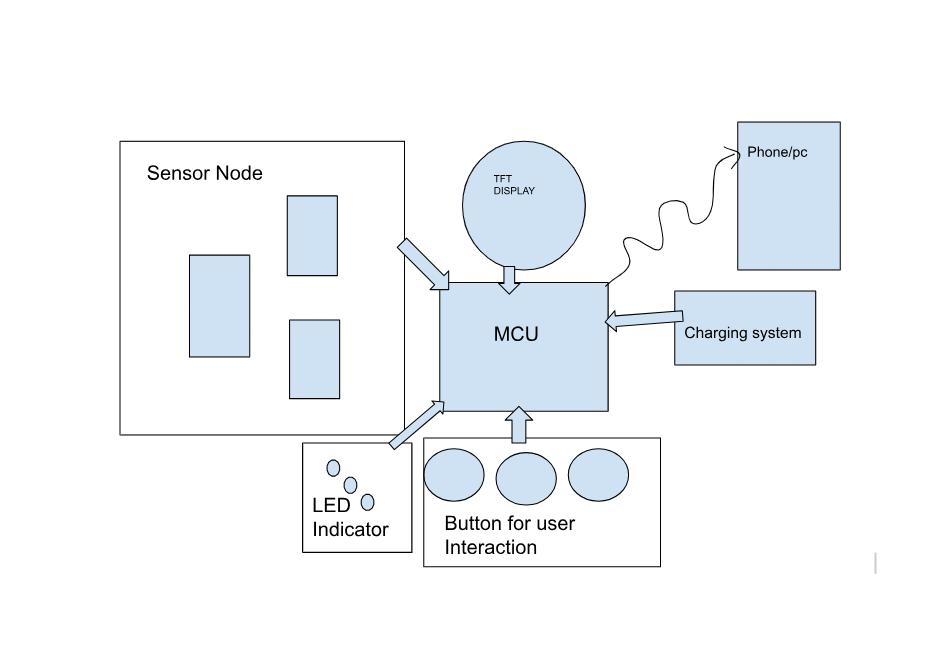
The system brings together several core functional layers:
- Main Brain: ESP32 Development Module coordinating onboard processing, system timers, and Wi-Fi data parsing.
- Audio capture: INMP441 I2S digital microphone setup for future interactive audio input capture.
- Audio Delivery: Responsive 8Ω speaker setup signaling customized notification frequencies.
- Visual Interface: TFT/OLED visual screen driving interactive expressions, diagnostic values, and active schedules.
- Sensor Pod array: DHT22 climate sensor (temperature/humidity), MQ-135 tracking indoor quality, and a PIR motion node monitoring room occupancy.
- Power Supply: Integrated Lithium-Ion Cell regulated via a TP4056 management board over USB.
- System Software: C++ codebases compiling inside the Arduino Environment paired with an asynchronous web panel.
Fab Academy Timeline Mapping
AURA was engineered systematically by grouping weekly assignment labs into modules that joined into the final project package:
- Computer-Aided Design: Modeled the multi-component robotic layout inside SolidWorks.
- Electronics Production & Design: Devised, isolated, and milled custom power expansion boards via desktop FR1 milling machines.
- Embedded Programming: Wrote firmware components handling SPI display tasks, I2C polling loops, and button array state changes.
- Interface Development: Deployed a local Wi-Fi control hub layout to remotely register and assign variable calendar events.
Custom Electronics & Production
PCB Design and Fabrication
The project utilizes a custom PCB drafted in KiCad and structured at the local lab using an FR1 copper board blank. The primary intent behind this board layer was stable, centralized power rail distribution. Since many environmental modules had to be physically distributed around the chassis, the custom system routes clean, decoupled VCC (3.3V) and GND paths seamlessly.
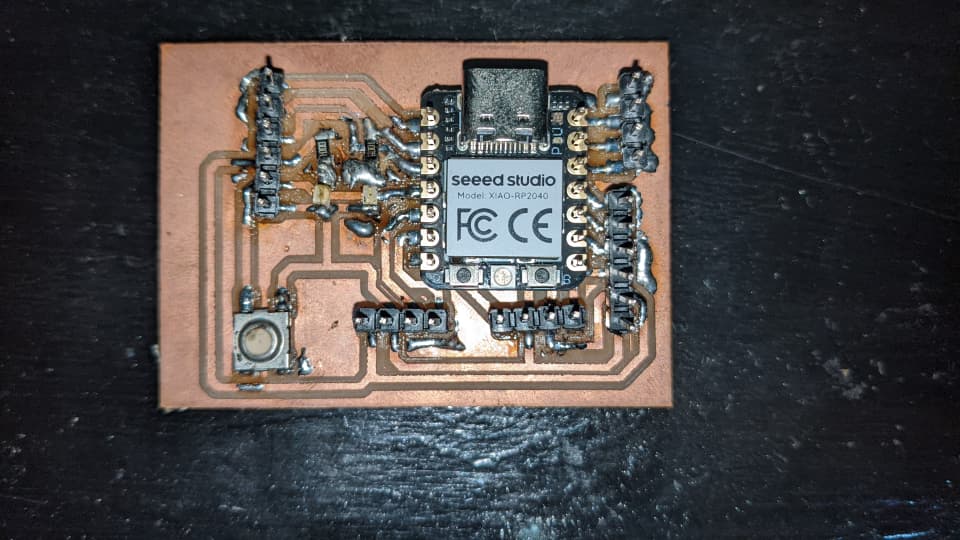
Interested in the complete PCB production process? Visit my
Electronic Production Week Documentation →
to see the PCB design, milling, soldering, and testing process in detail.
Mechanical Design
3D Housing & Layout Assembly
The exterior architecture forms a neat desktop robot look designed inside SolidWorks to print cleanly in PLA or PETG materials. The layout maps independent internal shelves to segregate components safely: specialized slide channels lock the TFT module in place, ventilation slits face the environmental sensor arrays, and a bottom compartment securely separates the lithium polymer cell.
Onboard Logic & Programming
The processing software handles system execution states gracefully using two primary runtime configurations:
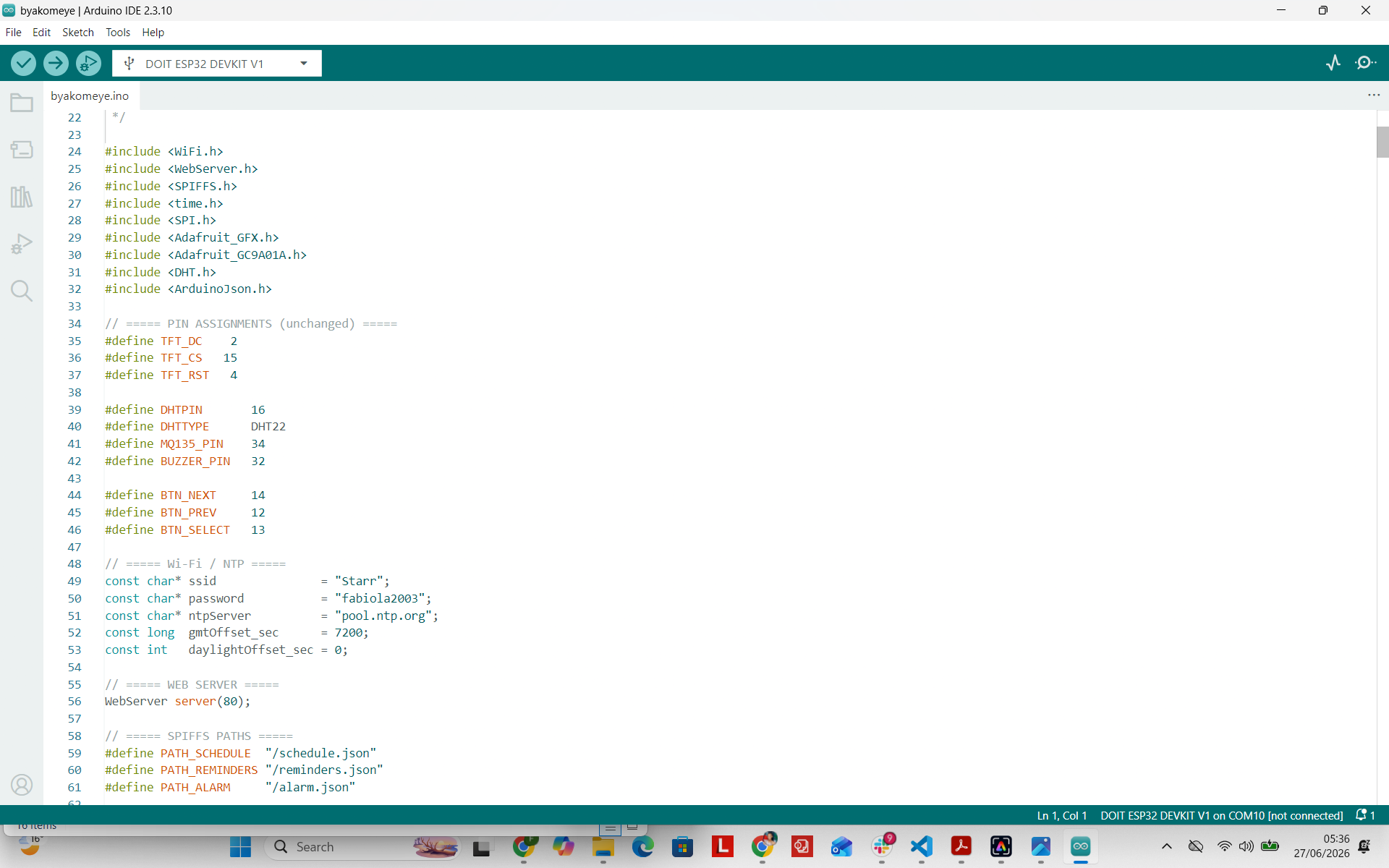
- Offline Standalone Mode: Continuously manages system schedules, reads sensor values, tests PIR movement updates, and drives screen rendering loops without needing any internet connection.
- Online Linked Mode: Leverages the ESP32 Wi-Fi antenna to connect to a local router, synchronize system time via Network Time Protocol (NTP), and parse updates sent from the connected web config panel.
Project Challenges & Adjustments
The main challenge during this project was 3D printing fabrication rather than electronics or programming. While early enclosure concepts printed fine, the lab's main 3D printer broke down right before final assembly, and printing filament ran out of stock.
To keep moving forward, I adapted by testing the electronic circuits, refining the firmware, building out the custom PCB, and completing the documentation while keeping the SolidWorks models updated and ready to print later. This structured focus kept the system fully validated and operational on the bench without stalling the timeline.
Testing Routine & Verification
Every sub-circuit on AURA went through isolation testing before full system integration. The display modules, sensor lines, and notification buttons were checked individually to keep debugging fast and reliable.
Comprehensive wiring schematics, code validation tests, and full setup steps are logged on my integration page.
Future Expansion Plans & Vision
Moving beyond the core evaluation cycle, my ongoing goal is to integrate natural offline AI models directly onto the hardware as edge processing power improves. This will include adding low-power camera matrices for face detection, multi-language speech libraries for localized accessibility, and a companion smartphone application for easy setup. I also plan to package AURA into an accessible DIY kit for STEM classrooms, helping introduce young women and new learners to digital fabrication.
Bill of Materials (BOM)
| Component Name | Function Type | Qty | Sourcing Type |
|---|---|---|---|
| ESP32 Development Node | Main Core Microcontroller | 1 | Lab Inventory |
| DHT22 + MQ-135 + PIR | Environmental Tracking Array | 1 ea | Lab Electronics Stock |
| TFT Display Module | Visual UI UI Graphics Render | 1 | Lab Inventory |
| FR1 Copper Board Clad | Power Routing PCB Foundation | 1 | Custom Milled In-House |
| TP4056 + Li-Ion System | Power Delivery & Management | 1 | Sourced Component |
Project Development & System Integration Logs
For an in-depth breakdown of every engineering iteration, code test iteration, layout calculation, and hardware integration phase, please access the master log. This acts as the definitive documentation tracking all technical development and system integrations executed since day one of the project lifecyle.
Explore Full Project System Integration Log (Day 1 to Final Build) →