As described on the Final Project page, this project was inspired by my interest inclusion and improving communication accessibility for people who are deaf or have hearing impairments. Many members of this community possess valuable skills, creativity, and knowledge, yet communication barriers can sometimes limit everyday interactions.
Although sign language is a well-established and effective communication system, many people, including myself, are not fluent in it. In my community, I know individuals who belong to this group, and I have experienced firsthand how communication can become limited or confusing when there is no common language available. This motivated me to explore whether digital fabrication technologies could be used to create an alternative communication tool capable of reducing that barrier.
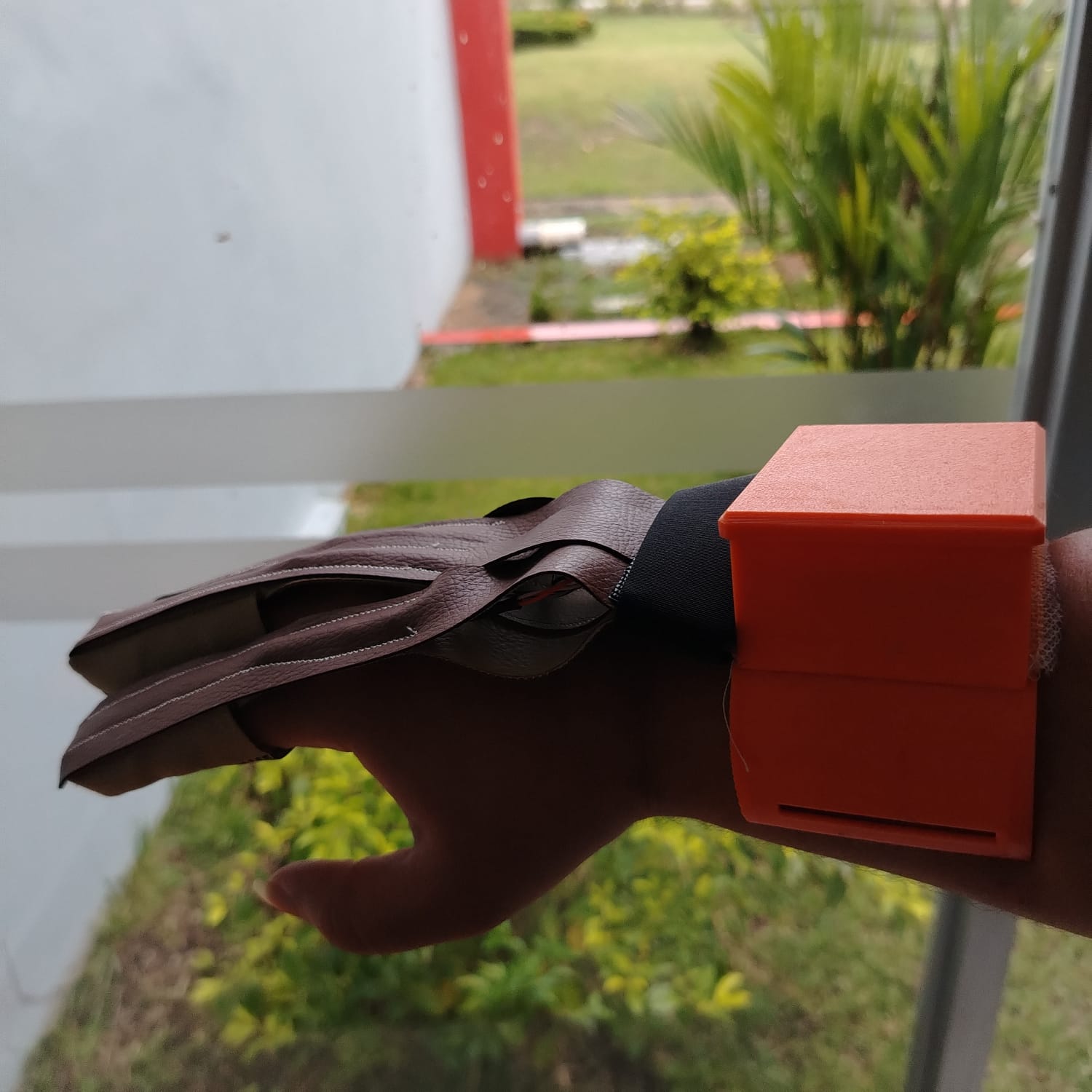
To address this challenge, I designed and fabricated a glove capable of translating predefined finger gestures into words displayed on a computer screen. Rather than attempting to replace sign language, the goal of the project is to provide a simple communication aid that can translate a limited set of common expressions and basic needs into understandable words and short phrases.
Gesture Combination Tables
Predefined Word Gesture Combinations
The combination BENT - BENT - BENT is reserved as a confirmation gesture to send the selected word to the computer.
| Index Finger | Middle Finger | Ring Finger | Word / Action |
|---|---|---|---|
| STRAIGHT | STRAIGHT | STRAIGHT | HELLO |
| STRAIGHT | STRAIGHT | MID | GOODBYE |
| STRAIGHT | STRAIGHT | BENT | YES |
| STRAIGHT | MID | STRAIGHT | NO |
| STRAIGHT | MID | MID | THANK YOU |
| STRAIGHT | MID | BENT | PLEASE |
| STRAIGHT | BENT | STRAIGHT | HELP |
| STRAIGHT | BENT | MID | WATER |
| STRAIGHT | BENT | BENT | FOOD |
| MID | STRAIGHT | STRAIGHT | BATHROOM |
| MID | STRAIGHT | MID | HOME |
| MID | STRAIGHT | BENT | FAMILY |
| MID | MID | STRAIGHT | FRIEND |
| MID | MID | MID | SCHOOL |
| MID | MID | BENT | WORK |
| MID | BENT | STRAIGHT | DOCTOR |
| MID | BENT | MID | MEDICINE |
| MID | BENT | BENT | EMERGENCY |
| BENT | STRAIGHT | STRAIGHT | PAIN |
| BENT | STRAIGHT | MID | HAPPY |
| BENT | STRAIGHT | BENT | SAD |
| BENT | MID | STRAIGHT | HOT |
| BENT | MID | MID | COLD |
| BENT | MID | BENT | OPEN |
| BENT | BENT | STRAIGHT | CLOSE |
| BENT | BENT | MID | STOP |
| BENT | BENT | BENT | SEND |
Alphabet Gesture Combinations
The combination BENT - BENT - BENT is used as a confirmation gesture to send the selected letter.
| Index Finger | Middle Finger | Ring Finger | Letter / Action |
|---|---|---|---|
| STRAIGHT | STRAIGHT | STRAIGHT | A |
| STRAIGHT | STRAIGHT | MID | B |
| STRAIGHT | STRAIGHT | BENT | C |
| STRAIGHT | MID | STRAIGHT | D |
| STRAIGHT | MID | MID | E |
| STRAIGHT | MID | BENT | F |
| STRAIGHT | BENT | STRAIGHT | G |
| STRAIGHT | BENT | MID | H |
| STRAIGHT | BENT | BENT | I |
| MID | STRAIGHT | STRAIGHT | J |
| MID | STRAIGHT | MID | K |
| MID | STRAIGHT | BENT | L |
| MID | MID | STRAIGHT | M |
| MID | MID | MID | N |
| MID | MID | BENT | O |
| MID | BENT | STRAIGHT | P |
| MID | BENT | MID | Q |
| MID | BENT | BENT | R |
| BENT | STRAIGHT | STRAIGHT | S |
| BENT | STRAIGHT | MID | T |
| BENT | STRAIGHT | BENT | U |
| BENT | MID | STRAIGHT | V |
| BENT | MID | MID | W |
| BENT | MID | BENT | X |
| BENT | BENT | STRAIGHT | Y |
| BENT | BENT | MID | Z |
| BENT | BENT | BENT | SEND |
As shown in the gesture tables, each finger can be classified into one of three states: Straight, Mid, or Bent. Each flex sensor measures a resistance value that is converted into a bending angle. Based on this angle, the system determines the current state of each finger and identifies the corresponding gesture combination.
As different gestures are performed, the glove continuously selects the associated word or letter. When all monitored fingers are placed in the Bent state, the gesture is interpreted as a transmission command. The selected word is then sent wirelessly to the graphical user interface and displayed on the computer screen. The following images show the interface receiving and displaying the transmitted word.
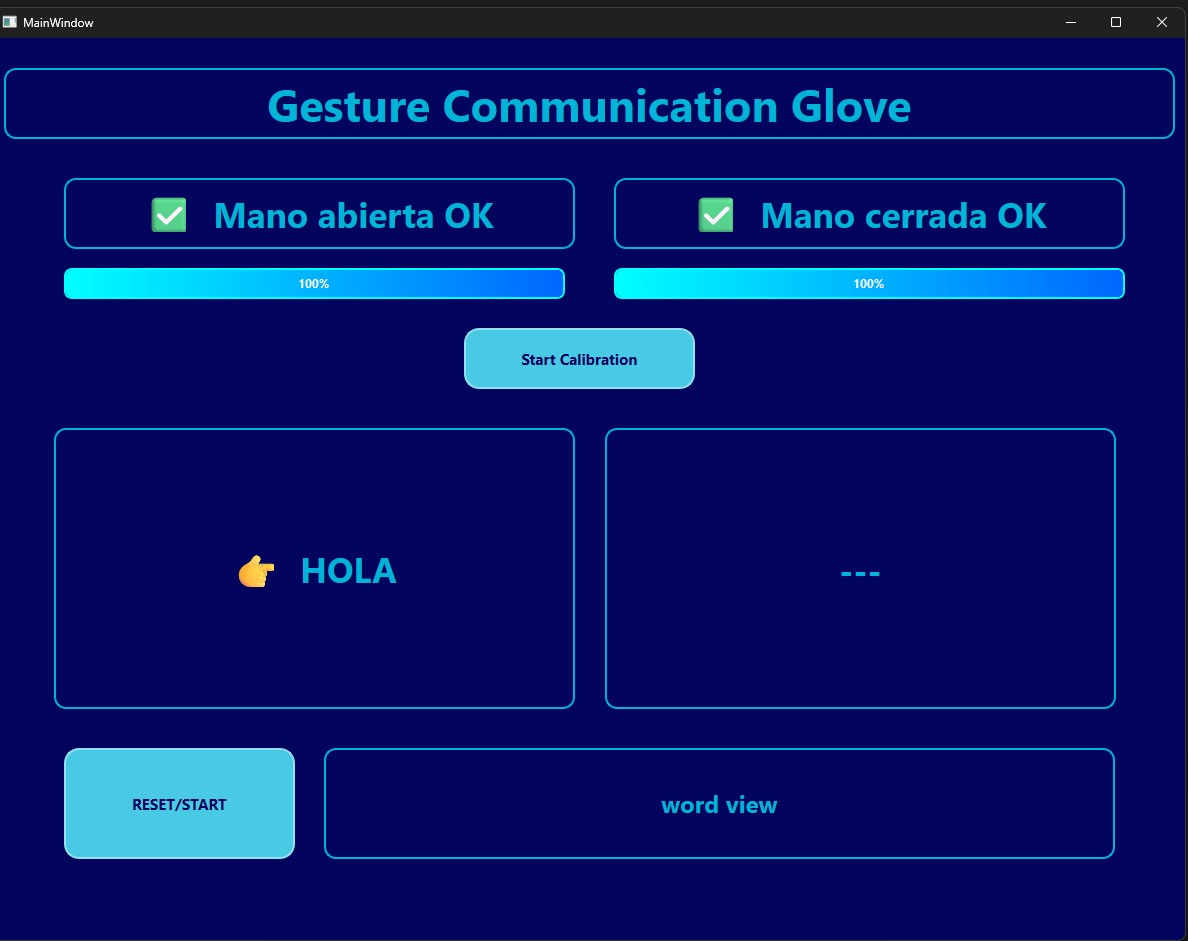
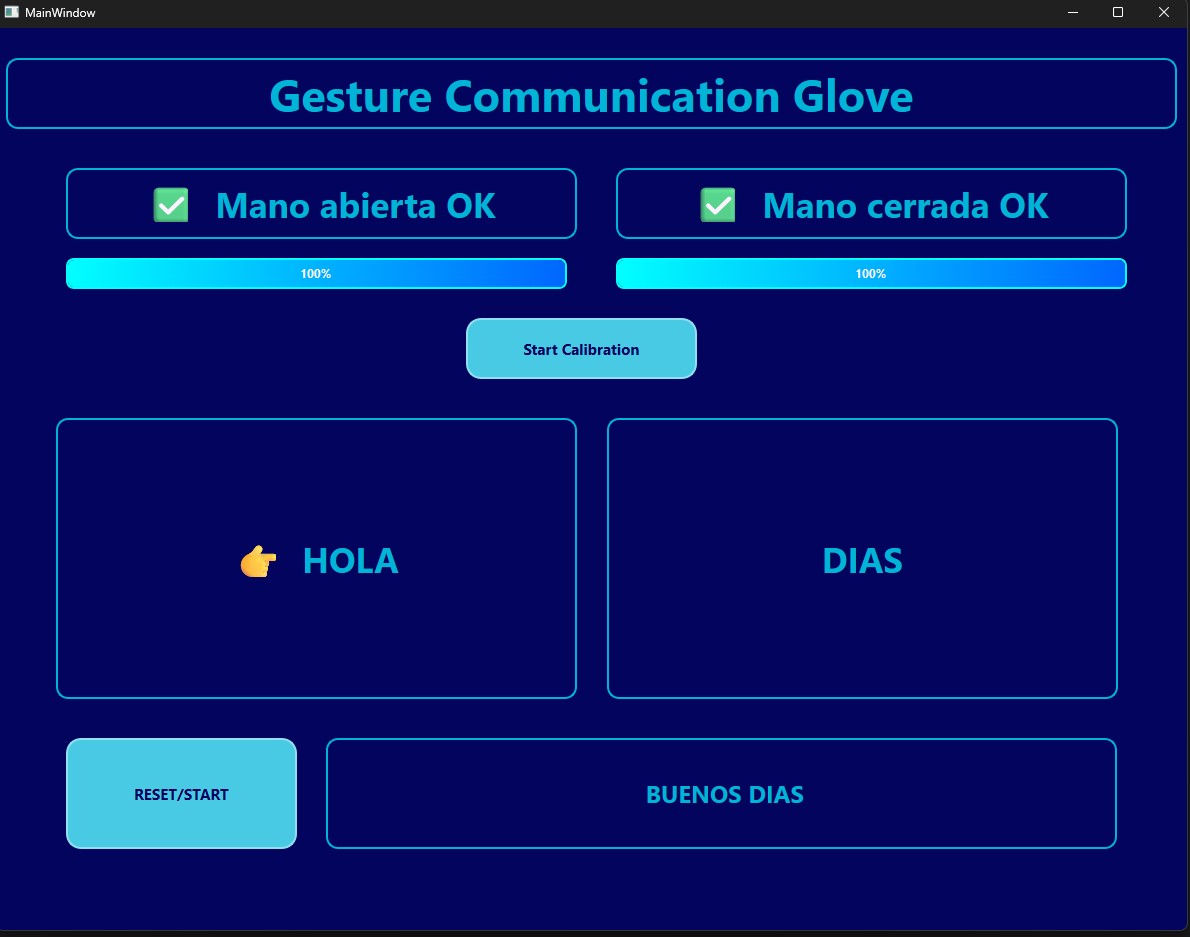
The images below show the current version of the graphical user interface running on the computer. The interface displays the words generated by the glove in real time and also includes a calibration button. Calibration is an essential step before using the system, as it allows the glove to determine the operating ranges of the flex sensors. By pressing the calibration button, the glove requests two reference positions: first, the hand must remain fully open, and then fully closed. These reference measurements are used to establish the thresholds required to classify each finger as Straight, Mid, or Bent.
The interface contains three main display areas. The panel on the left previews the currently detected word as different gestures are performed. This area allows the operator to browse through the available vocabulary by moving the fingers according to the predefined gesture combinations shown in the previous table. Once the desired word is selected, the transmission gesture is performed and the chosen word is immediately displayed in the output panel on the right. At the same time, the Word View section progressively builds complete phrases such as "HELLO FRIEND" or "HOW ARE YOU".
The same concept can also be applied to alphabet characters, as shown in the following example. The gesture recognition system can operate using either predefined words or individual letters. The current development stage focuses on implementing a dual-mode system that will allow switching between word mode and alphabet mode, providing greater flexibility for communication.
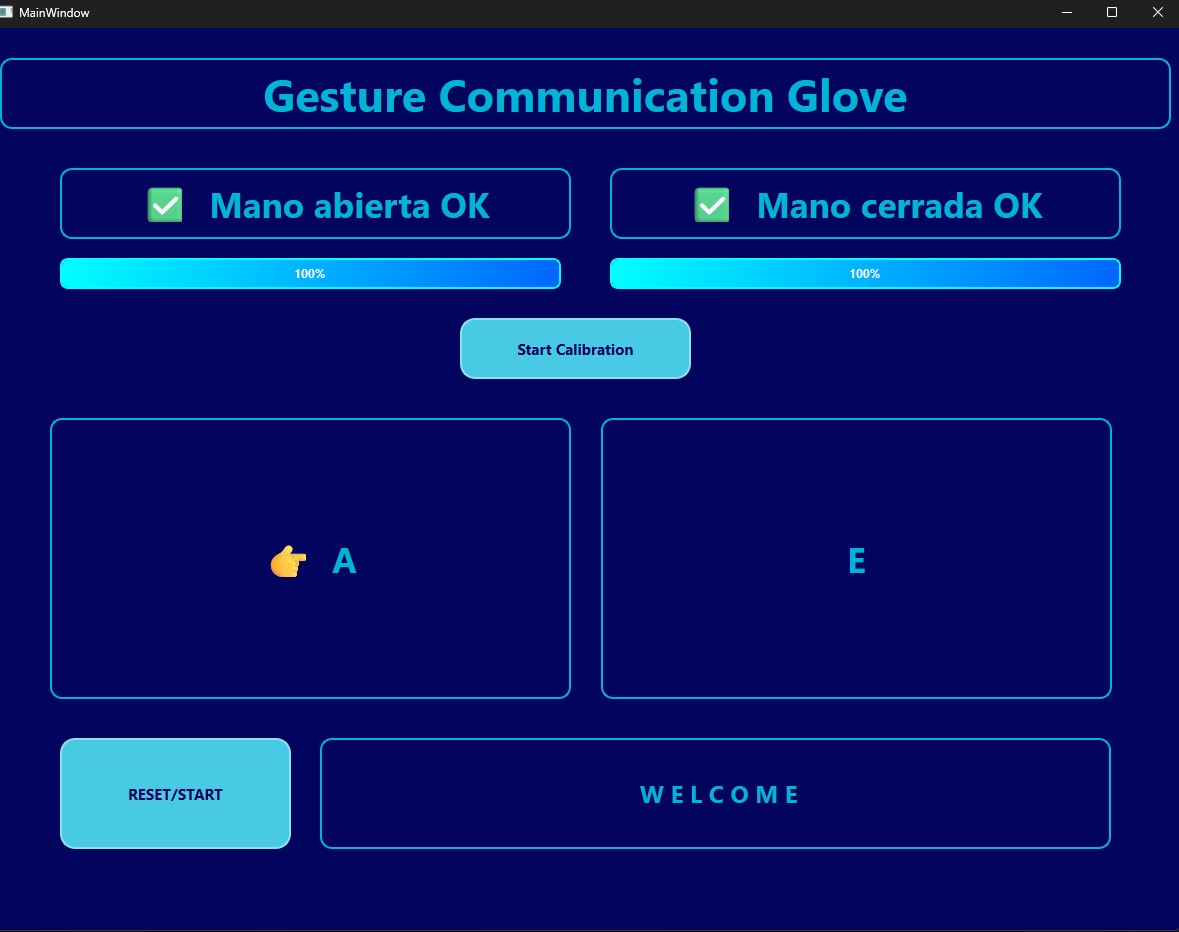
Note: No wired connection is required between the glove and the computer. The system relies entirely on WiFi communication, enabling the wireless transmission of gesture data and selected words from the XIAO ESP32C3 to the graphical user interface in real time.
Related Projects and Reference Sources
The development of gesture-based communication devices has been explored by several universities, research groups, and companies around the world. Creating a glove capable of translating hand gestures into words or text is a challenging task due to the wide variety of sign languages, gestures, and communication systems used across different regions and cultures.
Although the primary motivation behind this project is to contribute to the inclusion of deaf and non-verbal individuals, it was important to study existing developments in this field. Reviewing previous projects helped me understand different design approaches, sensing technologies, and communication methods that have already been explored by researchers and industry professionals.
The following examples served as valuable technical references during the development of this project:
- BrightSign Glove: A company that develops wearable communication devices capable of translating hand gestures into speech and text. Their work demonstrates how sensor-based gloves can be used to improve communication accessibility.
- Glovatrix: A smart glove project that captures hand and finger movements using sensors and converts them into text or speech through a connected application. It serves as an example of gesture-based communication technology.
- Low-Cost Smart Glove (UC San Diego): A university research project that uses flex sensors and embedded electronics to recognize hand gestures and translate them into digital information. This project shares several similarities with the glove developed in this work.
In summary, the industry several gesture translation gloves being developed. However, the glove presented in this project follows a different approach. While many existing systems rely on five flex sensors and machine learning algorithms, this glove uses only three flex sensors and a simple state-based logic system to recognize gestures.
Each monitored finger can be classified into three states: Straight, Mid, or Bent. By combining these states, the glove generates predefined gestures that are associated with specific words or letters. This approach simplifies both the hardware and software requirements while maintaining a functional communication system.
One of the main advantages of this design is its lower fabrication cost, since only three flex sensors are required instead of five. The trade-off is that the user must learn the gesture combinations associated with each predefined word or letter. Although this may require an initial learning period, the combinations become easier to remember with regular use.
Materials, Components and Tools Used
Materials
| Material | Cost | Source |
|---|---|---|
| Leatherette Fabric | $5.00 per yard | Purchased locally |
| Mesh Fabric | $2.50 per yard | Purchased locally |
| PETG Filament | $30.00 per 1 kg spool | Purchased locally |
| Velcro Fabric | $1.25 per yard | Purchased locally |
| Sewing Thread | $0.00 | Provided by Fab Lab UP Cidete |
| Weld-On Acrylic Cement | $0.00 | Provided by Fab Lab UP Cidete |
Electronic Components
| Component | Cost | Source |
|---|---|---|
| XIAO ESP32C3 | $10.00 | Amazon |
| Flex Sensors | $25.00 each (four were initially purchased, although only three were used in the final design) | Purchased in Panama City, as they were not available in Veraguas |
| FR1 Copper Board | $4.00 each | Purchased in Panama City. The supplier did not have stock available, so the boards were ordered several weeks in advance and required approximately 2–3 weeks for delivery. |
| SMD Resistors | Included in an SMD electronics kit costing $33.00, which also contained capacitors and SMD LEDs | Amazon. The kit was ordered during Week 4 of the program. |
| SMD LEDs | Included in the SMD electronics kit | Amazon |
| Ethernet Cable Wires | $0.50 per foot | Purchased locally |
Fabrication Equipment
| Equipment | Purpose |
|---|---|
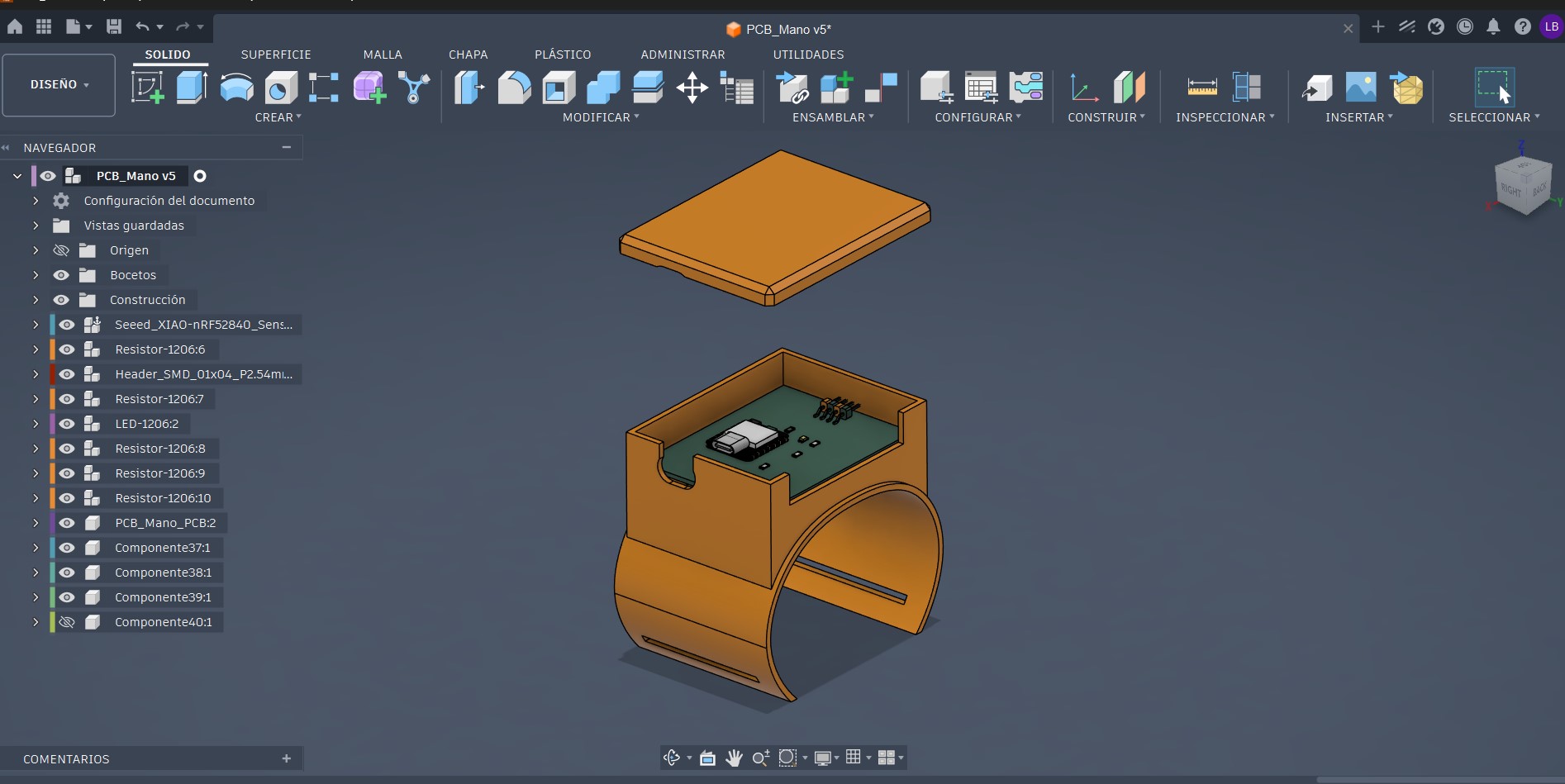
| Bambu Lab H2D | 3D printing the structural parts used to hold the electronics and secure the glove on the back of the hand |
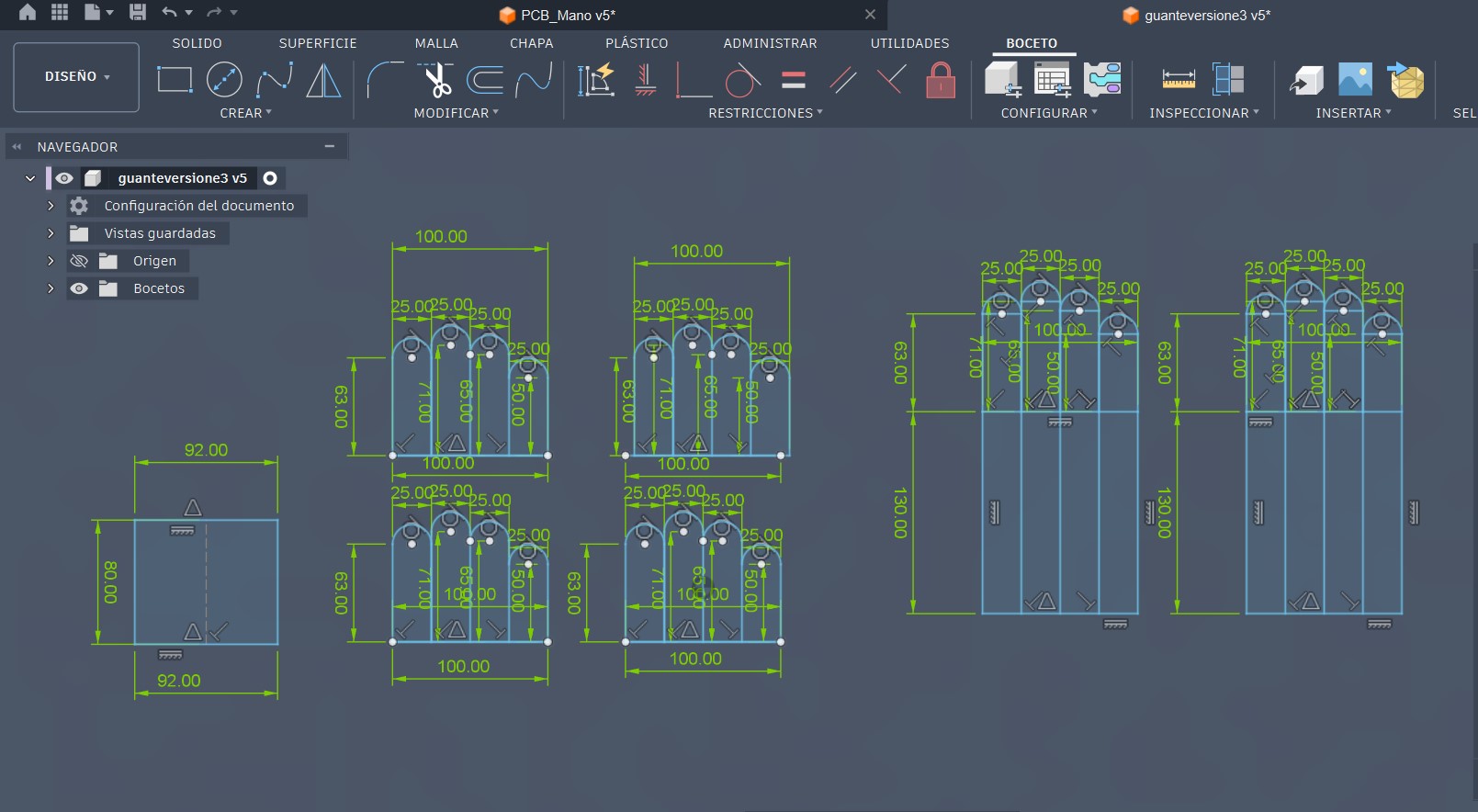
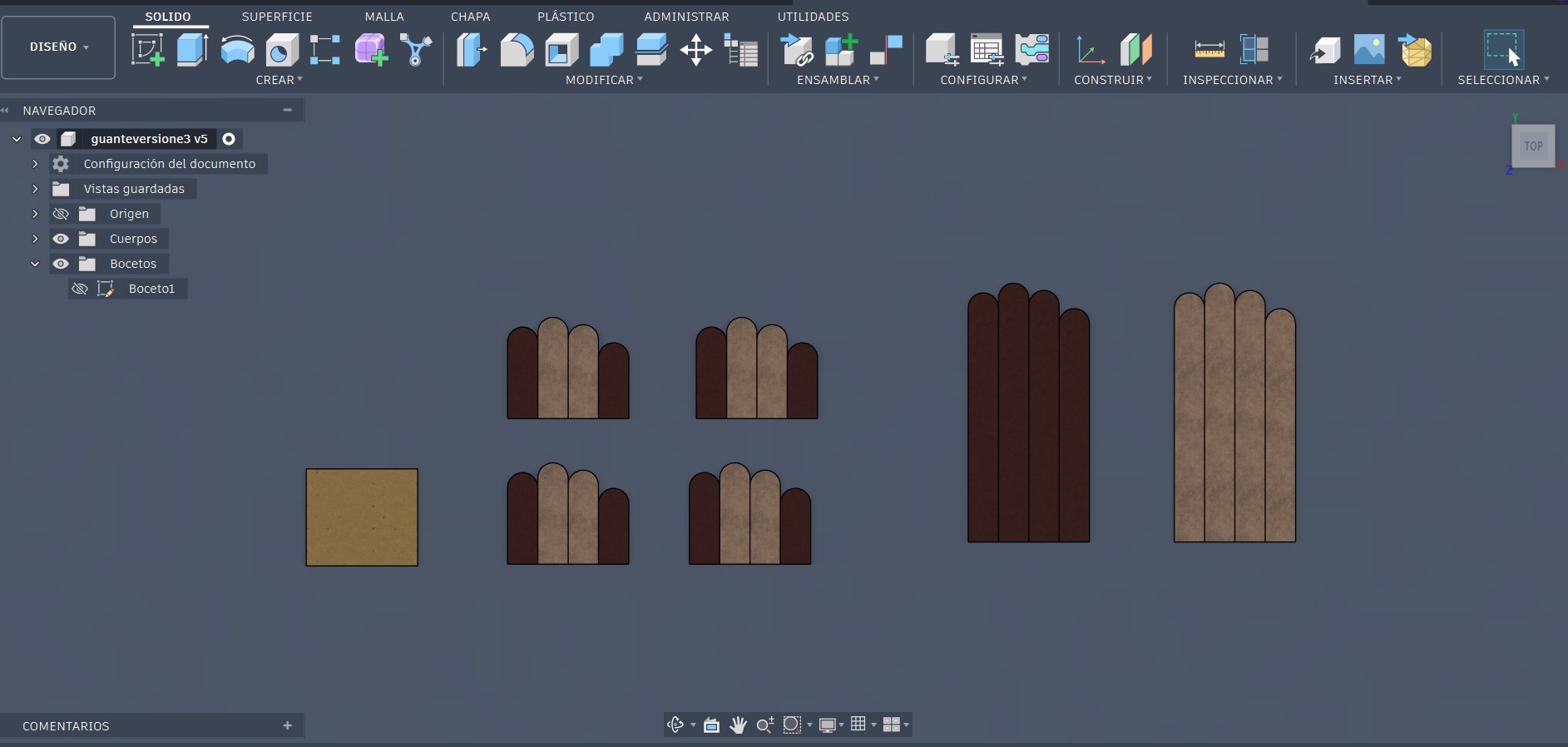
| Fenix CMA 1309 | Laser cutting textile components |
| xTool Laser | PCB engraving and fabrication |
| Brother SE1900 | Sewing and assembling the textile components of the glove |
Software Tools
| Software | Purpose |
|---|---|
| Fusion 360 | 3D design and modeling of the glove components |
| Arduino IDE | Programming and testing the XIAO ESP32C3 microcontroller |
| Python | Development of the desktop application and WiFi communication system |
| Visual Studio Code | Source code development, testing, and debugging |
| Qt Designer | Design of the graphical user interface |
| PyQt6 | Implementation of the graphical user interface and desktop application |
| SmartCarve | Preparation of laser cutting and engraving workflows |
| xTool Creative Space | Laser machine control and PCB engraving workflow preparation |
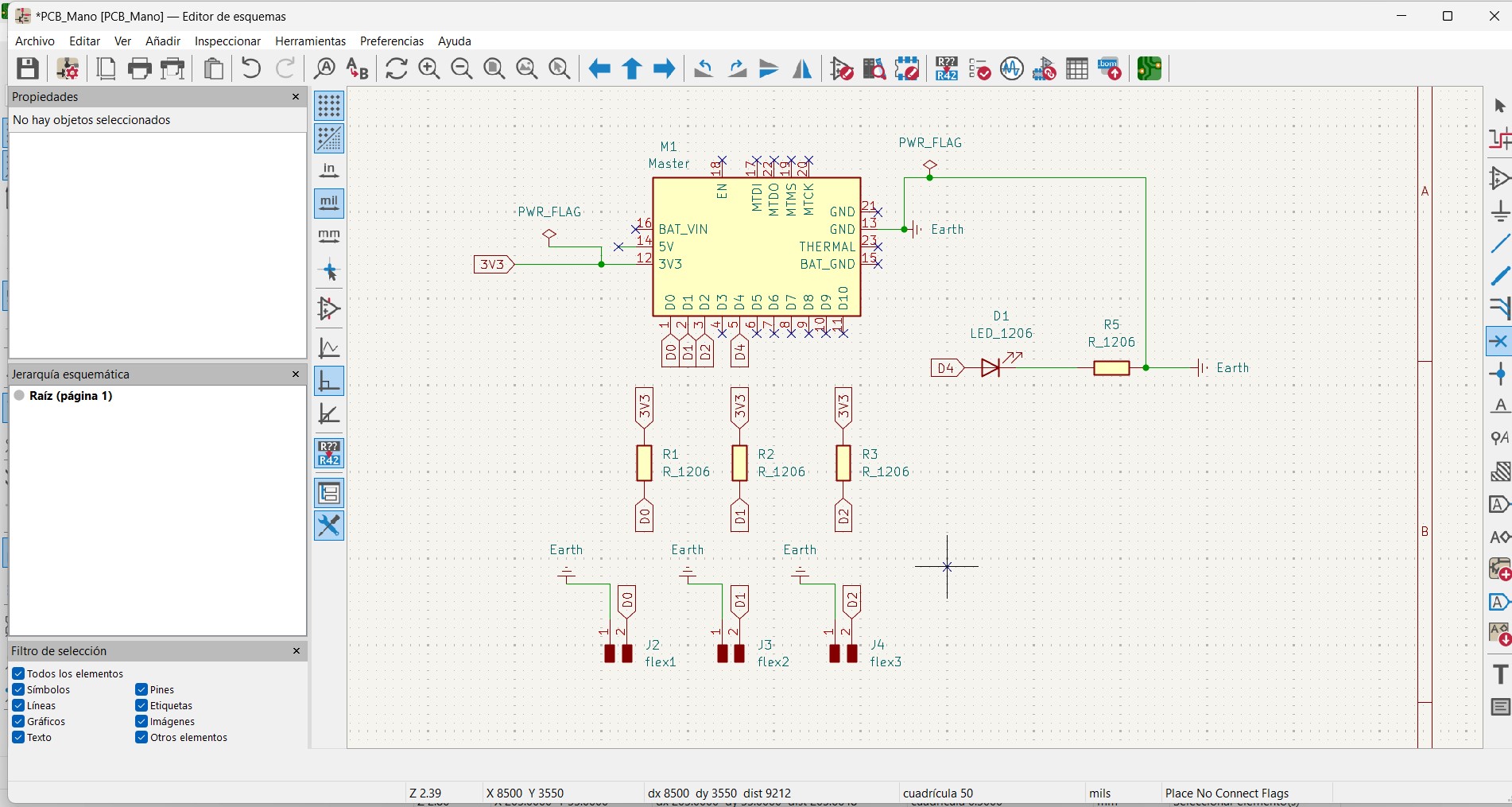
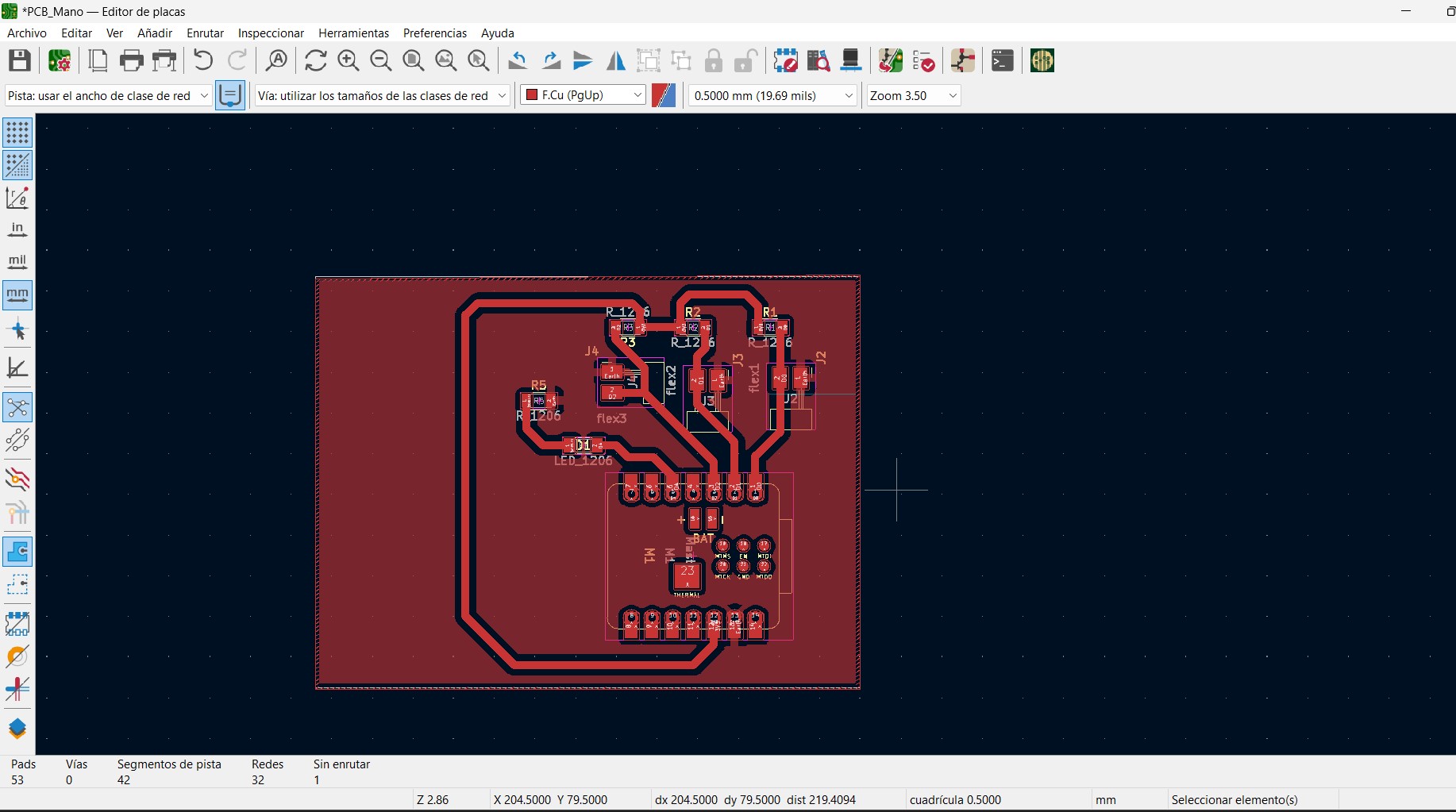
Que sistema y piezas se fabricaran
Considerations for the Fabrication Processes Used
- 3D Printing: During the development of this glove, it became evident that minimizing the number of rigid components is important to improve comfort and wearability. The current design uses PETG for the fabricated parts; however, future iterations could benefit from incorporating TPU due to its flexibility and better adaptation to hand movements. A hybrid approach combining PETG for structural support and TPU for flexible sections could provide a more ergonomic solution.
- Laser Cutting: When cutting textile materials such as leatherette or mesh fabric, it is important to carefully adjust laser power and cutting speed. Since laser cutting is a thermal process, excessive power can remove more material than expected and affect dimensional accuracy. During fabrication, special attention must also be given to properly securing and flattening the fabric on the laser bed to avoid distortions and obtain consistent cutting results.
- PCB Fabrication: Based on the experience gained during the electronic design phase, a double-sided copper board would be preferable for future versions of the PCB. Designing the circuit on a single-sided board required additional routing constraints and made it more difficult to avoid crossing traces. A double-layer PCB would simplify the layout and provide greater flexibility for future improvements.
- Sewing and Assembly Process: One of the most challenging fabrication processes was sewing. Due to my limited previous experience with textile fabrication, several unsuccessful iterations were required before achieving satisfactory results. Although sewing may appear straightforward, it requires careful planning regarding fabric orientation, assembly order, and stitching paths. Through repeated practice and experimentation, I gradually developed a better understanding of the process and was able to improve the overall quality of the final assembly.
Avance actual
As shown in the video, different predefined words are displayed as the fingers move through the available gesture combinations. To select a word, it is necessary to perform the corresponding gesture until the desired word appears on the screen. Once the correct word has been identified, it can be captured by closing the hand. This action sends the selected word and concatenates it with the previously transmitted words, allowing complete phrases to be formed. As demonstrated in the video, the glove can generate simple phrases such as "HELLO HELP", "YES PLEASE", and "GOODBYE FRIEND". The predefined vocabulary was not selected randomly. Instead, the words were chosen based on common communication needs, including expressing emotions, requesting assistance, indicating locations, and communicating basic needs such as food, water, bathroom access, and health-related situations. Note: The video demonstrates the system using Spanish words. This version is currently being used for testing and validation purposes while the programming and functionality of the glove continue to be refined and improved.
Questions That Still Need to Be Addressed
Although the current version of the glove successfully translates predefined gestures into words, several important questions remain open for future development.
One of the main challenges is determining how a new user can learn and become familiar with the gesture system. Unlike traditional sign languages, the glove does not rely on established sign language gestures. Instead, each word is associated with a specific combination of finger states (Straight, Mid, and Bent). This raises the question of how to make the learning process more intuitive and how users can efficiently memorize the available gesture combinations.
Another important question is how to make the glove more discreet and comfortable for everyday use. While the current prototype successfully demonstrates the concept, future iterations could focus on reducing the size of the electronic components, improving the integration of the sensors within the textile structure, and creating a design that is less noticeable while maintaining functionality.
For a more detailed overview of the development process, I invite you to visit my Final Project page. There you will find documentation, weekly assignments, design iterations, fabrication processes, electronics development, programming, and testing related to the creation of this glove. Go to Final Project