Week 18: Applications and Implications, Project Development
Assignment:
Plan a final project masterpiece that integrates the range of units covered.
Your project should incorporate:
2D and 3D design.
Additive and subtractive fabrication processes.
Electronics design and production.
Embedded microcontroller interfacing and programming.
System integration and packaging.
Week 18 - Applications and Implications, Project Development
Have you answered these questions?
What will it do?
Who has done what beforehand?
What sources will you use?
What will you design?
What materials and components will be used?
Where will they come from?
How much will they cost?
What parts and systems will be made?
What processes will be used?
What questions need to be answered?
How will it be evaluated?
Uploaded summary slide (placeholder).
Uploaded video clip (placeholder).
Checked they are linked in the final presentation schedule.
1) What Will the Project Do?
SpiruSense is an intelligent photobioreactor designed for the cultivation and monitoring of Limnospira platensis (spirulina). The system will measure critical cultivation variables such as temperature, pH, total dissolved solids (TDS), and light intensity in real time. In addition, the data can be visualized locally through an LCD screen and remotely through an IoT platform connected to Firebase. It will also allow lighting and aeration to be controlled from a web application, improving growth conditions and facilitating cultivation monitoring.
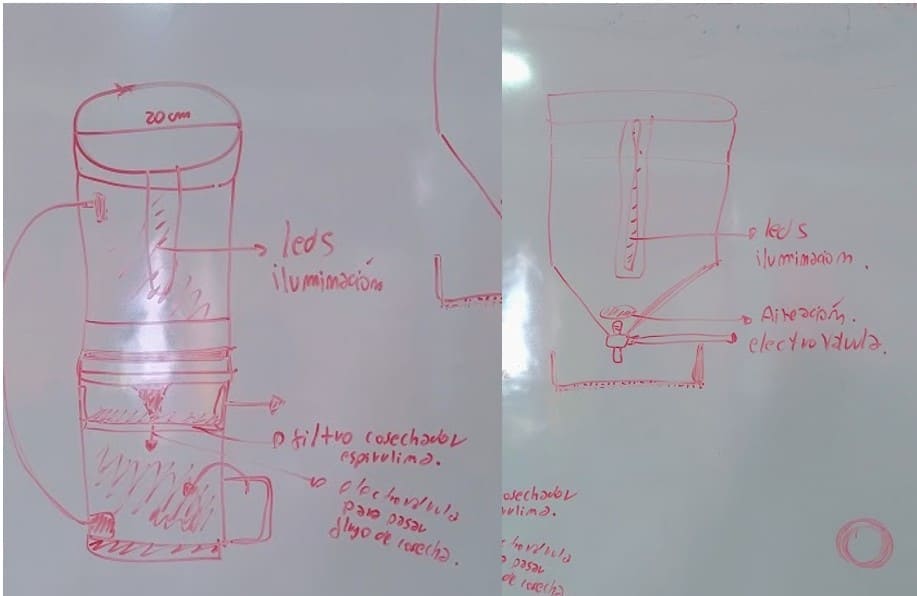
Img. 1: Diagram of how the photobioreactor structure will be.
2) Who Has Done Something Similar Before?
There are several projects and developments related to photobioreactors for the cultivation of microalgae and spirulina. During the research phase, both academic references and projects developed within the Fab Academy community were reviewed.
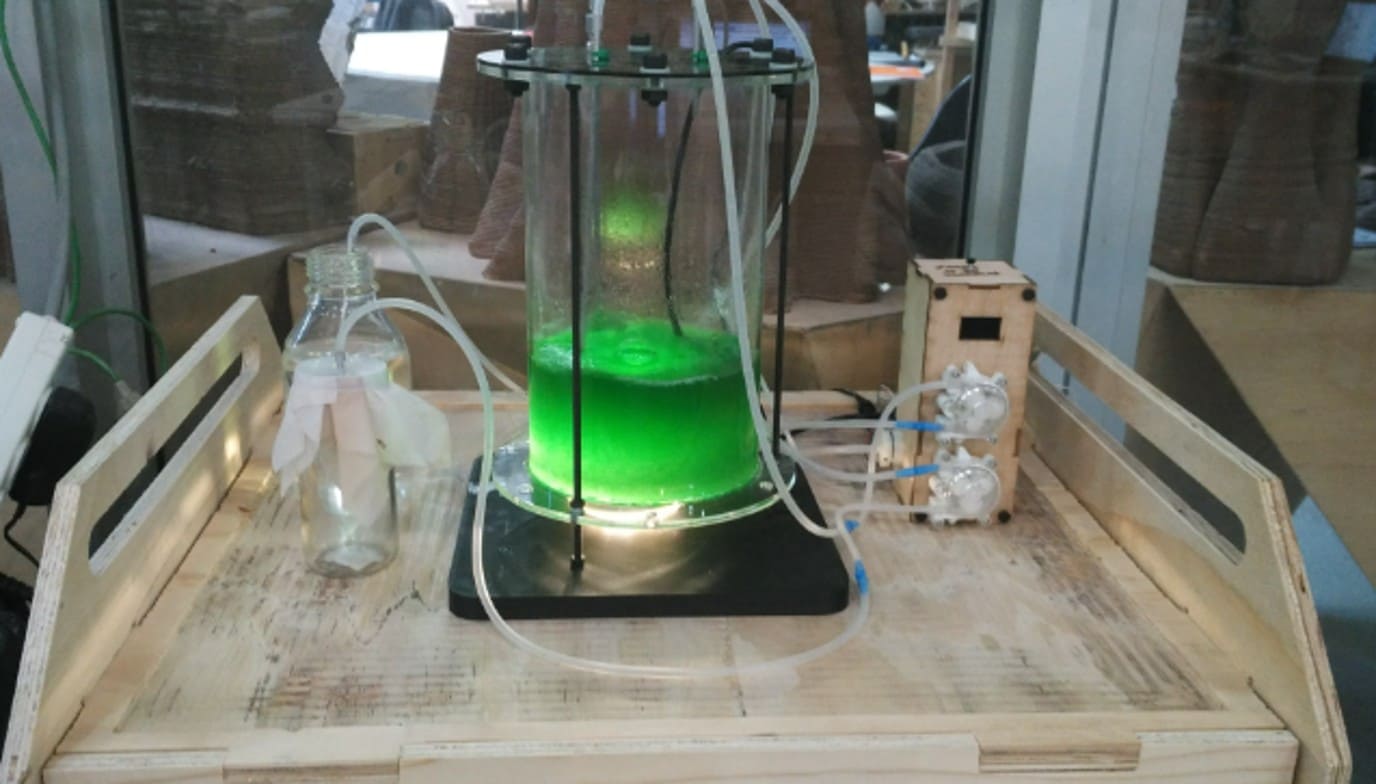
One reference was the “Microalgae Bio-Photoreactor” project developed in Fab Academy, focused on building a system for the controlled cultivation of microalgae through lighting and aeration. This project helped me understand aspects related to the design of transparent reactors, circulation of the culture medium, and the importance of avoiding dead zones inside the system.
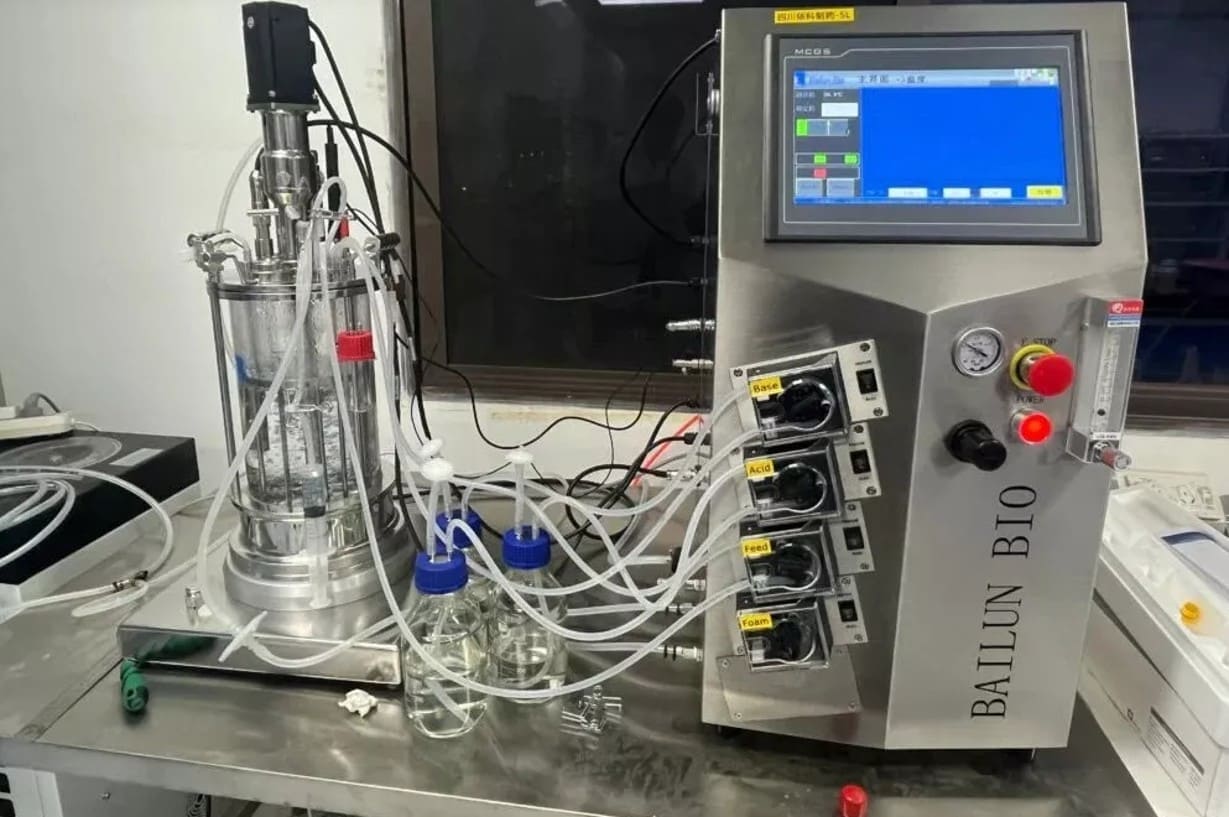
Commercial developments of automated photobioreactors used for microalgae research and production were also reviewed. These systems incorporate sensors, parameter monitoring, and control systems to optimize crop growth. They demonstrate the importance of integrating real-time monitoring, environmental control, and data logging to improve productivity.
Likewise, initiatives such as Ecotrons and AlgaGrower were analyzed. These are oriented toward automated microalgae cultivation and the development of experimental platforms for biotechnological research. They served as inspiration for the integration of sensors, connectivity, and remote monitoring within a compact system.
SpiruSense seeks to develop an accessible alternative based on digital fabrication, integrating CAD design, 3D printing, thermoforming, custom electronics, environmental sensors, WiFi communication, and cloud monitoring through Firebase. The objective is to provide a low-cost tool for educational institutions, Fab Labs, and small producers interested in cultivating Limnospira platensis (spirulina).
Main Difference of SpiruSense
Locally manufactured through digital fabrication technologies.
Custom structure designed in Fusion 360.
Custom PCB designed in KiCad and fabricated by CNC milling.
Monitoring of temperature, pH, TDS, and light intensity.
Local visualization through LCD screen.
Real-time remote monitoring through Firebase.
Remote control of lighting and aeration.
Low cost compared to commercial equipment.
Educational application for research and teaching in Fab Labs.
Img. 2: Commercial photobioreactor.
Img. 3: Fab Academy project used as a reference.
3) What Sources Will You Use?
The development of SpiruSense will be supported by various technical, scientific, and reference sources that will help validate both the mechanical design and the electronic and biological integration of the system.
Technical and Electronic Documentation
XIAO ESP32-C3 documentation, used for microcontroller programming, sensor management, and WiFi communication.
Official Firebase documentation, used to implement remote monitoring and real-time data storage.
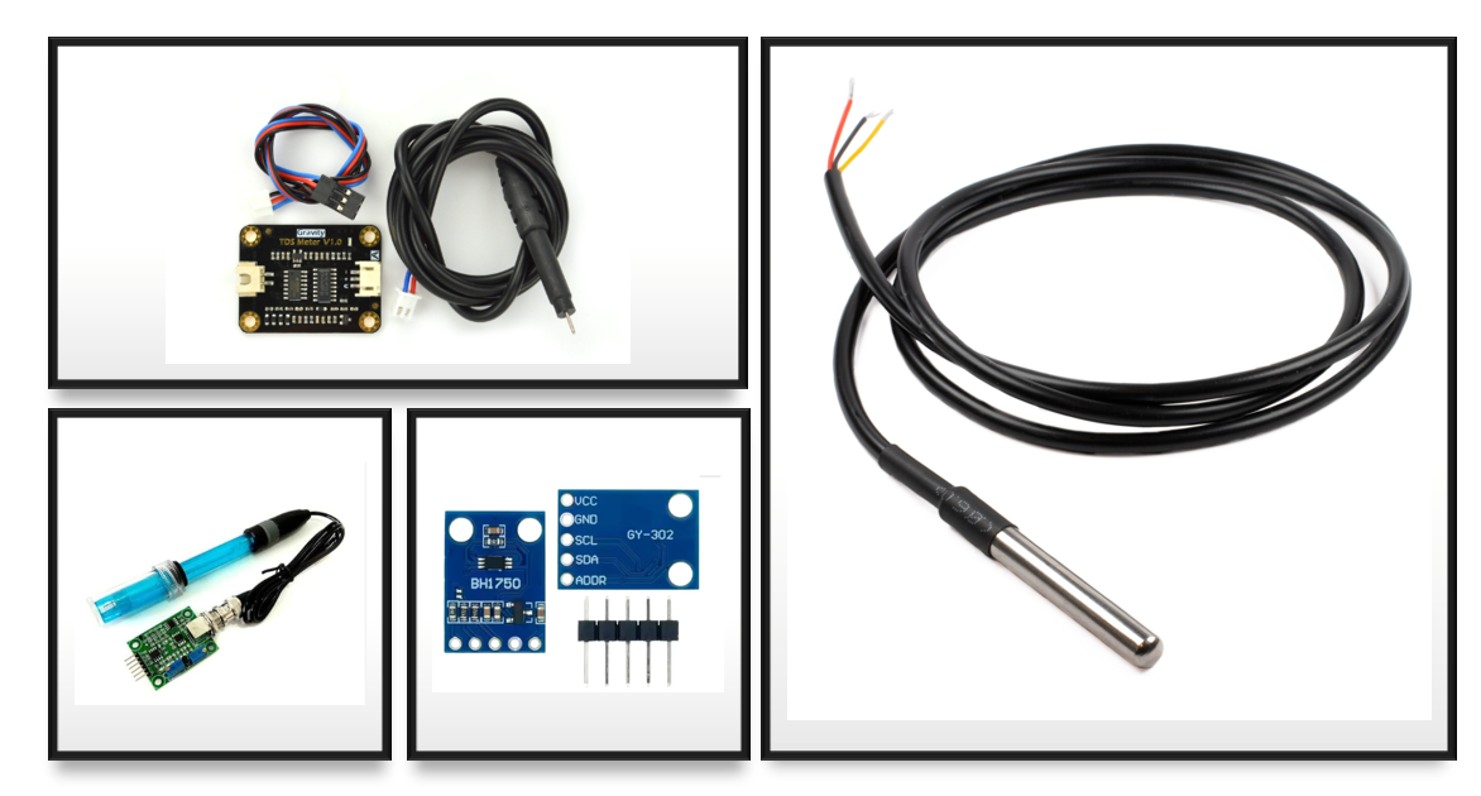
Datasheets and technical documentation for the DS18B20, BH1750, TDS, and pH E201-C BNC sensors, used to understand their electrical characteristics, operating ranges, and integration methods.
Ecotrons, a platform focused on experimental systems for biological monitoring and automation, used as a reference for integrating sensors and controlling environmental variables.
AlgaGrower, a system oriented toward automated microalgae cultivation, used as a reference to analyze lighting, monitoring, and crop growth strategies.
Scientific Sources
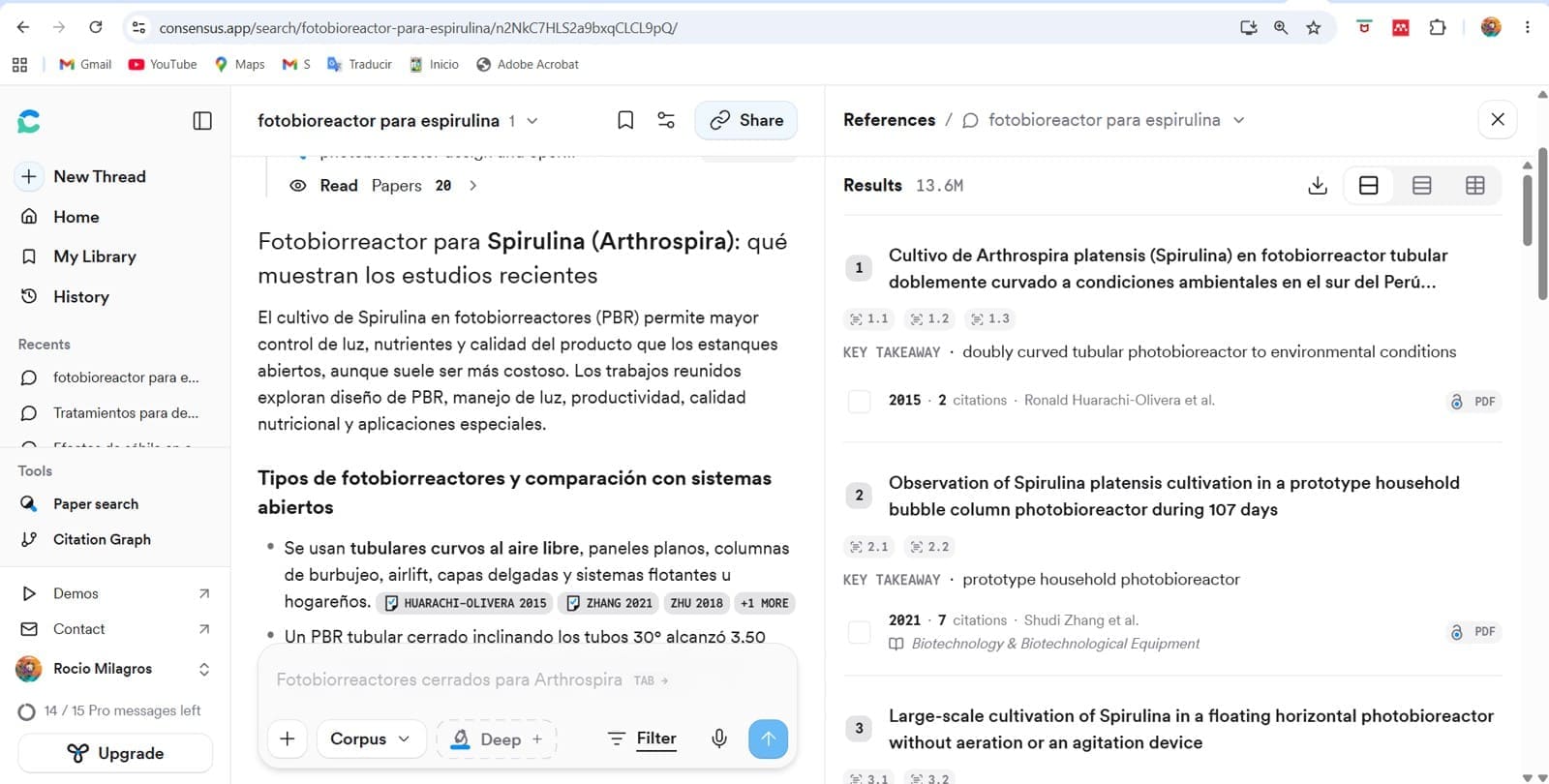
Scientific articles and publications related to the cultivation of Limnospira platensis (spirulina).
Research on lighting, temperature, pH, and aeration requirements to optimize microalgae growth.
Information on cell density monitoring and methods for evaluating spirulina growth.
Img. 5: Research on photobioreactors.
4) What Will You Design?
The following elements will be designed and fabricated:
Mechanical System
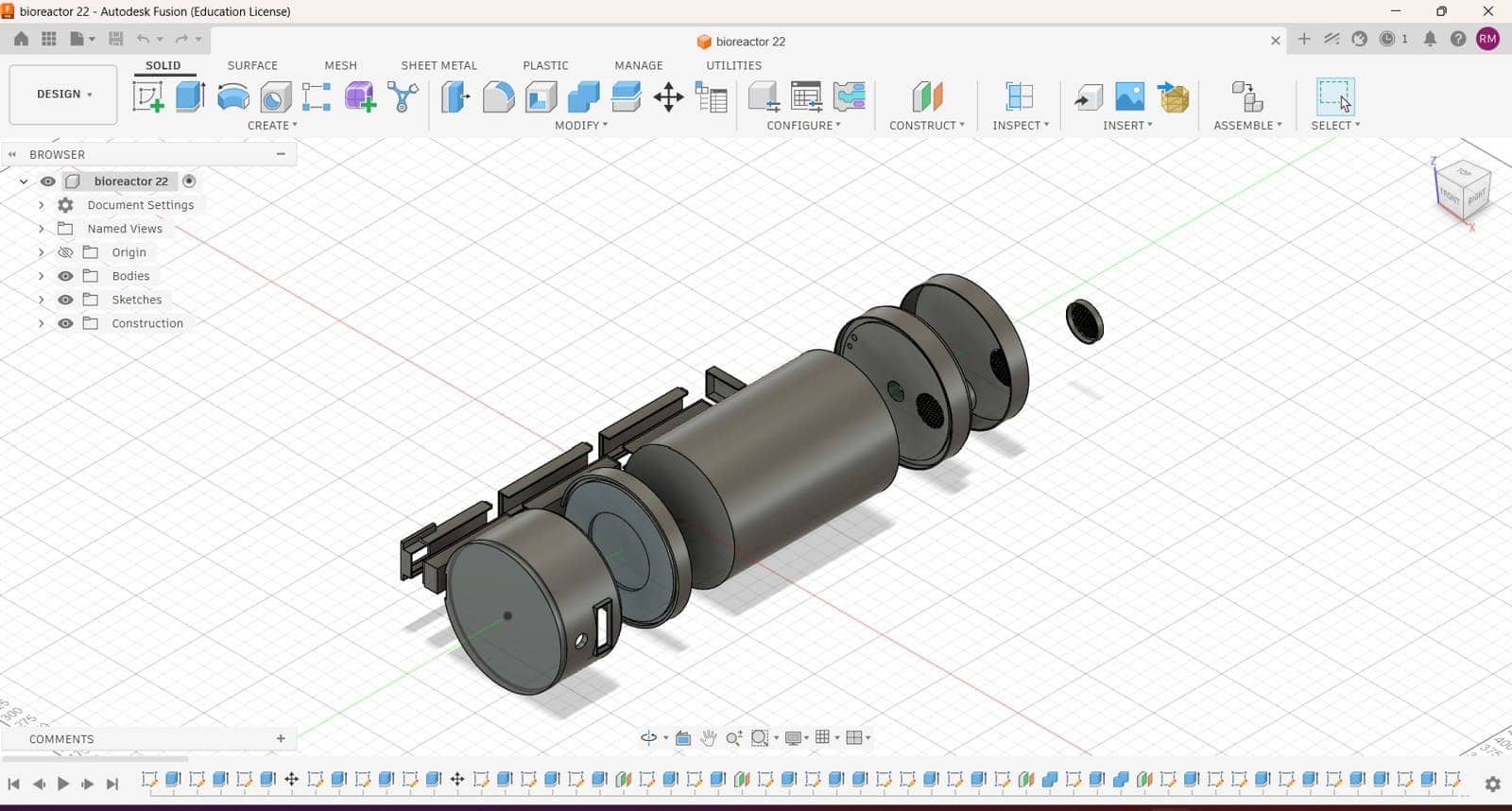
Photobioreactor base.
Upper lid.
Central column for lighting.
Air diffuser.
Sensor supports.
Electronic System
Custom PCB.
Sensor integration.
Power supply system.
Digital System
Firebase platform.
Monitoring dashboard.
Remote control system.
Img. 6: Fusion design of the photobioreactor.
5) What Materials and Components Will Be Used?
Material or Component
Quantity
XIAO ESP32-C3
1
DS18B20 sensor
1
TDS sensor
1
pH E201-C BNC electrode
1
BH1750 sensor
1
I2C LCD screen
1
Air pump
1
1.5 m LED strip
1
FR1 PCB
1
PLA filament
2 kg
Transparent acrylic
1/4 sheet
Silicone hoses
2 m / several
SMD electronic components
Several
Where Will They Come From?
The materials and components will be obtained from:
Fab Lab inventory.
Electronics suppliers in the city of Lima.
Online purchases.
Materials available in the laboratory.
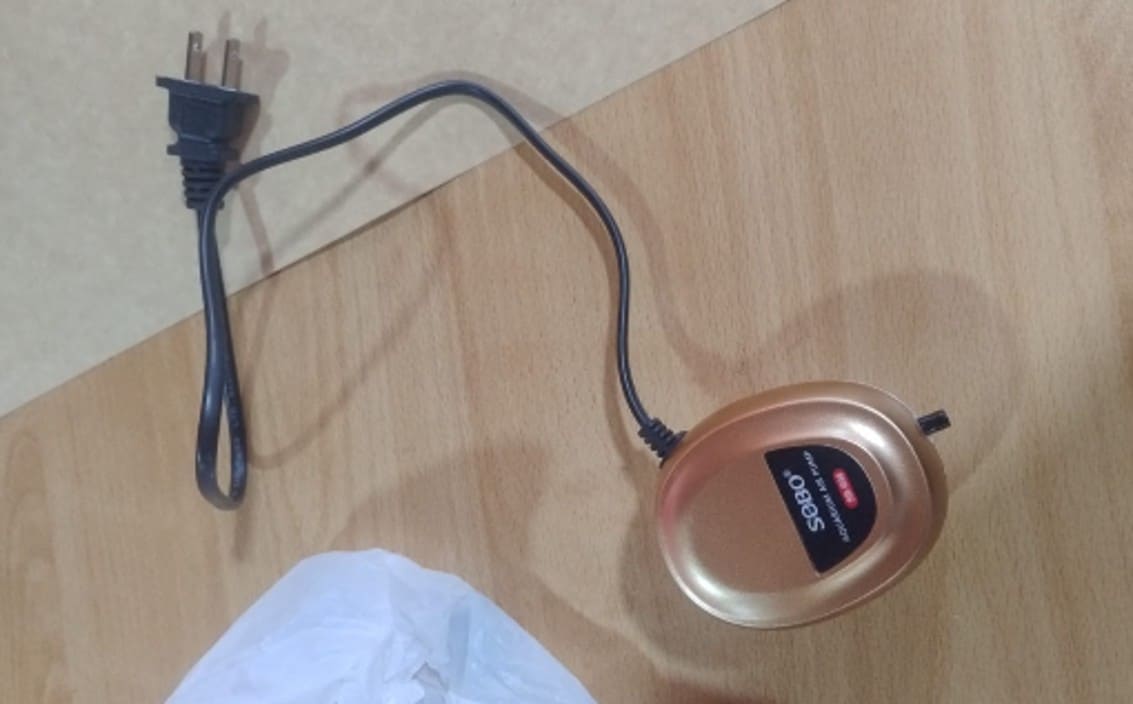
Img. 7: Air pump used.
6) How Much Will They Cost?
Preliminary Budget (BOM)
Component
Quantity
Total Cost (S/.)
Total Cost (USD)
Use in the Project
XIAO ESP32-C3
1
40.00
11.11
Main microcontroller
DS18B20 sensor
1
5.50
1.53
Temperature measurement
TDS sensor
1
75.00
20.83
Dissolved solids measurement
pH E201-C BNC sensor
1
65.00
18.06
pH measurement
BH1750 sensor
1
10.00
2.78
Light intensity measurement
I2C LCD screen
1
25.00
6.94
Local visualization
Air pump
2
36.00
10.00
Culture aeration
Relay module
2
20.00
5.56
Lighting and aeration control
LED strip
1
5.00
1.39
Culture lighting
12V power supply
1
60.00
16.67
Main power supply
LM2596 Step-Down regulator
1
5.00
1.39
Voltage conversion
5V–3.3V logic converter
1
6.00
1.67
Signal adaptation for the pH sensor
ON/OFF switch
1
5.00
1.39
General power on/off
Transparent acrylic
1
60.00
16.67
Thermoformed cylinder
PLA filament
1
75.00
20.83
3D printing of the structure
PCB and electronic components
1
50.00
13.89
Custom electronic board
Resistors and connectors
Several
10.00
2.78
Circuitry and connections
Miscellaneous materials
Several
30.00
8.33
Cables, hoses, screws, and sealing
Estimated Total
S/ 582.50
USD 161.81
7) What Parts and Systems Will Be Made?
Fabricated Parts
3D printed base.
3D printed lid.
Aeration system.
Lighting column.
Custom PCB.
Sensor supports.
Integrated Systems
Monitoring system.
Lighting system.
Aeration system.
Electronic system.
IoT system.
Local visualization system.
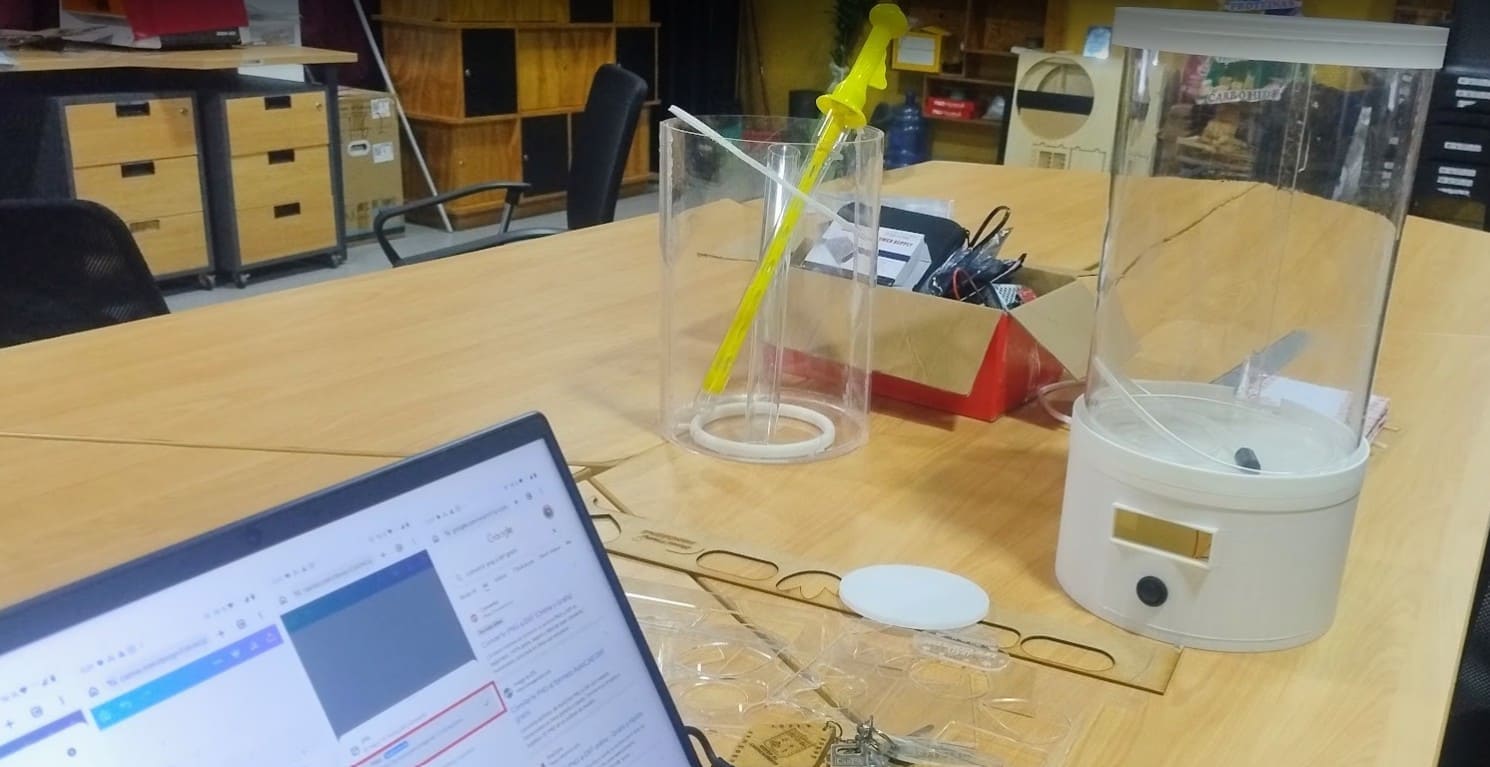
Img. 8: Printed structure and cylinder made by thermoforming transparent acrylic.
8) What Processes Will Be Used?
The project will integrate multiple processes learned during Fab Academy:
Area
Process Used
Application in the SpiruSense Project
2D Design
PCB design in KiCad
The custom electronic board was designed to integrate the XIAO ESP32-C3 microcontroller, sensors, and actuators of the system.
2D Design
Laser cutting design
Parts were designed for the fabrication of the mold used in thermoforming the acrylic cylinder.
3D Design
CAD modeling in Fusion 360
The complete structure of the photobioreactor was designed, including the base, lid, central lighting column, sensor supports, and aeration system.
Additive Fabrication
3D printing
The base, lid, air diffuser, central lighting column, and various structural supports of the system were fabricated.
Subtractive Fabrication
Laser cutting
Parts were fabricated for the mold used during the thermoforming process of the transparent cylinder.
Subtractive Fabrication
CNC milling
Components used in the thermoforming mold were machined, and tests were carried out for the fabrication of auxiliary parts of the system.
Subtractive Fabrication
PCB milling
The custom electronic board was fabricated using the PCB milling process with a precision CNC machine.
Electronics
Electronic design
The electronic schematic was designed to integrate temperature, pH, TDS, light intensity sensors, LCD screen, lighting, and aeration.
Electronics
PCB production
A custom electronic board was fabricated and assembled to centralize connections and reduce external wiring.
Electronics
Component soldering
The microcontroller, connectors, resistors, and other electronic components required for system operation were soldered.
Programming
XIAO ESP32-C3 programming
The firmware was developed to manage sensors, actuators, WiFi communication, and system monitoring.
Programming
Communication with sensors
The reading and processing of data from the DS18B20, TDS, BH1750, and pH sensors were implemented.
Programming
Firebase integration
Communication with the Firebase platform was developed to visualize data in real time and remotely control the system.
System Integration
Mechanical integration
All structural components were assembled to form a compact and functional photobioreactor.
System Integration
Electronic integration
Sensors, LCD screen, lighting, aeration, and PCB were connected within a single operational platform.
System Integration
IoT integration
Remote monitoring, data storage, and device control were integrated through WiFi and Firebase.
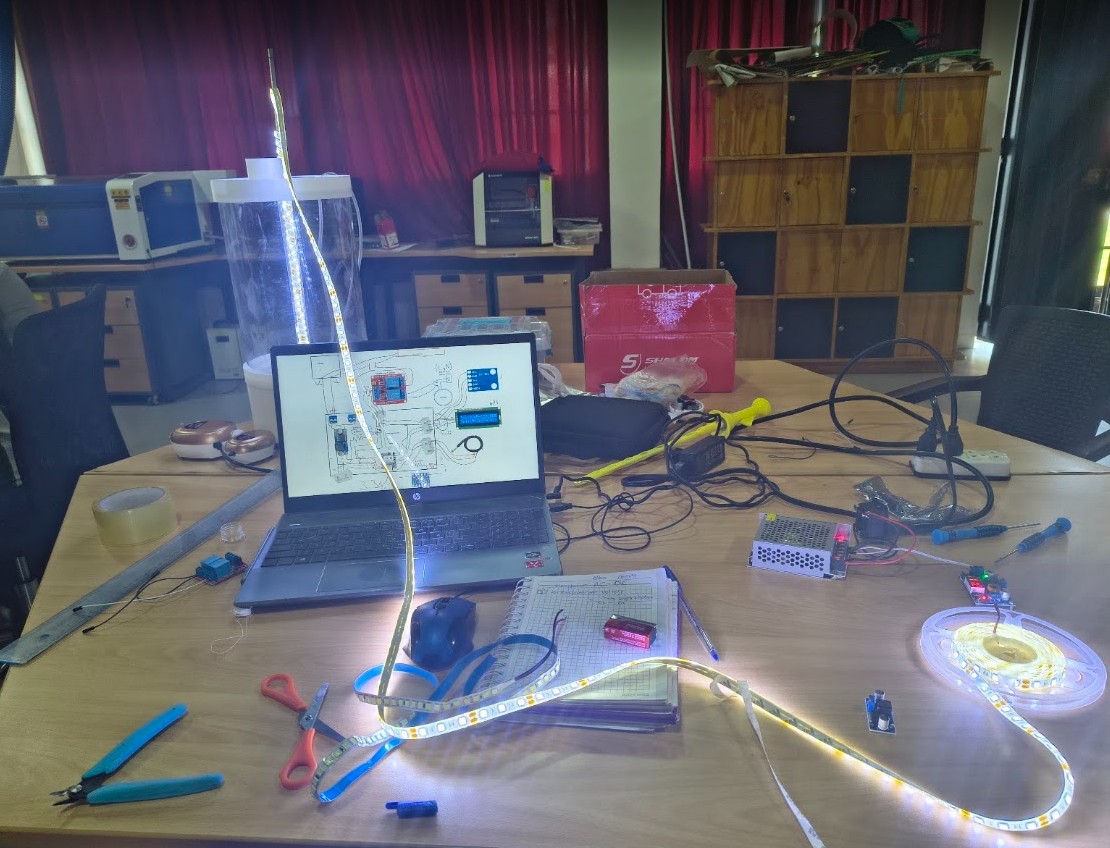
Img. 9: Power supply operation tests.
9) What Questions Need to Be Answered?
During the development of the project, the following questions will need to be answered:
Will the structure adequately support the weight of the culture?
Will the sensors provide stable and reliable measurements?
Will the WiFi communication be stable enough for remote monitoring?
Will the light intensity be adequate for spirulina growth?
Will the aeration allow proper mixing of the culture?
Will the integration of all subsystems work simultaneously?
Can the system be used as an educational and research tool?
10) How Will It Be Evaluated?
The project will be considered successful if it achieves the following:
✅ Measure temperature in real time.
✅ Measure pH in real time.
✅ Measure TDS in real time.
✅ Measure light intensity in real time.
✅ Display data on the LCD screen.
✅ Send data to Firebase through WiFi.
✅ Allow remote monitoring.
✅ Allow remote control of lighting.
✅ Allow remote control of aeration.
✅ Operate without water leaks.
✅ Maintain a stable and safe structure.
✅ Present an appearance close to a finished product.
11) Summary Slide and Video
Summary Slide (Placeholder)
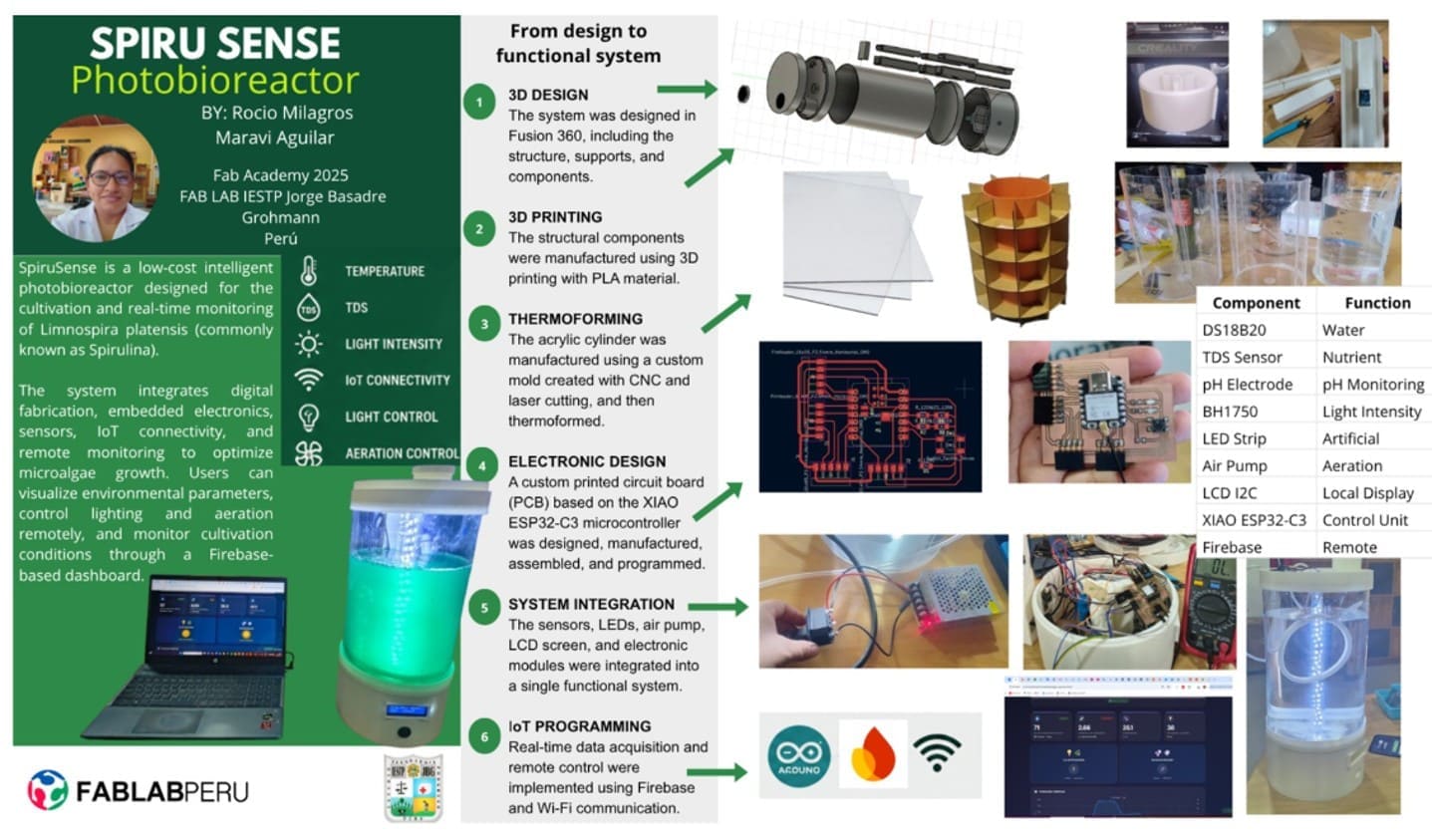
A summary slide named presentation.png was prepared, showing the general project description, the fabrication processes used, the main components, and the expected result. This slide will be updated before the final presentation.
Img. 10: Summary slide of the final project.
Summary Video (Placeholder)
A short video named presentation.mp4 was developed, showing the identified problem, the design, fabrication, and system integration process, as well as a demonstration of its operation. The video will be updated and improved before the final presentation.
Video 1: Summary video of the final project.
Link Verification
The files presentation.png and presentation.mp4 will be placed in the root directory of the repository, and their correct linking within the official final presentation schedule will be verified.
12) Project Development Plan
Project Development Schedule (June 03–12, 2026)
Activity
03 Jun
04 Jun
05 Jun
06 Jun
07 Jun
08 Jun
09 Jun
10 Jun
11 Jun
12 Jun
Definition of the idea
█
Research and references
█
CAD design
█
PCB design
█
Mechanical fabrication
█
Electronic fabrication
█
Sensor integration
█
█
█
Programming
█
█
█
█
█
Firebase integration
█
█
█
█
Functional tests
█
█
█
System validation
█
█
Final slide preparation
█
█
█
Final video preparation
█
█
█
█
Final documentation
█
█
█
█
█
█
█
█
█
General project review
█
█
Final Fab Academy presentation
⭐
Legend
█ = Scheduled activity.
⭐ = Final presentation.
Schedule Description
By June 3, the stages of idea definition, research, CAD design, electronic design, and fabrication of the main components had been completed. During the week prior to the final presentation, the integration of sensors, programming of the XIAO ESP32-C3 microcontroller, and implementation of communication with Firebase will continue. Afterwards, functional tests, system validation, and final adjustments will be carried out. In parallel, the documentation, presentation slide, and demonstration video required for the final presentation on June 12, 2026 will be developed.
13) Development Summary
SpiruSense arises from the need to improve traditional spirulina cultivation methods used in the laboratory, which depend on handmade containers and manual monitoring. The project seeks to integrate digital fabrication, custom electronics, sensors, and the Internet of Things into a single platform capable of monitoring and controlling the main cultivation variables. During the following weeks, the integration of subsystems, sensor validation, and operation tests will continue in order to obtain a fully operational prototype ready for its final presentation.