Assigments
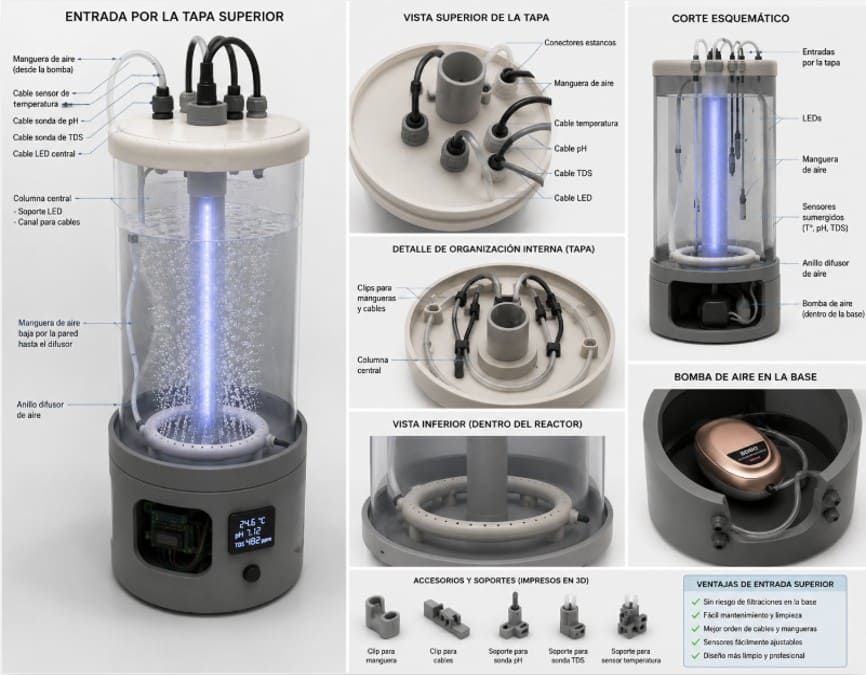
Week 16: System Integration
Assignment:
- Design and document the system integration for your final project.
Final Project:
- SpiruSense: Compact photobioreactor for spirulina cultivation and monitoring.
The objective of this week was to plan, design, and implement the complete integration of all subsystems of my final project, SpiruSense, ensuring that the mechanical, electronic, and software components work as a single functional and reliable solution for spirulina cultivation and monitoring.
From the early stages of the project, a modular architecture was defined to allow the integration of the physical structure, sensors, lighting, aeration, control system, and remote monitoring platform.
Since I already had an idea of what the final version of my photobioreactor would look like, and because I have an exclusive chat for my final project, I asked it to generate an image with the subsystems that make it up. The generated image helped me a lot in organizing my progress. The system was divided into the following subsystems:
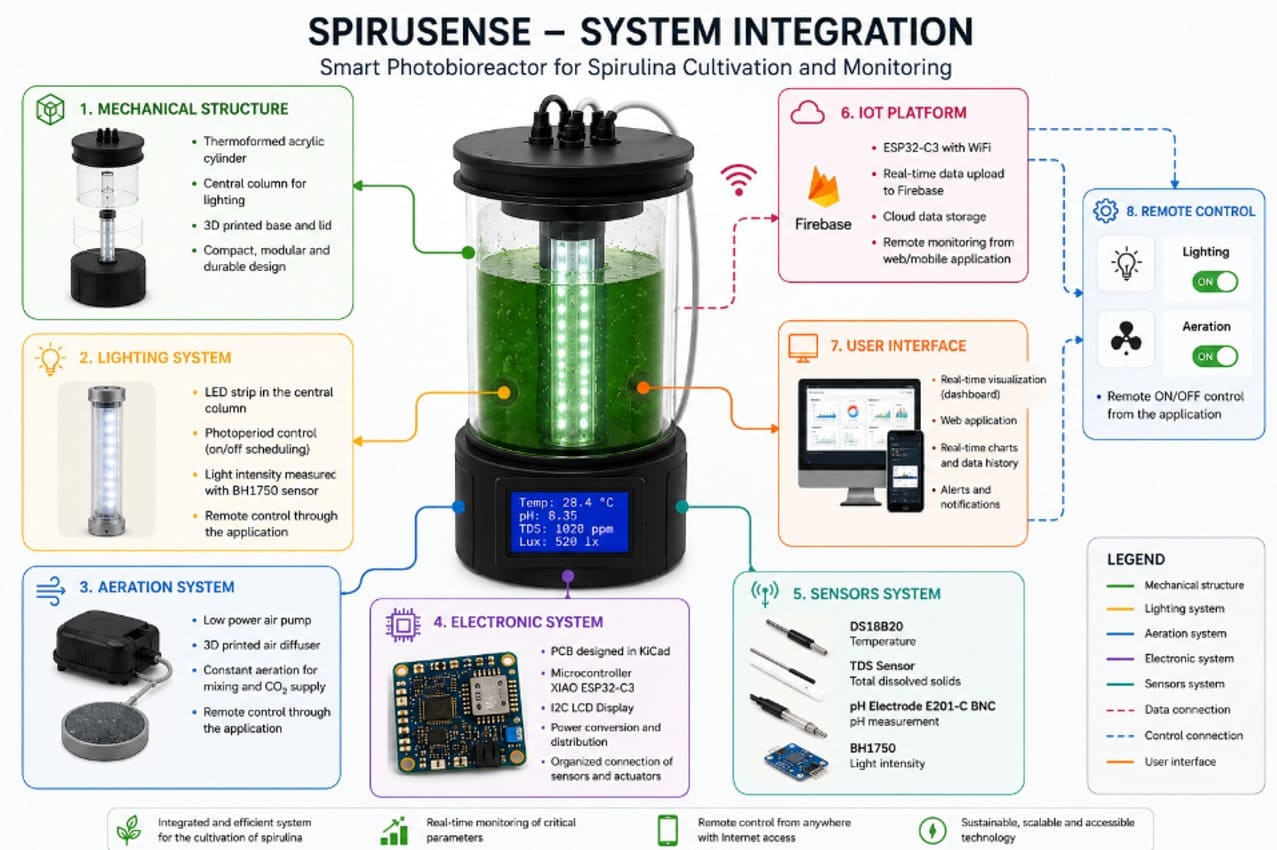
Img. 1: Image generated with ChatGPT of the subsystems, which helped me organize my progress.
Before fabricating the final components, CAD models were developed in Fusion 360 to verify:
Integration was considered from the design phase to avoid interference between the different subsystems.
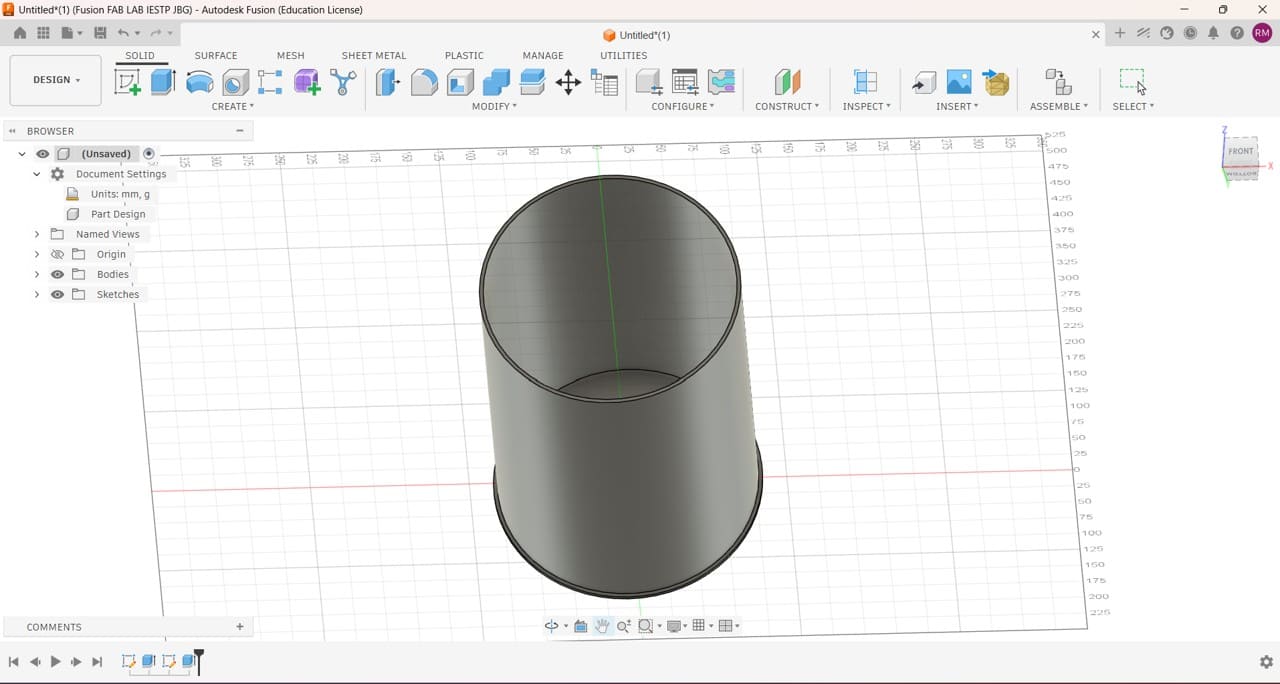
Img. 2: Model of the 20 cm diameter tube, the central part of the photobioreactor that will contain the liquid culture and will be made of acrylic.
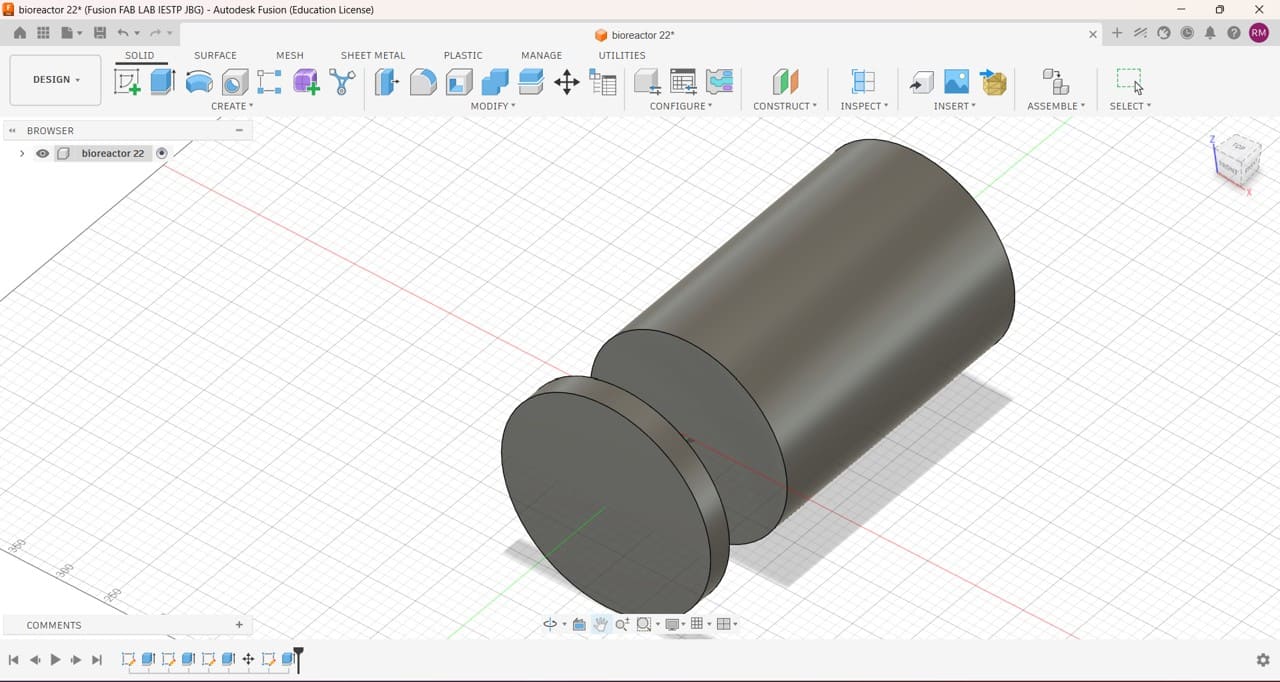
Img. 3: Design of the base lid that will contain all the electrical components.
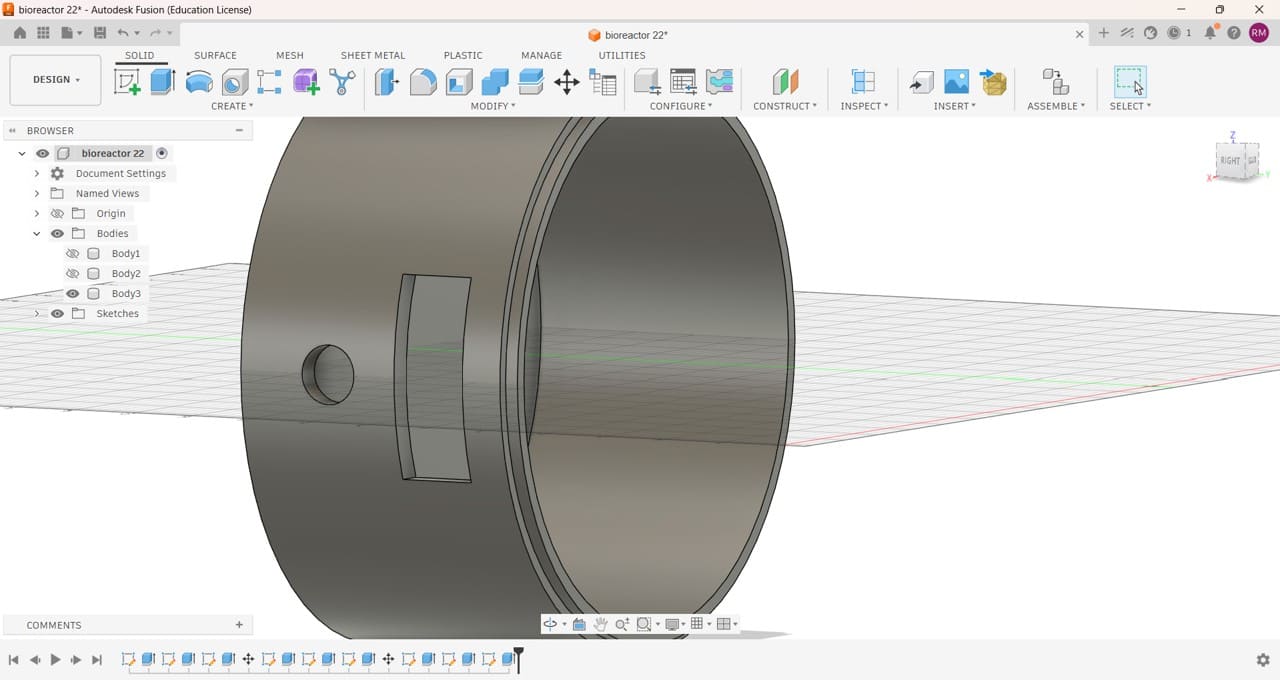
Img. 4: Design of the base that will contain all the electronic components and the microcontroller.
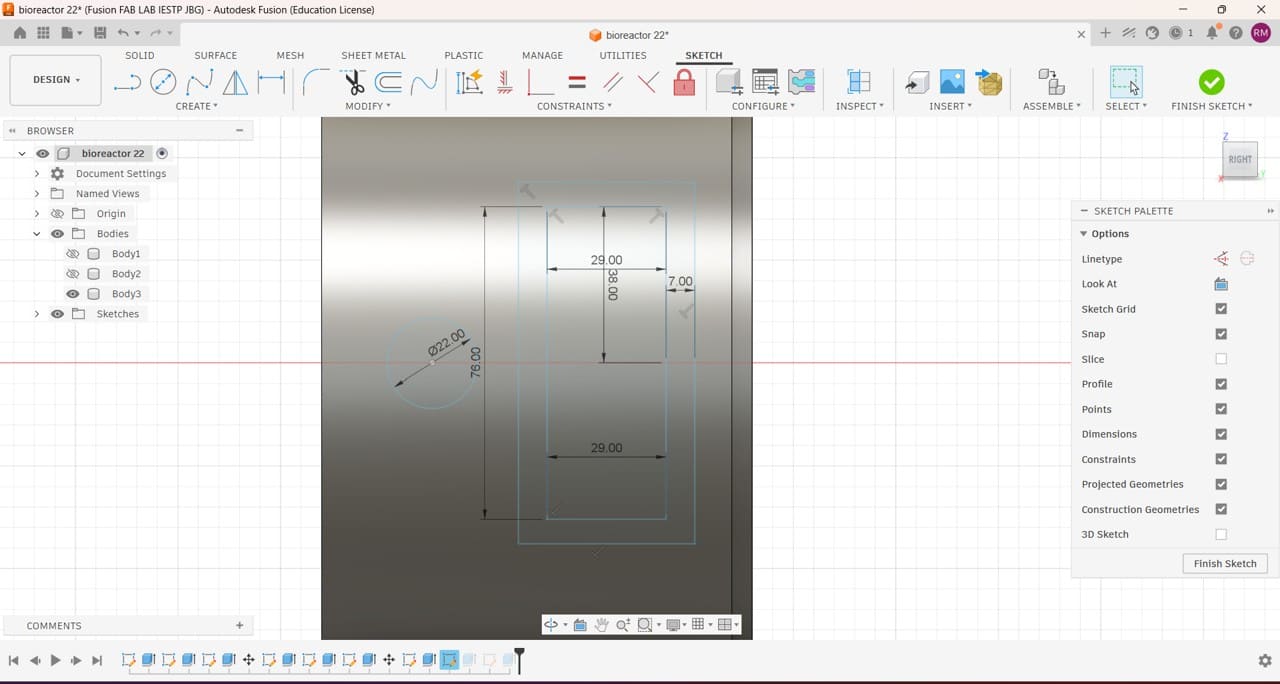
Img. 5: Design of the LCD output, power button, and shutdown button.
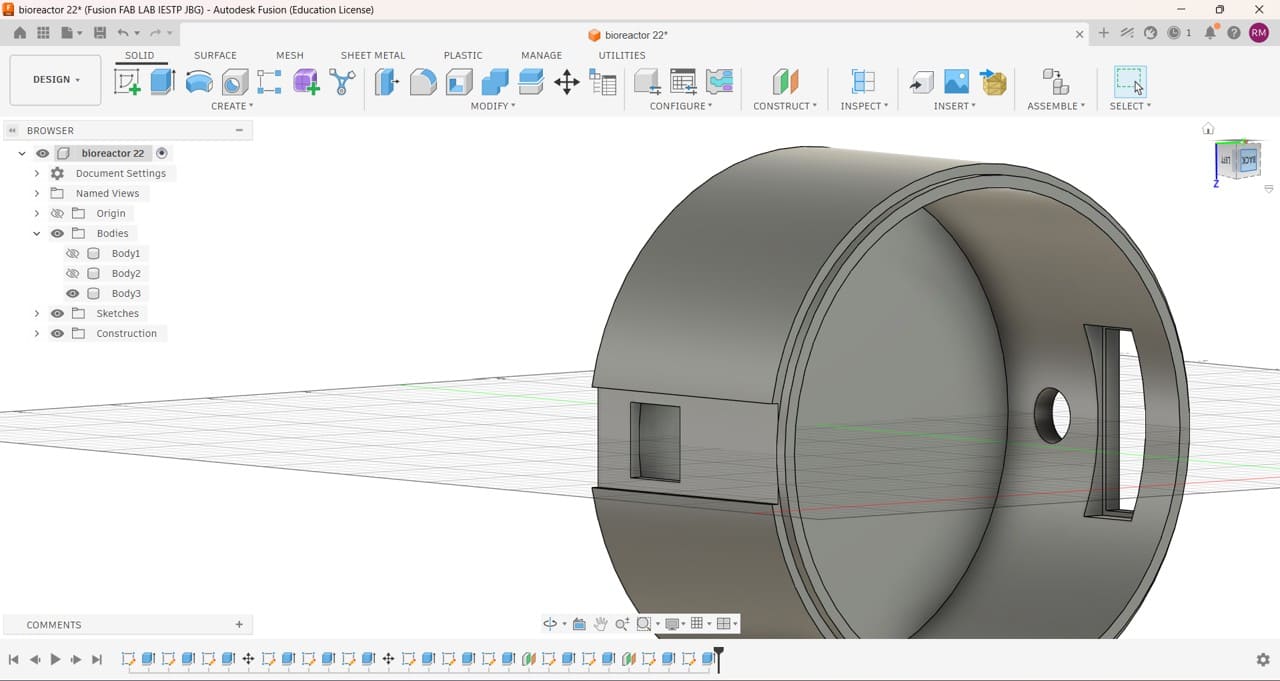
Img. 6: Design of the LCD output, power button, and shutdown button.
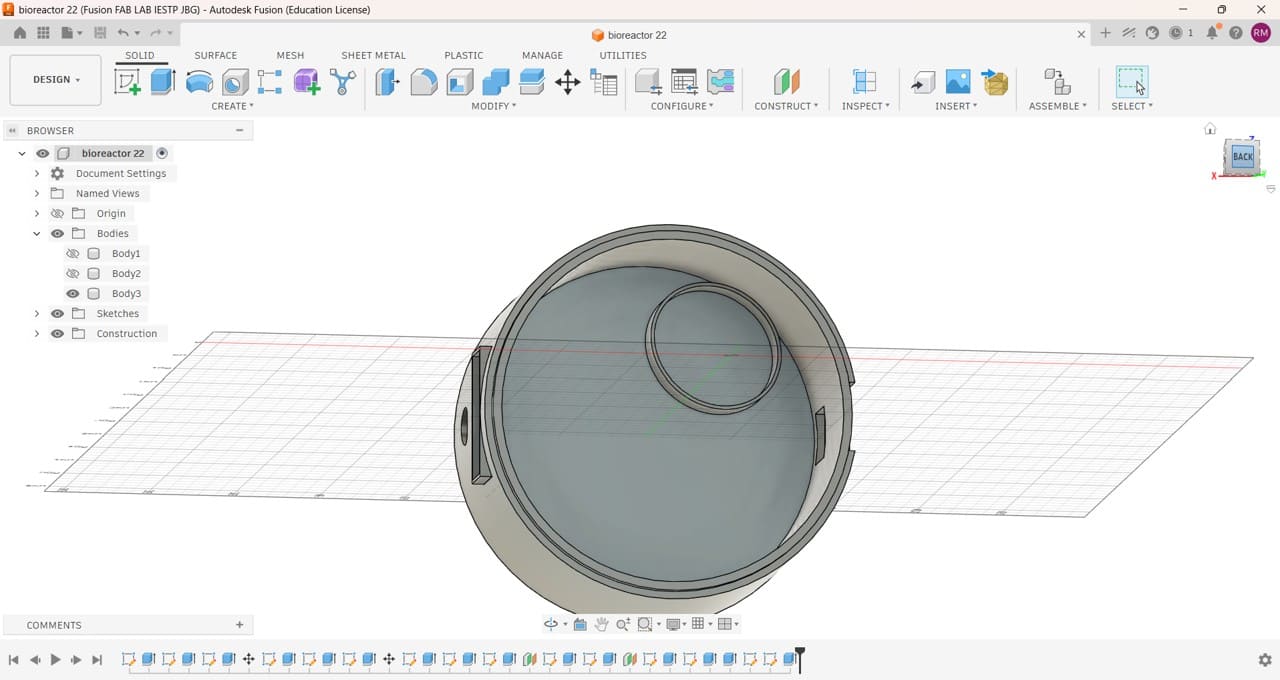
Img. 7: Design of the area where the air pump will be located to reduce vibrations.
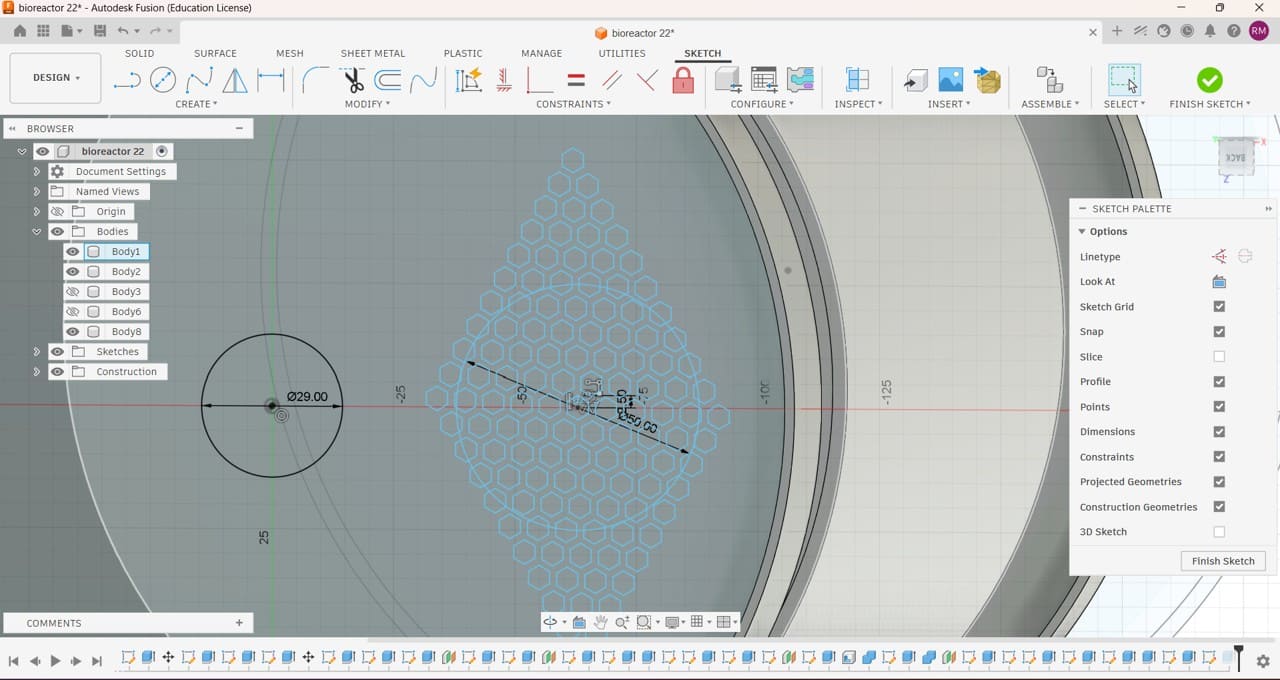
Img. 8: Design of honeycomb-style holes for gas exchange.
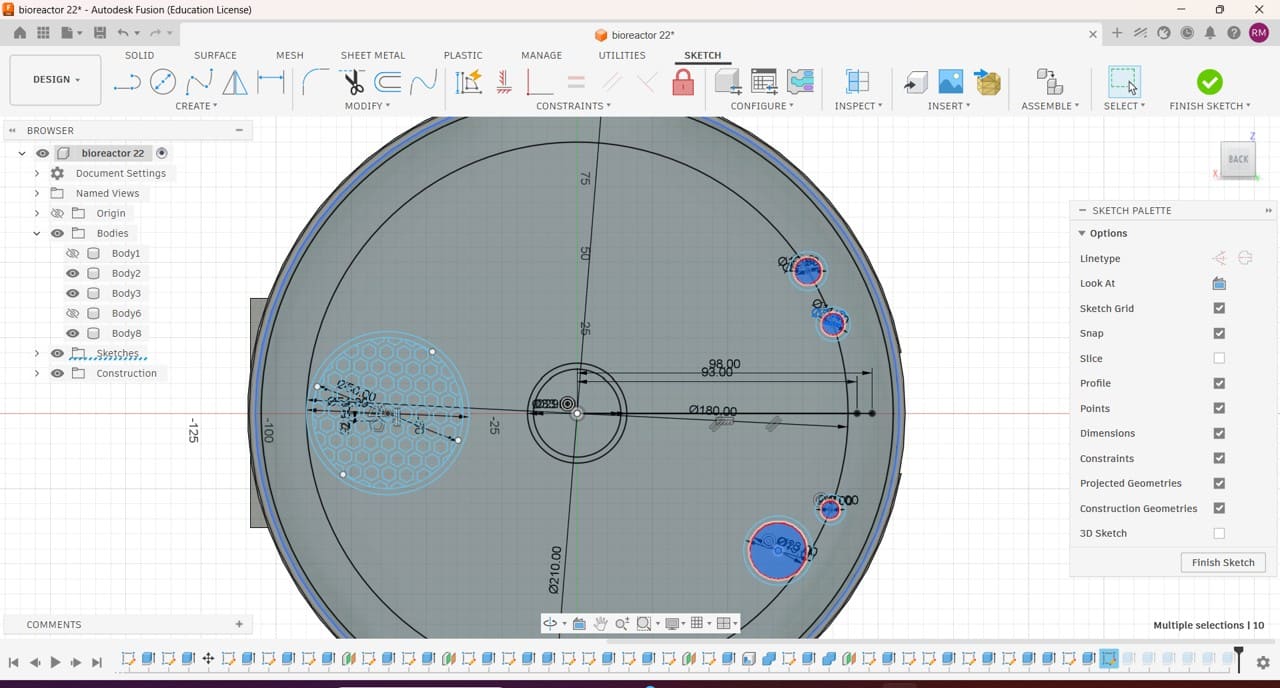
Img. 9: Design of the compartments for sensor entry through the photobioreactor lid.
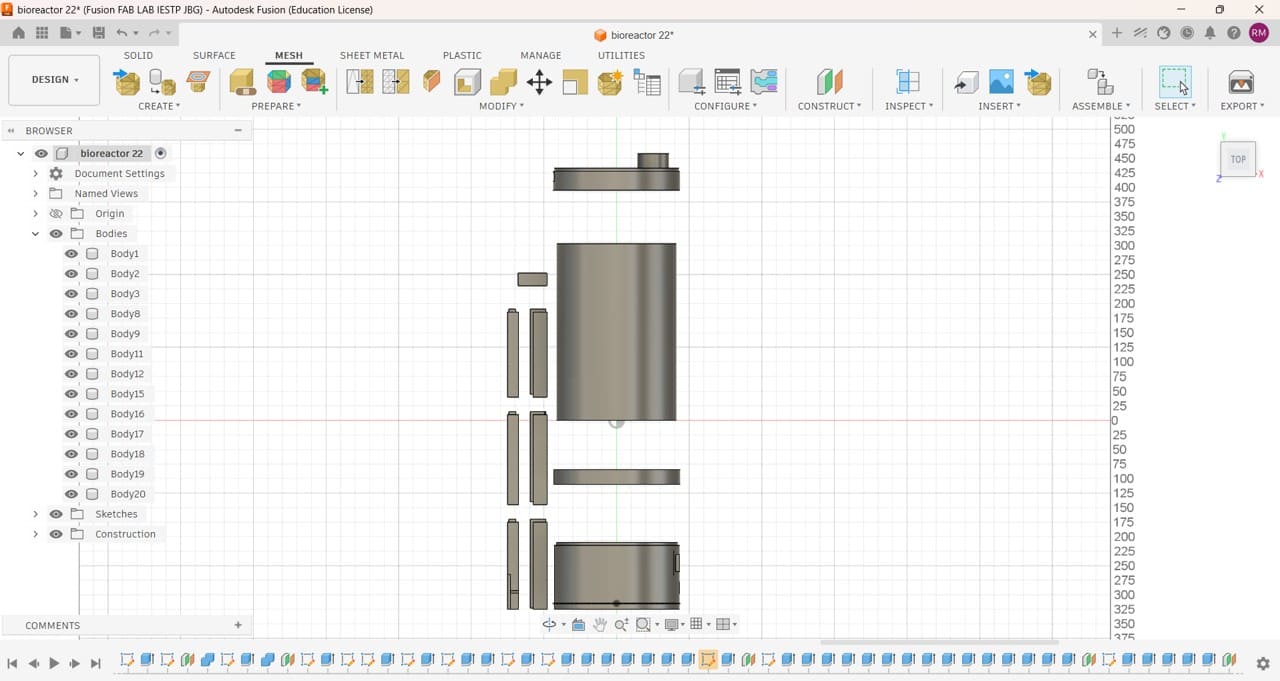
Img. 10: Design of all parts of the photobioreactor.
Several strategies were implemented to achieve the appearance of a finished product:
These decisions helped improve the aesthetics, safety, and ease of maintenance of the system.
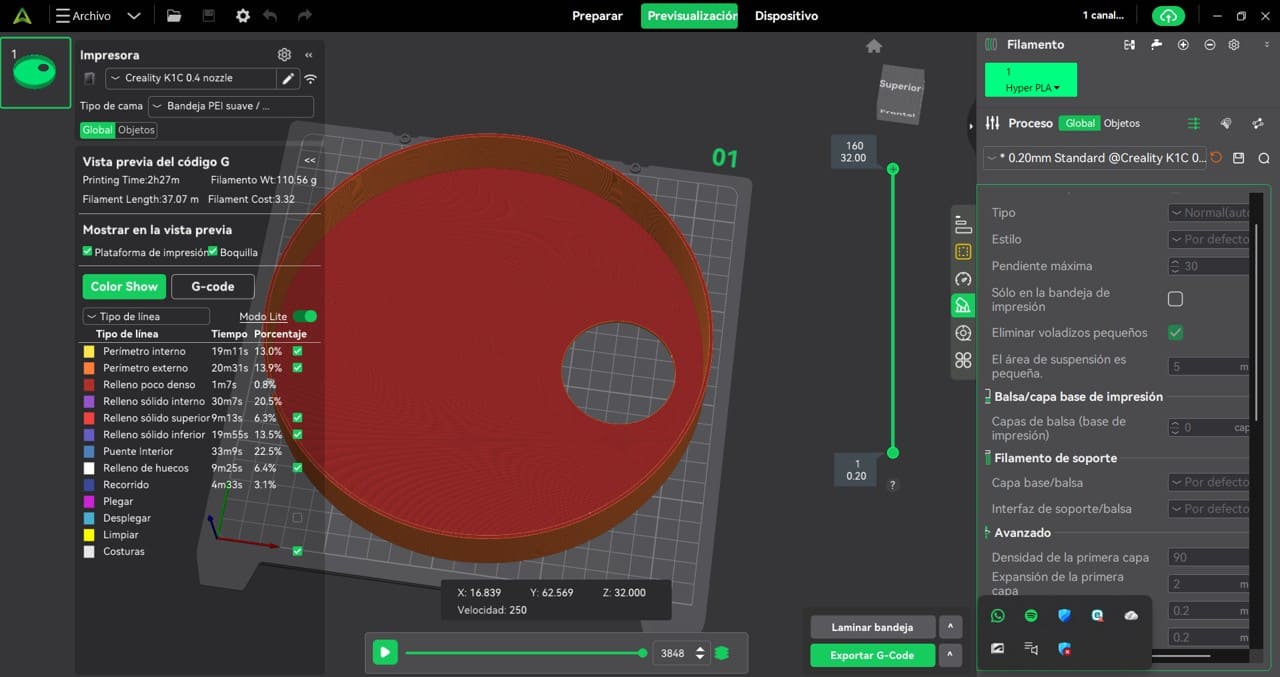
Img. 11: Preparation for printing the lid.
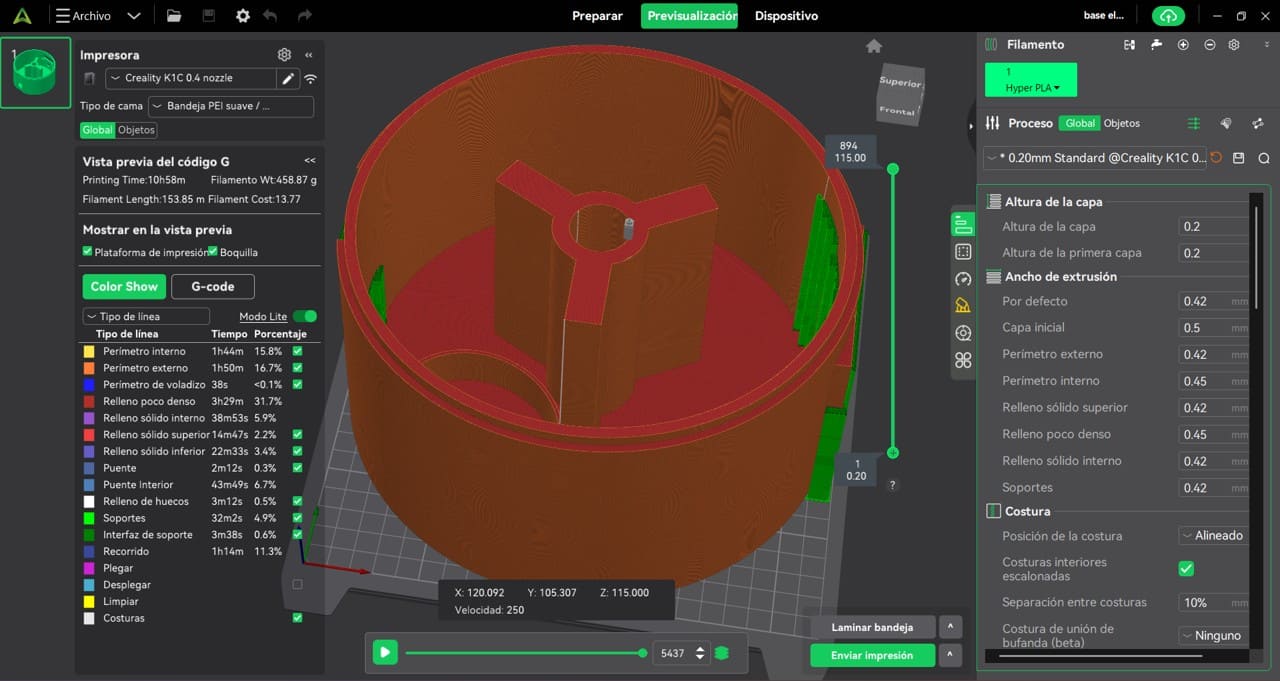
Img. 12: Preparation for printing the base.
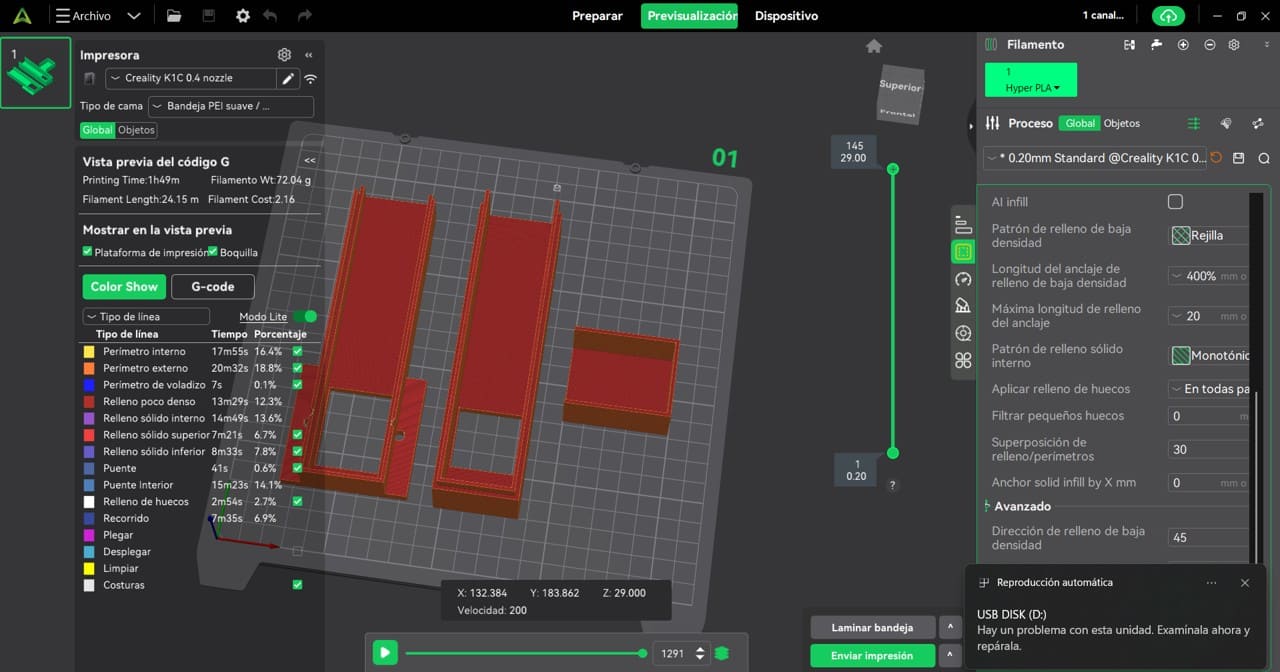
Img. 13: Preparation for printing the cable channels.
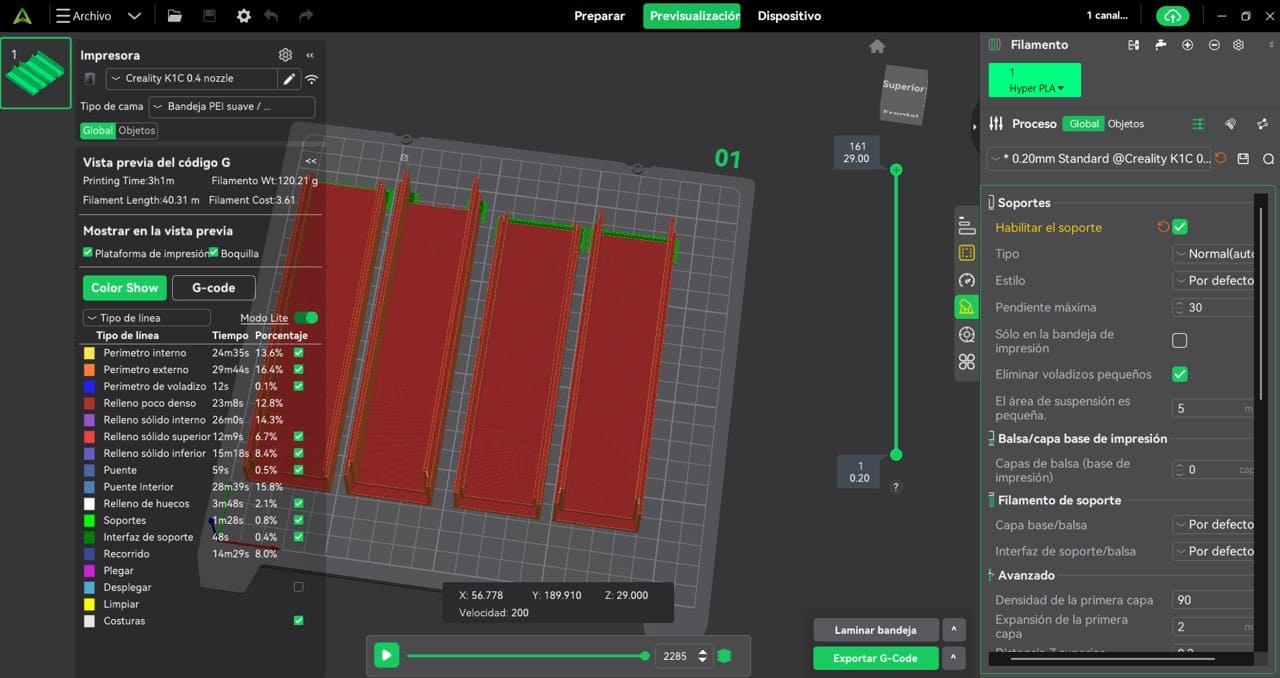
Img. 14: Preparation for printing the cable channels.
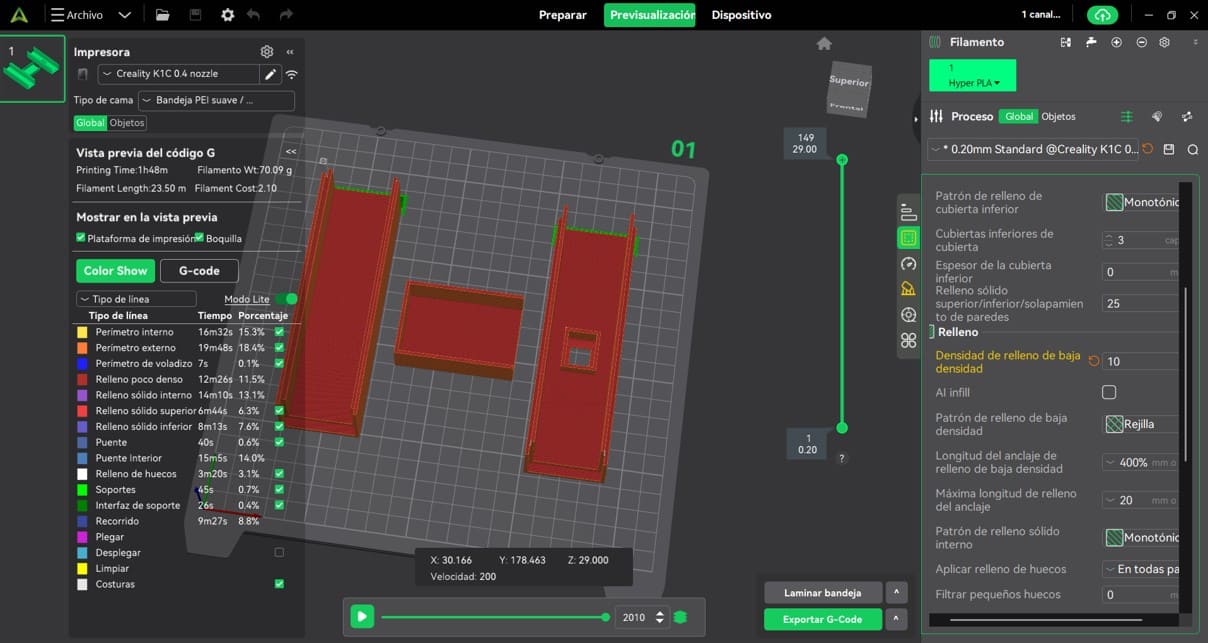
Img. 15: Preparation for printing the cable channels.
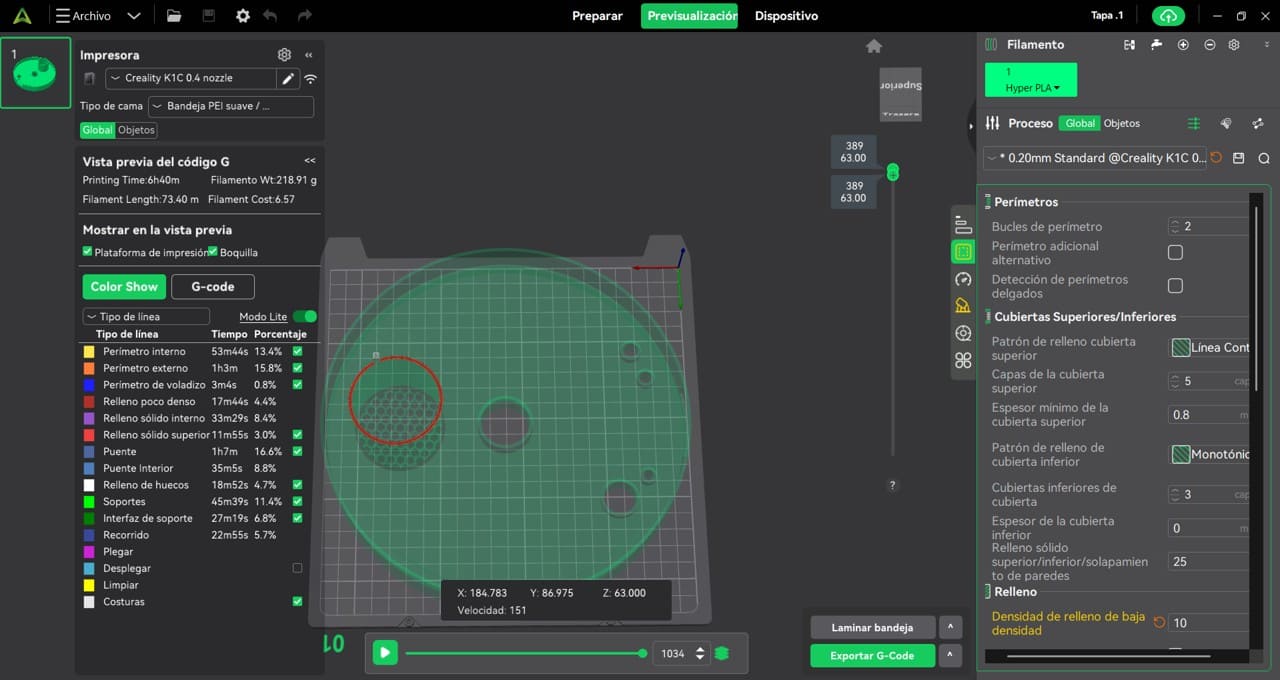
Img. 16: Print preparation for the sensor entry.
SpiruSense was designed to look like a functional product and not only an experimental prototype.
For this purpose, the following were integrated:
The final result is a functional photobioreactor capable of monitoring and controlling important spirulina culture variables in real time.
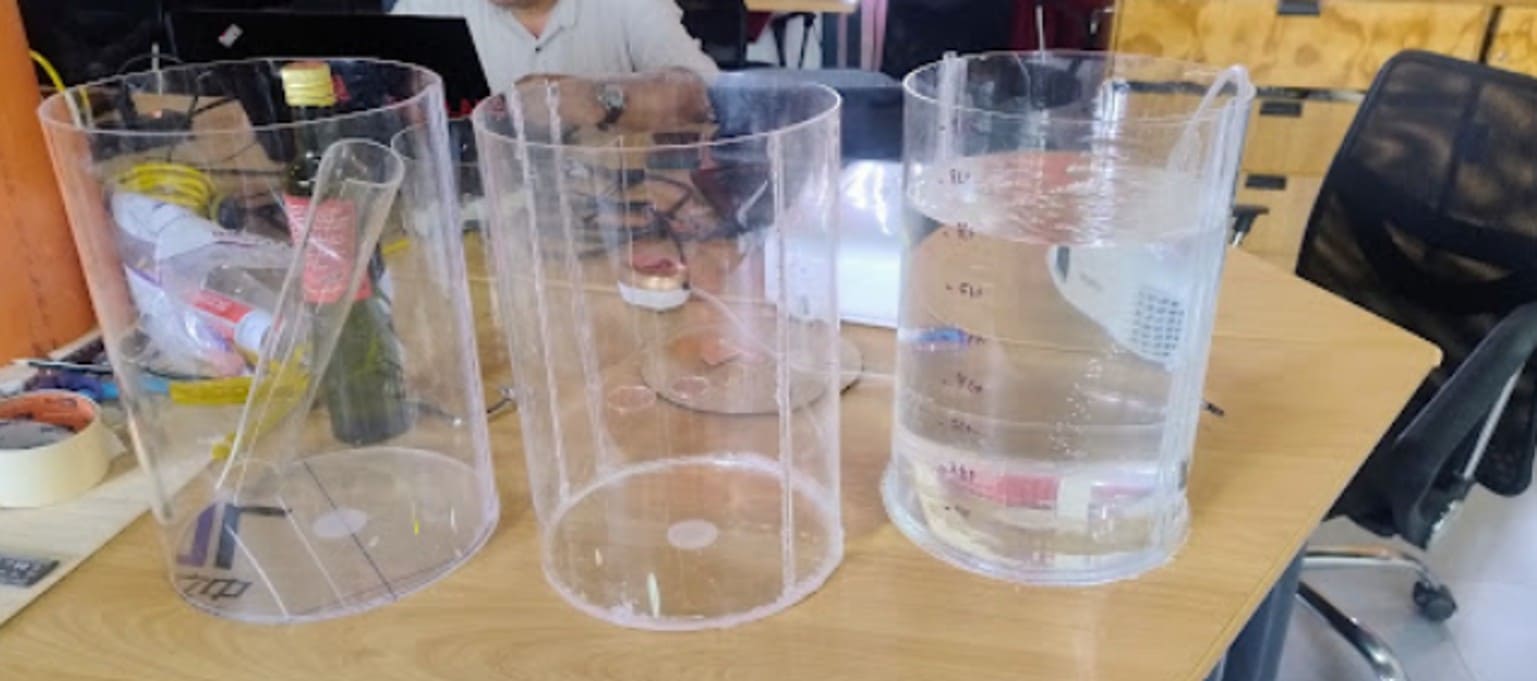
Img. 17: Cylinders made with acrylic through thermoforming.
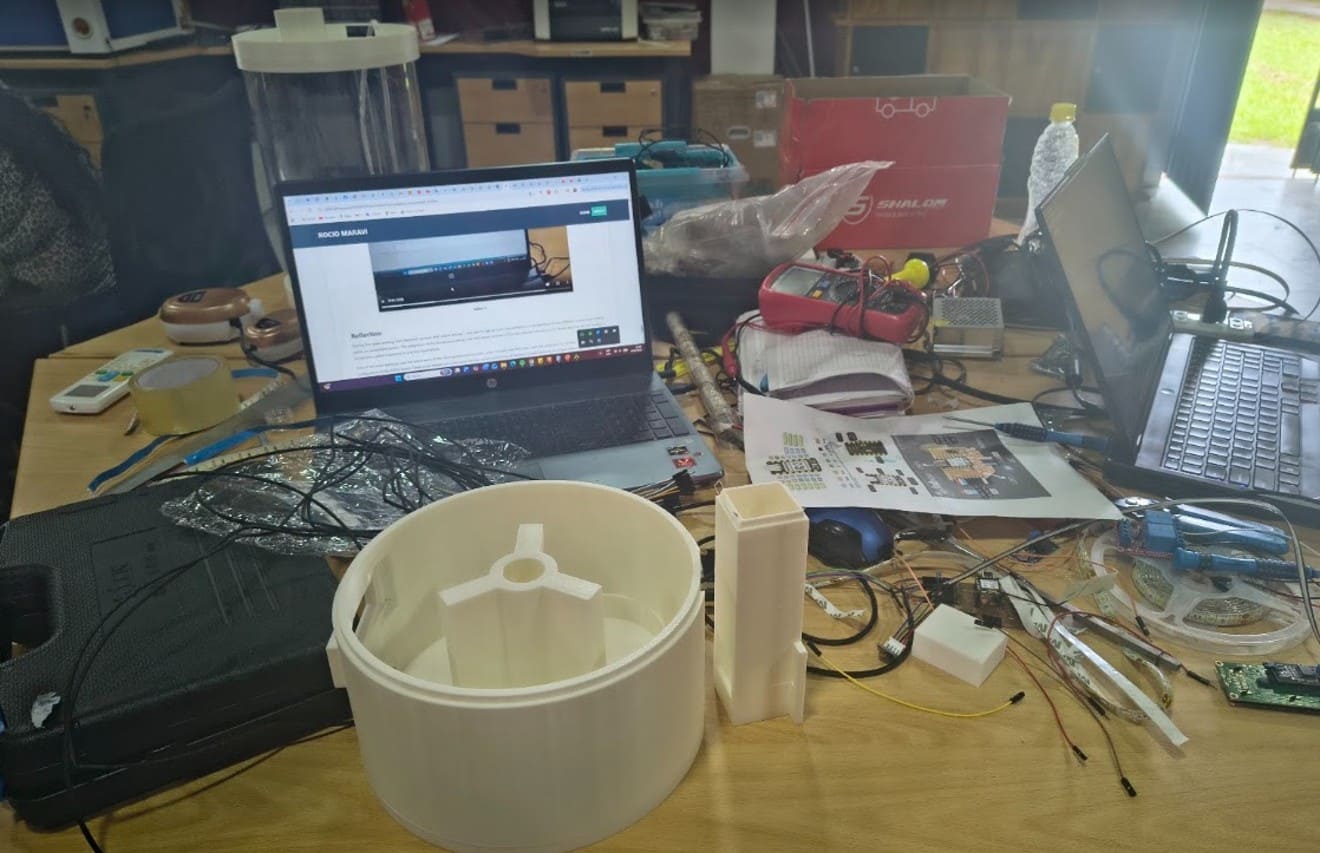
Img. 18: Printing of the base for the electronic components.
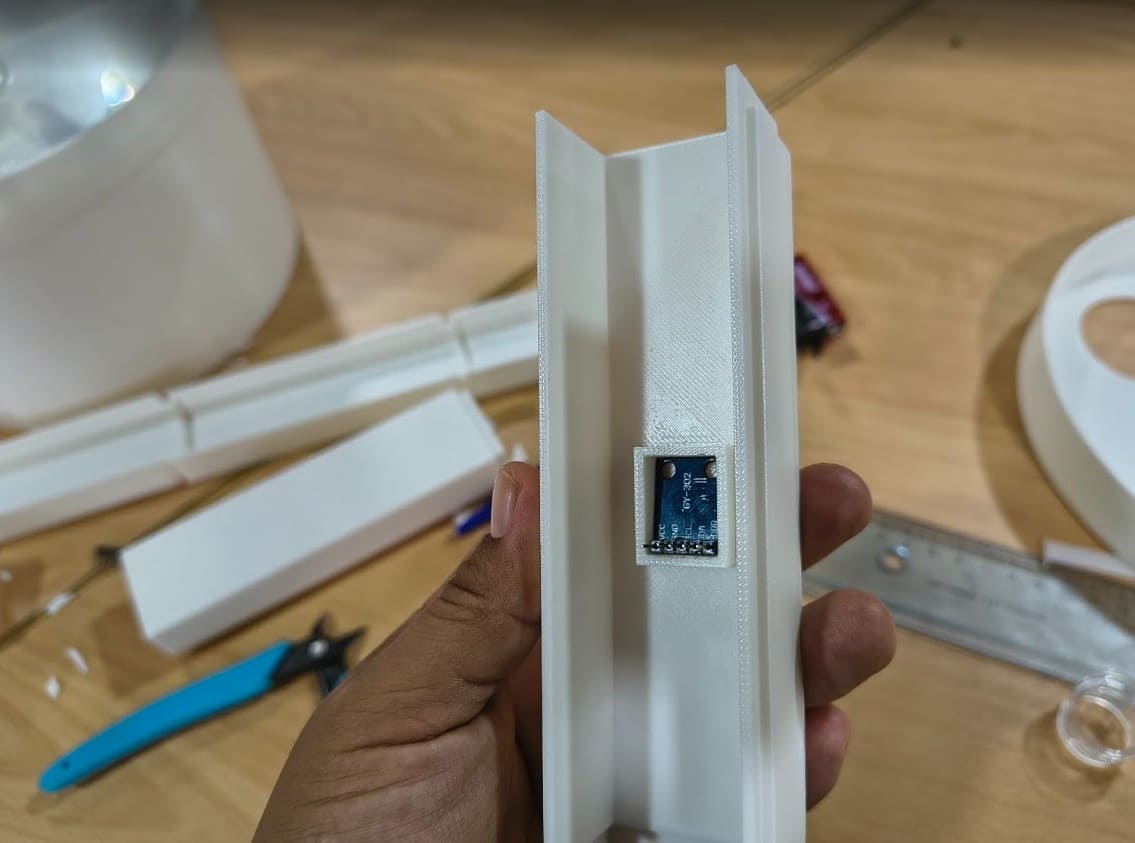
Img. 19: Printing with slots for the phototransistor.
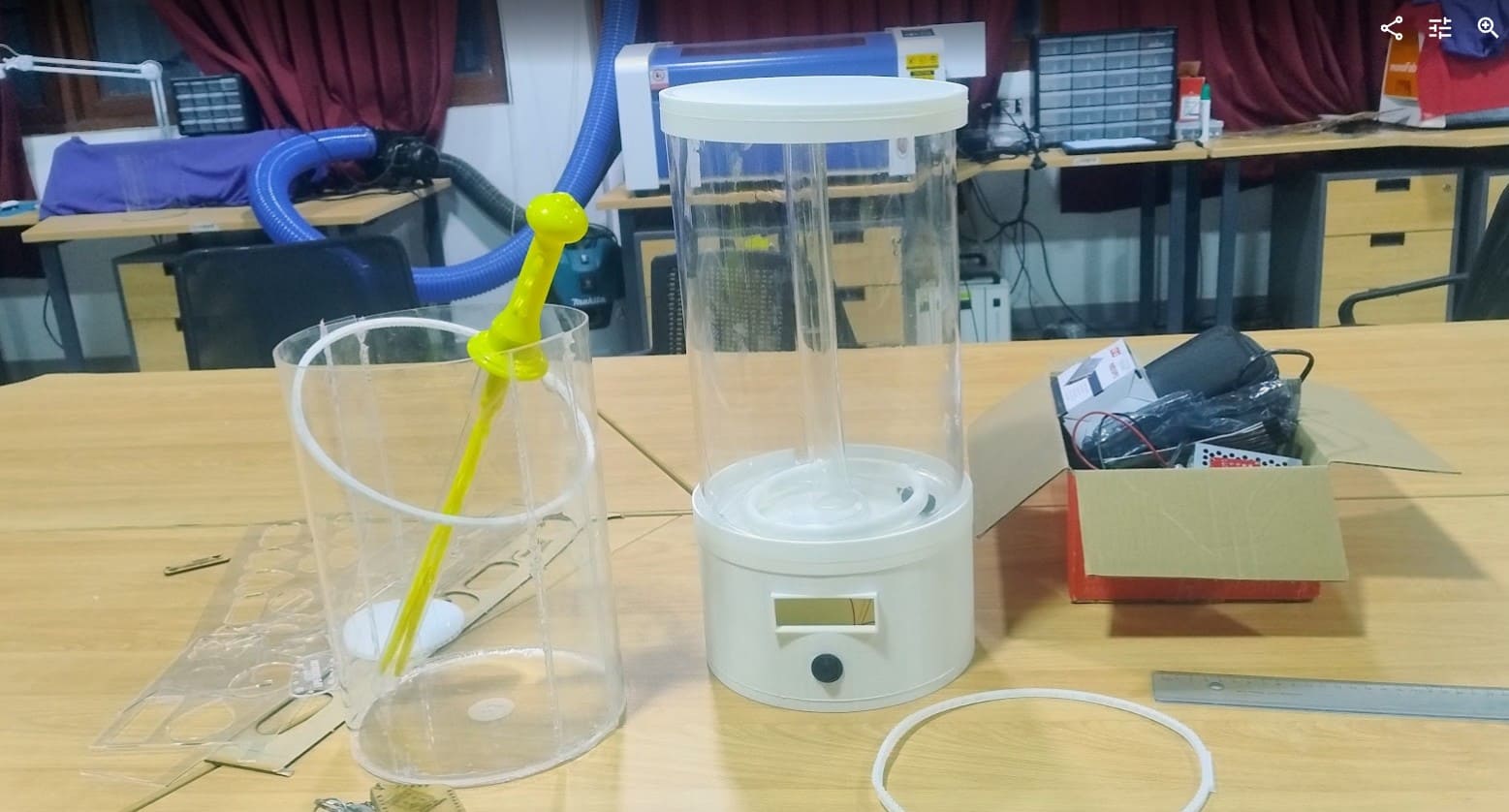
Img. 20: Structural prototype.
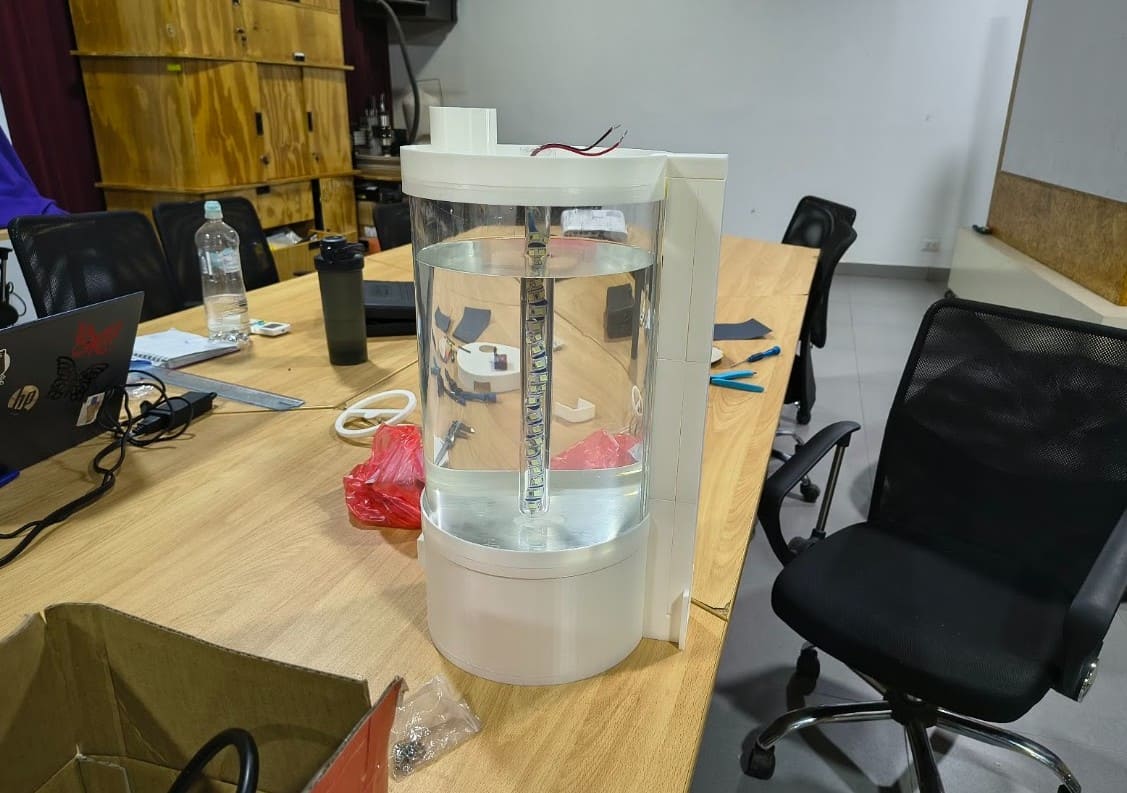
Img. 21: Water tests.
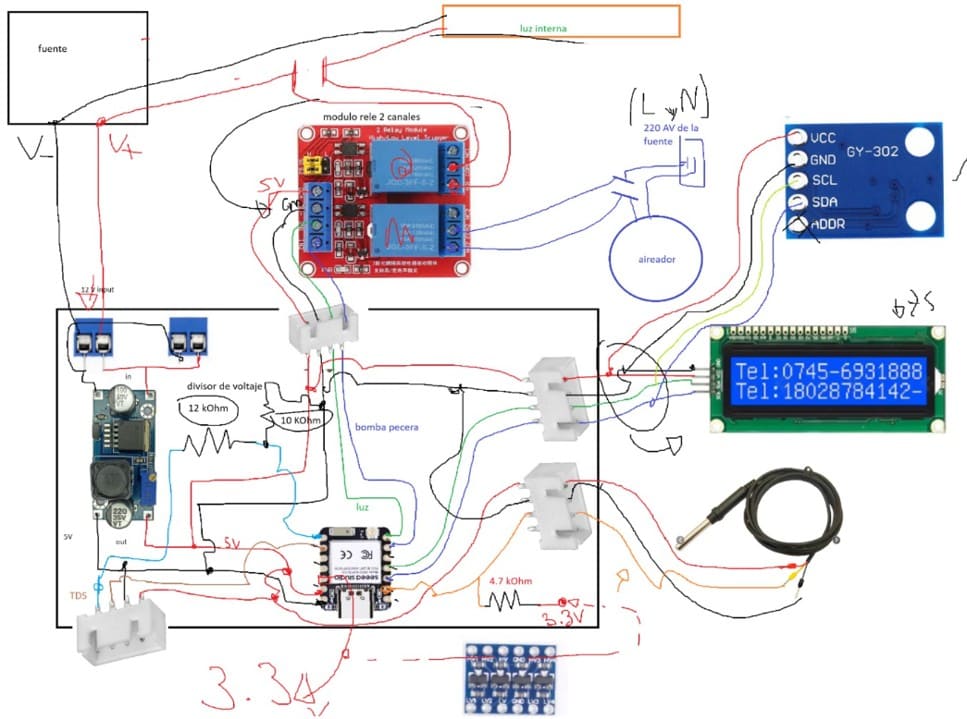
Img. 22: Electronic component connection diagram.
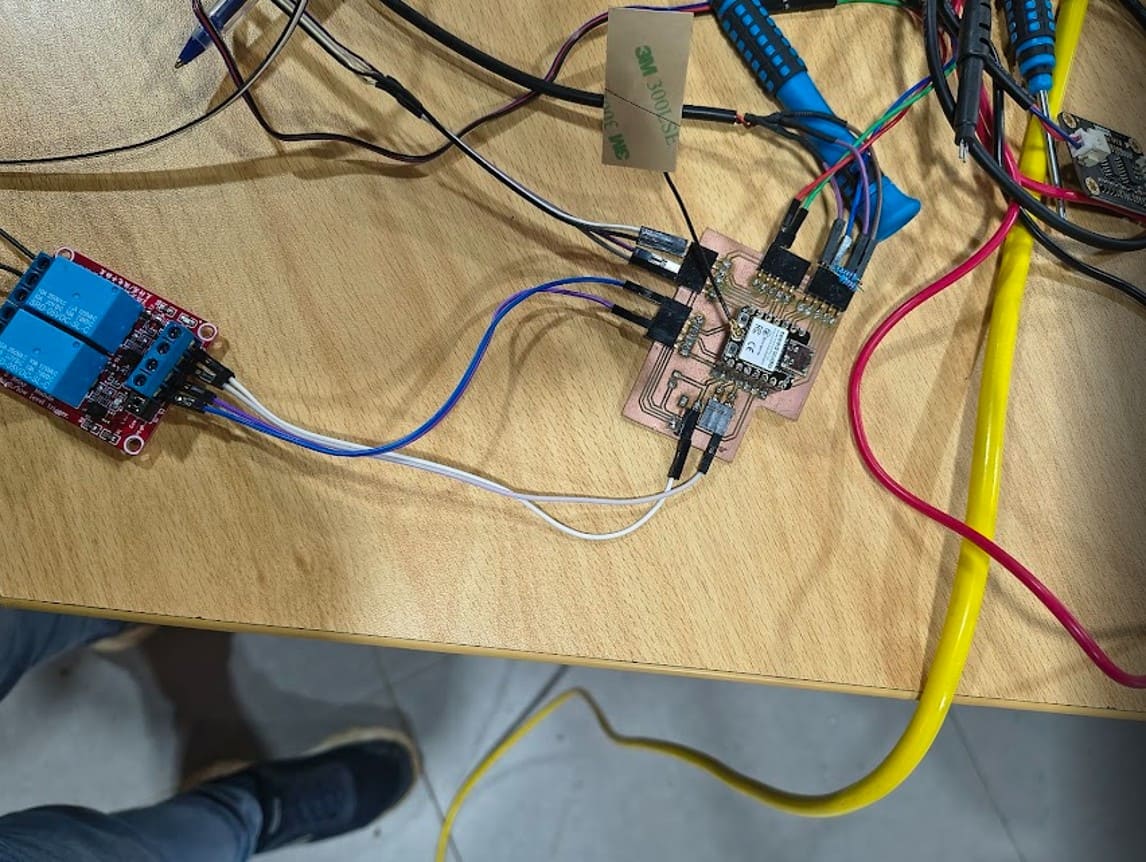
Img. 23: Designed board.
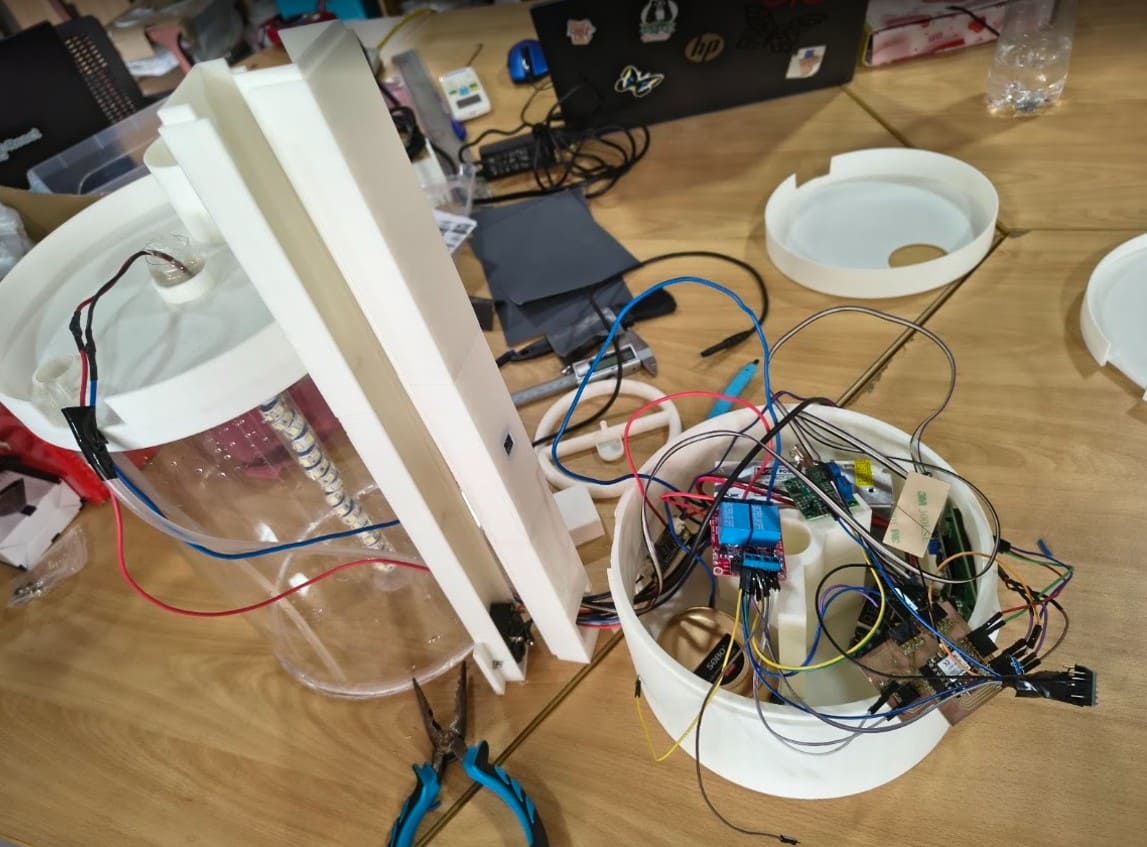
Img. 24: Electronic components.
During integration, several challenges appeared:
Each of these problems was solved through design iterations, testing, and fabrication adjustments.
The integration was successful. All subsystems work together, allowing:
| Identified Problem | Implemented Solution |
|---|---|
| Simultaneous integration of the DS18B20, TDS, pH, and BH1750 sensors, causing difficulties in wiring and data reading. | Individual tests were performed for each sensor before integrating them into the complete system, verifying connections and operation. |
| Organization of internal wiring due to the large number of connections between sensors, LCD screen, lighting, and aeration. | Specific compartments were designed inside the base to house the electronics and safely organize the cables. |
| Obtaining the transparent cylinder through acrylic thermoforming. The first tests showed deformations and unsatisfactory results. | The heating process was adjusted and several attempts were made until the required shape was obtained using a mold fabricated with laser cutting and CNC. |
| Risk of water leaks that could affect the electronics installed in the base. | Watertightness and leakage tests were carried out before permanently installing the electronic components. |
| Configuration of the communication between the XIAO ESP32-C3 microcontroller and the Firebase platform. | Progressive tests of WiFi connectivity and data sending were developed until stable real-time communication was achieved. |
| Physical integration of the LED lighting and aeration system inside the photobioreactor. | A central column was designed to house the lighting and properly distribute aeration inside the culture. |
| Design of the packaging system so that the project would have the appearance of a finished product. | A 3D printed base was fabricated with dedicated spaces for sensors, electronics, LCD screen, and power system, achieving an organized and professional integration. |
System integration represented one of the most important and challenging stages in the development of SpiruSense, since it required combining mechanical, electronic, digital fabrication, programming, and Internet of Things elements into a single functional solution. During this process, I understood that the success of a project does not depend only on the individual operation of each component, but on the ability of all subsystems to work in a coordinated and reliable way.
Planning through sketches, CAD models, and iterative tests allowed me to identify and correct problems before final assembly. Likewise, integration with Firebase demonstrated the potential of IoT technologies for remote monitoring of microalgae cultures.
Finally, this experience allowed me to practically apply the knowledge acquired throughout Fab Academy, transforming an initial idea into a functional prototype with characteristics close to a real product and with potential for future improvement and scaling.