Assigments

Week 13 cover

Week 13: Mid Term Review

Assignment:

  • On your final project site, post a system diagram for your project.
  • List the tasks to be completed.
  • Make a schedule for doing them.
  • Meet with your local and global instructors to review these and your weekly assignments.

Final Project:

  • Compact photobioreactor for spirulina cultivation.

Compact Photobioreactor for Spirulina Cultivation

Assignment Description

For Week 13, I worked on the planning, organization, and management of my Final Project: a compact modular photobioreactor for spirulina cultivation.

The main objective of this week was to organize the complete workflow of the project, establish priorities, identify risks, define work modules, and generate a realistic schedule considering the remaining time until the final Fab Academy presentation.

This week allowed me to:

  • Define the general architecture of the system.
  • Organize the fabrication stages.
  • Establish priorities according to time and resources.
  • Identify dependencies between modules.
  • Plan iterative prototypes.
  • Integrate different digital fabrication processes.
  • Evaluate technical risks and limitations.

1) General Project Description

The project consists of developing a compact modular photobioreactor for spirulina cultivation using digital fabrication processes, electronics, and embedded systems.

Spirulina is a microalga with high nutritional value due to its protein, vitamin, and antioxidant content. However, many existing cultivation systems are expensive, bulky, or difficult to monitor and automate at a small scale.
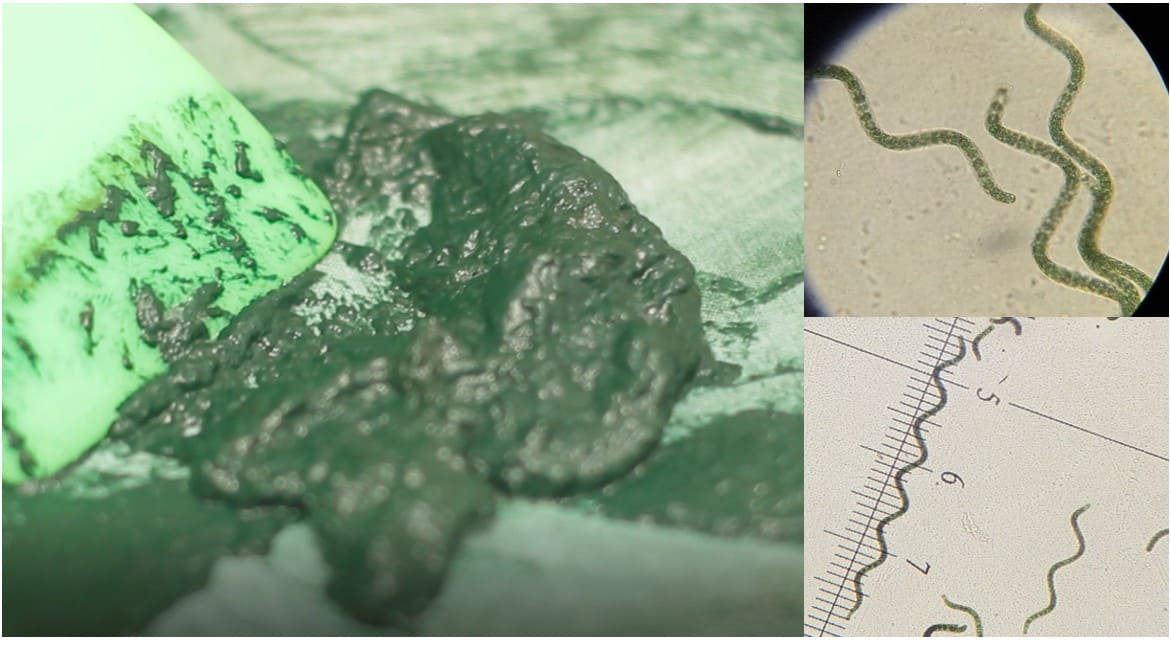
Img 1

Img. 1: Spirulina, a superfood.

This project seeks to solve the need for a compact, modular, and low-cost system that allows spirulina cultivation using accessible digital fabrication technologies.
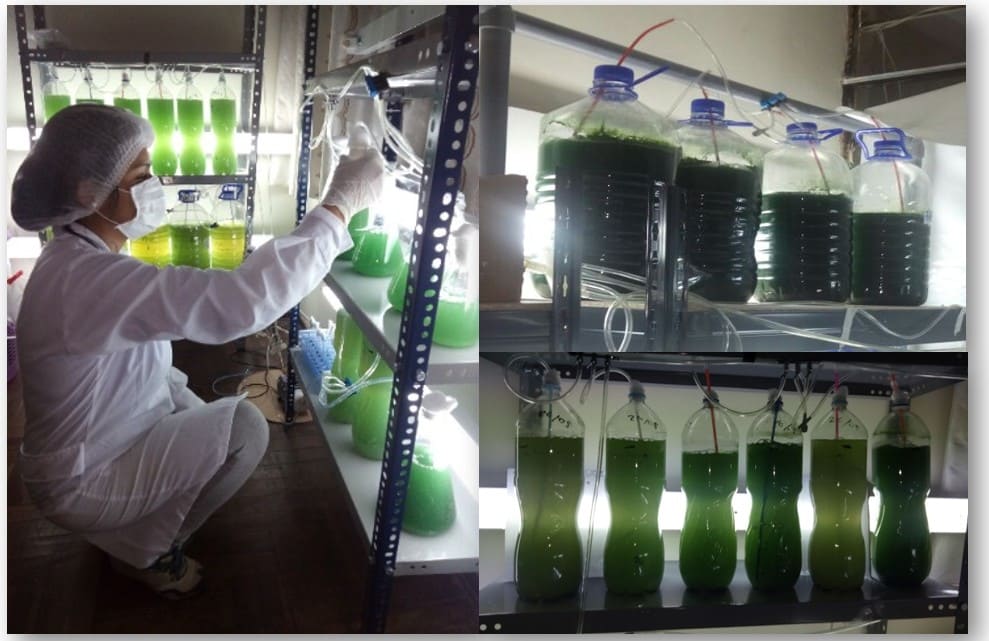
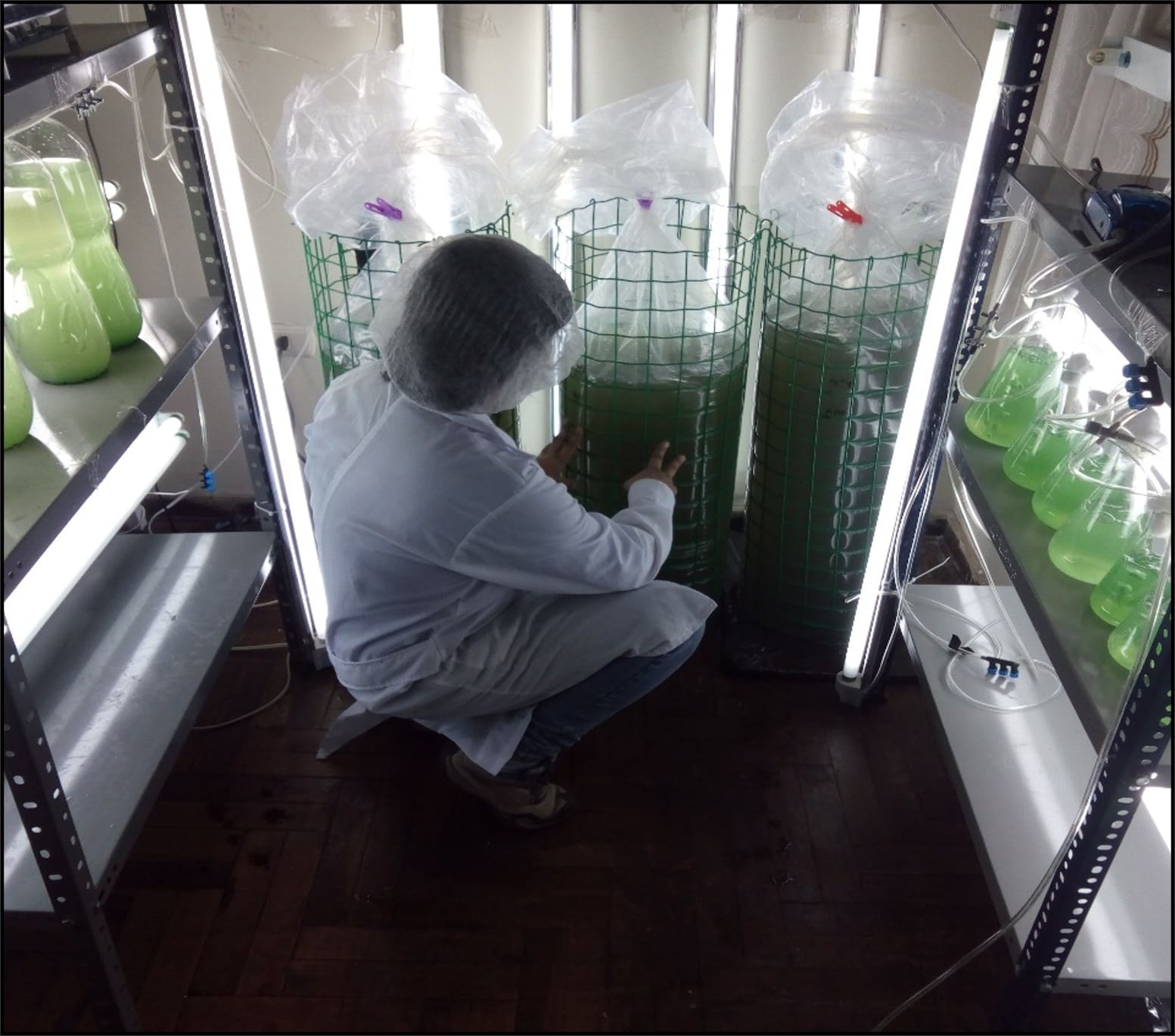
Img 2

Img. 2: Current way spirulina is cultivated in the laboratory where I work. Currently, PET bottles are used and there is no control of cultivation parameters, which reduces performance.

The system will integrate:

  • a transparent thermoformed chamber,
  • LED lighting,
  • controlled aeration,
  • environmental monitoring using sensors,
  • and electronic control through ESP32.

In addition, the project seeks to demonstrate how multiple digital fabrication processes can be integrated into a single functional system oriented toward biotechnological applications.
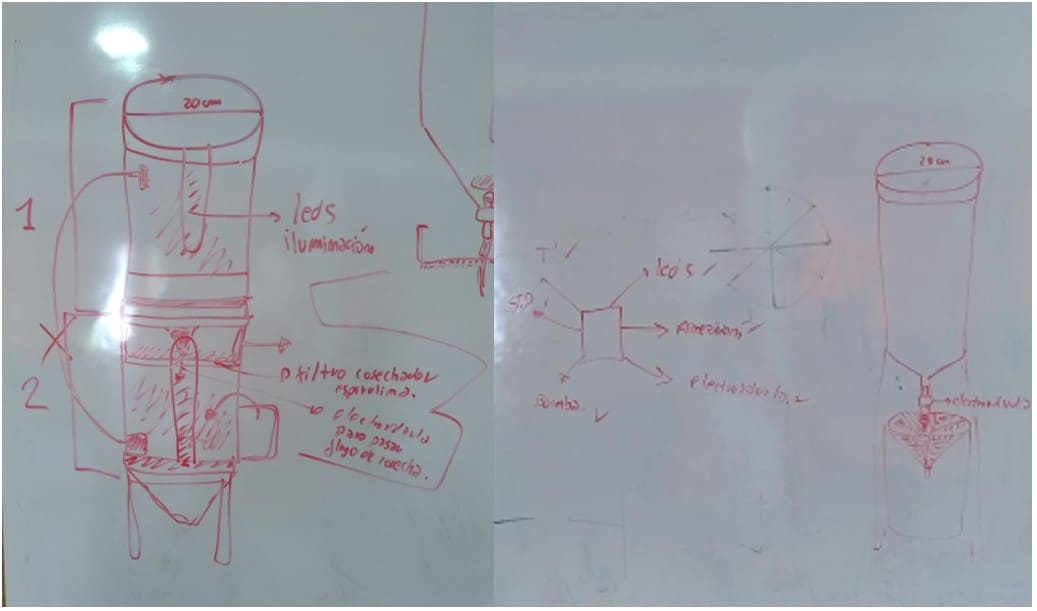
Img 3

Img. 3: Sketch of how the photobioreactor will look.
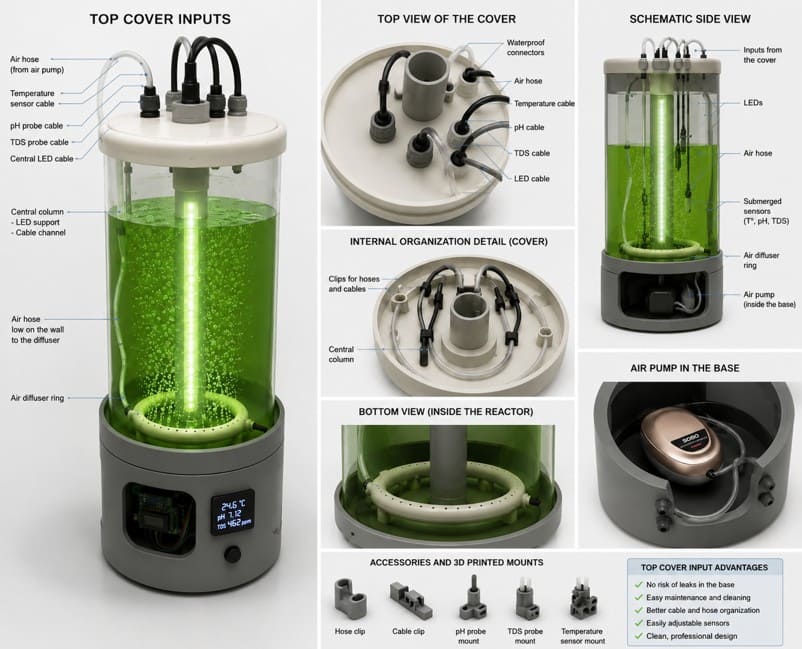
Img 4

Img. 4: Image generated with ChatGPT. I have a chat for my final project where I gradually provided information about how I want to develop it, and I simply asked for an image of how my final project would look.
2) Project Management Table

Component / ModuleFunctionIntegrated Digital FabricationIdentified RiskMitigation Strategy
Thermoformed acrylic cylinderMain chamber for spirulina cultivationCAD design in Fusion 360 + laser mold + thermoformingAcrylic deformation or fractureProgressive temperature tests and reinforced mold
Thermoforming moldMaintains cylindrical geometry during bendingLaser cutting + parametric designLoss of circularityStructural reinforcement with ribs and aluminum
Structural baseReactor support and electronic compartment3D printingDeformation due to water weightIncrease thicknesses and internal ribs
Upper technical coverOrganization of sensors and wiring3D printingLeaks or poor cable distributionRemovable modular design
Aeration systemOxygenation and mixing of the cultureCAD design + 3D printingUneven bubble distributionCircular system with double air inlet
Diffuser ringUniform bubble generation3D printingBuoyancy and air leaksIncorporation of weight and sealing with silicone
LED systemLighting for spirulina growthCAD design + 3D printingOverheatingThermal separation and ventilation
ESP32Control and monitoring of the systemEmbedded programmingCommunication or power failureModular design and individual tests
Temperature sensorThermal monitoring of the cultureIntegrated electronicsUnstable readingsCalibration and sensor insulation
pH sensorChemical monitoring of the mediumIntegrated electronicsDecalibrationPeriodic calibration
TDS sensorMonitoring the concentration of the mediumIntegrated electronicsIncorrect readings due to bubblesStrategic location and data filtering
IoT monitoring systemNotification and data visualizationProgramming + ESP32Lack of connectivityIndependent local system
Cable and hose managementInternal organization of the systemParametric design + 3D printingDisorder or interferenceCentral technical column
General integrationUnion of all systemsMultidisciplinary digital fabricationDelays due to complexityPrioritization of the functional MVP

3) General Schedule

Gantt-type Schedule

ActivityS13S14S15S16S17S18S19S20
Research and conceptualization███
Initial CAD design██████
Modular reactor design██████
Thermoforming mold design██████
Acrylic dimension calculation██████
Mold fabrication███
Thermoforming tests███
Cylinder fabrication███
Aeration system design██████
Diffuser ring printing███
Structural base design██████
Electronic integration███
Sensor integration███
ESP32 programming███
Final assembly██████
Final tests and debugging███
Final documentation██████
Final presentation███

5) Reflections

  • Week 13 allowed me to understand that a successful project does not depend only on the fabrication of components or technological development, but also on proper planning and management of each stage of the process. Before starting the fabrication of the photobioreactor, it was necessary to define clear objectives, establish priorities, and organize the activities according to the available resources and time.
  • During this week, I understood the importance of dividing a complex project into independent modules. This strategy facilitates testing, reduces risks, and allows progress to be made gradually, validating each system before integrating it into the final assembly. Thanks to this, I was able to structure the reactor development into subsystems such as the cultivation chamber, aeration, lighting, electronics, and monitoring.
  • Project management also allowed me to identify technical risks from early stages, such as possible leaks, acrylic deformation, aeration problems, or time limitations for fabrication. Anticipating these problems helped me propose mitigation strategies before starting the construction of the system.
  • Another important aspect was understanding that, in an innovation project, it is essential to maintain flexibility to adapt the design to the resources that are actually available. During the process, it was necessary to rethink some construction solutions and prioritize the essential functionalities to guarantee the viability of the prototype within the established deadline.

6) Conclusions

  • Project management made it possible to establish a clear roadmap for the development of the spirulina photobioreactor, defining objectives, activities, resources, and the time needed to achieve a functional solution.
  • Modular planning facilitated the organization of the work, allowing each system component to be developed and validated independently, reducing risks and optimizing the fabrication process.
  • The early identification of technical risks and time limitations made it possible to prioritize critical project activities, focusing efforts on the development of a minimum viable product capable of demonstrating the main operation of the system.
  • The integration of CAD design, digital fabrication, electronics, and programming tools demonstrates the potential of digital fabrication laboratories to develop innovative biotechnological solutions through accessible and replicable processes.
  • Week 13 was fundamental in transforming an initial idea into a structured project, allowing a realistic development strategy aligned with the objectives and timing of Fab Academy to be defined.
  • The project management process carried out during this stage will serve as a basis for future improvements to the system, including harvesting automation, remote monitoring, intelligent control of cultivation variables, and scaling of the photobioreactor.